


About Jintaijin: the workshop, the people and the way a job is handled
A manufacturer of finishing equipment in Xiamen since 1992, working out of a plant it owns, building every machine it sells and standing behind it afterwards.
Who we are
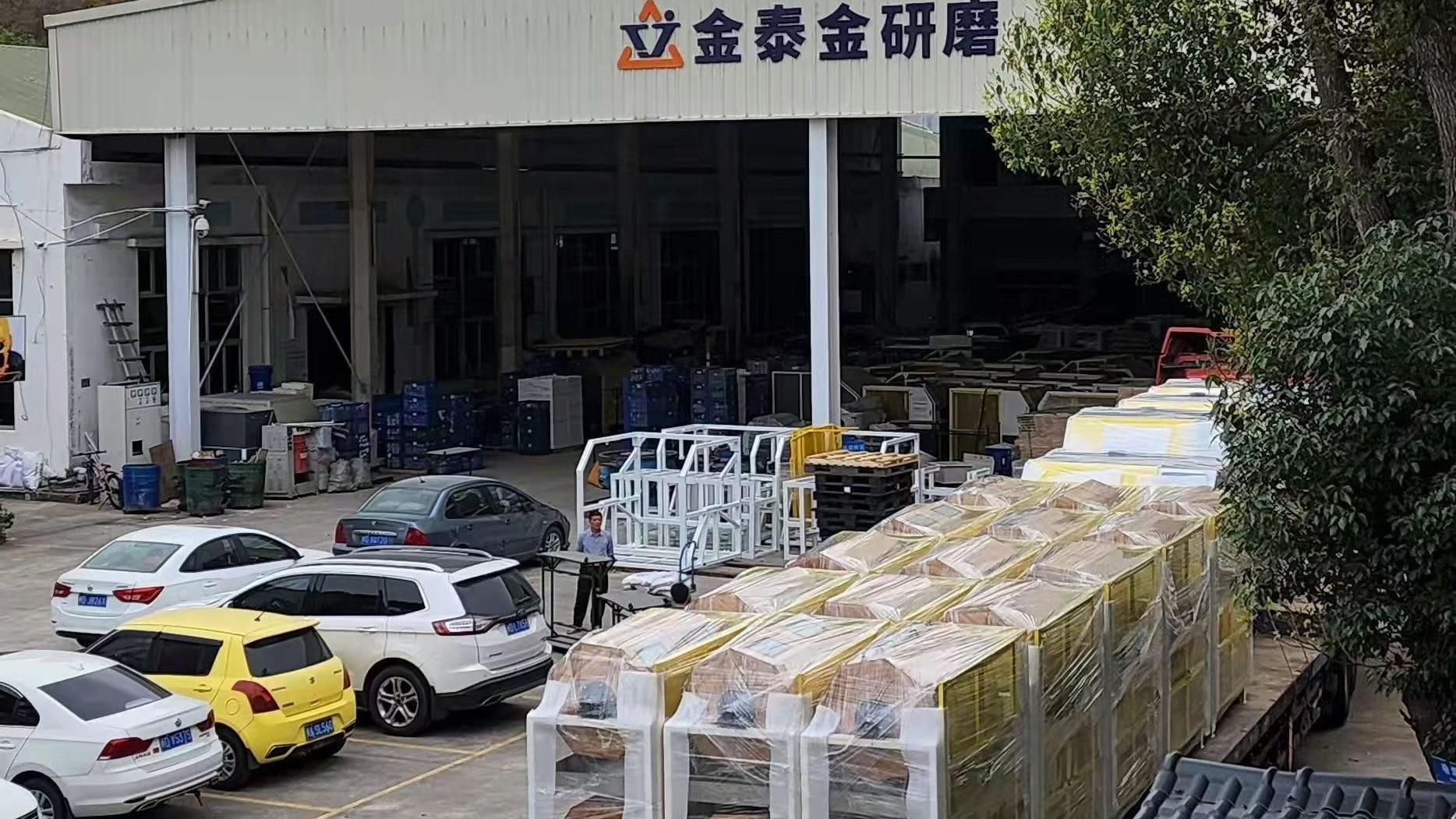
Xiamen Jin Tai Jin Grinding Technology Co.,Ltd. has been building finishing equipment in Xiamen since 1992. We are a workshop rather than an office: the drawings are drawn here, the frames welded here, the panels wired here, the machines run here before they are loaded, and the people who answer the telephone afterwards are the people who built them.
One building, four bays
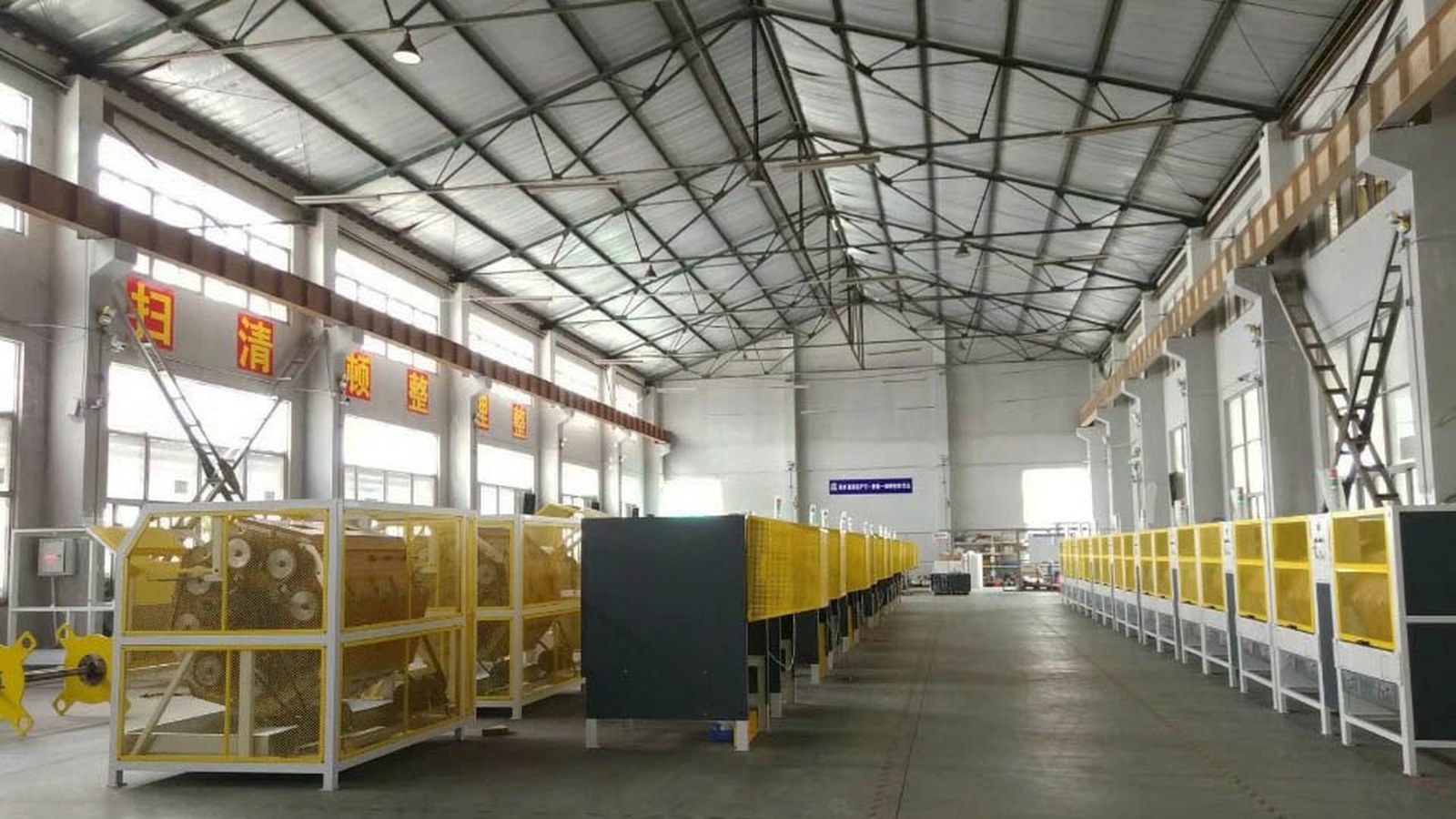
The plant is arranged along a single aisle. The first bay is where the frames are welded and the guarding is fitted; the second is where the tanks, the drives and the electrical cabinets go in; the third is the assembly bay, where a machine grows from a frame into something that runs; and the fourth is the test bay, with a bench, a set of instruments and the parts a customer has sent us to try. Past the fourth bay is the loading door.
What we build, and what we do not
We build six lines of equipment: vibratory, disc, barrel, magnetic and centrifugal machines, and the dryers that go with them. We also make the media and the compounds that run in the equipment, because the result comes out of the combination of the three and not out of the machine alone. The machines page lists every model with its capacity, and the company profile is the manufacturing file — the workshop, the capacity, the type-examination reports and the equipment in full.
What we do not do is pretend the numbers are better than they are. If a figure is not ours to publish, this page says so rather than filling the gap with an estimate.
How a job runs
Every job follows roughly the same path, because the decisions are taken in the order they can be checked.
The work that comes through the door
The same six lines turn up in very different workshops, and the difference is usually the acceptance rather than the work: a bracket that has to come out of a tray without a particle on it, a blade that has to keep an edge, a frame that must not go white. The short version is on the finishing machine FAQ.
What the acceptance changes
The work itself is often the same. What changes is what the customer has to be able to show somebody afterwards, and that requirement decides the process — which is cheaper to design for than to correct.
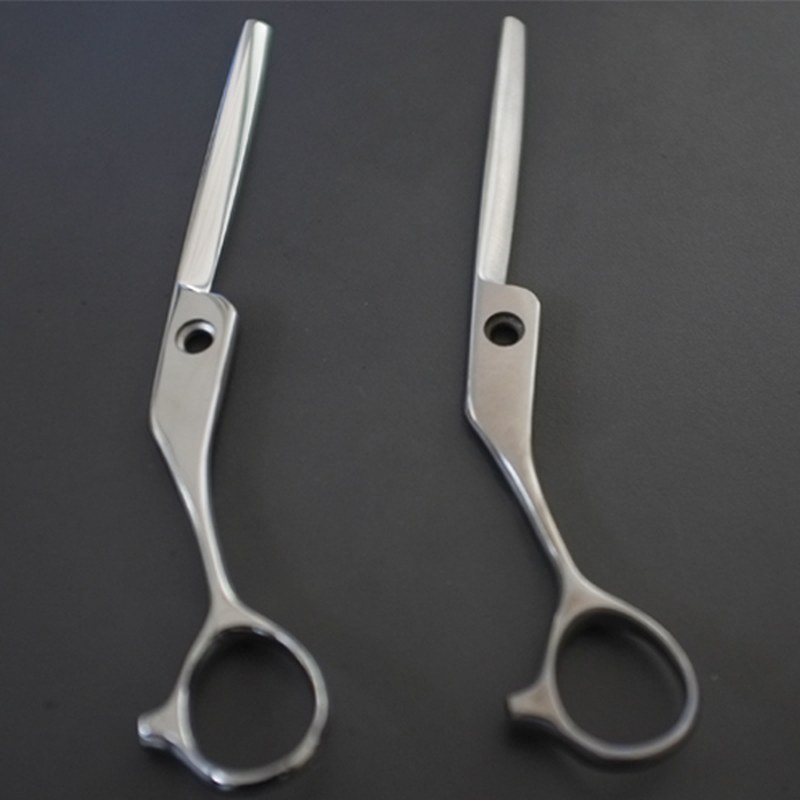
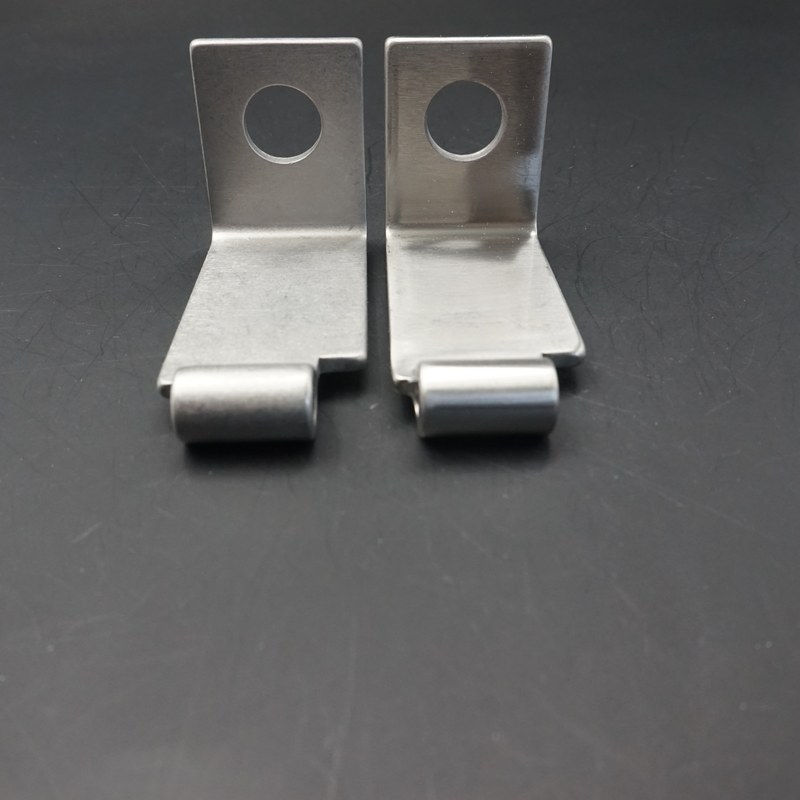
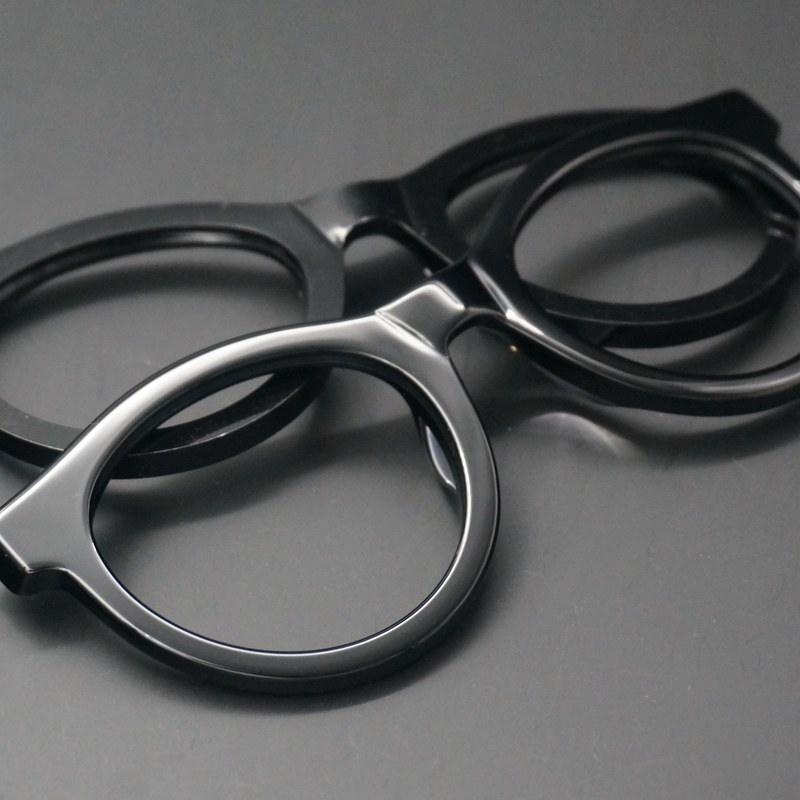
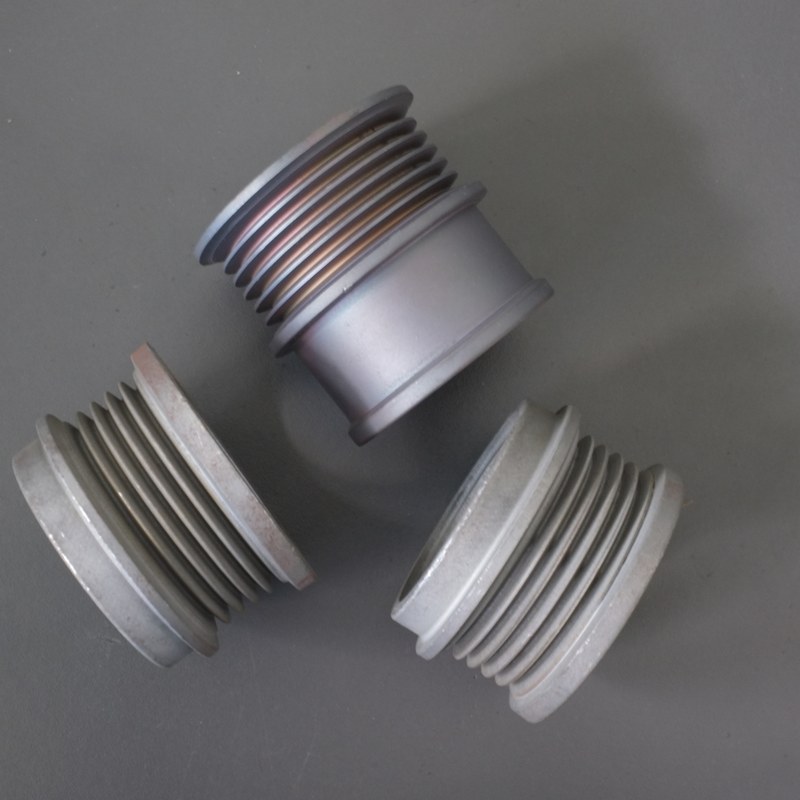
On aluminium there is a note on shine against a surface that measures and another on improving the surface quality. On medical work, finishing without scratches, residue or rounded edges. On frames, polishing without whitening and the dry and wet process guide. On titanium, electropolishing against mechanical polishing.
The people who answer afterwards
The machine is the part of the relationship that is easiest to deliver and the hardest to make useful on its own. Most of what a customer needs once the crate has gone is somebody who will take the call, and the calls are rarely about the machine. They are about the media, the compound, or a batch that came out differently from the last one.
The media is ours, and so is the answer
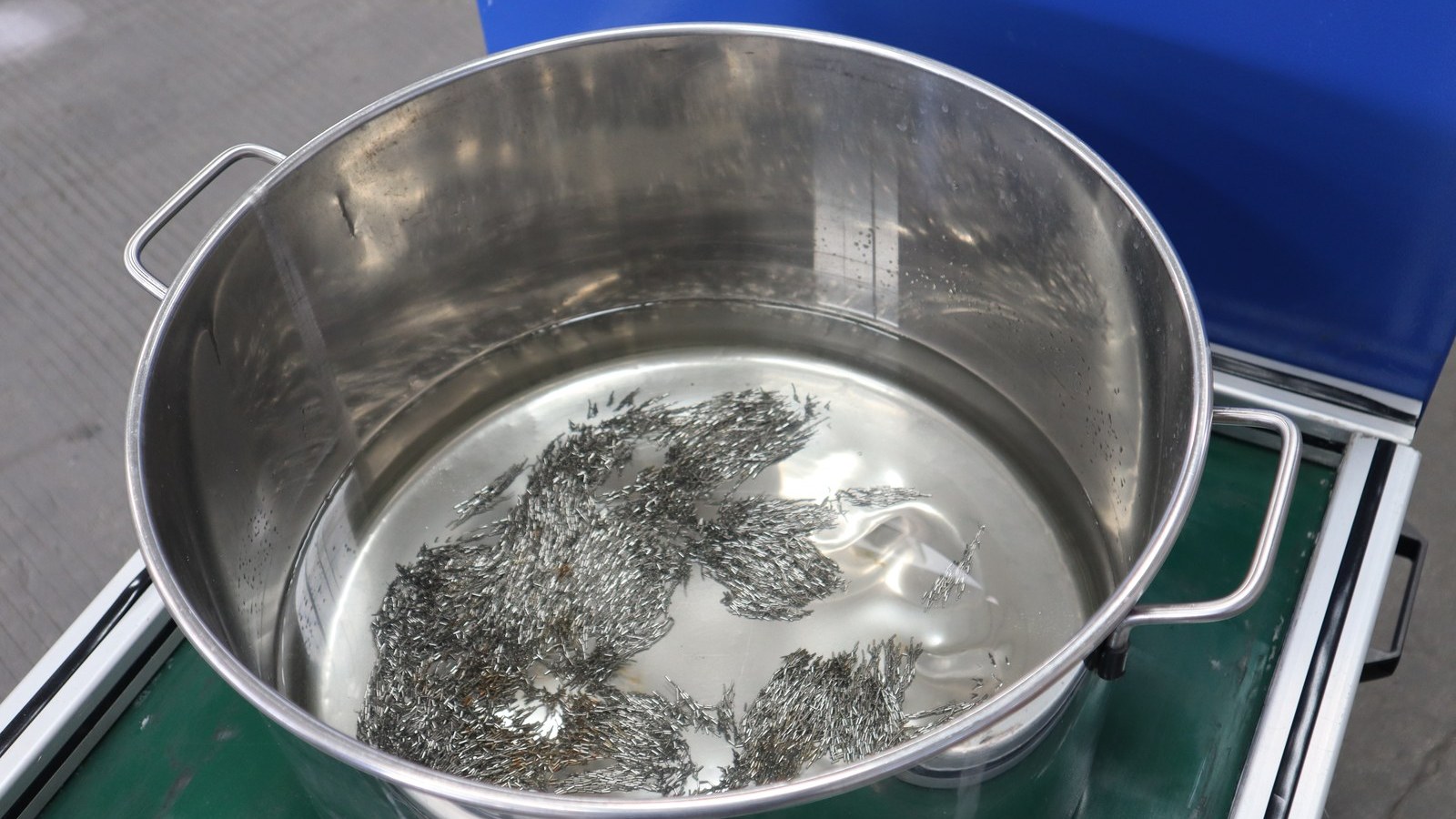
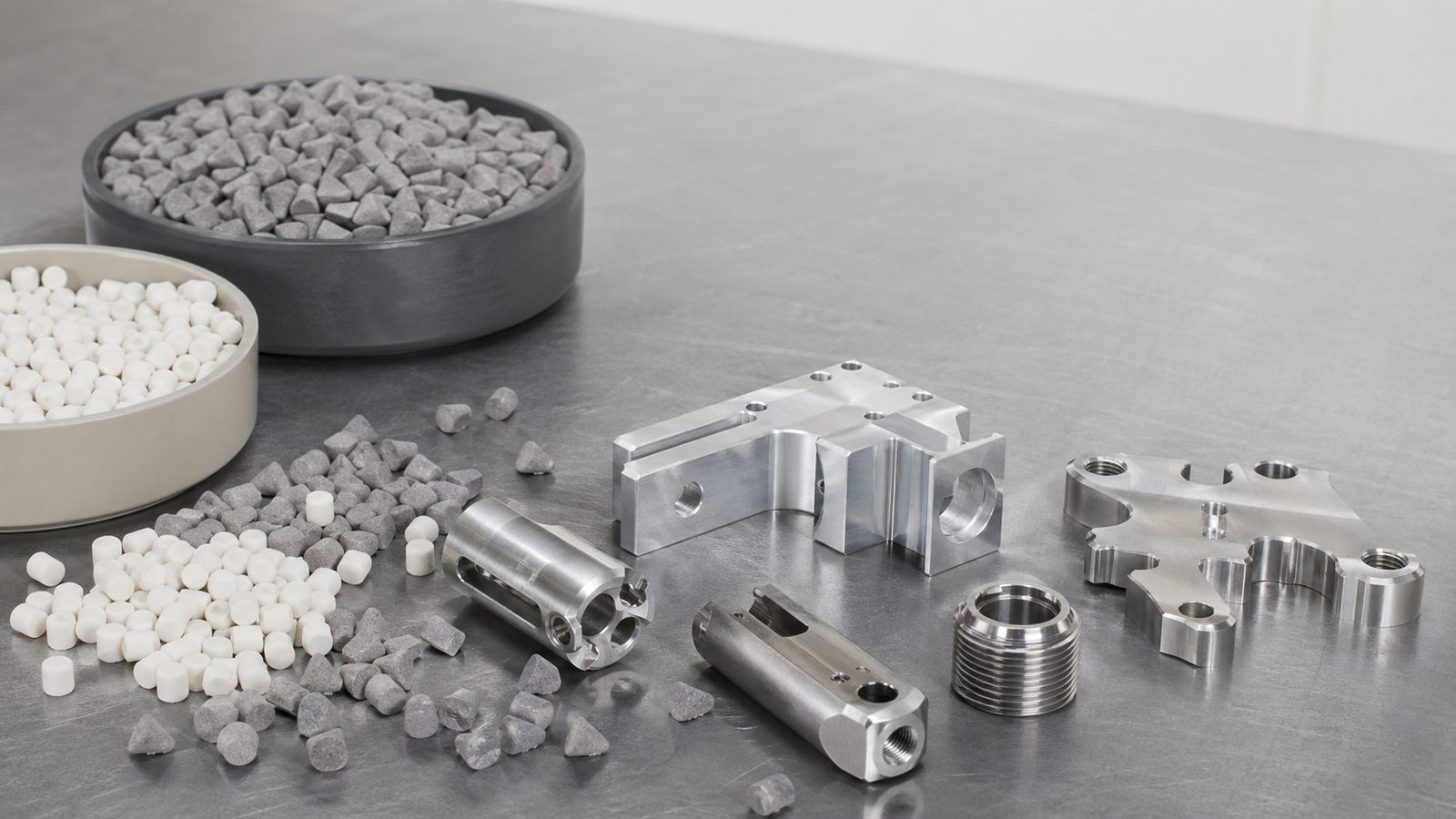
We make the media and the compounds ourselves rather than reselling somebody else's: the grinding media, the ceramic media and the consumables are ours, so the advice that comes with them is advice we can act on. When a result is not right, the first question is whether the charge was right for the material, and that is a question we can answer without looking it up.
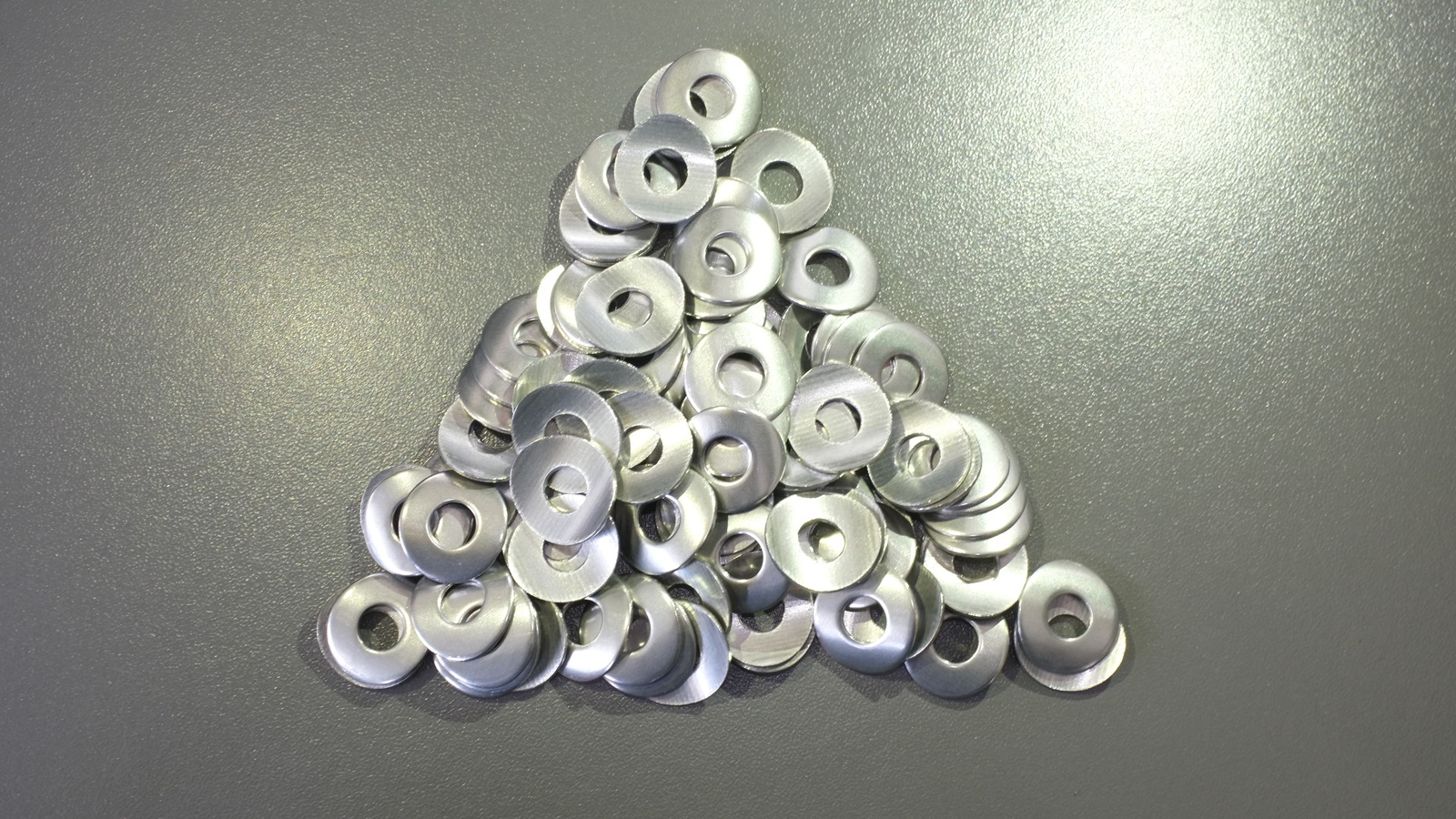
What is in the crate
Each machine leaves with the settings proved on the bench, the manuals, the arrangement drawings, the spare parts list and the installation paperwork. We would rather a customer could put a machine into production without us than have them call every time the same question comes up.
Commissioning, wherever the machine is
A machine that runs in Xiamen can behave differently in another workshop, because the supply, the room and the operator are different. We commission in person and leave the settings written down for the next shift.
Inside the plant
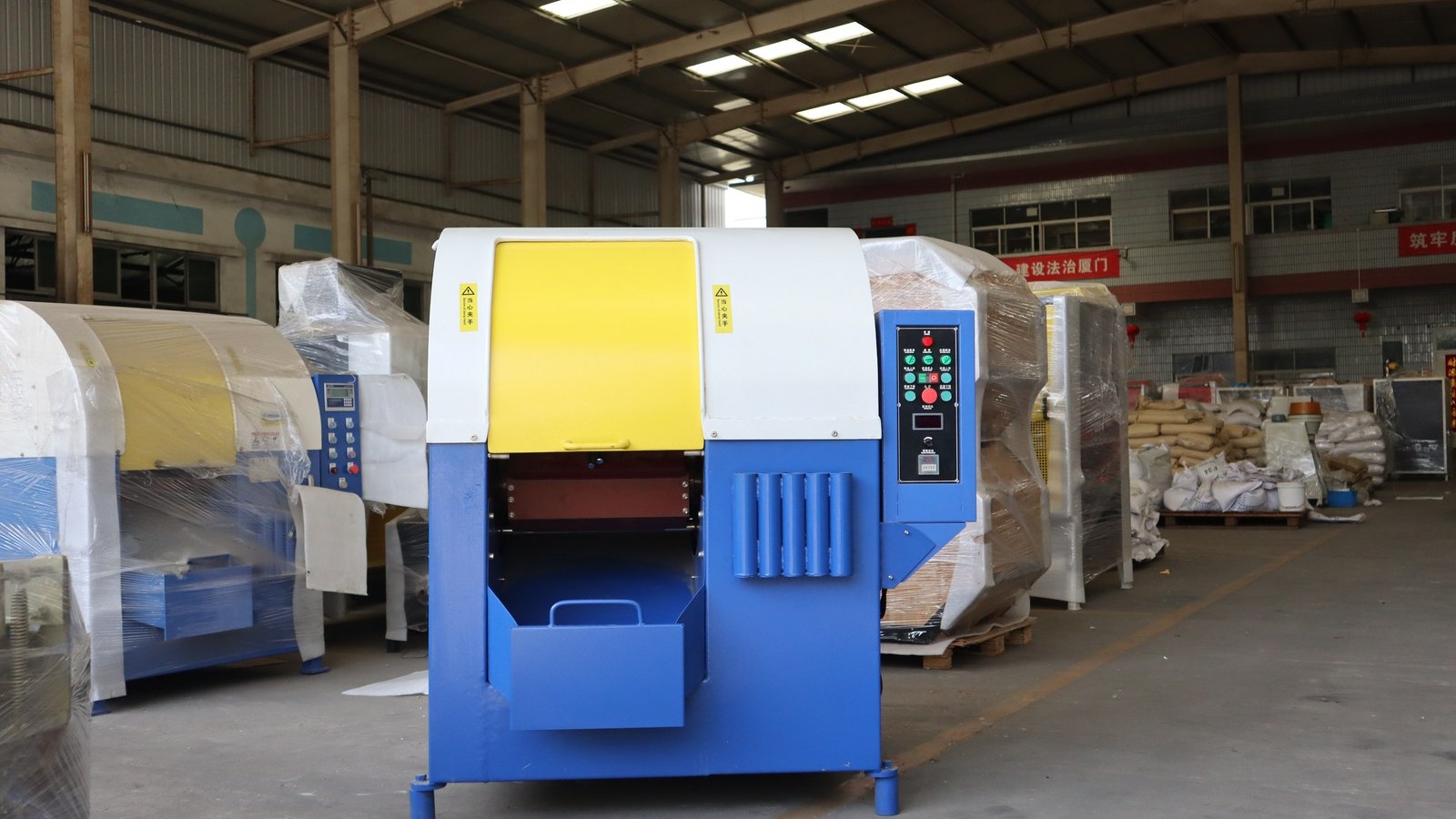
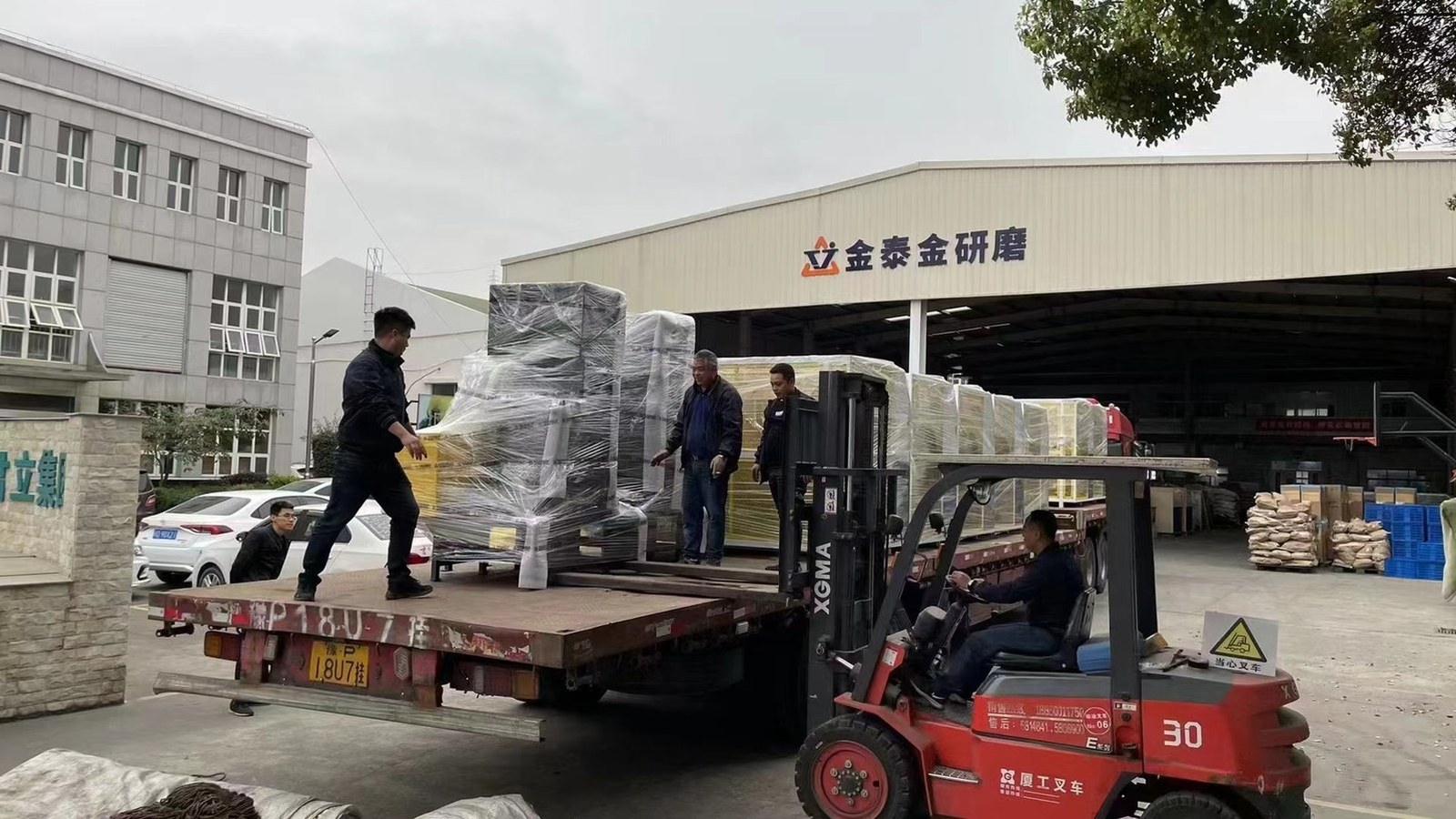
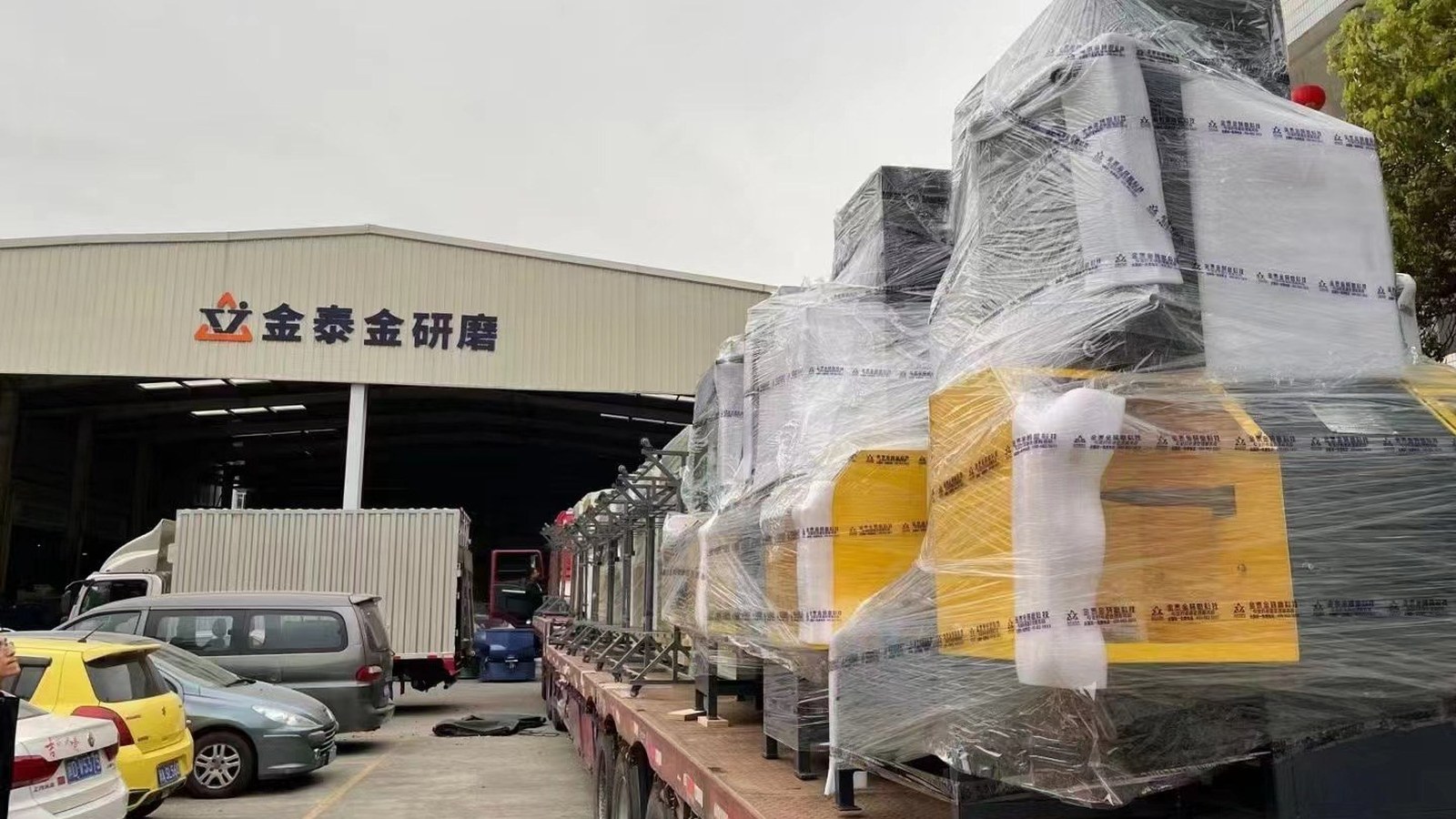
The photographs below are of this workshop, grouped by what each one shows: the machine lines, then the machining, assembly and dispatch bays. A buyer reading a factory page is usually settling one question — whether this is a works that builds machines or an office that forwards them — and that reads off the floor.
The machine lines
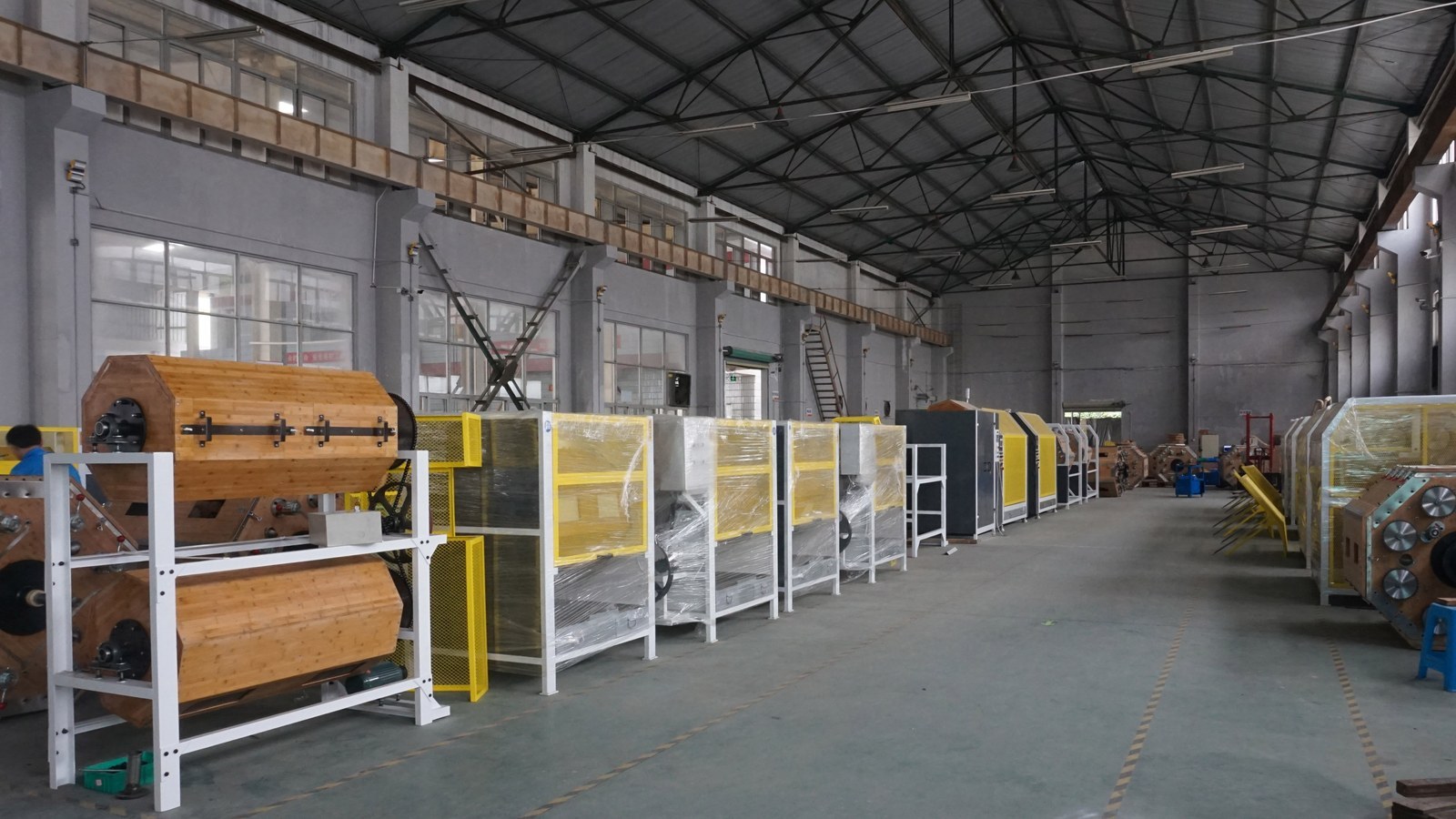
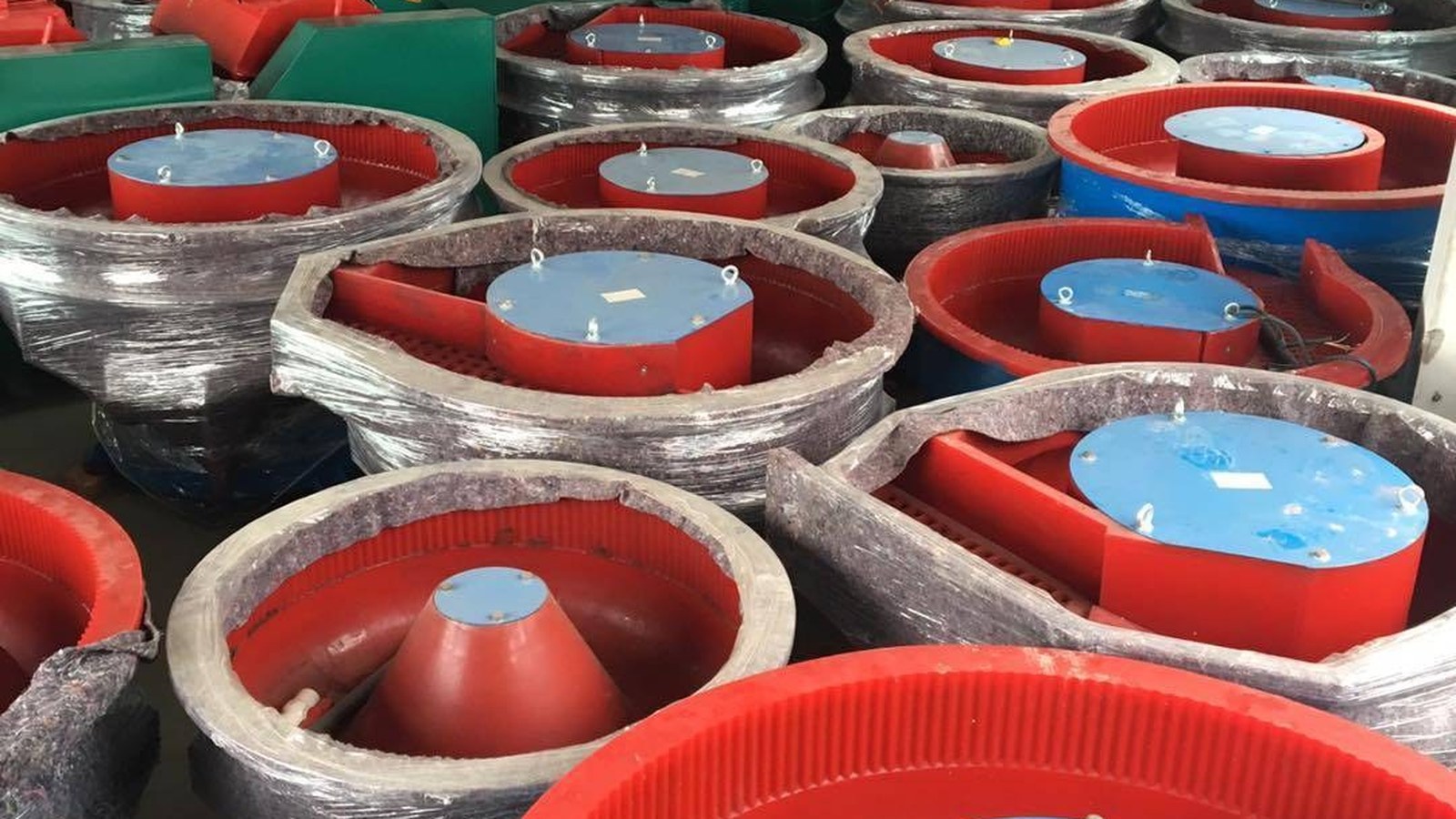
Machining, assembly and dispatch
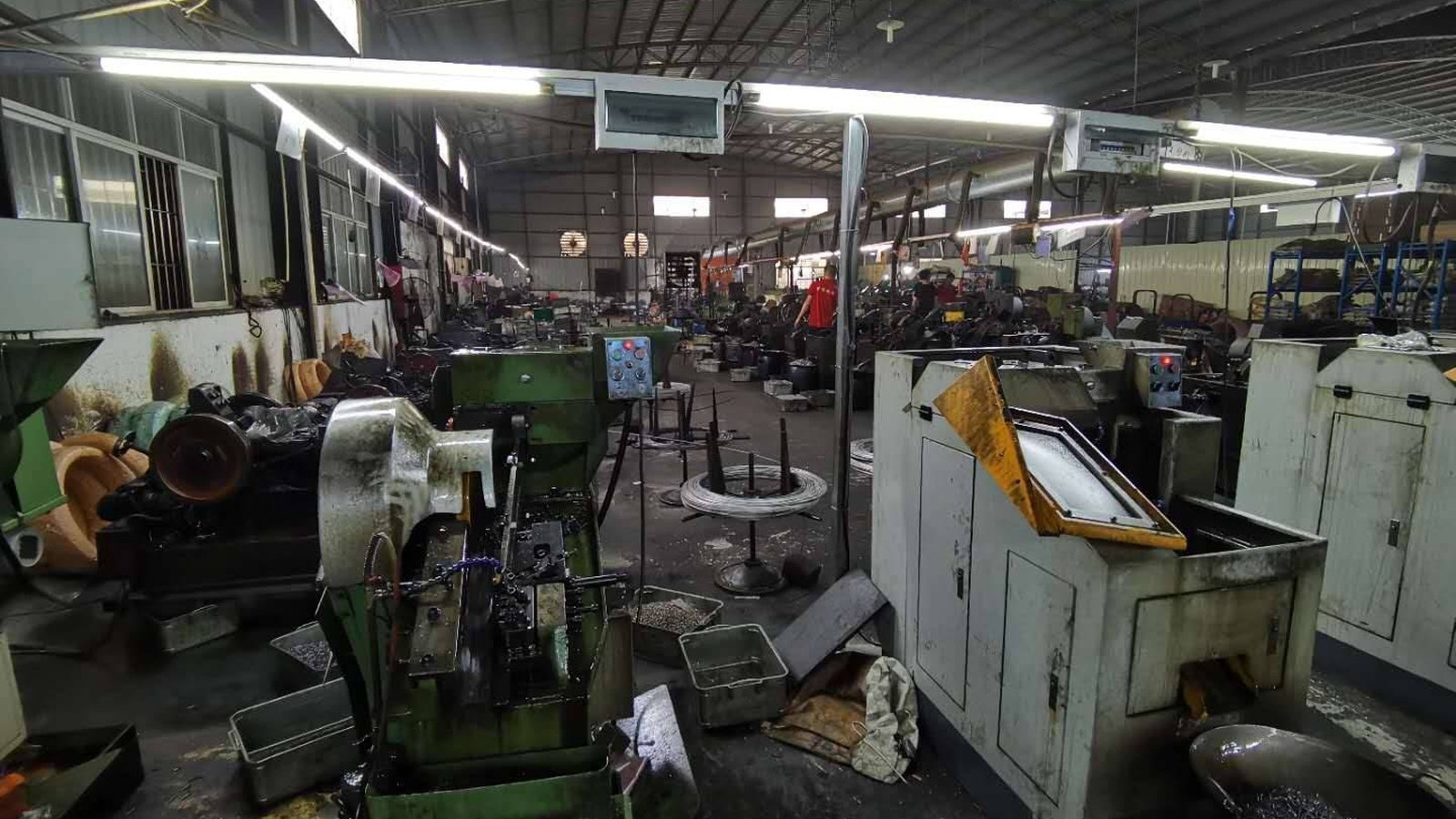
Certifications and patents, in three groups
Sixteen certificates are printed below in three groups: the machinery attestations, the quality management certificate, and the patent certificates. Each carries a number and a date, and the pages no longer in force are shown with that said plainly. The numbers are also collected on the Certifications and Patents page.
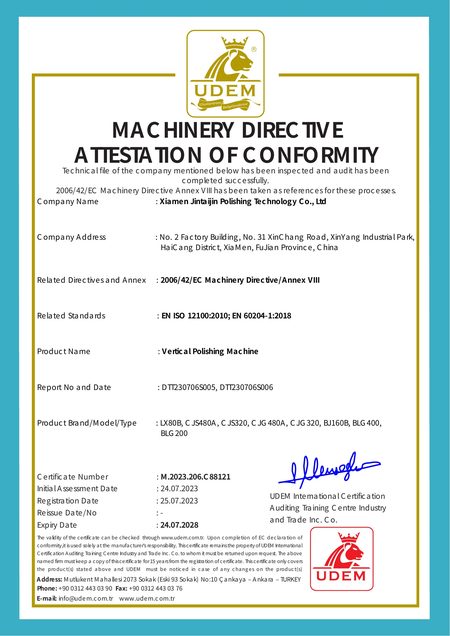
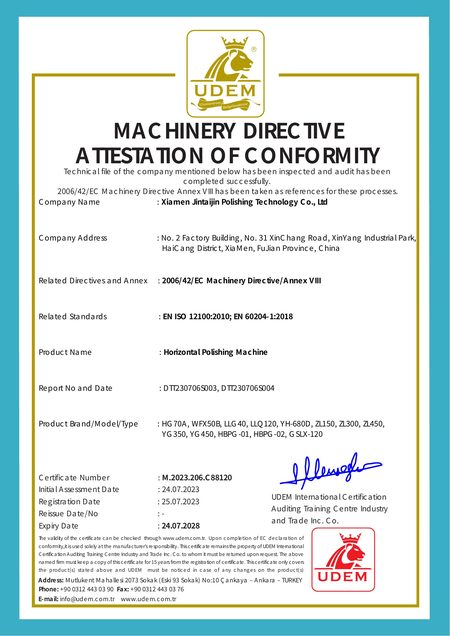
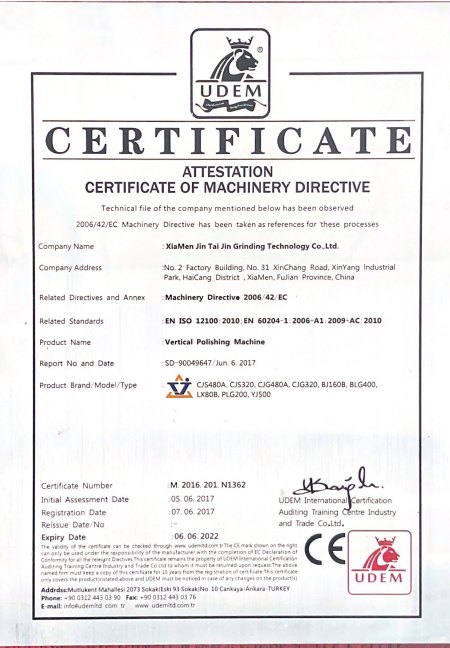
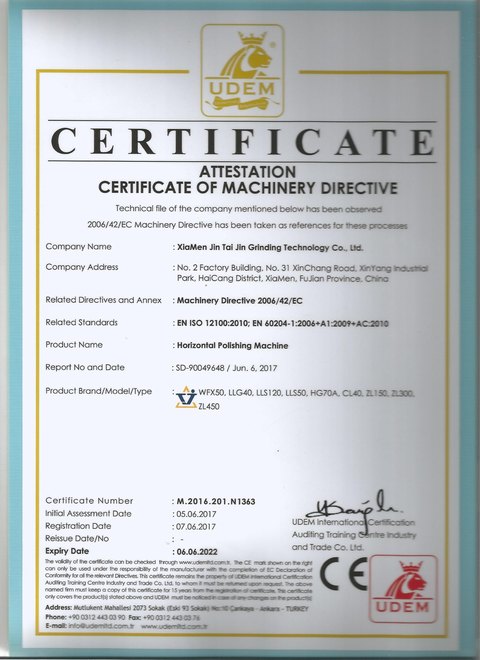
Machinery conformity — CE attestation M.2023.206.C88121 and M.2023.206.C88120
Both attestations were issued by UDEM International Certification Centre against Machinery Directive 2006/42/EC, with EN ISO 12100:2010 for mechanical safety and EN 60204-1:2006+A1:2009+AC:2010 for the electrical equipment. Reports DTT230706S005 and DTT230706S006 cover the vertical polishing machines, reports DTT230706S003 and DTT230706S004 the horizontal ones.
Each certificate number exists in two issues, and both are shown. The 2023 issue of each was assessed on 2023-06-05, registered on 2023-06-07 and is valid to 2028-06-06. The 2017 issue of each was assessed on 2017-06-05, registered on 2017-06-07 and expired on 2022-06-06. The expired pages are here on purpose: shown only the current certificate, a buyer cannot tell whether the earlier one was replaced or withdrawn.
Quality management — GB/T 19001-2016 / ISO 9001:2015, certificate 00726Q01571R001
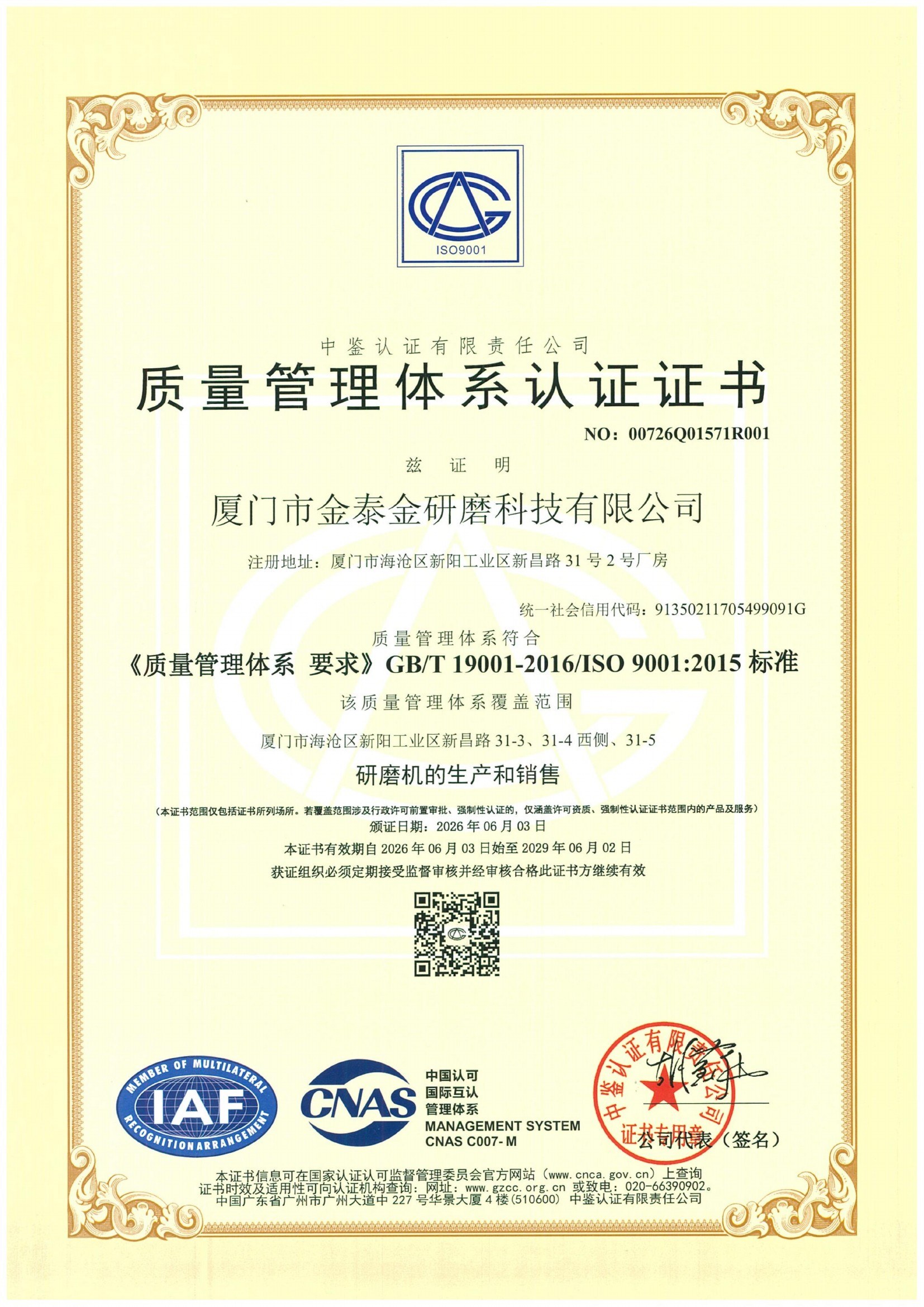
The quality management system was certified by Zhongjian Certification Co., Ltd. to GB/T 19001-2016 / ISO 9001:2015, certificate number 00726Q01571R001, scope covering the design, development and production of grinders. The certificate prints a term of validity from 2026-06-03 to 2029-06-02 inclusive, and that printed term is what is quoted here rather than a claim about its status today. If you need the current position before you quote, ask us and we will tell you where it stands.
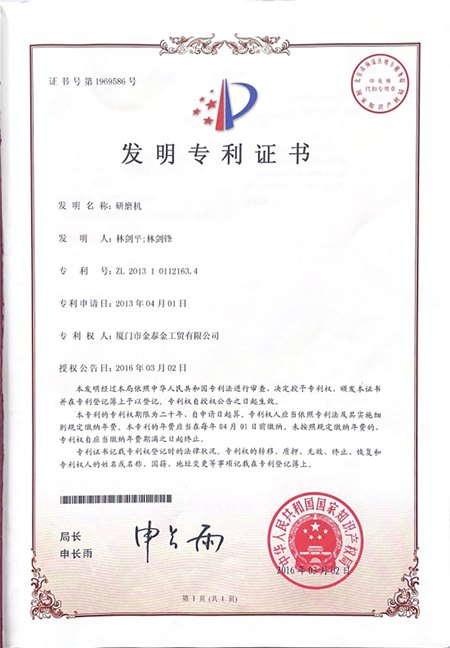
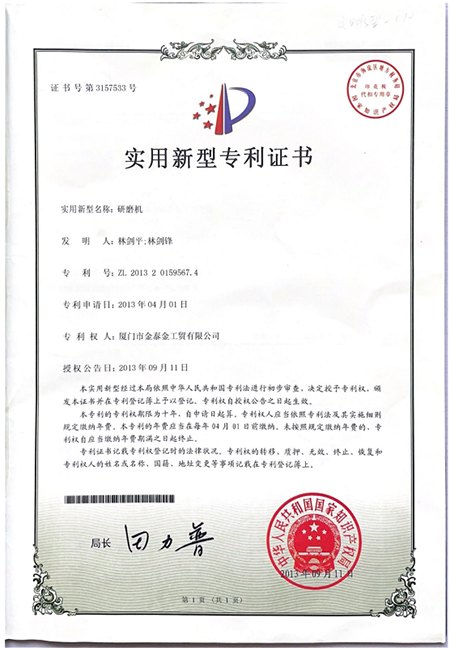
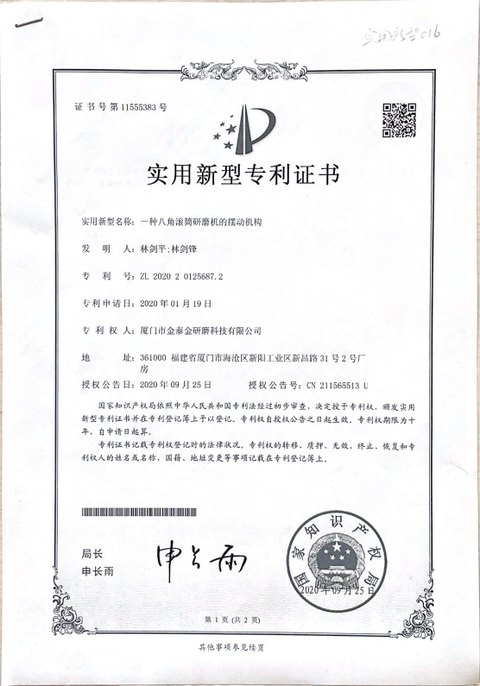
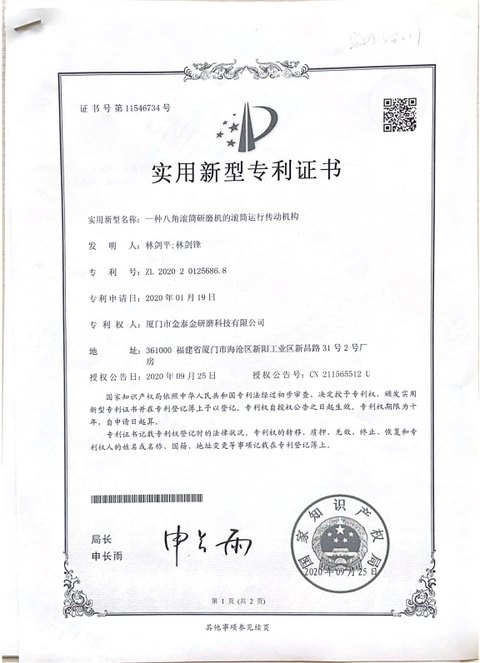
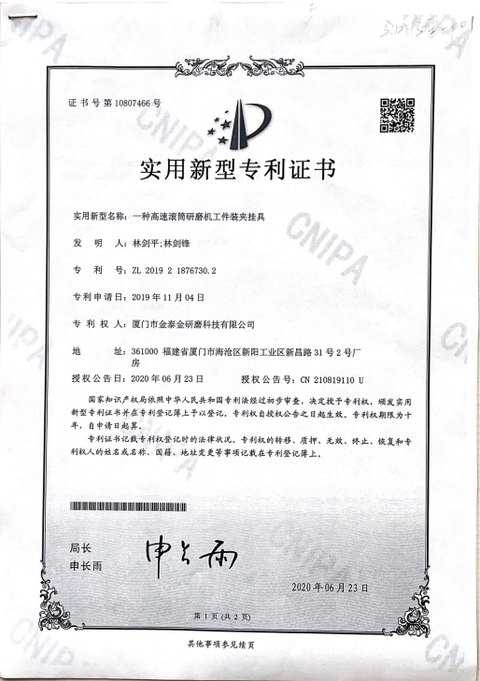
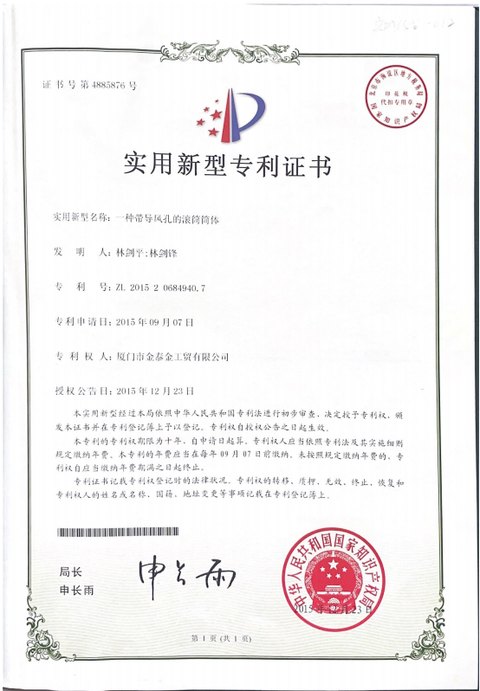
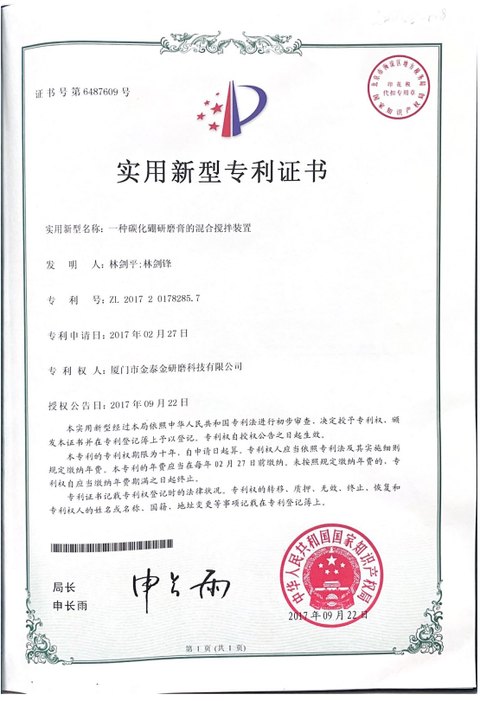
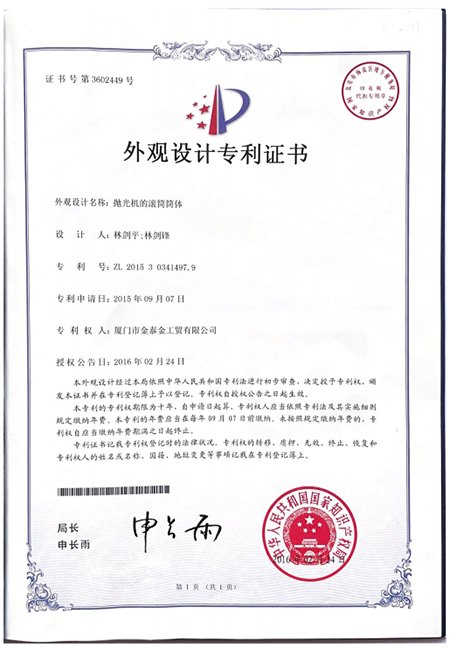
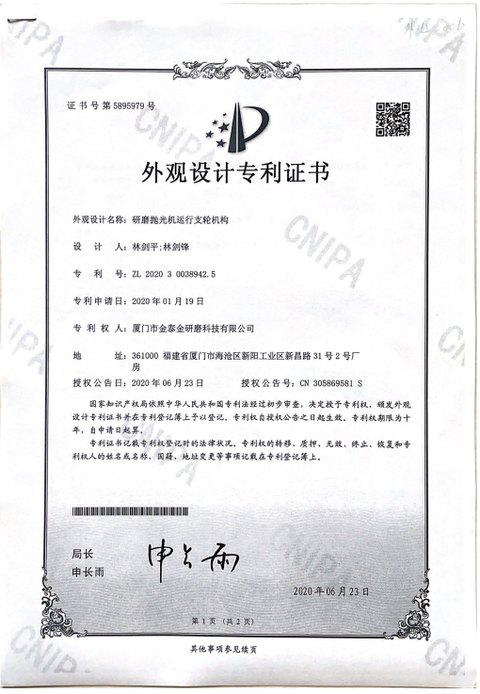
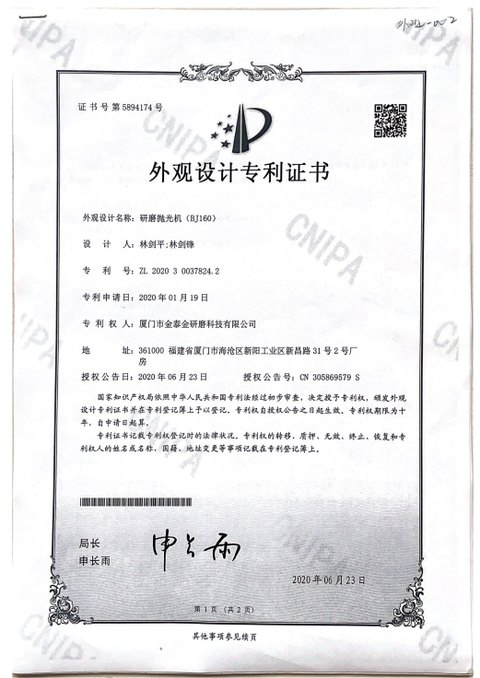
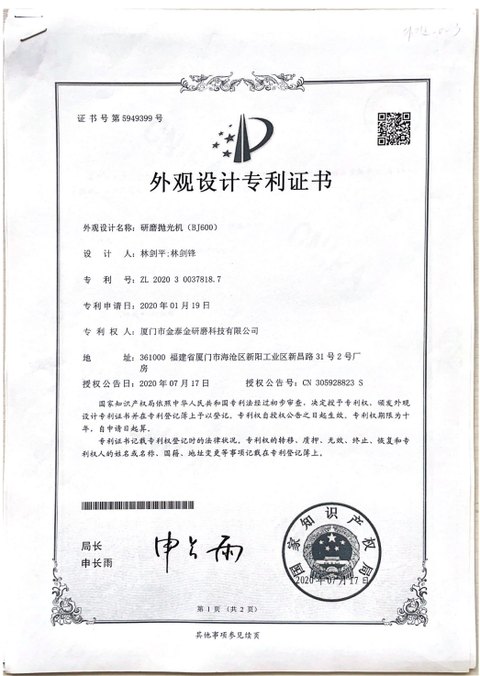
Patents — twenty-four granted rights, of which six are designs
The group holds twenty-four granted intellectual property rights and the breakdown matters: one invention, seventeen utility models and six designs. A design protects the appearance of a machine or a part rather than a technical solution, so the six are counted as rights of their own kind — twenty-four granted rights in total, not twenty-four patents.
Eleven of the certificate pages are printed below: the invention, six utility models and four designs. The full set, with the patent number, the filing and grant dates and the holder of record for each, is on the Certifications and Patents page.
The figures we can give you today
Five numbers a buyer usually asks for are not ours to publish yet: the floor area, the number of people on the team, the monthly output, the share of output going outside China, and the machine platforms we own rather than build to order. They are being confirmed by the business and will be added as figures rather than estimates.
Everything else we publish is on this page, on the company profile page, or in the finishing machine FAQ, and it can be checked against the documents behind it.
Talk to us about your part
Send a photograph of the workpiece, the material and the finish you need. We will come back with the machine, the media and the cycle time we would use for it, and we will tell you when the answer is that a different process is the right one.
Send us your part
Send a photograph of the workpiece, the material and the finish you need. We will come back with the machine, the media and the cycle time we would use for it.
Send your part → +86-592-2381506


 IPv6 network supported
