Disc Finishing Machines
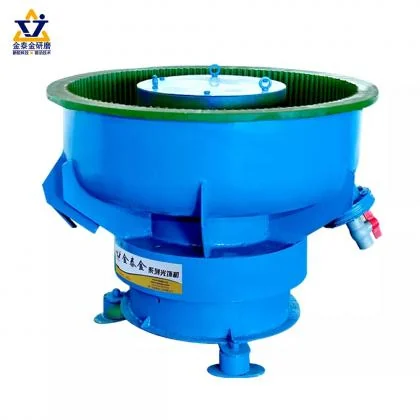
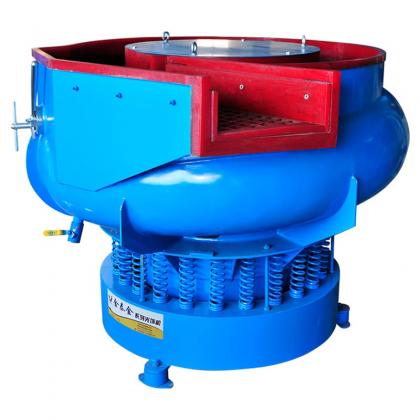
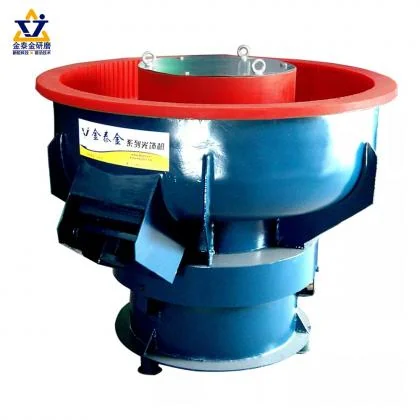
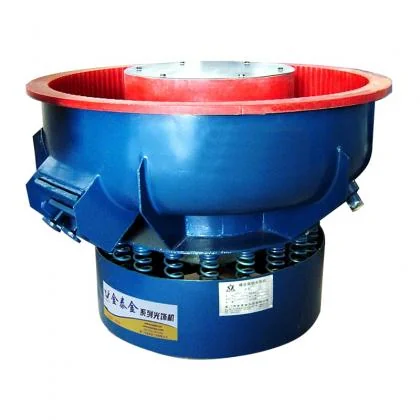
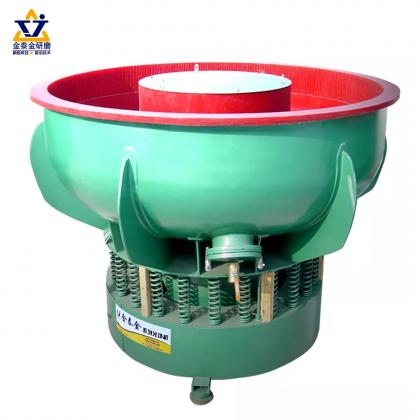
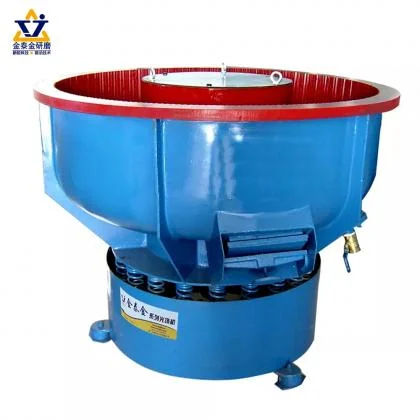
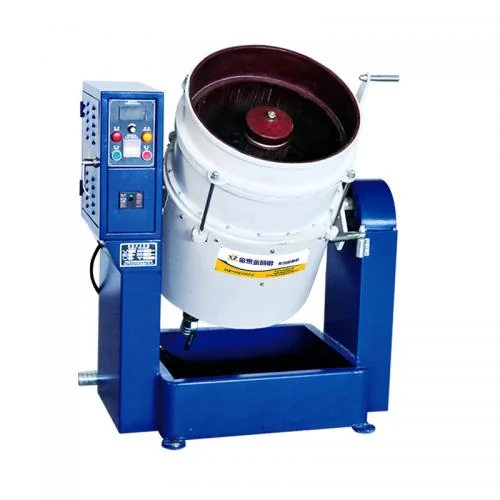
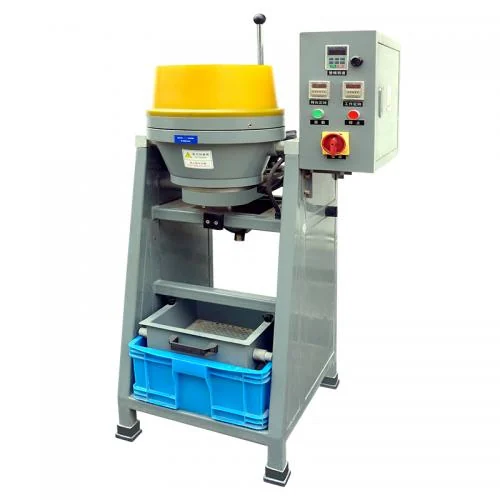
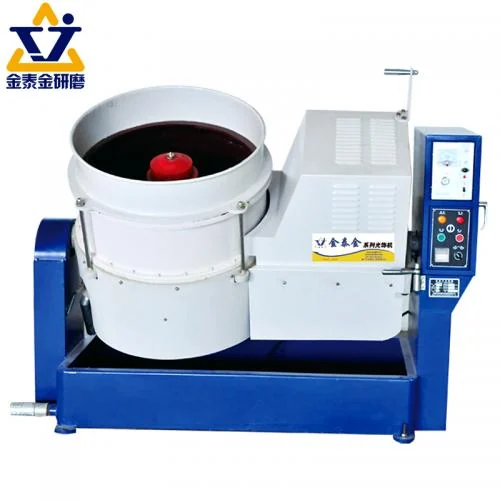
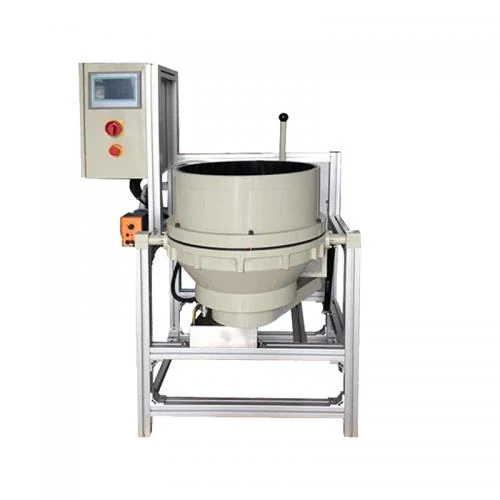
Mass Polishing's centrifugal disc finishing machine uses centrifugal force to create smooth, polished finishes on parts and components. The machine rotates a disc at high speeds, between 1,000 and 4,000 RPM, causing the media to move outward and grind against the parts. Easy to use and maintain, this cost-effective solution is ideal for various finishing applications.
Email : info@surface-polish.com


A disc finishing machine is a high-energy mass finishing system: a rotating disc at the bottom of a bowl drives a media charge upward along the bowl wall, and parts are processed in the fast-moving mass rather than being tumbled slowly. That geometry is what makes it different from a vibratory bowl — and it is also what limits the parts it can handle.
The working principle is a single rotating disc set at the bottom of a stationary bowl. The disc spins at high speed, and friction between the disc and the media charge throws the media upward in a toroidal (donut-shaped) flow. Parts placed in the bowl are carried through the media at speeds a vibratory bowl cannot reach.
Three consequences follow directly from that geometry:
| Application | Why the disc suits it |
|---|---|
| Deburring small to medium parts in volume | High media velocity cuts burrs fast; short cycles suit batch throughput |
| Edge radiusing | The aggressive media path produces a consistent radius rather than a random one |
| Surface refinement before plating or coating | Repeatable finish across a batch because the whole load sees the same media flow |
| Jewellery and small precision components | Small bowl sizes suit small parts, and cycles are short enough for hand-in-hand operation |
The same high energy that makes the disc fast also makes it unforgiving. Three cases where it is the wrong choice:
| Variable | What it controls | What to check |
|---|---|---|
| Bowl volume and disc diameter | The largest part that can circulate, and the batch mass | Part dimensions against bowl diameter with clearance for media |
| Disc speed and motor rating | The energy available — and therefore the cutting rate | Whether the finish target needs high energy or a controlled lower setting |
| Media type and size | Whether the media can reach the feature and how much it cuts | Ceramic for aggressive cutting, plastic for softer metals and finer finish |
| Compound and dosing | Cleaning, cooling and the final brightness | Whether the process needs a cutting compound, a burnishing compound, or both in sequence |
All three are mass finishing processes, but they trade energy against control differently:
| Process | Energy | Cycle time | Best for |
|---|---|---|---|
| Disc | Highest | Shortest | Fast deburring and radiusing of small-to-medium parts |
| Centrifugal barrel | High | Short | Higher energy without the disc's part-size ceiling |
| Vibratory bowl | Moderate | Longer | Gentler processing, larger parts, and processes needing close control |
The choice is not about which machine is "better" — it is about which energy level the part and the finish target can tolerate. A part that needs the disc's cutting speed is usually a part that has enough material and enough robustness to take it.
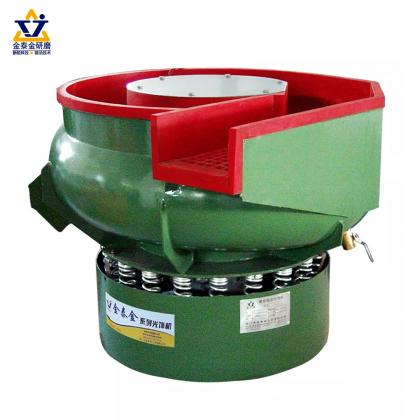
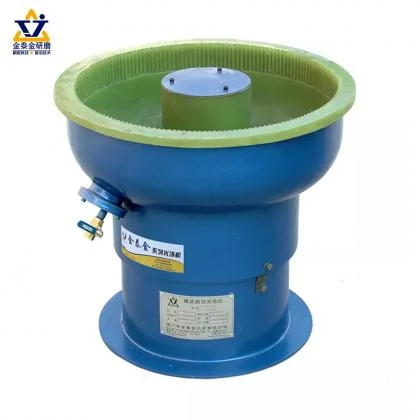
The models in this range differ in bowl volume and disc drive, which together set the batch size and the available energy. Rather than publish a list of capacities, the useful question is which model suits a specific part — the answer depends on part geometry, the burr to remove, and the finish the part is allowed to have.
Four inputs decide the machine, and three of them are about the part rather than the machine:
Send those four and the machine selection follows. Send only a model number and the selection is a guess.
A disc machine uses a rotating disc at the bottom of a bowl to drive media at high velocity; a vibratory bowl uses a vibrating motor to move media more gently. The disc cuts faster but handles smaller parts; the bowl is slower but more forgiving and accepts larger parts.
Not generally. They cover different parts of the same job. A disc machine is chosen when speed matters and the part can take the energy; a bowl when the part is large, delicate, or the finish needs close control.
Typically minutes rather than tens of minutes, because the media velocity is high. The exact cycle depends on the burr size, media, and finish target — it is set by a trial on representative parts, not by a table.
Ceramic media for aggressive cutting and edge radiusing on harder metals; plastic media for softer metals, aluminium, and where a finer finish or less material removal is needed. Media size has to be small enough to reach the feature without lodging in it.
Yes — the same energy that cuts a burr quickly will mark a polished face, round an edge that had to stay sharp, or distort a thin section. That is why the parts that suit a disc machine are the ones with enough material and robustness to take the energy.
Part material, largest and smallest dimensions, the feature that must be preserved, the incoming burr or surface condition, the finish target, and the batch quantity. A model recommendation without the part geometry is a guess.
Send the part details and the finish requirement. The useful inputs are the geometry with features to protect, the starting condition, the finish the part is allowed to have, and how the result will be inspected. The machine follows from those, not the other way round.
We manufacture disc finishing machines and the media and compounds for them. Specifications describe the listed range; confirm the exact configuration and cycle for your part with a trial on representative parts.
 IPv6 network supported





 +86-592-2381506
