A buyer in Coimbatore, India finishing a 6061-T6 instrument housing for medical devices has to hold two requirements at once: a satin face the customer will see, and an O-ring groove edge that must stay within a stated radius. SurfacePolish supplies finishing machines, media and compounds across borders and runs a free sample trial on the parts the buyer sends. This brief is written for a buyer in Coimbatore working on medical devices; it describes equipment, media and a scoped sample review, not a local polishing service.
What is the minimum wall thickness and unsupported span, and which internal features could trap media?
What downstream operation follows finishing, such as anodising, laser marking, bonding or assembly, and what does it require of the surface?
What edge radius or chamfer is allowed at each mating, sealing and press-fit feature, and how will it be measured?
A finishing route is only as good as the parts fed into it, so characterise the starting condition first. Note the machining process, the depth and direction of tool marks, whether the part was linished or hand-sanded already, whether it carries heat-treat scale or an as-cast skin, and which surfaces were scratched in handling. A batch of mixed starting conditions produces a mixed finish, because a cycle that removes a twenty-micron tool mark on 6061 will not remove a deep gouge without rounding the part. Record batch size, the mix of part numbers and the quantity of each, since an underloaded bowl or barrel runs differently from a full one. Segregate parts by alloy, by temper and by pre-finish condition before they enter the same machine.
Aluminium reacts to both strong acid and strong alkali, so compound chemistry deserves more care here than on steel. A mildly alkaline or near-neutral cleaning and burnishing compound with a suitable inhibitor is the usual starting point for aluminium, because a strongly alkaline product etches the surface, darkens it and attacks exposed edges, while a strongly acidic one can pit it and leave smut. The compound also carries debris and controls foam, lubricity and rinsing, so concentration and flow rate matter as much as family. Water quality is part of the chemistry: hard water leaves mineral spotting and deposits, chloride content in the supply raises a corrosion concern on aluminium, and a recirculated system concentrates fines and dissolved metal over time. Set a working range for concentration, pH and flow, then monitor and correct it during the shift.
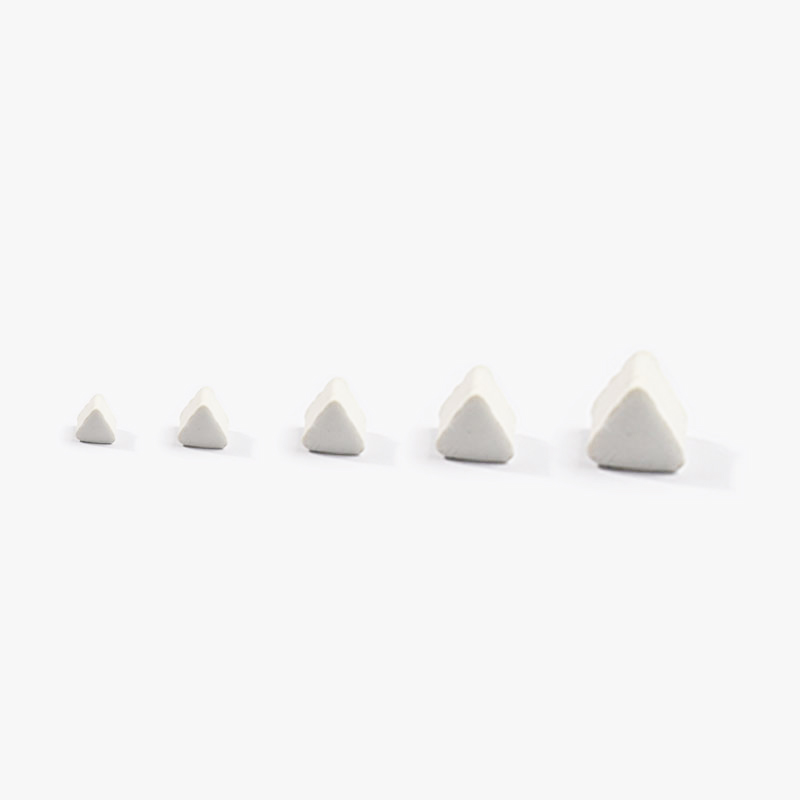
| Media | Best fit | Watch out for |
|---|---|---|
| Dry media, corn cob with a polishing compound charge | Final dry polish and drying assistance on small aluminium parts where a wet rinse and dry would leave spotting | Compound loading saturates with use and the media cakes; the charge needs regular replacement, and soft aluminium can still smear |
| Plastic-bonded media, ball and ellipsoid shapes | Surface refinement and blending on cosmetic aluminium faces where edges, seal lands and dowel bores must stay close to drawing | Removes very little edge material, so a burr at a bore exit or a thread crest may survive the cycle and need a separate step |
| Ceramic media, spheres and low-density ceramic, fine size class | Bright surface development and light edge work on small aluminium components with mixed cosmetic and internal features | Fine media lodges in blind holes, cross-drillings and thin-wall pockets and is harder to screen out of the load |
| Ceramic media, angle-cut triangles, medium size class | Heavy-cut deburring on cast or robust aluminium parts where the machined surface will be finished again or is not appearance graded | Rounds functional edges quickly and can chip or peen thin walls; not suitable where a sealing land or press fit is exposed |
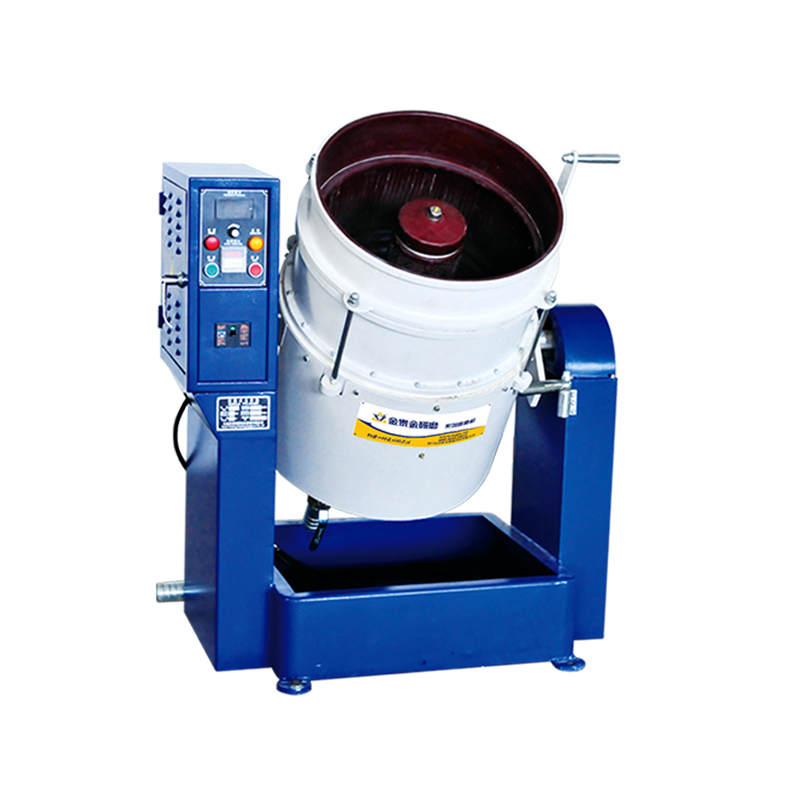
A rotary barrel tumbles the load under gravity at comparatively low energy, which makes it a reasonable route for small precise aluminium parts that must not be peened, distorted or made to impinge on each other. It suits high-volume small components such as connector bodies, pins, small fittings and thin machined parts where the requirement is a consistent light deburr and surface refinement rather than heavy stock removal. Two costs come with that gentleness: cycles are longer for the same result, and parts with flats, pockets or low mass can slide rather than tumble, so one face may receive almost no work. Barrel loading, rotational speed, media-to-part ratio and compound quantity all change the result, and an overloaded barrel simply rotates with the mass instead of working it.
| Machine route | Where it fits | What it will not do |
|---|---|---|
| Tub vibrator | Long and large aluminium parts such as extruded frames and housings that can be oriented in a linear working channel | Slower uniform coverage, a tendency for parts to settle in one attitude, and greater floor space and media volume than a bowl |
| Grinding finishing machine | Higher material removal on aluminium parts that need a heavy burr or a pronounced chamfer removed before a gentler finishing step | Aggressive on soft aluminium, difficult to control on cosmetic faces and functional edges, and not a finishing step on its own |
| Magnetic finishing machine | Small aluminium parts with fine internal features such as cross-holes, slots and recesses that tumbling media cannot reach | Small working envelope and low throughput; pins and fine media can lodge in blind features, and mixed part families are awkward |
| Disc finishing machine | Fast burr removal and edge radiusing on robust aluminium parts where a short cycle and high material removal matter most | High part-on-part contact and impingement risk; smears soft 6061, is hard to localise, and adds fixturing labour to every cycle |
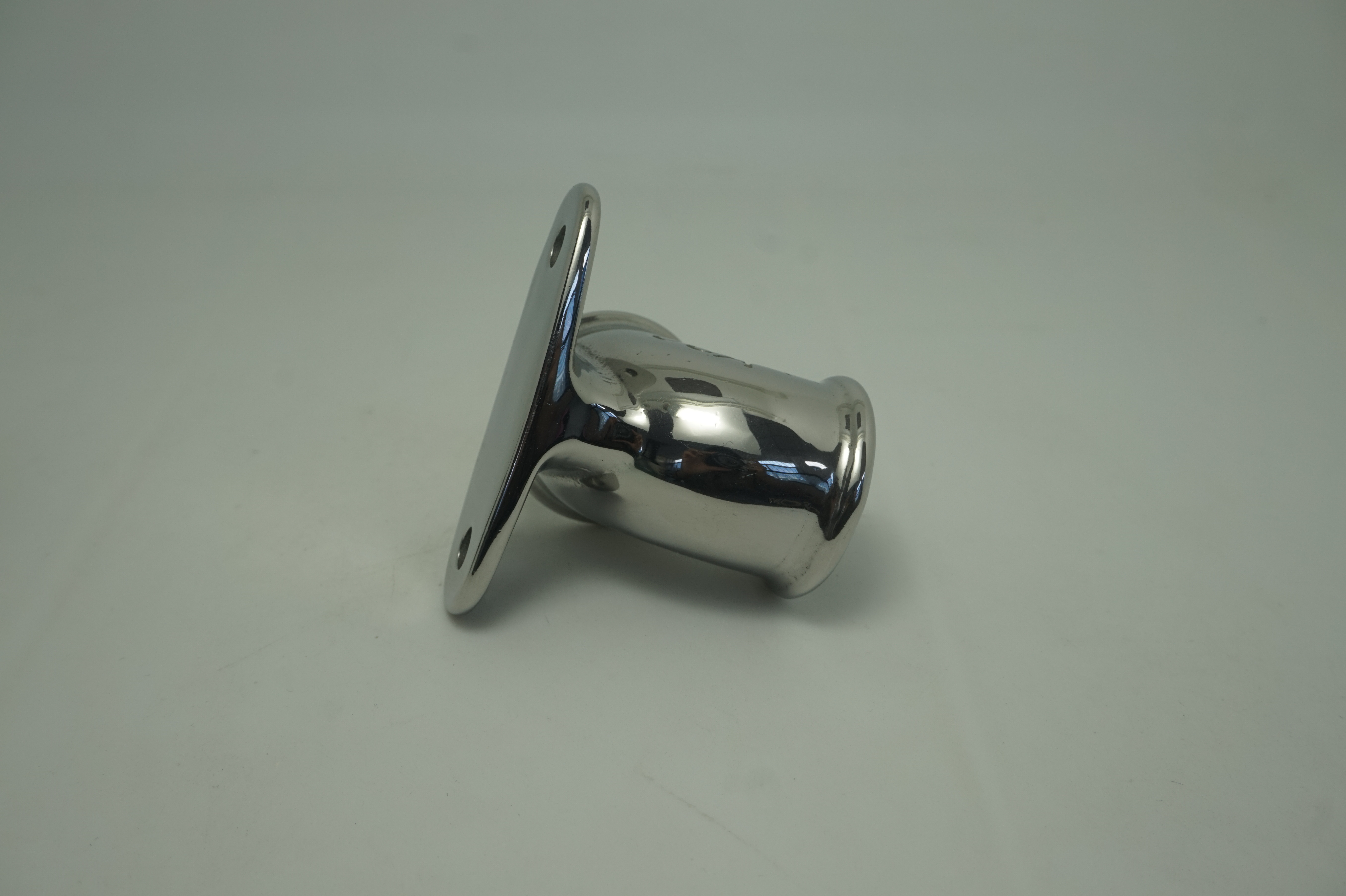
Aluminium can leave a finishing cycle looking worse in colour than it went in. Over-alkaline compound etches and darkens the surface; hard water leaves mineral spotting that dries into rings; iron transferred from steel media or worn machine parts appears as black smut or scattered dark specks; and a slow or hot dry lets an oxide film form unevenly across a face. Castings with porosity are especially prone, because they hold liquid and release it later as a bloom. Check the part dry, under the lighting the customer will use, and compare against a retained reference part rather than memory. Control compound pH and concentration, rinse with controlled water quality, dry promptly and completely, and keep steel out of the aluminium loop. A stain found after anodising or packaging has already cost the value of the part.
| Failure mode | Likely cause | How to catch it |
|---|---|---|
| Dents, peening marks or a hammered texture from part-on-part contact | Excessive energy for the part mass, under- or over-loaded charge, no fixture to control part attitude, hard or oversized media | Inspect a full-face view under low-angle light and a cross-section of a dent under a toolmaker's microscope to confirm plastic deformation |
| Finish bloom or speckle, or poor laser mark contrast, revealed after anodising or marking | Embedded media, a silicate or residue film, a directional texture that marks unevenly, or an oxide layer from a slow dry | Evaluate the appearance on a coated or marked sample rather than bare metal, and compare marking contrast on parts from different positions in the load |
| Sealing land or dowel bore edge rounded past the drawing limit | Long or energetic cycle on an unprotected functional edge, sharp-edged media, cumulative material removal across repeated passes | Measure the edge with an optical comparator or radius gauge on a cross-section, or compare a CMM scan of the feature before and after finishing |
| Damaged thread or media wedged in a thread root | Threads left exposed to the media field, sharp media entering the crest, insufficient plugging or masking of ports before the cycle | Run a go and no-go gauge through every sampled thread and inspect the root with a borescope or a thread impression |
Coimbatore is an engineering city. Its district administration states that the pump and motor manufacturing sector is among the largest engineering activities in the city and that the industry supplies over 40% of India's requirements, which is why Coimbatore is called the pump city of Asia. The same source records auto-component manufacturing by companies including Robert Bosch GmbH, PRICOL, Craftsman Automation and Roots Industries, more than 700 wet-grinder manufacturers, and a gold-jewellery and diamond-cutting base, while the Airports Authority of India records more than 25,000 small, medium and large industries and textile mills in the city and notes its motor pump sets and varied engineering goods. LMW Limited (formerly Lakshmi Machine Works), registered at Perianaickenpalayam, Coimbatore, runs textile machinery, machine tool and foundry divisions and has added an Advanced Technology Centre to manufacture components for the aerospace industry. India's pump manufacturers' association, IPMA, states that almost all major Indian pump manufacturers are its members.
The nearest part of that base to this brief is aerospace: LMW Limited, registered at Perianaickenpalayam in Coimbatore, states that it added an Advanced Technology Centre to manufacture components for the aerospace industry.
Pump and motor manufacture involves cast and machined parts — impellers, casings, shafts and end covers — where burrs and edge condition affect flow, fit and seal performance, and where media or compound residue left in internal passages is a rejection risk. The district's foundry and precision-machining base also produces automotive and aerospace components that are inspected for edge quality and surface finish. Because the same finishing machine behaves differently on cast iron, aluminium and stainless steel, process selection normally starts from the material and geometry of the actual part.
A Coimbatore pump or motor maker should settle the acceptance criterion first — edge or radius control on a machined feature, or a finish value on a sealing or flow surface — and then confirm by trial that the selected media and compound do not embed in cast iron or aluminium or leave residue in internal passages.
Freight context: Coimbatore International Airport (Airports Authority of India). Coimbatore International Airport is AAI-maintained, and AAI's airport directory lists Coimbatore among operational airports; district freight otherwise moves by road and rail within Tamil Nadu. Imported finishing machines and sample parts are cleared under the standard Indian customs procedure — bill of entry, plus BIS compliance where the product is notified.
India's foreign-trade, customs and standards machinery works in English: the Foreign Trade Policy, DGFT's IEC and scheme material, the BIS standards catalogue and Invest India's investor guide are all published in English, and the mandatory import documents are the internationally conventional bill of lading, commercial invoice cum packing list and bill of entry (c1, c3, c6, c10). Payment in the import channel is bank-intermediated; the Foreign Trade Policy treats the irrevocable commercial letter of credit as the instrument that fixes an importer's commitment when import policy changes (c4), so a supplier should expect LC or advance terms rather than open-account credit on a first order. Indian industry associations are explicit about import substitution: the Bombay Chamber of Commerce and Industry states that one of its major focuses today is how to expand manufacturing setups and substitute imported products (c13), so a cross-border equipment seller should expect questions about local support, spares, training and total cost of ownership rather than price alone, and should hold the IEC, GST registration, bill of entry documentation and any BIS obligation as part of the commercial discussion.
An Importer-Exporter Code (IEC) issued by DGFT is a key business identification number which is mandatory for exports or imports, and since the introduction of GST the IEC number is the same as the PAN of the firm (c6). The post-incorporation clearance list published by Invest India includes the IEC, a Customs- Special Valuation Branch reference and the grant of a Bureau of Indian Standards (BIS) licence, and it names the Central Board of Excise and Customs among the agencies in the framework (c10). The Foreign Trade Policy fixes the mandatory import documents as a bill of lading / airway bill / lorry receipt / railway receipt, a commercial invoice cum packing list and a bill of entry, with additional documents or NOCs possible for goods subject to product-specific compliance (c3); it also states that domestic laws, rules, orders, technical specifications and environmental, safety and health norms applicable to domestically produced goods apply mutatis mutandis to imports unless specifically exempted (c2), which is the basis on which a BIS quality-control order can bite on imported machinery. A landed-cost plan therefore needs the correct ITC(HS) classification and the basic customs duty and IGST that follow from it, plus the IEC, the bill of entry documentation and any BIS licence or registration obligation, and a related-party import can additionally be pulled into special customs valuation.
SurfacePolish supplies from Xiamen, China. The buyer's own destination rules, conformity marking, tariff classification and documentation responsibilities stay with the buyer; confirm them against the authorities named above before ordering.
Treat the first finished part of every batch as a first article and hold it until it has been checked against the agreed criteria. Record the part number, alloy and temper, the machine and route, the media charge identity and its accumulated hours, the compound and concentration, the cycle time, the load ratio and the drying step. Retain a reference part from the accepted first article, and when a later batch differs, compare the two physically before adjusting anything. Segregate batches by alloy and part number, and keep the aluminium loop separate from steel work so iron cannot transfer onto a soft surface. This discipline, not the machine settings, is what makes a finish reproducible. Who performs the checks and who signs the release is a buyer decision, but the record of what was run is worth keeping.
Send parts that represent the real production condition, not a polished bench sample. A useful set includes the worst case: the thinnest wall, the tightest sealing edge, the deepest tool mark, the casting with visible porosity, the smallest hole and the feature most likely to trap media. Include two or three pieces of each condition so one can be sectioned or inspected internally, and include an untreated part as the comparison reference. Label every part with its alloy and temper, its part number, the surfaces that are cosmetic, the surfaces that are functional, and the edge radius or chamfer allowed at each critical feature. State the current process and the defect that prompted the enquiry, plus the downstream operation such as anodising, laser marking or assembly.
No. SurfacePolish is a cross-border supplier of finishing machines, media and compounds and runs a free sample trial on parts the buyer sends. A trial reports observations on the parts tested under the settings used; it does not qualify, approve or validate a process, and it does not create biocompatibility, cleanability, sterility or regulatory documentation. Any requirement of that kind must be defined by the buyer and verified by the buyer's own engineering and quality functions, usually with the help of specialist testing providers. For a device programme in India, treat the finishing route as one input into the buyer's own verification plan rather than as evidence for it.
Keep the aluminium loop physically separate. Steel media, steel barrels, worn machine parts and shared screening equipment all transfer iron to a soft aluminium surface, and the result shows as black smut, dark specks or a galvanic couple that becomes visible under a coating or after anodising. Dedicated media, a dedicated barrel or bowl liner, separate screens and separate storage are the practical controls, along with a check of the finished surface under directional light. For a plant in India running both steel and aluminium work, the segregation rule needs to cover media storage and top-up stocks, not only the machine, because a shared media bin reintroduces the contamination.
Both alloys can be finished mechanically, but they behave differently. 6061 in T6 cuts and polishes predictably and tolerates a wider media range. 7075 is stronger and harder, tears more readily around machining marks and is less forgiving of heavy media and long energetic cycles. Cast aluminium behaves differently again because porosity and an as-cast skin change how the surface responds. For a part in India, the useful approach is to trial both alloys separately with the same media direction and see where the surface and edge results diverge, then set the route per alloy rather than assuming one setting covers the family.
Use Coimbatore, India as the destination on the enquiry and state whether the deliverable is equipment, media and compound, a representative sample review or a line concept. A destination does not imply local stock, a local service point or a local delivery time.
The national standards body is the Bureau of Indian Standards (BIS), whose certification scheme BIS describes as basically voluntary in nature, with compliance made compulsory for a number of products by the Central Government; IPMA notes that its members prepare drafts for Indian Standards on pumps and motors. Pump and motor buyers commonly reference the relevant IS numbers alongside their own hydraulic, material and surface requirements.
Sources were retrieved on 2026-09-29 and describe the local industrial and trade context only. They do not evidence any SurfacePolish project, shipment, installation or service in Coimbatore.
The buyer needs a uniform satin cosmetic face without rounding the O-ring groove edge or driving media into the threaded bosses.
Send the material, dimensions, approximate weight, batch quantity, the incoming condition and photographs of the difficult features. Mark which features must not be contacted by media and state how the result will be inspected. This form carries source reference PSEO-0983; quote it if you prefer an additional manual reference.
Open the SurfacePolish enquiry form Email a prepared enquiry
No price, lead time, certification or result is promised here. Confirm whether a sample trial is available for the specific part and what the trial can and cannot show.
Page PSEO-0983 · revised 2026-09-29 · cross-border equipment, media and scoped sample review. City context is sourced and cited above.
Use this local checker to identify missing part and inspection information. It prepares a technical-review brief; it does not approve a machine, process recipe or production result.
Complete the part details to prepare a review brief.
Email : info@surface-polish.com


 IPv6 network supported


 +86-592-2381506