A finned aluminium cold plate for medical devices puts two requirements in conflict: a burr-free fin array that must not bend, and a gasket land that must keep its flat seat. A buyer in Edmonton, Canada can send representative plates to SurfacePolish, a cross-border supplier of finishing machines, media and compounds, for a free sample trial. This brief is written for a buyer in Edmonton working on medical devices; it describes equipment, media and a scoped sample review, not a local polishing service.
What edge radius or chamfer is allowed at each mating, sealing and press-fit feature, and how will it be measured?
Which surfaces on this aluminium part carry a cosmetic grade, which are functional seating or sealing faces, and which are indifferent?
What are the alloy and temper, and has machining, casting, welding or heat treatment already changed the surface hardness and porosity?
A finishing route is only as good as the parts fed into it, so characterise the starting condition first. Note the machining process, the depth and direction of tool marks, whether the part was linished or hand-sanded already, whether it carries heat-treat scale or an as-cast skin, and which surfaces were scratched in handling. A batch of mixed starting conditions produces a mixed finish, because a cycle that removes a twenty-micron tool mark on 6061 will not remove a deep gouge without rounding the part. Record batch size, the mix of part numbers and the quantity of each, since an underloaded bowl or barrel runs differently from a full one. Segregate parts by alloy, by temper and by pre-finish condition before they enter the same machine.
Media is a consumable that changes as it works, and that change alters the finish. As media wear down they lose mass and edge definition, the charge volume drops, the cut rate falls and the surface result drifts, so a finish that was correct at the start of a media charge may not be reproducible after a week of running. Screen and grade media for size, top up the charge, and replace a fraction on a schedule rather than waiting for the result to move. Cross-contamination is the sharper risk on aluminium: steel media or steel machine parts in the same loop deposit iron on the soft surface, which later shows as black staining, as a galvanic couple under a coating or as an inclusion visible after anodising. Keep media and barrels dedicated to aluminium where finish matters.
| Media | Best fit | Watch out for |
|---|---|---|
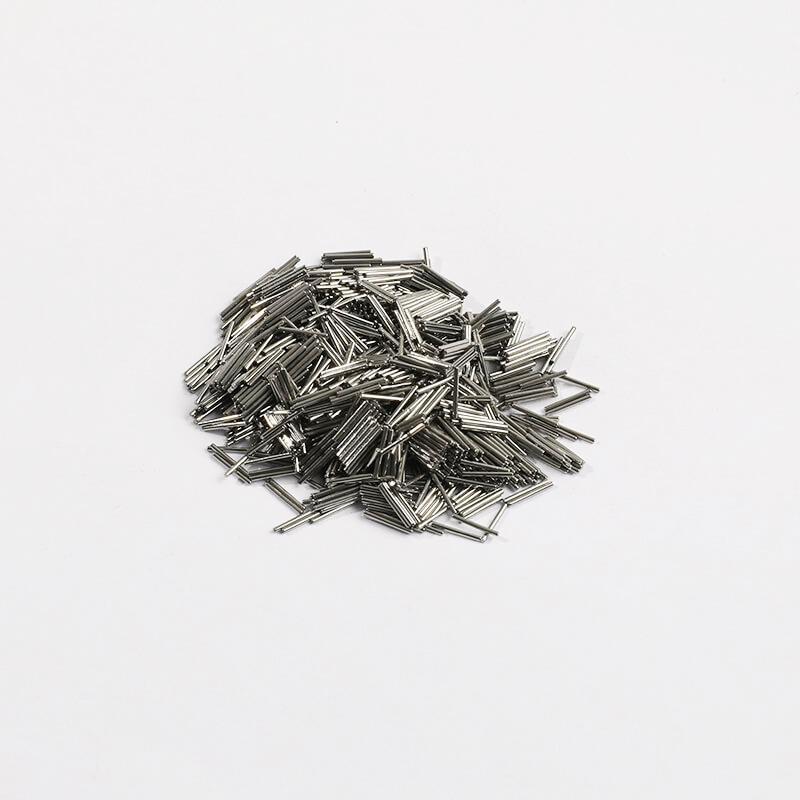
| Steel media, balls or pins, for bright polishing | Bright reflective finish on hard, robust steel work where a high lustre is the primary requirement | Deposits iron on aluminium, causing black smut, staining and a galvanic couple; keep it out of any loop shared with aluminium parts |
| Dry media, walnut shell, fine grade | Dry polishing, light surface cleaning and preparation before anodising or laser marking on aluminium parts | Shell dust must be extracted and the part cleaned, or the residue interferes with marking, bonding or a later coating step |
| Ceramic media, angle-cut triangles, medium size class | Heavy-cut deburring on cast or robust aluminium parts where the machined surface will be finished again or is not appearance graded | Rounds functional edges quickly and can chip or peen thin walls; not suitable where a sealing land or press fit is exposed |
| Ceramic media, spheres and low-density ceramic, fine size class | Bright surface development and light edge work on small aluminium components with mixed cosmetic and internal features | Fine media lodges in blind holes, cross-drillings and thin-wall pockets and is harder to screen out of the load |
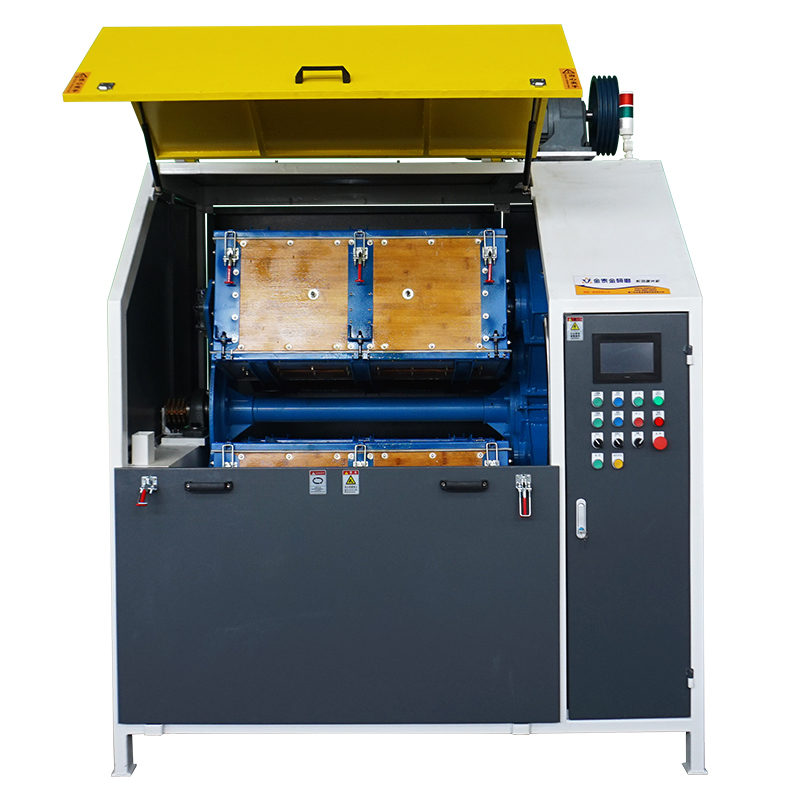
Centrifugal barrel finishing puts the barrels on a rotating turret so media and parts press against each other at high force, producing a fine surface and a controlled edge in a much shorter cycle than a conventional barrel. For aluminium device parts that need a uniform satin appearance without a long residence time it can be efficient, particularly on small to medium parts that fit the barrel geometry. The same high energy that shortens the cycle will bend thin walls, distort light sections and round edges faster than expected, so it demands a well-defined part envelope and a short instrumented cycle rather than a fixed timer. Barrel size and geometry set a hard limit on part length and pieces per run. Confirm the finish you want and the edge radius you can accept first.
| Machine route | Where it fits | What it will not do |
|---|---|---|
| Centrifugal barrel finishing machine | Short, controlled cycles producing a fine satin finish and a defined edge on small to medium aluminium device parts | High energy bends thin walls and distorts light sections; barrel geometry limits part length and pieces per run |
| Tub vibrator | Long and large aluminium parts such as extruded frames and housings that can be oriented in a linear working channel | Slower uniform coverage, a tendency for parts to settle in one attitude, and greater floor space and media volume than a bowl |
| Magnetic finishing machine | Small aluminium parts with fine internal features such as cross-holes, slots and recesses that tumbling media cannot reach | Small working envelope and low throughput; pins and fine media can lodge in blind features, and mixed part families are awkward |
| Disc finishing machine | Fast burr removal and edge radiusing on robust aluminium parts where a short cycle and high material removal matter most | High part-on-part contact and impingement risk; smears soft 6061, is hard to localise, and adds fixturing labour to every cycle |
Small media, abrasive grit and magnetic pins can lodge in a blind hole, a cross-drilling, a thread root, an undercut or a thin-wall pocket and stay there through rinsing. A lodged fragment is a functional defect, not a cosmetic one: it can score a mating bore during assembly, come loose inside a device, or sit under a coating. Thin walls make it worse because the pocket deforms slightly under load and grips the fragment. Detect it with a borescope on internal features, by weighing parts against a known-clean reference, by controlled tapping over a white surface, or by an ultrasonic clean followed by inspection of the bath residue. Design the route around it: plug or shield the features that trap media, change the size class, or choose a route whose loading geometry differs. A visual pass is not proof that a cavity is clean.
| Failure mode | Likely cause | How to catch it |
|---|---|---|
| Bloom, bleed-out or staining appearing days after finishing on a casting | Porosity holding compound or rinse water, an as-cast skin opened by the cycle, incomplete drying before packaging or anodising | Hold finished castings for a defined period and re-inspect, and section a rejected part to confirm whether the residue originates in the pores |
| Black smut or scattered dark specks on the finished surface | Iron transferred from steel media, a shared barrel, worn machine parts or a shared media store; galvanic reaction on the soft aluminium surface | Examine under magnification and with a light acidified wipe, and audit media storage, barrel liners and screening equipment for steel contact |
| Etched, darkened or chalky surface after wet finishing | Compound pH or concentration outside the aluminium working range, over-alkaline product, long dwell in a hot solution, exhausted compound | Compare a dried part against a retained reference under the customer's lighting, and log compound pH, concentration and temperature for the batch |
| Galled, smeared or picked surface with transferred aluminium | Media too heavy or too dense for the alloy, insufficient compound lubricity, hot or overloaded charge, aluminium parts rubbing against each other | Inspect under low-angle directional light for smears and cold welds, then wipe with a white lint-free cloth to reveal transferred metal |
Edmonton's industrial base is built on hydrocarbons and the processing industries that grew around them, combined with a substantial aerospace and aviation maintenance presence at the provincial level. The Government of Alberta describes Alberta's Industrial Heartland as the province's designated industrial zone and an emerging international hub for petrochemicals, home to global companies including Dow Chemical and Shell, and it cites Dow's CAD 11.6 billion net-zero petrochemical plant as one of the largest private investments in provincial history. Aerospace and aviation is the other measurable cluster: the province states that Alberta is becoming a premier aviation and aircraft manufacturing hub, with De Havilland selecting Alberta for an aircraft assembly facility, parts manufacturing and distribution centre, training centre and museum, and Lufthansa Technik Canada establishing a maintenance and repair facility at Calgary International Airport. The Edmonton region also hosts defence and security manufacturing: the national defence industry association reports that Western and Northern Canada accounts for 21 per cent of Canada's defence and security industry, with aircraft maintenance, repair and overhaul among the key regional activities. The City of Edmonton tracks and publishes its own economic reporting through the Corporate Economics function, including quarterly economic updates and long-term outlook documents.
The nearest part of that base to this brief is machinery: The national defence industry association reports that Western and Northern Canada accounts for 21 per cent of Canada's defence and security industry, with aircraft maintenance, repair and overhaul and naval maintenance among the key regional activities.
Petrochemical and hydrocarbon processing plants in the Edmonton region depend on valves, pumps, compressors, heat-exchanger components and piping spools whose sealing surfaces, gasket faces and machined bores must be burr-free and finished to specification, and turnaround work creates a recurring demand for reconditioning those components. Aviation maintenance, repair and overhaul adds engine and airframe component work where edge condition, surface integrity and cleanliness carry airworthiness implications, and where the finishing process has to be documented. Both customer groups buy on specification and inspection records rather than on appearance, so the practical requirement in Edmonton is process repeatability and the ability to prove what was done to a part.
An Edmonton buyer should settle whether the finishing requirement is driven by seal integrity or by fatigue and cleanliness, because those two answers point to different processes and different acceptance testing; on petrochemical hardware the specification is usually a defined gasket-face or sealing-surface finish, while in aviation MRO it is edge condition and cleanliness. The second question is whether the shop can produce and retain the process records that a petrochemical operator or an aviation quality system will ask for, since a finishing cell that cannot produce evidence of repeatability will not pass either customer's audit.
Freight context: Edmonton International Airport and Alberta Aerospace and Technology Centre, CN and CPKC rail corridors, Alberta's Industrial Heartland industrial zone (Fort Saskatchewan / Strathcona County), Edmonton's inland rail and industrial parks. Edmonton combines an international airport with an adjacent aerospace and technology industrial cluster, direct Class 1 rail service, and the large contiguous heavy-industry land base of Alberta's Industrial Heartland, which is why Alberta can site petrochemical plants of the scale of the Dow investment there. For equipment import, a machine would normally arrive through a coastal container port and be railed into Edmonton, while urgent parts can move by air; heavy modules and oversized components can also move by rail directly to industrial sites.
Canada's national standards system is coordinated by the Standards Council of Canada (SCC), which accredits standards-development organizations, certification bodies and testing laboratories; the SCC and CSA Group websites could not be retrieved for citation during this research, so this entry rests on the accessible Government of Canada and CCOHS material below. The Canadian Centre for Occupational Health and Safety describes standards as documents that "establish specifications and procedures to ensure the reliability of the products, methods, and services people use every day on the job", and Innovation, Science and Economic Development Canada (ISED) maintains the federal entry point for "[t]he different types of standards and certifying bodies that can be used by your business". In practice a Canadian buyer of finishing equipment references (a) the Canadian electrical safety certification of the machine and its control panel, (b) provincial occupational health and safety regulation for machine guarding, lockout and dust/ventilation control, which in Canada is enforced by the provinces rather than by a single federal inspectorate, and (c) the buyer's own customer-specific surface finish, edge-condition and cleanliness specifications, which are contractual rather than national standards. Finishing-process standards in the ISO 25.080 machine-tool and ISO 8500-series surface-preparation families are the usual technical reference points, but product-level standards sold by CSA Group were not retrievable for verification here.
China is one of Canada's ten principal merchandise trading partners and the second-largest single-country source of Canadian imports after the United States: Statistics Canada reported CAD 5,369 million of balance-of-payments imports from China in January 2025, against a CAD 2,299 million bilateral merchandise deficit that month. Canada has no free trade agreement with China, so Chinese-origin industrial machinery enters under the Most-Favoured-Nation (MFN) tariff column of the Canadian Customs Tariff; the preferential treatments listed in the tariff (CUSMA/UST and MXT, CETA/CEUT, CPTPP/CPTPT, UKT, KRT and others) do not include China, and preferential rates require proof of origin plus the applicable shipping rules, so a China-origin machine cannot claim them. Tariff classification is mandatory work, not a formality: vibratory, barrel, centrifugal and disc finishing machines are classified in Chapter 84 ("Nuclear reactors, boilers, machinery and mechanical appliances; parts thereof") according to the function of the machine, and the ten-digit Canadian tariff item drives both the duty rate and the statistics. A further landed-cost risk sits outside the tariff schedule: under the Special Import Measures Act (SIMA), the CBSA and the Canadian International Trade Tribunal may apply anti-dumping and countervailing duties to named goods, so a buyer should check the measures-in-force list for the specific product before assuming the MFN rate is the final duty.
SurfacePolish supplies from Xiamen, China. The buyer's own destination rules, conformity marking, tariff classification and documentation responsibilities stay with the buyer; confirm them against the authorities named above before ordering.
Treat the first finished part of every batch as a first article and hold it until it has been checked against the agreed criteria. Record the part number, alloy and temper, the machine and route, the media charge identity and its accumulated hours, the compound and concentration, the cycle time, the load ratio and the drying step. Retain a reference part from the accepted first article, and when a later batch differs, compare the two physically before adjusting anything. Segregate batches by alloy and part number, and keep the aluminium loop separate from steel work so iron cannot transfer onto a soft surface. This discipline, not the machine settings, is what makes a finish reproducible. Who performs the checks and who signs the release is a buyer decision, but the record of what was run is worth keeping.
A sample trial produces observations on the parts that were tested, under the settings that were used, on the equipment that ran them. It does not guarantee a roughness value, an appearance grade, an edge radius, a dimensional result, a cycle time, a capacity or a production cost, and it does not qualify, approve or validate a process for a medical device or any regulated application. It cannot prove biocompatibility, cleanability, sterility, corrosion life or a cleaning validation, and it does not create a specification the buyer can rely on for regulatory purposes. Those determinations belong to the buyer's own engineering and quality functions, working to their own requirements. What a trial can do is show whether a mechanical route is plausible for a part and which media and compound direction is worth pursuing.
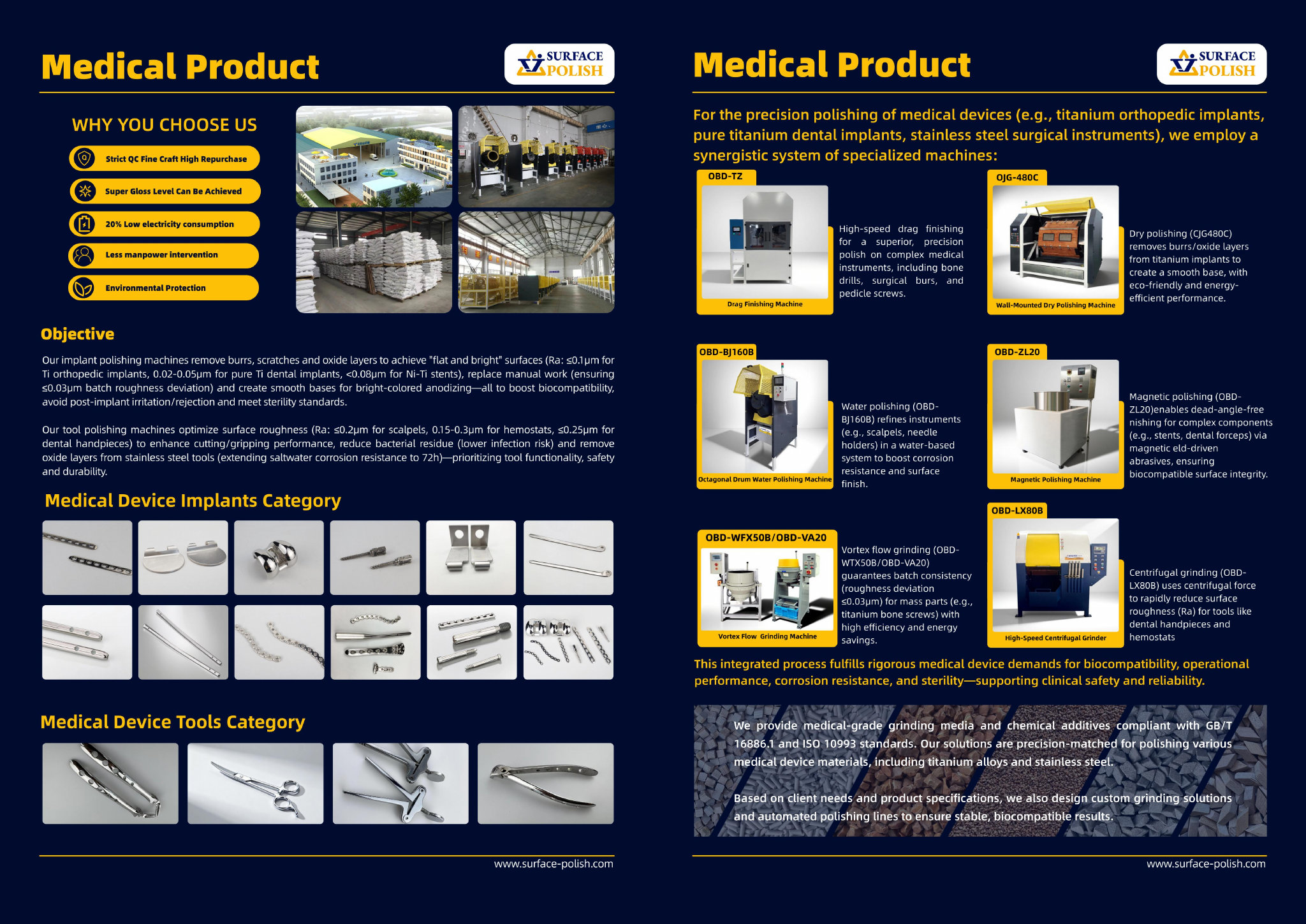
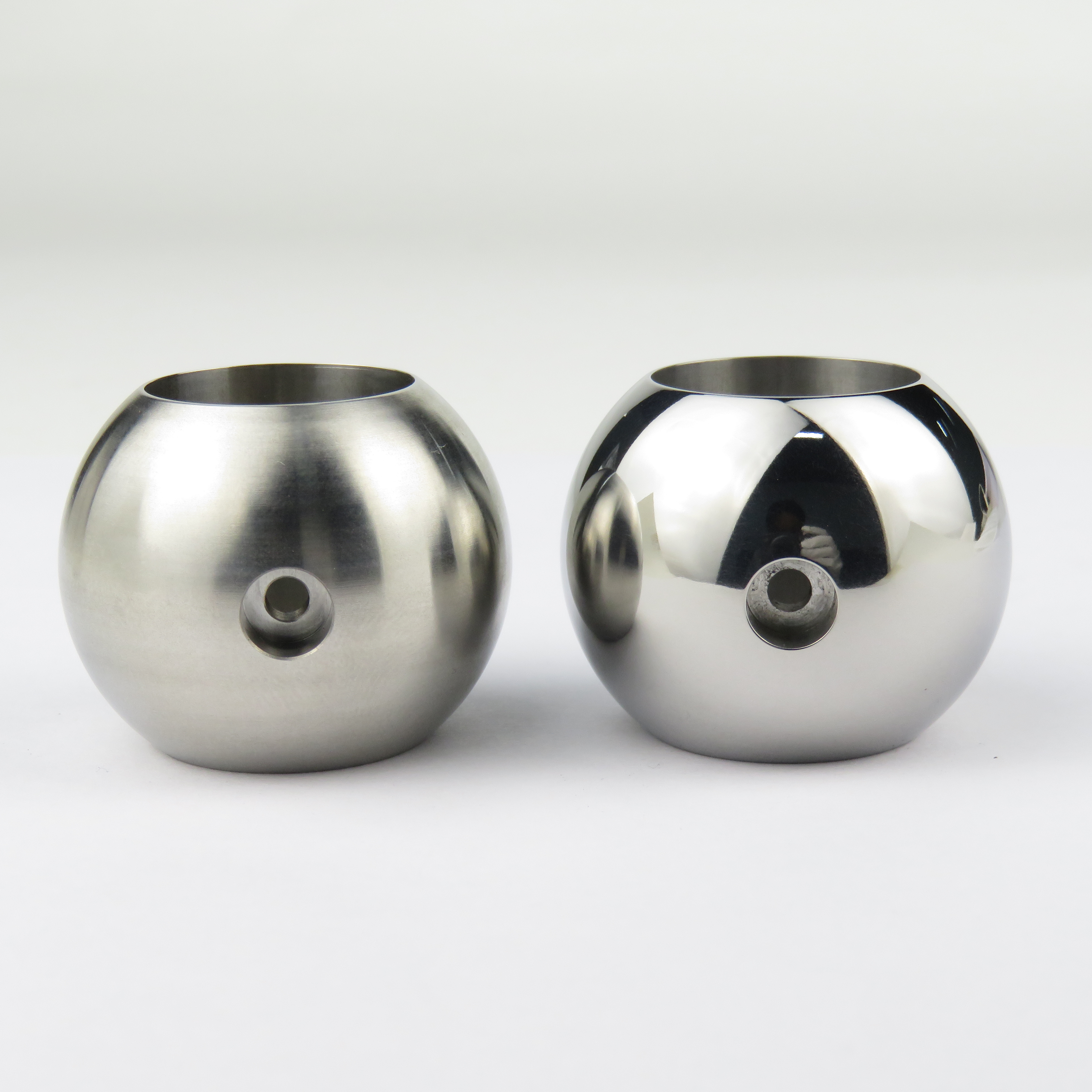
Send representative parts, including the worst case: the thinnest wall, the tightest sealing edge, the deepest tool mark, a casting with visible porosity, the smallest hole and the feature most likely to trap media. Include two or three pieces of each condition, an untreated reference part, and a note of the alloy and temper, the part number, which surfaces are cosmetic and which are functional, and the edge radius or chamfer allowed at each critical feature. State the current process, the defect that prompted the enquiry and the downstream operation, whether anodising, laser marking, bonding or assembly. The clearer the part definition, the more useful the observations returned.
A bowl vibrator circulates a load through a media field at moderate energy, with good uniformity on small parts that tumble freely and easy discharge. A centrifugal barrel presses media and parts together at high force in a much shorter cycle, producing a fine finish and controlled edge quickly, but bending thin walls, distorting light sections and rounding edges faster. Bowl routes suit mixed small parts and gentle work; centrifugal routes suit a narrow part family that fits the barrel and accepts the energy. Parts made in Canada should be trialled in the specific geometry before a machine size is fixed, because barrel dimensions limit part length and load size.
Start with media that are softer or lighter than the workpiece is likely to tolerate: plastic-bonded media in a light or medium abrasive grade, or a low-density ceramic. Dense ceramic and steel media that cut steel efficiently will embed, smear or gall aluminium and can implant iron that later shows as staining. Media weight, compound lubricity and load ratio matter as much as family, because a heavy, hot, under-lubricated charge will gall parts even with the right media. A buyer in Canada should treat media selection as a two-stage question: what removes the burr, and what produces the final cosmetic surface without transfer.
Use Edmonton, Canada as the destination on the enquiry and state whether the deliverable is equipment, media and compound, a representative sample review or a line concept. A destination does not imply local stock, a local service point or a local delivery time.
An Edmonton buyer in the petrochemical and oil and gas chain works to the applicable pressure-equipment and piping standards their engineering contractor names, together with Alberta occupational health and safety requirements and Canadian electrical certification for equipment installed in the plant. In aviation MRO, the requirements come from the transport-aircraft maintenance regime and the customer's approved process specifications rather than from a finishing-specific national standard.
Sources were retrieved on 2026-09-29 and describe the local industrial and trade context only. They do not evidence any SurfacePolish project, shipment, installation or service in Edmonton.
The buyer needs burrs removed from the fin array without bending the fins or rounding the gasket land that seals the assembly.
Send the material, dimensions, approximate weight, batch quantity, the incoming condition and photographs of the difficult features. Mark which features must not be contacted by media and state how the result will be inspected. This form carries source reference PSEO-0143; quote it if you prefer an additional manual reference.
Open the SurfacePolish enquiry form Email a prepared enquiry
No price, lead time, certification or result is promised here. Confirm whether a sample trial is available for the specific part and what the trial can and cannot show.
Page PSEO-0143 · revised 2026-09-29 · cross-border equipment, media and scoped sample review. City context is sourced and cited above.
Use this local checker to identify missing part and inspection information. It prepares a technical-review brief; it does not approve a machine, process recipe or production result.
Complete the part details to prepare a review brief.
Email : info@surface-polish.com


 IPv6 network supported


 +86-592-2381506