High-volume small aluminium components for medical devices live or die on part-to-part consistency, and a batch of several thousand ferrules in Florence, Italy will show any weakness in media size class, screening or load control. SurfacePolish supplies finishing machines, media and compounds across borders and runs a free sample trial on the buyer's parts. This brief is written for a buyer in Florence working on medical devices; it describes equipment, media and a scoped sample review, not a local polishing service.
What is the minimum wall thickness and unsupported span, and which internal features could trap media?
Who defines and verifies the cleanliness, residue and any regulatory requirement, and by what method and limit?
What edge radius or chamfer is allowed at each mating, sealing and press-fit feature, and how will it be measured?
Begin by marking up the drawing surface by surface. An aluminium device housing may carry a visible cosmetic face, several machined mating faces that set a seal or a press fit, threaded ports, dowel holes and a thin outer wall, and each has a different finishing tolerance. Cosmetic zones can accept a uniform satin or bright finish; sealing faces and dowel bores need the edge left close to sharp or rounded to a stated radius, and a heavy media cycle destroys that. Note where the customer sees the part after assembly, because a face that meets a cosmetic grade on its own can still look wrong beside an untreated neighbour. A drawing that names, per surface, whether it is cosmetic, functional or indifferent is the cheapest document in the whole finishing project.
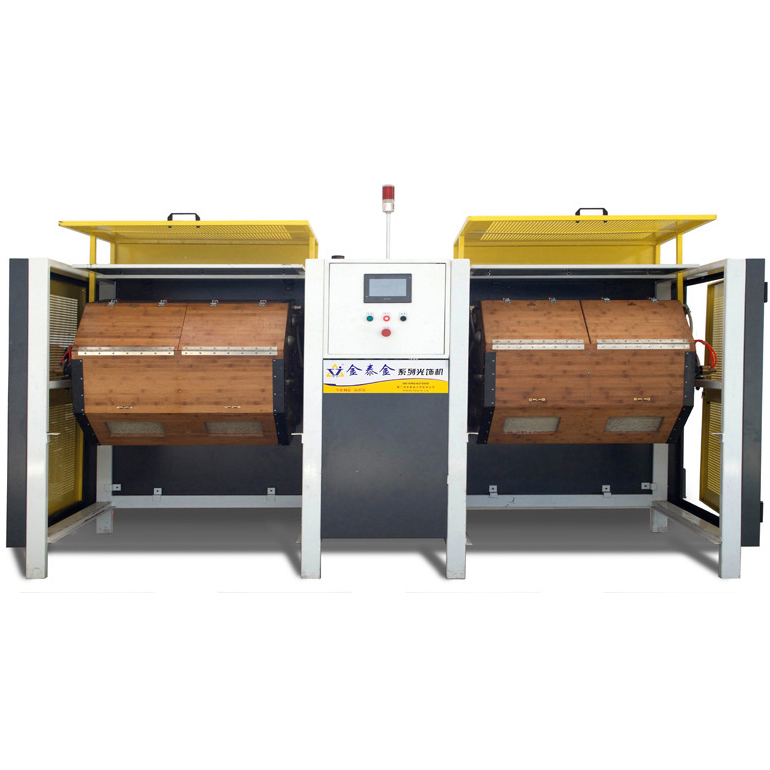
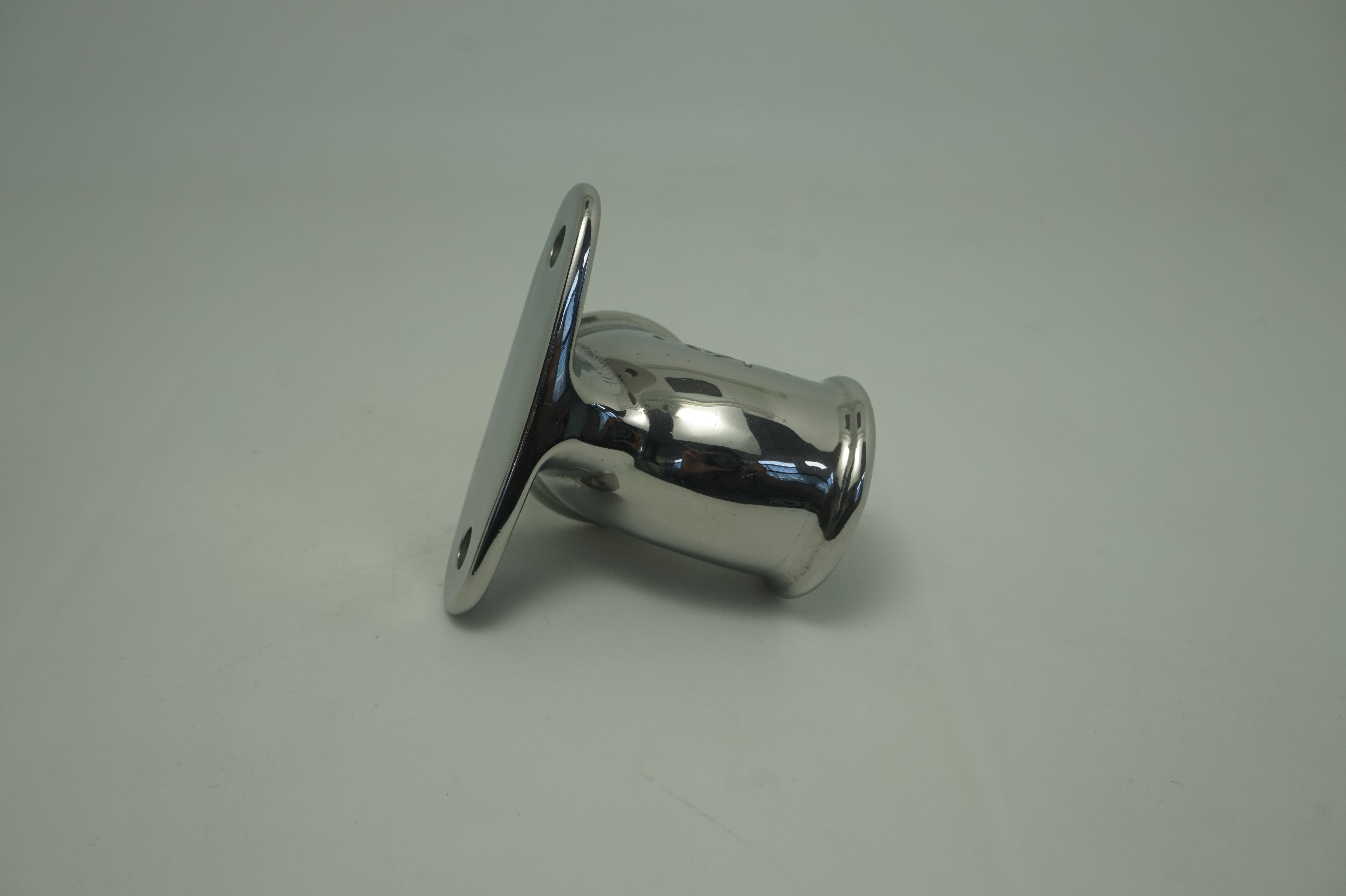
A round bowl vibrator suits small to medium aluminium components that tumble freely and pass a media gate: instrument handles, ferrules, cover plates, brackets. It gives good part-to-part uniformity because the whole load circulates through the same energy field, and it is easy to automate with compound flow and a discharge gate. The limit is size and shape. A long extruded frame, a tall manifold or a part with a protruding boss will not circulate well in a bowl and will shadow itself, leaving the sheltered side unfinished. Tub vibrators handle long and large parts because the working channel is linear and the part can be oriented; the trade-off is slower uniform coverage and a greater tendency for parts to settle in one attitude. Match machine to part envelope first, then to finish.
| Machine route | Where it fits | What it will not do |
|---|---|---|
| Centrifugal barrel finishing machine | Short, controlled cycles producing a fine satin finish and a defined edge on small to medium aluminium device parts | High energy bends thin walls and distorts light sections; barrel geometry limits part length and pieces per run |
| Magnetic finishing machine | Small aluminium parts with fine internal features such as cross-holes, slots and recesses that tumbling media cannot reach | Small working envelope and low throughput; pins and fine media can lodge in blind features, and mixed part families are awkward |
| Grinding finishing machine | Higher material removal on aluminium parts that need a heavy burr or a pronounced chamfer removed before a gentler finishing step | Aggressive on soft aluminium, difficult to control on cosmetic faces and functional edges, and not a finishing step on its own |
| Disc finishing machine | Fast burr removal and edge radiusing on robust aluminium parts where a short cycle and high material removal matter most | High part-on-part contact and impingement risk; smears soft 6061, is hard to localise, and adds fixturing labour to every cycle |
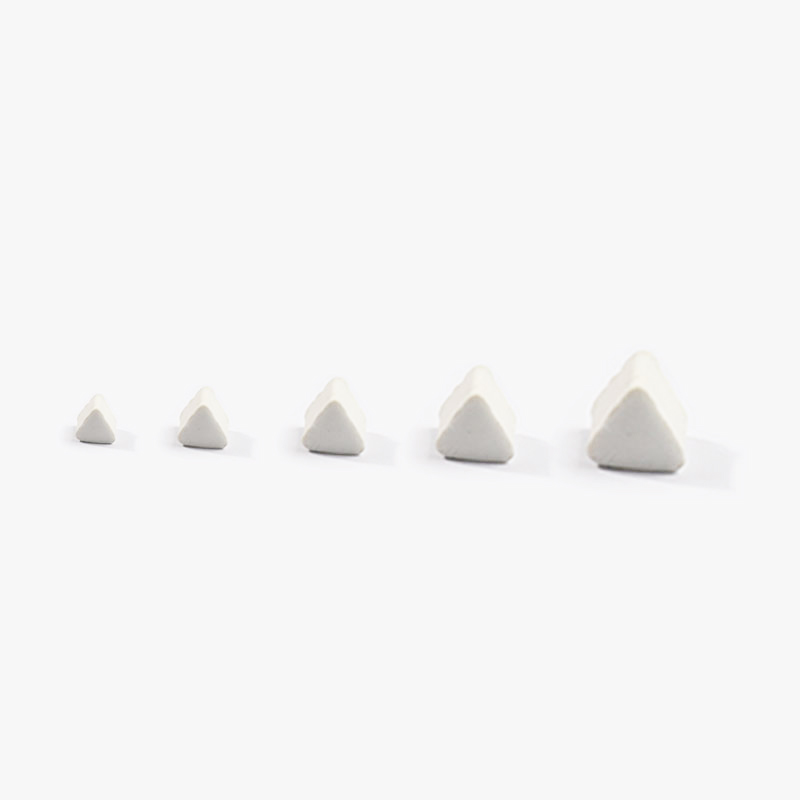
Media choice on aluminium is dominated by one fact: the workpiece is softer than most media used on steel. Dense ceramic and steel media that cut steel efficiently will embed, smear or gall an aluminium surface, implant iron particles that later show as staining or a galvanic couple, and round edges faster than the drawing allows. Plastic-bonded media in a light or medium abrasive grade, or a low-density ceramic, is the usual starting family for cosmetic work on 6061 and 7075, with harder ceramic reserved for a genuine heavy-cut deburr where the surface is not graded. The trade-off is real: gentle media remove less material and take longer, so a deep tool mark or heavy burr may need a coarser first stage and a gentler second. Choose media around the surface and edge the part must end with.
| Media | Best fit | Watch out for |
|---|---|---|
| Plastic-bonded media, light to medium abrasive grade, cone and triangle shapes | General deburring and satin finishing on 6061 and 7075 where galling risk rules out dense ceramic | Wears quickly and loses edge definition; cut rate drops as the charge ages and the cosmetic result drifts unless media is screened and topped up |
| Plastic-bonded media, ball and ellipsoid shapes | Surface refinement and blending on cosmetic aluminium faces where edges, seal lands and dowel bores must stay close to drawing | Removes very little edge material, so a burr at a bore exit or a thread crest may survive the cycle and need a separate step |
| Steel media, balls or pins, for bright polishing | Bright reflective finish on hard, robust steel work where a high lustre is the primary requirement | Deposits iron on aluminium, causing black smut, staining and a galvanic couple; keep it out of any loop shared with aluminium parts |
| Dry media, walnut shell, fine grade | Dry polishing, light surface cleaning and preparation before anodising or laser marking on aluminium parts | Shell dust must be extracted and the part cleaned, or the residue interferes with marking, bonding or a later coating step |
Aluminium can leave a finishing cycle looking worse in colour than it went in. Over-alkaline compound etches and darkens the surface; hard water leaves mineral spotting that dries into rings; iron transferred from steel media or worn machine parts appears as black smut or scattered dark specks; and a slow or hot dry lets an oxide film form unevenly across a face. Castings with porosity are especially prone, because they hold liquid and release it later as a bloom. Check the part dry, under the lighting the customer will use, and compare against a retained reference part rather than memory. Control compound pH and concentration, rinse with controlled water quality, dry promptly and completely, and keep steel out of the aluminium loop. A stain found after anodising or packaging has already cost the value of the part.
| Failure mode | Likely cause | How to catch it |
|---|---|---|
| Black smut or scattered dark specks on the finished surface | Iron transferred from steel media, a shared barrel, worn machine parts or a shared media store; galvanic reaction on the soft aluminium surface | Examine under magnification and with a light acidified wipe, and audit media storage, barrel liners and screening equipment for steel contact |
| Water spotting, rings or mineral staining after drying | Hard rinse water, slow or incomplete dry, droplets trapped in blind holes or under a flange, no final deionised rinse | Inspect the dried part in raking light against a reference, and check rinse-water hardness and conductivity records for the shift |
| Dimensional drift on a critical bore, dowel hole or press-fit diameter | Aggressive media attacking a feature the cycle should not touch, cumulative removal over repeated runs, no masking of close-tolerance geometry | Measure the feature with a CMM or bore gauge at first article and at the end of the media charge, and chart the trend against drawing limits |
| Sealing land or dowel bore edge rounded past the drawing limit | Long or energetic cycle on an unprotected functional edge, sharp-edged media, cumulative material removal across repeated passes | Measure the edge with an optical comparator or radius gauge on a cross-section, or compare a CMM scan of the feature before and after finishing |
Florence's provincial economy is dominated on the export side by pharmaceuticals: the Chamber of Commerce reports that intra-group logistics and processing traffic in the pharmaceutical sector now weighs more than half of total provincial exports (s1), and that sector turnover grew +5.4% in the first quarter of 2026 and +8.5% in the second (s2). Manufacturing production rose +1.6% year on year at the start of 2026 and moderated to +0.4% at mid-year, with the pharmaceutical component carrying the aggregate (s2). Provincial exports reached EUR 16.4 billion in the first half of 2026, +3.3% year on year, and EUR 35.1 billion on a rolling-year basis, after 2025 growth of +41.4% and more than EUR 34 billion that the chamber attributes partly to pharmaceutical flows and to US-bound frontloading (s1, s3). Away from pharmaceuticals the chamber describes traditional manufacturing sectors as showing weaker dynamics and the fashion system as being in reorganisation (s1). The Florence metropolitan area also carries a documented electronics, radar, optronics and space-navigation manufacturing base, and the local Confindustria association is promoting a Tuscan aerospace district (s4). The Chianti Classico wine zone has its two capital cities in Florence and Siena (s5).
For this brief the relevant part of that base is medical: The pharmaceutical sector weighs more than half of total provincial exports and its turnover grew +5.4% in the first quarter of 2026 and +8.5% in the second.
For the pharmaceutical-side base the finishing question is cleaning and residue control rather than cosmetic finish: burr-free stainless and alloy parts, media that will not leave contamination, and a documented cleanliness result per part number. For the electronics, radar and optronics manufacturing that the local Confindustria association describes, edge quality and surface condition on machined housings, waveguide and antenna components affect both assembly fit and electrical performance. Because pharmaceutical output here is export-driven and audit-heavy, surface and cleanliness results normally have to be recorded against a specification the customer already holds, not demonstrated on a sample alone.
The first question is whether the part is destined for the pharmaceutical or electronics base, because that decides whether the controlling requirement is a cleanliness and residue limit or an edge and surface-texture tolerance. For the pharmaceutical side it is worth establishing up front which cleanliness specification and which sampling method will be used for acceptance, since that choice constrains both the process and the media.
Freight context: Porto di Livorno, Aeroporto di Firenze-Peretola (FLR). The freight evidence available for Florence in this session is trade value rather than hub throughput: EUR 16.4 billion of exports in the first half of 2026 and EUR 35.1 billion on a rolling-year basis, with the pharmaceutical component distorting the provincial averages (s3). The Tuscan port and airport gateways named above are regional geography and were not verified against an authority page here, because the Livorno port authority site served a JavaScript challenge and the Toscana Aeroporti site returned HTTP 403 to every request made from this session.
Business is conducted in Italian; quotations, drawings, technical dossiers and declarations of conformity are normally expected in Italian, and correspondence in English is workable but rarely sufficient for a purchase order or for a conformity file. Italian industrial buyers qualify suppliers through a documented process: a part drawing with surface-texture indications, a sample or trial batch, and written acceptance criteria are the usual gate before a machine or media is specified into production. Payment and documentation norms follow Italian/EU practice - the importing entity's VAT and EORI details, invoice data matching the customs declaration, and standard EU commercial terms - so a cross-border seller should expect the conformity documentation (declaration of conformity, technical file, material certificates) to be requested before, not after, delivery.
The national standards body is UNI - Ente Italiano di Normazione, a private non-profit association founded over a century ago, which develops, publishes and disseminates voluntary technical standards and adopts the European and international standards as Italian editions. For finishing work the operative references are the surface-texture series UNI EN ISO 21920-1:2022, which fixes how the surface state (roughness, waviness, primary profile) is indicated on technical product documentation, and UNI EN ISO 21920-2:2022, which defines the terms, definitions and parameters used with profile methods. Machinery safety requirements come from the EU machinery legislation rather than from UNI alone: Machinery Directive 2006/42/EC applies to machinery placed on the EU market before 20 January 2027, after which Machinery Regulation (EU) 2023/1230 takes over.
SurfacePolish supplies from Xiamen, China. The buyer's own destination rules, conformity marking, tariff classification and documentation responsibilities stay with the buyer; confirm them against the authorities named above before ordering.
Treat the first finished part of every batch as a first article and hold it until it has been checked against the agreed criteria. Record the part number, alloy and temper, the machine and route, the media charge identity and its accumulated hours, the compound and concentration, the cycle time, the load ratio and the drying step. Retain a reference part from the accepted first article, and when a later batch differs, compare the two physically before adjusting anything. Segregate batches by alloy and part number, and keep the aluminium loop separate from steel work so iron cannot transfer onto a soft surface. This discipline, not the machine settings, is what makes a finish reproducible. Who performs the checks and who signs the release is a buyer decision, but the record of what was run is worth keeping.
Send parts that represent the real production condition, not a polished bench sample. A useful set includes the worst case: the thinnest wall, the tightest sealing edge, the deepest tool mark, the casting with visible porosity, the smallest hole and the feature most likely to trap media. Include two or three pieces of each condition so one can be sectioned or inspected internally, and include an untreated part as the comparison reference. Label every part with its alloy and temper, its part number, the surfaces that are cosmetic, the surfaces that are functional, and the edge radius or chamfer allowed at each critical feature. State the current process and the defect that prompted the enquiry, plus the downstream operation such as anodising, laser marking or assembly.
Lodging is a geometry problem before it is a media problem. Blind holes, cross-drillings, thread roots, undercuts and thin-wall pockets trap fragments, and a pocket that flexes under load grips them harder. Options include shielding or plugging the trapping features, changing the media size class so pieces cannot enter, moving to a route whose loading geometry differs, and adding an inspection step with a borescope or a weighed reference part. A visual pass on an exterior face proves nothing about a cavity. For parts made in Italy, agree with the buyer which internal features are checked and how, before the first batch is run.
The buyer defines the requirement and the check. Methods include visual inspection of internal features under magnification or with a borescope, a wipe test with a defined solvent and a white substrate, gravimetric non-volatile residue on a rinse sample, and rinse-water conductivity where the assembly is sensitive. Blind holes, threads and press fits retain residue and should be sampled specifically. A residue limit, a validated cleaning process, biocompatibility data or a sterility claim is the buyer's to set and verify against their own specification. Equipment supply and a sample trial do not establish any of those, and no finishing route substitutes for the buyer's own quality system.
Laser marking interacts with surface texture, so contrast depends on whether the surface is directional, random satin or bright. A strong directional finish from a tub or a linishing step can produce a marking that reads differently when the part is turned, while a uniform random texture marks more consistently. Residue and embedded media also interfere, because the marking energy meets a contaminated surface. For a marked cover plate in Italy, the practical sequence is to fix the finish first, then qualify the marking programme on finished parts, and to check the mark under the lighting the end user will use rather than a bench lamp.
Use Florence, Italy as the destination on the enquiry and state whether the deliverable is equipment, media and compound, a representative sample review or a line concept. A destination does not imply local stock, a local service point or a local delivery time.
A Florence buyer would set surface and edge requirements against ISO/UNI surface-texture standards and, for the pharmaceutical-side base, against the cleanliness and residue limits held in the customer's own device or plant specification rather than in a finishing-specific standard. Finishing operations are normally qualified as a process step inside the customer's quality system, and the Tuscan manufacturing associations run technical and standardisation desks for members.
Sources were retrieved on 2026-09-29 and describe the local industrial and trade context only. They do not evidence any SurfacePolish project, shipment, installation or service in Florence.
The buyer needs part-to-part consistency across a large batch and is worried about small parts escaping a screen or lodging in each other.
Send the material, dimensions, approximate weight, batch quantity, the incoming condition and photographs of the difficult features. Mark which features must not be contacted by media and state how the result will be inspected. This form carries source reference PSEO-0473; quote it if you prefer an additional manual reference.
Open the SurfacePolish enquiry form Email a prepared enquiry
No price, lead time, certification or result is promised here. Confirm whether a sample trial is available for the specific part and what the trial can and cannot show.
Page PSEO-0473 · revised 2026-09-29 · cross-border equipment, media and scoped sample review. City context is sourced and cited above.
Use this local checker to identify missing part and inspection information. It prepares a technical-review brief; it does not approve a machine, process recipe or production result.
Complete the part details to prepare a review brief.
Email : info@surface-polish.com


 IPv6 network supported


 +86-592-2381506
