An aluminium valve body for medical devices that will be hard-anodised after finishing must arrive at the anodiser free of embedded media, residue and rounded seal lands. A buyer in Hamburg, Germany can send representative bodies to SurfacePolish, a cross-border supplier of finishing machines, media and compounds, for a free sample trial and a scoped discussion. This brief is written for a buyer in Hamburg working on medical devices; it describes equipment, media and a scoped sample review, not a local polishing service.
What downstream operation follows finishing, such as anodising, laser marking, bonding or assembly, and what does it require of the surface?
What are the alloy and temper, and has machining, casting, welding or heat treatment already changed the surface hardness and porosity?
What edge radius or chamfer is allowed at each mating, sealing and press-fit feature, and how will it be measured?
Aluminium is a family, and the finishing window moves with alloy and temper. Wrought 6061 in T6 cuts and polishes predictably and holds a uniform finish, which is why it dominates machined device hardware. Wrought 7075 is stronger but harder, more prone to tearing and to differential finishing around machining marks, and it needs gentler media and shorter high-energy contact. Cast aluminium behaves differently again: surface porosity, cold shuts and a hard as-cast skin mean a casting can absorb compound into pores and bleed it out later, and an energetic cycle opens pores that machining had closed. Annealed or solution-treated stock smears under media where the same alloy in T6 would cut cleanly. Record alloy, temper and heat-treatment state before media is chosen rather than after the first batch disappoints.
A rotary barrel tumbles the load under gravity at comparatively low energy, which makes it a reasonable route for small precise aluminium parts that must not be peened, distorted or made to impinge on each other. It suits high-volume small components such as connector bodies, pins, small fittings and thin machined parts where the requirement is a consistent light deburr and surface refinement rather than heavy stock removal. Two costs come with that gentleness: cycles are longer for the same result, and parts with flats, pockets or low mass can slide rather than tumble, so one face may receive almost no work. Barrel loading, rotational speed, media-to-part ratio and compound quantity all change the result, and an overloaded barrel simply rotates with the mass instead of working it.
| Machine route | Where it fits | What it will not do |
|---|---|---|
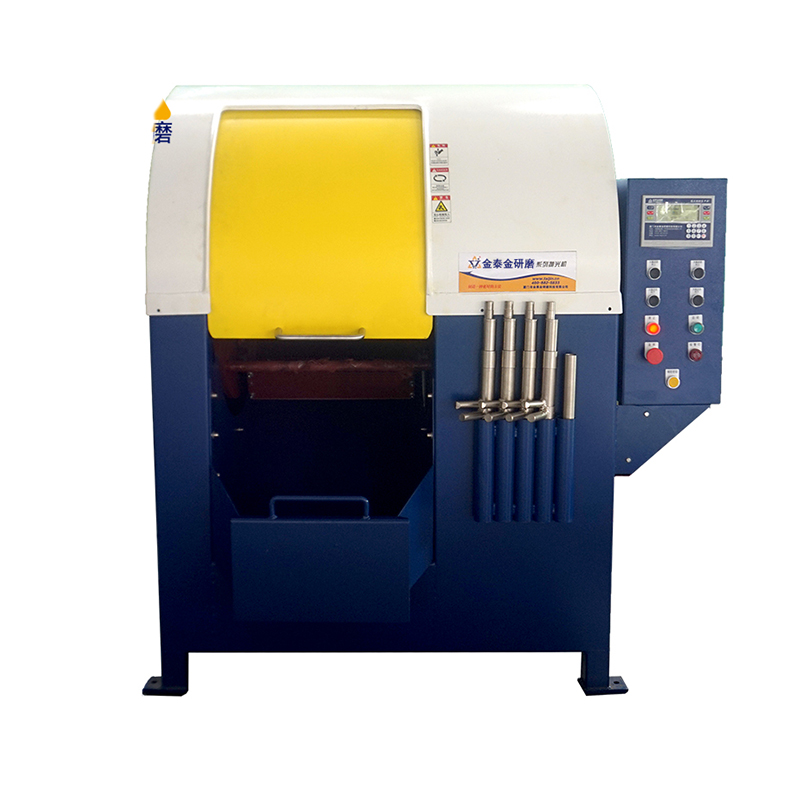
| Vibratory bowl finishing machine | Small to medium aluminium components that tumble freely: ferrules, handles, brackets and cover plates needing uniform deburring or satin finishing | Long, tall or heavily recessed parts shadow themselves and finish unevenly; part envelope must fit free circulation in the bowl |
| Tub vibrator | Long and large aluminium parts such as extruded frames and housings that can be oriented in a linear working channel | Slower uniform coverage, a tendency for parts to settle in one attitude, and greater floor space and media volume than a bowl |
| Grinding finishing machine | Higher material removal on aluminium parts that need a heavy burr or a pronounced chamfer removed before a gentler finishing step | Aggressive on soft aluminium, difficult to control on cosmetic faces and functional edges, and not a finishing step on its own |
| Dry polishing machine and dryer | Post-wet drying and dry polishing of aluminium parts before anodising, laser marking, bonding or packaging | Does not remove a burr or refine a surface on its own; residual media dust and incomplete drying still cause marking and coating defects |
Media choice on aluminium is dominated by one fact: the workpiece is softer than most media used on steel. Dense ceramic and steel media that cut steel efficiently will embed, smear or gall an aluminium surface, implant iron particles that later show as staining or a galvanic couple, and round edges faster than the drawing allows. Plastic-bonded media in a light or medium abrasive grade, or a low-density ceramic, is the usual starting family for cosmetic work on 6061 and 7075, with harder ceramic reserved for a genuine heavy-cut deburr where the surface is not graded. The trade-off is real: gentle media remove less material and take longer, so a deep tool mark or heavy burr may need a coarser first stage and a gentler second. Choose media around the surface and edge the part must end with.
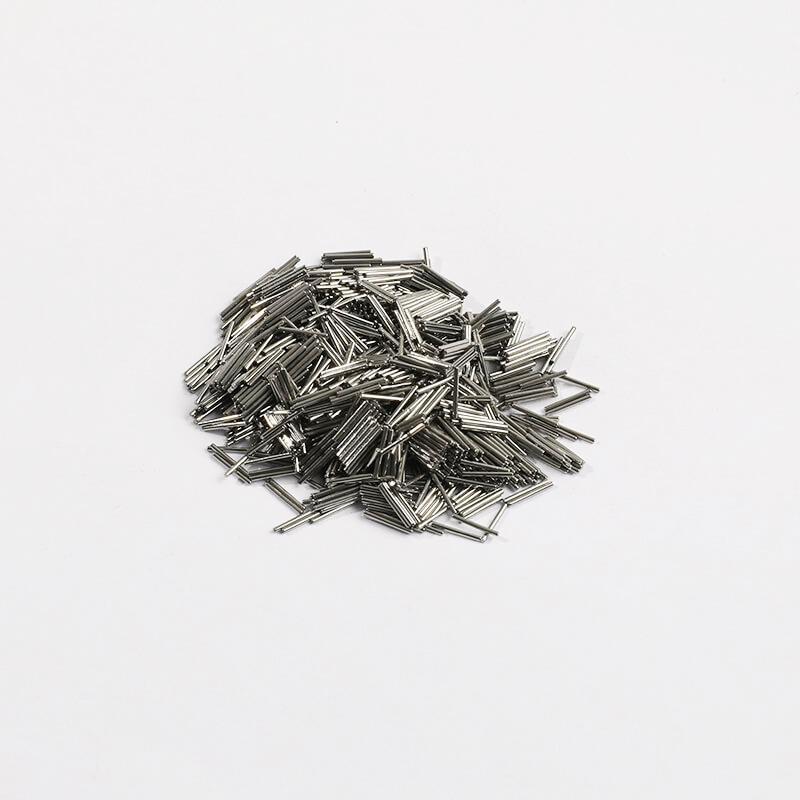
| Media | Best fit | Watch out for |
|---|---|---|
| Dry media, corn cob with a polishing compound charge | Final dry polish and drying assistance on small aluminium parts where a wet rinse and dry would leave spotting | Compound loading saturates with use and the media cakes; the charge needs regular replacement, and soft aluminium can still smear |
| Ceramic media, spheres and low-density ceramic, fine size class | Bright surface development and light edge work on small aluminium components with mixed cosmetic and internal features | Fine media lodges in blind holes, cross-drillings and thin-wall pockets and is harder to screen out of the load |
| Plastic-bonded media, light to medium abrasive grade, cone and triangle shapes | General deburring and satin finishing on 6061 and 7075 where galling risk rules out dense ceramic | Wears quickly and loses edge definition; cut rate drops as the charge ages and the cosmetic result drifts unless media is screened and topped up |
| Ceramic media, angle-cut triangles, medium size class | Heavy-cut deburring on cast or robust aluminium parts where the machined surface will be finished again or is not appearance graded | Rounds functional edges quickly and can chip or peen thin walls; not suitable where a sealing land or press fit is exposed |
Small media, abrasive grit and magnetic pins can lodge in a blind hole, a cross-drilling, a thread root, an undercut or a thin-wall pocket and stay there through rinsing. A lodged fragment is a functional defect, not a cosmetic one: it can score a mating bore during assembly, come loose inside a device, or sit under a coating. Thin walls make it worse because the pocket deforms slightly under load and grips the fragment. Detect it with a borescope on internal features, by weighing parts against a known-clean reference, by controlled tapping over a white surface, or by an ultrasonic clean followed by inspection of the bath residue. Design the route around it: plug or shield the features that trap media, change the size class, or choose a route whose loading geometry differs. A visual pass is not proof that a cavity is clean.
| Failure mode | Likely cause | How to catch it |
|---|---|---|
| Black smut or scattered dark specks on the finished surface | Iron transferred from steel media, a shared barrel, worn machine parts or a shared media store; galvanic reaction on the soft aluminium surface | Examine under magnification and with a light acidified wipe, and audit media storage, barrel liners and screening equipment for steel contact |
| Galled, smeared or picked surface with transferred aluminium | Media too heavy or too dense for the alloy, insufficient compound lubricity, hot or overloaded charge, aluminium parts rubbing against each other | Inspect under low-angle directional light for smears and cold welds, then wipe with a white lint-free cloth to reveal transferred metal |
| Damaged thread or media wedged in a thread root | Threads left exposed to the media field, sharp media entering the crest, insufficient plugging or masking of ports before the cycle | Run a go and no-go gauge through every sampled thread and inspect the root with a borescope or a thread impression |
| Etched, darkened or chalky surface after wet finishing | Compound pH or concentration outside the aluminium working range, over-alkaline product, long dwell in a hot solution, exhausted compound | Compare a dried part against a retained reference under the customer's lighting, and log compound pH, concentration and temperature for the batch |
Hamburg's industrial identity is built on its port and on aviation: 8.3 million TEU were handled in the Port of Hamburg in 2025, growth of 7.3 percent, and HHLA operates three container terminals in the city at Altenwerder, Burchardkai and Tollerort (s1, s2). Airbus states that Hamburg is the headquarters for Airbus Commercial Aircraft in Germany, the largest Airbus site in the country and a key centre for developing and manufacturing jetliners (s3). The city presents Hamburg as the economic heart of northern Europe on the strength of its mix of economic potential and quality of life (s4), with Hamburg Invest as the central contact for companies investing, expanding or locating in the metropolitan region (s5). The Handelskammer Hamburg frames the city as a business location defined by its port, airport and critical infrastructure (s6), and a dedicated cluster agency works the renewable-energy industry of the metropolitan region (s7).
The nearest part of that base to this brief is energy: Erneuerbare Energien Hamburg Clusteragentur GmbH is the city's renewable-energy cluster agency and publishes on the renewable-energy industry of the Hamburg metropolitan region (s7).
Hamburg combines large-scale port and terminal engineering with aircraft component manufacture, both of which involve stainless and aluminium structures that are welded, cut and machined before assembly and then judged on edge condition, burr removal and surface preparation before painting, sealing or coating. Aviation work brings documented process control and cleanliness requirements, while the port and terminal side contributes heavy fabrication and repair work where de-scaling, edge rounding and surface preparation are routine.
A Hamburg buyer should first decide whether the process has to fit aviation-style documented process control or whether a general workshop specification is enough, and then check whether the same equipment must handle both aluminium and stainless parts, since media and compound selection differ and cross-contamination between the two is the usual failure point.
Freight context: Port of Hamburg (HHLA container terminals Altenwerder, Burchardkai and Tollerort), Hamburg Airport (HAM). The Port of Hamburg handled 8.3 million TEU in 2025 (up 7.3 percent), with HHLA operating the three city container terminals (s1, s2). The port is the natural entry point for a full finishing machine shipped from Asia, and Hamburg Airport plus the port's air-freight and courier links are the practical route for sample parts that have to reach a plant quickly.
Machinery placed on the German market must be CE marked, and the manufacturer is responsible for the conformity assessment, the technical file, the EU declaration of conformity and for affixing the mark; importers and distributors are separately obliged to ensure that only compliant, CE-marked products are placed on the EEA market (c3, c4). The customs authority is German customs (Zoll), part of the Generalzolldirektion, and the operator identification it issues, the EORI number, is a prerequisite for customs clearance in the European Union (c5, c6). In general EU practice a buyer's landed-cost plan therefore needs to cover the commodity-code classification that sets the duty rate, import VAT and the customs declaration, on top of the CE technical file and an identified EU-based economic operator who can act as importer or authorised representative; the technical documentation and the declaration of conformity must be available in the language required by the buyer's market surveillance authority.
DIN, the German Institute for Standardization, is the German standards body: German technical rules and standards from Germany and worldwide are distributed through DIN Media, its publishing house, and DIN adopts European and international standards at national level (c7). In practice a German buyer's surface, edge and cleanliness specifications are written against DIN/EN/ISO texts, while machinery conformity itself runs through the European CE route (CE marking plus technical file and EU declaration of conformity) rather than a separate national approval (c3, c7). In the automotive supply chain the VDA, whose members are the more than 620 companies producing for the German automotive industry, is the association through which sector supplier requirements and quality-management material are organised (c10).
SurfacePolish supplies from Xiamen, China. The buyer's own destination rules, conformity marking, tariff classification and documentation responsibilities stay with the buyer; confirm them against the authorities named above before ordering.
Some acceptance criteria are functional and cannot be judged by looking. Check edge condition on sealing and mating features with a radius gauge or optical comparator, and verify that a seal land is still flat and wide enough to seat. Measure critical bores, dowel holes, press-fit diameters and any feature the cycle can move, and compare against drawing limits rather than a nominal. Confirm that threads run freely with a gauge and that no media fragment is trapped in a thread root or cross-hole. Where a lid, gasket or mating plate will seat on the finished surface, a simple assembly or leak test on a first-article part proves more than visual inspection. The buyer defines which checks apply and what the limits are; a finishing trial reports what it observed on the parts it received.
Send parts that represent the real production condition, not a polished bench sample. A useful set includes the worst case: the thinnest wall, the tightest sealing edge, the deepest tool mark, the casting with visible porosity, the smallest hole and the feature most likely to trap media. Include two or three pieces of each condition so one can be sectioned or inspected internally, and include an untreated part as the comparison reference. Label every part with its alloy and temper, its part number, the surfaces that are cosmetic, the surfaces that are functional, and the edge radius or chamfer allowed at each critical feature. State the current process and the defect that prompted the enquiry, plus the downstream operation such as anodising, laser marking or assembly.
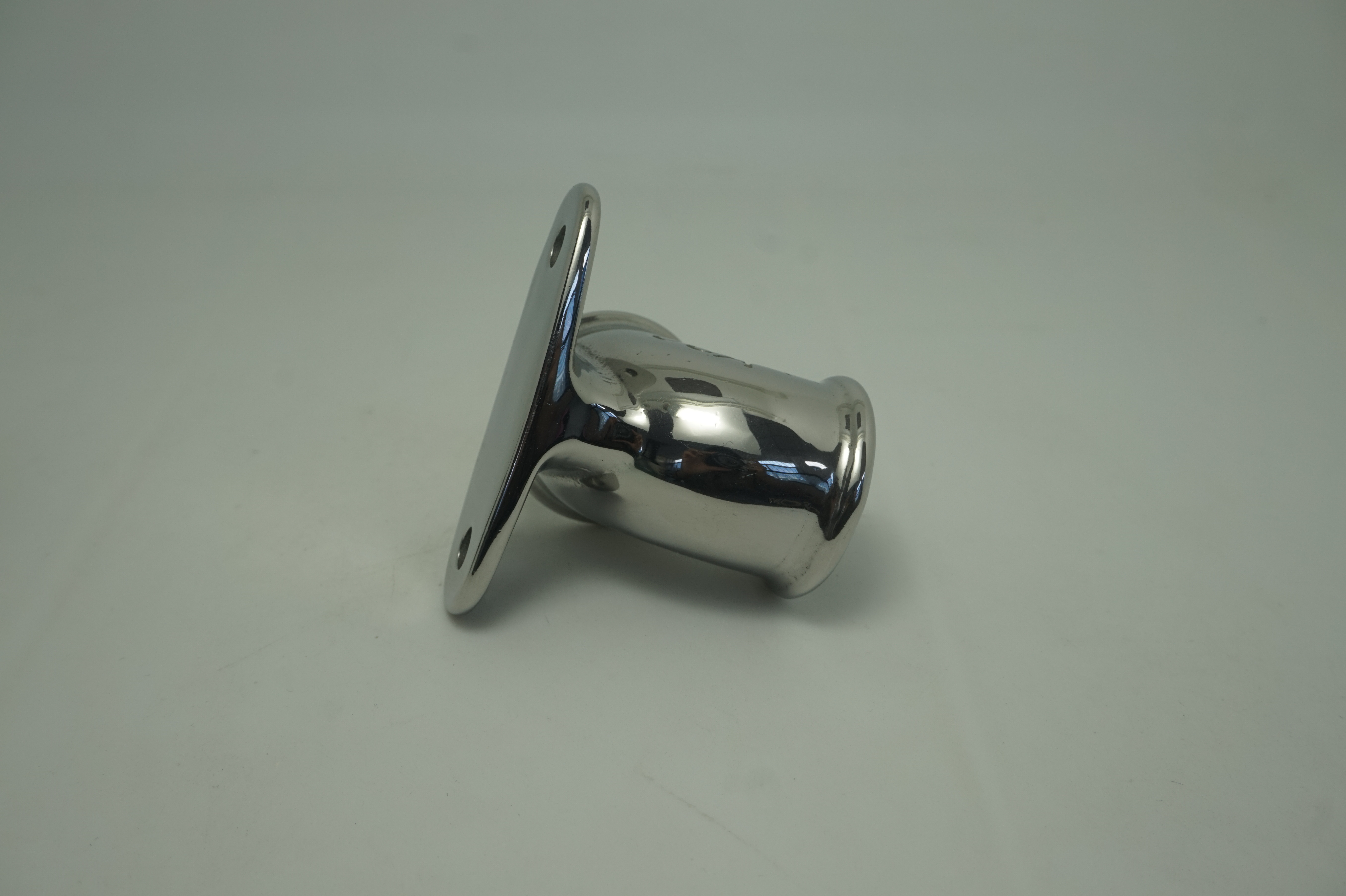
It does. Anodising is partly transparent over the underlying texture, so machining marks, media direction and any residual film remain visible, and embedded media or a silicate deposit can show as a bloom or speckle. Aluminium also needs a clean, freshly finished surface, because a slow dry or a contaminated rinse leaves an oxide or residue layer that shows through the coating. A buyer planning a cosmetic anodised finish should evaluate appearance on an anodised sample rather than on bare metal, and should specify the rinse, dry and handling expectations to the finishing supplier. Acceptance of the coating itself remains with the buyer and the anodiser.
No. A trial shows what happened on the parts tested, with the media, compound and cycle used at that time. It does not guarantee a roughness value, appearance grade, edge radius, dimensional result, cycle time, capacity or cost in production, and it cannot cover the drift that comes from media wear, compound carry-over, water changes or a different machine. What it can do is indicate whether a mechanical route is plausible, which media and compound direction deserves a closer look, and which features need protection. A buyer in Germany should plan a first-article routine and retain a reference part before releasing a production batch.
No. SurfacePolish is a cross-border supplier of finishing machines, media and compounds and runs a free sample trial on parts the buyer sends. A trial reports observations on the parts tested under the settings used; it does not qualify, approve or validate a process, and it does not create biocompatibility, cleanability, sterility or regulatory documentation. Any requirement of that kind must be defined by the buyer and verified by the buyer's own engineering and quality functions, usually with the help of specialist testing providers. For a device programme in Germany, treat the finishing route as one input into the buyer's own verification plan rather than as evidence for it.
Use Hamburg, Germany as the destination on the enquiry and state whether the deliverable is equipment, media and compound, a representative sample review or a line concept. A destination does not imply local stock, a local service point or a local delivery time.
Surface, edge and cleanliness requirements in Hamburg are written against DIN/EN/ISO texts, with CE marking and the EU declaration of conformity as the route for placing machinery on the German market (c3, c7). Aerospace customers apply their own qualification and documentation regimes on top of that, while the VDA framework governs automotive supplier requirements where Hamburg plants feed automotive programmes (c10).
Sources were retrieved on 2026-09-29 and describe the local industrial and trade context only. They do not evidence any SurfacePolish project, shipment, installation or service in Hamburg.
The buyer needs the deburring cycle to leave the sealing land flat and the thread clean, and to leave a surface that anodises without a visible bloom.
Send the material, dimensions, approximate weight, batch quantity, the incoming condition and photographs of the difficult features. Mark which features must not be contacted by media and state how the result will be inspected. This form carries source reference PSEO-0333; quote it if you prefer an additional manual reference.
Open the SurfacePolish enquiry form Email a prepared enquiry
No price, lead time, certification or result is promised here. Confirm whether a sample trial is available for the specific part and what the trial can and cannot show.
Page PSEO-0333 · revised 2026-09-29 · cross-border equipment, media and scoped sample review. City context is sourced and cited above.
Use this local checker to identify missing part and inspection information. It prepares a technical-review brief; it does not approve a machine, process recipe or production result.
Complete the part details to prepare a review brief.
Email : info@surface-polish.com


 IPv6 network supported


 +86-592-2381506