Cast aluminium housings for medical devices combine a cosmetic outer wall with machined datums, and an energetic tumbling cycle tends to satisfy one at the expense of the other. A buyer in Hyderabad, India can send representative castings to SurfacePolish, a cross-border supplier of finishing machines, media and compounds, for a free sample trial. This brief is written for a buyer in Hyderabad working on medical devices; it describes equipment, media and a scoped sample review, not a local polishing service.
What is the minimum wall thickness and unsupported span, and which internal features could trap media?
Who defines and verifies the cleanliness, residue and any regulatory requirement, and by what method and limit?
Which surfaces on this aluminium part carry a cosmetic grade, which are functional seating or sealing faces, and which are indifferent?
Aluminium is a family, and the finishing window moves with alloy and temper. Wrought 6061 in T6 cuts and polishes predictably and holds a uniform finish, which is why it dominates machined device hardware. Wrought 7075 is stronger but harder, more prone to tearing and to differential finishing around machining marks, and it needs gentler media and shorter high-energy contact. Cast aluminium behaves differently again: surface porosity, cold shuts and a hard as-cast skin mean a casting can absorb compound into pores and bleed it out later, and an energetic cycle opens pores that machining had closed. Annealed or solution-treated stock smears under media where the same alloy in T6 would cut cleanly. Record alloy, temper and heat-treatment state before media is chosen rather than after the first batch disappoints.
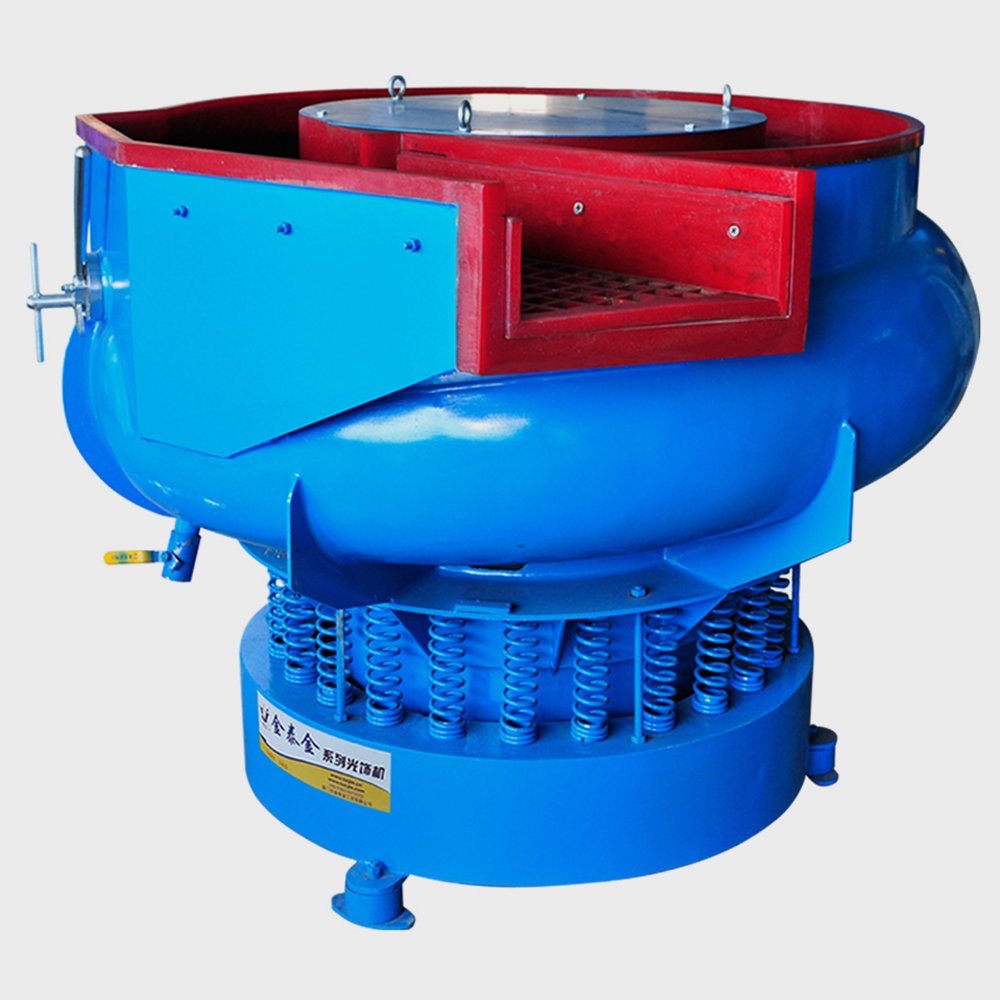
A round bowl vibrator suits small to medium aluminium components that tumble freely and pass a media gate: instrument handles, ferrules, cover plates, brackets. It gives good part-to-part uniformity because the whole load circulates through the same energy field, and it is easy to automate with compound flow and a discharge gate. The limit is size and shape. A long extruded frame, a tall manifold or a part with a protruding boss will not circulate well in a bowl and will shadow itself, leaving the sheltered side unfinished. Tub vibrators handle long and large parts because the working channel is linear and the part can be oriented; the trade-off is slower uniform coverage and a greater tendency for parts to settle in one attitude. Match machine to part envelope first, then to finish.
| Machine route | Where it fits | What it will not do |
|---|---|---|
| Dry polishing machine and dryer | Post-wet drying and dry polishing of aluminium parts before anodising, laser marking, bonding or packaging | Does not remove a burr or refine a surface on its own; residual media dust and incomplete drying still cause marking and coating defects |
| Rotary barrel finishing machine | Gentle, low-energy deburring of small precise aluminium parts in high volume, including thin and light components | Longer cycles for the same result; flat or light parts may slide rather than tumble, and an overloaded barrel stops working the load |
| Centrifugal barrel finishing machine | Short, controlled cycles producing a fine satin finish and a defined edge on small to medium aluminium device parts | High energy bends thin walls and distorts light sections; barrel geometry limits part length and pieces per run |
| Tub vibrator | Long and large aluminium parts such as extruded frames and housings that can be oriented in a linear working channel | Slower uniform coverage, a tendency for parts to settle in one attitude, and greater floor space and media volume than a bowl |
Media shape decides which features receive work. Angle-cut triangles, stars and wedges reach into corners and produce an edge break; spheres and ellipsoids blend surface and remove very little edge material; cylinders and pins work inside bores and slots; flattened or lens shapes reach recesses a rounded body cannot. On aluminium components with mixed features this distinction is the whole decision: a sphere-heavy charge protects a sealing edge but leaves a burr at a bore exit, while a sharp-edged charge removes the burr and rounds the very edge that has to stay accurate. Size matters just as much. Large media cannot enter a small slot but produce a more open, less clogged charge; small media follow tighter geometry but lodge in pockets, pack blind holes and are harder to screen out of the load. Define the smallest feature to be worked before specifying size class.
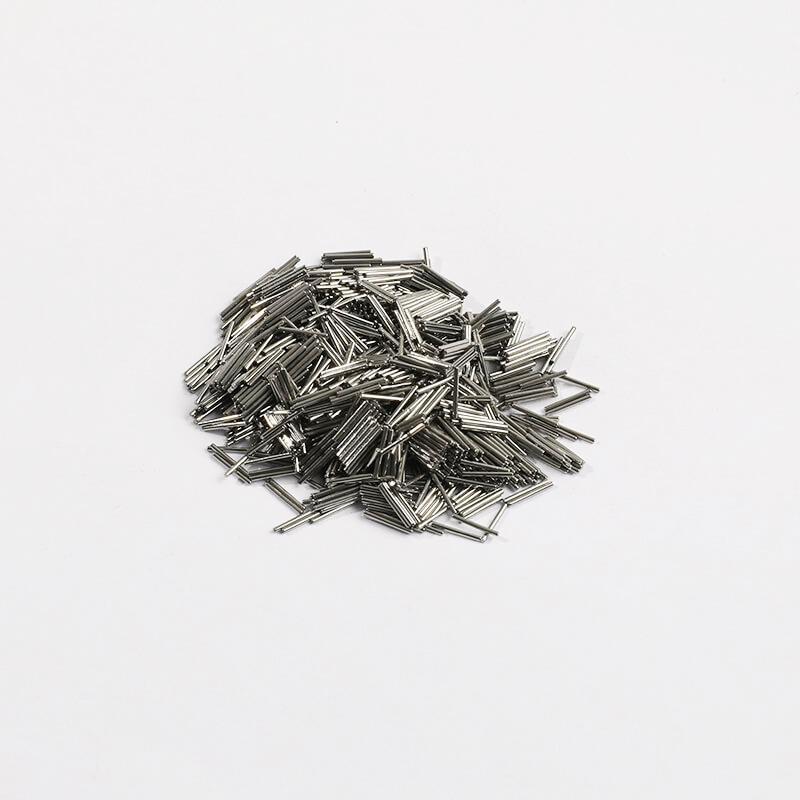
| Media | Best fit | Watch out for |
|---|---|---|
| Ceramic media, angle-cut triangles, medium size class | Heavy-cut deburring on cast or robust aluminium parts where the machined surface will be finished again or is not appearance graded | Rounds functional edges quickly and can chip or peen thin walls; not suitable where a sealing land or press fit is exposed |
| Plastic-bonded media, light to medium abrasive grade, cone and triangle shapes | General deburring and satin finishing on 6061 and 7075 where galling risk rules out dense ceramic | Wears quickly and loses edge definition; cut rate drops as the charge ages and the cosmetic result drifts unless media is screened and topped up |
| Alumina-based ceramic media, low-density, cylindrical and pin shapes | Internal bores, slots and cross-holes on small aluminium components that a rounded tumbling body cannot reach | Pin and cylinder shapes can wedge in a bore or a slot; confirm retrieval and inspection before running a production batch |
| Steel media, balls or pins, for bright polishing | Bright reflective finish on hard, robust steel work where a high lustre is the primary requirement | Deposits iron on aluminium, causing black smut, staining and a galvanic couple; keep it out of any loop shared with aluminium parts |
Aluminium can leave a finishing cycle looking worse in colour than it went in. Over-alkaline compound etches and darkens the surface; hard water leaves mineral spotting that dries into rings; iron transferred from steel media or worn machine parts appears as black smut or scattered dark specks; and a slow or hot dry lets an oxide film form unevenly across a face. Castings with porosity are especially prone, because they hold liquid and release it later as a bloom. Check the part dry, under the lighting the customer will use, and compare against a retained reference part rather than memory. Control compound pH and concentration, rinse with controlled water quality, dry promptly and completely, and keep steel out of the aluminium loop. A stain found after anodising or packaging has already cost the value of the part.
| Failure mode | Likely cause | How to catch it |
|---|---|---|
| Damaged thread or media wedged in a thread root | Threads left exposed to the media field, sharp media entering the crest, insufficient plugging or masking of ports before the cycle | Run a go and no-go gauge through every sampled thread and inspect the root with a borescope or a thread impression |
| Uneven finish with bright and dull bands on the same face | Part settling in one attitude, self-shadowing on a long or recessed part, wrong load ratio, media too large to flow around the geometry | Compare several parts taken from different positions in the load under directional light rather than sampling only the discharge gate |
| Water spotting, rings or mineral staining after drying | Hard rinse water, slow or incomplete dry, droplets trapped in blind holes or under a flange, no final deionised rinse | Inspect the dried part in raking light against a reference, and check rinse-water hardness and conductivity records for the shift |
| Media or abrasive fragment lodged in a blind hole, cross-drilling or thin-wall pocket | Media size class too small for the feature, unshielded pockets, flexing thin wall gripping the fragment, no dedicated retrieval step | Borescope the internal features, weigh against a known-clean reference, tap over white paper, and inspect the residue from an ultrasonic clean |
Hyderabad's industrial base combines pharmaceuticals and life sciences with aerospace and defence manufacturing and heavy electrical equipment. The city is the registered-office base of Aurobindo Pharma, an Indian generics manufacturer, and Telangana's apex chamber, the Federation of Telangana Chambers of Commerce and Industry (established 1917), runs its industry programmes at Federation House in the city. Tata Advanced Systems' Boeing joint venture delivered the 250th AH-64 Apache fuselage from its Hyderabad facility, which the company says employs over 900 engineers and technicians. BHEL keeps a dedicated R&D centre in Hyderabad and lists a Heavy Power Equipment Plant (HPEP) in the city.
For this brief the relevant part of that base is medical: Aurobindo Pharma, an Indian generics manufacturer, has its registered office at Ameerpet, Hyderabad, and FTCCI runs pharma-industry programmes at Federation House in the city.
Hyderabad's mix of pharmaceutical equipment, aerospace structures and heavy electrical hardware puts deburring, edge quality and cleanliness on the production agenda: hygienic stainless components have to meet the equipment owner's cleaning and contamination requirements, while machined aerospace and power-equipment parts are checked for burrs and edge condition before assembly. Process selection also depends on whether media or compound residue can be fully removed from internal passages and crevices, which is a standard qualification question for safety-critical and hygienic parts.
Before choosing a finishing process, a Hyderabad buyer should settle whether acceptance is defined by edge condition on machined parts or by particulate and contamination cleanliness on hygienic stainless parts, and confirm on sample parts that the selected media and compound can be removed completely from the part's internal geometry.
Freight context: Hyderabad Begumpet Airport (Airports Authority of India). AAI maintains the Hyderabad airport page for Begumpet Airport and lists a cargo section. Imported machines and sample parts move under the standard Indian customs procedure — bill of entry and clearance at the airport or port of entry, or at an inland container depot — and notified products are checked for BIS compliance at import.
India's foreign-trade, customs and standards machinery works in English: the Foreign Trade Policy, DGFT's IEC and scheme material, the BIS standards catalogue and Invest India's investor guide are all published in English, and the mandatory import documents are the internationally conventional bill of lading, commercial invoice cum packing list and bill of entry (c1, c3, c6, c10). Payment in the import channel is bank-intermediated; the Foreign Trade Policy treats the irrevocable commercial letter of credit as the instrument that fixes an importer's commitment when import policy changes (c4), so a supplier should expect LC or advance terms rather than open-account credit on a first order. Indian industry associations are explicit about import substitution: the Bombay Chamber of Commerce and Industry states that one of its major focuses today is how to expand manufacturing setups and substitute imported products (c13), so a cross-border equipment seller should expect questions about local support, spares, training and total cost of ownership rather than price alone, and should hold the IEC, GST registration, bill of entry documentation and any BIS obligation as part of the commercial discussion.
An Importer-Exporter Code (IEC) issued by DGFT is a key business identification number which is mandatory for exports or imports, and since the introduction of GST the IEC number is the same as the PAN of the firm (c6). The post-incorporation clearance list published by Invest India includes the IEC, a Customs- Special Valuation Branch reference and the grant of a Bureau of Indian Standards (BIS) licence, and it names the Central Board of Excise and Customs among the agencies in the framework (c10). The Foreign Trade Policy fixes the mandatory import documents as a bill of lading / airway bill / lorry receipt / railway receipt, a commercial invoice cum packing list and a bill of entry, with additional documents or NOCs possible for goods subject to product-specific compliance (c3); it also states that domestic laws, rules, orders, technical specifications and environmental, safety and health norms applicable to domestically produced goods apply mutatis mutandis to imports unless specifically exempted (c2), which is the basis on which a BIS quality-control order can bite on imported machinery. A landed-cost plan therefore needs the correct ITC(HS) classification and the basic customs duty and IGST that follow from it, plus the IEC, the bill of entry documentation and any BIS licence or registration obligation, and a related-party import can additionally be pulled into special customs valuation.
SurfacePolish supplies from Xiamen, China. The buyer's own destination rules, conformity marking, tariff classification and documentation responsibilities stay with the buyer; confirm them against the authorities named above before ordering.
Residue requirements on a device component come from the buyer's own specification, not from a finishing route, and they should be stated as a measurable limit before parts are accepted. Practical checks include visual inspection of internal features under magnification or with a borescope, a wipe test with a defined solvent and a white substrate, a gravimetric non-volatile residue determination on a rinse sample, and a rinse-water conductivity or particulate count where the assembly is sensitive. Blind holes, threads and press fits are the features that retain residue, so sample them specifically rather than only a flat exterior face. If a validated cleaning process, biocompatibility data or a sterility claim is needed, that work belongs to the buyer's own quality system.
Scaling from a bench or pilot run to a producing line changes several things at once, and each has to be planned. The machine must be sized for the part envelope and the throughput the buyer needs, which sets load volume, media quantity and compound dosing. A compound delivery system with a dosing pump, a flow meter and a recirculation or once-through decision is what makes the chemistry repeatable rather than hand-mixed. Media handling needs a screen or separator, a stock of graded media for top-up, and a rule for replacing worn media. Parts need a defined load pattern, and any fixture or mask needs a duplicate so it does not become the bottleneck. Rinse and drying stages must match the downstream requirement. The layout, services and acceptance criteria remain the buyer's engineering decisions.
No. A trial shows what happened on the parts tested, with the media, compound and cycle used at that time. It does not guarantee a roughness value, appearance grade, edge radius, dimensional result, cycle time, capacity or cost in production, and it cannot cover the drift that comes from media wear, compound carry-over, water changes or a different machine. What it can do is indicate whether a mechanical route is plausible, which media and compound direction deserves a closer look, and which features need protection. A buyer in India should plan a first-article routine and retain a reference part before releasing a production batch.
Both alloys can be finished mechanically, but they behave differently. 6061 in T6 cuts and polishes predictably and tolerates a wider media range. 7075 is stronger and harder, tears more readily around machining marks and is less forgiving of heavy media and long energetic cycles. Cast aluminium behaves differently again because porosity and an as-cast skin change how the surface responds. For a part in India, the useful approach is to trial both alloys separately with the same media direction and see where the surface and edge results diverge, then set the route per alloy rather than assuming one setting covers the family.
Send representative parts, including the worst case: the thinnest wall, the tightest sealing edge, the deepest tool mark, a casting with visible porosity, the smallest hole and the feature most likely to trap media. Include two or three pieces of each condition, an untreated reference part, and a note of the alloy and temper, the part number, which surfaces are cosmetic and which are functional, and the edge radius or chamfer allowed at each critical feature. State the current process, the defect that prompted the enquiry and the downstream operation, whether anodising, laser marking, bonding or assembly. The clearer the part definition, the more useful the observations returned.
Use Hyderabad, India as the destination on the enquiry and state whether the deliverable is equipment, media and compound, a representative sample review or a line concept. A destination does not imply local stock, a local service point or a local delivery time.
India's national standards body is the Bureau of Indian Standards (BIS). Pharmaceutical and medical-device buyers in Hyderabad normally write finish, cleanliness and material requirements into their own equipment specifications and vendor qualification documents, on top of the applicable Indian Standards.
Sources were retrieved on 2026-09-29 and describe the local industrial and trade context only. They do not evidence any SurfacePolish project, shipment, installation or service in Hyderabad.
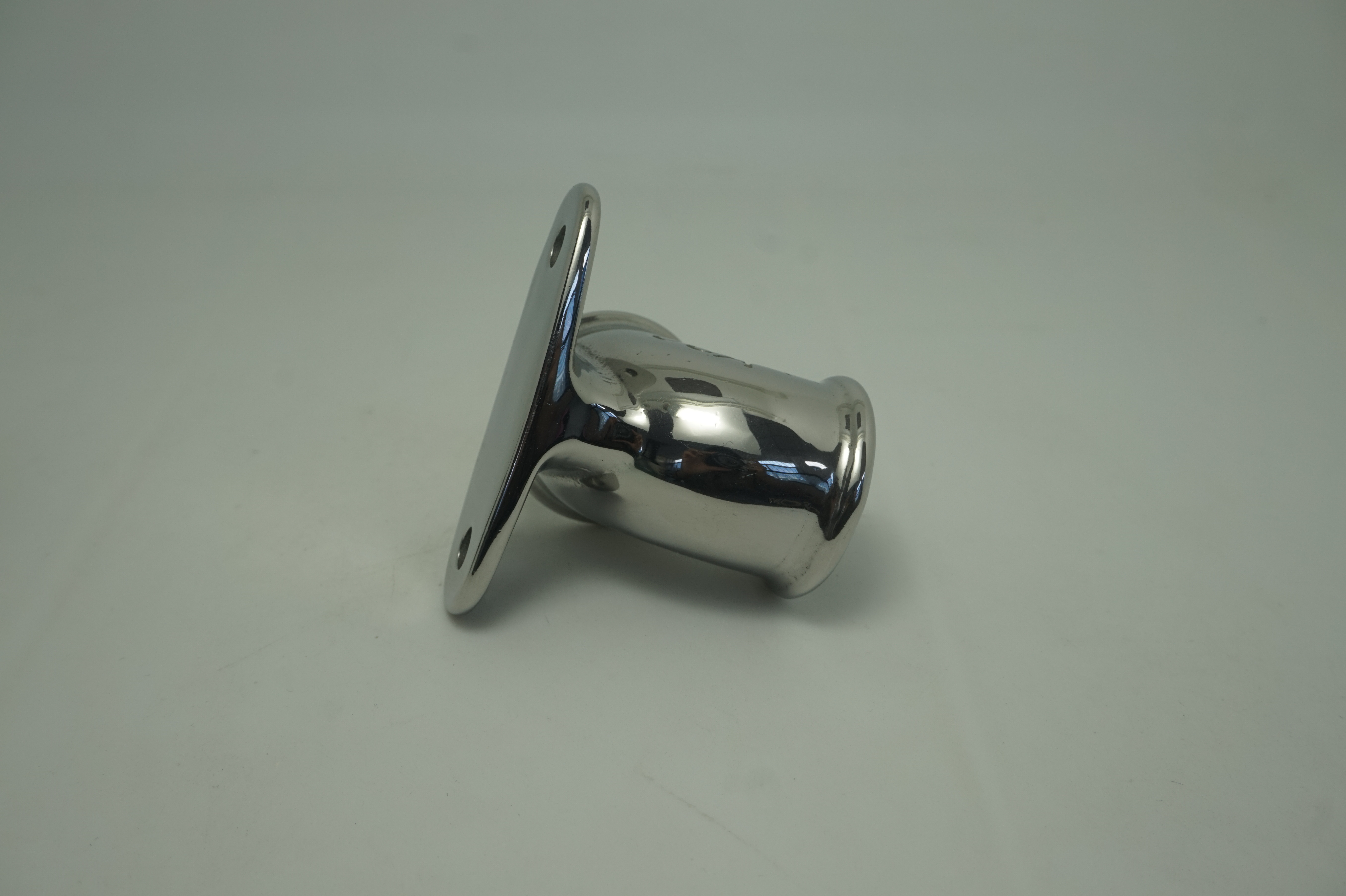
The buyer is fighting media lodged in the casting's internal ribs and a mounting foot that loses flatness during an energetic cycle.
Send the material, dimensions, approximate weight, batch quantity, the incoming condition and photographs of the difficult features. Mark which features must not be contacted by media and state how the result will be inspected. This form carries source reference PSEO-0953; quote it if you prefer an additional manual reference.
Open the SurfacePolish enquiry form Email a prepared enquiry
No price, lead time, certification or result is promised here. Confirm whether a sample trial is available for the specific part and what the trial can and cannot show.
Page PSEO-0953 · revised 2026-09-29 · cross-border equipment, media and scoped sample review. City context is sourced and cited above.
Use this local checker to identify missing part and inspection information. It prepares a technical-review brief; it does not approve a machine, process recipe or production result.
Complete the part details to prepare a review brief.
Email : info@surface-polish.com


 IPv6 network supported


 +86-592-2381506