A finned aluminium cold plate for medical devices puts two requirements in conflict: a burr-free fin array that must not bend, and a gasket land that must keep its flat seat. A buyer in Leipzig, Germany can send representative plates to SurfacePolish, a cross-border supplier of finishing machines, media and compounds, for a free sample trial. This brief is written for a buyer in Leipzig working on medical devices; it describes equipment, media and a scoped sample review, not a local polishing service.
Which surfaces on this aluminium part carry a cosmetic grade, which are functional seating or sealing faces, and which are indifferent?
What downstream operation follows finishing, such as anodising, laser marking, bonding or assembly, and what does it require of the surface?
What is the minimum wall thickness and unsupported span, and which internal features could trap media?
Thin aluminium walls are the most common source of trouble in a vibratory or barrel route. Below roughly two millimetres of wall, part-on-part contact and media impact bend a rib, peen a flange or drive small media into a pocket where it wedges and stays. Blind holes, cross-drillings, undercuts, fine threads and knurled bands all trap media, and a lodged piece of ceramic later shows up as a rattle, a scored bore or a rejected assembly. Count the features that cannot be inspected easily from outside, then decide whether they need masking, a plug, a fixture that shields them or a different route entirely. A thin-wall housing that survives one cycle may not survive a hundred, so ask for wall thickness and unsupported span rather than assuming them.
Disc finishing machines generate high energy at the disc face and remove material and round edges quickly, which is attractive when a batch of aluminium parts needs a burr gone in a short cycle. That same energy is what makes them risky on soft wrought aluminium and on thin castings. Part-on-part contact is high, so parts impinge, peen each other and develop a hammered or uneven surface, and 6061 will smear rather than cut if the compound is wrong or the load too heavy. Fixturing helps: a carrier that holds each part in a fixed attitude reduces random contact but adds load and unload labour to every cycle. Disc routes are also unforgiving on edge control because removal is neither uniform nor easy to localise. Use them where a robust part needs a fast radius.
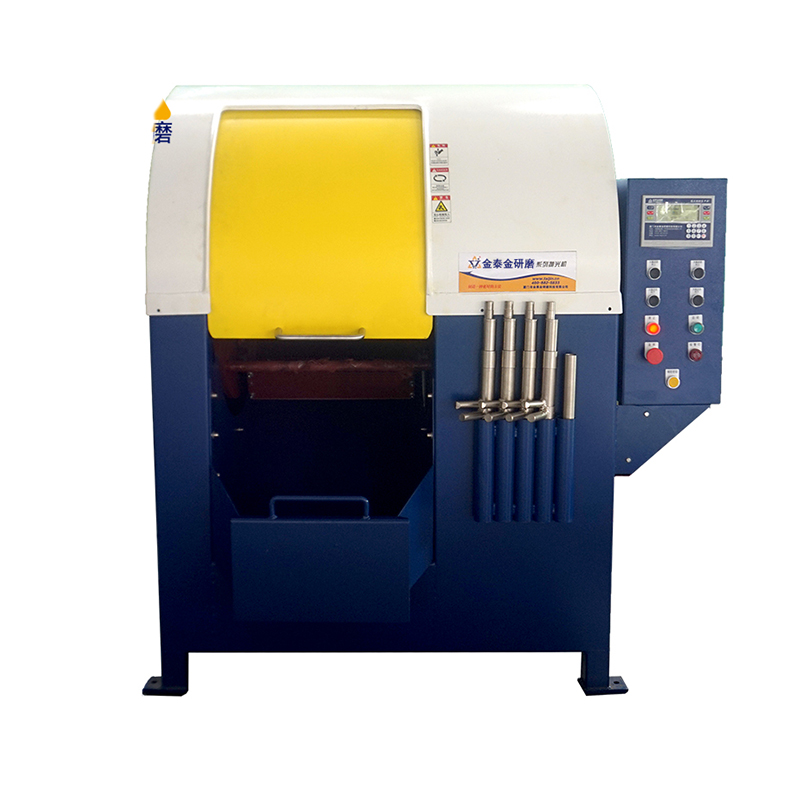
| Machine route | Where it fits | What it will not do |
|---|---|---|
| Tub vibrator | Long and large aluminium parts such as extruded frames and housings that can be oriented in a linear working channel | Slower uniform coverage, a tendency for parts to settle in one attitude, and greater floor space and media volume than a bowl |
| Disc finishing machine | Fast burr removal and edge radiusing on robust aluminium parts where a short cycle and high material removal matter most | High part-on-part contact and impingement risk; smears soft 6061, is hard to localise, and adds fixturing labour to every cycle |
| Grinding finishing machine | Higher material removal on aluminium parts that need a heavy burr or a pronounced chamfer removed before a gentler finishing step | Aggressive on soft aluminium, difficult to control on cosmetic faces and functional edges, and not a finishing step on its own |
| Dry polishing machine and dryer | Post-wet drying and dry polishing of aluminium parts before anodising, laser marking, bonding or packaging | Does not remove a burr or refine a surface on its own; residual media dust and incomplete drying still cause marking and coating defects |
After a wet cycle an aluminium part carries compound residue, suspended fines, media dust and water. Some of it sits in a blind hole, under a flange or in a thread and is not removed by a plain rinse. A dried residue film or a silicate deposit can interfere with later operations: it can show as a bloom under anodising, uneven laser marking, a poor bond or a stained appearance after assembly. Define what the downstream operation needs and state it, because the buyer owns that requirement; the realistic levers are rinse stages, water quality, a controlled dry, and verification by the buyer on the parts they receive. Nothing about equipment supply or a sample trial establishes biocompatibility, sterility or a validated cleaning process, and residue limits for a device must be set and verified by the buyer against their own specification.
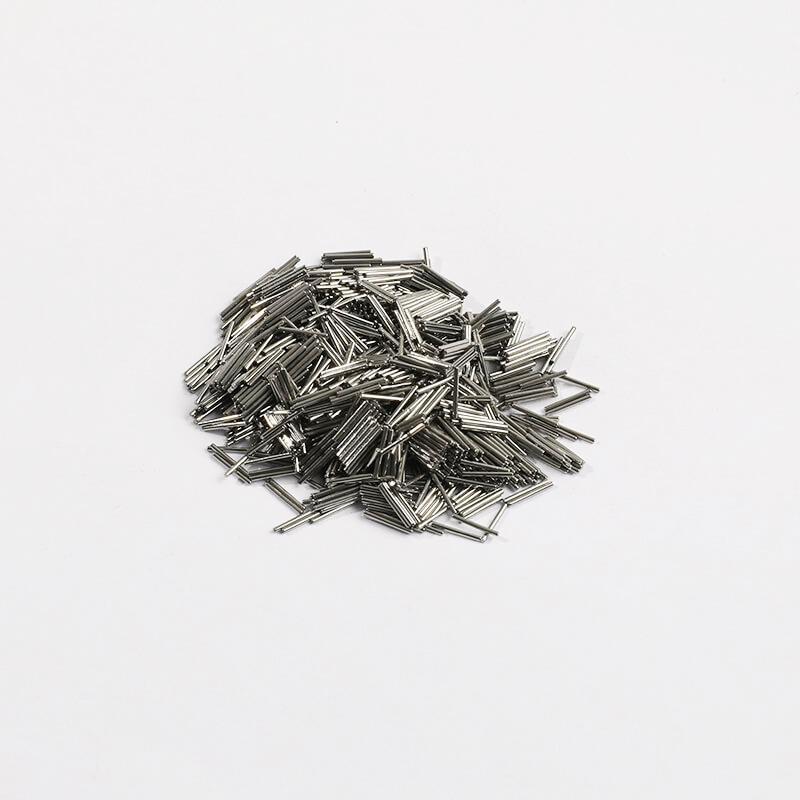
| Media | Best fit | Watch out for |
|---|---|---|
| Dry media, walnut shell, fine grade | Dry polishing, light surface cleaning and preparation before anodising or laser marking on aluminium parts | Shell dust must be extracted and the part cleaned, or the residue interferes with marking, bonding or a later coating step |
| Steel media, balls or pins, for bright polishing | Bright reflective finish on hard, robust steel work where a high lustre is the primary requirement | Deposits iron on aluminium, causing black smut, staining and a galvanic couple; keep it out of any loop shared with aluminium parts |
| Ceramic media, angle-cut triangles, medium size class | Heavy-cut deburring on cast or robust aluminium parts where the machined surface will be finished again or is not appearance graded | Rounds functional edges quickly and can chip or peen thin walls; not suitable where a sealing land or press fit is exposed |
| Alumina-based ceramic media, low-density, cylindrical and pin shapes | Internal bores, slots and cross-holes on small aluminium components that a rounded tumbling body cannot reach | Pin and cylinder shapes can wedge in a bore or a slot; confirm retrieval and inspection before running a production batch |
Galling is the characteristic failure of a mechanical cycle on soft aluminium. Under pressure and without adequate lubrication, aluminium transfers to the media and to neighbouring parts, producing a torn, smeared or picked surface that looks worse than the starting condition. It shows first on edges, on high spots left by machining, and on any face where two aluminium parts rub. Temperature, compound lubricity, load ratio and media weight all push toward it, and a hot, heavy, under-lubricated charge will gall a batch that ran cleanly the day before. Check with low-angle lighting across the surface to reveal smears and cold welds, and confirm with a white cloth for transferred metal. Prevention is mostly charge discipline: lighter media on cosmetic faces, adequate compound flow, a controlled load, and segregation.
| Failure mode | Likely cause | How to catch it |
|---|---|---|
| Media or abrasive fragment lodged in a blind hole, cross-drilling or thin-wall pocket | Media size class too small for the feature, unshielded pockets, flexing thin wall gripping the fragment, no dedicated retrieval step | Borescope the internal features, weigh against a known-clean reference, tap over white paper, and inspect the residue from an ultrasonic clean |
| Galled, smeared or picked surface with transferred aluminium | Media too heavy or too dense for the alloy, insufficient compound lubricity, hot or overloaded charge, aluminium parts rubbing against each other | Inspect under low-angle directional light for smears and cold welds, then wipe with a white lint-free cloth to reveal transferred metal |
| Etched, darkened or chalky surface after wet finishing | Compound pH or concentration outside the aluminium working range, over-alkaline product, long dwell in a hot solution, exhausted compound | Compare a dried part against a retained reference under the customer's lighting, and log compound pH, concentration and temperature for the batch |
| Sealing land or dowel bore edge rounded past the drawing limit | Long or energetic cycle on an unprotected functional edge, sharp-edged media, cumulative material removal across repeated passes | Measure the edge with an optical comparator or radius gauge on a cross-section, or compare a CMM scan of the feature before and after finishing |
Leipzig has rebuilt a manufacturing base around a small number of very large plants and a cluster policy documented in the city's annual economic report: the city counted 633,592 inhabitants and 297,289 socially insured jobs in 2025. Automotive is the largest industrial cluster with 750 companies and 21,743 employees, built on the BMW Group plant (259,430 BMW and MINI vehicles in 2025, a record for the 20-year-old site) and the Porsche plant, where the city reports a new SUV model will be built. Aerospace is being added at Leipzig/Halle Airport, where Deutsche Aircraft is building a factory for the D328eco regional aircraft with a planned capacity of up to 48 aircraft a year, and life sciences (54,203 employees in 2,840 companies) and green tech (15,809 employees in 1,275 companies) are the two other clusters with published employment figures.
For this brief the relevant part of that base is medical: Leipzig's life-sciences cluster employs 54,203 people in 2,840 companies and grew turnover by 73.2 percent since 2015, with the BioCity Campus hosting biotech, MedTech start-ups, the Fraunhofer IZI and the university's ICCAS medical-technology institute.
The parts that matter in Leipzig are vehicle bodies and powertrains from the BMW and Porsche plants and their 750-strong supplier base, plus aircraft structures and engine components for the D328eco programme, all of which carry deburring, edge and cleanliness requirements. Aerospace and automotive both work to defined edge and surface conditions before painting, sealing or assembly, and 24/7 shift operation at the vehicle plants puts pressure on a supplier's ability to hold those conditions at volume. Life-science and medical-technology firms on the BioCity Campus add a second requirement pattern based on clean, burr-free stainless and aluminium surfaces rather than high removal rates.
Clarify first whether the part belongs to the automotive volume regime (IATF/VDA cleanliness and edge specs, three-shift supply) or to aerospace/medical (EN 9100 or ISO 13485 documentation and traceability), because that choice fixes the media, process control and documentation a Leipzig buyer has to demand from a finishing equipment supplier.
Freight context: Leipzig/Halle Airport (cargo hub, DHL and Deutsche Aircraft site), Leipzig rail freight and industrial sidings (Industriestammgleis serving the BMW plant and Logistikpark Leipzig), A9 and A14 motorway junctions / Leipzig logistics parks. Leipzig's logistics cluster employs 40,020 people in 1,219 companies with EUR 1.05 billion turnover, and the city reports the airport being used as a 24/7 hub by Deutsche Aircraft; logistics firms including Kühne + Nagel and DHL Global Forwarding operate at the location, alongside specialised pharma and biotech logistics. Machines and sample parts can arrive by air freight at Leipzig/Halle or by road/rail via the city's freight sidings and logistics parks.
Germany sits inside the EU customs union, so Chinese-origin industrial machinery enters against the EU's common commercial tariff rather than a German national tariff, and the duty that applies is determined by the commodity code declared on the import declaration. China is one of the EU's largest goods trading partners and the EU has long run a goods deficit with it, while the Commission characterises the relationship as simultaneously partnership, competition and systemic rivalry (c1, c2). The Commission publishes the EU's trade agreements; no agreement with China appears in that overview, so Chinese-origin goods cannot claim a preferential origin rate and are assessed under the standard tariff (c8). German customs is administered by the Zoll under the Generalzolldirektion, and the importer must hold an EORI number - valid throughout the European Union and replacing the former German customs number - before goods can be cleared (c5, c6).
German is the working language of drawings, contracts, test reports and conformity documentation, and German buyers normally expect English-language technical documentation to be supplied alongside it. Procurement is documentation-driven: the EU declaration of conformity, the technical file, and the identity of the EU-based importer or authorised representative are settled before the order, and the EORI registration and customs declaration are the importer's responsibility rather than the exporter's (c3, c4, c5). Germany is the world's leading machinery and equipment manufacturer, so quotations compete against established domestic builders on technical documentation and measurable process data rather than on price alone (c9). Payment, delivery and risk terms are normally fixed by written contract with a named Incoterm, and classification (commodity code) is commonly confirmed in writing before shipment because it drives the duty and the import declaration.
SurfacePolish supplies from Xiamen, China. The buyer's own destination rules, conformity marking, tariff classification and documentation responsibilities stay with the buyer; confirm them against the authorities named above before ordering.
Residue requirements on a device component come from the buyer's own specification, not from a finishing route, and they should be stated as a measurable limit before parts are accepted. Practical checks include visual inspection of internal features under magnification or with a borescope, a wipe test with a defined solvent and a white substrate, a gravimetric non-volatile residue determination on a rinse sample, and a rinse-water conductivity or particulate count where the assembly is sensitive. Blind holes, threads and press fits are the features that retain residue, so sample them specifically rather than only a flat exterior face. If a validated cleaning process, biocompatibility data or a sterility claim is needed, that work belongs to the buyer's own quality system.
The first good batch is not the hard part; holding the finish over weeks is. Media wear, the charge volume falls, fines accumulate in the compound, screens clog and the rinse water changes, so the same timer produces a different result as the charge ages. Drift shows first as a slightly duller surface, a burr that reappears at a bore exit, or a finish that no longer matches the retained reference. Control it with a media top-up and replacement rule based on screening rather than the calendar, a compound concentration and pH check each shift, a rinse-water quality check, and a first-article comparison against the retained reference at the start of every batch. Any change of media supplier, compound, water supply or machine setting invalidates the previous baseline and should be treated as a new first-article event.
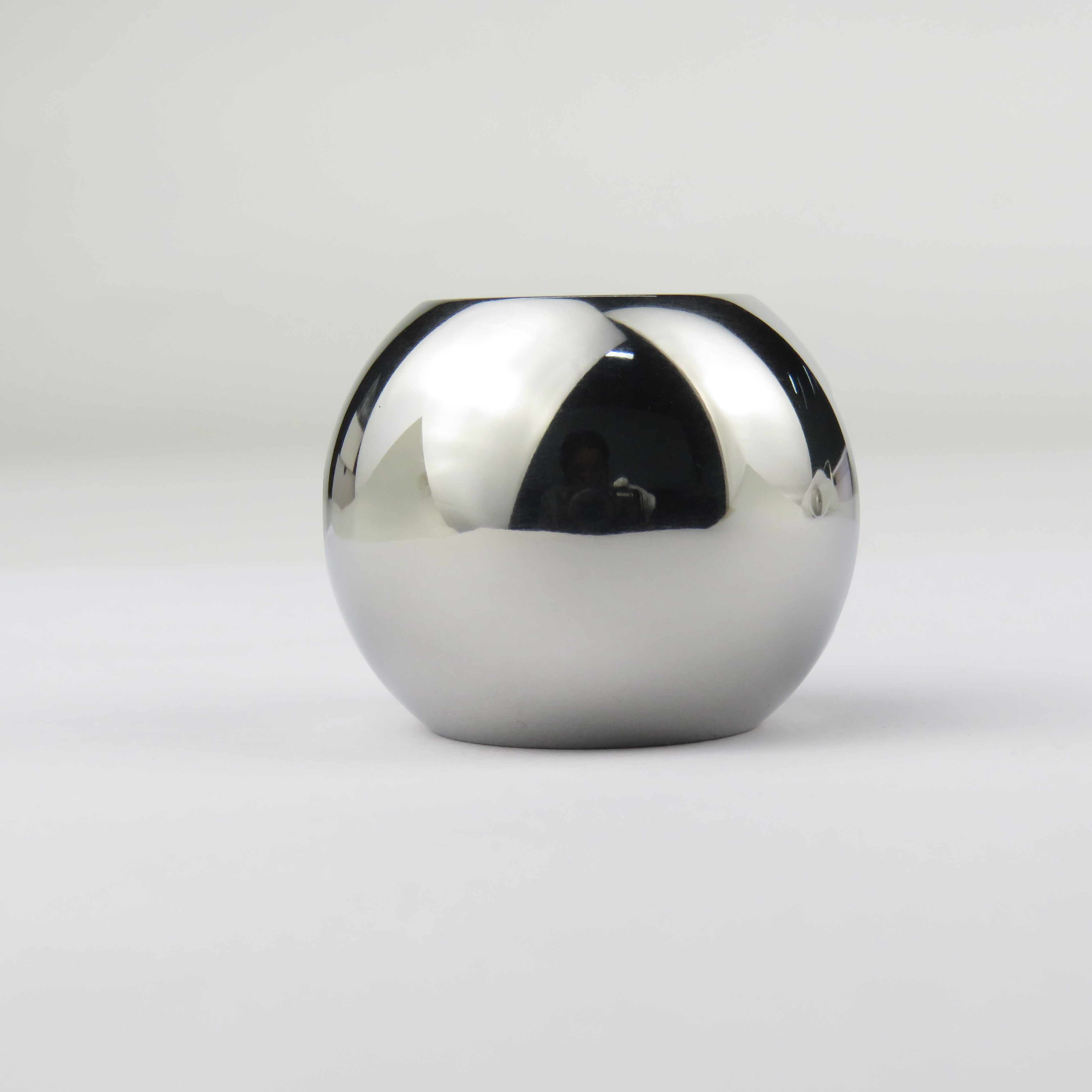
It does. Anodising is partly transparent over the underlying texture, so machining marks, media direction and any residual film remain visible, and embedded media or a silicate deposit can show as a bloom or speckle. Aluminium also needs a clean, freshly finished surface, because a slow dry or a contaminated rinse leaves an oxide or residue layer that shows through the coating. A buyer planning a cosmetic anodised finish should evaluate appearance on an anodised sample rather than on bare metal, and should specify the rinse, dry and handling expectations to the finishing supplier. Acceptance of the coating itself remains with the buyer and the anodiser.
Both alloys can be finished mechanically, but they behave differently. 6061 in T6 cuts and polishes predictably and tolerates a wider media range. 7075 is stronger and harder, tears more readily around machining marks and is less forgiving of heavy media and long energetic cycles. Cast aluminium behaves differently again because porosity and an as-cast skin change how the surface responds. For a part in Germany, the useful approach is to trial both alloys separately with the same media direction and see where the surface and edge results diverge, then set the route per alloy rather than assuming one setting covers the family.
Start with media that are softer or lighter than the workpiece is likely to tolerate: plastic-bonded media in a light or medium abrasive grade, or a low-density ceramic. Dense ceramic and steel media that cut steel efficiently will embed, smear or gall aluminium and can implant iron that later shows as staining. Media weight, compound lubricity and load ratio matter as much as family, because a heavy, hot, under-lubricated charge will gall parts even with the right media. A buyer in Germany should treat media selection as a two-stage question: what removes the burr, and what produces the final cosmetic surface without transfer.
Use Leipzig, Germany as the destination on the enquiry and state whether the deliverable is equipment, media and compound, a representative sample review or a line concept. A destination does not imply local stock, a local service point or a local delivery time.
Automotive suppliers in Leipzig work to IATF 16949 and VDA 6.3 with VDA 19.1 / ISO 16232 technical-cleanliness limits; aerospace work follows EN 9100-series quality systems with specific surface and edge requirements, and medical-technology and biotech suppliers work to ISO 13485. Surface-texture callouts are normally expressed to ISO 21920 and material conformity to EN 10204 (3.1), with CE marking required for machinery placed on the EEA market.
Sources were retrieved on 2026-09-29 and describe the local industrial and trade context only. They do not evidence any SurfacePolish project, shipment, installation or service in Leipzig.
The buyer needs burrs removed from the fin array without bending the fins or rounding the gasket land that seals the assembly.
Send the material, dimensions, approximate weight, batch quantity, the incoming condition and photographs of the difficult features. Mark which features must not be contacted by media and state how the result will be inspected. This form carries source reference PSEO-0373; quote it if you prefer an additional manual reference.
Open the SurfacePolish enquiry form Email a prepared enquiry
No price, lead time, certification or result is promised here. Confirm whether a sample trial is available for the specific part and what the trial can and cannot show.
Page PSEO-0373 · revised 2026-09-29 · cross-border equipment, media and scoped sample review. City context is sourced and cited above.
Use this local checker to identify missing part and inspection information. It prepares a technical-review brief; it does not approve a machine, process recipe or production result.
Complete the part details to prepare a review brief.
Email : info@surface-polish.com


 IPv6 network supported


 +86-592-2381506