Long thin-wall aluminium frames for medical devices will not circulate freely in a round bowl, so one face usually comes out duller than the rest. A buyer in Melbourne, Australia weighing a tub vibrator against a fixtured route can send parts to SurfacePolish, a cross-border supplier of finishing machines, media and compounds, for a free sample trial. This brief is written for a buyer in Melbourne working on medical devices; it describes equipment, media and a scoped sample review, not a local polishing service.
Who defines and verifies the cleanliness, residue and any regulatory requirement, and by what method and limit?
Which surfaces on this aluminium part carry a cosmetic grade, which are functional seating or sealing faces, and which are indifferent?
What edge radius or chamfer is allowed at each mating, sealing and press-fit feature, and how will it be measured?
Controlled edge rounding is where a finishing route earns or loses its place. Every machined aluminium edge carries a burr and a stress concentration, and a deburring cycle removes both, but it also moves the edge position. On a mating face, a seal groove, a bearing seat or a dowel hole that movement is a functional change, not a cosmetic one. Establish the allowed edge radius or chamfer per feature, then measure the finished edge against it rather than judging by eye, using an optical comparator or a radius gauge on a sectioned or replica sample. A part with generous cosmetic edges and one tight sealing edge usually needs a shielded fixture or selective hand finishing after the machine cycle. Deciding this after the first batch has run is how an assembly ends up with a leak path.
After a wet cycle an aluminium part carries compound residue, suspended fines, media dust and water. Some of it sits in a blind hole, under a flange or in a thread and is not removed by a plain rinse. A dried residue film or a silicate deposit can interfere with later operations: it can show as a bloom under anodising, uneven laser marking, a poor bond or a stained appearance after assembly. Define what the downstream operation needs and state it, because the buyer owns that requirement; the realistic levers are rinse stages, water quality, a controlled dry, and verification by the buyer on the parts they receive. Nothing about equipment supply or a sample trial establishes biocompatibility, sterility or a validated cleaning process, and residue limits for a device must be set and verified by the buyer against their own specification.
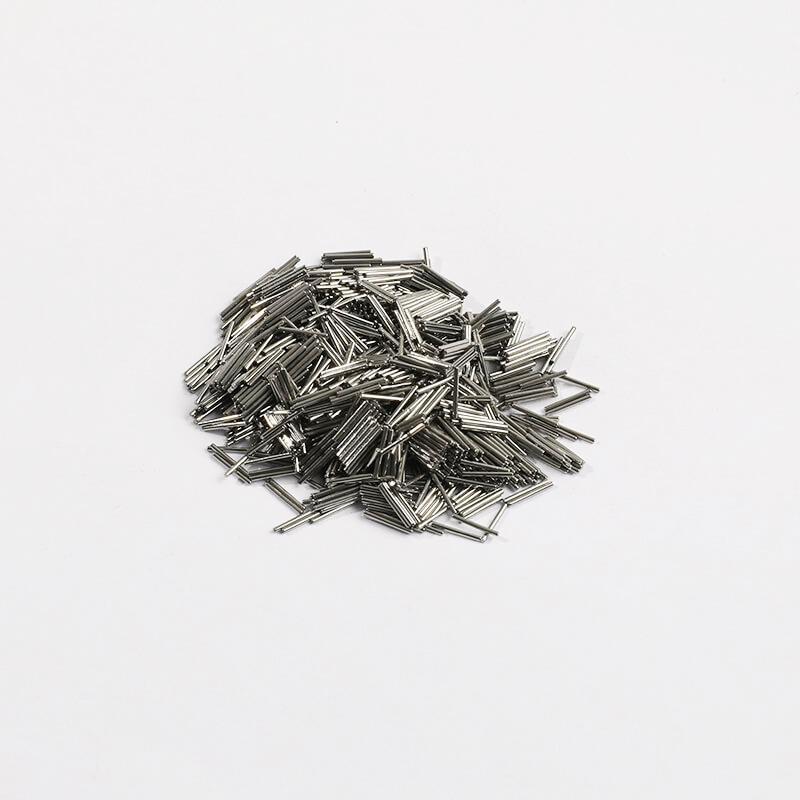
| Media | Best fit | Watch out for |
|---|---|---|
| Ceramic media, angle-cut triangles, medium size class | Heavy-cut deburring on cast or robust aluminium parts where the machined surface will be finished again or is not appearance graded | Rounds functional edges quickly and can chip or peen thin walls; not suitable where a sealing land or press fit is exposed |
| Dry media, corn cob with a polishing compound charge | Final dry polish and drying assistance on small aluminium parts where a wet rinse and dry would leave spotting | Compound loading saturates with use and the media cakes; the charge needs regular replacement, and soft aluminium can still smear |
| Dry media, walnut shell, fine grade | Dry polishing, light surface cleaning and preparation before anodising or laser marking on aluminium parts | Shell dust must be extracted and the part cleaned, or the residue interferes with marking, bonding or a later coating step |
| Plastic-bonded media, light to medium abrasive grade, cone and triangle shapes | General deburring and satin finishing on 6061 and 7075 where galling risk rules out dense ceramic | Wears quickly and loses edge definition; cut rate drops as the charge ages and the cosmetic result drifts unless media is screened and topped up |
Magnetic finishing works on small aluminium parts with fine internal features, using a magnetic field to drive small pins or abrasive media through holes, slots and recesses that a tumbling load cannot reach. It is useful on small fittings, valve spools, connector components and parts with internal cross-holes, and it can be gentle enough for thin sections if field strength and cycle are controlled. Its limits are size and throughput: the working envelope is small and the process suits a narrow part family rather than a mixed batch, and fine media or pins lodge in blind features just as tumbling media do, so retrieval and inspection matter. Dry polishing machines and dryers handle the post-wet step, removing water from blind holes before anodising or laser marking, where a trapped droplet becomes a stain or a marking defect.
| Machine route | Where it fits | What it will not do |
|---|---|---|
| Grinding finishing machine | Higher material removal on aluminium parts that need a heavy burr or a pronounced chamfer removed before a gentler finishing step | Aggressive on soft aluminium, difficult to control on cosmetic faces and functional edges, and not a finishing step on its own |
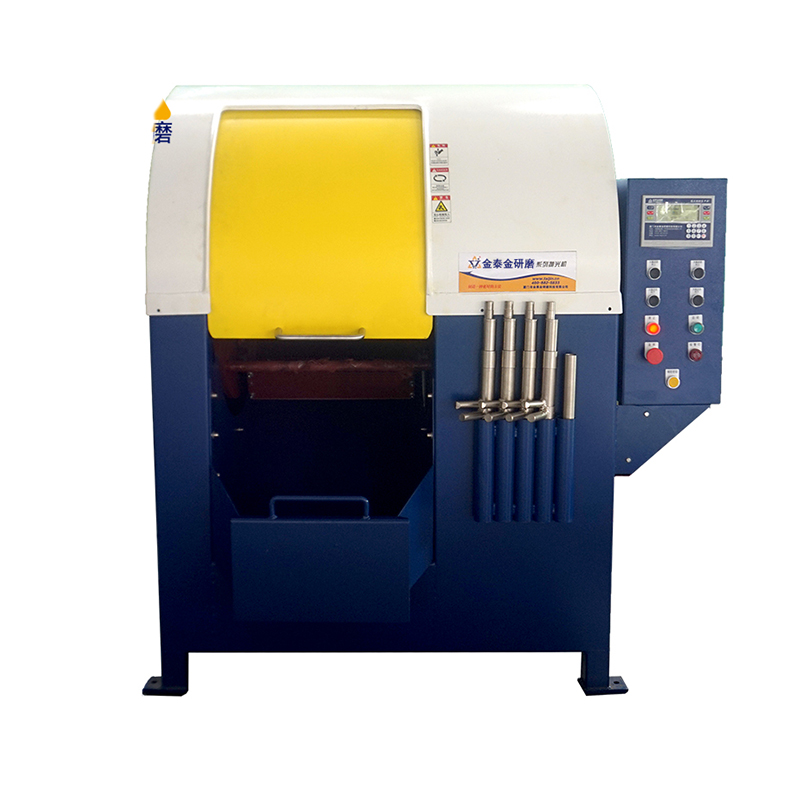
| Magnetic finishing machine | Small aluminium parts with fine internal features such as cross-holes, slots and recesses that tumbling media cannot reach | Small working envelope and low throughput; pins and fine media can lodge in blind features, and mixed part families are awkward |
| Disc finishing machine | Fast burr removal and edge radiusing on robust aluminium parts where a short cycle and high material removal matter most | High part-on-part contact and impingement risk; smears soft 6061, is hard to localise, and adds fixturing labour to every cycle |
| Tub vibrator | Long and large aluminium parts such as extruded frames and housings that can be oriented in a linear working channel | Slower uniform coverage, a tendency for parts to settle in one attitude, and greater floor space and media volume than a bowl |
Media cannot tell a cosmetic edge from a sealing edge, so a cycle that breaks a burr nicely on the outside of a housing can round a seal land, a dowel bore or a press-fit shoulder until it no longer functions. The drift is gradual and cumulative: each pass removes a little more material, and a batch that was within tolerance at the start of a media charge may be outside it by the end. Watch for a seal face that has lost its flat land, a bore edge closed to a radius, or a chamfer grown past the drawing. Detect it with an optical comparator or radius gauge on a cross-section, or by measuring the feature with a CMM before and after. Protection comes from shielding the functional edge, rounder and lighter media, and a first-article check.
| Failure mode | Likely cause | How to catch it |
|---|---|---|
| Damaged thread or media wedged in a thread root | Threads left exposed to the media field, sharp media entering the crest, insufficient plugging or masking of ports before the cycle | Run a go and no-go gauge through every sampled thread and inspect the root with a borescope or a thread impression |
| Bloom, bleed-out or staining appearing days after finishing on a casting | Porosity holding compound or rinse water, an as-cast skin opened by the cycle, incomplete drying before packaging or anodising | Hold finished castings for a defined period and re-inspect, and section a rejected part to confirm whether the residue originates in the pores |
| Etched, darkened or chalky surface after wet finishing | Compound pH or concentration outside the aluminium working range, over-alkaline product, long dwell in a hot solution, exhausted compound | Compare a dried part against a retained reference under the customer's lighting, and log compound pH, concentration and temperature for the batch |
| Uneven finish with bright and dull bands on the same face | Part settling in one attitude, self-shadowing on a long or recessed part, wrong load ratio, media too large to flow around the geometry | Compare several parts taken from different positions in the load under directional light rather than sampling only the discharge gate |
Greater Melbourne's manufacturing base spans automotive and caravan manufacturing, engineering and metal work, food and beverage product manufacturing, and medical technology and pharmaceuticals manufacturing, all of which fall within the remit of the Victorian Government's manufacturing industry advisory group. Public research capacity sits inside the metro area: CSIRO operates Victorian sites including Clayton, Parkville and a Food Innovation Centre at Werribee, and BioMelbourne Network is the state's membership association for biotechnology, medical technology and health innovation. Freight moves between the metropolitan intermodal terminals at Dynon, South Dynon, Spotswood, Laverton, Somerton and the Swanson Dock terminals, which connect road and rail movements to the Port of Melbourne.
For this brief the relevant part of that base is medical: The advisory group covers medical technology and pharmaceuticals manufacturing, and BioMelbourne Network is the Victorian industry association for biotechnology, medical technology and health innovation.
Melbourne's mix of metal fabrication, food and beverage plant, and medical device manufacturing puts surface condition on the critical path in several ways: deburring and edge rounding affect fit, fatigue life and the safety of parts handled in automated lines, while cleanliness and residue control matter where components go into food-contact equipment or medical products. Batch finishing choices also interact with the mix of low-volume fabrication and higher-volume repetitive parts typical of the metro area, because the same workshop often needs both.
A Melbourne buyer should decide whether the requirement is a functional edge and burr condition on specific features or a blanket surface specification, because that determines media selection and cycle time - and for food-contact or medical parts it should also settle the cleaning and residue acceptance criteria before any equipment is chosen.
Freight context: Port of Melbourne, Dynon and South Dynon intermodal terminals, Somerton intermodal terminal, Laverton intermodal terminal, Melbourne Airport. Victoria's freight system is coordinated by Freight Victoria, and the state publishes the metropolitan intermodal terminal list that feeds the Port of Melbourne, including terminals operated by Qube, Pacific National, SCT Logistics, Sadleirs, ACFS and Austrak. Containerised imports of finishing equipment normally arrive through the Port of Melbourne and are unpacked at or railed from one of those metropolitan terminals; intermodal terminals are defined by the state as locations for transferring freight between transport modes.
The national standards body is Standards Australia, which publishes Australian Standards (AS) and joint Australian/New Zealand Standards (AS/NZS); on their own, standards are voluntary and there is no general requirement for the public to comply, but state and Commonwealth governments often refer to AS or AS/NZS standards in legislation and they can then become mandatory. For finishing and machinery work, the applicable documents are the ones cited in the buyer's own contract, purchase specification, licence condition or safety management system, together with the marking rules in AS/NZS 4417.1 and AS/NZS 4417.2 for in-scope electrical equipment sold under the EESS.
The Australian Border Force (ABF) is the customs authority and clears imported goods through customs; all goods arriving in Australia must be declared unless an exception applies, goods valued at up to A$1,000 can be imported without a formal import declaration, and entry is made through the Integrated Cargo System (Form B650 for sea or air cargo). Generally all goods imported into Australia are liable for duties and taxes unless an exemption or concession applies, and most imports are subject to 10% GST, so classification, customs valuation and any preferential tariff claim drive the landed cost; a licensed customs broker is the normal route for a first-time importer. Electrical equipment can fall under the Electrical Equipment Safety System, under which the first Australian supplier registers as a Responsible Supplier, holds an ABN, makes a Responsible Supplier Declaration and marks the equipment with the Regulatory Compliance Mark (RCM) in accordance with AS/NZS 4417.1 and AS/NZS 4417.2. Imported goods may also require a trade description naming the country of manufacture, and machinery that is not in-scope electrical equipment still has to meet state work health and safety duties covering plant.
SurfacePolish supplies from Xiamen, China. The buyer's own destination rules, conformity marking, tariff classification and documentation responsibilities stay with the buyer; confirm them against the authorities named above before ordering.
Some acceptance criteria are functional and cannot be judged by looking. Check edge condition on sealing and mating features with a radius gauge or optical comparator, and verify that a seal land is still flat and wide enough to seat. Measure critical bores, dowel holes, press-fit diameters and any feature the cycle can move, and compare against drawing limits rather than a nominal. Confirm that threads run freely with a gauge and that no media fragment is trapped in a thread root or cross-hole. Where a lid, gasket or mating plate will seat on the finished surface, a simple assembly or leak test on a first-article part proves more than visual inspection. The buyer defines which checks apply and what the limits are; a finishing trial reports what it observed on the parts it received.
Send parts that represent the real production condition, not a polished bench sample. A useful set includes the worst case: the thinnest wall, the tightest sealing edge, the deepest tool mark, the casting with visible porosity, the smallest hole and the feature most likely to trap media. Include two or three pieces of each condition so one can be sectioned or inspected internally, and include an untreated part as the comparison reference. Label every part with its alloy and temper, its part number, the surfaces that are cosmetic, the surfaces that are functional, and the edge radius or chamfer allowed at each critical feature. State the current process and the defect that prompted the enquiry, plus the downstream operation such as anodising, laser marking or assembly.

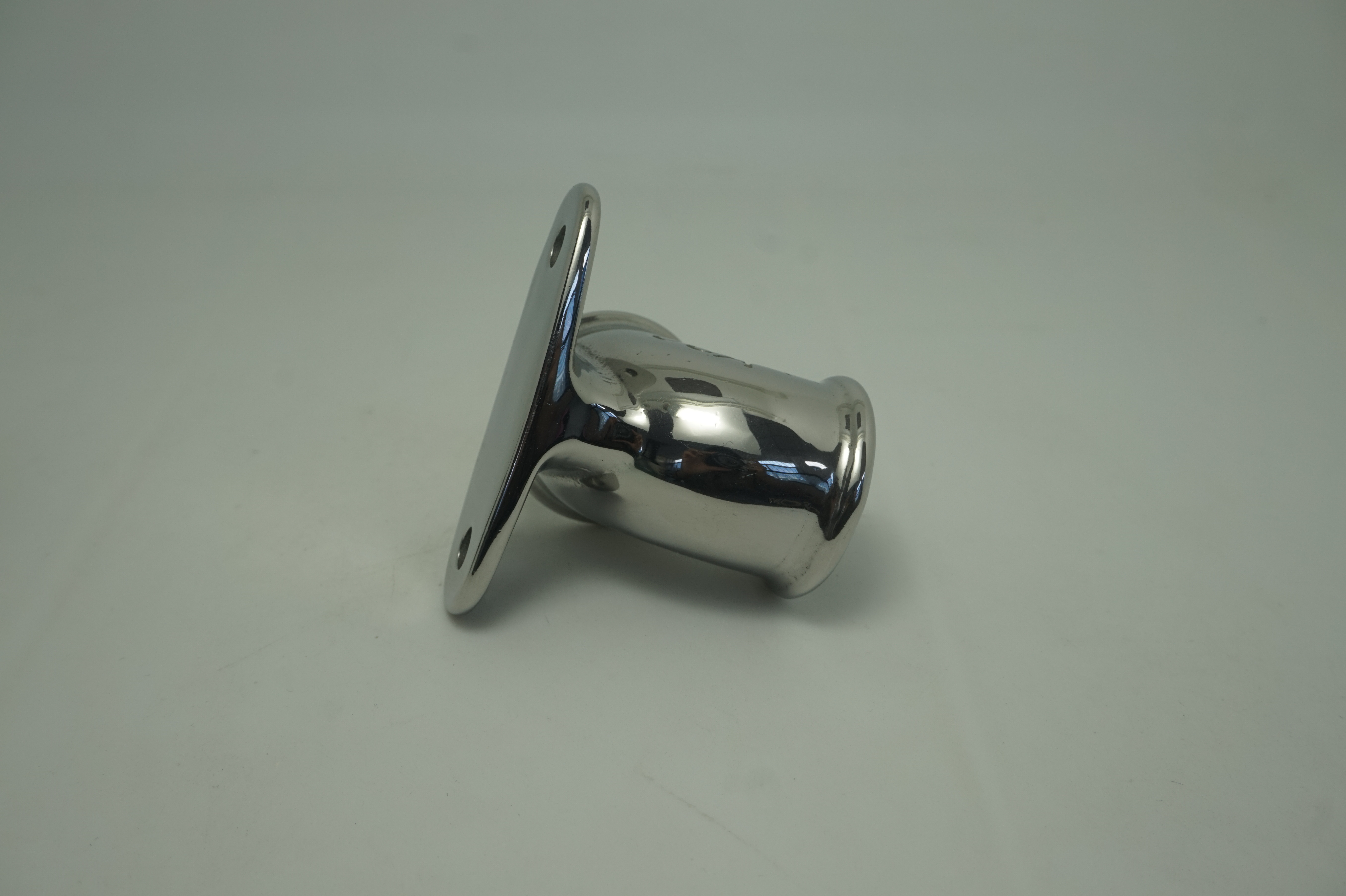
It will if the edge is exposed to the media for long enough. Media cannot distinguish a cosmetic edge from a seal land, a dowel bore or a press-fit shoulder, and rounding accumulates gradually, so a batch inside tolerance at the start of a media charge can be outside it later. Protection comes from shielding or masking the functional edge, using rounder and lighter media, shortening the cycle, and checking the feature with an optical comparator, radius gauge or CMM rather than by eye. A buyer in Australia should state the allowed edge radius per feature on the drawing, because a blanket edge-break note will be read literally.
Both alloys can be finished mechanically, but they behave differently. 6061 in T6 cuts and polishes predictably and tolerates a wider media range. 7075 is stronger and harder, tears more readily around machining marks and is less forgiving of heavy media and long energetic cycles. Cast aluminium behaves differently again because porosity and an as-cast skin change how the surface responds. For a part in Australia, the useful approach is to trial both alloys separately with the same media direction and see where the surface and edge results diverge, then set the route per alloy rather than assuming one setting covers the family.
No. SurfacePolish is a cross-border supplier of finishing machines, media and compounds and runs a free sample trial on parts the buyer sends. A trial reports observations on the parts tested under the settings used; it does not qualify, approve or validate a process, and it does not create biocompatibility, cleanability, sterility or regulatory documentation. Any requirement of that kind must be defined by the buyer and verified by the buyer's own engineering and quality functions, usually with the help of specialist testing providers. For a device programme in Australia, treat the finishing route as one input into the buyer's own verification plan rather than as evidence for it.
Use Melbourne, Australia as the destination on the enquiry and state whether the deliverable is equipment, media and compound, a representative sample review or a line concept. A destination does not imply local stock, a local service point or a local delivery time.
Victorian buyers reference Australian Standards (AS) and joint AS/NZS standards named in their own specifications, purchase orders or safety systems; these standards are voluntary on their own but become effectively mandatory when state or Commonwealth legislation refers to them. Electrical equipment in scope for the EESS must carry the Regulatory Compliance Mark in accordance with AS/NZS 4417.1 and AS/NZS 4417.2, and machinery used in Victorian workplaces sits under the state's work health and safety duties for plant.
Sources were retrieved on 2026-09-29 and describe the local industrial and trade context only. They do not evidence any SurfacePolish project, shipment, installation or service in Melbourne.
The buyer cannot keep the long frame from shadowing in a bowl route and needs to know whether a tub or a fixture is the realistic answer.
Send the material, dimensions, approximate weight, batch quantity, the incoming condition and photographs of the difficult features. Mark which features must not be contacted by media and state how the result will be inspected. This form carries source reference PSEO-0713; quote it if you prefer an additional manual reference.
Open the SurfacePolish enquiry form Email a prepared enquiry
No price, lead time, certification or result is promised here. Confirm whether a sample trial is available for the specific part and what the trial can and cannot show.
Page PSEO-0713 · revised 2026-09-29 · cross-border equipment, media and scoped sample review. City context is sourced and cited above.
Use this local checker to identify missing part and inspection information. It prepares a technical-review brief; it does not approve a machine, process recipe or production result.
Complete the part details to prepare a review brief.
Email : info@surface-polish.com


 IPv6 network supported


 +86-592-2381506