A finned aluminium cold plate for medical devices puts two requirements in conflict: a burr-free fin array that must not bend, and a gasket land that must keep its flat seat. A buyer in Munich, Germany can send representative plates to SurfacePolish, a cross-border supplier of finishing machines, media and compounds, for a free sample trial. This brief is written for a buyer in Munich working on medical devices; it describes equipment, media and a scoped sample review, not a local polishing service.
What downstream operation follows finishing, such as anodising, laser marking, bonding or assembly, and what does it require of the surface?
Which surfaces on this aluminium part carry a cosmetic grade, which are functional seating or sealing faces, and which are indifferent?
Who defines and verifies the cleanliness, residue and any regulatory requirement, and by what method and limit?
Begin by marking up the drawing surface by surface. An aluminium device housing may carry a visible cosmetic face, several machined mating faces that set a seal or a press fit, threaded ports, dowel holes and a thin outer wall, and each has a different finishing tolerance. Cosmetic zones can accept a uniform satin or bright finish; sealing faces and dowel bores need the edge left close to sharp or rounded to a stated radius, and a heavy media cycle destroys that. Note where the customer sees the part after assembly, because a face that meets a cosmetic grade on its own can still look wrong beside an untreated neighbour. A drawing that names, per surface, whether it is cosmetic, functional or indifferent is the cheapest document in the whole finishing project.
Magnetic finishing works on small aluminium parts with fine internal features, using a magnetic field to drive small pins or abrasive media through holes, slots and recesses that a tumbling load cannot reach. It is useful on small fittings, valve spools, connector components and parts with internal cross-holes, and it can be gentle enough for thin sections if field strength and cycle are controlled. Its limits are size and throughput: the working envelope is small and the process suits a narrow part family rather than a mixed batch, and fine media or pins lodge in blind features just as tumbling media do, so retrieval and inspection matter. Dry polishing machines and dryers handle the post-wet step, removing water from blind holes before anodising or laser marking, where a trapped droplet becomes a stain or a marking defect.
| Machine route | Where it fits | What it will not do |
|---|---|---|
| Rotary barrel finishing machine | Gentle, low-energy deburring of small precise aluminium parts in high volume, including thin and light components | Longer cycles for the same result; flat or light parts may slide rather than tumble, and an overloaded barrel stops working the load |
| Disc finishing machine | Fast burr removal and edge radiusing on robust aluminium parts where a short cycle and high material removal matter most | High part-on-part contact and impingement risk; smears soft 6061, is hard to localise, and adds fixturing labour to every cycle |
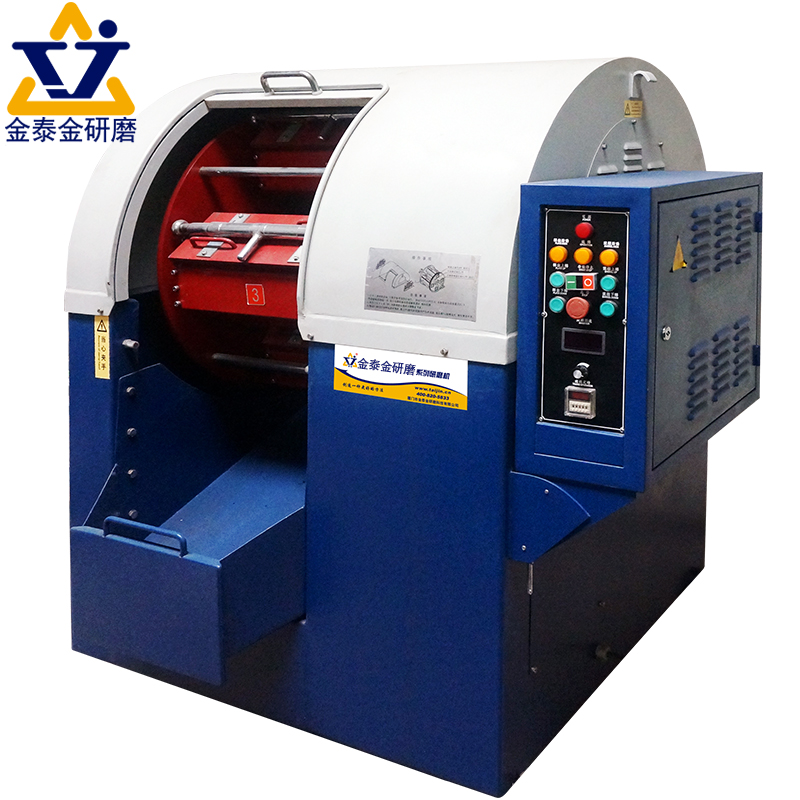
| Magnetic finishing machine | Small aluminium parts with fine internal features such as cross-holes, slots and recesses that tumbling media cannot reach | Small working envelope and low throughput; pins and fine media can lodge in blind features, and mixed part families are awkward |
| Dry polishing machine and dryer | Post-wet drying and dry polishing of aluminium parts before anodising, laser marking, bonding or packaging | Does not remove a burr or refine a surface on its own; residual media dust and incomplete drying still cause marking and coating defects |
Media shape decides which features receive work. Angle-cut triangles, stars and wedges reach into corners and produce an edge break; spheres and ellipsoids blend surface and remove very little edge material; cylinders and pins work inside bores and slots; flattened or lens shapes reach recesses a rounded body cannot. On aluminium components with mixed features this distinction is the whole decision: a sphere-heavy charge protects a sealing edge but leaves a burr at a bore exit, while a sharp-edged charge removes the burr and rounds the very edge that has to stay accurate. Size matters just as much. Large media cannot enter a small slot but produce a more open, less clogged charge; small media follow tighter geometry but lodge in pockets, pack blind holes and are harder to screen out of the load. Define the smallest feature to be worked before specifying size class.
| Media | Best fit | Watch out for |
|---|---|---|
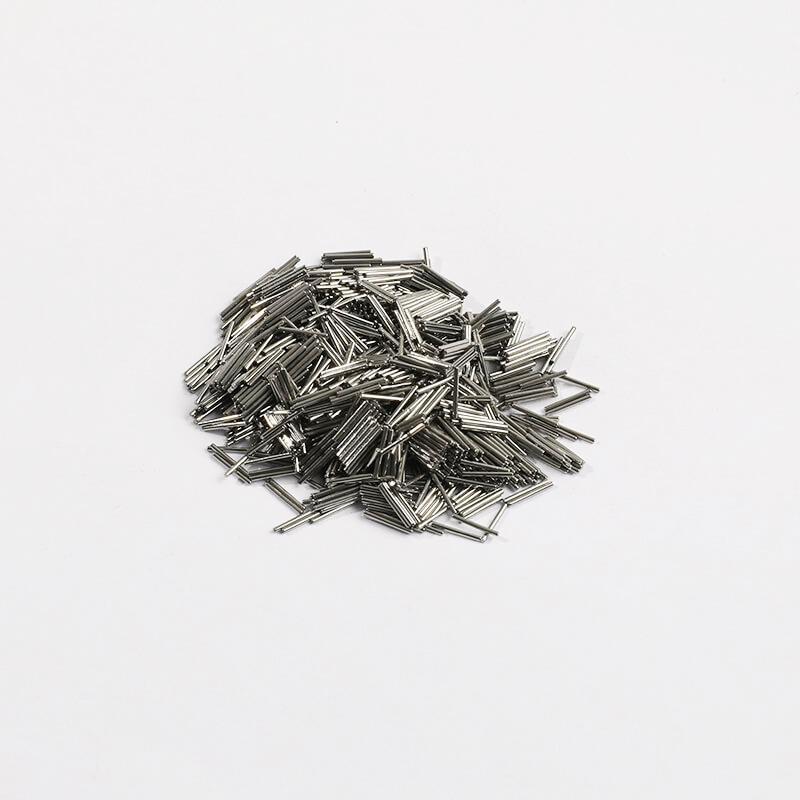
| Dry media, walnut shell, fine grade | Dry polishing, light surface cleaning and preparation before anodising or laser marking on aluminium parts | Shell dust must be extracted and the part cleaned, or the residue interferes with marking, bonding or a later coating step |
| Ceramic media, spheres and low-density ceramic, fine size class | Bright surface development and light edge work on small aluminium components with mixed cosmetic and internal features | Fine media lodges in blind holes, cross-drillings and thin-wall pockets and is harder to screen out of the load |
| Plastic-bonded media, ball and ellipsoid shapes | Surface refinement and blending on cosmetic aluminium faces where edges, seal lands and dowel bores must stay close to drawing | Removes very little edge material, so a burr at a bore exit or a thread crest may survive the cycle and need a separate step |
| Dry media, corn cob with a polishing compound charge | Final dry polish and drying assistance on small aluminium parts where a wet rinse and dry would leave spotting | Compound loading saturates with use and the media cakes; the charge needs regular replacement, and soft aluminium can still smear |
Galling is the characteristic failure of a mechanical cycle on soft aluminium. Under pressure and without adequate lubrication, aluminium transfers to the media and to neighbouring parts, producing a torn, smeared or picked surface that looks worse than the starting condition. It shows first on edges, on high spots left by machining, and on any face where two aluminium parts rub. Temperature, compound lubricity, load ratio and media weight all push toward it, and a hot, heavy, under-lubricated charge will gall a batch that ran cleanly the day before. Check with low-angle lighting across the surface to reveal smears and cold welds, and confirm with a white cloth for transferred metal. Prevention is mostly charge discipline: lighter media on cosmetic faces, adequate compound flow, a controlled load, and segregation.
| Failure mode | Likely cause | How to catch it |
|---|---|---|
| Etched, darkened or chalky surface after wet finishing | Compound pH or concentration outside the aluminium working range, over-alkaline product, long dwell in a hot solution, exhausted compound | Compare a dried part against a retained reference under the customer's lighting, and log compound pH, concentration and temperature for the batch |
| Galled, smeared or picked surface with transferred aluminium | Media too heavy or too dense for the alloy, insufficient compound lubricity, hot or overloaded charge, aluminium parts rubbing against each other | Inspect under low-angle directional light for smears and cold welds, then wipe with a white lint-free cloth to reveal transferred metal |
| Dimensional drift on a critical bore, dowel hole or press-fit diameter | Aggressive media attacking a feature the cycle should not touch, cumulative removal over repeated runs, no masking of close-tolerance geometry | Measure the feature with a CMM or bore gauge at first article and at the end of the media charge, and chart the trend against drawing limits |
| Bloom, bleed-out or staining appearing days after finishing on a casting | Porosity holding compound or rinse water, an as-cast skin opened by the cycle, incomplete drying before packaging or anodising | Hold finished castings for a defined period and re-inspect, and section a rejected part to confirm whether the residue originates in the pores |
Munich is the capital of Bavaria, where manufacturing contributes 23.1 percent of gross value added and employs 1,870,000 people, 20.5 percent of all employed persons in the state (s4). At city level, 102,787 people worked in 2024 in manufacturing establishments with 20 or more employees, while 146,917 employees at the place of work were counted in the producing sector, up from 140,879 in 2019 (s2). Bavaria states that it is one of Europe's leading locations for microelectronics and covers the entire semiconductor value chain with a focus on chip design (s3). Automotive is the state's largest industrial employer at around 500,000 people (s5), and the region combines mechanical engineering and automation networks with the aerospace and space manufacturing carried out by Airbus at Ottobrunn/Taufkirchen (s6, s7). Munich Airport positions southern Germany, with Munich as its largest cargo hub, as accounting for more than a third of total German air freight volume (s1).
The nearest part of that base to this brief is semiconductor: The Bavarian state government states that Bavaria is one of Europe's leading microelectronics locations and covers the entire semiconductor value chain, with a focus on chip design (s3).
Munich's manufacturing mix spans precision components for automotive and commercial-vehicle build, machine and automation construction, and space hardware, all of which are judged on edge condition, burr freedom and defined surface parameters after cutting and machining. Space and aerospace work adds acceptance documentation and cleanliness expectations for components before assembly, and automation builders need repeatable part quality because their own output depends on the dimensional consistency of the parts they are given.
A Munich buyer should settle whether the finishing step must satisfy an aviation or space acceptance requirement with documented inspection, or whether a workshop-level edge and surface specification is sufficient, because the two routes differ in sample evidence and in how the process is qualified before series release.
Freight context: Munich Airport (MUC), cargo division, Munich rail freight and the Bavarian motorway network. Munich Airport grew total cargo volume by 9.5 percent since 2024 to 341,000 tonnes in 2025 and states that Munich is again number one among the top German airports for cargo growth, with southern Germany accounting for more than a third of German air freight volume (s1). Air-freight import is therefore the practical route for urgent sample parts, while full machines are normally moved by sea or rail freight and cleared inland.
Germany sits inside the EU customs union, so Chinese-origin industrial machinery enters against the EU's common commercial tariff rather than a German national tariff, and the duty that applies is determined by the commodity code declared on the import declaration. China is one of the EU's largest goods trading partners and the EU has long run a goods deficit with it, while the Commission characterises the relationship as simultaneously partnership, competition and systemic rivalry (c1, c2). The Commission publishes the EU's trade agreements; no agreement with China appears in that overview, so Chinese-origin goods cannot claim a preferential origin rate and are assessed under the standard tariff (c8). German customs is administered by the Zoll under the Generalzolldirektion, and the importer must hold an EORI number - valid throughout the European Union and replacing the former German customs number - before goods can be cleared (c5, c6).
Machinery placed on the German market must be CE marked, and the manufacturer is responsible for the conformity assessment, the technical file, the EU declaration of conformity and for affixing the mark; importers and distributors are separately obliged to ensure that only compliant, CE-marked products are placed on the EEA market (c3, c4). The customs authority is German customs (Zoll), part of the Generalzolldirektion, and the operator identification it issues, the EORI number, is a prerequisite for customs clearance in the European Union (c5, c6). In general EU practice a buyer's landed-cost plan therefore needs to cover the commodity-code classification that sets the duty rate, import VAT and the customs declaration, on top of the CE technical file and an identified EU-based economic operator who can act as importer or authorised representative; the technical documentation and the declaration of conformity must be available in the language required by the buyer's market surveillance authority.
SurfacePolish supplies from Xiamen, China. The buyer's own destination rules, conformity marking, tariff classification and documentation responsibilities stay with the buyer; confirm them against the authorities named above before ordering.
A roughness number without a location and a cut-off is not a specification. On an aluminium device component, name each surface that carries a roughness requirement, the direction of measurement relative to the machining or polishing marks, and the cut-off and evaluation length to be used, since a profile measured over a short length with a short cut-off reads differently from one measured across the full face. ISO 4287 and ISO 4288 describe profile parameters and the rules for selecting cut-off, ISO 25178 covers areal texture if a three-dimensional description is needed, and ASME B46.1 is the equivalent North American reference. Aluminium is soft, so stylus force and tip radius can mark the surface being measured; agree the instrument and the force, or use an optical method, and retain the measured part as the physical reference.
Scaling from a bench or pilot run to a producing line changes several things at once, and each has to be planned. The machine must be sized for the part envelope and the throughput the buyer needs, which sets load volume, media quantity and compound dosing. A compound delivery system with a dosing pump, a flow meter and a recirculation or once-through decision is what makes the chemistry repeatable rather than hand-mixed. Media handling needs a screen or separator, a stock of graded media for top-up, and a rule for replacing worn media. Parts need a defined load pattern, and any fixture or mask needs a duplicate so it does not become the bottleneck. Rinse and drying stages must match the downstream requirement. The layout, services and acceptance criteria remain the buyer's engineering decisions.
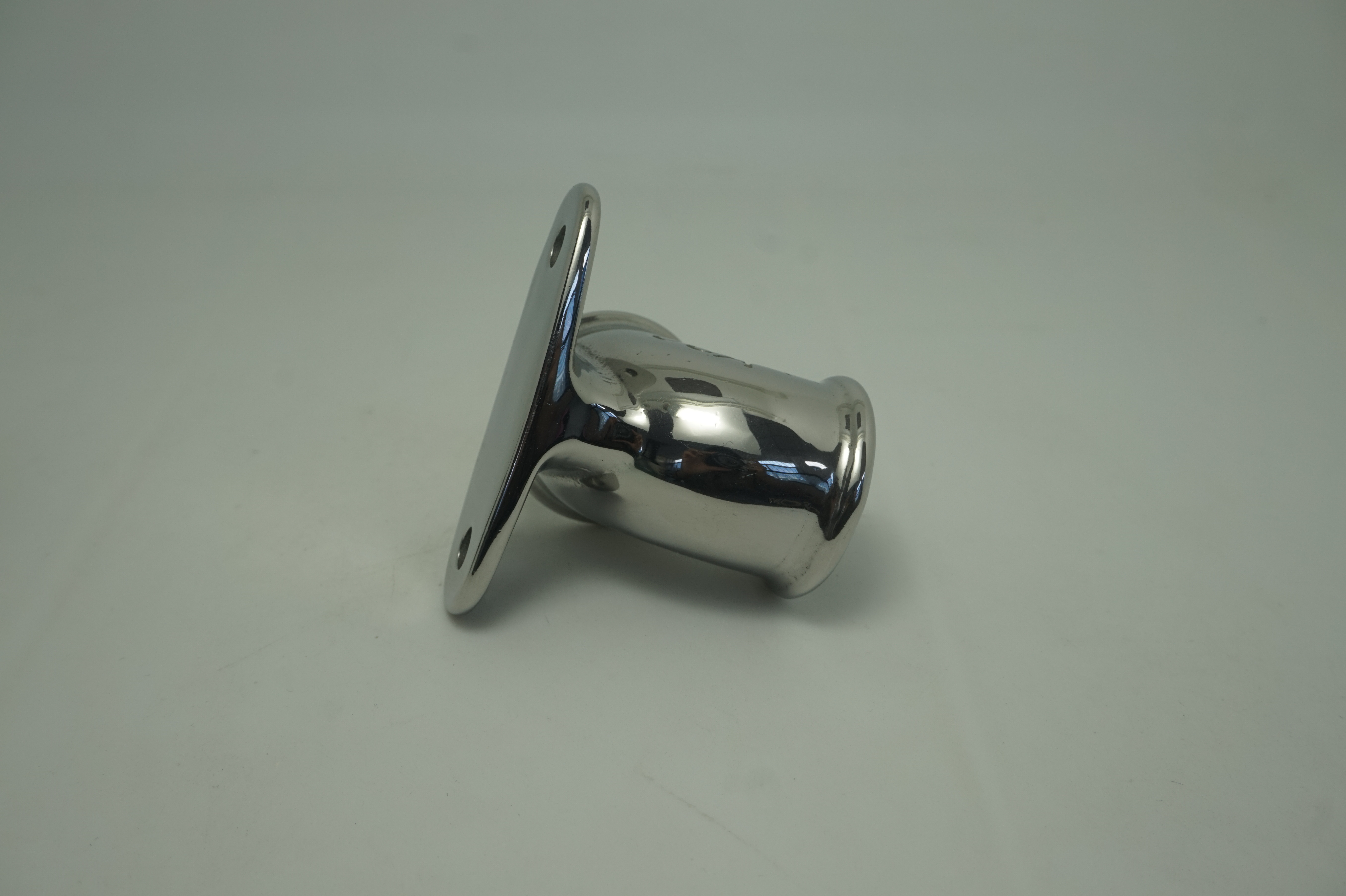
It does. Anodising is partly transparent over the underlying texture, so machining marks, media direction and any residual film remain visible, and embedded media or a silicate deposit can show as a bloom or speckle. Aluminium also needs a clean, freshly finished surface, because a slow dry or a contaminated rinse leaves an oxide or residue layer that shows through the coating. A buyer planning a cosmetic anodised finish should evaluate appearance on an anodised sample rather than on bare metal, and should specify the rinse, dry and handling expectations to the finishing supplier. Acceptance of the coating itself remains with the buyer and the anodiser.
Start with media that are softer or lighter than the workpiece is likely to tolerate: plastic-bonded media in a light or medium abrasive grade, or a low-density ceramic. Dense ceramic and steel media that cut steel efficiently will embed, smear or gall aluminium and can implant iron that later shows as staining. Media weight, compound lubricity and load ratio matter as much as family, because a heavy, hot, under-lubricated charge will gall parts even with the right media. A buyer in Germany should treat media selection as a two-stage question: what removes the burr, and what produces the final cosmetic surface without transfer.
Lodging is a geometry problem before it is a media problem. Blind holes, cross-drillings, thread roots, undercuts and thin-wall pockets trap fragments, and a pocket that flexes under load grips them harder. Options include shielding or plugging the trapping features, changing the media size class so pieces cannot enter, moving to a route whose loading geometry differs, and adding an inspection step with a borescope or a weighed reference part. A visual pass on an exterior face proves nothing about a cavity. For parts made in Germany, agree with the buyer which internal features are checked and how, before the first batch is run.
Use Munich, Germany as the destination on the enquiry and state whether the deliverable is equipment, media and compound, a representative sample review or a line concept. A destination does not imply local stock, a local service point or a local delivery time.
Munich buyers write surface, edge and cleanliness requirements against DIN/EN/ISO texts and rely on CE marking with an EU declaration of conformity for the machine (c3, c7). Automotive and aerospace customers add their own sector specifications, and the VDA is the body through which German automotive supplier requirements are organised (c10).
Sources were retrieved on 2026-09-29 and describe the local industrial and trade context only. They do not evidence any SurfacePolish project, shipment, installation or service in Munich.
The buyer needs burrs removed from the fin array without bending the fins or rounding the gasket land that seals the assembly.
Send the material, dimensions, approximate weight, batch quantity, the incoming condition and photographs of the difficult features. Mark which features must not be contacted by media and state how the result will be inspected. This form carries source reference PSEO-0313; quote it if you prefer an additional manual reference.
Open the SurfacePolish enquiry form Email a prepared enquiry
No price, lead time, certification or result is promised here. Confirm whether a sample trial is available for the specific part and what the trial can and cannot show.
Page PSEO-0313 · revised 2026-09-29 · cross-border equipment, media and scoped sample review. City context is sourced and cited above.
Use this local checker to identify missing part and inspection information. It prepares a technical-review brief; it does not approve a machine, process recipe or production result.
Complete the part details to prepare a review brief.
Email : info@surface-polish.com


 IPv6 network supported


 +86-592-2381506