A buyer in Naples, Italy finishing a 6061-T6 instrument housing for medical devices has to hold two requirements at once: a satin face the customer will see, and an O-ring groove edge that must stay within a stated radius. SurfacePolish supplies finishing machines, media and compounds across borders and runs a free sample trial on the parts the buyer sends. This brief is written for a buyer in Naples working on medical devices; it describes equipment, media and a scoped sample review, not a local polishing service.
Who defines and verifies the cleanliness, residue and any regulatory requirement, and by what method and limit?
What downstream operation follows finishing, such as anodising, laser marking, bonding or assembly, and what does it require of the surface?
What are the alloy and temper, and has machining, casting, welding or heat treatment already changed the surface hardness and porosity?
Aluminium is a family, and the finishing window moves with alloy and temper. Wrought 6061 in T6 cuts and polishes predictably and holds a uniform finish, which is why it dominates machined device hardware. Wrought 7075 is stronger but harder, more prone to tearing and to differential finishing around machining marks, and it needs gentler media and shorter high-energy contact. Cast aluminium behaves differently again: surface porosity, cold shuts and a hard as-cast skin mean a casting can absorb compound into pores and bleed it out later, and an energetic cycle opens pores that machining had closed. Annealed or solution-treated stock smears under media where the same alloy in T6 would cut cleanly. Record alloy, temper and heat-treatment state before media is chosen rather than after the first batch disappoints.
Media choice on aluminium is dominated by one fact: the workpiece is softer than most media used on steel. Dense ceramic and steel media that cut steel efficiently will embed, smear or gall an aluminium surface, implant iron particles that later show as staining or a galvanic couple, and round edges faster than the drawing allows. Plastic-bonded media in a light or medium abrasive grade, or a low-density ceramic, is the usual starting family for cosmetic work on 6061 and 7075, with harder ceramic reserved for a genuine heavy-cut deburr where the surface is not graded. The trade-off is real: gentle media remove less material and take longer, so a deep tool mark or heavy burr may need a coarser first stage and a gentler second. Choose media around the surface and edge the part must end with.
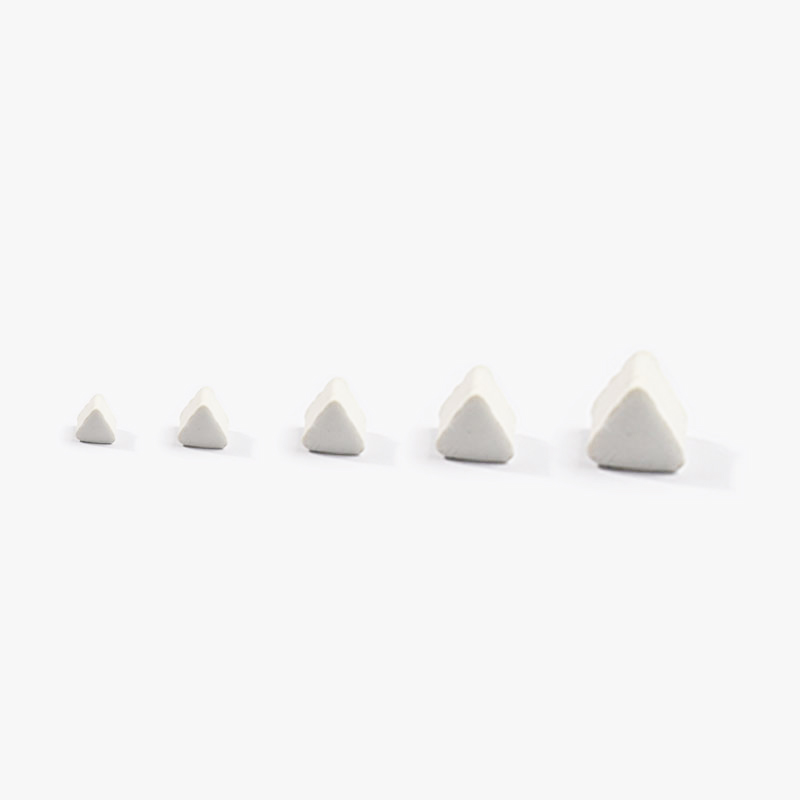
| Media | Best fit | Watch out for |
|---|---|---|
| Plastic-bonded media, ball and ellipsoid shapes | Surface refinement and blending on cosmetic aluminium faces where edges, seal lands and dowel bores must stay close to drawing | Removes very little edge material, so a burr at a bore exit or a thread crest may survive the cycle and need a separate step |
| Dry media, corn cob with a polishing compound charge | Final dry polish and drying assistance on small aluminium parts where a wet rinse and dry would leave spotting | Compound loading saturates with use and the media cakes; the charge needs regular replacement, and soft aluminium can still smear |
| Ceramic media, angle-cut triangles, medium size class | Heavy-cut deburring on cast or robust aluminium parts where the machined surface will be finished again or is not appearance graded | Rounds functional edges quickly and can chip or peen thin walls; not suitable where a sealing land or press fit is exposed |
| Plastic-bonded media, light to medium abrasive grade, cone and triangle shapes | General deburring and satin finishing on 6061 and 7075 where galling risk rules out dense ceramic | Wears quickly and loses edge definition; cut rate drops as the charge ages and the cosmetic result drifts unless media is screened and topped up |
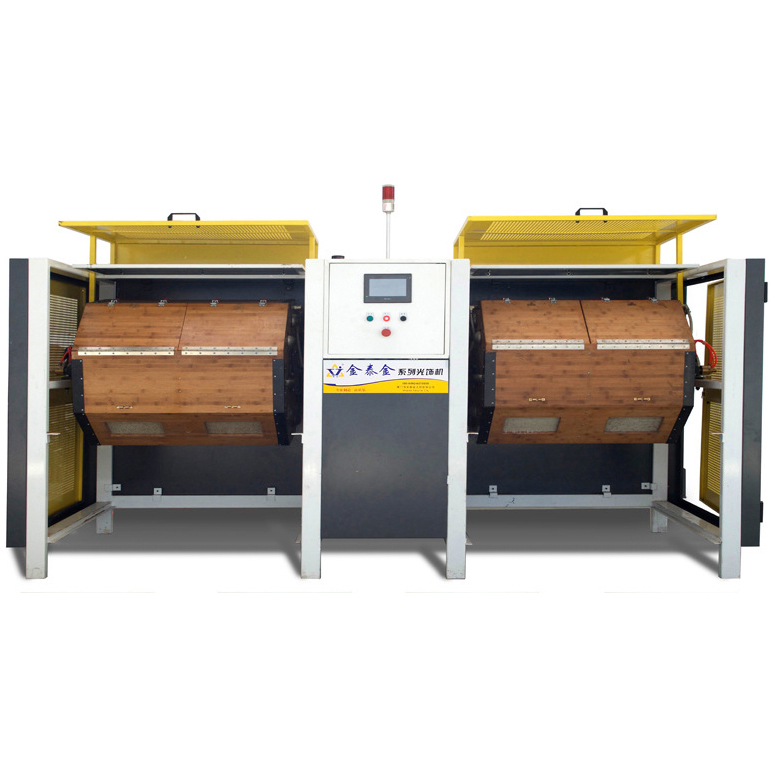
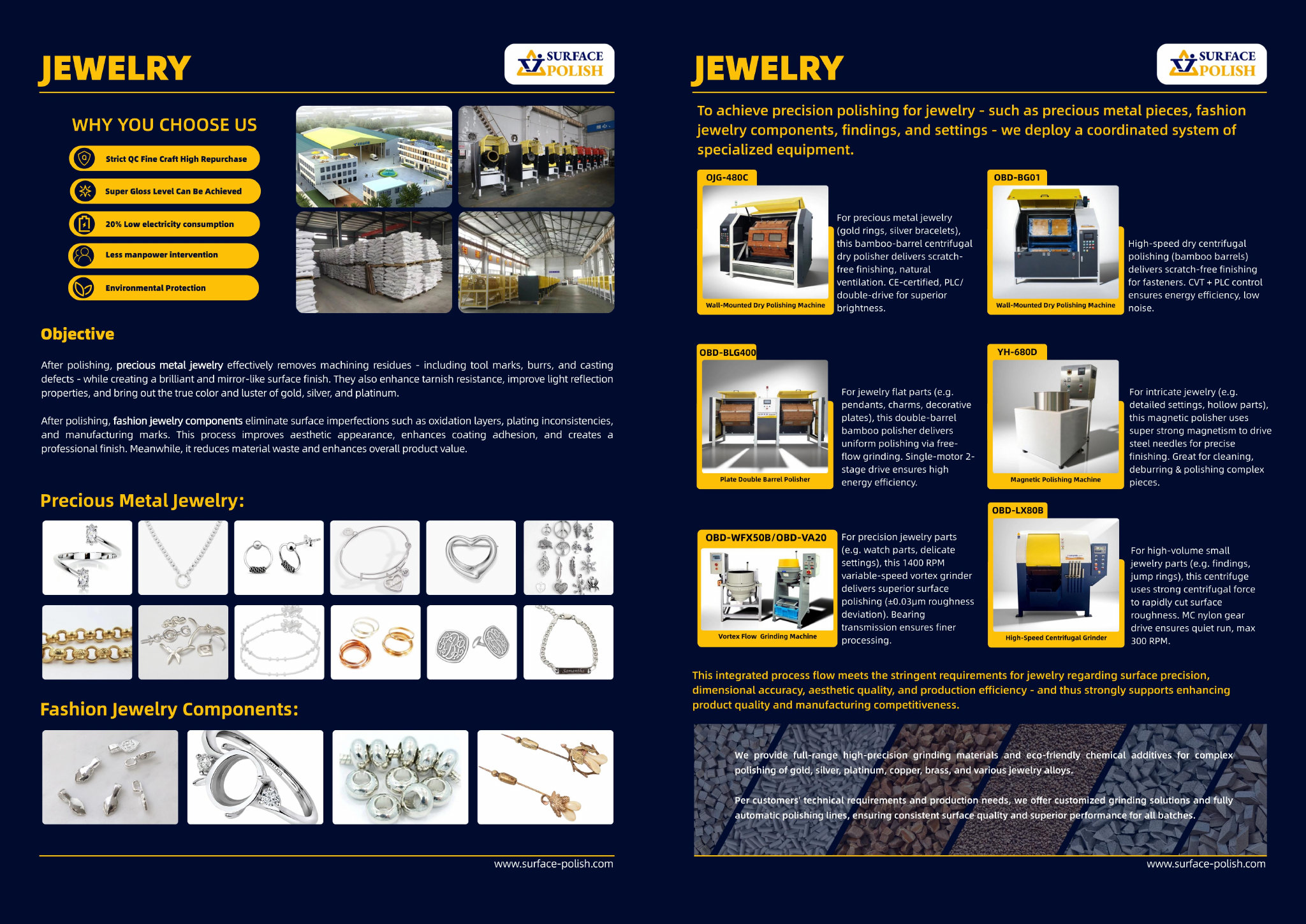
Centrifugal barrel finishing puts the barrels on a rotating turret so media and parts press against each other at high force, producing a fine surface and a controlled edge in a much shorter cycle than a conventional barrel. For aluminium device parts that need a uniform satin appearance without a long residence time it can be efficient, particularly on small to medium parts that fit the barrel geometry. The same high energy that shortens the cycle will bend thin walls, distort light sections and round edges faster than expected, so it demands a well-defined part envelope and a short instrumented cycle rather than a fixed timer. Barrel size and geometry set a hard limit on part length and pieces per run. Confirm the finish you want and the edge radius you can accept first.
| Machine route | Where it fits | What it will not do |
|---|---|---|
| Rotary barrel finishing machine | Gentle, low-energy deburring of small precise aluminium parts in high volume, including thin and light components | Longer cycles for the same result; flat or light parts may slide rather than tumble, and an overloaded barrel stops working the load |
| Dry polishing machine and dryer | Post-wet drying and dry polishing of aluminium parts before anodising, laser marking, bonding or packaging | Does not remove a burr or refine a surface on its own; residual media dust and incomplete drying still cause marking and coating defects |
| Magnetic finishing machine | Small aluminium parts with fine internal features such as cross-holes, slots and recesses that tumbling media cannot reach | Small working envelope and low throughput; pins and fine media can lodge in blind features, and mixed part families are awkward |
| Tub vibrator | Long and large aluminium parts such as extruded frames and housings that can be oriented in a linear working channel | Slower uniform coverage, a tendency for parts to settle in one attitude, and greater floor space and media volume than a bowl |
Parts that do not circulate freely receive uneven work. In a bowl or barrel a long part, a heavy part or a part with a deep recess can sit in one attitude, shelter its own face, or trap a neighbour against the wall, leaving a bright band beside a dull one. Impingement is the more visible version: two parts strike each other repeatedly and produce dents, peened patches, scratches or a hammered texture that will not polish out without further material removal. The cause is usually charge geometry rather than media: wrong load ratio, media too large to flow around the part, insufficient compound lubricity, or a fixture that holds parts where the media field is weak. Check under directional light and compare several parts from different positions in the load, not one sample from the discharge gate.
| Failure mode | Likely cause | How to catch it |
|---|---|---|
| Galled, smeared or picked surface with transferred aluminium | Media too heavy or too dense for the alloy, insufficient compound lubricity, hot or overloaded charge, aluminium parts rubbing against each other | Inspect under low-angle directional light for smears and cold welds, then wipe with a white lint-free cloth to reveal transferred metal |
| Etched, darkened or chalky surface after wet finishing | Compound pH or concentration outside the aluminium working range, over-alkaline product, long dwell in a hot solution, exhausted compound | Compare a dried part against a retained reference under the customer's lighting, and log compound pH, concentration and temperature for the batch |
| Dimensional drift on a critical bore, dowel hole or press-fit diameter | Aggressive media attacking a feature the cycle should not touch, cumulative removal over repeated runs, no masking of close-tolerance geometry | Measure the feature with a CMM or bore gauge at first article and at the end of the media charge, and chart the trend against drawing limits |
| Water spotting, rings or mineral staining after drying | Hard rinse water, slow or incomplete dry, droplets trapped in blind holes or under a flange, no final deionised rinse | Inspect the dried part in raking light against a reference, and check rinse-water hardness and conductivity records for the shift |
The Chamber of Commerce's provincial economic profile records a broad manufacturing base alongside services: manufacturing accounts for 18% of provincial employment, behind public services and administration at 30.7% but ahead of commerce (14%), construction (9.5%) and transport (8.2%) (s2). The profile singles out mechanical, electromechanical and transport-equipment manufacturing as particularly significant, and records that the automotive and aeronautical industries are present through large plants that have generated a tier of specialised small and medium subcontracting firms (s1). The fishing and marine sector has an official support track: the chamber approved state-aid vouchers for modernising machinery and equipment for fishing firms in the Phlegraean communes (s5), and the wine sector of the province is promoted through chamber-organised export meetings with foreign buyers (s3). These chamber data are the provincial economic profile published by the Camera di Commercio di Napoli and its census base is historical, so the structural description should be read as the chamber's own profile rather than as current-year statistics.
The nearest part of that base to this brief is machinery: The chamber profile identifies mechanical and electromechanical manufacturing, together with transport-equipment construction, as a particularly significant part of the provincial industrial base.
Naples has an automotive and aeronautical plant base supplied by a local subcontracting tier, which is the part of the local market where deburring and edge control matter most: transmission and engine components, hydraulic fittings, structural brackets and machined castings, all of which reach a finishing operation before inspection. The port's shipbuilding and ship-repair activity adds a large-fabrication case where weld dressing and surface preparation, not fine deburring, set the requirement. Burr and residue control is the acceptance issue for both, and for the aerospace-supplying shops it is written into the customer's drawing.
The first question is whether the shop supplies the automotive or the aeronautical chain, because that decides which quality regime governs and whether a special-process approval is needed at all. Having settled that, the acceptance criterion for burr height or cleanliness should be taken from the customer's drawing rather than agreed bilaterally, since both chains audit against the prime's specification.
Freight context: Porto di Napoli, Aeroporto internazionale di Napoli (Capodichino). The chamber's profile of the provincial transport system records more than 370 firms operating port services with more than 5,200 employees, and lists ship repairs, port warehousing, container services, freight forwarding and ship's agency among the main services, alongside bulk trades in mineral oils, cereals and machinery and vehicles (s6). It describes the international airport at Naples as the most important in southern Italy for traffic volume and close to the city centre (s6). Machines can therefore be landed by sea and cleared in the port area, while sample parts normally move by air, which makes the airport the practical route for a small consignment.
The customs authority is the Agenzia delle Dogane e dei Monopoli (ADM), which is the regulatory, supervisory and control authority for customs and collects the duties. Goods arriving from China are cleared by customs before they can enter the single market and are released into free circulation by means of a customs declaration; the date of acceptance of that declaration is the date used to calculate and apply the import duty and any VAT or excise duty. Importers should settle in advance who lodges the declaration and under which VAT and EORI arrangements, and must ensure the machine carries CE marking and is supported by the EU declaration of conformity and technical file. Because the CE mark is compulsory for machinery covered by the EU machinery legislation and forbidden for products outside it, the conformity route must be settled before shipment rather than at the border.
Italy applies the EU's common commercial policy to imports from China, so Chinese industrial machinery enters under the EU Common Customs Tariff, where the duty rate depends on the type and origin of the goods and the working tariff is TARIC. Istat's August 2026 extra-EU trade release records a 16.0% year-on-year increase in Italian purchases from China, alongside strong growth from India, OPEC and Mercosur, so China remains one of the fastest-growing sources of Italian imports. Anti-dumping and other trade-defence measures apply case by case to specific product categories rather than to finishing machinery in general, so the applicable rate must be checked against the specific commodity code before a quotation is finalised.
SurfacePolish supplies from Xiamen, China. The buyer's own destination rules, conformity marking, tariff classification and documentation responsibilities stay with the buyer; confirm them against the authorities named above before ordering.
Residue requirements on a device component come from the buyer's own specification, not from a finishing route, and they should be stated as a measurable limit before parts are accepted. Practical checks include visual inspection of internal features under magnification or with a borescope, a wipe test with a defined solvent and a white substrate, a gravimetric non-volatile residue determination on a rinse sample, and a rinse-water conductivity or particulate count where the assembly is sensitive. Blind holes, threads and press fits are the features that retain residue, so sample them specifically rather than only a flat exterior face. If a validated cleaning process, biocompatibility data or a sterility claim is needed, that work belongs to the buyer's own quality system.
A sample trial is most useful when it isolates one change. If media family, size, compound and cycle time all change together, a difference in the result cannot be attributed to anything and the trial cannot be repeated. Ask for a small matrix: the same parts run with two media families at the same cycle, or the same media at two cycle times, with every other condition held constant and a record of the settings used for each cell. Photograph or measure each result on the same features under the same lighting, and keep an untreated reference beside them. Reproducibility deserves attention too: one good part proves little, so ask whether the result repeated on the other pieces in the charge. A trial yields observations on the parts tested, not a guaranteed production result.
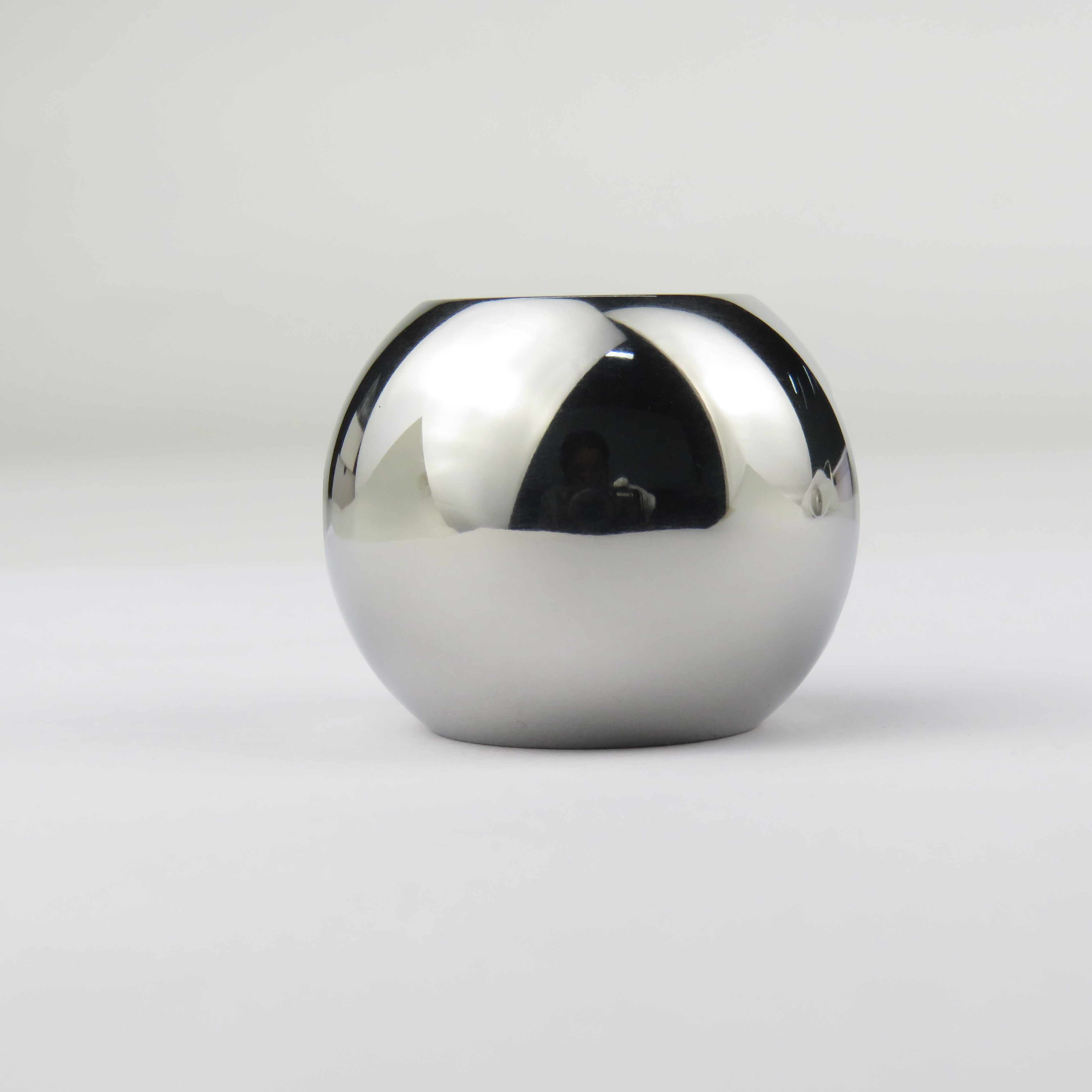
Laser marking interacts with surface texture, so contrast depends on whether the surface is directional, random satin or bright. A strong directional finish from a tub or a linishing step can produce a marking that reads differently when the part is turned, while a uniform random texture marks more consistently. Residue and embedded media also interfere, because the marking energy meets a contaminated surface. For a marked cover plate in Italy, the practical sequence is to fix the finish first, then qualify the marking programme on finished parts, and to check the mark under the lighting the end user will use rather than a bench lamp.
It will if the edge is exposed to the media for long enough. Media cannot distinguish a cosmetic edge from a seal land, a dowel bore or a press-fit shoulder, and rounding accumulates gradually, so a batch inside tolerance at the start of a media charge can be outside it later. Protection comes from shielding or masking the functional edge, using rounder and lighter media, shortening the cycle, and checking the feature with an optical comparator, radius gauge or CMM rather than by eye. A buyer in Italy should state the allowed edge radius per feature on the drawing, because a blanket edge-break note will be read literally.
Keep the aluminium loop physically separate. Steel media, steel barrels, worn machine parts and shared screening equipment all transfer iron to a soft aluminium surface, and the result shows as black smut, dark specks or a galvanic couple that becomes visible under a coating or after anodising. Dedicated media, a dedicated barrel or bowl liner, separate screens and separate storage are the practical controls, along with a check of the finished surface under directional light. For a plant in Italy running both steel and aluminium work, the segregation rule needs to cover media storage and top-up stocks, not only the machine, because a shared media bin reintroduces the contamination.
Use Naples, Italy as the destination on the enquiry and state whether the deliverable is equipment, media and compound, a representative sample review or a line concept. A destination does not imply local stock, a local service point or a local delivery time.
Naples-area buyers reference UNI and ISO standards for surface texture and cleanliness, and in the automotive and aerospace supply chains the qualification regimes their primes impose: IATF 16949 for automotive and AS/EN 9100 for aerospace, frequently with NADCAP special-process approval where surface treatment is involved. Because the province's automotive and aeronautical work runs through a subcontracting tier, the finish and cleanliness callouts usually reach a machine shop inside the customer's drawing and inspection plan rather than as a standalone finishing specification.
Sources were retrieved on 2026-09-29 and describe the local industrial and trade context only. They do not evidence any SurfacePolish project, shipment, installation or service in Naples.
The buyer needs a uniform satin cosmetic face without rounding the O-ring groove edge or driving media into the threaded bosses.
Send the material, dimensions, approximate weight, batch quantity, the incoming condition and photographs of the difficult features. Mark which features must not be contacted by media and state how the result will be inspected. This form carries source reference PSEO-0493; quote it if you prefer an additional manual reference.
Open the SurfacePolish enquiry form Email a prepared enquiry
No price, lead time, certification or result is promised here. Confirm whether a sample trial is available for the specific part and what the trial can and cannot show.
Page PSEO-0493 · revised 2026-09-29 · cross-border equipment, media and scoped sample review. City context is sourced and cited above.
Use this local checker to identify missing part and inspection information. It prepares a technical-review brief; it does not approve a machine, process recipe or production result.
Complete the part details to prepare a review brief.
Email : info@surface-polish.com


 IPv6 network supported


 +86-592-2381506