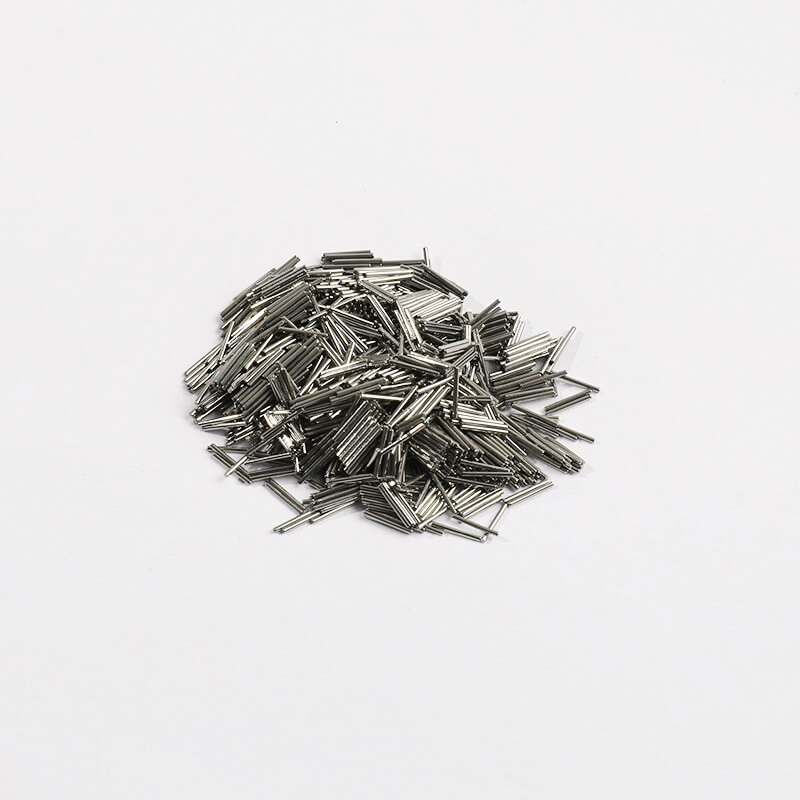
High-volume small aluminium components for medical devices live or die on part-to-part consistency, and a batch of several thousand ferrules in Newcastle, Australia will show any weakness in media size class, screening or load control. SurfacePolish supplies finishing machines, media and compounds across borders and runs a free sample trial on the buyer's parts. This brief is written for a buyer in Newcastle working on medical devices; it describes equipment, media and a scoped sample review, not a local polishing service.
What are the alloy and temper, and has machining, casting, welding or heat treatment already changed the surface hardness and porosity?
What is the minimum wall thickness and unsupported span, and which internal features could trap media?
What edge radius or chamfer is allowed at each mating, sealing and press-fit feature, and how will it be measured?
Controlled edge rounding is where a finishing route earns or loses its place. Every machined aluminium edge carries a burr and a stress concentration, and a deburring cycle removes both, but it also moves the edge position. On a mating face, a seal groove, a bearing seat or a dowel hole that movement is a functional change, not a cosmetic one. Establish the allowed edge radius or chamfer per feature, then measure the finished edge against it rather than judging by eye, using an optical comparator or a radius gauge on a sectioned or replica sample. A part with generous cosmetic edges and one tight sealing edge usually needs a shielded fixture or selective hand finishing after the machine cycle. Deciding this after the first batch has run is how an assembly ends up with a leak path.
Media is a consumable that changes as it works, and that change alters the finish. As media wear down they lose mass and edge definition, the charge volume drops, the cut rate falls and the surface result drifts, so a finish that was correct at the start of a media charge may not be reproducible after a week of running. Screen and grade media for size, top up the charge, and replace a fraction on a schedule rather than waiting for the result to move. Cross-contamination is the sharper risk on aluminium: steel media or steel machine parts in the same loop deposit iron on the soft surface, which later shows as black staining, as a galvanic couple under a coating or as an inclusion visible after anodising. Keep media and barrels dedicated to aluminium where finish matters.
| Media | Best fit | Watch out for |
|---|---|---|
| Plastic-bonded media, ball and ellipsoid shapes | Surface refinement and blending on cosmetic aluminium faces where edges, seal lands and dowel bores must stay close to drawing | Removes very little edge material, so a burr at a bore exit or a thread crest may survive the cycle and need a separate step |
| Plastic-bonded media, light to medium abrasive grade, cone and triangle shapes | General deburring and satin finishing on 6061 and 7075 where galling risk rules out dense ceramic | Wears quickly and loses edge definition; cut rate drops as the charge ages and the cosmetic result drifts unless media is screened and topped up |
| Alumina-based ceramic media, low-density, cylindrical and pin shapes | Internal bores, slots and cross-holes on small aluminium components that a rounded tumbling body cannot reach | Pin and cylinder shapes can wedge in a bore or a slot; confirm retrieval and inspection before running a production batch |
| Dry media, walnut shell, fine grade | Dry polishing, light surface cleaning and preparation before anodising or laser marking on aluminium parts | Shell dust must be extracted and the part cleaned, or the residue interferes with marking, bonding or a later coating step |
A round bowl vibrator suits small to medium aluminium components that tumble freely and pass a media gate: instrument handles, ferrules, cover plates, brackets. It gives good part-to-part uniformity because the whole load circulates through the same energy field, and it is easy to automate with compound flow and a discharge gate. The limit is size and shape. A long extruded frame, a tall manifold or a part with a protruding boss will not circulate well in a bowl and will shadow itself, leaving the sheltered side unfinished. Tub vibrators handle long and large parts because the working channel is linear and the part can be oriented; the trade-off is slower uniform coverage and a greater tendency for parts to settle in one attitude. Match machine to part envelope first, then to finish.
| Machine route | Where it fits | What it will not do |
|---|---|---|
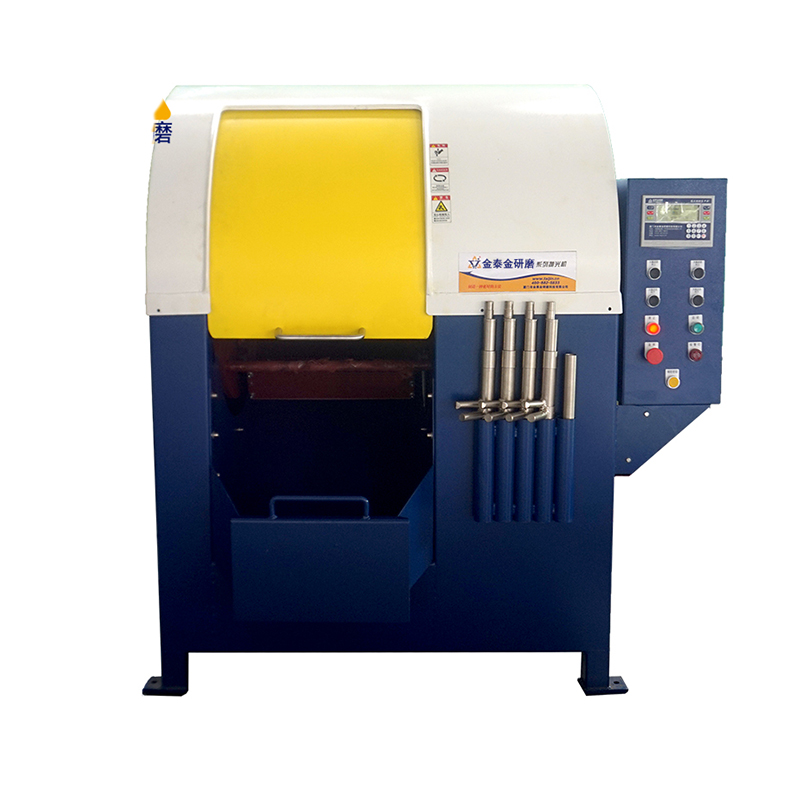
| Rotary barrel finishing machine | Gentle, low-energy deburring of small precise aluminium parts in high volume, including thin and light components | Longer cycles for the same result; flat or light parts may slide rather than tumble, and an overloaded barrel stops working the load |
| Disc finishing machine | Fast burr removal and edge radiusing on robust aluminium parts where a short cycle and high material removal matter most | High part-on-part contact and impingement risk; smears soft 6061, is hard to localise, and adds fixturing labour to every cycle |
| Grinding finishing machine | Higher material removal on aluminium parts that need a heavy burr or a pronounced chamfer removed before a gentler finishing step | Aggressive on soft aluminium, difficult to control on cosmetic faces and functional edges, and not a finishing step on its own |
| Vibratory bowl finishing machine | Small to medium aluminium components that tumble freely: ferrules, handles, brackets and cover plates needing uniform deburring or satin finishing | Long, tall or heavily recessed parts shadow themselves and finish unevenly; part envelope must fit free circulation in the bowl |
Parts that do not circulate freely receive uneven work. In a bowl or barrel a long part, a heavy part or a part with a deep recess can sit in one attitude, shelter its own face, or trap a neighbour against the wall, leaving a bright band beside a dull one. Impingement is the more visible version: two parts strike each other repeatedly and produce dents, peened patches, scratches or a hammered texture that will not polish out without further material removal. The cause is usually charge geometry rather than media: wrong load ratio, media too large to flow around the part, insufficient compound lubricity, or a fixture that holds parts where the media field is weak. Check under directional light and compare several parts from different positions in the load, not one sample from the discharge gate.
| Failure mode | Likely cause | How to catch it |
|---|---|---|
| Damaged thread or media wedged in a thread root | Threads left exposed to the media field, sharp media entering the crest, insufficient plugging or masking of ports before the cycle | Run a go and no-go gauge through every sampled thread and inspect the root with a borescope or a thread impression |
| Black smut or scattered dark specks on the finished surface | Iron transferred from steel media, a shared barrel, worn machine parts or a shared media store; galvanic reaction on the soft aluminium surface | Examine under magnification and with a light acidified wipe, and audit media storage, barrel liners and screening equipment for steel contact |
| Dents, peening marks or a hammered texture from part-on-part contact | Excessive energy for the part mass, under- or over-loaded charge, no fixture to control part attitude, hard or oversized media | Inspect a full-face view under low-angle light and a cross-section of a dent under a toolmaker's microscope to confirm plastic deformation |
| Galled, smeared or picked surface with transferred aluminium | Media too heavy or too dense for the alloy, insufficient compound lubricity, hot or overloaded charge, aluminium parts rubbing against each other | Inspect under low-angle directional light for smears and cold welds, then wipe with a white lint-free cloth to reveal transferred metal |
Newcastle is the manufacturing and export centre of the Hunter, which the NSW Government describes as the largest regional economy in Australia, with a population of 774,587 and named key industries of advanced manufacturing, defence and aerospace, renewable energy, food and wine, tourism, education, mining and health care. The region's industrial identity was built on coal and heavy industry, and mining and energy remain foundational, but the current growth is in advanced manufacturing and defence: the NSW Government identifies Williamtown, the Hunter Energy Hub at Muswellbrook, the Port of Newcastle and the John Hunter Health Innovation Precinct as growth precincts. Newcastle Airport, 20 minutes north of the city, anchors a defence and aerospace hub with the Astra Aerolab precinct adjoining RAAF Base Williamtown, specialising in defence sustainment and manufacturing; the airport's terminal and runway upgrades are intended to open up air freight as well as tourism. The Port of Newcastle is described by the NSW Government as Australia's third-largest port and by the port authority as the largest port on the East Coast and Australia's oldest export port, and the Hunter's research base includes the CSIRO Energy Centre and the University of Newcastle.
For this brief the relevant part of that base is medical: RDA Hunter established the HMIC (Health and Medtech Cluster) in 2020, described as 'an economic diversification initiative of RDA Hunter' that has grown into a cluster of companies and organisations working on the region's healthtech ecosystem, supported by the John Hunter Health Innovation Precinct named as a growth precinct by the NSW Government.
The Hunter's advanced manufacturing and defence supply chains work in steel, aluminium and exotic alloys for mining equipment, rail, defence structures and aircraft sustainment components, where cut edges and weld-prep surfaces must be deburred and radiused before welding, coating or assembly. Components destined for defence sustainment work and for mining equipment operating in abrasive conditions are typically specified with defined edge condition and surface preparation requirements, and heavy plate and machined parts often need a finishing step that removes oxide and burrs without changing dimensions. Fabricators supplying both sectors also need to control media contamination between ferrous and aluminium work to avoid cross-metal corrosion.
A Hunter buyer should settle early whether the finishing step is being used for weld preparation, for edge radius control on a load-bearing or fatigue-critical defence or mining component, or simply for cosmetic clean-up, because those three cases imply different media, different process times and different inspection evidence.
Freight context: Port of Newcastle (largest port on the East Coast, Australia's oldest export port, operated landside by Port of Newcastle), Newcastle Airport (international terminal, Code E runway, adjoining Astra Aerolab and RAAF Base Williamtown), M1 Pacific Motorway and Hexham Straight road freight corridor; Sydney-Newcastle railway. RDA Hunter records the Port of Newcastle handling between 150 million and 166 million tonnes of trade annually with deepwater capacity currently operating at roughly 50%, plus significant industrial land connected by road and rail. Newcastle Airport's new international terminal, part of a $110 million expansion within a broader $250 million precinct investment, introduced swing-gate functionality and wide-body aircraft capability, and RDA Hunter states the improvements boost freight capability. Incoming finishing machines and sample parts can therefore arrive by sea through Newcastle or by air through Newcastle Airport, with the M1/Hexham Straight programme improving corridor reliability.
Australia and China are parties to the China-Australia Free Trade Agreement (ChAFTA), signed on 17 June 2015 and in force since 20 December 2015; the Australian Border Force maintains a dedicated ChAFTA page and working tariff schedule, and FTAs give importers a route to preferential rates of duty where the rules of origin are met. China was Australia's largest source of imports in 2025 at $130.2b, up 12.5% on 2024, and 56% (69,567) of Australian business importers traded at least once with China in 2020-21. A Chinese supplier of finishing machines, media or compounds is therefore shipping into Australia's single largest import stream, and preferential duty depends on origin documentation rather than on a blanket zero-tariff guarantee for every product line.
Business is conducted in English and Australian industrial buyers are normally registered companies with an ABN that contract through a local importer or a licensed customs broker rather than directly with an overseas manufacturer. Because the first Australian supplier of in-scope electrical equipment becomes the legally responsible supplier, Chinese manufacturers are typically asked to provide test evidence, a compliance folder and a declaration so that their Australian importer can register and mark the product. Quotation and contracting expectations centre on a clear commercial entity, correct HS/tariff classification, documented country of origin for preferential duty, and an explicit statement of what is included in the delivered price and what is not.
SurfacePolish supplies from Xiamen, China. The buyer's own destination rules, conformity marking, tariff classification and documentation responsibilities stay with the buyer; confirm them against the authorities named above before ordering.
Residue requirements on a device component come from the buyer's own specification, not from a finishing route, and they should be stated as a measurable limit before parts are accepted. Practical checks include visual inspection of internal features under magnification or with a borescope, a wipe test with a defined solvent and a white substrate, a gravimetric non-volatile residue determination on a rinse sample, and a rinse-water conductivity or particulate count where the assembly is sensitive. Blind holes, threads and press fits are the features that retain residue, so sample them specifically rather than only a flat exterior face. If a validated cleaning process, biocompatibility data or a sterility claim is needed, that work belongs to the buyer's own quality system.
A sample trial is most useful when it isolates one change. If media family, size, compound and cycle time all change together, a difference in the result cannot be attributed to anything and the trial cannot be repeated. Ask for a small matrix: the same parts run with two media families at the same cycle, or the same media at two cycle times, with every other condition held constant and a record of the settings used for each cell. Photograph or measure each result on the same features under the same lighting, and keep an untreated reference beside them. Reproducibility deserves attention too: one good part proves little, so ask whether the result repeated on the other pieces in the charge. A trial yields observations on the parts tested, not a guaranteed production result.
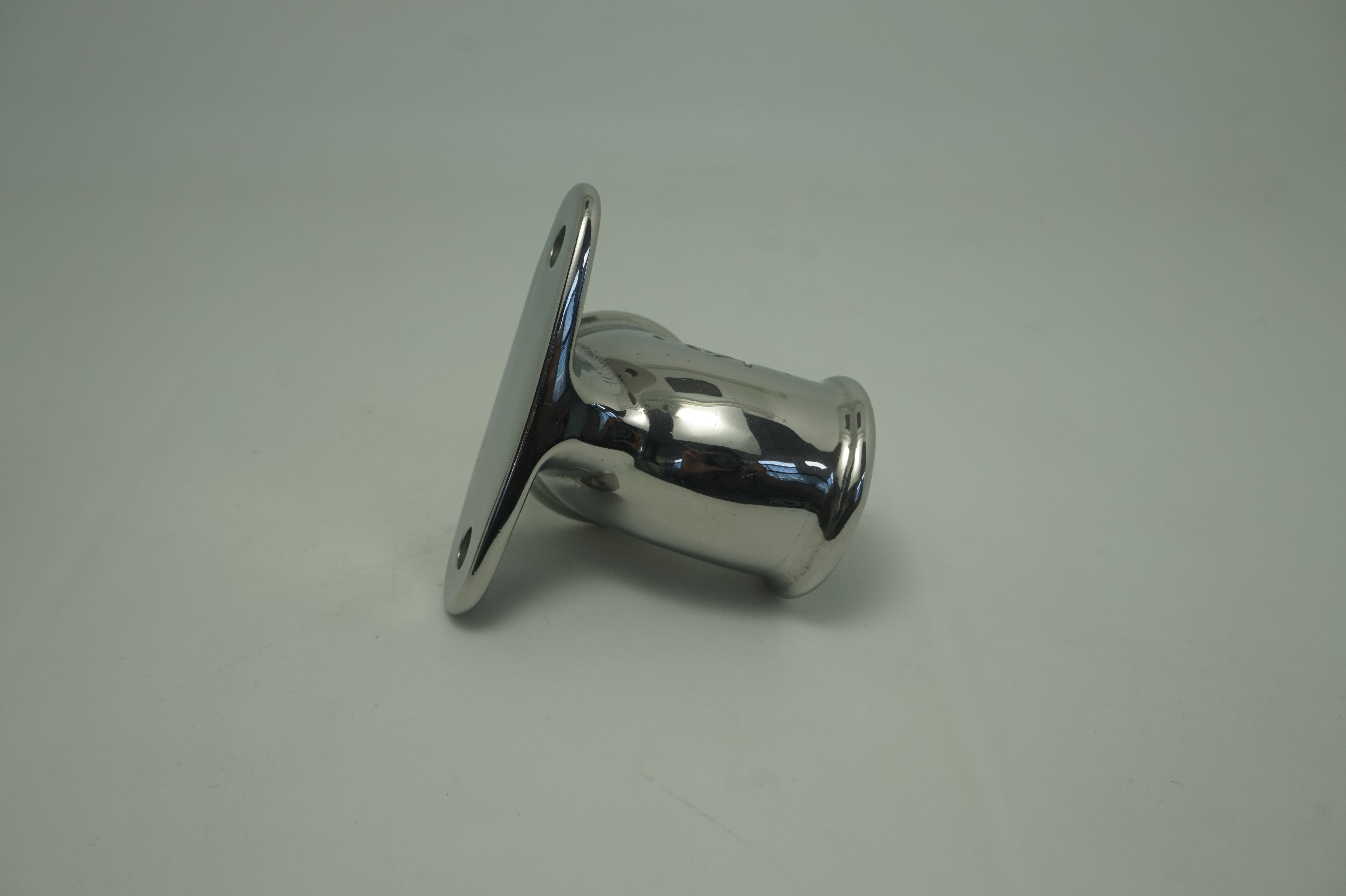
Laser marking interacts with surface texture, so contrast depends on whether the surface is directional, random satin or bright. A strong directional finish from a tub or a linishing step can produce a marking that reads differently when the part is turned, while a uniform random texture marks more consistently. Residue and embedded media also interfere, because the marking energy meets a contaminated surface. For a marked cover plate in Australia, the practical sequence is to fix the finish first, then qualify the marking programme on finished parts, and to check the mark under the lighting the end user will use rather than a bench lamp.
It does. Anodising is partly transparent over the underlying texture, so machining marks, media direction and any residual film remain visible, and embedded media or a silicate deposit can show as a bloom or speckle. Aluminium also needs a clean, freshly finished surface, because a slow dry or a contaminated rinse leaves an oxide or residue layer that shows through the coating. A buyer planning a cosmetic anodised finish should evaluate appearance on an anodised sample rather than on bare metal, and should specify the rinse, dry and handling expectations to the finishing supplier. Acceptance of the coating itself remains with the buyer and the anodiser.
Keep the aluminium loop physically separate. Steel media, steel barrels, worn machine parts and shared screening equipment all transfer iron to a soft aluminium surface, and the result shows as black smut, dark specks or a galvanic couple that becomes visible under a coating or after anodising. Dedicated media, a dedicated barrel or bowl liner, separate screens and separate storage are the practical controls, along with a check of the finished surface under directional light. For a plant in Australia running both steel and aluminium work, the segregation rule needs to cover media storage and top-up stocks, not only the machine, because a shared media bin reintroduces the contamination.
Use Newcastle, Australia as the destination on the enquiry and state whether the deliverable is equipment, media and compound, a representative sample review or a line concept. A destination does not imply local stock, a local service point or a local delivery time.
Newcastle buyers work to Australian Standards administered by Standards Australia, and electrical equipment must carry the Regulatory Compliance Mark under AS/NZS 4417.1 and AS/NZS 4417.2 where in scope. Defence and aerospace suppliers in the Williamtown/Astra Aerolab supply chain additionally work to Defence procurement specifications and mission-assurance requirements, and mining equipment suppliers commonly reference client-specific surface and inspection requirements.
Sources were retrieved on 2026-09-29 and describe the local industrial and trade context only. They do not evidence any SurfacePolish project, shipment, installation or service in Newcastle.
The buyer needs part-to-part consistency across a large batch and is worried about small parts escaping a screen or lodging in each other.
Send the material, dimensions, approximate weight, batch quantity, the incoming condition and photographs of the difficult features. Mark which features must not be contacted by media and state how the result will be inspected. This form carries source reference PSEO-0763; quote it if you prefer an additional manual reference.
Open the SurfacePolish enquiry form Email a prepared enquiry
No price, lead time, certification or result is promised here. Confirm whether a sample trial is available for the specific part and what the trial can and cannot show.
Page PSEO-0763 · revised 2026-09-29 · cross-border equipment, media and scoped sample review. City context is sourced and cited above.
Use this local checker to identify missing part and inspection information. It prepares a technical-review brief; it does not approve a machine, process recipe or production result.
Complete the part details to prepare a review brief.
Email : info@surface-polish.com


 IPv6 network supported


 +86-592-2381506
