A buyer in Phoenix, United States finishing a 6061-T6 instrument housing for medical devices has to hold two requirements at once: a satin face the customer will see, and an O-ring groove edge that must stay within a stated radius. SurfacePolish supplies finishing machines, media and compounds across borders and runs a free sample trial on the parts the buyer sends. This brief is written for a buyer in Phoenix working on medical devices; it describes equipment, media and a scoped sample review, not a local polishing service.
Who defines and verifies the cleanliness, residue and any regulatory requirement, and by what method and limit?
What are the alloy and temper, and has machining, casting, welding or heat treatment already changed the surface hardness and porosity?
What downstream operation follows finishing, such as anodising, laser marking, bonding or assembly, and what does it require of the surface?
A finishing route is only as good as the parts fed into it, so characterise the starting condition first. Note the machining process, the depth and direction of tool marks, whether the part was linished or hand-sanded already, whether it carries heat-treat scale or an as-cast skin, and which surfaces were scratched in handling. A batch of mixed starting conditions produces a mixed finish, because a cycle that removes a twenty-micron tool mark on 6061 will not remove a deep gouge without rounding the part. Record batch size, the mix of part numbers and the quantity of each, since an underloaded bowl or barrel runs differently from a full one. Segregate parts by alloy, by temper and by pre-finish condition before they enter the same machine.
Media is a consumable that changes as it works, and that change alters the finish. As media wear down they lose mass and edge definition, the charge volume drops, the cut rate falls and the surface result drifts, so a finish that was correct at the start of a media charge may not be reproducible after a week of running. Screen and grade media for size, top up the charge, and replace a fraction on a schedule rather than waiting for the result to move. Cross-contamination is the sharper risk on aluminium: steel media or steel machine parts in the same loop deposit iron on the soft surface, which later shows as black staining, as a galvanic couple under a coating or as an inclusion visible after anodising. Keep media and barrels dedicated to aluminium where finish matters.
| Media | Best fit | Watch out for |
|---|---|---|
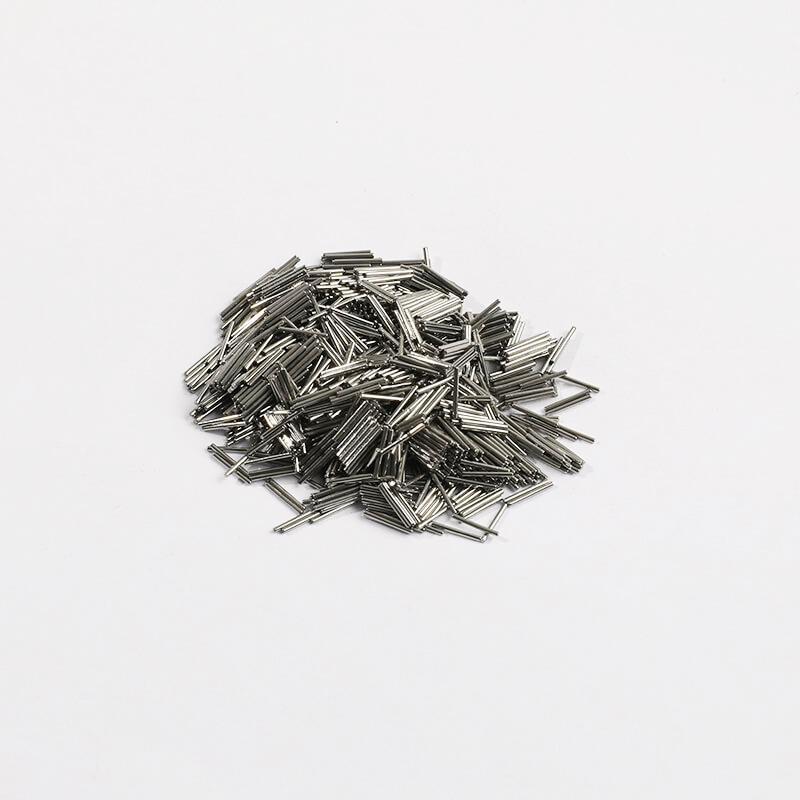
| Plastic-bonded media, light to medium abrasive grade, cone and triangle shapes | General deburring and satin finishing on 6061 and 7075 where galling risk rules out dense ceramic | Wears quickly and loses edge definition; cut rate drops as the charge ages and the cosmetic result drifts unless media is screened and topped up |
| Alumina-based ceramic media, low-density, cylindrical and pin shapes | Internal bores, slots and cross-holes on small aluminium components that a rounded tumbling body cannot reach | Pin and cylinder shapes can wedge in a bore or a slot; confirm retrieval and inspection before running a production batch |
| Steel media, balls or pins, for bright polishing | Bright reflective finish on hard, robust steel work where a high lustre is the primary requirement | Deposits iron on aluminium, causing black smut, staining and a galvanic couple; keep it out of any loop shared with aluminium parts |
| Ceramic media, spheres and low-density ceramic, fine size class | Bright surface development and light edge work on small aluminium components with mixed cosmetic and internal features | Fine media lodges in blind holes, cross-drillings and thin-wall pockets and is harder to screen out of the load |
A rotary barrel tumbles the load under gravity at comparatively low energy, which makes it a reasonable route for small precise aluminium parts that must not be peened, distorted or made to impinge on each other. It suits high-volume small components such as connector bodies, pins, small fittings and thin machined parts where the requirement is a consistent light deburr and surface refinement rather than heavy stock removal. Two costs come with that gentleness: cycles are longer for the same result, and parts with flats, pockets or low mass can slide rather than tumble, so one face may receive almost no work. Barrel loading, rotational speed, media-to-part ratio and compound quantity all change the result, and an overloaded barrel simply rotates with the mass instead of working it.
| Machine route | Where it fits | What it will not do |
|---|---|---|
| Grinding finishing machine | Higher material removal on aluminium parts that need a heavy burr or a pronounced chamfer removed before a gentler finishing step | Aggressive on soft aluminium, difficult to control on cosmetic faces and functional edges, and not a finishing step on its own |
| Disc finishing machine | Fast burr removal and edge radiusing on robust aluminium parts where a short cycle and high material removal matter most | High part-on-part contact and impingement risk; smears soft 6061, is hard to localise, and adds fixturing labour to every cycle |
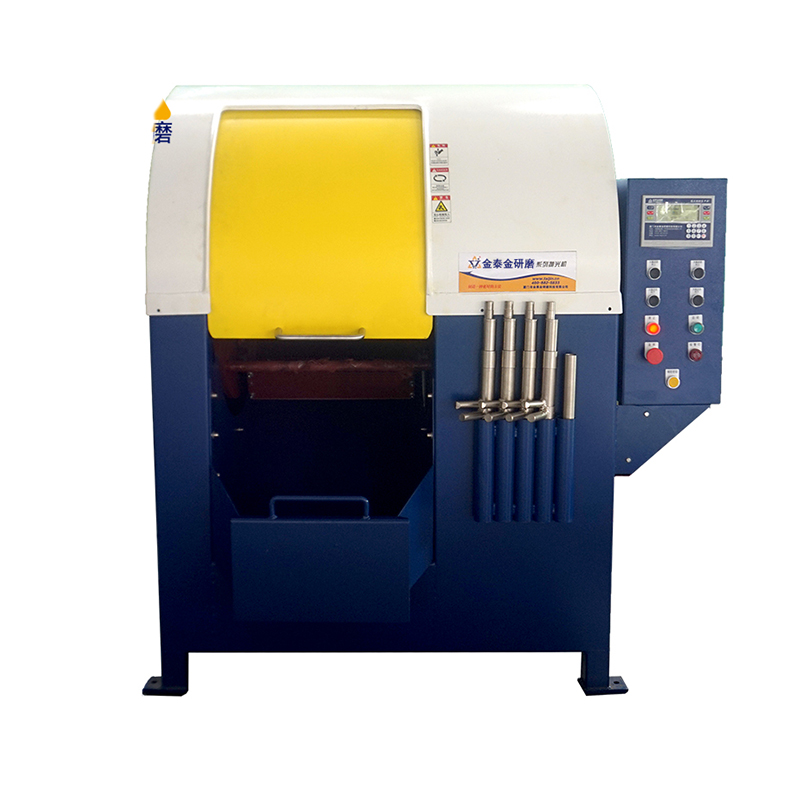
| Centrifugal barrel finishing machine | Short, controlled cycles producing a fine satin finish and a defined edge on small to medium aluminium device parts | High energy bends thin walls and distorts light sections; barrel geometry limits part length and pieces per run |
| Vibratory bowl finishing machine | Small to medium aluminium components that tumble freely: ferrules, handles, brackets and cover plates needing uniform deburring or satin finishing | Long, tall or heavily recessed parts shadow themselves and finish unevenly; part envelope must fit free circulation in the bowl |
Small media, abrasive grit and magnetic pins can lodge in a blind hole, a cross-drilling, a thread root, an undercut or a thin-wall pocket and stay there through rinsing. A lodged fragment is a functional defect, not a cosmetic one: it can score a mating bore during assembly, come loose inside a device, or sit under a coating. Thin walls make it worse because the pocket deforms slightly under load and grips the fragment. Detect it with a borescope on internal features, by weighing parts against a known-clean reference, by controlled tapping over a white surface, or by an ultrasonic clean followed by inspection of the bath residue. Design the route around it: plug or shield the features that trap media, change the size class, or choose a route whose loading geometry differs. A visual pass is not proof that a cavity is clean.
| Failure mode | Likely cause | How to catch it |
|---|---|---|
| Bloom, bleed-out or staining appearing days after finishing on a casting | Porosity holding compound or rinse water, an as-cast skin opened by the cycle, incomplete drying before packaging or anodising | Hold finished castings for a defined period and re-inspect, and section a rejected part to confirm whether the residue originates in the pores |
| Uneven finish with bright and dull bands on the same face | Part settling in one attitude, self-shadowing on a long or recessed part, wrong load ratio, media too large to flow around the geometry | Compare several parts taken from different positions in the load under directional light rather than sampling only the discharge gate |
| Media or abrasive fragment lodged in a blind hole, cross-drilling or thin-wall pocket | Media size class too small for the feature, unshielded pockets, flexing thin wall gripping the fragment, no dedicated retrieval step | Borescope the internal features, weigh against a known-clean reference, tap over white paper, and inspect the residue from an ultrasonic clean |
| Etched, darkened or chalky surface after wet finishing | Compound pH or concentration outside the aluminium working range, over-alkaline product, long dwell in a hot solution, exhausted compound | Compare a dried part against a retained reference under the customer's lighting, and log compound pH, concentration and temperature for the batch |
Metro Phoenix combines semiconductor packaging and device manufacturing, aerospace and defence production, electric-vehicle assembly and large-scale nuclear generation. Amkor Technology lists its corporate headquarters and business operations in Tempe, Arizona and promotes a new US advanced packaging and test facility for the domestic semiconductor supply chain. Boeing states that it builds and tests AH-64 Apache helicopters at its Mesa, Arizona site for the US Army and global customers, and Lucid Motors states it selected a 500-acre property in Casa Grande, Arizona, between Phoenix and Tucson, for its first purpose-built electric-vehicle factory. The US Energy Information Administration locates the Palo Verde nuclear station in Maricopa County, and CBP lists Phoenix, Arizona (2605) and Phoenix-Mesa Gateway Airport (2682) as ports of entry served by the Tucson field office. Phoenix Sky Harbor International is a large-hub airport in the FAA's final CY2025 enplanement table.
The nearest part of that base to this brief is automotive: Lucid Motors states it selected a 500-acre property in Casa Grande, Arizona, between Phoenix and Tucson, for its factory, described as the first purpose-built EV factory in North America.
Semiconductor packaging, tool and equipment manufacturing around Phoenix needs deburred, low-particle surfaces on machined stainless and aluminium parts, because residual media, compound or metal fines are a contamination risk on parts that go near a bond line, a vacuum chamber or a cleanroom. Aerospace and defence work in Mesa adds edge-control and surface-texture requirements tied to fatigue life and coating adhesion, and electric-vehicle drivetrain and battery-enclosure parts are typically specified for edge quality and burr-free, coating-ready surfaces. In all three cases the finish specification is set by the downstream process, not by appearance.
For Phoenix buyers the first question is what happens to the part downstream: a cleanroom, vacuum or bond-line part needs a documented cleaning and particle limit and a finishing process whose media cannot embed or shed, whereas an aerospace or EV part is usually governed by edge-radius and coating-adhesion callouts. Settling the residue or cleanliness test and the edge callout before trialling media is what prevents a finish that looks correct but fails the customer's validation.
Freight context: Phoenix Sky Harbor International Airport (PHX), Phoenix, Arizona (CBP port of entry 2605) and Phoenix-Mesa Gateway Airport (2682). FAA final CY2025 enplanement data list Phoenix Sky Harbor International with 25,094,817 boardings, and CBP's Arizona table lists Phoenix, Arizona (2605) and Phoenix-Mesa Gateway Airport (2682) as ports of entry under the Tucson field office. Metro Phoenix has no seaport, so containerised machines from China normally arrive at a West Coast port and move inland by rail or truck, clearing CBP at the port of unlading or at the Phoenix port of entry; air consignments such as sample parts clear at Sky Harbor.
The United States has no free-trade agreement with China, so Chinese industrial machinery enters under normal-trade-relations (MFN) duty rates in the Harmonized Tariff Schedule of the United States plus any Section 301 duty that applies to the specific HTSUS subheading. USTR's four-year-review modification of the Section 301 China technology-transfer investigation imposed additional Section 301 duties or increased existing rates on certain Chinese products in strategic sectors, and created a temporary exclusion process for machinery used in domestic manufacturing: chapters 84 and 85 of the HTSUS, which cover most machinery used in manufacturing processes, are the chapters that were made eligible for exclusion requests. CBP still administers Section 301 China duties, the four-year-review increases and product exclusions. The IEEPA-based additional ad valorem duties of 2025 - including the reciprocal-tariff actions and the China synthetic-opioid supply-chain duties imposed under Executive Orders 14195 and 14257 - were ordered terminated by Executive Order 14389 of 20 February 2026 and, as soon as practicable, are no longer collected. A buyer should therefore price the MFN rate plus any applicable Section 301 rate and check whether the machine's exact subheading is covered by a current exclusion, rather than assuming either the 2025 IEEPA tariffs or a blanket China rate still applies.
Business is conducted in US English. Units matter: US drawings and purchase orders frequently use inches, microinch Ra and US gallons, and a supplier that quotes only metric can be asked to reissue documentation. Buyers are US legal entities with an EIN and expect an identifiable contracting entity, a correct HTSUS classification, a commercial invoice, packing list and bill of lading, country-of-origin marking, and an importer of record for customs. Procurement is normally evidence-driven: process selection is expected to be justified by a trial run on the buyer's own sample parts with measured results (burr height, edge radius, Ra, cleanliness) and by media and compound data sheets, rather than by a capability claim. Payment terms in general US industrial practice are open account with net-30 to net-60 terms for established buyers, with letters of credit or advance payment more common for a first order from a new overseas supplier; no US buyer assumes Incoterms, warranty terms or spare-parts lead times unless they are stated in the quotation.
SurfacePolish supplies from Xiamen, China. The buyer's own destination rules, conformity marking, tariff classification and documentation responsibilities stay with the buyer; confirm them against the authorities named above before ordering.
Treat the first finished part of every batch as a first article and hold it until it has been checked against the agreed criteria. Record the part number, alloy and temper, the machine and route, the media charge identity and its accumulated hours, the compound and concentration, the cycle time, the load ratio and the drying step. Retain a reference part from the accepted first article, and when a later batch differs, compare the two physically before adjusting anything. Segregate batches by alloy and part number, and keep the aluminium loop separate from steel work so iron cannot transfer onto a soft surface. This discipline, not the machine settings, is what makes a finish reproducible. Who performs the checks and who signs the release is a buyer decision, but the record of what was run is worth keeping.
A sample trial produces observations on the parts that were tested, under the settings that were used, on the equipment that ran them. It does not guarantee a roughness value, an appearance grade, an edge radius, a dimensional result, a cycle time, a capacity or a production cost, and it does not qualify, approve or validate a process for a medical device or any regulated application. It cannot prove biocompatibility, cleanability, sterility, corrosion life or a cleaning validation, and it does not create a specification the buyer can rely on for regulatory purposes. Those determinations belong to the buyer's own engineering and quality functions, working to their own requirements. What a trial can do is show whether a mechanical route is plausible for a part and which media and compound direction is worth pursuing.
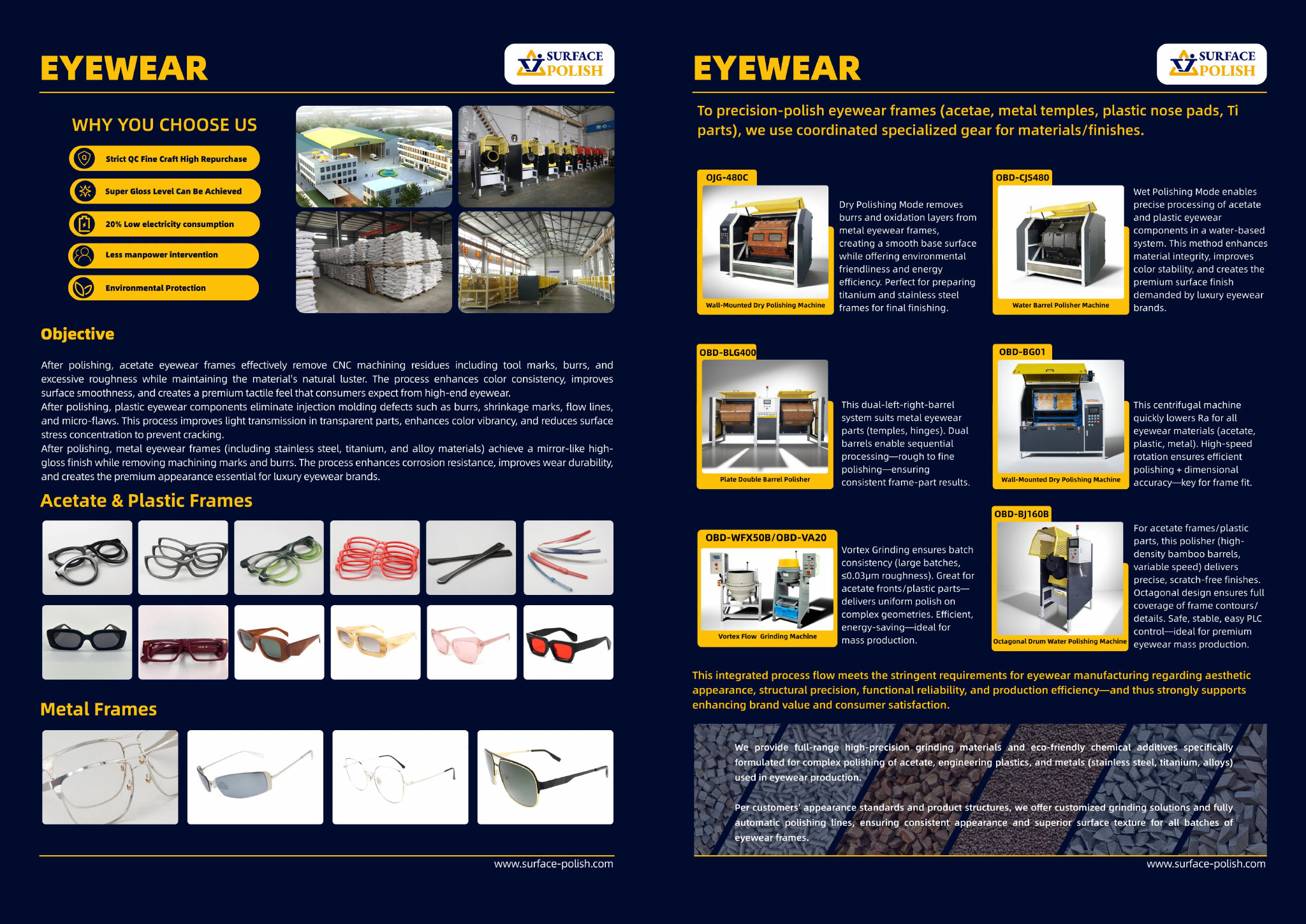
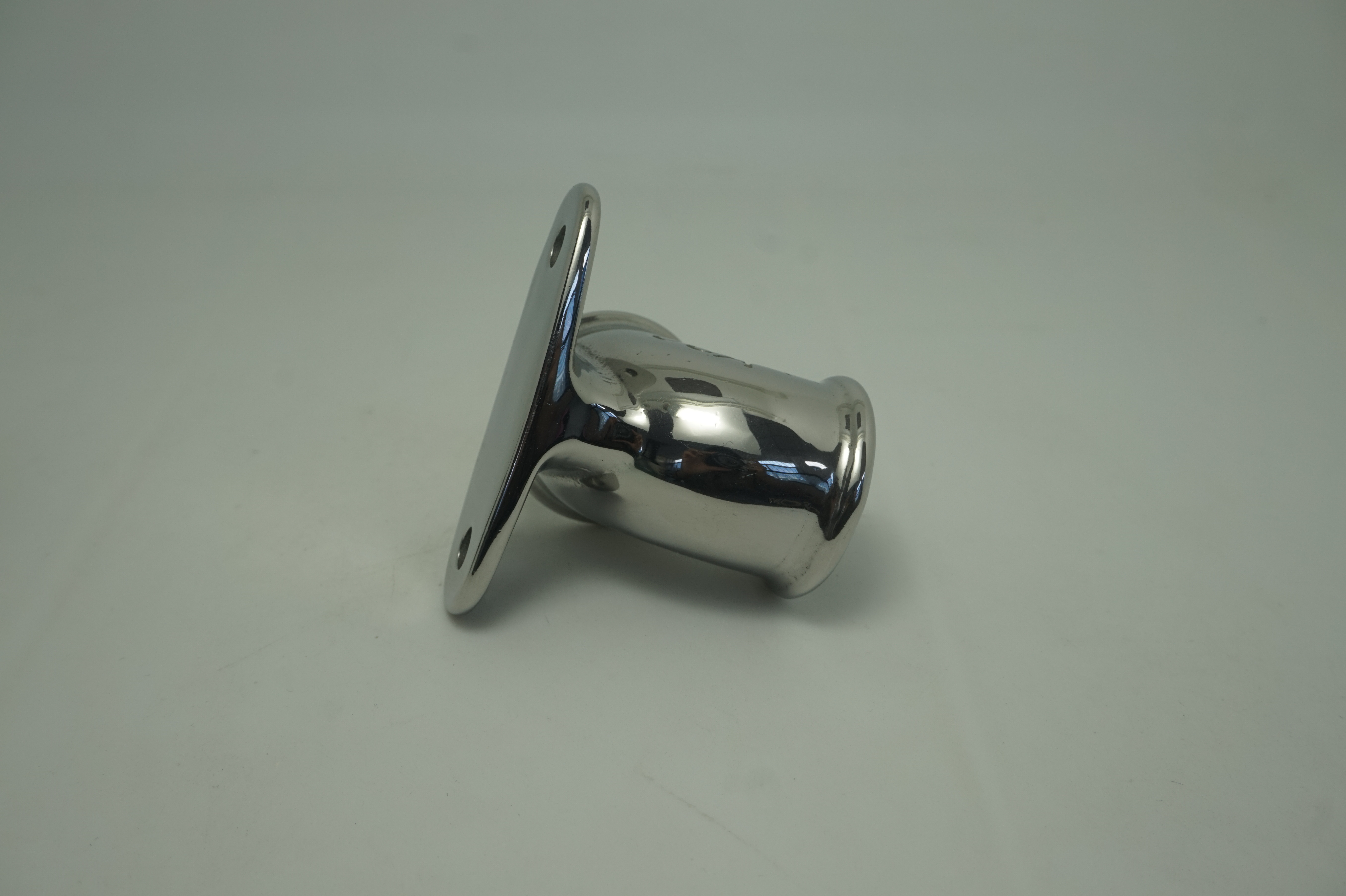
Both alloys can be finished mechanically, but they behave differently. 6061 in T6 cuts and polishes predictably and tolerates a wider media range. 7075 is stronger and harder, tears more readily around machining marks and is less forgiving of heavy media and long energetic cycles. Cast aluminium behaves differently again because porosity and an as-cast skin change how the surface responds. For a part in United States, the useful approach is to trial both alloys separately with the same media direction and see where the surface and edge results diverge, then set the route per alloy rather than assuming one setting covers the family.
Laser marking interacts with surface texture, so contrast depends on whether the surface is directional, random satin or bright. A strong directional finish from a tub or a linishing step can produce a marking that reads differently when the part is turned, while a uniform random texture marks more consistently. Residue and embedded media also interfere, because the marking energy meets a contaminated surface. For a marked cover plate in United States, the practical sequence is to fix the finish first, then qualify the marking programme on finished parts, and to check the mark under the lighting the end user will use rather than a bench lamp.
Start with media that are softer or lighter than the workpiece is likely to tolerate: plastic-bonded media in a light or medium abrasive grade, or a low-density ceramic. Dense ceramic and steel media that cut steel efficiently will embed, smear or gall aluminium and can implant iron that later shows as staining. Media weight, compound lubricity and load ratio matter as much as family, because a heavy, hot, under-lubricated charge will gall parts even with the right media. A buyer in United States should treat media selection as a two-stage question: what removes the burr, and what produces the final cosmetic surface without transfer.
Use Phoenix, United States as the destination on the enquiry and state whether the deliverable is equipment, media and compound, a representative sample review or a line concept. A destination does not imply local stock, a local service point or a local delivery time.
Semiconductor-equipment and cleanroom-adjacent parts are commonly specified against SEMI standards with explicit particulate, residue and surface-finish limits, while general machined parts are called out to ASME B46.1 or ISO 4287/4288; aerospace work in Mesa typically also carries AS9100 quality-system and NADCAP special-process requirements with SAE AMS process specifications on the certificate.
Sources were retrieved on 2026-09-29 and describe the local industrial and trade context only. They do not evidence any SurfacePolish project, shipment, installation or service in Phoenix.
The buyer needs a uniform satin cosmetic face without rounding the O-ring groove edge or driving media into the threaded bosses.
Send the material, dimensions, approximate weight, batch quantity, the incoming condition and photographs of the difficult features. Mark which features must not be contacted by media and state how the result will be inspected. This form carries source reference PSEO-0093; quote it if you prefer an additional manual reference.
Open the SurfacePolish enquiry form Email a prepared enquiry
No price, lead time, certification or result is promised here. Confirm whether a sample trial is available for the specific part and what the trial can and cannot show.
Page PSEO-0093 · revised 2026-09-29 · cross-border equipment, media and scoped sample review. City context is sourced and cited above.
Use this local checker to identify missing part and inspection information. It prepares a technical-review brief; it does not approve a machine, process recipe or production result.
Complete the part details to prepare a review brief.
Email : info@surface-polish.com


 IPv6 network supported


 +86-592-2381506