A buyer in Winnipeg, Canada finishing a 6061-T6 instrument housing for medical devices has to hold two requirements at once: a satin face the customer will see, and an O-ring groove edge that must stay within a stated radius. SurfacePolish supplies finishing machines, media and compounds across borders and runs a free sample trial on the parts the buyer sends. This brief is written for a buyer in Winnipeg working on medical devices; it describes equipment, media and a scoped sample review, not a local polishing service.
Who defines and verifies the cleanliness, residue and any regulatory requirement, and by what method and limit?
What edge radius or chamfer is allowed at each mating, sealing and press-fit feature, and how will it be measured?
What are the alloy and temper, and has machining, casting, welding or heat treatment already changed the surface hardness and porosity?
Begin by marking up the drawing surface by surface. An aluminium device housing may carry a visible cosmetic face, several machined mating faces that set a seal or a press fit, threaded ports, dowel holes and a thin outer wall, and each has a different finishing tolerance. Cosmetic zones can accept a uniform satin or bright finish; sealing faces and dowel bores need the edge left close to sharp or rounded to a stated radius, and a heavy media cycle destroys that. Note where the customer sees the part after assembly, because a face that meets a cosmetic grade on its own can still look wrong beside an untreated neighbour. A drawing that names, per surface, whether it is cosmetic, functional or indifferent is the cheapest document in the whole finishing project.
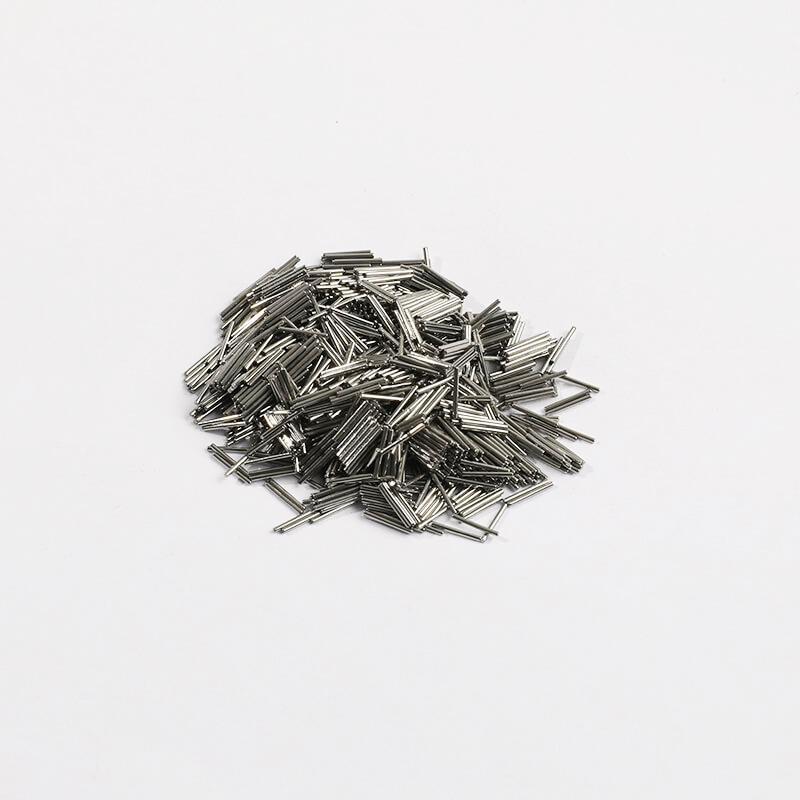
Media shape decides which features receive work. Angle-cut triangles, stars and wedges reach into corners and produce an edge break; spheres and ellipsoids blend surface and remove very little edge material; cylinders and pins work inside bores and slots; flattened or lens shapes reach recesses a rounded body cannot. On aluminium components with mixed features this distinction is the whole decision: a sphere-heavy charge protects a sealing edge but leaves a burr at a bore exit, while a sharp-edged charge removes the burr and rounds the very edge that has to stay accurate. Size matters just as much. Large media cannot enter a small slot but produce a more open, less clogged charge; small media follow tighter geometry but lodge in pockets, pack blind holes and are harder to screen out of the load. Define the smallest feature to be worked before specifying size class.
| Media | Best fit | Watch out for |
|---|---|---|
| Dry media, corn cob with a polishing compound charge | Final dry polish and drying assistance on small aluminium parts where a wet rinse and dry would leave spotting | Compound loading saturates with use and the media cakes; the charge needs regular replacement, and soft aluminium can still smear |
| Steel media, balls or pins, for bright polishing | Bright reflective finish on hard, robust steel work where a high lustre is the primary requirement | Deposits iron on aluminium, causing black smut, staining and a galvanic couple; keep it out of any loop shared with aluminium parts |
| Dry media, walnut shell, fine grade | Dry polishing, light surface cleaning and preparation before anodising or laser marking on aluminium parts | Shell dust must be extracted and the part cleaned, or the residue interferes with marking, bonding or a later coating step |
| Plastic-bonded media, ball and ellipsoid shapes | Surface refinement and blending on cosmetic aluminium faces where edges, seal lands and dowel bores must stay close to drawing | Removes very little edge material, so a burr at a bore exit or a thread crest may survive the cycle and need a separate step |
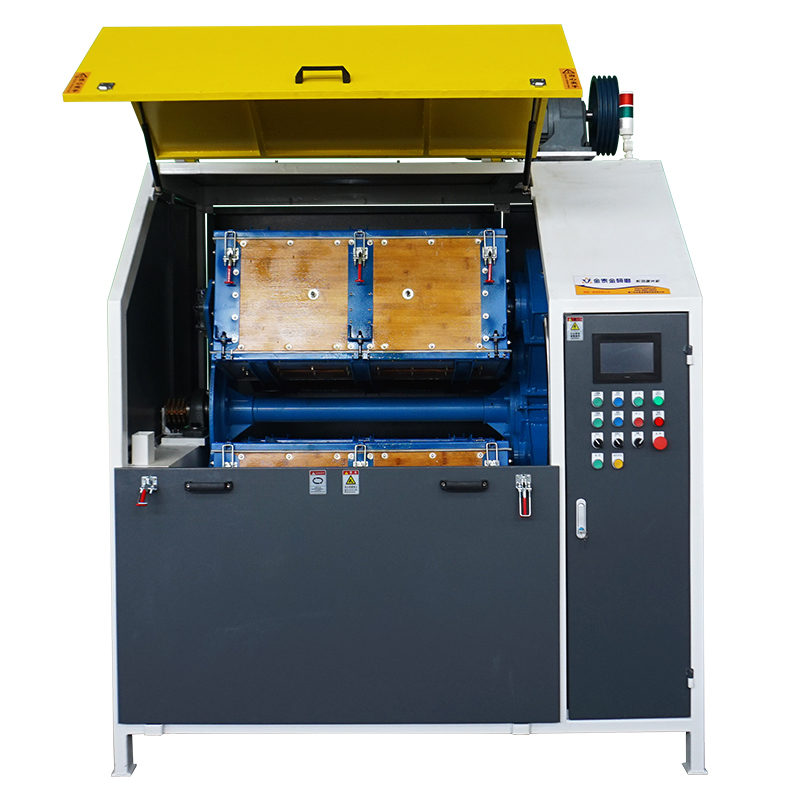
Disc finishing machines generate high energy at the disc face and remove material and round edges quickly, which is attractive when a batch of aluminium parts needs a burr gone in a short cycle. That same energy is what makes them risky on soft wrought aluminium and on thin castings. Part-on-part contact is high, so parts impinge, peen each other and develop a hammered or uneven surface, and 6061 will smear rather than cut if the compound is wrong or the load too heavy. Fixturing helps: a carrier that holds each part in a fixed attitude reduces random contact but adds load and unload labour to every cycle. Disc routes are also unforgiving on edge control because removal is neither uniform nor easy to localise. Use them where a robust part needs a fast radius.
| Machine route | Where it fits | What it will not do |
|---|---|---|
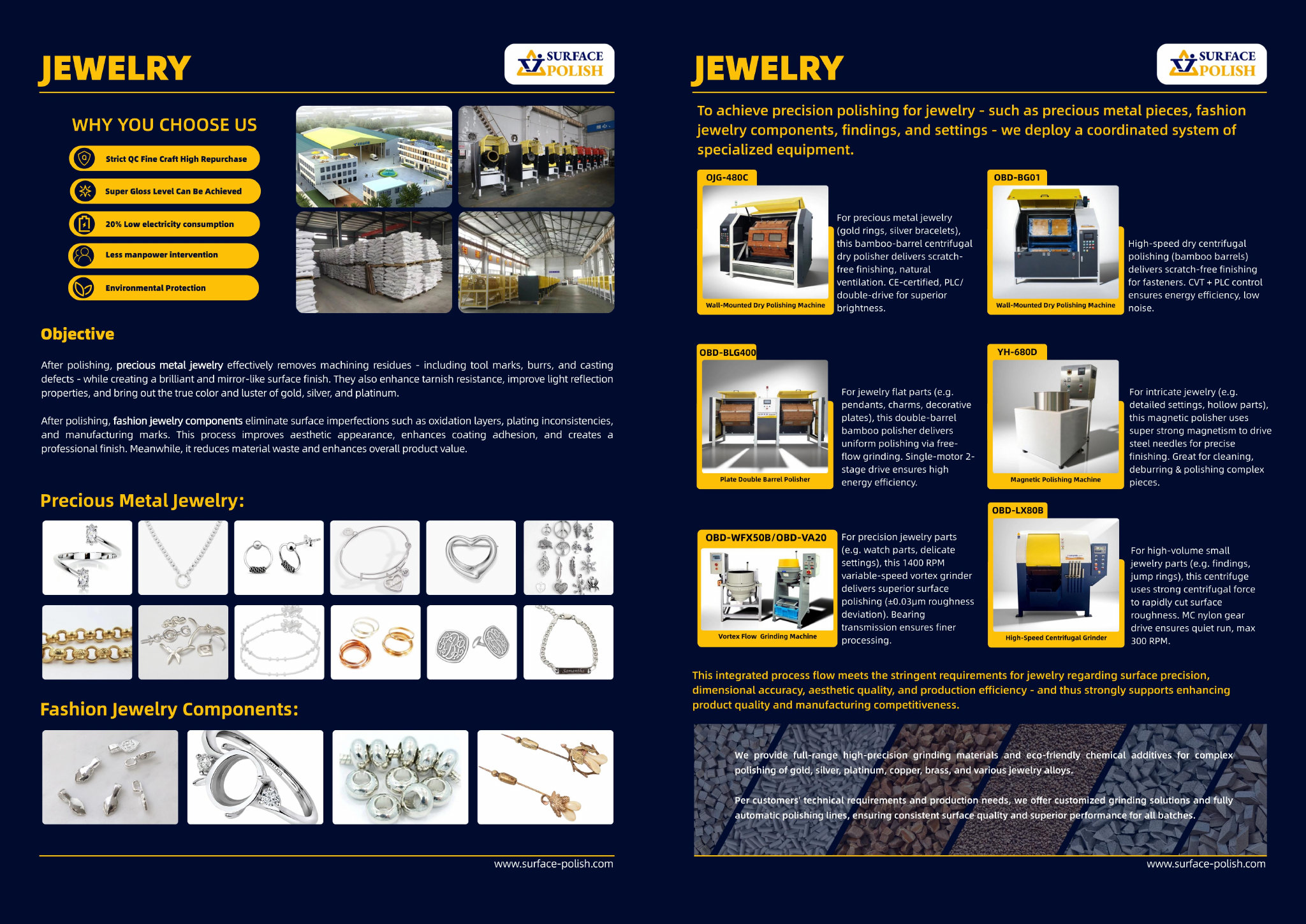
| Rotary barrel finishing machine | Gentle, low-energy deburring of small precise aluminium parts in high volume, including thin and light components | Longer cycles for the same result; flat or light parts may slide rather than tumble, and an overloaded barrel stops working the load |
| Dry polishing machine and dryer | Post-wet drying and dry polishing of aluminium parts before anodising, laser marking, bonding or packaging | Does not remove a burr or refine a surface on its own; residual media dust and incomplete drying still cause marking and coating defects |
| Grinding finishing machine | Higher material removal on aluminium parts that need a heavy burr or a pronounced chamfer removed before a gentler finishing step | Aggressive on soft aluminium, difficult to control on cosmetic faces and functional edges, and not a finishing step on its own |
| Magnetic finishing machine | Small aluminium parts with fine internal features such as cross-holes, slots and recesses that tumbling media cannot reach | Small working envelope and low throughput; pins and fine media can lodge in blind features, and mixed part families are awkward |
Small media, abrasive grit and magnetic pins can lodge in a blind hole, a cross-drilling, a thread root, an undercut or a thin-wall pocket and stay there through rinsing. A lodged fragment is a functional defect, not a cosmetic one: it can score a mating bore during assembly, come loose inside a device, or sit under a coating. Thin walls make it worse because the pocket deforms slightly under load and grips the fragment. Detect it with a borescope on internal features, by weighing parts against a known-clean reference, by controlled tapping over a white surface, or by an ultrasonic clean followed by inspection of the bath residue. Design the route around it: plug or shield the features that trap media, change the size class, or choose a route whose loading geometry differs. A visual pass is not proof that a cavity is clean.
| Failure mode | Likely cause | How to catch it |
|---|---|---|
| Uneven finish with bright and dull bands on the same face | Part settling in one attitude, self-shadowing on a long or recessed part, wrong load ratio, media too large to flow around the geometry | Compare several parts taken from different positions in the load under directional light rather than sampling only the discharge gate |
| Water spotting, rings or mineral staining after drying | Hard rinse water, slow or incomplete dry, droplets trapped in blind holes or under a flange, no final deionised rinse | Inspect the dried part in raking light against a reference, and check rinse-water hardness and conductivity records for the shift |
| Dents, peening marks or a hammered texture from part-on-part contact | Excessive energy for the part mass, under- or over-loaded charge, no fixture to control part attitude, hard or oversized media | Inspect a full-face view under low-angle light and a cross-section of a dent under a toolmaker's microscope to confirm plastic deformation |
| Galled, smeared or picked surface with transferred aluminium | Media too heavy or too dense for the alloy, insufficient compound lubricity, hot or overloaded charge, aluminium parts rubbing against each other | Inspect under low-angle directional light for smears and cold welds, then wipe with a white lint-free cloth to reveal transferred metal |
Winnipeg's manufacturing base is aerospace and defence plus food processing and packaging, and federal investment is actively expanding it. Prairies Economic Development Canada announced CAD 19.5 million through the Regional Defence Investment Initiative for three Winnipeg-based projects: Magellan Aerospace's establishment of an advanced machining centre in Winnipeg for aircraft components used in military aircraft, StandardAero's expansion of its Winnipeg campus for dual-use aerospace maintenance, repair and overhaul capacity including new equipment and advanced digital technologies, and Win-Shield Devices' establishment of a manufacturing facility for personal protective equipment. The city is also a defence geography in its own right: it is home to the operational headquarters of the Royal Canadian Air Force and the Canadian NORAD region, and Manitoba hosts CFB Winnipeg (17 Wing) and CFB Shilo. Investment in the airside industrial base continues, with CAD 10 million federal and CAD 5 million provincial funding announced in February 2026 toward the Winnipeg Airports Authority's development of 127 acres of direct-access runway lands at Winnipeg Richardson International Airport, intended to support growth in aerospace, defence and advanced manufacturing including aircraft maintenance and repair operations.
For this brief the relevant part of that base is medical: Win-Shield Devices received CAD 3.5 million through the same federal programme to establish a Winnipeg manufacturing facility for personal protection equipment for military and civilian applications, including inclusive respirators.
Winnipeg's aerospace machining and MRO base is the dominant finishing driver: engine components and aircraft structures produced or repaired in the city carry edge-condition, surface-integrity and cleanliness requirements that trace back to airworthiness, and MRO work on in-service hardware often requires re-finishing parts whose original surface condition has degraded. Magellan's new advanced machining centre and StandardAero's expanded engine MRO campus both increase the volume of machined and reworked parts flowing through the city, and both sit inside quality systems that require the finishing process to be specified, controlled and recorded. Personal protective equipment manufacturing at Win-Shield adds a different requirement set, where moulded and formed components need clean, burr-free edges that will not damage the sealing surfaces of respirators.
A Winnipeg buyer should settle whether the finishing operation is inside a quality system that requires approved process specifications and records, because in aerospace MRO and component manufacturing it usually is, and a machine that cannot be tied to a controlled specification will not be usable on flight hardware. The second question is how reworked and in-service parts differ from new parts in their finishing requirement, since MRO work brings in parts with unknown prior surface history that may need inspection and re-finishing rather than a standard pass through the same process.
Freight context: Winnipeg Richardson International Airport (YWG), CentrePort Canada inland port, CN and CPKC rail corridors, Arctic Gateway Group trade alliance routes. Winnipeg is a rail and air hub rather than a seaport. The federal and provincial governments are funding preparation of 127 acres of direct-access runway lands at YWG to create space for businesses that need immediate runway access, in support of aerospace, defence and advanced manufacturing including aircraft maintenance and repair operations. Separately, the Winnipeg Airports Authority, CentrePort Canada and Arctic Gateway Group announced a trade alliance in January 2026 to diversify trade routes and improve access to global markets, which matters for a manufacturer importing equipment and exporting finished parts.
China is one of Canada's ten principal merchandise trading partners and the second-largest single-country source of Canadian imports after the United States: Statistics Canada reported CAD 5,369 million of balance-of-payments imports from China in January 2025, against a CAD 2,299 million bilateral merchandise deficit that month. Canada has no free trade agreement with China, so Chinese-origin industrial machinery enters under the Most-Favoured-Nation (MFN) tariff column of the Canadian Customs Tariff; the preferential treatments listed in the tariff (CUSMA/UST and MXT, CETA/CEUT, CPTPP/CPTPT, UKT, KRT and others) do not include China, and preferential rates require proof of origin plus the applicable shipping rules, so a China-origin machine cannot claim them. Tariff classification is mandatory work, not a formality: vibratory, barrel, centrifugal and disc finishing machines are classified in Chapter 84 ("Nuclear reactors, boilers, machinery and mechanical appliances; parts thereof") according to the function of the machine, and the ten-digit Canadian tariff item drives both the duty rate and the statistics. A further landed-cost risk sits outside the tariff schedule: under the Special Import Measures Act (SIMA), the CBSA and the Canadian International Trade Tribunal may apply anti-dumping and countervailing duties to named goods, so a buyer should check the measures-in-force list for the specific product before assuming the MFN rate is the final duty.
The customs authority is the Canada Border Services Agency (CBSA), and importers of commercial goods must work through the CBSA Assessment and Revenue Management (CARM) system, which is where registration, the duties-and-taxes calculator, advance rulings and national customs rulings, and the commercial accounting declaration (CAD) are handled. Documentation expectations are explicit: "You must provide proof of country of origin when you import goods into Canada and, in some cases, your goods must also be clearly marked", the invoice or sales receipt must carry "a complete description of the goods", "the selling price" and "any conditions and terms of the sale", and the value for duty must be declared in Canadian currency only. Duties and taxes are layered rather than single: customs duty on the tariff item, the Goods and Services Tax calculated on the duty-paid value, and potentially excise duty, excise tax, surtax or safeguard measures. Importers must also clear non-tariff gates: goods must be admissible, some goods need permits, certificates or inspections from other federal departments that the CBSA applies on their behalf, controlled goods under the Defence Production Act require consultation with the CBSA and Global Affairs Canada before import, and "Goods manufactured or produced wholly or in part by forced or prison labour are prohibited from entering Canada", with due diligence resting on the importer. For electrical machinery, the practical conformity route in Canada is certification of the product to Canadian electrical safety standards by an accredited certification body rather than a self-declared CE-style mark; buyers should confirm the specific certification body and mark required before shipment. For a first shipment of a finishing machine or a media/compound sample lot, the fastest way to remove classification and valuation uncertainty is to use the CARM portal to request an advance ruling for tariff classification and origin.
SurfacePolish supplies from Xiamen, China. The buyer's own destination rules, conformity marking, tariff classification and documentation responsibilities stay with the buyer; confirm them against the authorities named above before ordering.
Some acceptance criteria are functional and cannot be judged by looking. Check edge condition on sealing and mating features with a radius gauge or optical comparator, and verify that a seal land is still flat and wide enough to seat. Measure critical bores, dowel holes, press-fit diameters and any feature the cycle can move, and compare against drawing limits rather than a nominal. Confirm that threads run freely with a gauge and that no media fragment is trapped in a thread root or cross-hole. Where a lid, gasket or mating plate will seat on the finished surface, a simple assembly or leak test on a first-article part proves more than visual inspection. The buyer defines which checks apply and what the limits are; a finishing trial reports what it observed on the parts it received.
Scaling from a bench or pilot run to a producing line changes several things at once, and each has to be planned. The machine must be sized for the part envelope and the throughput the buyer needs, which sets load volume, media quantity and compound dosing. A compound delivery system with a dosing pump, a flow meter and a recirculation or once-through decision is what makes the chemistry repeatable rather than hand-mixed. Media handling needs a screen or separator, a stock of graded media for top-up, and a rule for replacing worn media. Parts need a defined load pattern, and any fixture or mask needs a duplicate so it does not become the bottleneck. Rinse and drying stages must match the downstream requirement. The layout, services and acceptance criteria remain the buyer's engineering decisions.
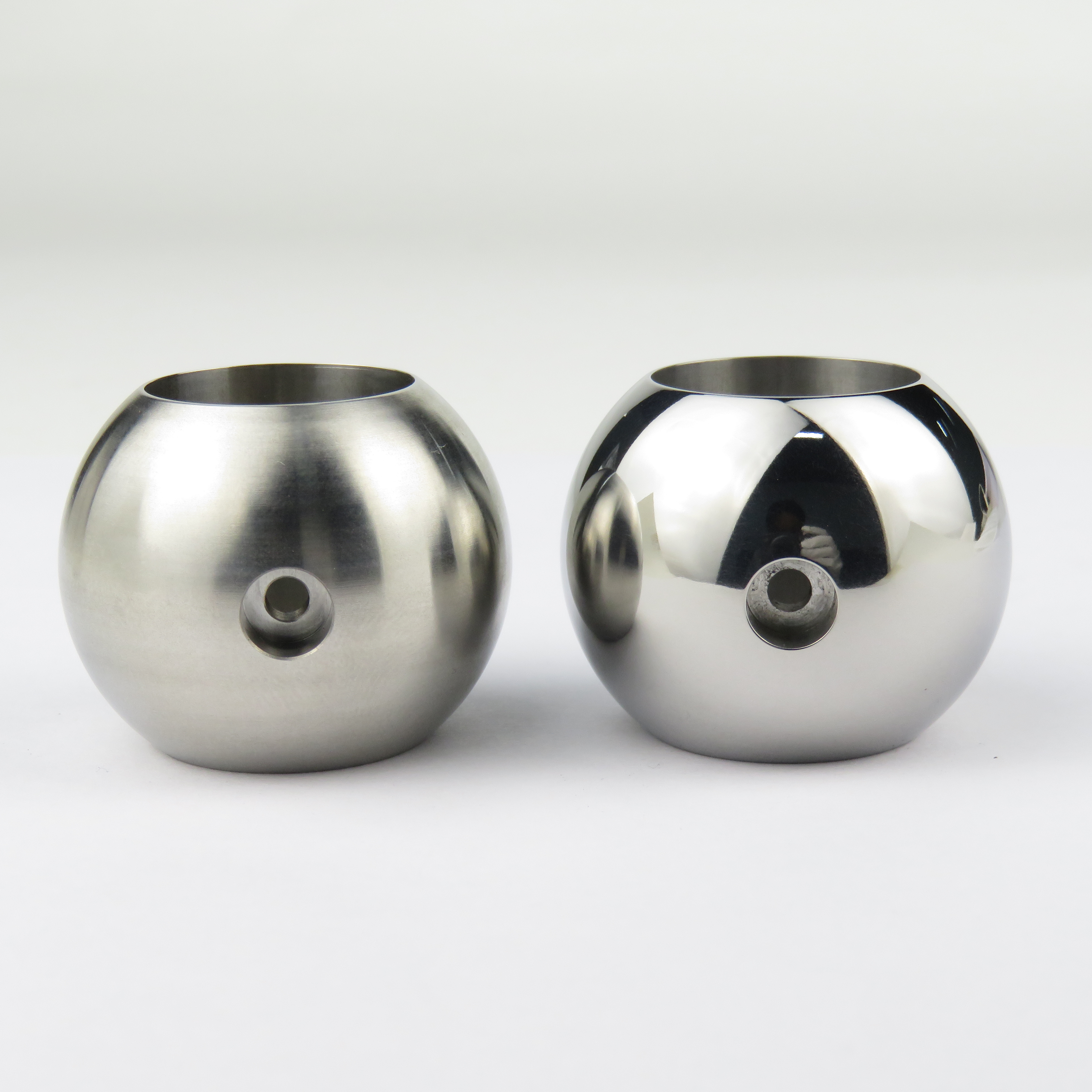
Laser marking interacts with surface texture, so contrast depends on whether the surface is directional, random satin or bright. A strong directional finish from a tub or a linishing step can produce a marking that reads differently when the part is turned, while a uniform random texture marks more consistently. Residue and embedded media also interfere, because the marking energy meets a contaminated surface. For a marked cover plate in Canada, the practical sequence is to fix the finish first, then qualify the marking programme on finished parts, and to check the mark under the lighting the end user will use rather than a bench lamp.
Both alloys can be finished mechanically, but they behave differently. 6061 in T6 cuts and polishes predictably and tolerates a wider media range. 7075 is stronger and harder, tears more readily around machining marks and is less forgiving of heavy media and long energetic cycles. Cast aluminium behaves differently again because porosity and an as-cast skin change how the surface responds. For a part in Canada, the useful approach is to trial both alloys separately with the same media direction and see where the surface and edge results diverge, then set the route per alloy rather than assuming one setting covers the family.
It will if the edge is exposed to the media for long enough. Media cannot distinguish a cosmetic edge from a seal land, a dowel bore or a press-fit shoulder, and rounding accumulates gradually, so a batch inside tolerance at the start of a media charge can be outside it later. Protection comes from shielding or masking the functional edge, using rounder and lighter media, shortening the cycle, and checking the feature with an optical comparator, radius gauge or CMM rather than by eye. A buyer in Canada should state the allowed edge radius per feature on the drawing, because a blanket edge-break note will be read literally.
Use Winnipeg, Canada as the destination on the enquiry and state whether the deliverable is equipment, media and compound, a representative sample review or a line concept. A destination does not imply local stock, a local service point or a local delivery time.
A Winnipeg buyer in aerospace works to the applicable transport-aircraft maintenance and manufacturing requirements and the customer's approved process specifications, with the finished part's edge condition and cleanliness treated as part of airworthiness rather than appearance. On the plant side, Manitoba occupational health and safety regulation and Canadian electrical certification of the equipment apply. Where the product is protective equipment, the relevant product standard and certification regime for that device governs.
Sources were retrieved on 2026-09-29 and describe the local industrial and trade context only. They do not evidence any SurfacePolish project, shipment, installation or service in Winnipeg.
The buyer needs a uniform satin cosmetic face without rounding the O-ring groove edge or driving media into the threaded bosses.
Send the material, dimensions, approximate weight, batch quantity, the incoming condition and photographs of the difficult features. Mark which features must not be contacted by media and state how the result will be inspected. This form carries source reference PSEO-0183; quote it if you prefer an additional manual reference.
Open the SurfacePolish enquiry form Email a prepared enquiry
No price, lead time, certification or result is promised here. Confirm whether a sample trial is available for the specific part and what the trial can and cannot show.
Page PSEO-0183 · revised 2026-09-29 · cross-border equipment, media and scoped sample review. City context is sourced and cited above.
Use this local checker to identify missing part and inspection information. It prepares a technical-review brief; it does not approve a machine, process recipe or production result.
Complete the part details to prepare a review brief.
Email : info@surface-polish.com


 IPv6 network supported


 +86-592-2381506