A vessel builder in Canberra, Australia working for food processing equipment has a 304 tank with fillet welds and heat tint across its interior. They want to know whether a tumbler can reach those surfaces, whether grinding and refining is the realistic route, and where the finished condition has to be supplemented. SurfacePolish supplies finishing equipment, media and compounds across borders and runs a free sample trial on the buyer's own parts. This brief is written for a buyer in Canberra working on food processing equipment; it describes equipment, media and a scoped sample review, not a local polishing service.
Which internal surfaces can a mechanical route physically reach, and what happens to the zones it cannot?
Which surfaces on this part touch product, and what does each one have to satisfy in roughness, oxide freedom, edge condition and cleanliness?
What must the finished surface survive in service, including cleaning cycles, and how will that be checked without leaning on a finishing trial?
Welds are where hygienic stainless equipment most often fails a surface requirement, so screen the weld itself rather than the nominal part. Record the process, whether the cap is left proud or ground flush, whether there is spatter, undercut, overlap or a stop-start, and the colour of any heat tint from straw through blue to grey-black, since colour is a rough practical indicator of oxide thickness. Note whether the weld sits in a product-contact zone, at a gasket seat, or in a crevice where two surfaces meet. A weld that will be dressed mechanically needs enough cap material to remove without undercutting the parent metal, while a weld that will only be brushed needs a different acceptance conversation. Photograph each weld family before and after any dressing already applied.
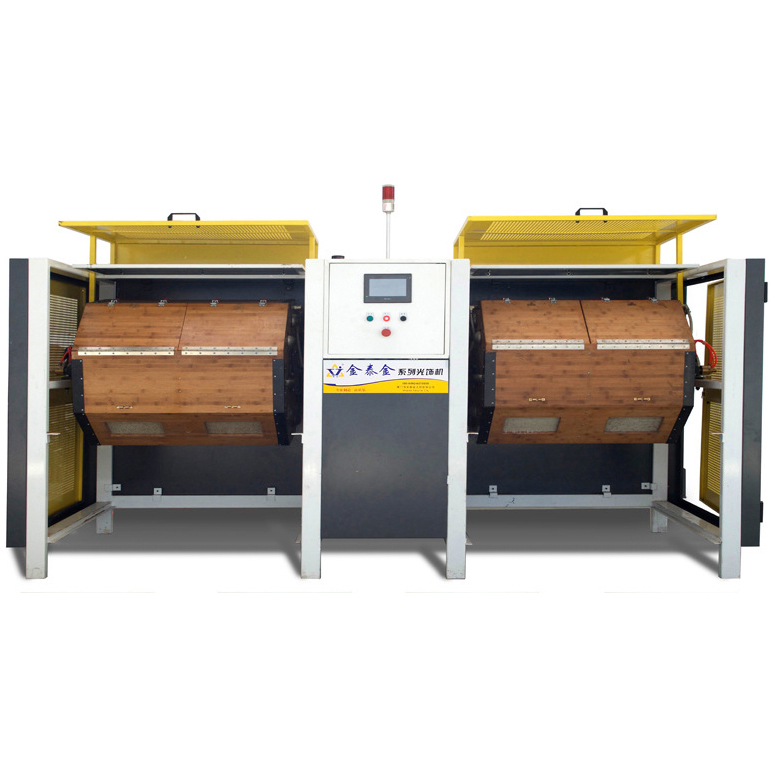
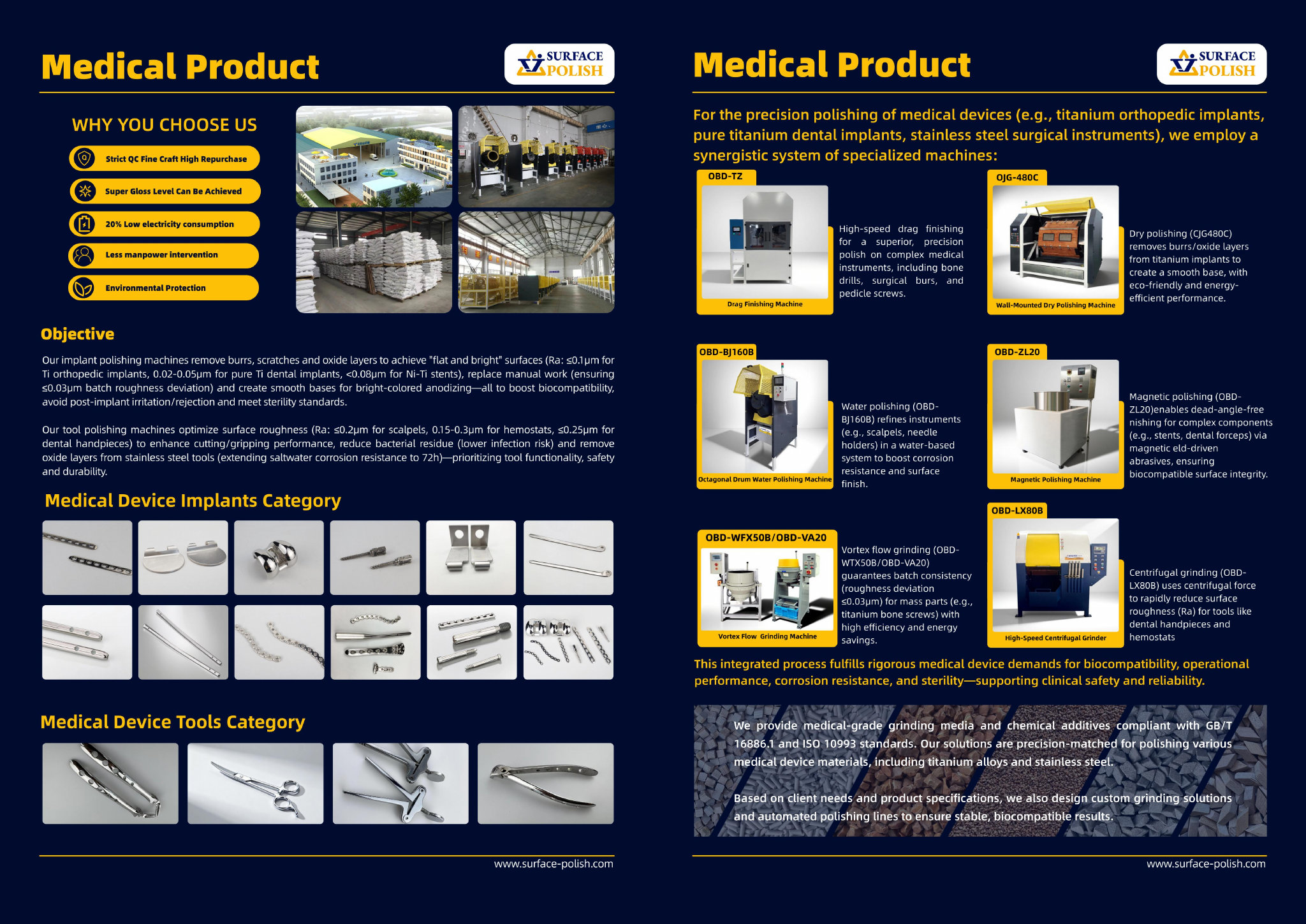
A bowl vibrator keeps a visible, continuously moving load and suits mid-sized parts where edges, weld toes and accessible external surfaces need blending and refinement. Energy is set by amplitude, motor speed and load fill, so one machine can deburr aggressively or refine gently, and the effect on a weld toe is judged by how much cap material the buyer is willing to lose. The bowl reaches external geometry and shallow recesses well, and it can carry compartments or fixtures to limit part-on-part contact on thin or appearance-critical pieces. It does not reach the inside of a long tube or a narrow crevice, and chamber geometry caps part size. Media class and fill level matter more than nominal machine size: an under-filled chamber raises impingement risk, and an over-filled one starves the part of contact.
| Machine route | Where it fits | What it will not do |
|---|---|---|
| Tub vibrator | Long parts, tube spools, chute sections and small vessels that a bowl cannot accept, with the part repositioned as needed. | Coverage depends on how the part sits in the media mass, so banding and shadow zones are common without a planned fixture. |
| Barrel finishing machine, rotary barrel tumbler | Large batches of small robust fittings, fasteners and valve trim that can tumble freely without damage. | Part-on-part contact is unavoidable, and fine threads, sealing lips and thin diaphragms are poor candidates. |
| Dry polishing machine and dryer | Dry burnishing where a wet cycle is unwanted, and drying parts after a wet cycle so crevices do not stay wet. | Removes no oxide and needs dust extraction; a dryer manages water, it does not change the finish left by the wet stage. |
| Magnetic finishing machine | Small precise parts and short internal features such as slots, small bores and blind recesses. | Part size and surface area are limited, large panels and long tubes are out of scope, and it will not dress a weld cap. |
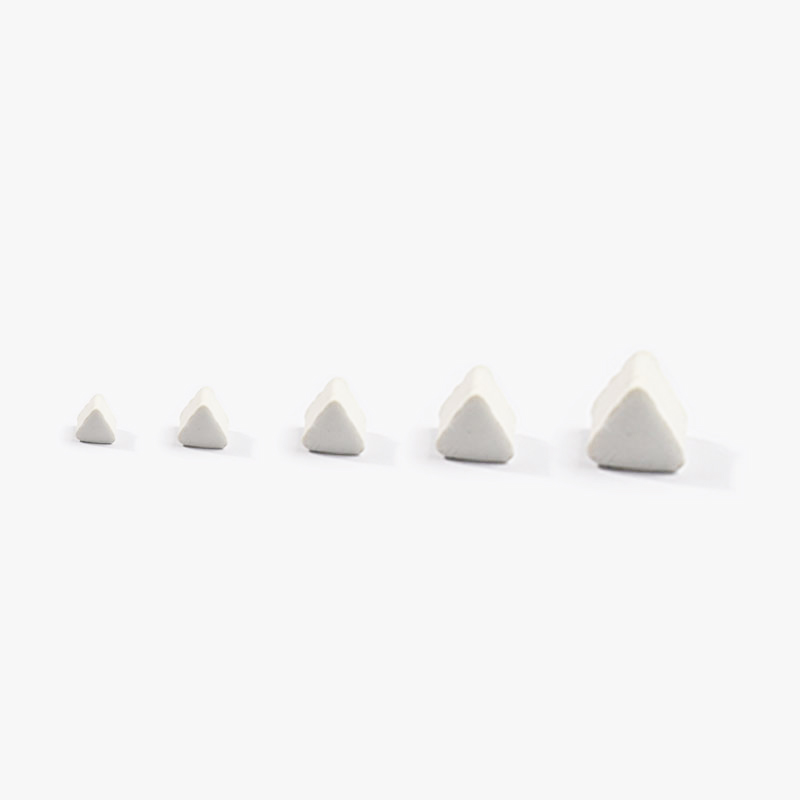
Ceramic media in angle-cut triangles, cylinders, stars and small spheres is the workhorse for stainless weld refinement and deburring. Bonding and shape class set the cut: an angle-cut triangle reaches into corners and along a weld toe, a cylinder rolls and blends, and a small sphere refines without cutting an edge hard. Size drives reach as much as aggression does, because a piece larger than the crevice simply cannot enter it. Ceramic wears down and changes its effective size class over its working life, so top-up and screening are part of holding a finish steady. Wear also produces sludge and fine debris that must be rinsed away, and a chipped piece is an embedding risk. Buying medium on price alone usually shows up later as inconsistent finish and higher consumption.
| Media | Best fit | Watch out for |
|---|---|---|
| Grinding media, coarse alumina-based | Removing a proud weld cap, heavy scale and heat tint before a refinement stage on accessible external surfaces. | Leaves a coarse scratch pattern that must be refined, removes material fast, and can gouge thin sheet or a soft alloy. |
| Liquid compound, abrasive cleaning slurry family | Cleaning, descaling and fine abrasive work through the cycle, with dosing and flow matched to the load and the alloy. | Chloride content and pH matter on stainless, foam can cushion the cut, and residue left in a crevice becomes a later defect. |
| Steel pins and fine media for magnetic finishing | Small precise components, short bores, slots and blind features that shaped tumbling media cannot enter. | Limited to small parts, will not remove a proud weld cap, and pins must be counted and recovered from every opening. |
| Plastic media, cones and triangles | Gentle edge blending and cosmetic refinement on softer non-ferrous fittings, thin sections and delicate parts. | Cannot remove heat tint, mill scale or a weld cap, so it must follow the operation that does that work. |
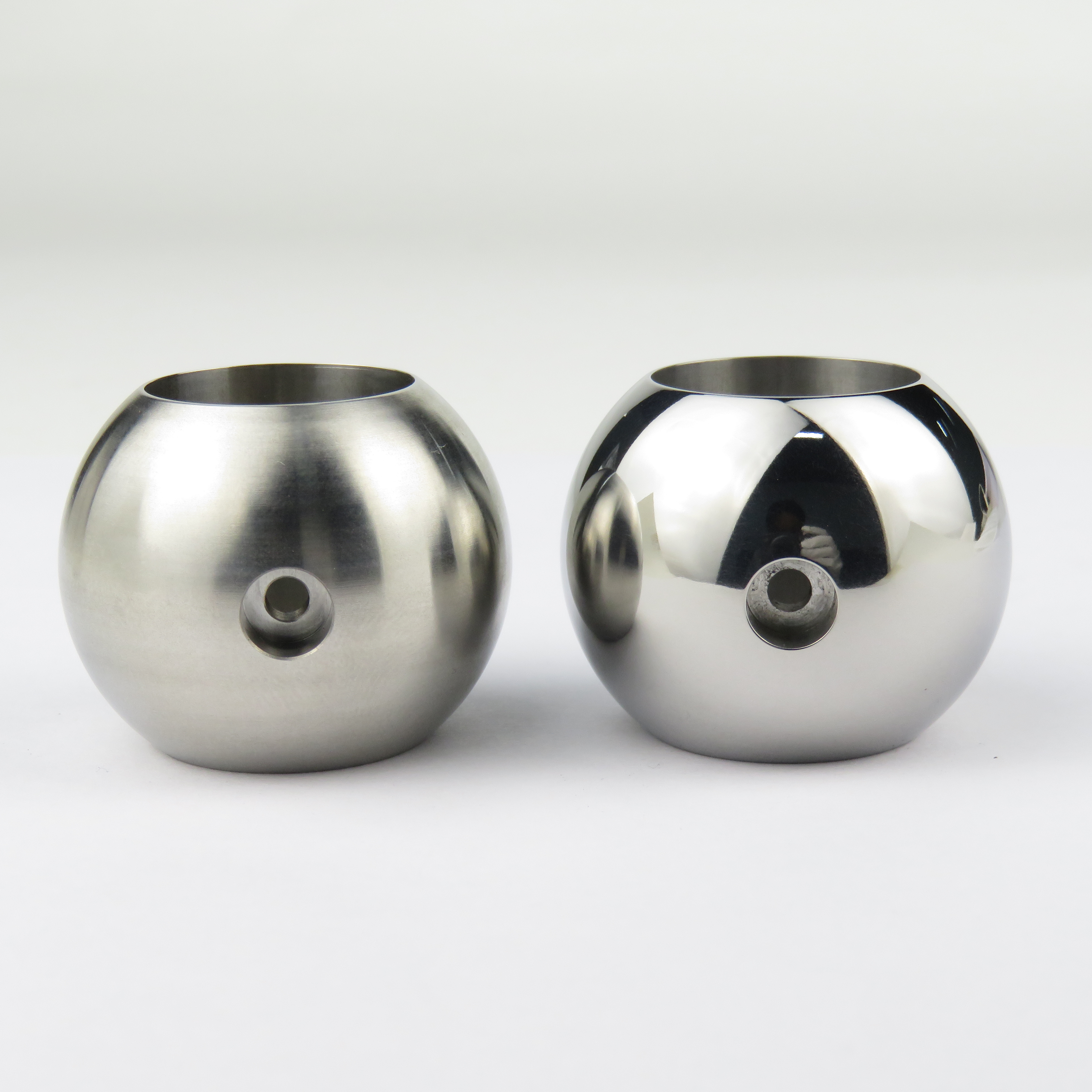
Heat tint is an oxide layer whose thickness varies across a weld, thickest where the metal was hottest and often receding into a crevice or along the toe line where no medium reaches. A mechanical cycle can polish the visible cap and leave the toe untouched, so a part passes a glance and still carries oxide in exactly the location that matters. Colour is a practical indicator: straw and light blue suggest a thinner film, while grey and black scale suggests a heavier one that needs real removal before any refinement means anything. Detection is by inspection at magnification, comparison with an agreed visual reference, and the buyer's own test for free iron or passive condition where their specification asks for one. Photograph the toe at a fixed angle before and after each stage.
| Failure mode | Likely cause | How to catch it |
|---|---|---|
| Discolouration, water spotting or flash rust after the cycle | Contaminated or hard rinse water, incomplete draining of a crevice, or a part left wet before drying. | Inspect after drying under consistent lighting, check the rinse water source and quality, and verify that orientation during draining lets every recess empty. |
| Media lodged in gasket grooves, threads, blind holes or tube ends | Medium size class too close to the opening size, no masking or plugging, and no counted retrieval step at the end of the cycle. | Count media into and out of the load, use a borescope at an agreed angle plus a pin gauge on critical openings, and weigh or shake parts over a tray to reveal retained pieces. |
| Cross-contamination from tooling, racks or media shared with carbon steel | No dedicated stainless area, undocumented consumable grades, or media stored where mild steel fabrication dust settles. | Audit which tools, racks and media touch the part, record their grades, store media covered and segregated, and confirm cleanliness with the buyer's own test after a tooling change. |
| Thin-wall distortion or dishing on tanks, panels and chutes | Heavy media load striking unsupported thin sheet, or a chamber fill level that lets parts fall rather than tumble. | Measure wall flatness and key dimensions before and after, inspect under raking light for oil-canning, and run the test at the production fill level rather than a light one. |
Canberra's industrial base is unusual for Australia: it is built around the Australian Government as the country's largest single buyer of goods and services, plus national research institutions rather than heavy manufacturing. The ACT Government's business and investment site describes a 'future-focused knowledge economy' with defence, space, cyber and quantum, agri-technology and renewable energy as its named key sectors. Local manufacturing does exist and is concentrated in high-value, low-volume work: Skykraft designs and manufactures mini-satellites in Canberra, the Canberra Deep Space Communication Complex is managed for NASA by CSIRO, and the Advanced Instrumentation and Technology Centre at Mount Stromlo provides space test and verification facilities. The Australian National University, the University of Canberra, CSIRO and Geoscience Australia maintain major laboratories and instrument-building capability in the city, and Geoscience Australia operates a purpose-built Canberra headquarters. Canberra Airport's precincts at Brindabella Business Park, Majura Park and Fairbairn, adjoining the RAAF base, concentrate aviation, defence and light industrial tenancies.
The nearest part of that base to this brief is energy: The ACT business and investment site states 'The ACT is now powered by 100% renewable electricity, generated by wind and photovoltaic power' and that more than $2 billion has been invested into sustainable energy, with a target of zero net emissions by 2045 and a programme to phase out approximately 139,000 fossil fuel gas connections.
Canberra's manufacturing is precision, low-volume work — satellite structures, space instrument payloads, scientific apparatus and defence electronics — where burr removal, edge break and surface cleanliness affect optical alignment, vacuum compatibility and electrical contact rather than cosmetic appearance. For parts machined from aluminium, stainless and titanium in small batches, the choice between vibratory, barrel and disc finishing methods is driven by part geometry and allowable edge radius, and deburring must not alter critical dimensions or introduce media carry-over into clean assemblies. Buyers in this city typically need a documented, repeatable process for a small number of high-value parts rather than high-throughput finishing.
Before selecting finishing equipment or media, an ACT buyer working on space, defence or scientific hardware should settle whether the required surface condition is specified as a measurable edge radius or surface roughness value, or only as a visual 'deburred' requirement, and whether the process must avoid media embedding and cross-contamination because the part goes into an optical, vacuum or clean assembly.
Freight context: Canberra Airport (terminal, Brindabella Business Park, Majura Park, Fairbairn precinct, adjoining Fairbairn RAAF base), South Jerrabomberra Regional Job Precinct (NSW, 20-minute drive from Queanbeyan, serving the ACT workforce), Port of Eden (NSW south coast deep-water port, regional gateway). Canberra Airport is the city's international gateway and its business precincts handle the light-industrial and aviation tenancies; the airport's own site describes it as having 'thriving business precincts and daily international flights'. Canberra is an inland city with no seaport, so sea freight for machines or sample parts arrives through Port Botany, Port Kembla or the Port of Eden and moves by road, while the South Jerrabomberra Regional Job Precinct gives businesses in the corridor direct access to the ACT workforce and to Commonwealth agencies.
The national standards body is Standards Australia, which publishes Australian Standards (AS) and joint Australian/New Zealand Standards (AS/NZS); on their own, standards are voluntary and there is no general requirement for the public to comply, but state and Commonwealth governments often refer to AS or AS/NZS standards in legislation and they can then become mandatory. For finishing and machinery work, the applicable documents are the ones cited in the buyer's own contract, purchase specification, licence condition or safety management system, together with the marking rules in AS/NZS 4417.1 and AS/NZS 4417.2 for in-scope electrical equipment sold under the EESS.
Business is conducted in English and Australian industrial buyers are normally registered companies with an ABN that contract through a local importer or a licensed customs broker rather than directly with an overseas manufacturer. Because the first Australian supplier of in-scope electrical equipment becomes the legally responsible supplier, Chinese manufacturers are typically asked to provide test evidence, a compliance folder and a declaration so that their Australian importer can register and mark the product. Quotation and contracting expectations centre on a clear commercial entity, correct HS/tariff classification, documented country of origin for preferential duty, and an explicit statement of what is included in the delivered price and what is not.
SurfacePolish supplies from Xiamen, China. The buyer's own destination rules, conformity marking, tariff classification and documentation responsibilities stay with the buyer; confirm them against the authorities named above before ordering.
Visual acceptance is only repeatable when the viewing conditions are fixed. Agree the light source, distance, angle and magnification, whether raking light is used to reveal tint and scratches, and whether comparison is made against a physical reference or a photograph taken at the same settings. Define what counts as a defect: a colour band, a scratch, the scratch pattern left by coarse abrasive, a water spot, a handling mark. Internal surfaces need their own method, usually a borescope at an agreed insertion depth and view angle, with images retained so a later batch can be compared. Photographs are the practical record in a cross-border discussion, because a described appearance travels badly while a fixed-angle image travels well. Both sides should work from the same written standard.
Media is a consumable with a working life, and treating it as a fixed asset is a common reason a validated-looking process drifts. Plan for screening fines and broken pieces out, topping up to hold the size class and the load volume, and recording what was added and when. Compound concentration, dosing rate and rinse water quality need the same discipline, including a chloride check where the buyer's own requirements limit it, because concentration that creeps upward changes both the cut and the residue left behind. Sludge and spent compound have to be removed on a schedule, not when the chamber looks bad. Store media and compound so they cannot pick up contamination from a carbon steel fabrication area. Write the routine down, because a process that depends on one experienced operator is not yet a line.
Generally no, and this is the clearest practical difference between the routes. Tumbling media, whether ceramic, plastic or steel, has to physically enter a bore to work on it, and a tube whose length is many times its diameter and whose bore is narrow will not admit media in a way that produces an even result. Some internal work is possible with a magnetic finishing machine on short bores and small precise parts, but long runs of small-bore sanitary tubing are out of reach for a mechanical process. Zones a machine cannot reach have to be finished another way, accepted as they are, or designed out.
No. SurfacePolish supplies finishing machines, media and compounds, and no machine, medium, compound or process is presented as approved, certified or qualified for food contact, hygienic service or any regulated application. Certification of that kind depends on the finished equipment, its design, its materials and the way it is operated, and it is defined and verified by your own quality and regulatory functions against the requirements that apply to your market. What a supplier can provide is equipment and consumables information, including composition data for media and compounds, so your own assessment has something to work from. A sample trial is not a certification.
No. Mechanical finishing removes material and can strip oxide and free iron from the surfaces it touches, but it does not restore a passive film and it does not perform a chemical passivation step. Passivation, whether by a paste, a bath or an electrochemical process, is a separate operation with its own method and verification that belongs to your own specification and supply chain. Mechanical work can leave a surface in better or worse condition for that step, which is one reason media and compound selection on 316L should consider what comes afterwards rather than only the finish you see at the end of the cycle.
Use Canberra, Australia as the destination on the enquiry and state whether the deliverable is equipment, media and compound, a representative sample review or a line concept. A destination does not imply local stock, a local service point or a local delivery time.
Canberra buyers are typically Commonwealth agencies or their suppliers, so work is frequently procured against Australian Standards and, for defence and space work, against the relevant Defence specifications and mission-assurance requirements rather than a purely commercial finish specification. Standards Australia is the national standards body, and AS/NZS 4417.1 and AS/NZS 4417.2 govern use of the Regulatory Compliance Mark for electrical equipment — relevant if a finishing machine is electrically powered.
Sources were retrieved on 2026-09-29 and describe the local industrial and trade context only. They do not evidence any SurfacePolish project, shipment, installation or service in Canberra.
The buyer has to reduce weld discolouration across large internal surfaces without distorting thin panels or losing the manway gasket seat.
Send the material, dimensions, approximate weight, batch quantity, the incoming condition and photographs of the difficult features. Mark which features must not be contacted by media and state how the result will be inspected. This form carries source reference PSEO-0754; quote it if you prefer an additional manual reference.
Open the SurfacePolish enquiry form Email a prepared enquiry
No price, lead time, certification or result is promised here. Confirm whether a sample trial is available for the specific part and what the trial can and cannot show.
Page PSEO-0754 · revised 2026-09-29 · cross-border equipment, media and scoped sample review. City context is sourced and cited above.
Use this local checker to identify missing part and inspection information. It prepares a technical-review brief; it does not approve a machine, process recipe or production result.
Complete the part details to prepare a review brief.
Email : info@surface-polish.com


 IPv6 network supported


 +86-592-2381506