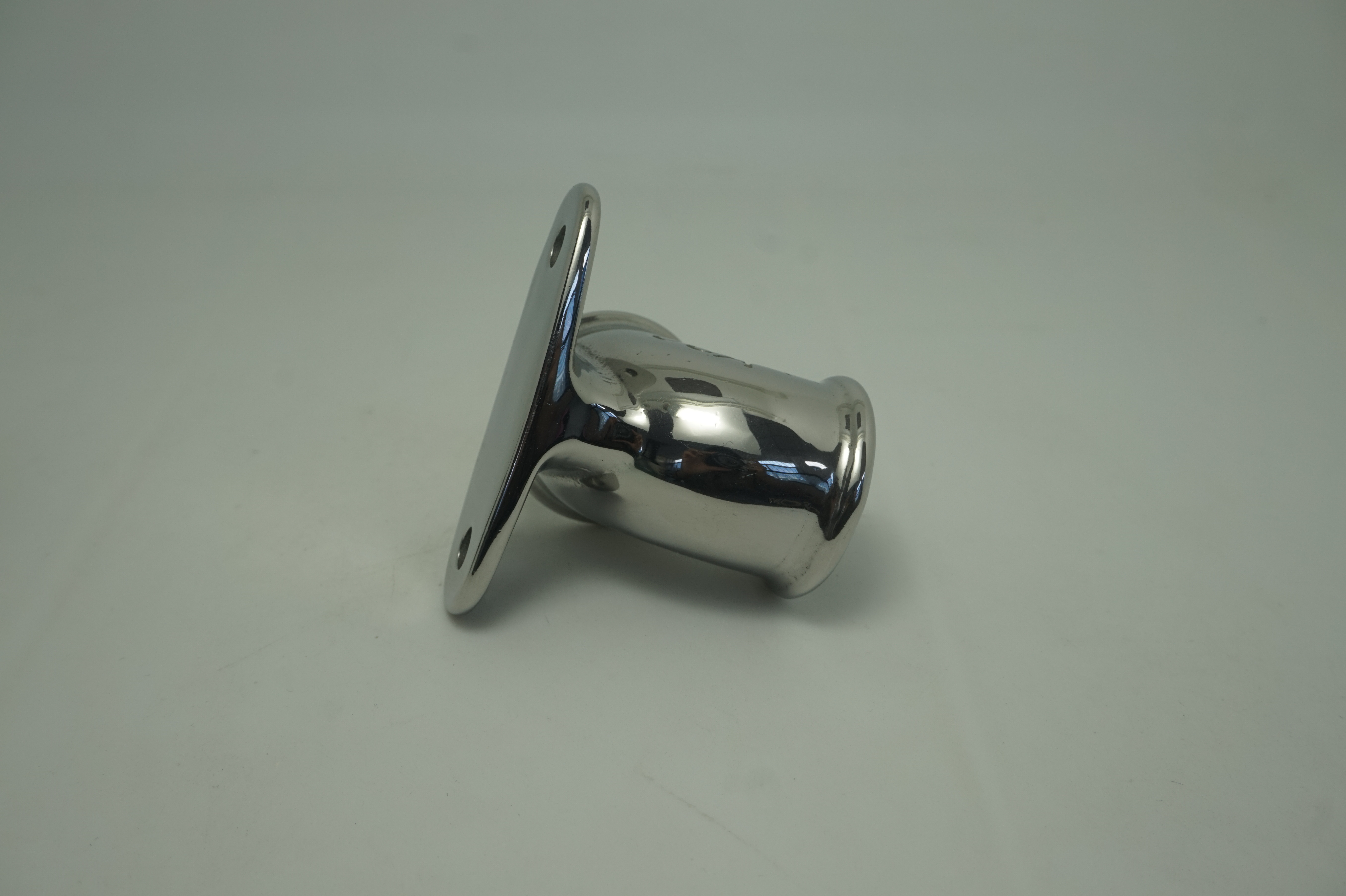
A fabricator in Chicago, United States supplying food processing equipment has a 316L tube spool whose internal orbital weld still shows heat tint. They searched for electropolishing, and what they really need is a decision: which route reaches that bore, and what a mechanical route can achieve on the outside of the joint. SurfacePolish supplies finishing machines, media and compounds across borders and runs a free sample trial on parts sent to Xiamen. This brief is written for a buyer in Chicago working on food processing equipment; it describes equipment, media and a scoped sample review, not a local polishing service.
Which surfaces on this part touch product, and what does each one have to satisfy in roughness, oxide freedom, edge condition and cleanliness?
What must the finished surface survive in service, including cleaning cycles, and how will that be checked without leaning on a finishing trial?
Does the route have to remove heat tint and restore a passive condition, or refine a surface that is already clean, and who verifies that difference?
Reachability decides the route more often than the finish target does. Measure the internal diameter of every tube, the depth and diameter of every blind hole, the width of every crevice and gasket groove and the corner radius at every internal weld. Ratios matter more than absolute size: a bore that is wide but very deep, or a groove narrower than the smallest available medium, stays untouched by any tumbling process however long the cycle runs. Ask whether a borescope can be inserted and at what angle, because a surface that cannot be seen cannot be inspected after finishing. List the zones a machine cannot reach, and decide in advance whether those zones are finished by another method, accepted as-is with a stated condition, or designed out of the part.
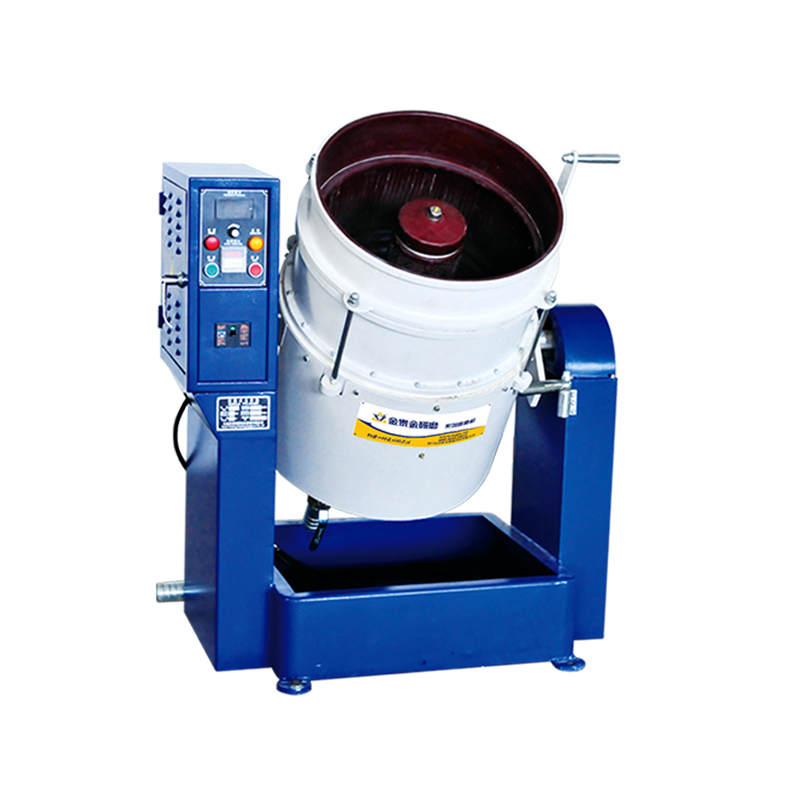
Barrel and rotary barrel machines suit small, robust fittings in quantity: ferrules, clamps, elbows, valve trim, pump internals and fasteners that tumble freely without damage. With no fixturing every surface sees media, which is efficient but means part-on-part contact is part of the process and cannot be excluded. Centrifugal barrel machines raise the energy considerably by rotating barrels around a central axis, which shortens the time needed to blend an edge or refine a small part, but the same energy increases the risk of over-rounding a soft detail or imprinting one part on another. Fine threads, sharp sealing lips and thin diaphragms are poor candidates. Load composition matters too: mixing heavy and light parts in one barrel usually means the light ones finish first and the heavy ones keep going.
| Machine route | Where it fits | What it will not do |
|---|---|---|
| Dry polishing machine and dryer | Dry burnishing where a wet cycle is unwanted, and drying parts after a wet cycle so crevices do not stay wet. | Removes no oxide and needs dust extraction; a dryer manages water, it does not change the finish left by the wet stage. |
| Disc finishing machine | High-energy work on flat faces, flanges and convex zones where material removal or fast refinement is wanted. | Poor reach into recesses and around complex geometry, and it can dish a flat face if the cycle is not controlled. |
| Centrifugal barrel finishing machine | Higher-energy cycles that shorten the time to blend an edge or refine a small part in quantity. | The added energy increases over-rounding and imprinting risk, and delicate or mixed-size loads need careful planning. |
| Barrel finishing machine, rotary barrel tumbler | Large batches of small robust fittings, fasteners and valve trim that can tumble freely without damage. | Part-on-part contact is unavoidable, and fine threads, sealing lips and thin diaphragms are poor candidates. |
Steel media in balls, diagonals and pins is dense and produces a bright refined surface quickly, which makes it attractive where appearance matters. On stainless the trade-off is contamination: steel media and its wear debris can transfer iron to the surface, and that iron is exactly what later appears as a rust bloom in service. Magnetic separation makes steel media easy to recover, and its mass helps it work into recesses, but it can also imprint soft or thin features and flatten a deliberate edge radius. Whether steel is acceptable depends on the buyer's own cleanliness and free-iron requirements and on what happens downstream. If a stainless part will meet moisture or a chloride-bearing environment, settle the contamination question before steel media is written into the process.
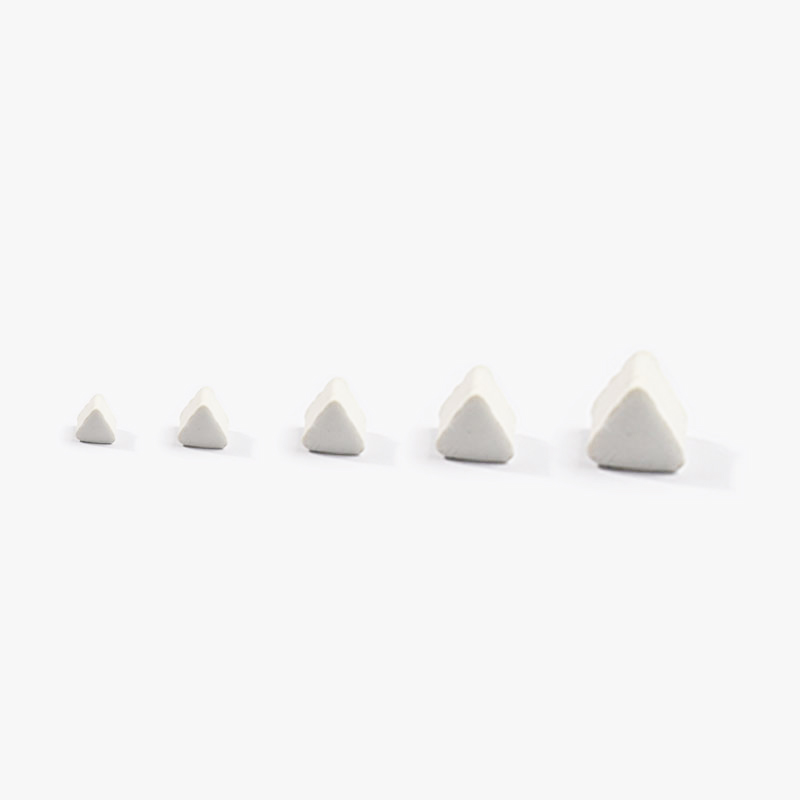
| Media | Best fit | Watch out for |
|---|---|---|
| Ceramic media, small cylinders and spheres | General deburring and light radius work on hygienic fittings, with less edge cutting than an angle-cut shape. | Small sizes lodge in gasket grooves and drilled openings, and a sphere refines slowly where oxide is thick. |
| Ceramic media, angle-cut triangles | Heavier weld-zone refinement and edge blending on 304 and 316L parts where a corner or a toe line has to be reached. | Wears down and changes its effective size class, produces sludge, and can over-round a thin edge or a soft detail. |
| Steel media, balls and diagonals | Bright surface refinement on robust stainless parts where a dense medium is wanted to work into recesses. | Can transfer iron to stainless, imprint soft or thin features, flatten a deliberate edge radius, and needs magnetic recovery. |
| Liquid compound, abrasive cleaning slurry family | Cleaning, descaling and fine abrasive work through the cycle, with dosing and flow matched to the load and the alloy. | Chloride content and pH matter on stainless, foam can cushion the cut, and residue left in a crevice becomes a later defect. |
Removing material always changes the part, and the change is not always wanted. A weld toe can be rounded past the radius the drawing implies, a sealing lip can lose its bite, a gasket seat can dish enough to leak, and a thin tank panel can deflect under a heavy load. Media size class and density drive this: a large dense piece on a soft detail rounds it quickly, while a small light piece barely touches it. Detection uses an optical comparator or radius gauge on edges, a flatness check on sealing faces, and dimensional measurement of any feature that carries a tolerance. Dye penetrant or a visual check finds an undercut created by over-grinding a weld cap. Thin-wall parts deserve measurement before and after, because distortion in a small load only worsens at production fill levels.
| Failure mode | Likely cause | How to catch it |
|---|---|---|
| Cross-contamination from tooling, racks or media shared with carbon steel | No dedicated stainless area, undocumented consumable grades, or media stored where mild steel fabrication dust settles. | Audit which tools, racks and media touch the part, record their grades, store media covered and segregated, and confirm cleanliness with the buyer's own test after a tooling change. |
| Ceramic or steel media fragments embedded in the surface | Chipped or worn media, excessive cycle energy on a soft or thin feature, or a broken piece recirculating in the load. | Inspect under magnification at low angle, screen the media for broken pieces, and check the surface before and after a refinement stage to see whether fragments were present earlier. |
| Media lodged in gasket grooves, threads, blind holes or tube ends | Medium size class too close to the opening size, no masking or plugging, and no counted retrieval step at the end of the cycle. | Count media into and out of the load, use a borescope at an agreed angle plus a pin gauge on critical openings, and weigh or shake parts over a tray to reveal retained pieces. |
| Thin-wall distortion or dishing on tanks, panels and chutes | Heavy media load striking unsupported thin sheet, or a chamber fill level that lets parts fall rather than tumble. | Measure wall flatness and key dimensions before and after, inspect under raking light for oil-canning, and run the test at the production fill level rather than a light one. |
Chicago plans its industrial base through a designated corridor and Planned Manufacturing District (PMD) system rather than a single industrial estate: the Pilsen Industrial Corridor is one of Chicago's 26 designated industrial corridors, covers 1,070 acres and contains PMD 11, and it is home to food distributors, manufacturers and industrial operators as well as segments of the South Branch of the Chicago River and the Sanitary and Ship Canal. World Business Chicago, the city's economic-development organisation, describes Chicago as having one of the largest manufacturing industries in the nation, with 400,000+ manufacturing and logistics workers across the metro area and $100B+ in annual manufacturing output, and names Manufacturing, Food Manufacturing, Transportation/Distribution/Logistics and Life Sciences among the region's priority sectors. The same source describes the local base as spanning advanced robotics, clean energy systems, aerospace, food production and precision engineering, with mHUB and UI Labs named as manufacturing innovation centres. The Seventh Federal Reserve District, which includes Chicago, is characterised by the Chicago Fed as featuring significant agricultural production, automotive and other manufacturing, and financial and insurance industries.
For this brief the relevant part of that base is food: The Pilsen Industrial Corridor is home to food distributors, manufacturers and industrial operators, and World Business Chicago lists Food Manufacturing as one of the region's priority sectors.
The corridor mix puts two different finishing problems side by side: food-processing and packaging equipment, where stainless wetted surfaces are judged on weld dressing, passivation and cleanability, and general machinery, automation and metalworking parts, where edge radius, burr height and Ra are checked before assembly. Because the work is spread across 26 industrial corridors and is largely batch and job-shop in nature, media and compound selection usually has to cover mixed stainless, aluminium and carbon-steel parts rather than a single alloy family.
The first question to settle is whether the parts are food/life-science stainless requiring validated cleanability and passivation, or structural and machinery parts requiring only edge radius and burr-height control, because that answer fixes media type, compound chemistry and cycle time far more than machine size does.
Freight context: Illinois International Port District (Iroquois Landing and Lake Calumet terminals), O'Hare International Airport, Class I rail terminals serving BNSF, CN, CP, CSX, NS and UP. The Illinois International Port District operates its own rail infrastructure connecting to six of the seven North American Class I railroads - BNSF, CN, CP, CSX, NS and UP - and its Iroquois Landing facility takes international ship traffic through the St. Lawrence Seaway; the District states it moves more general cargo than any other Great Lakes port, at over 19 million tons waterborne a year. CBP maintains a Chicago customs presence for imported and exported shipping, so machinery and sample parts would be entered and marked for country of origin at the port of entry.
The United States has no free-trade agreement with China, so Chinese industrial machinery enters under normal-trade-relations (MFN) duty rates in the Harmonized Tariff Schedule of the United States plus any Section 301 duty that applies to the specific HTSUS subheading. USTR's four-year-review modification of the Section 301 China technology-transfer investigation imposed additional Section 301 duties or increased existing rates on certain Chinese products in strategic sectors, and created a temporary exclusion process for machinery used in domestic manufacturing: chapters 84 and 85 of the HTSUS, which cover most machinery used in manufacturing processes, are the chapters that were made eligible for exclusion requests. CBP still administers Section 301 China duties, the four-year-review increases and product exclusions. The IEEPA-based additional ad valorem duties of 2025 - including the reciprocal-tariff actions and the China synthetic-opioid supply-chain duties imposed under Executive Orders 14195 and 14257 - were ordered terminated by Executive Order 14389 of 20 February 2026 and, as soon as practicable, are no longer collected. A buyer should therefore price the MFN rate plus any applicable Section 301 rate and check whether the machine's exact subheading is covered by a current exclusion, rather than assuming either the 2025 IEEPA tariffs or a blanket China rate still applies.
Business is conducted in US English. Units matter: US drawings and purchase orders frequently use inches, microinch Ra and US gallons, and a supplier that quotes only metric can be asked to reissue documentation. Buyers are US legal entities with an EIN and expect an identifiable contracting entity, a correct HTSUS classification, a commercial invoice, packing list and bill of lading, country-of-origin marking, and an importer of record for customs. Procurement is normally evidence-driven: process selection is expected to be justified by a trial run on the buyer's own sample parts with measured results (burr height, edge radius, Ra, cleanliness) and by media and compound data sheets, rather than by a capability claim. Payment terms in general US industrial practice are open account with net-30 to net-60 terms for established buyers, with letters of credit or advance payment more common for a first order from a new overseas supplier; no US buyer assumes Incoterms, warranty terms or spare-parts lead times unless they are stated in the quotation.
SurfacePolish supplies from Xiamen, China. The buyer's own destination rules, conformity marking, tariff classification and documentation responsibilities stay with the buyer; confirm them against the authorities named above before ordering.
Mechanical finishing leaves media, compound, swarf and water wherever they were not removed, so cleanliness is part of acceptance rather than a separate concern. Agree how the part is rinsed, how it is dried, what residue check applies, and whether a water-break or wipe test is used on product-contact surfaces. Crevices, threads, gasket grooves and tube ends deserve their own check because that is where material collects. If the buyer's specification requires chemical passivation, that is a separate downstream operation with its own method and verification, and mechanical finishing neither performs nor replaces it, though the surface condition it leaves affects how that step behaves. Where free iron is a concern, the buyer's own test method and critical locations define acceptance, and both belong in writing before a batch is accepted.
A sample trial reports what was observed on the parts tested under the settings used, and that is the whole of it. It cannot promise a roughness value, an edge dimension, a cycle time, a throughput, a cost per part or a delivery date, and it does not qualify a machine, medium, compound or process for food contact, hygienic service or any regulated application. A handful of parts does not represent production variation in material, welding or fit-up, and performance in service, including corrosion behaviour after cleaning and any passivation step, is not established by a finishing trial. What a trial does give is evidence: how a route behaved on real geometry, which zones it reached, what the surface looked like, and where a mechanical route runs out of reach. The decisions that follow belong with the buyer.

No. SurfacePolish supplies finishing machines, media and compounds, and no machine, medium, compound or process is presented as approved, certified or qualified for food contact, hygienic service or any regulated application. Certification of that kind depends on the finished equipment, its design, its materials and the way it is operated, and it is defined and verified by your own quality and regulatory functions against the requirements that apply to your market. What a supplier can provide is equipment and consumables information, including composition data for media and compounds, so your own assessment has something to work from. A sample trial is not a certification.
Specify it with a location, a cut-off and a direction, not as a single number. Mark the measurement points on the drawing and say whether each sits on base metal, a dressed weld or the heat-affected zone, because those are different surfaces. State the cut-off and evaluation length, and require readings across the lay at each point rather than one convenient traverse. Also state what Ra is not being asked to prove: it does not describe a crevice, an oxide film, embedded contamination or an edge condition. A buyer in United States should record the instrument and the calibration specimen on every report.
They are different operations rather than interchangeable ones. Mechanical finishing can remove a weld cap and oxide where a medium or tool physically reaches, and it refines the surface it contacts. Electrochemical polishing removes a thin layer more uniformly and can reach inside small-bore tubing and enclosed channels that no tumbling medium enters. A mechanical route is usually the practical answer for accessible weld zones and external surfaces, and it cannot level the inside of a long narrow tube. Whether that reach matters on your part is the decision; a trial at Chicago can show what was reached on the parts tested.
Use Chicago, United States as the destination on the enquiry and state whether the deliverable is equipment, media and compound, a representative sample review or a line concept. A destination does not imply local stock, a local service point or a local delivery time.
A Chicago buyer works inside the US voluntary-consensus system coordinated by ANSI rather than against a single national finishing standard, with surface-texture, cleaning and coating requirements normally written into the drawing or purchase order. Food, life-science and medical customers add their own hygiene, material-conformity and cleanability requirements, and any machine installed in a US plant must also satisfy the applicable OSHA machine-guarding and electrical requirements.
Sources were retrieved on 2026-09-29 and describe the local industrial and trade context only. They do not evidence any SurfacePolish project, shipment, installation or service in Chicago.
The buyer must get the internal weld zone clean and oxide-free but cannot get a mechanical tool or tumbling media into a bore that long.
Send the material, dimensions, approximate weight, batch quantity, the incoming condition and photographs of the difficult features. Mark which features must not be contacted by media and state how the result will be inspected. This form carries source reference PSEO-0004; quote it if you prefer an additional manual reference.
Open the SurfacePolish enquiry form Email a prepared enquiry
No price, lead time, certification or result is promised here. Confirm whether a sample trial is available for the specific part and what the trial can and cannot show.
Page PSEO-0004 · revised 2026-09-29 · cross-border equipment, media and scoped sample review. City context is sourced and cited above.
Use this local checker to identify missing part and inspection information. It prepares a technical-review brief; it does not approve a machine, process recipe or production result.
Complete the part details to prepare a review brief.
Email : info@surface-polish.com


 IPv6 network supported


 +86-592-2381506