A finishing planner in Brisbane, Australia working on large aluminium structures for aerospace components needs pocket and hole edges blended on a frame over a metre long without distortion or impact damage. SurfacePolish supplies tub and long-chamber finishing machines and media across borders, and a free sample trial can test a segment or representative part before any line concept is discussed. This brief is written for a buyer in Brisbane working on aerospace components; it describes equipment, media and a scoped sample review, not a local polishing service.
Does the compound chemistry family create a hydrogen, staining or residue risk for this alloy and heat treatment, and who verifies that?
At what batch size, load pattern and media wear state does the trial result still describe what production will produce?
Which features on this part must not be touched by media, and how will each one be masked, plugged, fixtured or deliberately finished?
Datum and mating surfaces constrain the whole finishing decision because they establish assembly geometry. Media contact on a datum face can shift hole position, introduce local flatness variation or change a press-fit condition, and none of that is visible in ordinary shop inspection. Identify on the drawing which surfaces are datums and which mate with another part, then treat the finish callout on those surfaces separately from cosmetic areas. A part may tolerate a brighter appearance on an outboard face while its bolted flange must simply remain flat within its stated requirement. Protection strategy follows the same logic: a datum is often masked, fixtured against a support or finished with a lighter medium rather than with the same blend as the rest of the part. Discuss finish location with the designer before promising a blanket surface condition.
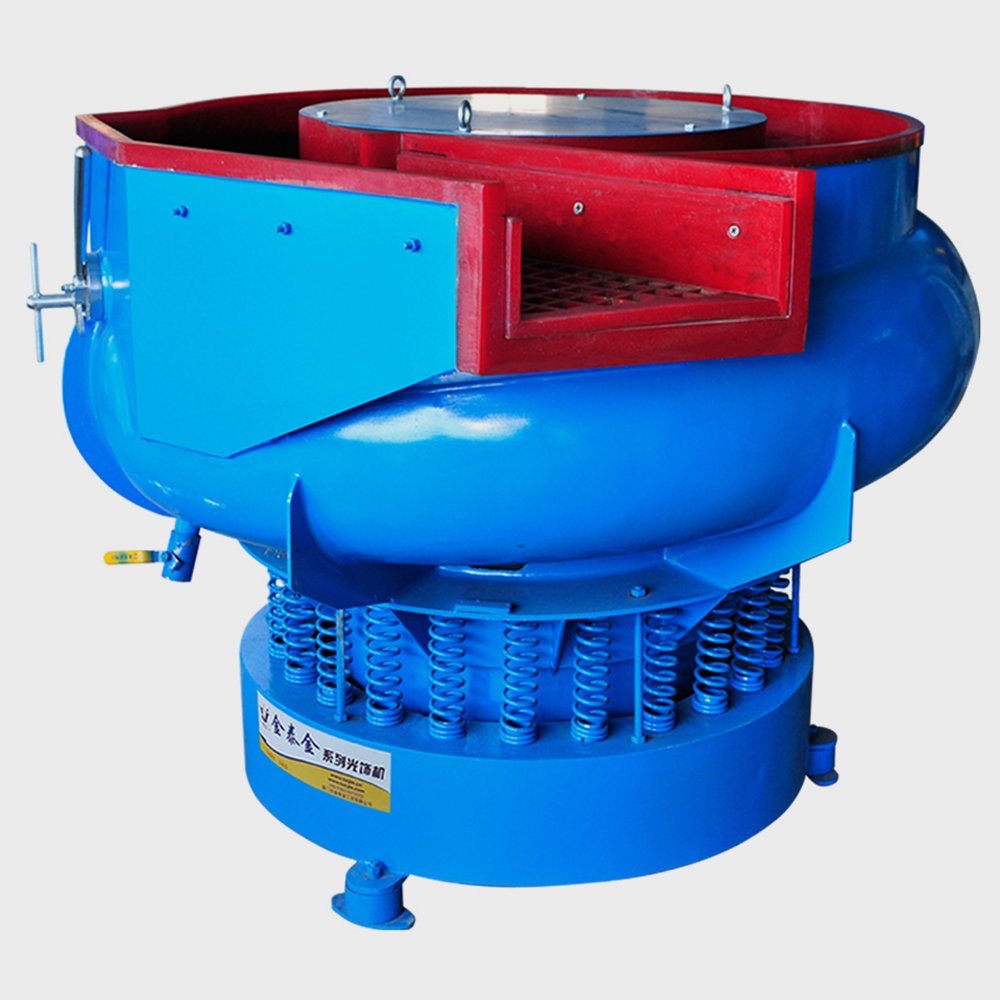
Vibratory finishing is usually the first route to evaluate for aerospace parts because it blends edges and refines surfaces while keeping part-on-part contact moderate and allowing visual access during the cycle. The real differences lie in the chamber: a bowl with a centre column circulates the load continuously, while a tub or long-channel machine moves it more linearly and suits long shafts, tubes and housings that will not turn in a bowl. Drive amplitude, motor setting and the media-to-part ratio decide how much energy reaches the surface, and the machine frame sets the practical part size. For thin-walled or delicate components, ask whether the load can be run in compartments or on fixtures rather than free-tumbling. Also settle unloading and separation early, because a vibratory machine that finishes well but traps media in a closed housing costs more in inspection time than it saves in cycle time.
| Machine route | Where it fits | What it will not do |
|---|---|---|
| Disc finishing machine | Fast cycles on flat plates, brackets and robust turned parts with simple geometry. | High energy risks edge roll, distortion of thin sections and part-on-part marking; part size is bounded by the working gap. |
| Dry polishing machine and dryer | Post-wet drying and light dry finishing of parts with blind holes and passages where moisture carryover matters. | Dry media cut slowly, require dust extraction and medium condition control, and forced-air drying must be matched to internal geometry. |
| Vibratory finishing machine, bowl type | General edge blending and surface refinement on medium-sized parts with a continuous, visible load. | Part size is capped by chamber geometry, and thin or delicate parts may need compartments or fixtures to limit part-on-part contact. |
| Vibratory tub or long-channel machine | Long shafts, tubes, housings and large parts that will not turn or circulate in a bowl. | Media circulation is less uniform along a long chamber, and bridging can leave sections of a long bore unprocessed. |
Media wear is a slow process change that eventually shows up as an unexplained shift in finish. As media break down and round off, the blend loses cutting power, screens differently and settles at a different bulk density, so the same timer setting no longer produces the same surface. Track size class, weight of make-up media per cycle and the interval between full replacements, and keep a record so a change in results can be traced to the blend. Separation is a matching problem: media must be retained in the machine and cleared from the parts, and the method used depends on the media shape and the features it can enter. Screens, magnetic separators and bar-end magnets all have limits. For parts with drilled passages, add a retrieval step to the routing and reconcile media counts per batch so a lodged piece is found before it leaves the shop as contamination.
| Media | Best fit | Watch out for |
|---|---|---|
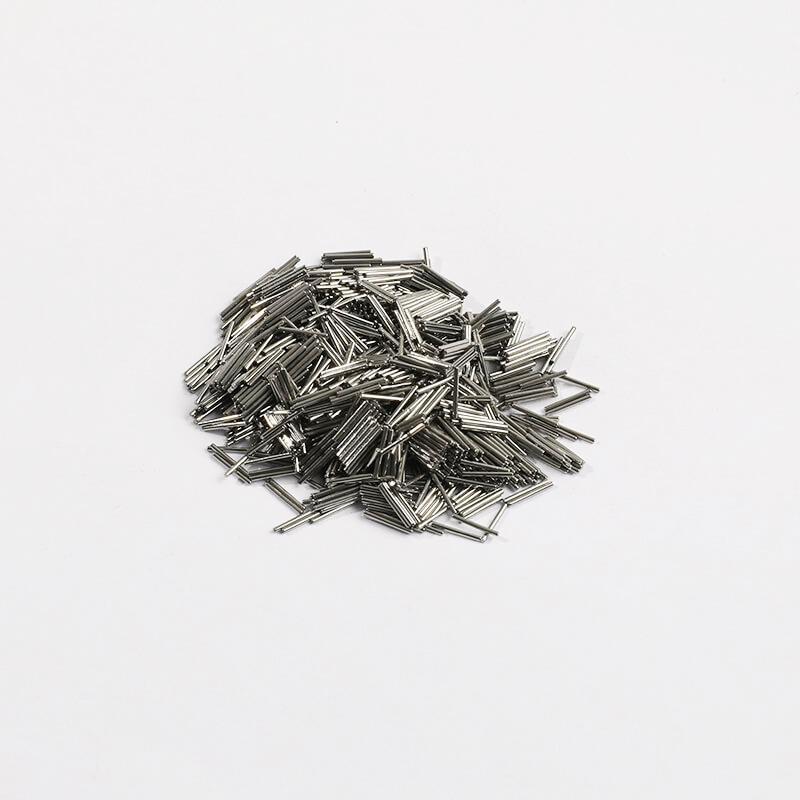
| Ceramic media, small size class for tight features | Reaching small holes, slots and fillets where a standard size class cannot enter, at reduced removal rate. | Screens differently from larger media, lodges more easily in drilled passages and must be kept below the smallest hole to stay clear. |
| Steel media for burnishing | Bright, uniform appearance with minimal dimensional change on parts whose geometry must stay as machined. | Presses debris and hard-water deposits into the surface, concentrates energy on thin sections, and carries iron cross-contamination risk. |
| Mildly acidic or chelated brightening compound | Brightening certain stainless grades where the buyer's specification permits that chemistry family. | Not appropriate where hydrogen uptake is a concern on high-strength steel, and requires close pH control and good rinse water quality. |
| Dry media: walnut shell and corn cob | Light deburring, drying support and residue removal on parts where moisture carryover is the governing concern. | Slower cutting, generates dust requiring extraction, and its condition and moisture content must be controlled to stay repeatable. |
A lodged piece of media is the failure mode that puts a finished aerospace part at greatest risk, because it may survive cleaning and only appear at final inspection or, worse, in service. Lodging happens where a feature's smallest dimension is close to the media size, which is why blind tapped holes, cross-drilled passage intersections, keyways, undercuts, dovetails and small counterbores are the usual sites. It is aggravated by soft or worn media that deform and wedge, by running a broad size-class blend, and by unmasked holes that were never intended to see media. Check with a known pin gauge, a borescope at an agreed viewing angle and a defined count of media in the batch before and after, and add a documented retrieval step such as bar-end magnets, directed air or a flush. The reliable prevention is size discipline: media sized well below the smallest hole to be left clear.
| Failure mode | Likely cause | How to catch it |
|---|---|---|
| Dried compound residue or water spotting in recesses | Rich compound, hard or chloride-bearing rinse water, or a drying method that does not move air through blind features. | Inspect recesses with a borescope, read rinse-water conductivity or hardness, and verify the drying method against the part's internal geometry. |
| Dark or heat-tinted patch following the media flow | Lean compound concentration or restricted flow, letting metal fines and heat build up in the working mass. | Compare against the agreed appearance master under fixed lighting and check the measured compound concentration and flow rate recorded for the batch. |
| Dimensional drift on a close-tolerance bore or spigot | Total removal accumulating over a long cycle or repeated passes without a start-of-run measurement on a critical feature. | Measure critical dimensions on the first part and at defined intervals through the batch, keeping the process effect separate from incoming variation. |
| Impingement marks or gouges on thin webs and sharp corners | Excess amplitude or speed with too little media in the chamber, or parts free to strike each other in an under-filled load. | Inspect the vulnerable features under magnification before and after, photograph under raking light, and compare the same feature across several parts from the load. |
Brisbane's industrial base is spread across a network of industrial precincts that Brisbane City Council treats as a distinct category of city land, alongside central and retail precincts. The Queensland Government's manufacturing information for the state covers food and beverage, agricultural products and the aviation industry, and CSIRO operates Queensland sites inside the metro area, including the Queensland Centre for Advanced Technologies at Pullenvale and the Australian eHealth Research Centre at Herston. Council projects that by 2041 industry will contribute more than $22 billion to Brisbane's gross regional product and account for 13% of the workforce.
For this brief the relevant part of that base is aerospace: The Queensland Government's manufacturing information covers the aviation industry.
Brisbane's industrial precincts mix food and beverage plant, aviation component and maintenance work, and fabrication for the resources and construction supply chains, and each brings a different surface requirement: hygienic, residue-free surfaces on food-contact equipment, edge and burr control on machined aviation and precision parts, and consistent finish on welded or laser-cut fabrications. Because much of the work is contract fabrication with varying batch sizes, media and cycle-time consistency across changes of part is a practical production issue rather than a theoretical one.
A Brisbane buyer should establish the part families and batch sizes the finishing process must cover before selecting equipment, because a cell sized for one high-volume part will not necessarily handle the mixed fabrication work typical of precinct-based contract manufacturers - and for food or aviation work the cleanliness and edge criteria need to be written down first.
Freight context: Port of Brisbane, Brisbane Airport. Brisbane is served by the Port of Brisbane for container and bulk sea freight and by Brisbane Airport for air freight, with rail-linked container handling at the port precinct. Inbound finishing machines and process samples normally enter by sea cargo through the port and clear customs under the ABF regime, with air freight used where a sample or spare part is time-critical.
The Australian Border Force (ABF) is the customs authority and clears imported goods through customs; all goods arriving in Australia must be declared unless an exception applies, goods valued at up to A$1,000 can be imported without a formal import declaration, and entry is made through the Integrated Cargo System (Form B650 for sea or air cargo). Generally all goods imported into Australia are liable for duties and taxes unless an exemption or concession applies, and most imports are subject to 10% GST, so classification, customs valuation and any preferential tariff claim drive the landed cost; a licensed customs broker is the normal route for a first-time importer. Electrical equipment can fall under the Electrical Equipment Safety System, under which the first Australian supplier registers as a Responsible Supplier, holds an ABN, makes a Responsible Supplier Declaration and marks the equipment with the Regulatory Compliance Mark (RCM) in accordance with AS/NZS 4417.1 and AS/NZS 4417.2. Imported goods may also require a trade description naming the country of manufacture, and machinery that is not in-scope electrical equipment still has to meet state work health and safety duties covering plant.
The national standards body is Standards Australia, which publishes Australian Standards (AS) and joint Australian/New Zealand Standards (AS/NZS); on their own, standards are voluntary and there is no general requirement for the public to comply, but state and Commonwealth governments often refer to AS or AS/NZS standards in legislation and they can then become mandatory. For finishing and machinery work, the applicable documents are the ones cited in the buyer's own contract, purchase specification, licence condition or safety management system, together with the marking rules in AS/NZS 4417.1 and AS/NZS 4417.2 for in-scope electrical equipment sold under the EESS.
SurfacePolish supplies from Xiamen, China. The buyer's own destination rules, conformity marking, tariff classification and documentation responsibilities stay with the buyer; confirm them against the authorities named above before ordering.
Parts can meet every roughness and appearance requirement and still be unusable because of what remains on them. Define the cleanliness check explicitly: which features are examined, with what instrument, at what magnification, and what counts as a reject. Borescope inspection of blind holes and passage intersections, flushing with a measured volume, examining the flush medium, and a defined particulate or residue check are all practical options, but the method must be fixed in advance. Three further checks are commonly omitted. Include media carryover, iron contamination pickup on stainless and aluminum, and residual compound film in recesses, and confirm that rinse water quality is controlled, since hard or chloride-bearing water can leave deposits that later read as corrosion. Keep the cleaning and drying method in the acceptance record, because it is part of the result, not workshop housekeeping.
Expect the first production batches to differ from trial parts, because a trial is run with extra attention on one or two pieces while a line runs a full load with a different operator, a partly worn blend and normal handling between operations. Reduce that gap by planning a ramp-up sequence: run a low quantity, inspect the first part fully, compare it against the retained trial part at the agreed locations, then increase load size only after the comparison holds. Re-inspect at defined intervals through the ramp and keep a reference part from each stage. Be clear about what a sample trial cannot establish. Observations apply to the parts tested and to the setup used. A trial does not establish fitness for a regulated or safety-critical application, does not replace the buyer's own qualification or structural testing, and does not transfer responsibility for acceptance, which always remains with the buyer's engineering and quality functions.

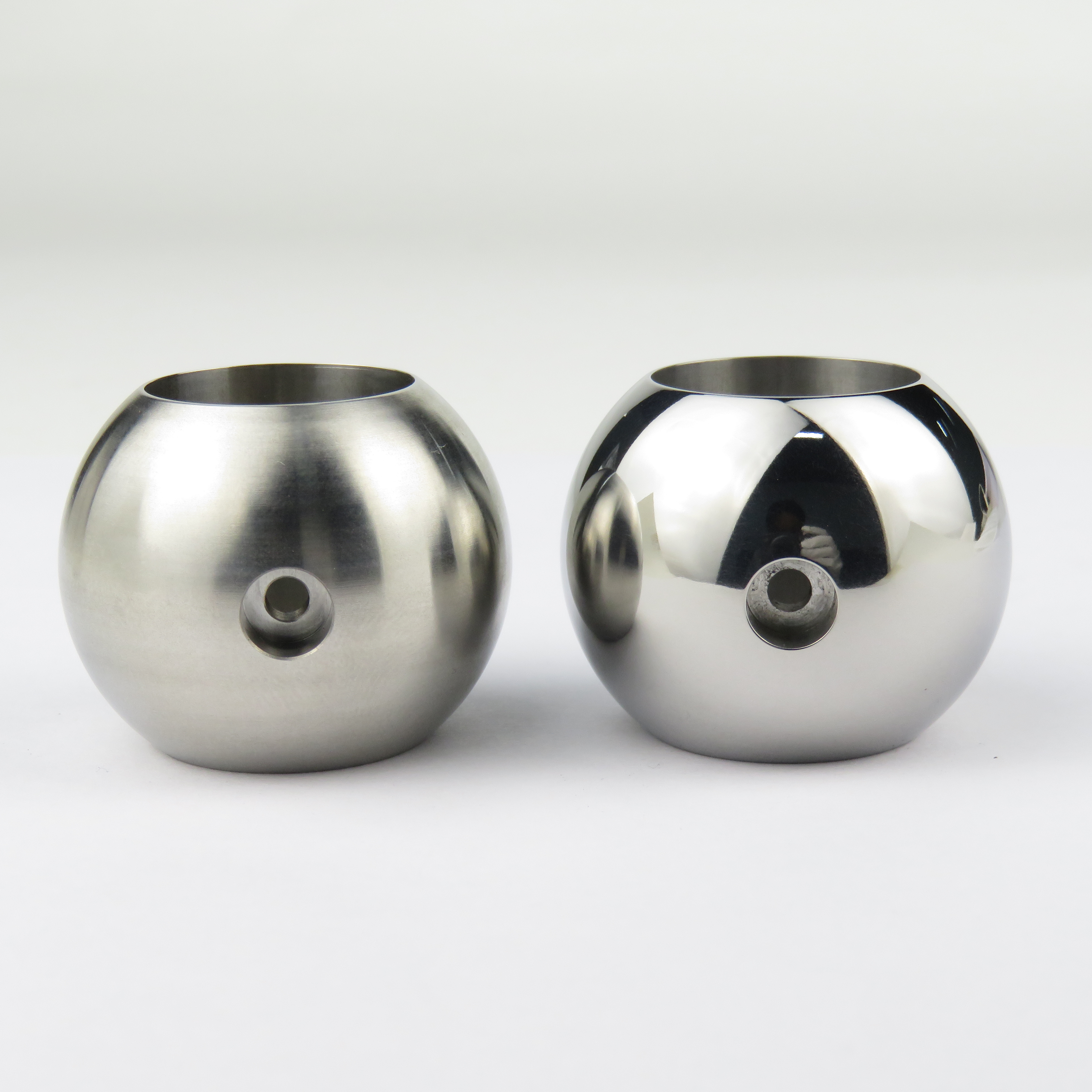
No. A part can look bright and uniform while carrying embedded media fragments, a smeared surface layer, dried compound residue in a recess or an edge that has rolled past its limit. Acceptance needs measurement at defined locations, edge checks where edges are specified, and cleanliness checks of internal features, all recorded against the drawing requirement. Define appearance with a physical master or a calibrated image set under fixed lighting and magnification, since adjectives are not criteria. For a buyer in Australia, the practical rule is that appearance is one input among several, and no appearance result on its own establishes fitness for a regulated application.
SurfacePolish is not a local polishing shop and has no branch, dealer or technician presence in Brisbane or anywhere else outside its own factory. What is offered is cross-border supply of finishing machines and consumables, a scoped discussion of a finishing line concept, and a free sample trial in which representative parts are shipped to the factory, processed and returned with observations and a proposed media and cycle direction. Buyers who need on-site processing should source that locally. Buyers building an in-house finishing capability can use the trial to choose equipment and media for their own line.
Specify the location, the evaluation length and cutoff, the filter, and whether the requirement is a maximum or an average, then keep that setup unchanged for every batch and comparison. Readings taken with different cutoffs on the same surface will not agree, and readings on interrupted or curved surfaces such as fillets or cast skins need a setup designed for them. Record the instrument and its calibration status with the results. When you compare a trial part from Xiamen with your production parts, Australia and China, use one instrument and one setup so the difference you are reading is the process, not the measurement.
Use Brisbane, Australia as the destination on the enquiry and state whether the deliverable is equipment, media and compound, a representative sample review or a line concept. A destination does not imply local stock, a local service point or a local delivery time.
Queensland buyers work to Australian Standards (AS) and joint AS/NZS standards referenced in their contracts, drawings and safety systems; these standards are voluntary in themselves but are commonly cited in state and Commonwealth legislation, where they can become mandatory. In-scope electrical equipment must be registered under the EESS and marked with the Regulatory Compliance Mark to AS/NZS 4417.1 and AS/NZS 4417.2, and plant in Queensland workplaces is covered by work health and safety duties.
Sources were retrieved on 2026-09-29 and describe the local industrial and trade context only. They do not evidence any SurfacePolish project, shipment, installation or service in Brisbane.
The buyer needs edge blending along pocket floors and hole edges on a long frame without distortion or impact damage.
Send the material, dimensions, approximate weight, batch quantity, the incoming condition and photographs of the difficult features. Mark which features must not be contacted by media and state how the result will be inspected. This form carries source reference PSEO-0721; quote it if you prefer an additional manual reference.
Open the SurfacePolish enquiry form Email a prepared enquiry
No price, lead time, certification or result is promised here. Confirm whether a sample trial is available for the specific part and what the trial can and cannot show.
Page PSEO-0721 · revised 2026-09-29 · cross-border equipment, media and scoped sample review. City context is sourced and cited above.
Use this local checker to identify missing part and inspection information. It prepares a technical-review brief; it does not approve a machine, process recipe or production result.
Complete the part details to prepare a review brief.
Email : info@surface-polish.com


 IPv6 network supported


 +86-592-2381506