A buyer in Coimbatore, India finishing titanium brackets for aerospace components has to reach fillet radii and lightening-hole edges without cutting through a shot-peened layer or smearing the alloy. SurfacePolish sells finishing equipment and media across borders and offers a free sample trial in which representative parts are processed and returned with a suggested media, compound and cycle direction plus notes on feature protection. This brief is written for a buyer in Coimbatore working on aerospace components; it describes equipment, media and a scoped sample review, not a local polishing service.
At what batch size, load pattern and media wear state does the trial result still describe what production will produce?
Which datum and mating surfaces carry assembly geometry, and is a flatness or fit check required on them after finishing?
Does the compound chemistry family create a hydrogen, staining or residue risk for this alloy and heat treatment, and who verifies that?
Before any machine or medium is proposed, the finishing engineer needs a feature inventory of the actual part, not a family description. List threaded holes, dowel bores, seal lands, bearing journals, hydraulic and fuel passage orifices, weld lands, machined bosses and thin webs, then decide for each whether it is masked, plugged, finished to a limit or deliberately left untouched. The inventory is what makes the media size class and cycle intensity defensible. Two parts from the same drawing family can need different screening because one carries a cross-drilled passage and the other does not. Ask for a marked-up drawing, a photograph of a sectioned sample and, where possible, one part already rejected for a finishing-related reason. Feature inventory also sets handling: which surfaces may be touched, where parts may be stacked and how they are separated between operations.
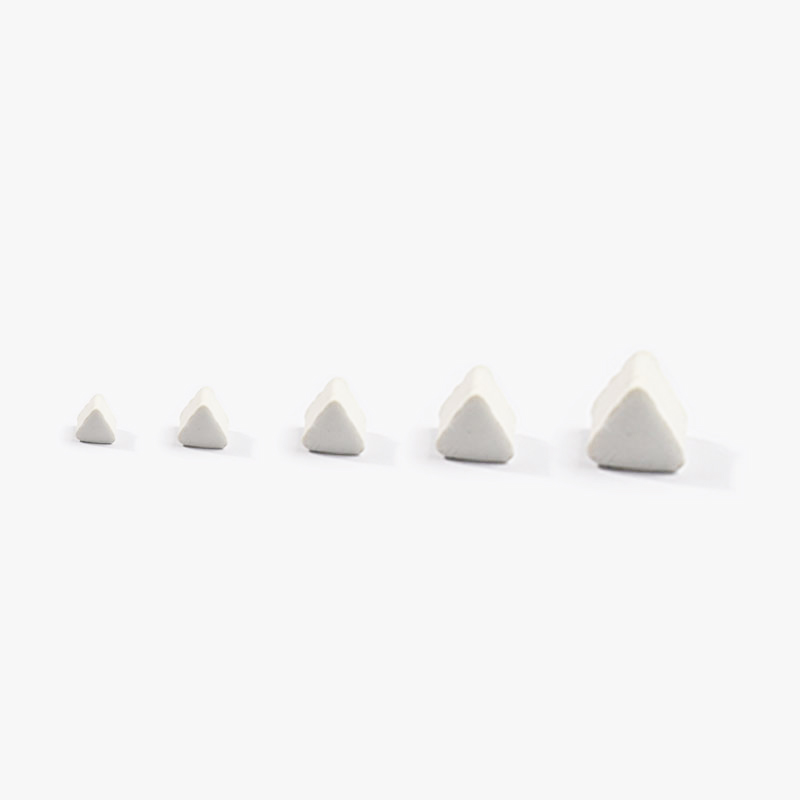
Plastic media removes material gently through a light cutting and burnishing action and is the usual first candidate for aluminum, thin-wall sections and parts where a soft surface must not be scored. Its lower density and hardness mean it conforms rather than cuts deeply, which protects delicate features but also makes it slower and less effective in deep recesses and tight radii where a harder medium is needed to reach. Wear behaviour is different from ceramic: plastic media deform, lose sharpness and load with metal fines, so a blend can look intact while its cut rate has collapsed. Dry media in the same family, such as walnut shell and corn cob, is used for light deburring and drying support rather than for aggressive stock removal. Choose plastic when feature preservation dominates and the required removal is light; verify by measuring the same locations before and after rather than judging by appearance.
| Media | Best fit | Watch out for |
|---|---|---|
| Plastic media, cones and triangles | Gentle cutting on aluminium, thin-wall sections and surfaces that must not be scored. | Deforms and loads with metal fines so cut rate falls while the blend still looks intact; ineffective in deep recesses and tight radii. |
| Ceramic media, small size class for tight features | Reaching small holes, slots and fillets where a standard size class cannot enter, at reduced removal rate. | Screens differently from larger media, lodges more easily in drilled passages and must be kept below the smallest hole to stay clear. |
| Steel media for burnishing | Bright, uniform appearance with minimal dimensional change on parts whose geometry must stay as machined. | Presses debris and hard-water deposits into the surface, concentrates energy on thin sections, and carries iron cross-contamination risk. |
| Ceramic media, angle-cut and triangular shapes | Heavier deburring and edge blending on steel, stainless and titanium parts with accessible corners and recesses. | Wears down and changes effective size class, generates sludge, and can chip or over-round thin sections and soft alloys. |
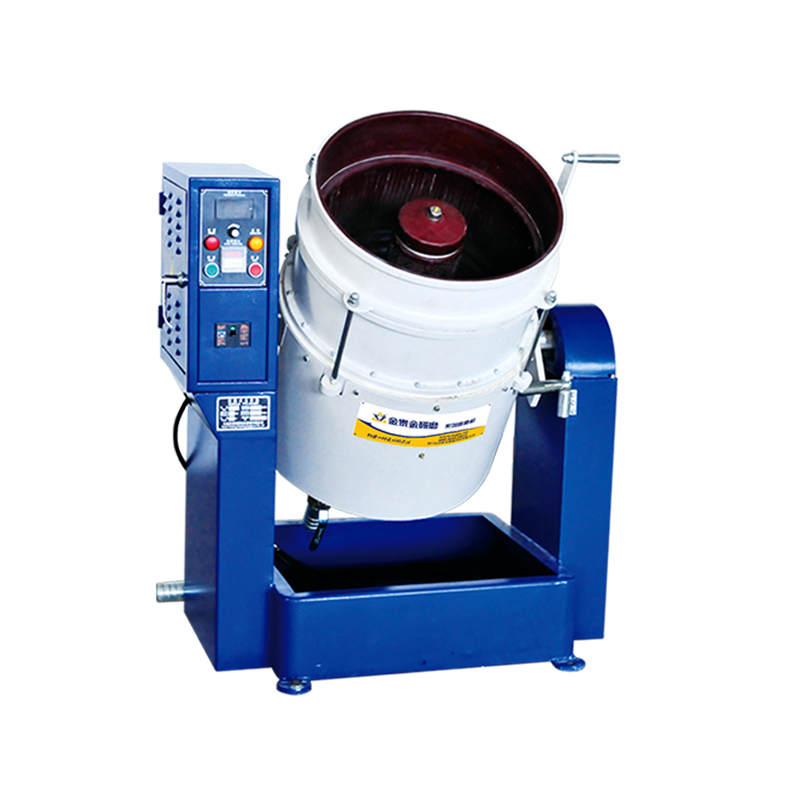
Vibratory finishing is usually the first route to evaluate for aerospace parts because it blends edges and refines surfaces while keeping part-on-part contact moderate and allowing visual access during the cycle. The real differences lie in the chamber: a bowl with a centre column circulates the load continuously, while a tub or long-channel machine moves it more linearly and suits long shafts, tubes and housings that will not turn in a bowl. Drive amplitude, motor setting and the media-to-part ratio decide how much energy reaches the surface, and the machine frame sets the practical part size. For thin-walled or delicate components, ask whether the load can be run in compartments or on fixtures rather than free-tumbling. Also settle unloading and separation early, because a vibratory machine that finishes well but traps media in a closed housing costs more in inspection time than it saves in cycle time.
| Machine route | Where it fits | What it will not do |
|---|---|---|
| Centrifugal barrel finishing machine | Short cycles on small, hard, robust parts where high pressure at the part-media interface is acceptable. | High energy transfers into thin walls and fixtures and wears liners; part size and barrel geometry bound what can be run. |
| Dry polishing machine and dryer | Post-wet drying and light dry finishing of parts with blind holes and passages where moisture carryover matters. | Dry media cut slowly, require dust extraction and medium condition control, and forced-air drying must be matched to internal geometry. |
| Rotary barrel tumbling machine | Gentle, uniform processing of small robust parts in large quantities, such as bushings, spacers and fasteners. | Slow cycles, per-barrel weight limits, and limited access for inspecting or repositioning parts during the run. |
| Vibratory finishing machine, bowl type | General edge blending and surface refinement on medium-sized parts with a continuous, visible load. | Part size is capped by chamber geometry, and thin or delicate parts may need compartments or fixtures to limit part-on-part contact. |
Impingement shows up as a local patch of heavier material removal, a gouge or a flattened edge where media or another part struck the surface with too much energy. On aerospace work it appears most often on thin webs, long unsupported sections, sharp external corners and parts run at too high an amplitude in a lightly loaded chamber. The cause is rarely the medium alone; it is the combination of energy setting, media size and mass, load volume and the freedom of parts to move against each other. Check for it by inspecting known vulnerable features under magnification before and after, by photographing under raking light rather than diffuse light, and by comparing the same feature across several parts from the load. Mitigation follows the diagnosis: reduce amplitude, add media, compartmentalise or fixture the part, or move the operation to a gentler route.
| Failure mode | Likely cause | How to catch it |
|---|---|---|
| Dark or heat-tinted patch following the media flow | Lean compound concentration or restricted flow, letting metal fines and heat build up in the working mass. | Compare against the agreed appearance master under fixed lighting and check the measured compound concentration and flow rate recorded for the batch. |
| Impingement marks or gouges on thin webs and sharp corners | Excess amplitude or speed with too little media in the chamber, or parts free to strike each other in an under-filled load. | Inspect the vulnerable features under magnification before and after, photograph under raking light, and compare the same feature across several parts from the load. |
| Uneven finish across a batch or across one part | Load volume outside the chamber's working range, parts blocking one another, mixed part sizes, or inconsistent fixturing and media distribution. | Measure surface texture at several recorded locations on multiple parts from the same load and record the load pattern alongside the results. |
| Dimensional drift on a close-tolerance bore or spigot | Total removal accumulating over a long cycle or repeated passes without a start-of-run measurement on a critical feature. | Measure critical dimensions on the first part and at defined intervals through the batch, keeping the process effect separate from incoming variation. |
Coimbatore is an engineering city. Its district administration states that the pump and motor manufacturing sector is among the largest engineering activities in the city and that the industry supplies over 40% of India's requirements, which is why Coimbatore is called the pump city of Asia. The same source records auto-component manufacturing by companies including Robert Bosch GmbH, PRICOL, Craftsman Automation and Roots Industries, more than 700 wet-grinder manufacturers, and a gold-jewellery and diamond-cutting base, while the Airports Authority of India records more than 25,000 small, medium and large industries and textile mills in the city and notes its motor pump sets and varied engineering goods. LMW Limited (formerly Lakshmi Machine Works), registered at Perianaickenpalayam, Coimbatore, runs textile machinery, machine tool and foundry divisions and has added an Advanced Technology Centre to manufacture components for the aerospace industry. India's pump manufacturers' association, IPMA, states that almost all major Indian pump manufacturers are its members.
For this brief the relevant part of that base is aerospace: LMW Limited, registered at Perianaickenpalayam in Coimbatore, states that it added an Advanced Technology Centre to manufacture components for the aerospace industry.
Pump and motor manufacture involves cast and machined parts — impellers, casings, shafts and end covers — where burrs and edge condition affect flow, fit and seal performance, and where media or compound residue left in internal passages is a rejection risk. The district's foundry and precision-machining base also produces automotive and aerospace components that are inspected for edge quality and surface finish. Because the same finishing machine behaves differently on cast iron, aluminium and stainless steel, process selection normally starts from the material and geometry of the actual part.
A Coimbatore pump or motor maker should settle the acceptance criterion first — edge or radius control on a machined feature, or a finish value on a sealing or flow surface — and then confirm by trial that the selected media and compound do not embed in cast iron or aluminium or leave residue in internal passages.
Freight context: Coimbatore International Airport (Airports Authority of India). Coimbatore International Airport is AAI-maintained, and AAI's airport directory lists Coimbatore among operational airports; district freight otherwise moves by road and rail within Tamil Nadu. Imported finishing machines and sample parts are cleared under the standard Indian customs procedure — bill of entry, plus BIS compliance where the product is notified.
India classifies every imported item in the ITC(HS) schedule, a compilation of codes for all merchandise for export and import whose Schedule I lays down the import policy regime for each item, maintained at 8-digit level under the First Schedule of the Customs Tariff Act, 1975 and aligned at 6 digits with the WCO Harmonized System (c1, c3). Importability is judged by the policy in force on the date of import, and when a policy moves from free to restricted, goods already committed through an irrevocable commercial letter of credit opened before the change can still be imported up to the balance quantity, value and period in that ICLC (c4). Preferential customs treatment is available only through the preferential trade agreements, free trade agreements, CECAs and CEPAs that India notifies and that are in operation (c5), so Chinese-origin industrial machinery is assessed at the applicable rate of the customs tariff rather than under any India-China preferential rate; India's commerce leadership has separately pointed to exports under free trade pacts growing faster than imports (c12). For capital goods specifically, DGFT operates the Export Promotion Capital Goods (EPCG) scheme, whose stated objective is to facilitate import of capital goods for producing quality goods and services (c7), which Indian firms use when they want duty relief on imported plant against an export obligation.
The Bureau of Indian Standards (BIS) describes itself as the National Standards Body of India and runs the country's product certification system, including products under compulsory certification, a foreign manufacturers certification scheme with nomination of an authorised Indian representative, and a registration scheme for manufacturers (c8, c9). Indian Standards (IS) issued by BIS are the reference texts Indian buyers write surface, coating and material specifications against, and BIS-recognised or BIS-empanelled laboratories are the test facilities used for certification work. Where a machine, media or compound falls under a BIS quality-control order, the licence or registration duty attaches to the product placed on the Indian market, so an overseas supplier should settle the applicable IS standard and the certification route before quoting.
SurfacePolish supplies from Xiamen, China. The buyer's own destination rules, conformity marking, tariff classification and documentation responsibilities stay with the buyer; confirm them against the authorities named above before ordering.
Acceptance begins with a written decision about how many parts are examined and which one is the reference. A workable plan names the sample size per batch, the inspection frequency, the measurement locations and the person responsible for accepting or rejecting. A first article should be fully inspected against the drawing and the agreed requirements, then retained as the physical reference for later comparison, because appearance memory is unreliable across shifts. For lower-volume aerospace work, the sensible pattern is to inspect the first part of each batch completely, examine a defined sample through the run and inspect critical features on every part when the feature is safety-relevant or the process is not yet stable. Fix these rules before the first production batch, when there is still room to argue about the requirement rather than about the parts.
Expect the first production batches to differ from trial parts, because a trial is run with extra attention on one or two pieces while a line runs a full load with a different operator, a partly worn blend and normal handling between operations. Reduce that gap by planning a ramp-up sequence: run a low quantity, inspect the first part fully, compare it against the retained trial part at the agreed locations, then increase load size only after the comparison holds. Re-inspect at defined intervals through the ramp and keep a reference part from each stage. Be clear about what a sample trial cannot establish. Observations apply to the parts tested and to the setup used. A trial does not establish fitness for a regulated or safety-critical application, does not replace the buyer's own qualification or structural testing, and does not transfer responsibility for acceptance, which always remains with the buyer's engineering and quality functions.
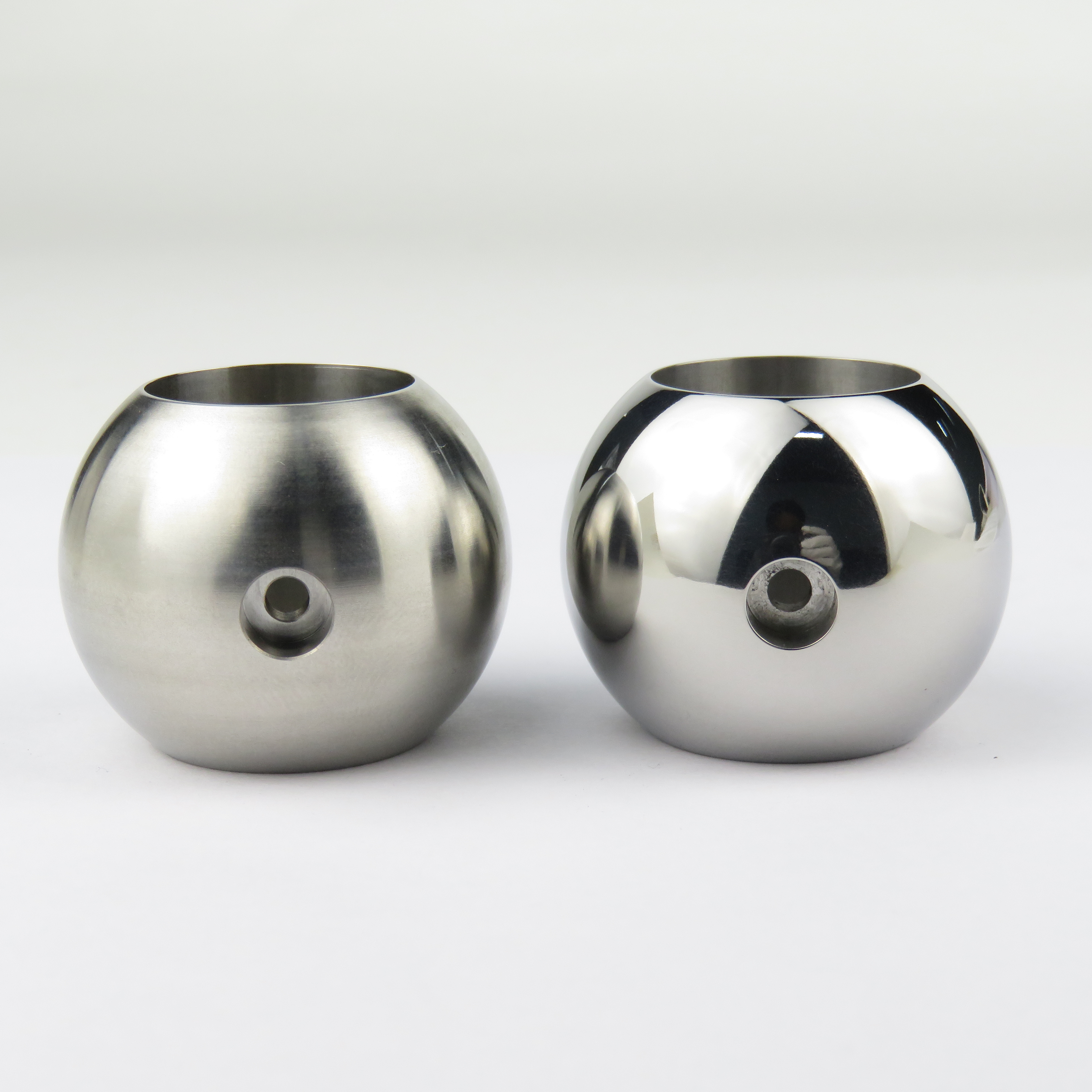
Specify the location, the evaluation length and cutoff, the filter, and whether the requirement is a maximum or an average, then keep that setup unchanged for every batch and comparison. Readings taken with different cutoffs on the same surface will not agree, and readings on interrupted or curved surfaces such as fillets or cast skins need a setup designed for them. Record the instrument and its calibration status with the results. When you compare a trial part from Xiamen with your production parts, India and China, use one instrument and one setup so the difference you are reading is the process, not the measurement.
Only partly. A trial is run with extra attention on a small number of pieces, while production runs a full load with a different operator, a partly worn media blend and the normal handling between operations. Treat trial output as evidence about the parts tested and the settings used, then plan a ramp-up in which the first production part is fully inspected and compared against the retained trial part at the same locations. Where results diverge, check the media blend and load pattern first, since those drift before a machine setting changes. SurfacePolish reports observations and a proposed direction; qualification and acceptance stay with the buyer.
High-strength steels carry a documented concern about hydrogen picked up from acidic or hydrogen-bearing chemistry, so the conservative route is a mechanical process with a neutral or alkaline compound and no acid stage. If your own specification permits acid-bearing chemistry, that decision and any subsequent treatment belong to your engineering and quality functions, not to the equipment supplier. SurfacePolish supplies compounds and media across borders and can run a trial with the chemistry family you nominate, reporting observations on the parts tested. Buyers in Coimbatore should confirm hydrogen-related requirements with their own specialists before any process is set.
Use Coimbatore, India as the destination on the enquiry and state whether the deliverable is equipment, media and compound, a representative sample review or a line concept. A destination does not imply local stock, a local service point or a local delivery time.
The national standards body is the Bureau of Indian Standards (BIS), whose certification scheme BIS describes as basically voluntary in nature, with compliance made compulsory for a number of products by the Central Government; IPMA notes that its members prepare drafts for Indian Standards on pumps and motors. Pump and motor buyers commonly reference the relevant IS numbers alongside their own hydraulic, material and surface requirements.
Sources were retrieved on 2026-09-29 and describe the local industrial and trade context only. They do not evidence any SurfacePolish project, shipment, installation or service in Coimbatore.
The buyer must not remove the peened layer or smear titanium while trying to reach the fillets and hole edges.
Send the material, dimensions, approximate weight, batch quantity, the incoming condition and photographs of the difficult features. Mark which features must not be contacted by media and state how the result will be inspected. This form carries source reference PSEO-0981; quote it if you prefer an additional manual reference.
Open the SurfacePolish enquiry form Email a prepared enquiry
No price, lead time, certification or result is promised here. Confirm whether a sample trial is available for the specific part and what the trial can and cannot show.
Page PSEO-0981 · revised 2026-09-29 · cross-border equipment, media and scoped sample review. City context is sourced and cited above.
Use this local checker to identify missing part and inspection information. It prepares a technical-review brief; it does not approve a machine, process recipe or production result.
Complete the part details to prepare a review brief.
Email : info@surface-polish.com


 IPv6 network supported


 +86-592-2381506