A production planner in Frankfurt, Germany needs several thousand small stainless bushings finished for aerospace components with consistent edges and no roll beyond a defined chamfer band. SurfacePolish supplies barrel, centrifugal and vibratory machines and the media to run them, and a free sample trial can compare media size classes on the buyer's own parts before any equipment decision is made. This brief is written for a buyer in Frankfurt working on aerospace components; it describes equipment, media and a scoped sample review, not a local polishing service.
How will media be kept out of drilled passages, tapped holes and closed volumes, and what retrieval and verification step proves it?
At what batch size, load pattern and media wear state does the trial result still describe what production will produce?
Which features on this part must not be touched by media, and how will each one be masked, plugged, fixtured or deliberately finished?
Before any machine or medium is proposed, the finishing engineer needs a feature inventory of the actual part, not a family description. List threaded holes, dowel bores, seal lands, bearing journals, hydraulic and fuel passage orifices, weld lands, machined bosses and thin webs, then decide for each whether it is masked, plugged, finished to a limit or deliberately left untouched. The inventory is what makes the media size class and cycle intensity defensible. Two parts from the same drawing family can need different screening because one carries a cross-drilled passage and the other does not. Ask for a marked-up drawing, a photograph of a sectioned sample and, where possible, one part already rejected for a finishing-related reason. Feature inventory also sets handling: which surfaces may be touched, where parts may be stacked and how they are separated between operations.
The compound is not a lubricant added at the end of the setup; it is the variable that keeps the process stable. Alkaline builders and detergents keep media and parts clean and suspend removed material, mildly acidic or chelated chemistry brightens certain alloys, and inhibitors are used to limit attack on sensitive surfaces. Concentration and flow rate at the machine are the actual levers: running lean loads the media, slows the cut and lets heat and discoloration develop, while running rich produces foam, residue that lodges in blind holes and unnecessary cost. Water quality belongs in the same discussion because hardness leaves scale and spotting, and chlorides present a pitting risk on stainless and aluminum. Set concentration by a measured dilution routine and a daily check, record it with the batch, and treat any drift as a process deviation rather than an operator preference.
| Media | Best fit | Watch out for |
|---|---|---|
| Dry media: walnut shell and corn cob | Light deburring, drying support and residue removal on parts where moisture carryover is the governing concern. | Slower cutting, generates dust requiring extraction, and its condition and moisture content must be controlled to stay repeatable. |
| Ceramic media, small size class for tight features | Reaching small holes, slots and fillets where a standard size class cannot enter, at reduced removal rate. | Screens differently from larger media, lodges more easily in drilled passages and must be kept below the smallest hole to stay clear. |
| Ceramic media, angle-cut and triangular shapes | Heavier deburring and edge blending on steel, stainless and titanium parts with accessible corners and recesses. | Wears down and changes effective size class, generates sludge, and can chip or over-round thin sections and soft alloys. |
| Plastic media, cones and triangles | Gentle cutting on aluminium, thin-wall sections and surfaces that must not be scored. | Deforms and loads with metal fines so cut rate falls while the blend still looks intact; ineffective in deep recesses and tight radii. |
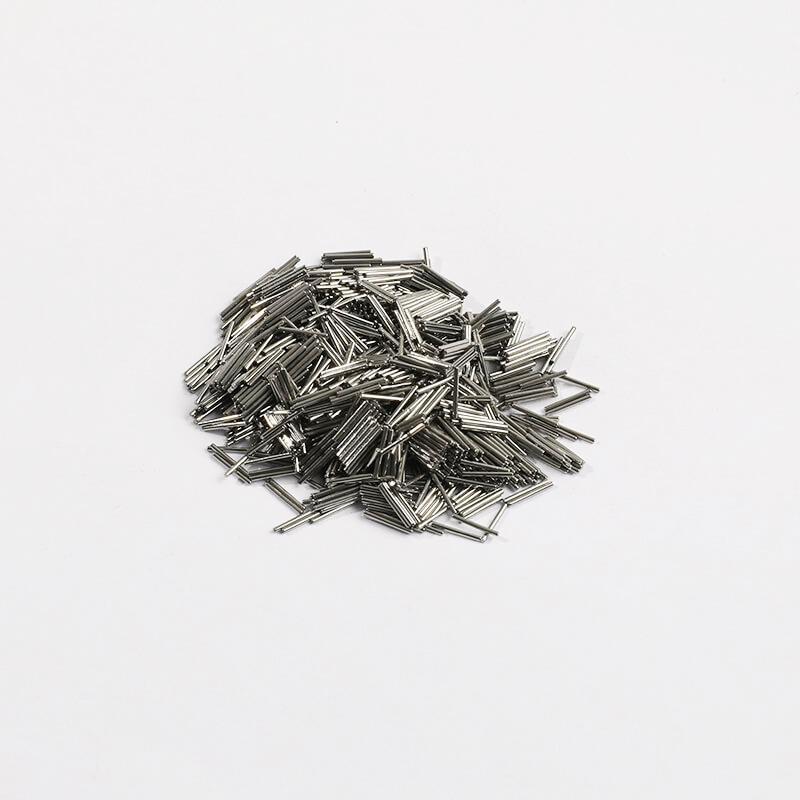
Magnetic finishing uses small pins or needles driven by a moving magnetic field to reach edges and recesses that loose media cannot enter, which suits small precise parts such as fuel system components, sensor bodies and thin stamped hardware where internal edges matter more than overall brightness. The honest limits are part size and mass, whether the workpiece material attracts the pins, and the retrieval job afterwards, because residual pins in blind holes are a genuine escape route for contamination. Dry polishing and drying are a separate decision: blind holes, narrow passages and surfaces that must not carry moisture usually need forced-air drying or a dry medium such as walnut shell or corn cob, and dry media cut more slowly and require dust extraction and medium condition control. Choose the dry route when cleanliness and carryover, not removal rate, are the governing requirement.
| Machine route | Where it fits | What it will not do |
|---|---|---|
| Vibratory tub or long-channel machine | Long shafts, tubes, housings and large parts that will not turn or circulate in a bowl. | Media circulation is less uniform along a long chamber, and bridging can leave sections of a long bore unprocessed. |
| Disc finishing machine | Fast cycles on flat plates, brackets and robust turned parts with simple geometry. | High energy risks edge roll, distortion of thin sections and part-on-part marking; part size is bounded by the working gap. |
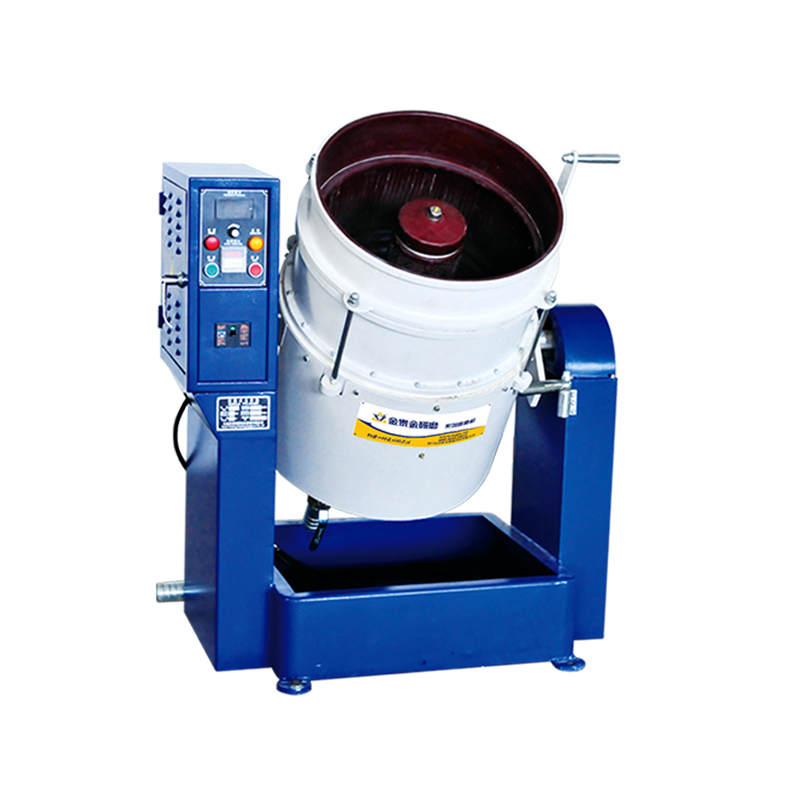
| Centrifugal barrel finishing machine | Short cycles on small, hard, robust parts where high pressure at the part-media interface is acceptable. | High energy transfers into thin walls and fixtures and wears liners; part size and barrel geometry bound what can be run. |
| Grinding finishing machine | Applications needing higher material removal before a refinement stage, such as heavy burrs or a defined stock removal. | Higher removal raises the risk of edge over-rounding and dimensional change on close-tolerance features. |
Impingement shows up as a local patch of heavier material removal, a gouge or a flattened edge where media or another part struck the surface with too much energy. On aerospace work it appears most often on thin webs, long unsupported sections, sharp external corners and parts run at too high an amplitude in a lightly loaded chamber. The cause is rarely the medium alone; it is the combination of energy setting, media size and mass, load volume and the freedom of parts to move against each other. Check for it by inspecting known vulnerable features under magnification before and after, by photographing under raking light rather than diffuse light, and by comparing the same feature across several parts from the load. Mitigation follows the diagnosis: reduce amplitude, add media, compartmentalise or fixture the part, or move the operation to a gentler route.
| Failure mode | Likely cause | How to catch it |
|---|---|---|
| Embedded media fragments or metal smeared into the surface | Dirty or overloaded compound, media hardness mismatched to the alloy, or high-pressure burnishing that presses debris into the surface. | Borescope internal features, examine agreed locations at low magnification, and use dye penetrant only where the buyer's own procedure requires it. |
| Dimensional drift on a close-tolerance bore or spigot | Total removal accumulating over a long cycle or repeated passes without a start-of-run measurement on a critical feature. | Measure critical dimensions on the first part and at defined intervals through the batch, keeping the process effect separate from incoming variation. |
| Media wedged at a cross-drilled passage intersection | Media small enough to enter the passage, plus no defined retrieval step in the routing before final cleaning. | Flush the passage with a measured volume, examine the flush medium and the passage with a borescope, and add a documented retrieval step such as directed air or a magnet. |
| Dark or heat-tinted patch following the media flow | Lean compound concentration or restricted flow, letting metal fines and heat build up in the working mass. | Compare against the agreed appearance master under fixed lighting and check the measured compound concentration and flow rate recorded for the batch. |
Frankfurt am Main is the largest city in Hesse, a state whose industrial base the chemicals employers' association describes in terms of strong chemicals, pharmaceuticals, metal and electrical industries (s3). The city hosts Industriepark Höchst, where Infraserv provides infrastructure and services to customers in the chemical and pharmaceutical industries (s4). IHK Frankfurt am Main maintains an industry committee that brings industry and political decision-makers together to improve the framework conditions of the industrial location (s2), and describes the FrankfurtRheinMain region as one of the most important international business locations in Europe (s5). Air freight is anchored by Frankfurt Airport, which Fraport describes as handling more than 6,000 tonnes of cargo per day at FRA in 2019 (s1).
The nearest part of that base to this brief is medical: Chemical and pharmaceutical production is concentrated at Industriepark Höchst in Frankfurt, where Infraserv serves customers in the chemical and pharmaceutical industries (s4), and HessenChemie names chemicals and pharmaceuticals among Hesse's strong industrial branches (s3).
Frankfurt's industrial core is process-oriented chemical and pharmaceutical production plus the machinery and metal-working shops that serve it, where stainless-steel vessels, pipework, pump and valve components, and change parts are regularly reworked after welding, machining or laser cutting, and where burrs and residue are a contamination risk rather than a cosmetic matter. Plants of this type also tend to run mixed batches of small and large components, so equipment selection is usually driven by whether the same process can handle both without cross-contamination.
For a Frankfurt buyer the decisive question is usually the cleanliness specification rather than the finish alone: whether the part must be delivered free of burrs, loose particles and media residue for a chemical or pharmaceutical process, and which inspection method will be used to demonstrate that, because that determines both the process and the media chemistry.
Freight context: Frankfurt Airport (FRA), Fraport AG, Industriepark Höchst (chemical/pharma site with rail and road links). Frankfurt Airport handled more than 6,000 tonnes of cargo per day at FRA on Fraport's 2019 figures, alongside more than 1,400 daily aircraft movements (s1). For a Frankfurt plant the practical split is air freight for sample parts and urgent spares, and sea freight cleared through a container port with onward road or rail movement for a full machine.
German is the working language of drawings, contracts, test reports and conformity documentation, and German buyers normally expect English-language technical documentation to be supplied alongside it. Procurement is documentation-driven: the EU declaration of conformity, the technical file, and the identity of the EU-based importer or authorised representative are settled before the order, and the EORI registration and customs declaration are the importer's responsibility rather than the exporter's (c3, c4, c5). Germany is the world's leading machinery and equipment manufacturer, so quotations compete against established domestic builders on technical documentation and measurable process data rather than on price alone (c9). Payment, delivery and risk terms are normally fixed by written contract with a named Incoterm, and classification (commodity code) is commonly confirmed in writing before shipment because it drives the duty and the import declaration.
Germany sits inside the EU customs union, so Chinese-origin industrial machinery enters against the EU's common commercial tariff rather than a German national tariff, and the duty that applies is determined by the commodity code declared on the import declaration. China is one of the EU's largest goods trading partners and the EU has long run a goods deficit with it, while the Commission characterises the relationship as simultaneously partnership, competition and systemic rivalry (c1, c2). The Commission publishes the EU's trade agreements; no agreement with China appears in that overview, so Chinese-origin goods cannot claim a preferential origin rate and are assessed under the standard tariff (c8). German customs is administered by the Zoll under the Generalzolldirektion, and the importer must hold an EORI number - valid throughout the European Union and replacing the former German customs number - before goods can be cleared (c5, c6).
SurfacePolish supplies from Xiamen, China. The buyer's own destination rules, conformity marking, tariff classification and documentation responsibilities stay with the buyer; confirm them against the authorities named above before ordering.
Acceptance begins with a written decision about how many parts are examined and which one is the reference. A workable plan names the sample size per batch, the inspection frequency, the measurement locations and the person responsible for accepting or rejecting. A first article should be fully inspected against the drawing and the agreed requirements, then retained as the physical reference for later comparison, because appearance memory is unreliable across shifts. For lower-volume aerospace work, the sensible pattern is to inspect the first part of each batch completely, examine a defined sample through the run and inspect critical features on every part when the feature is safety-relevant or the process is not yet stable. Fix these rules before the first production batch, when there is still room to argue about the requirement rather than about the parts.
Comparative trials lose their value when several things change together. Fix the machine, load volume, part count, compound concentration and cycle time, then change one variable: media material first, then size class, then compound, then time or energy setting. Ask for the same recorded locations to be measured with the same instrument and the same setting across all variants, and for photographs taken under identical lighting, so the comparison is between processes rather than between photographers. Retain all tested parts, including the ones that went wrong, because a rejected variant often explains which mechanism caused a defect and therefore which limit must be respected in production. A comparison of two media blends run with different cycle times and different operators tells you nothing about the media, which is the most common reason a trial result fails to transfer into a line.
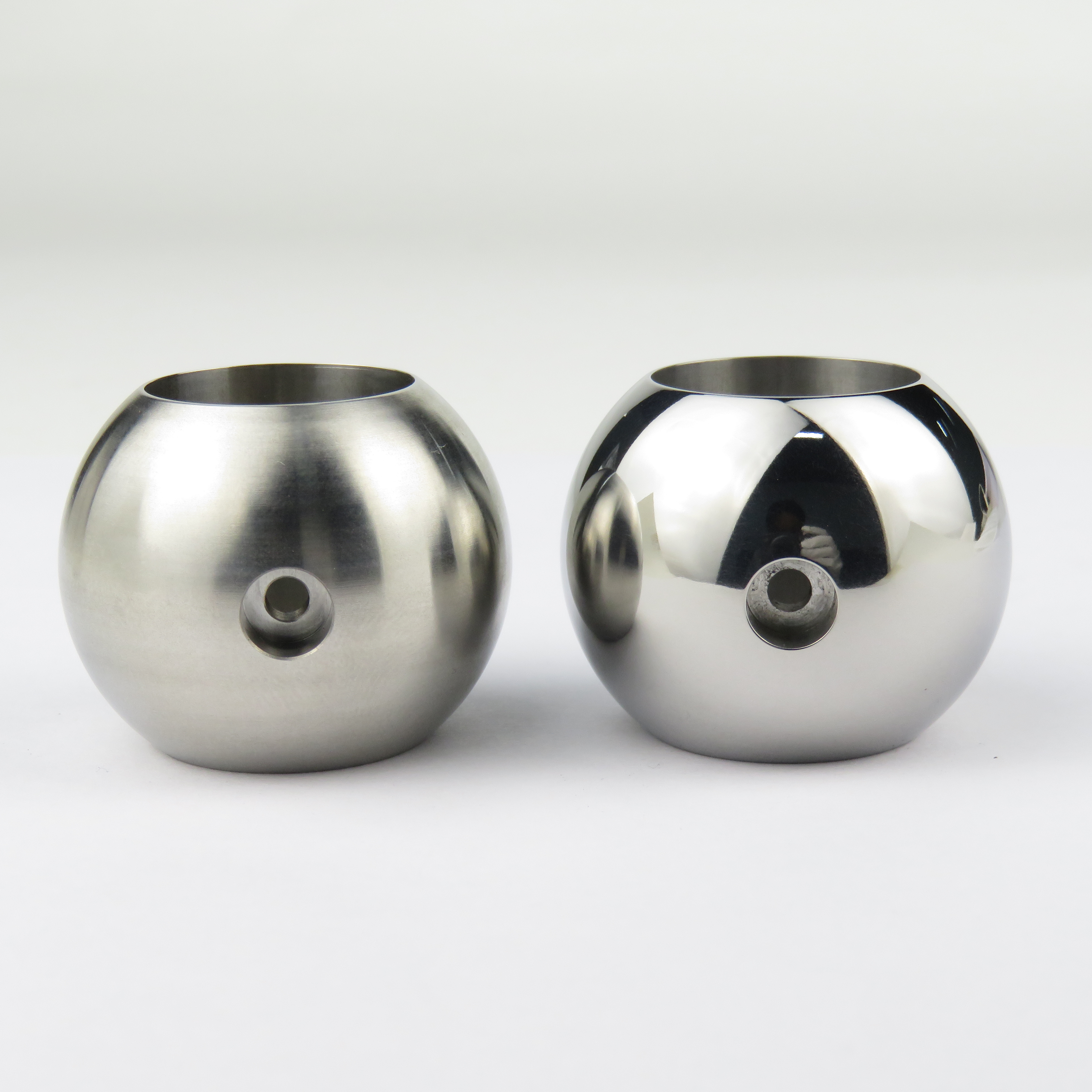
Keep dedicated media, baths and, where practical, dedicated machines or chambers for each material family, because stainless and aluminium can pick up iron from carbon steel media and soft alloys absorb debris from harder work. Change or filter compound on a schedule rather than when the bath looks dirty, control rinse water quality since hardness and chlorides leave deposits, and clean parts between stages instead of carrying sludge forward. Record which media ran in which machine and when the bath was last cleaned. For a buyer in Frankfurt running mixed families, separating the load plan is usually cheaper than cleaning contamination out of finished parts.
Size the media well below the smallest hole to keep clear, and treat every drilled passage as a retrieval point rather than hoping it stays empty. Mask or plug features that were never meant to see media, count media into and out of the batch, and add a defined check such as a borescope at an agreed angle plus a pin gauge. For Germany buyers shipping parts for a trial, send the part with the tightest hole so the media class is chosen against real geometry rather than an average. SurfacePolish reports what was found on the parts tested; your own cleanliness inspection remains the acceptance decision.
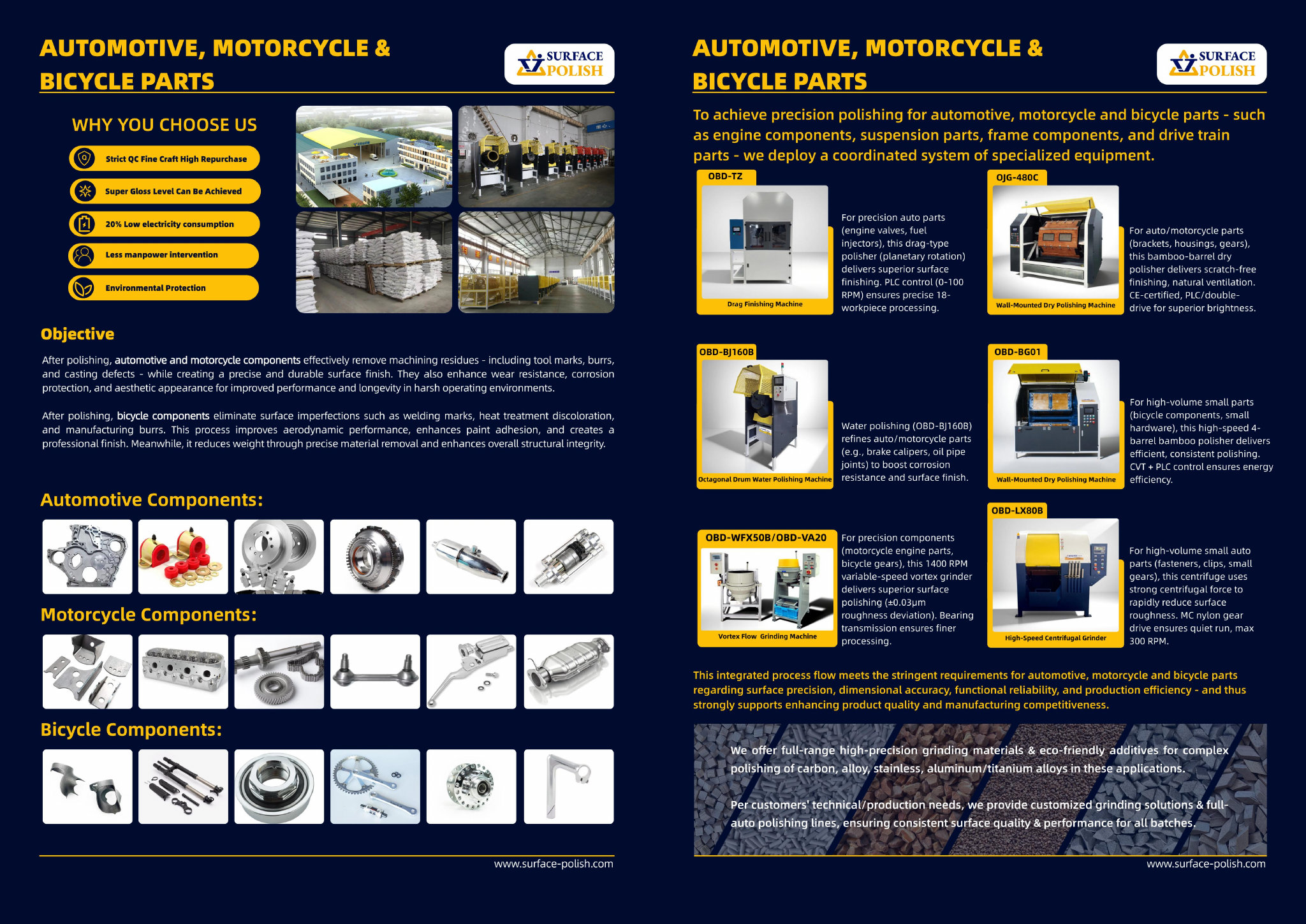
Small robust fittings often suit rotary or centrifugal barrel finishing, which process many pieces per load at low unit cost, while delicate parts may need a gentler vibratory route or magnetic finishing with small pins for internal edges. The deciding factors are the smallest feature to keep clear, the thinnest section, the edge limit and the batch size, not overall part size. Send the extreme cases from the family for a trial rather than a typical part, and ask for a comparison across two media classes with everything else held constant. SurfacePolish supplies all of these machine types across borders and can describe how each behaves on tested parts.
Use Frankfurt, Germany as the destination on the enquiry and state whether the deliverable is equipment, media and compound, a representative sample review or a line concept. A destination does not imply local stock, a local service point or a local delivery time.
Frankfurt buyers specify surface, edge and cleanliness requirements through DIN/EN/ISO standards, and machinery must carry CE marking with an EU declaration of conformity before it is placed on the German market (c3, c7). Chemical and pharmaceutical customers add their own materials, documentation and cleaning requirements, and the VDA framework applies where the same parts feed automotive programmes (c10).
Sources were retrieved on 2026-09-29 and describe the local industrial and trade context only. They do not evidence any SurfacePolish project, shipment, installation or service in Frankfurt.
The buyer needs high-volume edge blending and appearance consistency without unacceptable edge roll on the chamfers.
Send the material, dimensions, approximate weight, batch quantity, the incoming condition and photographs of the difficult features. Mark which features must not be contacted by media and state how the result will be inspected. This form carries source reference PSEO-0321; quote it if you prefer an additional manual reference.
Open the SurfacePolish enquiry form Email a prepared enquiry
No price, lead time, certification or result is promised here. Confirm whether a sample trial is available for the specific part and what the trial can and cannot show.
Page PSEO-0321 · revised 2026-09-29 · cross-border equipment, media and scoped sample review. City context is sourced and cited above.
Use this local checker to identify missing part and inspection information. It prepares a technical-review brief; it does not approve a machine, process recipe or production result.
Complete the part details to prepare a review brief.
Email : info@surface-polish.com


 IPv6 network supported


 +86-592-2381506