A buyer in Geelong, Australia producing titanium nozzle bodies for aerospace components must refine the outside while leaving 0.8 mm orifices clear and a critical seat dimensionally unchanged. SurfacePolish works as a cross-border equipment and media supplier with a free sample trial rather than a local finishing service, so parts are shipped in, run, and returned with a media and cycle direction and the measurements taken. This brief is written for a buyer in Geelong working on aerospace components; it describes equipment, media and a scoped sample review, not a local polishing service.
At what batch size, load pattern and media wear state does the trial result still describe what production will produce?
Does the compound chemistry family create a hydrogen, staining or residue risk for this alloy and heat treatment, and who verifies that?
Which datum and mating surfaces carry assembly geometry, and is a flatness or fit check required on them after finishing?
Before any machine or medium is proposed, the finishing engineer needs a feature inventory of the actual part, not a family description. List threaded holes, dowel bores, seal lands, bearing journals, hydraulic and fuel passage orifices, weld lands, machined bosses and thin webs, then decide for each whether it is masked, plugged, finished to a limit or deliberately left untouched. The inventory is what makes the media size class and cycle intensity defensible. Two parts from the same drawing family can need different screening because one carries a cross-drilled passage and the other does not. Ask for a marked-up drawing, a photograph of a sectioned sample and, where possible, one part already rejected for a finishing-related reason. Feature inventory also sets handling: which surfaces may be touched, where parts may be stacked and how they are separated between operations.
Vibratory finishing is usually the first route to evaluate for aerospace parts because it blends edges and refines surfaces while keeping part-on-part contact moderate and allowing visual access during the cycle. The real differences lie in the chamber: a bowl with a centre column circulates the load continuously, while a tub or long-channel machine moves it more linearly and suits long shafts, tubes and housings that will not turn in a bowl. Drive amplitude, motor setting and the media-to-part ratio decide how much energy reaches the surface, and the machine frame sets the practical part size. For thin-walled or delicate components, ask whether the load can be run in compartments or on fixtures rather than free-tumbling. Also settle unloading and separation early, because a vibratory machine that finishes well but traps media in a closed housing costs more in inspection time than it saves in cycle time.
| Machine route | Where it fits | What it will not do |
|---|---|---|
| Disc finishing machine | Fast cycles on flat plates, brackets and robust turned parts with simple geometry. | High energy risks edge roll, distortion of thin sections and part-on-part marking; part size is bounded by the working gap. |
| Rotary barrel tumbling machine | Gentle, uniform processing of small robust parts in large quantities, such as bushings, spacers and fasteners. | Slow cycles, per-barrel weight limits, and limited access for inspecting or repositioning parts during the run. |
| Dry polishing machine and dryer | Post-wet drying and light dry finishing of parts with blind holes and passages where moisture carryover matters. | Dry media cut slowly, require dust extraction and medium condition control, and forced-air drying must be matched to internal geometry. |
| Centrifugal barrel finishing machine | Short cycles on small, hard, robust parts where high pressure at the part-media interface is acceptable. | High energy transfers into thin walls and fixtures and wears liners; part size and barrel geometry bound what can be run. |
Steel media works by burnishing: it displaces surface metal and compresses it rather than cutting it away, which produces a bright, uniform appearance and can improve surface texture without the dimensional change that a cutting medium causes. That property makes it attractive where features must keep their geometry and only the surface appearance needs to change. The conditions are strict. Burnishing needs a clean load, correct compound chemistry and controlled water, because any debris, iron contamination or hard water deposit is pressed into the surface rather than flushed away. Steel media is heavy and concentrates energy, so thin walls and unsupported sections need lower energy or fixturing. It also carries a cross-contamination risk: stainless and aluminum parts can pick up iron from carbon steel media, so keep baths and media dedicated. Select it after the removal requirement has been met, not as a substitute for deburring.
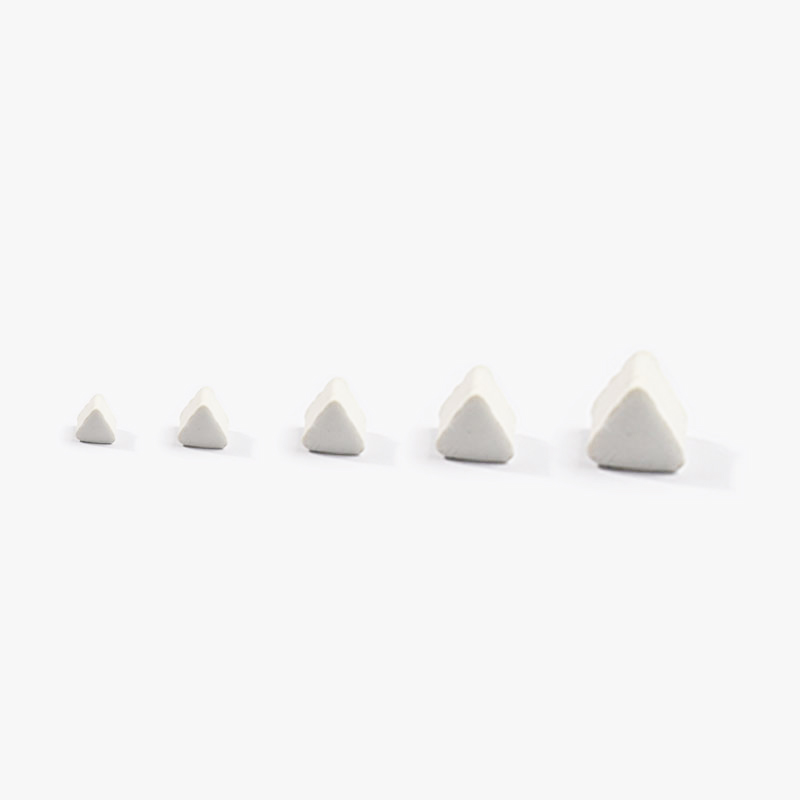
| Media | Best fit | Watch out for |
|---|---|---|
| Plastic media, cones and triangles | Gentle cutting on aluminium, thin-wall sections and surfaces that must not be scored. | Deforms and loads with metal fines so cut rate falls while the blend still looks intact; ineffective in deep recesses and tight radii. |
| Alkaline detergent compound | General cleaning and suspension of removed material on steel, stainless and aluminium where neutral to alkaline chemistry suits the alloy. | Running lean causes loading, heat and discoloration; running rich causes foam and residue that lodges in blind features. |
| Mildly acidic or chelated brightening compound | Brightening certain stainless grades where the buyer's specification permits that chemistry family. | Not appropriate where hydrogen uptake is a concern on high-strength steel, and requires close pH control and good rinse water quality. |
| Ceramic media, angle-cut and triangular shapes | Heavier deburring and edge blending on steel, stainless and titanium parts with accessible corners and recesses. | Wears down and changes effective size class, generates sludge, and can chip or over-round thin sections and soft alloys. |
Embedment occurs when fragments of media or removed metal are pressed into the surface rather than flushed away, and it is easy to miss because the part can look bright and uniform. Softer alloys, burnishing routes, high media pressure in centrifugal machines and dirty compound all raise the risk. Smearing is a related failure on titanium and some stainless grades, where material is displaced across the surface instead of cut, leaving a folded layer that later inspection may read as a defect. Check with a borescope on internal features, a dye penetrant inspection only where the buyer's own procedure calls for it, and low-magnification microscopy at agreed locations. Prevention rests on maintaining compound flow and cleanliness, matching media hardness to the alloy, avoiding acid-bearing chemistry where hydrogen is a concern, and cleaning the load between stages rather than carrying debris forward.
| Failure mode | Likely cause | How to catch it |
|---|---|---|
| Embedded media fragments or metal smeared into the surface | Dirty or overloaded compound, media hardness mismatched to the alloy, or high-pressure burnishing that presses debris into the surface. | Borescope internal features, examine agreed locations at low magnification, and use dye penetrant only where the buyer's own procedure requires it. |
| Uneven finish across a batch or across one part | Load volume outside the chamber's working range, parts blocking one another, mixed part sizes, or inconsistent fixturing and media distribution. | Measure surface texture at several recorded locations on multiple parts from the same load and record the load pattern alongside the results. |
| Dark or heat-tinted patch following the media flow | Lean compound concentration or restricted flow, letting metal fines and heat build up in the working mass. | Compare against the agreed appearance master under fixed lighting and check the measured compound concentration and flow rate recorded for the batch. |
| Media wedged at a cross-drilled passage intersection | Media small enough to enter the passage, plus no defined retrieval step in the routing before final cleaning. | Flush the passage with a measured volume, examine the flush medium and the passage with a borescope, and add a documented retrieval step such as directed air or a magnet. |
Geelong is one of Australia's foremost manufacturing centres with a long industrial history, and manufacturing is again its fastest-growing employment sector after the closures of the Alcoa aluminium smelter and the Ford engine plant. The Geelong Manufacturing Council reports that Greater Geelong reached a record 147,234 local jobs in 2024-25, with manufacturing recording the fastest expansion for the second consecutive year, rising 12.1 per cent to more than 11,400 jobs — a level not seen since before the Alcoa and Ford closures. The region has about 700 manufacturers across transport equipment, metals, extractive industries, chemicals and petroleum, cement, engineering, textiles, timber and food, contributing more than $1.7 billion in value add and around $5.8 billion in annual output; manufacturing categories tracked by the council include advanced manufacturing, automotive, metals, engineering, chemicals and refining, food, textiles and clean economy. Research infrastructure includes Deakin University, the Geelong Technology Precinct, CSIRO facilities, the Institute for Frontier Materials and Carbon Nexus. Defence manufacturing is a growing focus: Hanwha Defence Australia will build 129 Redback infantry fighting vehicles at its Avalon Airport Industrial Precinct facility, supported by local firms including Marand, UMS, Air Radiators, RPC Technologies, IXL Group and Carbon Revolution.
The nearest part of that base to this brief is automotive: The Geelong Manufacturing Council states that Geelong's manufacturing employment has reached 'a level not seen since before the Alcoa and Ford closures', confirming Geelong's historical automotive manufacturing base, and the council tracks Automotive as an active industry category with about 700 manufacturers across sectors including transport equipment.
Geelong's mix of metals, engineering, transport equipment and defence manufacturing produces machined and fabricated metal components in steel, aluminium and stainless where deburring, edge radiusing and surface preparation directly affect coating adhesion, weld quality and assembly fit. The defence vehicle programme at Avalon and its local supply chain impose documented process and inspection requirements on supplied parts, so finishing steps need to be repeatable and traceable rather than operator-judged. Food processing equipment manufacturers in the region add a further requirement: stainless surfaces must be finished without leaving media residue or embedded particles that could create hygiene or corrosion problems.
A Geelong buyer should decide whether the finishing process must produce evidence suitable for a defence or automotive customer's quality system — documented media, cycle parameters and inspection records — or whether a general engineering finish is sufficient, because the documentation burden and the resulting equipment and media choice differ substantially.
Freight context: Port of Geelong (Victoria's second-largest port), Avalon Airport (international airport and Avalon Airport Industrial Precinct), Road and rail links to Melbourne, Ballarat, Colac and the Melbourne CBD, 75 km away. The Geelong Manufacturing Council states the region 'is well connected by road, rail, sea and air, and is home to Victoria's second-largest port and an international airport that supports national and international supply chains and logistics'. Avalon Airport also hosts the industrial precinct where Hanwha Defence Australia is building the Redback infantry fighting vehicles, so the airport precinct is both a freight gateway and a defence manufacturing site. Incoming finishing machines can arrive by sea through the Port of Geelong or by air through Avalon, with Melbourne's port and airport an alternative via the 75 km road and rail corridor.
The national standards body is Standards Australia, which publishes Australian Standards (AS) and joint Australian/New Zealand Standards (AS/NZS); on their own, standards are voluntary and there is no general requirement for the public to comply, but state and Commonwealth governments often refer to AS or AS/NZS standards in legislation and they can then become mandatory. For finishing and machinery work, the applicable documents are the ones cited in the buyer's own contract, purchase specification, licence condition or safety management system, together with the marking rules in AS/NZS 4417.1 and AS/NZS 4417.2 for in-scope electrical equipment sold under the EESS.
Australia and China are parties to the China-Australia Free Trade Agreement (ChAFTA), signed on 17 June 2015 and in force since 20 December 2015; the Australian Border Force maintains a dedicated ChAFTA page and working tariff schedule, and FTAs give importers a route to preferential rates of duty where the rules of origin are met. China was Australia's largest source of imports in 2025 at $130.2b, up 12.5% on 2024, and 56% (69,567) of Australian business importers traded at least once with China in 2020-21. A Chinese supplier of finishing machines, media or compounds is therefore shipping into Australia's single largest import stream, and preferential duty depends on origin documentation rather than on a blanket zero-tariff guarantee for every product line.
SurfacePolish supplies from Xiamen, China. The buyer's own destination rules, conformity marking, tariff classification and documentation responsibilities stay with the buyer; confirm them against the authorities named above before ordering.
Appearance should be defined by an agreed physical master or a calibrated image set viewed under specified lighting and magnification, because written adjectives such as bright or uniform are not acceptance criteria. Beside appearance, insist on the checks that reflect how the part actually works. A seal land is checked for sealing condition, a bearing seat for fit and contact pattern, a sliding surface for freedom from raised material and a threaded feature for gauge entry. Edges are measured rather than viewed, using radius gauges, an optical comparator or a cast impression against the recorded pre-finish state. Functional checks should be performed with the buyer's own gauges where the buyer owns the acceptance decision, and the results recorded against the specified requirement instead of a pass or fail opinion. Where a check damages a part, define it as a sampling check on dedicated parts.
Send parts that represent the production condition, not the best examples from a setup rack. Include the part with the tightest internal feature, the thinnest wall and the most difficult edge, because those features decide the process more than the largest flat face does. Provide the material and heat treatment, the drawing requirements you can share, and a marked-up photograph that identifies the features which must not change and those which must. Include one or two parts in the incoming condition with no prior finishing, plus, where available, a part finished the way you want the result to look. State the batch size and how parts are separated in your own shop, since load pattern affects outcome as much as media choice. Where a family has variants, send the extremes of the family rather than a middle case.
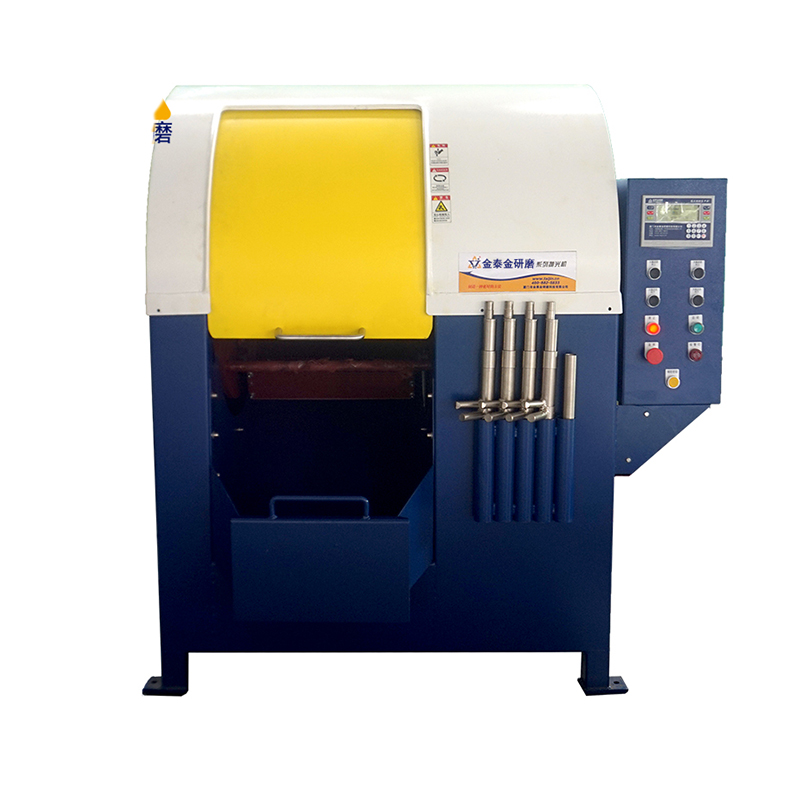
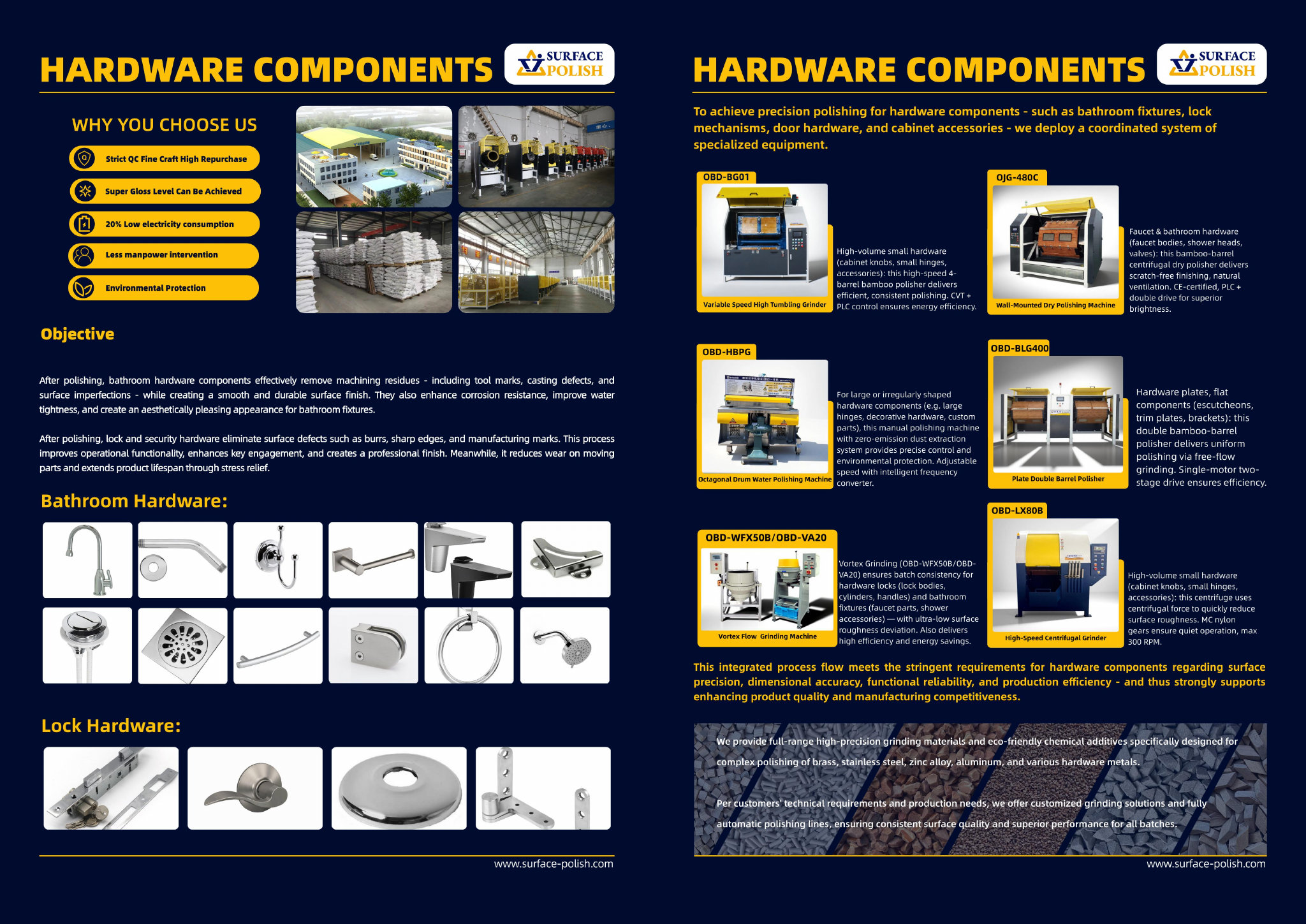
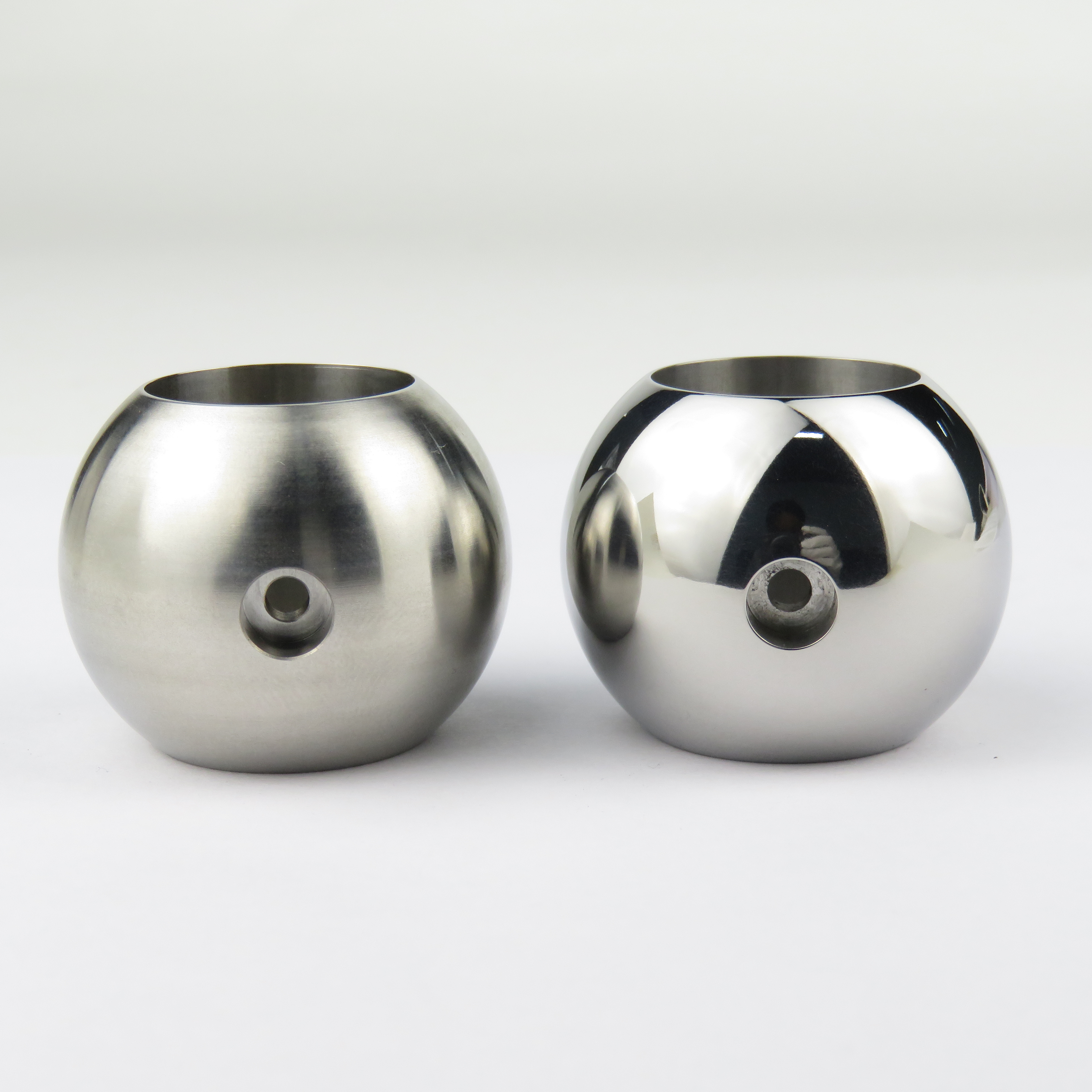
Send parts in the production condition, including the case with the thinnest wall, tightest internal feature and most difficult edge, not a convenient spare. Include material and heat treatment data, the drawing requirements you can share, and a marked-up photograph showing features that must not change. Add one part in the incoming condition and, if available, one finished the way you want the result to look. State the batch size and how you separate parts in your own shop. International shipments should be declared for temporary processing with a parts list, and buyers in Australia can ask us for a packing list format before dispatch.
Small robust fittings often suit rotary or centrifugal barrel finishing, which process many pieces per load at low unit cost, while delicate parts may need a gentler vibratory route or magnetic finishing with small pins for internal edges. The deciding factors are the smallest feature to keep clear, the thinnest section, the edge limit and the batch size, not overall part size. Send the extreme cases from the family for a trial rather than a typical part, and ask for a comparison across two media classes with everything else held constant. SurfacePolish supplies all of these machine types across borders and can describe how each behaves on tested parts.
Keep dedicated media, baths and, where practical, dedicated machines or chambers for each material family, because stainless and aluminium can pick up iron from carbon steel media and soft alloys absorb debris from harder work. Change or filter compound on a schedule rather than when the bath looks dirty, control rinse water quality since hardness and chlorides leave deposits, and clean parts between stages instead of carrying sludge forward. Record which media ran in which machine and when the bath was last cleaned. For a buyer in Geelong running mixed families, separating the load plan is usually cheaper than cleaning contamination out of finished parts.
Use Geelong, Australia as the destination on the enquiry and state whether the deliverable is equipment, media and compound, a representative sample review or a line concept. A destination does not imply local stock, a local service point or a local delivery time.
Geelong manufacturers work to Australian Standards administered by Standards Australia, and defence suppliers in the Avalon/Geelong Defence Alliance supply chain additionally work to Commonwealth defence procurement specifications and quality-management requirements. Electrically powered machinery must comply with the EESS and be marked with the Regulatory Compliance Mark under AS/NZS 4417.1 and AS/NZS 4417.2 where in scope.
Sources were retrieved on 2026-09-29 and describe the local industrial and trade context only. They do not evidence any SurfacePolish project, shipment, installation or service in Geelong.
The buyer needs the orifices kept clear and the seat untouched while the outside is refined consistently across a batch.
Send the material, dimensions, approximate weight, batch quantity, the incoming condition and photographs of the difficult features. Mark which features must not be contacted by media and state how the result will be inspected. This form carries source reference PSEO-0781; quote it if you prefer an additional manual reference.
Open the SurfacePolish enquiry form Email a prepared enquiry
No price, lead time, certification or result is promised here. Confirm whether a sample trial is available for the specific part and what the trial can and cannot show.
Page PSEO-0781 · revised 2026-09-29 · cross-border equipment, media and scoped sample review. City context is sourced and cited above.
Use this local checker to identify missing part and inspection information. It prepares a technical-review brief; it does not approve a machine, process recipe or production result.
Complete the part details to prepare a review brief.
Email : info@surface-polish.com


 IPv6 network supported


 +86-592-2381506