A buyer in Glasgow, United Kingdom producing titanium nozzle bodies for aerospace components must refine the outside while leaving 0.8 mm orifices clear and a critical seat dimensionally unchanged. SurfacePolish works as a cross-border equipment and media supplier with a free sample trial rather than a local finishing service, so parts are shipped in, run, and returned with a media and cycle direction and the measurements taken. This brief is written for a buyer in Glasgow working on aerospace components; it describes equipment, media and a scoped sample review, not a local polishing service.
Which datum and mating surfaces carry assembly geometry, and is a flatness or fit check required on them after finishing?
How will media be kept out of drilled passages, tapped holes and closed volumes, and what retrieval and verification step proves it?
At what batch size, load pattern and media wear state does the trial result still describe what production will produce?
Material leaves an edge far faster than it leaves an adjacent face on every mechanical finishing route, and on aerospace parts edge condition is frequently a specified requirement rather than a byproduct. Drawings may call out a defined radius, a broken edge or an edge that must remain sharp for a sealing or shearing function. Record the pre-finish edge state with an optical comparator, radius gauges or a cast impression before processing, then set the allowable band in writing. Fatigue-critical holes are the classic case: an edge that is too sharp concentrates stress, while one that is over-rounded changes the bearing area of a fastener head. Because stock removal at an edge is far faster than on a flat face, cycle intensity and media size class are the levers that control it. If edge limits are tight, plan an edge-specific operation rather than hoping a bulk cycle will land inside the band.
Aerospace polishing work often needs more than one stage because a single machine and medium rarely satisfies both a defined edge requirement and a defined surface requirement on a complex part. A common shape is a heavier cutting stage to remove machining burrs and establish an edge radius, followed by a lighter refinement stage with finer media and a cleaner compound, then a rinse and dry stage sized for the part's internal features. Treat the transfer points as engineering decisions: parts sitting wet between stages can stain, media carried on the part can scratch the next face, and handling between operations produces more damage than the finishing itself on thin parts. Describe the line as a sequence with defined in-between cleanliness and handling, then check that each machine's chamber, media separation and drying capability matches its position in that sequence before any purchase discussion.
| Machine route | Where it fits | What it will not do |
|---|---|---|
| Dry polishing machine and dryer | Post-wet drying and light dry finishing of parts with blind holes and passages where moisture carryover matters. | Dry media cut slowly, require dust extraction and medium condition control, and forced-air drying must be matched to internal geometry. |
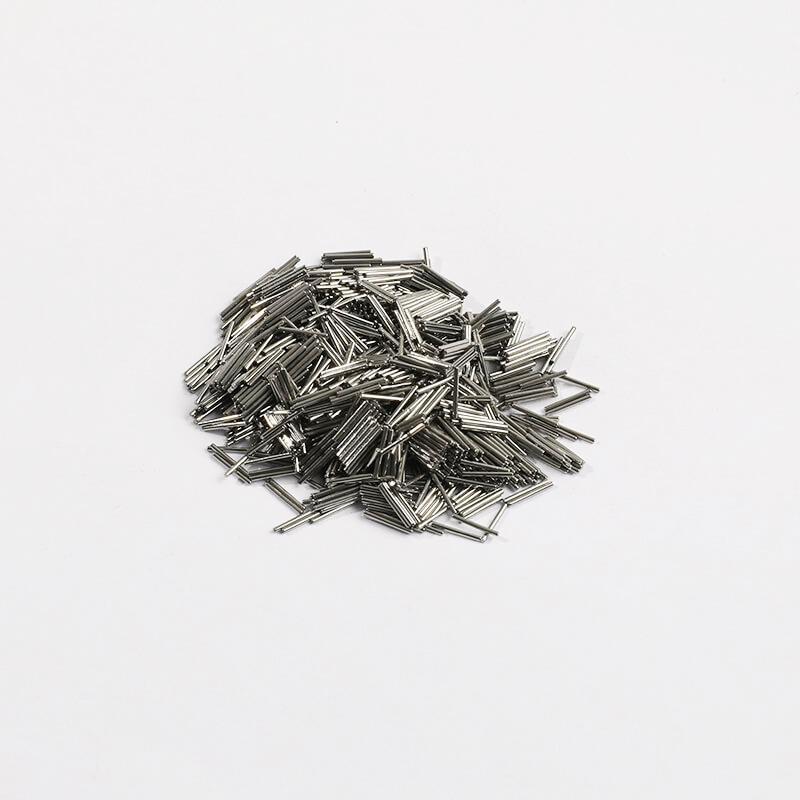
| Magnetic finishing machine | Small precise parts with internal edges and recesses that loose media cannot enter, using small pins or needles. | Bounded by part size and mass, by workpiece material attraction to the pins, and by the need to retrieve residual pins. |
| Vibratory tub or long-channel machine | Long shafts, tubes, housings and large parts that will not turn or circulate in a bowl. | Media circulation is less uniform along a long chamber, and bridging can leave sections of a long bore unprocessed. |
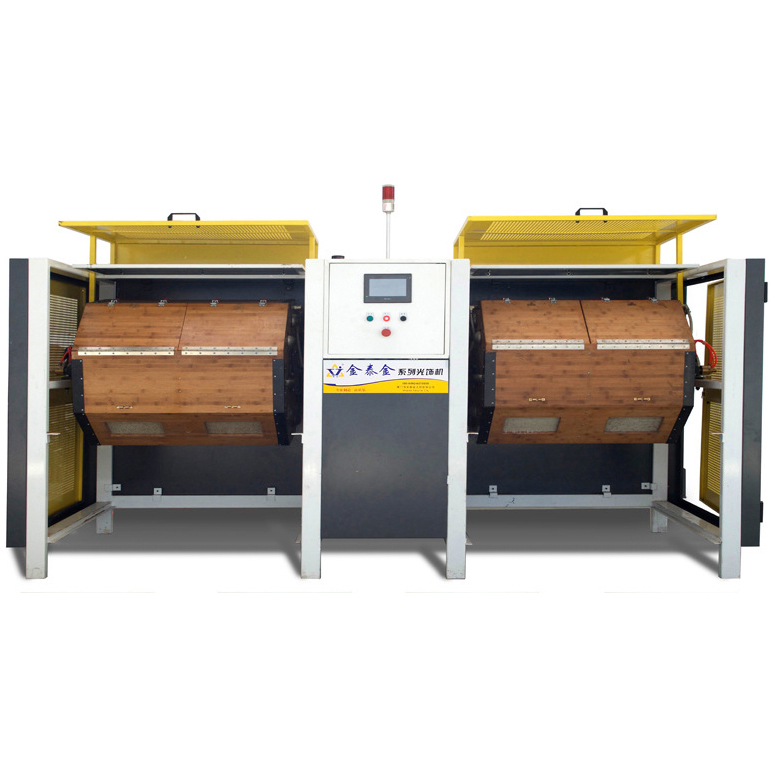
| Rotary barrel tumbling machine | Gentle, uniform processing of small robust parts in large quantities, such as bushings, spacers and fasteners. | Slow cycles, per-barrel weight limits, and limited access for inspecting or repositioning parts during the run. |
Media wear is a slow process change that eventually shows up as an unexplained shift in finish. As media break down and round off, the blend loses cutting power, screens differently and settles at a different bulk density, so the same timer setting no longer produces the same surface. Track size class, weight of make-up media per cycle and the interval between full replacements, and keep a record so a change in results can be traced to the blend. Separation is a matching problem: media must be retained in the machine and cleared from the parts, and the method used depends on the media shape and the features it can enter. Screens, magnetic separators and bar-end magnets all have limits. For parts with drilled passages, add a retrieval step to the routing and reconcile media counts per batch so a lodged piece is found before it leaves the shop as contamination.
| Media | Best fit | Watch out for |
|---|---|---|
| Compound with corrosion inhibitor for sensitive alloys | Aluminium and stainless parts that must not stain or pit during processing and between-stage handling. | Inhibitor does not compensate for hard or chloride-bearing water, and residue left in recesses can mask later inspection. |
| Ceramic media, angle-cut and triangular shapes | Heavier deburring and edge blending on steel, stainless and titanium parts with accessible corners and recesses. | Wears down and changes effective size class, generates sludge, and can chip or over-round thin sections and soft alloys. |
| Steel media for burnishing | Bright, uniform appearance with minimal dimensional change on parts whose geometry must stay as machined. | Presses debris and hard-water deposits into the surface, concentrates energy on thin sections, and carries iron cross-contamination risk. |
| Ceramic media, small size class for tight features | Reaching small holes, slots and fillets where a standard size class cannot enter, at reduced removal rate. | Screens differently from larger media, lodges more easily in drilled passages and must be kept below the smallest hole to stay clear. |
Embedment occurs when fragments of media or removed metal are pressed into the surface rather than flushed away, and it is easy to miss because the part can look bright and uniform. Softer alloys, burnishing routes, high media pressure in centrifugal machines and dirty compound all raise the risk. Smearing is a related failure on titanium and some stainless grades, where material is displaced across the surface instead of cut, leaving a folded layer that later inspection may read as a defect. Check with a borescope on internal features, a dye penetrant inspection only where the buyer's own procedure calls for it, and low-magnification microscopy at agreed locations. Prevention rests on maintaining compound flow and cleanliness, matching media hardness to the alloy, avoiding acid-bearing chemistry where hydrogen is a concern, and cleaning the load between stages rather than carrying debris forward.
| Failure mode | Likely cause | How to catch it |
|---|---|---|
| Impingement marks or gouges on thin webs and sharp corners | Excess amplitude or speed with too little media in the chamber, or parts free to strike each other in an under-filled load. | Inspect the vulnerable features under magnification before and after, photograph under raking light, and compare the same feature across several parts from the load. |
| Thread entry chamfer rounded away or thread crests burnished | Unmasked threaded features run in a burnishing or high-energy cutting load. | Gauge the thread with the buyer's own gauge and inspect the entry chamfer under magnification against the recorded pre-finish condition. |
| Media wedged at a cross-drilled passage intersection | Media small enough to enter the passage, plus no defined retrieval step in the routing before final cleaning. | Flush the passage with a measured volume, examine the flush medium and the passage with a borescope, and add a documented retrieval step such as directed air or a magnet. |
| Media lodged in a blind tapped hole or counterbore | Media size class too close to the hole diameter, soft or worn media that wedge, or an unmasked hole not intended to see media. | Check with a known pin gauge and a borescope at an agreed angle, and reconcile a counted media batch before and after the cycle. |
Glasgow is Scotland's largest city, with a metropolitan region of 1.85 million people that Invest Glasgow records as generating £48bn GVA, and the Glasgow City Region accounts for around a third of Scotland's output, business base, research power and employment. Invest Glasgow lists clinical life sciences and biotechnology, energy and green transition, space and satellite technology, and advanced manufacturing and precision engineering among the city region's key clusters. ADS Scotland, established in 2005, reports that the aerospace, defence, security and space industries add £3.7 billion to the Scottish economy, employ 36,900 people and reached £9 billion of turnover, and its Scotland Council includes BAE Systems, Rolls-Royce, Leonardo, Thales, GE Aerospace and Babcock International.
For this brief the relevant part of that base is aerospace: ADS Scotland states that the aerospace, defence, security and space industries add £3.7 billion to the Scottish economy and employ 36,900 people, and lists BAE Systems, Rolls-Royce, Leonardo, Thales and GE Aerospace among the companies directing its Scotland Council.
Glasgow's combination of precision engineering, an aerospace supply chain and clinical life-sciences work means machined and formed parts usually carry defined edge and surface acceptance criteria, and those are set by the customer's specification rather than by a local process convention. Clydeport's container, project and bulk cargo handling gives the city region an established route for importing finishing machines, media and compounds, with two new £25m ship-to-shore cranes at Greenock Ocean Terminal operational from autumn 2024.
A Glasgow buyer should decide early whether the part is aerospace or defence supply-chain work - where edge and surface criteria come from the prime contractor's specification - or general precision engineering, because that determines the documentation and the process route the finishing cell has to support.
Freight context: Clydeport (Peel Ports): Greenock Ocean Terminal, King George V Dock and the River Clyde network, Eurocentral (new 353,000 sq ft industrial space under a forward-funding agreement, reported by Glasgow Chamber of Commerce). Peel Ports states that Clydeport handles more than 15.4 million tonnes of cargo a year and has invested £25m in two new ship-to-shore cranes at Greenock Ocean Terminal to accommodate increased demand and support growth in transatlantic trade; the Glasgow Chamber of Commerce is the city's business body and reports industrial development at Eurocentral.
English is the working language of contracts, drawings and conformity paperwork, so quotations, technical files and Declarations of Conformity should be supplied in English. UK manufacturers have now recovered above 2019 output levels in every English region and devolved nation except Northern Ireland, and the sector is concentrated in food and drink and transport equipment, with the North West the largest manufacturing region by total output. Buyers typically expect the UKCA/CE route, a Declaration of Conformity and a UK-established economic operator to be identified before order, and they need commercial invoices, customs declarations and the C79 retained in a form their finance team can use for import VAT recovery. No source verified in this research establishes a mandated payment instrument, so payment structure should be treated as commercial negotiation rather than a regulatory requirement.
BSI is the UK's National Standards Body, and British Standards (BS, including adopted BS EN ISO texts) are the documents a UK buyer's surface-finish, edge and cleanliness specifications are normally written against and purchased through. On the plant side, HSE maintains the work equipment and machinery topic covering the safe supply and use of machinery, and the COSHH regime, which requires employers to identify, assess and control risks from hazardous substances - the regime that applies to finishing compounds, abrasive media and the dust and effluent they generate.
SurfacePolish supplies from Xiamen, China. The buyer's own destination rules, conformity marking, tariff classification and documentation responsibilities stay with the buyer; confirm them against the authorities named above before ordering.
Parts can meet every roughness and appearance requirement and still be unusable because of what remains on them. Define the cleanliness check explicitly: which features are examined, with what instrument, at what magnification, and what counts as a reject. Borescope inspection of blind holes and passage intersections, flushing with a measured volume, examining the flush medium, and a defined particulate or residue check are all practical options, but the method must be fixed in advance. Three further checks are commonly omitted. Include media carryover, iron contamination pickup on stainless and aluminum, and residual compound film in recesses, and confirm that rinse water quality is controlled, since hard or chloride-bearing water can leave deposits that later read as corrosion. Keep the cleaning and drying method in the acceptance record, because it is part of the result, not workshop housekeeping.
Before parts are packed, record the starting state so a result can be attributed to something. Take surface texture readings at agreed locations, photographs under consistent lighting and magnification, a note on edge condition measured or described, and a description of burrs with their location and approximate size. Write down what the trial must answer, in priority order: whether a specified edge requirement can be met without masking a named hole, whether a finish can be reached on a sealed face while a mating surface stays flat, whether a specific residue can be avoided in a blind passage, or whether a defined family can run in one load without marking the small parts. A trial with a written question list produces usable data; a trial sent as a general request tends to produce a general answer that cannot be scaled or repeated.

Mechanical finishing can improve surface texture, blend edges and remove burrs, and in some cases it reduces the need for an electrochemical step. It does not reproduce the specific surface chemistry or the material removal mechanism of electropolishing, so the two are not interchangeable without engineering review. SurfacePolish supplies mechanical finishing machines and consumables and does not perform or supply electropolishing. A sensible route for a buyer in Glasgow is to define the requirement first, then compare what mechanical methods can observe on the actual part, and treat any substitution decision as the buyer's engineering call rather than a supplier claim.
High-strength steels carry a documented concern about hydrogen picked up from acidic or hydrogen-bearing chemistry, so the conservative route is a mechanical process with a neutral or alkaline compound and no acid stage. If your own specification permits acid-bearing chemistry, that decision and any subsequent treatment belong to your engineering and quality functions, not to the equipment supplier. SurfacePolish supplies compounds and media across borders and can run a trial with the chemistry family you nominate, reporting observations on the parts tested. Buyers in Glasgow should confirm hydrogen-related requirements with their own specialists before any process is set.
SurfacePolish is not a local polishing shop and has no branch, dealer or technician presence in Glasgow or anywhere else outside its own factory. What is offered is cross-border supply of finishing machines and consumables, a scoped discussion of a finishing line concept, and a free sample trial in which representative parts are shipped to the factory, processed and returned with observations and a proposed media and cycle direction. Buyers who need on-site processing should source that locally. Buyers building an in-house finishing capability can use the trial to choose equipment and media for their own line.
Use Glasgow, United Kingdom as the destination on the enquiry and state whether the deliverable is equipment, media and compound, a representative sample review or a line concept. A destination does not imply local stock, a local service point or a local delivery time.
UKCA or CE marking with a Declaration of Conformity applies to machinery placed on the Great Britain market, HSE's work equipment and machinery and COSHH regimes cover operation and hazardous substances, and Scotland's aerospace and defence buyers normally receive quality and assurance requirements flowed down from primes such as those represented on the ADS Scotland Council.
Sources were retrieved on 2026-09-29 and describe the local industrial and trade context only. They do not evidence any SurfacePolish project, shipment, installation or service in Glasgow.
The buyer needs the orifices kept clear and the seat untouched while the outside is refined consistently across a batch.
Send the material, dimensions, approximate weight, batch quantity, the incoming condition and photographs of the difficult features. Mark which features must not be contacted by media and state how the result will be inspected. This form carries source reference PSEO-0261; quote it if you prefer an additional manual reference.
Open the SurfacePolish enquiry form Email a prepared enquiry
No price, lead time, certification or result is promised here. Confirm whether a sample trial is available for the specific part and what the trial can and cannot show.
Page PSEO-0261 · revised 2026-09-29 · cross-border equipment, media and scoped sample review. City context is sourced and cited above.
Use this local checker to identify missing part and inspection information. It prepares a technical-review brief; it does not approve a machine, process recipe or production result.
Complete the part details to prepare a review brief.
Email : info@surface-polish.com


 IPv6 network supported


 +86-592-2381506