A manufacturing engineer in Lille, France is finishing an aluminium fuel manifold for aerospace components and needs the outer face refined without disturbing a flat mating face or trapping media in cross-drilled passages. SurfacePolish runs a free sample trial from its own factory: representative parts are sent to Xiamen, tested, and returned with a media and cycle direction plus a record of what was measured. This brief is written for a buyer in Lille working on aerospace components; it describes equipment, media and a scoped sample review, not a local polishing service.
At what batch size, load pattern and media wear state does the trial result still describe what production will produce?
Does the compound chemistry family create a hydrogen, staining or residue risk for this alloy and heat treatment, and who verifies that?
What edge condition is actually specified at each critical location, and which machine and media combination can hold inside that band?
Material leaves an edge far faster than it leaves an adjacent face on every mechanical finishing route, and on aerospace parts edge condition is frequently a specified requirement rather than a byproduct. Drawings may call out a defined radius, a broken edge or an edge that must remain sharp for a sealing or shearing function. Record the pre-finish edge state with an optical comparator, radius gauges or a cast impression before processing, then set the allowable band in writing. Fatigue-critical holes are the classic case: an edge that is too sharp concentrates stress, while one that is over-rounded changes the bearing area of a fastener head. Because stock removal at an edge is far faster than on a flat face, cycle intensity and media size class are the levers that control it. If edge limits are tight, plan an edge-specific operation rather than hoping a bulk cycle will land inside the band.
The compound is not a lubricant added at the end of the setup; it is the variable that keeps the process stable. Alkaline builders and detergents keep media and parts clean and suspend removed material, mildly acidic or chelated chemistry brightens certain alloys, and inhibitors are used to limit attack on sensitive surfaces. Concentration and flow rate at the machine are the actual levers: running lean loads the media, slows the cut and lets heat and discoloration develop, while running rich produces foam, residue that lodges in blind holes and unnecessary cost. Water quality belongs in the same discussion because hardness leaves scale and spotting, and chlorides present a pitting risk on stainless and aluminum. Set concentration by a measured dilution routine and a daily check, record it with the batch, and treat any drift as a process deviation rather than an operator preference.
| Media | Best fit | Watch out for |
|---|---|---|
| Dry media: walnut shell and corn cob | Light deburring, drying support and residue removal on parts where moisture carryover is the governing concern. | Slower cutting, generates dust requiring extraction, and its condition and moisture content must be controlled to stay repeatable. |
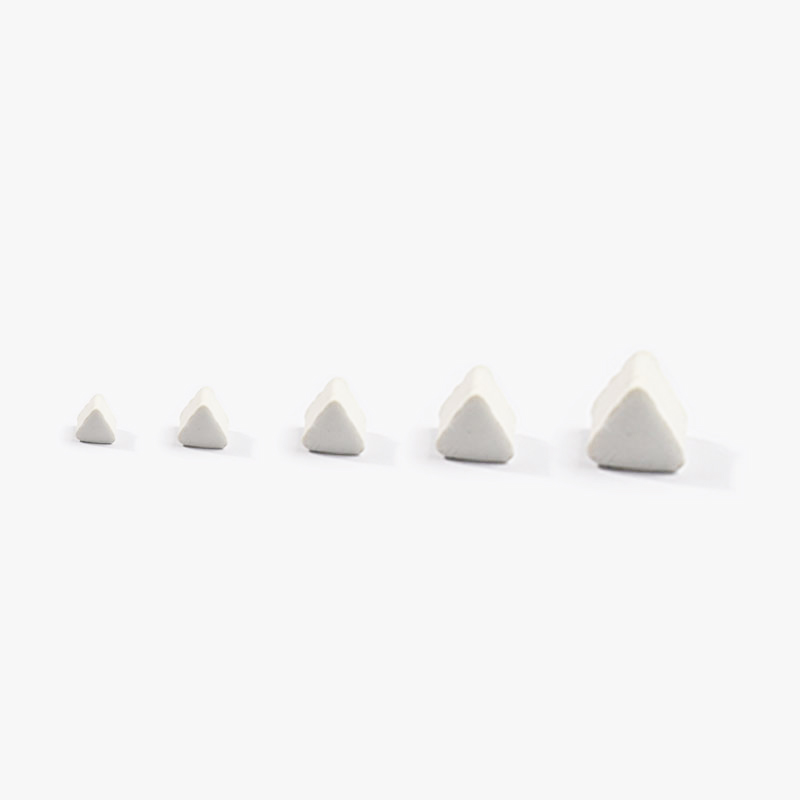
| Ceramic media, angle-cut and triangular shapes | Heavier deburring and edge blending on steel, stainless and titanium parts with accessible corners and recesses. | Wears down and changes effective size class, generates sludge, and can chip or over-round thin sections and soft alloys. |
| Plastic media, cones and triangles | Gentle cutting on aluminium, thin-wall sections and surfaces that must not be scored. | Deforms and loads with metal fines so cut rate falls while the blend still looks intact; ineffective in deep recesses and tight radii. |
| Alkaline detergent compound | General cleaning and suspension of removed material on steel, stainless and aluminium where neutral to alkaline chemistry suits the alloy. | Running lean causes loading, heat and discoloration; running rich causes foam and residue that lodges in blind features. |
Magnetic finishing uses small pins or needles driven by a moving magnetic field to reach edges and recesses that loose media cannot enter, which suits small precise parts such as fuel system components, sensor bodies and thin stamped hardware where internal edges matter more than overall brightness. The honest limits are part size and mass, whether the workpiece material attracts the pins, and the retrieval job afterwards, because residual pins in blind holes are a genuine escape route for contamination. Dry polishing and drying are a separate decision: blind holes, narrow passages and surfaces that must not carry moisture usually need forced-air drying or a dry medium such as walnut shell or corn cob, and dry media cut more slowly and require dust extraction and medium condition control. Choose the dry route when cleanliness and carryover, not removal rate, are the governing requirement.
| Machine route | Where it fits | What it will not do |
|---|---|---|
| Magnetic finishing machine | Small precise parts with internal edges and recesses that loose media cannot enter, using small pins or needles. | Bounded by part size and mass, by workpiece material attraction to the pins, and by the need to retrieve residual pins. |
| Rotary barrel tumbling machine | Gentle, uniform processing of small robust parts in large quantities, such as bushings, spacers and fasteners. | Slow cycles, per-barrel weight limits, and limited access for inspecting or repositioning parts during the run. |
| Vibratory tub or long-channel machine | Long shafts, tubes, housings and large parts that will not turn or circulate in a bowl. | Media circulation is less uniform along a long chamber, and bridging can leave sections of a long bore unprocessed. |
| Disc finishing machine | Fast cycles on flat plates, brackets and robust turned parts with simple geometry. | High energy risks edge roll, distortion of thin sections and part-on-part marking; part size is bounded by the working gap. |
Discolouration and residue usually arrive together and point at chemistry rather than mechanics. A lean compound lets metal fines and heat build up, producing a dark or heat-tinted patch that follows the media flow pattern. Rich, hard or contaminated water leaves dried salts and films, especially in blind holes where rinse water does not circulate. Uneven finish across one part or across a batch typically has a loading cause: parts blocking each other, too large a load, unmixed sizes, inconsistent fixturing or a chamber run below its proper load volume. Check by comparing appearance against an agreed physical master under fixed lighting, by reading rinse-water conductivity or chloride level, and by measuring surface texture at multiple recorded locations instead of one convenient spot. Then separate the two problems, because chemistry fixes do not solve loading variation and loading changes will not remove a residue film.
| Failure mode | Likely cause | How to catch it |
|---|---|---|
| Edge radius grown past the drawing limit | Cycle time, energy setting or media size class allowing continued edge removal after the adjacent face has stabilised. | Compare the recorded pre-finish edge state with the finished state using radius gauges, an optical comparator or a cast impression at fixed positions. |
| Thread entry chamfer rounded away or thread crests burnished | Unmasked threaded features run in a burnishing or high-energy cutting load. | Gauge the thread with the buyer's own gauge and inspect the entry chamfer under magnification against the recorded pre-finish condition. |
| Uneven finish across a batch or across one part | Load volume outside the chamber's working range, parts blocking one another, mixed part sizes, or inconsistent fixturing and media distribution. | Measure surface texture at several recorded locations on multiple parts from the same load and record the load pattern alongside the results. |
| Dark or heat-tinted patch following the media flow | Lean compound concentration or restricted flow, letting metal fines and heat build up in the working mass. | Compare against the agreed appearance master under fixed lighting and check the measured compound concentration and flow rate recorded for the batch. |
Lille is the administrative and engineering centre of the Hauts-de-France manufacturing belt; the commune itself recorded 10 645 establishments at the end of 2024, 2,6 % of them industrial, and 183 864 jobs at the place of work in 2023, while the automotive plants and logistics parks of the region sit within commuting distance in the Douai, Valenciennes and Hordain corridors. The decisive industrial fact for a finishing buyer is that the Lille hinterland is served by France's third-ranking North Sea port: Dunkerque-Port, whose Port Ouest concentrates most of the port's recent development and which publishes a 2025-2029 environmental report and an annual press conference on its traffic. Lille is also a health-industry and digital-services centre, with the Eurasanté biomedical cluster and EuraTechnologies in the metropolitan area.
The nearest part of that base to this brief is automotive: The Lille metropolitan economy is the service, engineering and administrative centre of the Hauts-de-France manufacturing belt: INSEE records 183 864 jobs at the place of work in Lille in 2023 and 2,6 % of establishments in industry, with the region's automotive and equipment plants in the surrounding Douai-Valenciennes-Hordain corridors.
The Hauts-de-France automotive and equipment-supplier chain is a high-volume, tolerance-driven environment: transmission and brake parts, stampings, fasteners and machined housings where burrs cause function and warranty problems and edge condition affects fatigue and coating adherence. Suppliers here work to customer-specific edge and cleanliness specifications, so deburring is a controlled process step with defined acceptance criteria rather than a manual clean-up. The health-industry and instrumentation side of the Lille economy adds stainless and clean-surface requirements where residue and surface roughness are functional.
A Lille buyer should settle the cleanliness specification together with the edge specification, because in this supply chain a part that passes a visual deburring check can still fail the customer's particulate or film residue limit if media, compound and rinsing are not controlled as one process.
Freight context: Grand Port Maritime de Dunkerque (Port Ouest), Lille-Lesquin Airport, Lille / Dourges combined transport terminals. Dunkerque-Port is the North Sea deep-sea entry for the Lille hinterland and its Port Ouest concentrates most recent port development, with the port publishing a 2025-2029 environmental programme; Lille also has its own airport and dense rail/road links to Belgium and the Channel ports. Containerised finishing machines and media drums typically arrive through Dunkerque or Antwerp/Rotterdam and move by road or rail, while sample parts are sent by courier.
For imports from outside the EU the declarant must file a customs declaration whose form and content are fixed by the Union Customs Code and its implementing provisions; French Customs identifies classification, origin and value as the three fundamental notions and makes the common/national tariff consultable via RITA. The customs authority is the Direction generale des douanes et droits indirects (DGDDI), which also runs the Info Douane Service for formalities questions. Buyers should expect to need an EORI number and an EU VAT treatment, because customs and tax authorisations are handled together (SOPRANO). For machinery, the CE marking and the applicable EU product-safety directives are the compliance gate items to settle before shipment, and the French market surveillance authority is the DGCCRF; the tariff rate itself must be confirmed per HS code in RITA or the EU Access2Markets tariff tool, since it varies by machine type.
The French national standards body is AFNOR (Association francaise de normalisation), which coordinates French participation in standardisation and publishes the NF and NF EN standards that transpose ISO and CEN work; AFNOR also runs the certification activity attached to many of those standards. A French buyer of finishing equipment would normally reference ISO/NF EN surface-texture standards for roughness and profile parameters, ISO/NF EN cleanliness or residue specifications for critical parts, and management-system or sector schemes such as ISO 9001, IATF 16949 for automotive and EN 9100 for aerospace.
SurfacePolish supplies from Xiamen, China. The buyer's own destination rules, conformity marking, tariff classification and documentation responsibilities stay with the buyer; confirm them against the authorities named above before ordering.
Acceptance begins with a written decision about how many parts are examined and which one is the reference. A workable plan names the sample size per batch, the inspection frequency, the measurement locations and the person responsible for accepting or rejecting. A first article should be fully inspected against the drawing and the agreed requirements, then retained as the physical reference for later comparison, because appearance memory is unreliable across shifts. For lower-volume aerospace work, the sensible pattern is to inspect the first part of each batch completely, examine a defined sample through the run and inspect critical features on every part when the feature is safety-relevant or the process is not yet stable. Fix these rules before the first production batch, when there is still room to argue about the requirement rather than about the parts.
Expect the first production batches to differ from trial parts, because a trial is run with extra attention on one or two pieces while a line runs a full load with a different operator, a partly worn blend and normal handling between operations. Reduce that gap by planning a ramp-up sequence: run a low quantity, inspect the first part fully, compare it against the retained trial part at the agreed locations, then increase load size only after the comparison holds. Re-inspect at defined intervals through the ramp and keep a reference part from each stage. Be clear about what a sample trial cannot establish. Observations apply to the parts tested and to the setup used. A trial does not establish fitness for a regulated or safety-critical application, does not replace the buyer's own qualification or structural testing, and does not transfer responsibility for acceptance, which always remains with the buyer's engineering and quality functions.

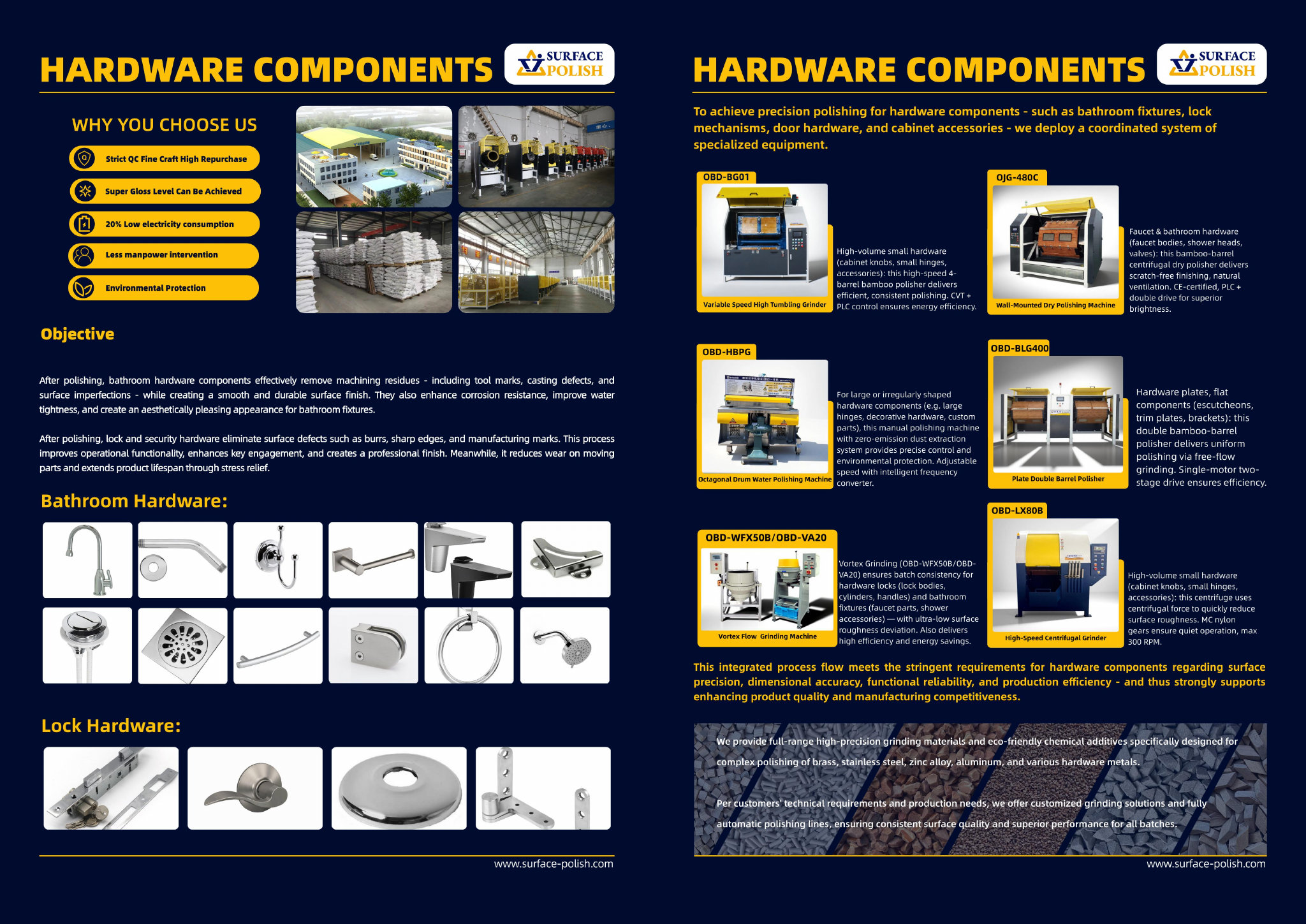
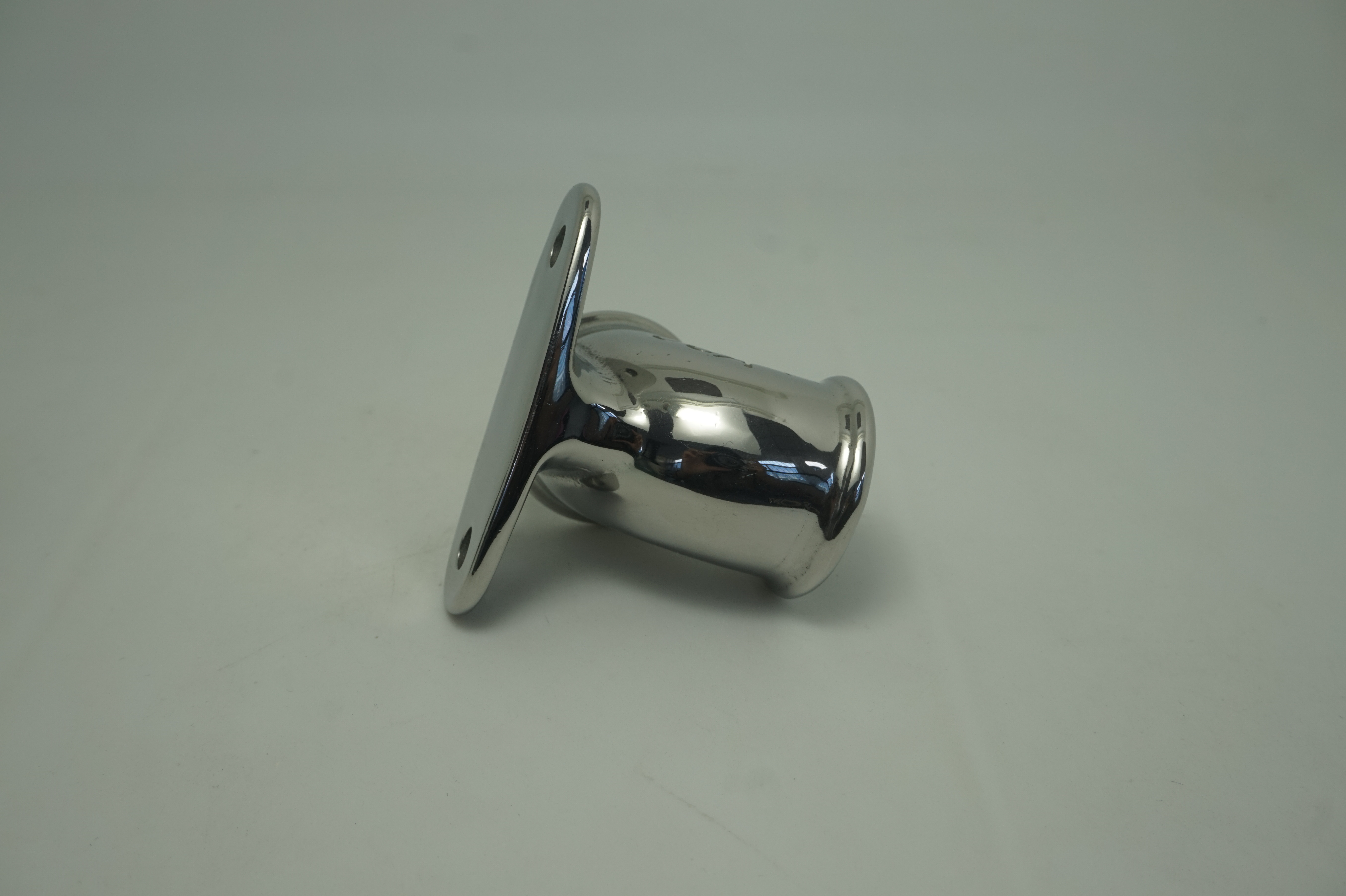
Send parts in the production condition, including the case with the thinnest wall, tightest internal feature and most difficult edge, not a convenient spare. Include material and heat treatment data, the drawing requirements you can share, and a marked-up photograph showing features that must not change. Add one part in the incoming condition and, if available, one finished the way you want the result to look. State the batch size and how you separate parts in your own shop. International shipments should be declared for temporary processing with a parts list, and buyers in France can ask us for a packing list format before dispatch.
Small robust fittings often suit rotary or centrifugal barrel finishing, which process many pieces per load at low unit cost, while delicate parts may need a gentler vibratory route or magnetic finishing with small pins for internal edges. The deciding factors are the smallest feature to keep clear, the thinnest section, the edge limit and the batch size, not overall part size. Send the extreme cases from the family for a trial rather than a typical part, and ask for a comparison across two media classes with everything else held constant. SurfacePolish supplies all of these machine types across borders and can describe how each behaves on tested parts.
Ask for records that let a later batch be compared with the approved one: machine and bath identification, media type and size class, compound product and measured concentration, cycle time and energy setting, load weight or part count, rinse and dry method, and measurement results with the instrument, setup and locations. Photographs taken under consistent lighting before and after belong in the record, along with any deviation raised during the run. A document that only asserts quality is less useful than one that names the configuration. Hold the configuration under change control, so a new media supplier or compound batch triggers re-verification rather than silently altering the output.
Use Lille, France as the destination on the enquiry and state whether the deliverable is equipment, media and compound, a representative sample review or a line concept. A destination does not imply local stock, a local service point or a local delivery time.
A Lille automotive supplier would work to IATF 16949 with customer-specific requirements layered on top, and would specify surface texture using ISO/NF EN surface-texture standards and cleanliness (residual particle and film limits) per the vehicle-maker's specification; ISO 9001 applies to the non-automotive machinery and health-sector suppliers. AFNOR publishes the NF/NF EN versions of the relevant ISO standards that appear on drawings here.
Sources were retrieved on 2026-09-29 and describe the local industrial and trade context only. They do not evidence any SurfacePolish project, shipment, installation or service in Lille.
The buyer needs the outer face brightened while the mating face stays flat and the passages are proven clear of media.
Send the material, dimensions, approximate weight, batch quantity, the incoming condition and photographs of the difficult features. Mark which features must not be contacted by media and state how the result will be inspected. This form carries source reference PSEO-0541; quote it if you prefer an additional manual reference.
Open the SurfacePolish enquiry form Email a prepared enquiry
No price, lead time, certification or result is promised here. Confirm whether a sample trial is available for the specific part and what the trial can and cannot show.
Page PSEO-0541 · revised 2026-09-29 · cross-border equipment, media and scoped sample review. City context is sourced and cited above.
Use this local checker to identify missing part and inspection information. It prepares a technical-review brief; it does not approve a machine, process recipe or production result.
Complete the part details to prepare a review brief.
Email : info@surface-polish.com


 IPv6 network supported


 +86-592-2381506