A buyer in Milan, Italy finishing titanium brackets for aerospace components has to reach fillet radii and lightening-hole edges without cutting through a shot-peened layer or smearing the alloy. SurfacePolish sells finishing equipment and media across borders and offers a free sample trial in which representative parts are processed and returned with a suggested media, compound and cycle direction plus notes on feature protection. This brief is written for a buyer in Milan working on aerospace components; it describes equipment, media and a scoped sample review, not a local polishing service.
Does the compound chemistry family create a hydrogen, staining or residue risk for this alloy and heat treatment, and who verifies that?
Which features on this part must not be touched by media, and how will each one be masked, plugged, fixtured or deliberately finished?
How will media be kept out of drilled passages, tapped holes and closed volumes, and what retrieval and verification step proves it?
Before any machine or medium is proposed, the finishing engineer needs a feature inventory of the actual part, not a family description. List threaded holes, dowel bores, seal lands, bearing journals, hydraulic and fuel passage orifices, weld lands, machined bosses and thin webs, then decide for each whether it is masked, plugged, finished to a limit or deliberately left untouched. The inventory is what makes the media size class and cycle intensity defensible. Two parts from the same drawing family can need different screening because one carries a cross-drilled passage and the other does not. Ask for a marked-up drawing, a photograph of a sectioned sample and, where possible, one part already rejected for a finishing-related reason. Feature inventory also sets handling: which surfaces may be touched, where parts may be stacked and how they are separated between operations.
The compound is not a lubricant added at the end of the setup; it is the variable that keeps the process stable. Alkaline builders and detergents keep media and parts clean and suspend removed material, mildly acidic or chelated chemistry brightens certain alloys, and inhibitors are used to limit attack on sensitive surfaces. Concentration and flow rate at the machine are the actual levers: running lean loads the media, slows the cut and lets heat and discoloration develop, while running rich produces foam, residue that lodges in blind holes and unnecessary cost. Water quality belongs in the same discussion because hardness leaves scale and spotting, and chlorides present a pitting risk on stainless and aluminum. Set concentration by a measured dilution routine and a daily check, record it with the batch, and treat any drift as a process deviation rather than an operator preference.
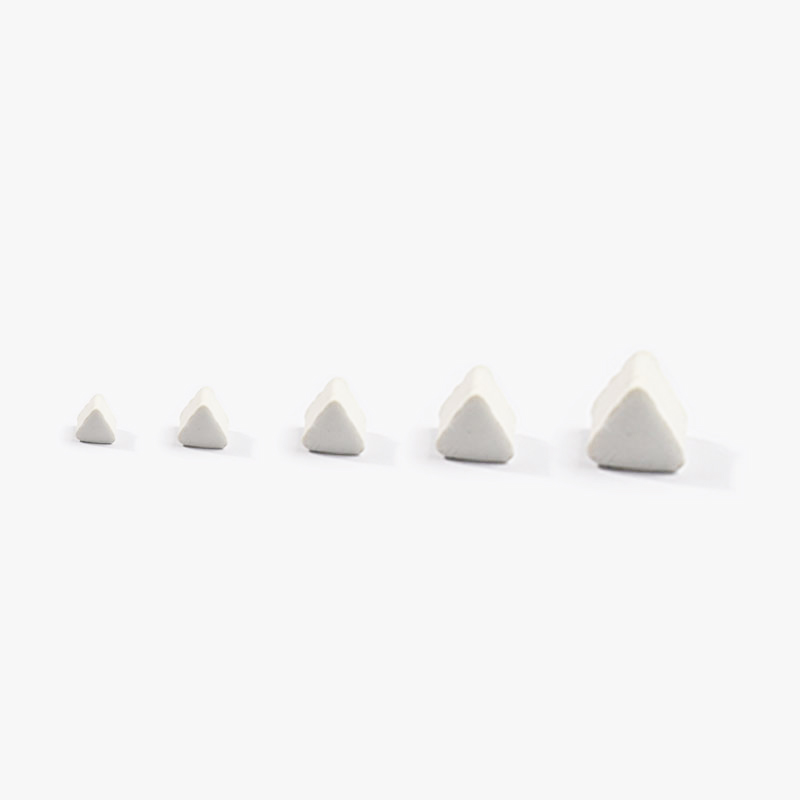
| Media | Best fit | Watch out for |
|---|---|---|
| Steel media for burnishing | Bright, uniform appearance with minimal dimensional change on parts whose geometry must stay as machined. | Presses debris and hard-water deposits into the surface, concentrates energy on thin sections, and carries iron cross-contamination risk. |
| Plastic media, cones and triangles | Gentle cutting on aluminium, thin-wall sections and surfaces that must not be scored. | Deforms and loads with metal fines so cut rate falls while the blend still looks intact; ineffective in deep recesses and tight radii. |
| Dry media: walnut shell and corn cob | Light deburring, drying support and residue removal on parts where moisture carryover is the governing concern. | Slower cutting, generates dust requiring extraction, and its condition and moisture content must be controlled to stay repeatable. |
| Ceramic media, angle-cut and triangular shapes | Heavier deburring and edge blending on steel, stainless and titanium parts with accessible corners and recesses. | Wears down and changes effective size class, generates sludge, and can chip or over-round thin sections and soft alloys. |
Aerospace polishing work often needs more than one stage because a single machine and medium rarely satisfies both a defined edge requirement and a defined surface requirement on a complex part. A common shape is a heavier cutting stage to remove machining burrs and establish an edge radius, followed by a lighter refinement stage with finer media and a cleaner compound, then a rinse and dry stage sized for the part's internal features. Treat the transfer points as engineering decisions: parts sitting wet between stages can stain, media carried on the part can scratch the next face, and handling between operations produces more damage than the finishing itself on thin parts. Describe the line as a sequence with defined in-between cleanliness and handling, then check that each machine's chamber, media separation and drying capability matches its position in that sequence before any purchase discussion.
| Machine route | Where it fits | What it will not do |
|---|---|---|
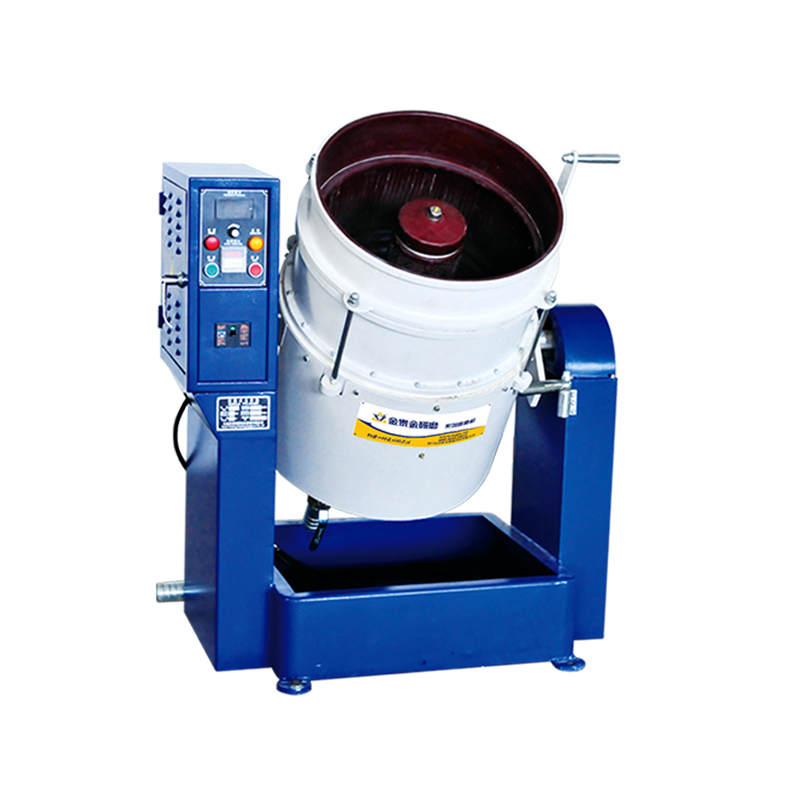
| Rotary barrel tumbling machine | Gentle, uniform processing of small robust parts in large quantities, such as bushings, spacers and fasteners. | Slow cycles, per-barrel weight limits, and limited access for inspecting or repositioning parts during the run. |
| Vibratory tub or long-channel machine | Long shafts, tubes, housings and large parts that will not turn or circulate in a bowl. | Media circulation is less uniform along a long chamber, and bridging can leave sections of a long bore unprocessed. |
| Vibratory finishing machine, bowl type | General edge blending and surface refinement on medium-sized parts with a continuous, visible load. | Part size is capped by chamber geometry, and thin or delicate parts may need compartments or fixtures to limit part-on-part contact. |
| Centrifugal barrel finishing machine | Short cycles on small, hard, robust parts where high pressure at the part-media interface is acceptable. | High energy transfers into thin walls and fixtures and wears liners; part size and barrel geometry bound what can be run. |
Impingement shows up as a local patch of heavier material removal, a gouge or a flattened edge where media or another part struck the surface with too much energy. On aerospace work it appears most often on thin webs, long unsupported sections, sharp external corners and parts run at too high an amplitude in a lightly loaded chamber. The cause is rarely the medium alone; it is the combination of energy setting, media size and mass, load volume and the freedom of parts to move against each other. Check for it by inspecting known vulnerable features under magnification before and after, by photographing under raking light rather than diffuse light, and by comparing the same feature across several parts from the load. Mitigation follows the diagnosis: reduce amplitude, add media, compartmentalise or fixture the part, or move the operation to a gentler route.
| Failure mode | Likely cause | How to catch it |
|---|---|---|
| Embedded media fragments or metal smeared into the surface | Dirty or overloaded compound, media hardness mismatched to the alloy, or high-pressure burnishing that presses debris into the surface. | Borescope internal features, examine agreed locations at low magnification, and use dye penetrant only where the buyer's own procedure requires it. |
| Local flatness or geometry change on a datum face | Media contact on a surface where appearance was treated as the only requirement and flatness was not protected. | Confirm the datum condition with the buyer's own method, such as a CMM or a surface plate check against the stated requirement, on parts from the first and last part of the load. |
| Iron contamination pickup on stainless or aluminium parts | Shared media, bath or chamber with carbon steel work, or recycled compound carrying steel fines. | Inspect for rust bloom, discoloured spots or magnetic particles after drying, and check which media and bath last ran in the machine. |
| Uneven finish across a batch or across one part | Load volume outside the chamber's working range, parts blocking one another, mixed part sizes, or inconsistent fixturing and media distribution. | Measure surface texture at several recorded locations on multiple parts from the same load and record the load pattern alongside the results. |
Greater Milan is Lombardy's manufacturing and services core. Assolombarda, the Confindustria association for Milano, Monza Brianza, Lodi and Pavia, reports that in the second quarter of 2026 manufacturing output in Milan was 2.3% above the level of a year earlier and provincial exports rose 10.3% year on year, the strongest growth since the start of 2023. Almost half of that export increase came from pharmaceuticals (+26.8%) and electronics (+41.8%), with significant additional contributions from transport equipment (+27.6%) and mechanical engineering (+6.8%). The association organises its member companies into named supply chains (filiere) that include agro-food, automotive, defence and space economy, life sciences, an energy chain and the built environment, and Italy's main air-cargo gateway sits in the same metropolitan area.
For this brief the relevant part of that base is aerospace: Difesa e Space Economy (defence and space economy) is one of Assolombarda's named supply chains for the Milan, Monza Brianza, Lodi and Pavia territory.
Milan's manufacturing mix puts edge condition and surface cleanliness on the critical path rather than at the cosmetic end: pharmaceutical and electronics production needs parts free of burrs, loose polishing media and contamination, while mechanical engineering and transport-equipment suppliers need repeatable deburring and edge break on machined and stamped components before assembly, coating or inspection. In practice these parts are specified on drawings, so the finishing step has to reproduce a stated surface-texture or edge condition batch after batch, and where a buyer is comparing an in-house mass-finishing cell with an outsourced process, the acceptance criteria have to be agreed before the trial, not after it.
The decisive question is whether the requirement is a drawing-level surface-texture callout under UNI EN ISO 21920-2 (which parameter, on which profile, measured how, on what sampling) or a functional cleanliness and edge requirement - because that determines whether the process can be qualified by a sample trial with a specific media and compound, or whether the machine specification alone will be accepted.
Freight context: Milano Malpensa airport - Malpensa Cargo (Cargo City), Milano Linate airport. Malpensa is Italy's leading cargo airport with a 60% market share and handled 782,000 tonnes of cargo in 2024, so air-freight sample parts and urgent machine spares for the Milan area normally move through it, while Linate serves the city side. Equipment or media arriving from outside the EU clears customs at its EU point of entry and is then delivered to Milan by road or rail, so the point of entry - not the final destination - determines the clearance procedure.
The customs authority is the Agenzia delle Dogane e dei Monopoli (ADM), which is the regulatory, supervisory and control authority for customs and collects the duties. Goods arriving from China are cleared by customs before they can enter the single market and are released into free circulation by means of a customs declaration; the date of acceptance of that declaration is the date used to calculate and apply the import duty and any VAT or excise duty. Importers should settle in advance who lodges the declaration and under which VAT and EORI arrangements, and must ensure the machine carries CE marking and is supported by the EU declaration of conformity and technical file. Because the CE mark is compulsory for machinery covered by the EU machinery legislation and forbidden for products outside it, the conformity route must be settled before shipment rather than at the border.
The national standards body is UNI - Ente Italiano di Normazione, a private non-profit association founded over a century ago, which develops, publishes and disseminates voluntary technical standards and adopts the European and international standards as Italian editions. For finishing work the operative references are the surface-texture series UNI EN ISO 21920-1:2022, which fixes how the surface state (roughness, waviness, primary profile) is indicated on technical product documentation, and UNI EN ISO 21920-2:2022, which defines the terms, definitions and parameters used with profile methods. Machinery safety requirements come from the EU machinery legislation rather than from UNI alone: Machinery Directive 2006/42/EC applies to machinery placed on the EU market before 20 January 2027, after which Machinery Regulation (EU) 2023/1230 takes over.
SurfacePolish supplies from Xiamen, China. The buyer's own destination rules, conformity marking, tariff classification and documentation responsibilities stay with the buyer; confirm them against the authorities named above before ordering.
A roughness number is only meaningful with its measurement setup attached. Agree the exact locations, which surfaces are excluded, the evaluation length and cutoff, the filter and whether the requirement is stated as an average, a maximum or a profile parameter. Values taken at different cutoffs on the same surface will not agree, and values taken on a curved or interrupted surface such as a fillet, thread flank or cast skin are unreliable unless the setup is designed for it. Record instrument identification, stylus condition and the calibration status in use at the time, and keep the readings with the batch. For areal or functional appearance requirements, prefer a documented procedure over an informal comparison, and state plainly that roughness readings describe the sampled locations on the parts measured. Repeatability comes from repeating the same setup, not from taking more readings in different ways.
Before parts are packed, record the starting state so a result can be attributed to something. Take surface texture readings at agreed locations, photographs under consistent lighting and magnification, a note on edge condition measured or described, and a description of burrs with their location and approximate size. Write down what the trial must answer, in priority order: whether a specified edge requirement can be met without masking a named hole, whether a finish can be reached on a sealed face while a mating surface stays flat, whether a specific residue can be avoided in a blind passage, or whether a defined family can run in one load without marking the small parts. A trial with a written question list produces usable data; a trial sent as a general request tends to produce a general answer that cannot be scaled or repeated.
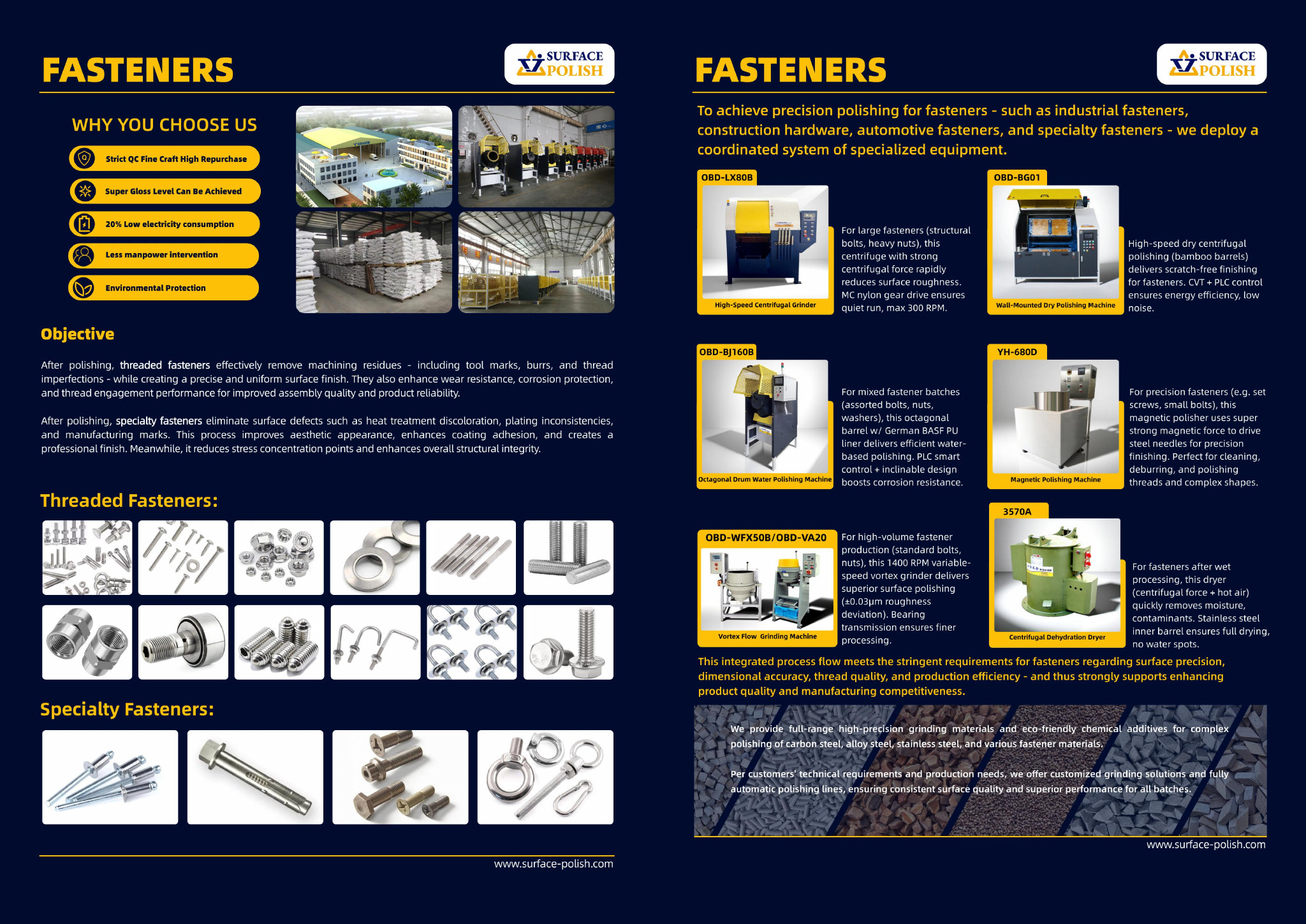
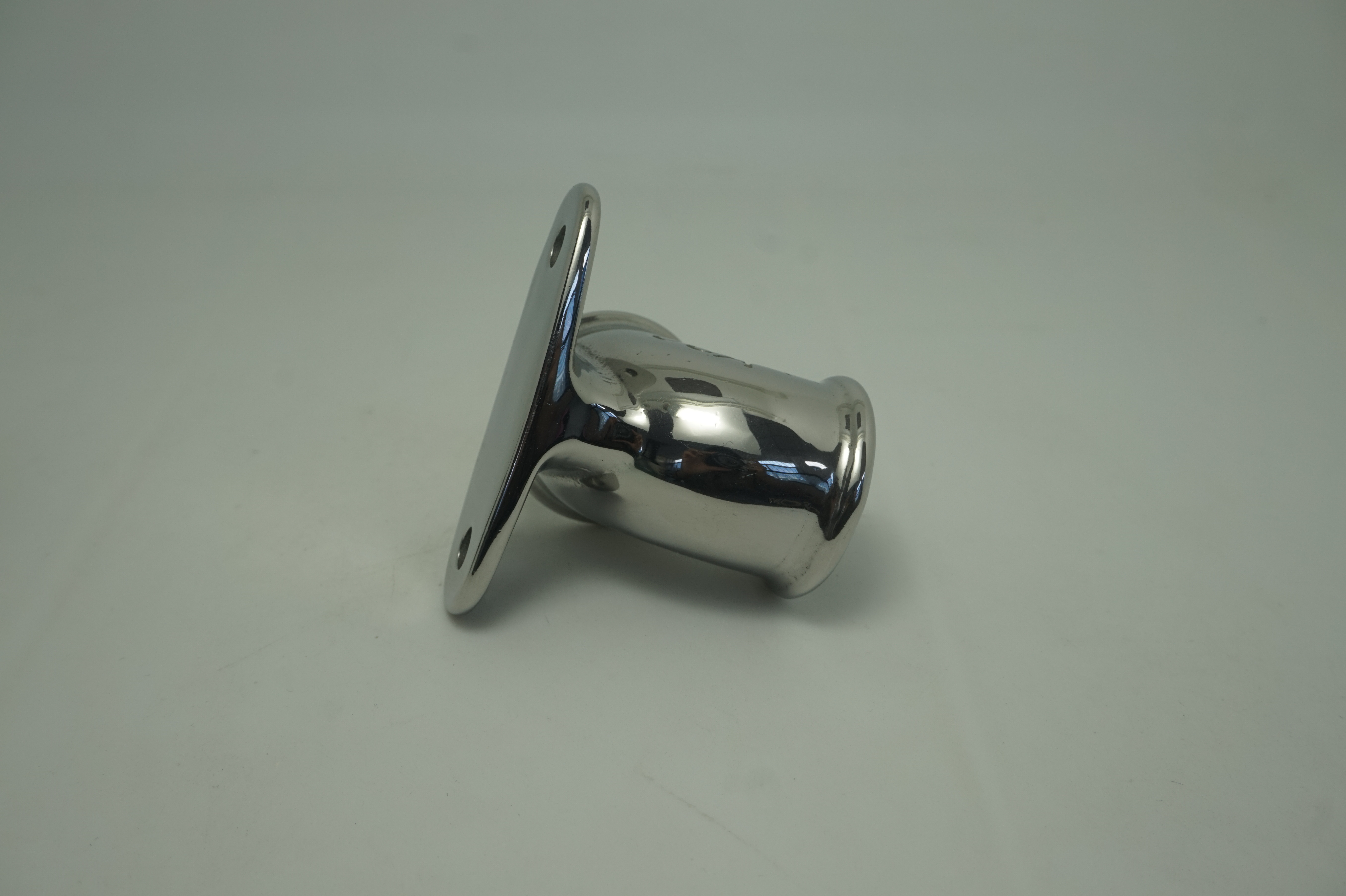
Send parts in the production condition, including the case with the thinnest wall, tightest internal feature and most difficult edge, not a convenient spare. Include material and heat treatment data, the drawing requirements you can share, and a marked-up photograph showing features that must not change. Add one part in the incoming condition and, if available, one finished the way you want the result to look. State the batch size and how you separate parts in your own shop. International shipments should be declared for temporary processing with a parts list, and buyers in Italy can ask us for a packing list format before dispatch.
Mechanical finishing can improve surface texture, blend edges and remove burrs, and in some cases it reduces the need for an electrochemical step. It does not reproduce the specific surface chemistry or the material removal mechanism of electropolishing, so the two are not interchangeable without engineering review. SurfacePolish supplies mechanical finishing machines and consumables and does not perform or supply electropolishing. A sensible route for a buyer in Milan is to define the requirement first, then compare what mechanical methods can observe on the actual part, and treat any substitution decision as the buyer's engineering call rather than a supplier claim.
No. A part can look bright and uniform while carrying embedded media fragments, a smeared surface layer, dried compound residue in a recess or an edge that has rolled past its limit. Acceptance needs measurement at defined locations, edge checks where edges are specified, and cleanliness checks of internal features, all recorded against the drawing requirement. Define appearance with a physical master or a calibrated image set under fixed lighting and magnification, since adjectives are not criteria. For a buyer in Italy, the practical rule is that appearance is one input among several, and no appearance result on its own establishes fitness for a regulated application.
Use Milan, Italy as the destination on the enquiry and state whether the deliverable is equipment, media and compound, a representative sample review or a line concept. A destination does not imply local stock, a local service point or a local delivery time.
Local buyers reference UNI, the Italian standards body, whose editions of the EN/ISO surface-texture standards govern how finish is called out and measured: UNI EN ISO 21920-1:2022 for indications on technical product documentation and UNI EN ISO 21920-2:2022 for the terms, definitions and parameters. Machinery supplied into the Milan market must also satisfy the EU machinery legislation, with Directive 2006/42/EC applying until 20 January 2027 and Regulation (EU) 2023/1230 after that.
Sources were retrieved on 2026-09-29 and describe the local industrial and trade context only. They do not evidence any SurfacePolish project, shipment, installation or service in Milan.
The buyer must not remove the peened layer or smear titanium while trying to reach the fillets and hole edges.
Send the material, dimensions, approximate weight, batch quantity, the incoming condition and photographs of the difficult features. Mark which features must not be contacted by media and state how the result will be inspected. This form carries source reference PSEO-0401; quote it if you prefer an additional manual reference.
Open the SurfacePolish enquiry form Email a prepared enquiry
No price, lead time, certification or result is promised here. Confirm whether a sample trial is available for the specific part and what the trial can and cannot show.
Page PSEO-0401 · revised 2026-09-29 · cross-border equipment, media and scoped sample review. City context is sourced and cited above.
Use this local checker to identify missing part and inspection information. It prepares a technical-review brief; it does not approve a machine, process recipe or production result.
Complete the part details to prepare a review brief.
Email : info@surface-polish.com


 IPv6 network supported


 +86-592-2381506