A buyer in Yokohama, Japan working with nickel-alloy combustor hardware for aerospace components needs heat tint and drilling burr removed from 0.6 mm cooling holes without changing hole geometry. SurfacePolish is a cross-border equipment and media supplier rather than a local shop; its free sample trial can test finer media and lower-energy routes on the parts sent, and the findings are reported as observations to be verified by the buyer. This brief is written for a buyer in Yokohama working on aerospace components; it describes equipment, media and a scoped sample review, not a local polishing service.
What edge condition is actually specified at each critical location, and which machine and media combination can hold inside that band?
At what batch size, load pattern and media wear state does the trial result still describe what production will produce?
Which datum and mating surfaces carry assembly geometry, and is a flatness or fit check required on them after finishing?
Before any machine or medium is proposed, the finishing engineer needs a feature inventory of the actual part, not a family description. List threaded holes, dowel bores, seal lands, bearing journals, hydraulic and fuel passage orifices, weld lands, machined bosses and thin webs, then decide for each whether it is masked, plugged, finished to a limit or deliberately left untouched. The inventory is what makes the media size class and cycle intensity defensible. Two parts from the same drawing family can need different screening because one carries a cross-drilled passage and the other does not. Ask for a marked-up drawing, a photograph of a sectioned sample and, where possible, one part already rejected for a finishing-related reason. Feature inventory also sets handling: which surfaces may be touched, where parts may be stacked and how they are separated between operations.
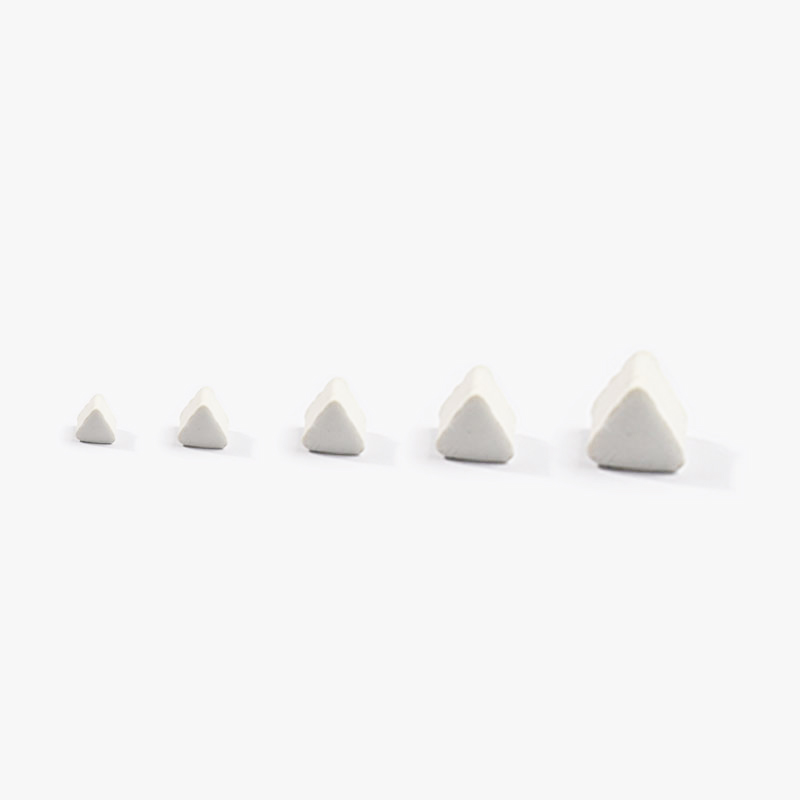
Plastic media removes material gently through a light cutting and burnishing action and is the usual first candidate for aluminum, thin-wall sections and parts where a soft surface must not be scored. Its lower density and hardness mean it conforms rather than cuts deeply, which protects delicate features but also makes it slower and less effective in deep recesses and tight radii where a harder medium is needed to reach. Wear behaviour is different from ceramic: plastic media deform, lose sharpness and load with metal fines, so a blend can look intact while its cut rate has collapsed. Dry media in the same family, such as walnut shell and corn cob, is used for light deburring and drying support rather than for aggressive stock removal. Choose plastic when feature preservation dominates and the required removal is light; verify by measuring the same locations before and after rather than judging by appearance.
| Media | Best fit | Watch out for |
|---|---|---|
| Ceramic media, small size class for tight features | Reaching small holes, slots and fillets where a standard size class cannot enter, at reduced removal rate. | Screens differently from larger media, lodges more easily in drilled passages and must be kept below the smallest hole to stay clear. |
| Alkaline detergent compound | General cleaning and suspension of removed material on steel, stainless and aluminium where neutral to alkaline chemistry suits the alloy. | Running lean causes loading, heat and discoloration; running rich causes foam and residue that lodges in blind features. |
| Mildly acidic or chelated brightening compound | Brightening certain stainless grades where the buyer's specification permits that chemistry family. | Not appropriate where hydrogen uptake is a concern on high-strength steel, and requires close pH control and good rinse water quality. |
| Plastic media, cones and triangles | Gentle cutting on aluminium, thin-wall sections and surfaces that must not be scored. | Deforms and loads with metal fines so cut rate falls while the blend still looks intact; ineffective in deep recesses and tight radii. |
Magnetic finishing uses small pins or needles driven by a moving magnetic field to reach edges and recesses that loose media cannot enter, which suits small precise parts such as fuel system components, sensor bodies and thin stamped hardware where internal edges matter more than overall brightness. The honest limits are part size and mass, whether the workpiece material attracts the pins, and the retrieval job afterwards, because residual pins in blind holes are a genuine escape route for contamination. Dry polishing and drying are a separate decision: blind holes, narrow passages and surfaces that must not carry moisture usually need forced-air drying or a dry medium such as walnut shell or corn cob, and dry media cut more slowly and require dust extraction and medium condition control. Choose the dry route when cleanliness and carryover, not removal rate, are the governing requirement.
| Machine route | Where it fits | What it will not do |
|---|---|---|
| Magnetic finishing machine | Small precise parts with internal edges and recesses that loose media cannot enter, using small pins or needles. | Bounded by part size and mass, by workpiece material attraction to the pins, and by the need to retrieve residual pins. |
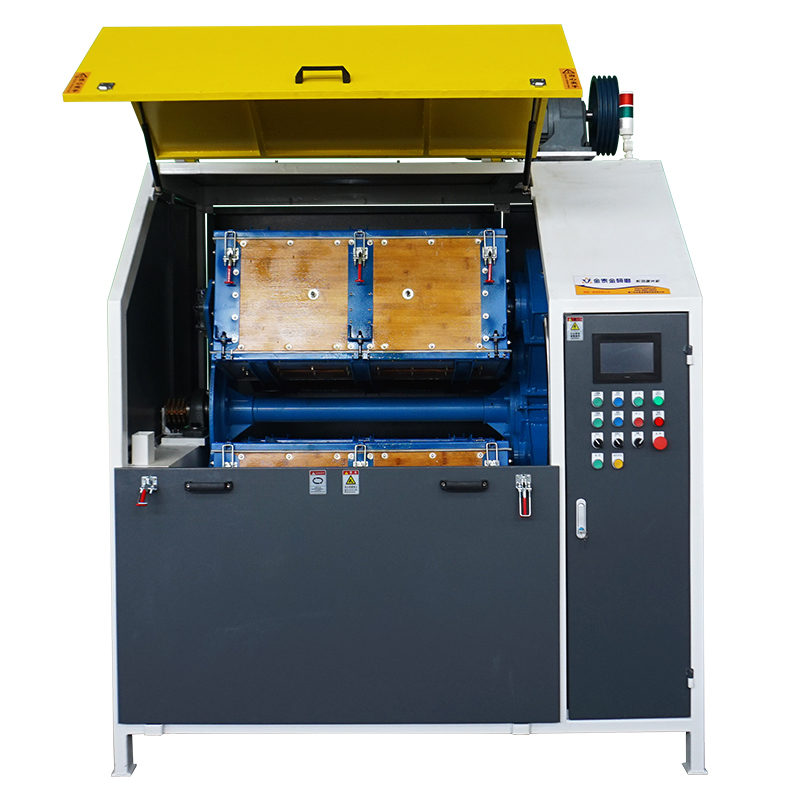
| Centrifugal barrel finishing machine | Short cycles on small, hard, robust parts where high pressure at the part-media interface is acceptable. | High energy transfers into thin walls and fixtures and wears liners; part size and barrel geometry bound what can be run. |
| Rotary barrel tumbling machine | Gentle, uniform processing of small robust parts in large quantities, such as bushings, spacers and fasteners. | Slow cycles, per-barrel weight limits, and limited access for inspecting or repositioning parts during the run. |
| Vibratory tub or long-channel machine | Long shafts, tubes, housings and large parts that will not turn or circulate in a bowl. | Media circulation is less uniform along a long chamber, and bridging can leave sections of a long bore unprocessed. |
Impingement shows up as a local patch of heavier material removal, a gouge or a flattened edge where media or another part struck the surface with too much energy. On aerospace work it appears most often on thin webs, long unsupported sections, sharp external corners and parts run at too high an amplitude in a lightly loaded chamber. The cause is rarely the medium alone; it is the combination of energy setting, media size and mass, load volume and the freedom of parts to move against each other. Check for it by inspecting known vulnerable features under magnification before and after, by photographing under raking light rather than diffuse light, and by comparing the same feature across several parts from the load. Mitigation follows the diagnosis: reduce amplitude, add media, compartmentalise or fixture the part, or move the operation to a gentler route.
| Failure mode | Likely cause | How to catch it |
|---|---|---|
| Uneven finish across a batch or across one part | Load volume outside the chamber's working range, parts blocking one another, mixed part sizes, or inconsistent fixturing and media distribution. | Measure surface texture at several recorded locations on multiple parts from the same load and record the load pattern alongside the results. |
| Dried compound residue or water spotting in recesses | Rich compound, hard or chloride-bearing rinse water, or a drying method that does not move air through blind features. | Inspect recesses with a borescope, read rinse-water conductivity or hardness, and verify the drying method against the part's internal geometry. |
| Media wedged at a cross-drilled passage intersection | Media small enough to enter the passage, plus no defined retrieval step in the routing before final cleaning. | Flush the passage with a measured volume, examine the flush medium and the passage with a borescope, and add a documented retrieval step such as directed air or a magnet. |
| Thread entry chamfer rounded away or thread crests burnished | Unmasked threaded features run in a burnishing or high-energy cutting load. | Gauge the thread with the buyer's own gauge and inspect the entry chamfer under magnification against the recorded pre-finish condition. |
Yokohama combines a waterfront heavy-industry zone with a large base of small and medium manufacturers. The city lists eight separate industrial accumulation areas, including the Keihin coastal zone, which it calls a major industrial region representing the Greater Tokyo area, and LINKAI Yokohama Kanazawa, where more than 1,000 companies and offices are located. The city's investment material states that Yokohama has clusters of automotive and other manufacturing, IT and life-science industries, together with R&D bases of global companies, and that it ranks first among Japan's designated cities for both the number of academic and R&D institutions and the number of engineers and researchers. The port's designated zones are predominantly industrial: of a 2,936.8 ha waterfront district, 1,712.1 ha is classified as an industrial port zone.
The nearest part of that base to this brief is automotive: Yokohama City's business-environment page states that the city has clusters of the automotive industry and other manufacturing, IT and life-science industries.
Yokohama's manufacturing base mixes automotive and general machinery production, in which deburring and edge quality affect fit, fatigue life and coating adhesion, with life-science and R&D activity, where cleanliness and documented surface condition matter. A dense supplier base across eight accumulation areas means an incoming parts specification is likely to pass through several subcontractors, so a shared, measurable finish requirement reduces rework at hand-offs.
A Yokohama buyer sourcing from an eight-area supplier base should fix one measurable edge and surface specification for the whole chain and agree who inspects it, rather than letting each subcontractor apply its own visual standard.
Freight context: Port of Yokohama (横浜港) — piers including Minami-Honmoku, Honmoku, Daikoku and Osanbashi, Haneda Airport, about 24 minutes from Yokohama Station by the city's own access description. The Port of Yokohama has a 7,218.3 ha port area and a 2,936.8 ha waterfront district, of which 1,712.1 ha is an industrial port zone, so both break-bulk and container movements of machinery sit alongside industrial waterfront users. The city publishes the Yokohama Port Statistics Yearbook and fast-report series for throughput data used in freight planning.
The customs authority is Japan Customs, the Customs and Tariff Bureau of the Ministry of Finance, with regional customs at Tokyo, Yokohama, Nagoya, Osaka and Kobe. Any person importing goods must declare them to the Director-General of Customs and obtain an import permit after examination and payment of customs duty and consumption tax. The declaration is normally filed by the importer or by a customs broker acting as proxy, on a triplicate import (customs duty payment) declaration form (Customs form C-5020) supported by the invoice, the bill of lading or air waybill, a certificate of origin where a WTO rate applies, certificates of origin for preferential rates, packing lists and freight and insurance documents where required, plus any licence or certificate demanded by laws other than the Customs Law. More than 90 per cent of import procedures are computerised. A JIS Mark certificate is a separate, voluntary third-party scheme; foreign exporters are eligible to apply, and certification bodies must comply with ISO/IEC 17065.
Chinese industrial machinery entering Japan is classified under the Customs Tariff Law, whose harmonised schedule sets the classification and the General Rate; the Temporary Tariff Measures Law sets a Temporary Rate for certain products, and where the WTO rate or an EPA rate for the goods is lower, that lower rate is applied. The applied rate therefore depends on the exact commodity code, and on whether an economic partnership agreement covers the goods and their origin, so a landed-cost figure has to be confirmed against the specific machine before it is quoted. Japan Customs' monthly country table for August 2026 records exports to China of 1,809,133 million yen and imports from China of 2,361,239 million yen, the largest single-country line in the Asian table, with imports from China up 22.5 per cent year on year.
SurfacePolish supplies from Xiamen, China. The buyer's own destination rules, conformity marking, tariff classification and documentation responsibilities stay with the buyer; confirm them against the authorities named above before ordering.
Ask for records that let a later batch be compared with the approved one rather than a certificate that merely asserts quality. Useful documents identify the machine and bath, the media type and size class, compound product and measured concentration, cycle time and energy setting, load weight or part count, rinse and dry method, and the measurement results with instrument, setup and locations. Photographs taken under the same lighting before and after belong in the record, along with the first-article result and any deviation raised during the run. Keep a controlled reference configuration so a change in media supplier, compound batch or machine setting is visible before it changes the output. The discipline that matters is the same for a trial and for production: one recorded configuration, one retained reference part, and a written rule for what triggers re-inspection rather than an informal judgement on the day.
Scale-up fails more often on bookkeeping than on metallurgy. Define the load before the first production batch: the range of part count or weight, how parts are separated, whether families may be mixed, and by what rule a load is split when a different feature set arrives. Record the cycle as it was actually run, including the media blend, compound concentration measured at the machine, water source, run time and the reason for any deviation, because a deviation that is not written down reappears as an unexplained appearance change. Set a media maintenance plan with a screening interval, a make-up rate by weight, a bath cleaning routine and a replacement trigger based on measured condition rather than on a calendar alone. Media wear changes the process gradually, so the record is the only way to notice drift before parts are affected.
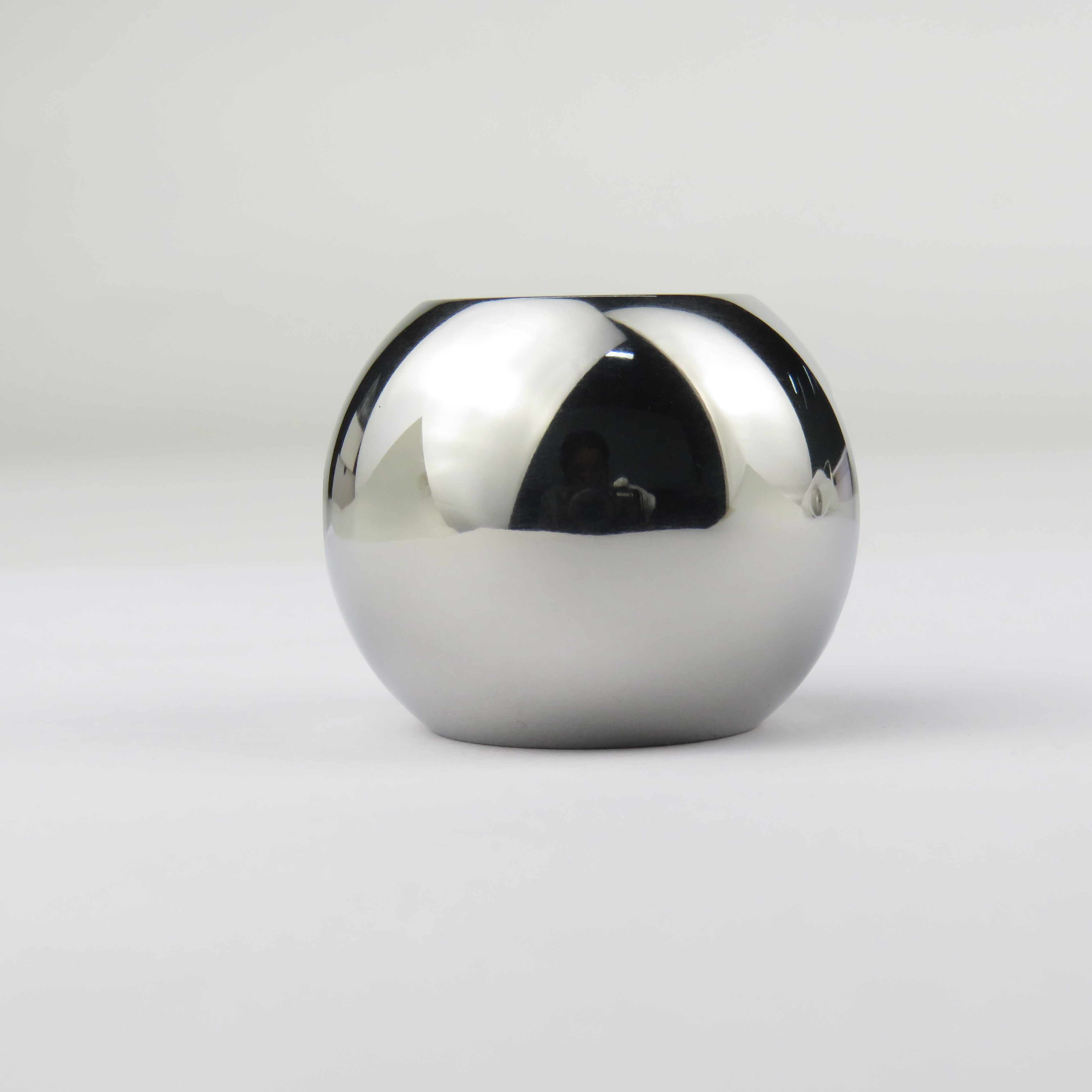
Record the edge condition before finishing, set the allowable band in writing, and measure afterwards with radius gauges, an optical comparator or a cast impression at fixed positions. Because edges lose material much faster than adjacent faces, the cycle continues to change them after the face has stabilised, so time, energy setting and media size class are the controlling variables. If the band is tight, plan a separate edge operation rather than relying on a bulk cycle. A sample trial can show how a named edge behaves under two media classes on the parts you send, which gives your engineering group data to set a limit instead of an opinion.
Mechanical finishing can improve surface texture, blend edges and remove burrs, and in some cases it reduces the need for an electrochemical step. It does not reproduce the specific surface chemistry or the material removal mechanism of electropolishing, so the two are not interchangeable without engineering review. SurfacePolish supplies mechanical finishing machines and consumables and does not perform or supply electropolishing. A sensible route for a buyer in Yokohama is to define the requirement first, then compare what mechanical methods can observe on the actual part, and treat any substitution decision as the buyer's engineering call rather than a supplier claim.
Send parts in the production condition, including the case with the thinnest wall, tightest internal feature and most difficult edge, not a convenient spare. Include material and heat treatment data, the drawing requirements you can share, and a marked-up photograph showing features that must not change. Add one part in the incoming condition and, if available, one finished the way you want the result to look. State the batch size and how you separate parts in your own shop. International shipments should be declared for temporary processing with a parts list, and buyers in Japan can ask us for a packing list format before dispatch.
Use Yokohama, Japan as the destination on the enquiry and state whether the deliverable is equipment, media and compound, a representative sample review or a line concept. A destination does not imply local stock, a local service point or a local delivery time.
Yokohama buyers reference JIS, maintained by the Japanese Industrial Standards Committee, with the mechanical engineering and ferrous materials divisions covering machined metal parts, and the JIS Mark scheme available for third-party product certification, including to foreign exporters. For finishing, the customer's drawing and incoming-inspection sheet define burr, edge and roughness acceptance.
Sources were retrieved on 2026-09-29 and describe the local industrial and trade context only. They do not evidence any SurfacePolish project, shipment, installation or service in Yokohama.
The buyer must remove heat tint and light burr from 0.6 mm holes without enlarging the holes or embedding media.
Send the material, dimensions, approximate weight, batch quantity, the incoming condition and photographs of the difficult features. Mark which features must not be contacted by media and state how the result will be inspected. This form carries source reference PSEO-0831; quote it if you prefer an additional manual reference.
Open the SurfacePolish enquiry form Email a prepared enquiry
No price, lead time, certification or result is promised here. Confirm whether a sample trial is available for the specific part and what the trial can and cannot show.
Page PSEO-0831 · revised 2026-09-29 · cross-border equipment, media and scoped sample review. City context is sourced and cited above.
Use this local checker to identify missing part and inspection information. It prepares a technical-review brief; it does not approve a machine, process recipe or production result.
Complete the part details to prepare a review brief.
Email : info@surface-polish.com


 IPv6 network supported


 +86-592-2381506