


OTEC M vs CP ceramic source comparison
Compare OTEC M and CP ceramic source fields and footnotes; filter differences and export your sample-review brief.
Compare source fields and prepare your review
M and CP source differences
Use this ceramic comparison to preserve two named manufacturer references while preparing a supplier and sample review. Both records come from the same captured OTEC table. They share its column definitions and family context, so the differences below refer to the printed strings rather than an inferred process recommendation. Jintaijin provides the review tool and does not establish an equivalent own-brand grade or an OTEC distribution relationship.
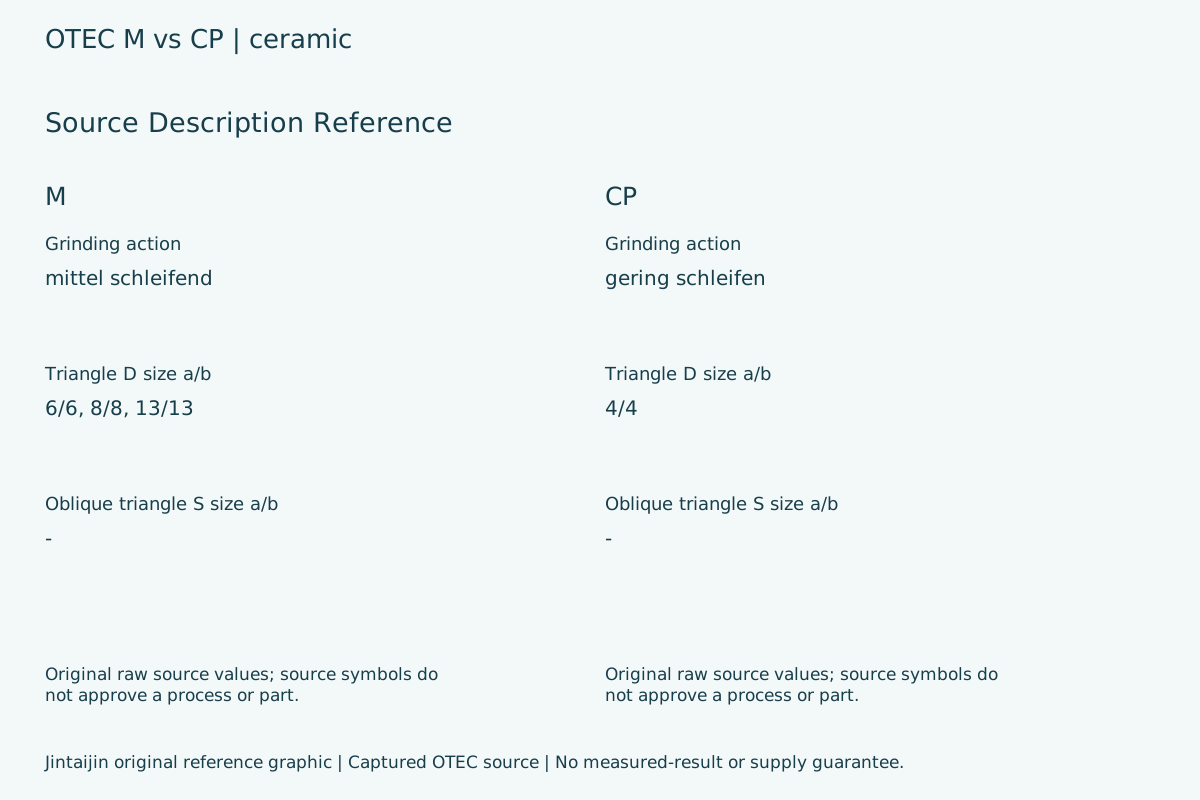
- Grinding action: M mittel schleifend; CP gering schleifen.
- Triangle D size a/b: M 6/6, 8/8, 13/13; CP 4/4.
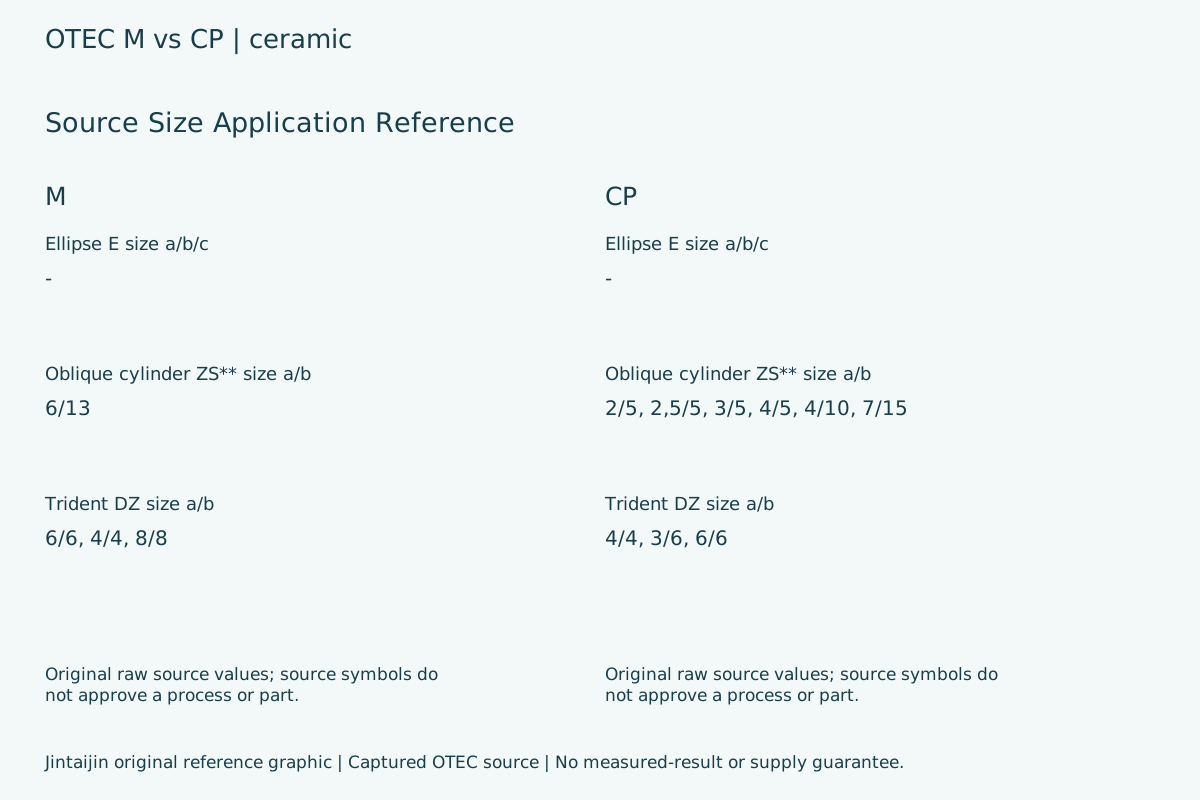
- Oblique cylinder ZS** size a/b: M 6/13; CP 2/5, 2,5/5, 3/5, 4/5, 4/10, 7/15.
- Trident DZ size a/b: M 6/6, 4/4, 8/8; CP 4/4, 3/6, 6/6.
Choose a field group to inspect the relevant source descriptions, geometry or application statements. Select different values to isolate the printed distinctions, or same values to retain matching fields. A matching source string does not demonstrate identical formulation, wear, cost or behavior on your workpiece. A different string does not establish a better grade. Qualitative plus signs and descriptive grain terms remain separate from physical measurements. The comparison does not turn these symbols into a score or calculate a finishing cycle.
Captured manufacturer fields
| Source field | M | CP |
|---|---|---|
| Grinding action Schleifwirkung | mittel schleifend | gering schleifen |
| Triangle D size a/b D Dreieck Größe a/b | 6/6, 8/8, 13/13 | 4/4 |
| Oblique triangle S size a/b S Dreieck (Schrägschnitt) Größe a/b | - | - |
| Ellipse E size a/b/c E Ellipse Größe a/b/c | - | - |
| Oblique cylinder ZS** size a/b ZS Zylinder** (Schrägschnitt) Größe a/b | 6/13 | 2/5, 2,5/5, 3/5, 4/5, 4/10, 7/15 |
| Trident DZ size a/b DZ Dreizack Größe a/b | 6/6, 4/4, 8/8 | 4/4, 3/6, 6/6 |
Source provenance and family conditions
Original OTEC manufacturer source; captured 2026-10-05T01:44:17.664949+00:00. Table 1, rows 2 and 6. SHA256: c156f9cb6769ee4120cdb9030728f8b159ce6fd6fd958b82eedfb87637ea08d1. The snapshot date is not a source publication date or current supply confirmation.
- Raw a/b and a/b/c dimension strings retained. Units are not stated in the extracted table heading; no mm inference.
- SK* footnote: sehr scharfkantig. ZS**: also available without oblique cut. A dash is a source dash, not zero or proven unavailability.
- Additional sizes/qualities on request. Broken shape images in offline table review do not establish geometry axes.
Prepare a supplier and sample review
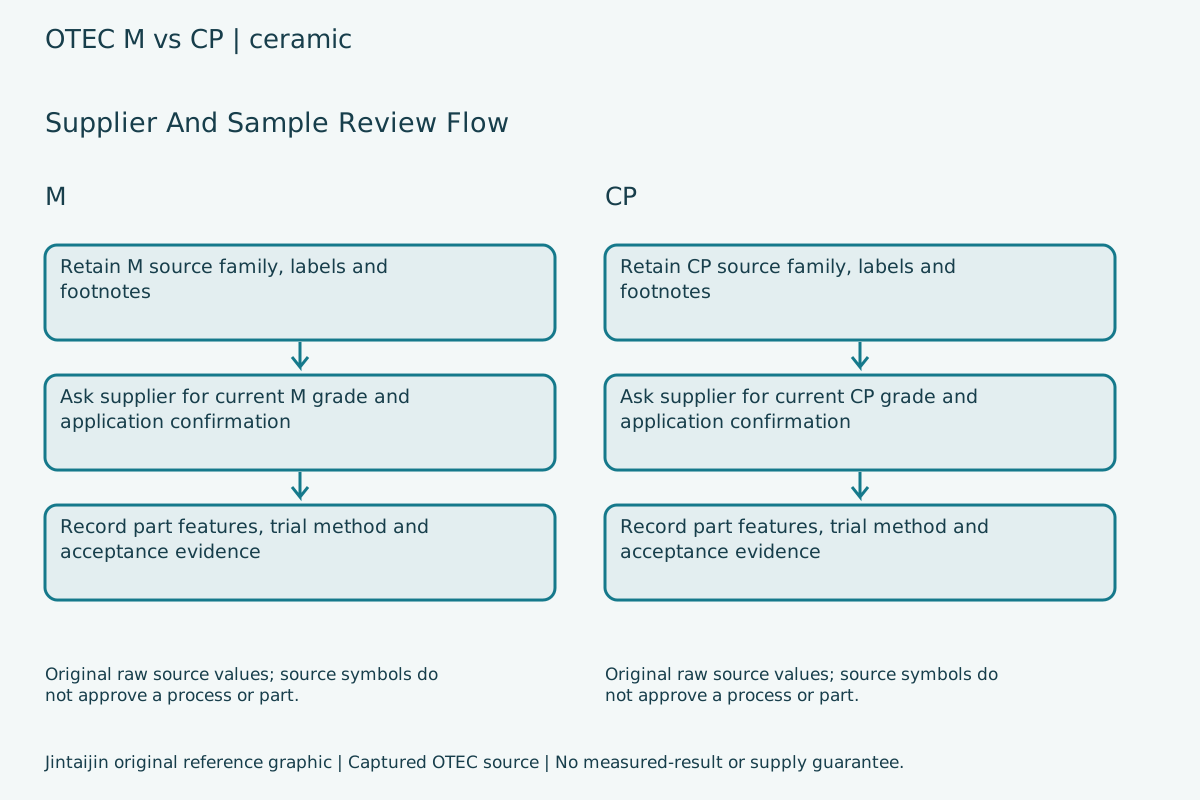
Record the workpiece material, dimensions, openings and protected surfaces before choosing a candidate. Keep the exact manufacturer grade and source family attached to the request. Ask the supplier for the current particle geometry and size definition, formulation where relevant, intended machine, carrier compatibility and separation method. For small features, assess how media enters and exits the part and whether it can lodge, mask a surface or remain after separation. A printed size alone cannot approve that path.
For pastes and powders, obtain the current safety data, preparation procedure, carrier and adhesion requirements from the supplier. The captured table does not provide a universal concentration, dose, replenishment interval or machine setting. References to steel, titanium, jewellery or implants identify manufacturer application statements; they do not provide a qualification record for your part, clinical approval or a residue limit. Keep unknowns unresolved until an identifiable supplier document or trial record addresses them.
Define acceptance before the sample trial: incoming condition, inspection method, protected-feature limits, cleaning and separation checks, and the sample identifier. Record actual observations alongside these source references. Do not reuse a manufacturer example of roughness or edge rounding as your measured result. The download records the current filters and notes at the moment you select export. It is a review brief and does not submit an inquiry, quote a price or approve the process.
Frequently asked questions
Which captured fields differ between M and CP?
The source values differ for Grinding action, Triangle D size a/b, Oblique cylinder ZS** size a/b, Trident DZ size a/b. Original strings remain in the table and export; no performance ratio is calculated.
Do plus signs measure removal rate or gloss?
No. They are manufacturer qualitative source markers. Their counts do not supply a physical unit, tested removal rate, gloss measurement, cycle time or guaranteed result. The original heading is retained.
Does the source size approve my workpiece?
No. Confirm the current grade, particle geometry, machine compatibility, media entry and exit, protected surfaces and separation route with the supplier. Source sizes do not establish a safe clearance or resistance to lodging.
What is included in the review download?
Your current field-group and raw-difference filters, matching source values, source identity, footnotes and the current workpiece, machine, supplier and acceptance notes. Changing a filter or note changes the next export.
Is this an OTEC offer or a Jintaijin equivalent-product claim?
No. This page presents third-party manufacturer references for procurement review. Current availability, price, grade equivalence, clinical approval and an OTEC distribution relationship are not established.
 +86-592-2381506

 IPv6 network supported