


OTEC SF 1 78-ILS vs SF X/1 78 - source specification comparison
Compare OTEC SF 1 78-ILS and SF X/1 78 source specifications, preserve holder and loading notes, and export a current fixture review.
Compare source fields and prepare a fixture review
Read the specification differences in context
This comparison helps a procurement or process engineer preserve two manufacturer references while preparing questions about loading, fixturing and sample acceptance. The source records belong to OTEC. Jintaijin presents a reference review tool; this page does not establish an OTEC distribution relationship or an equivalent Jintaijin model. Start with the exact model labels below and check each printed condition before comparing a number.
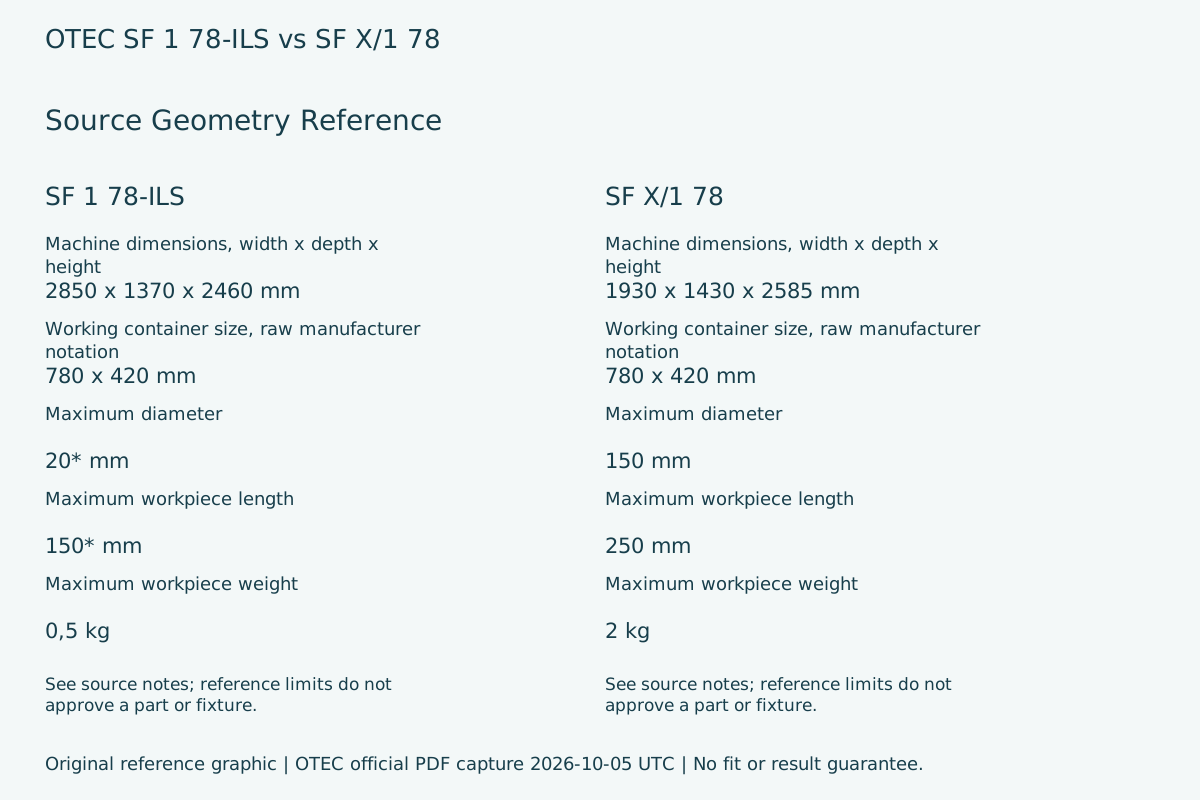
- Machine dimensions, width x depth x height: SF 1 78-ILS 2850 x 1370 x 2460; SF X/1 78 1930 x 1430 x 2585.
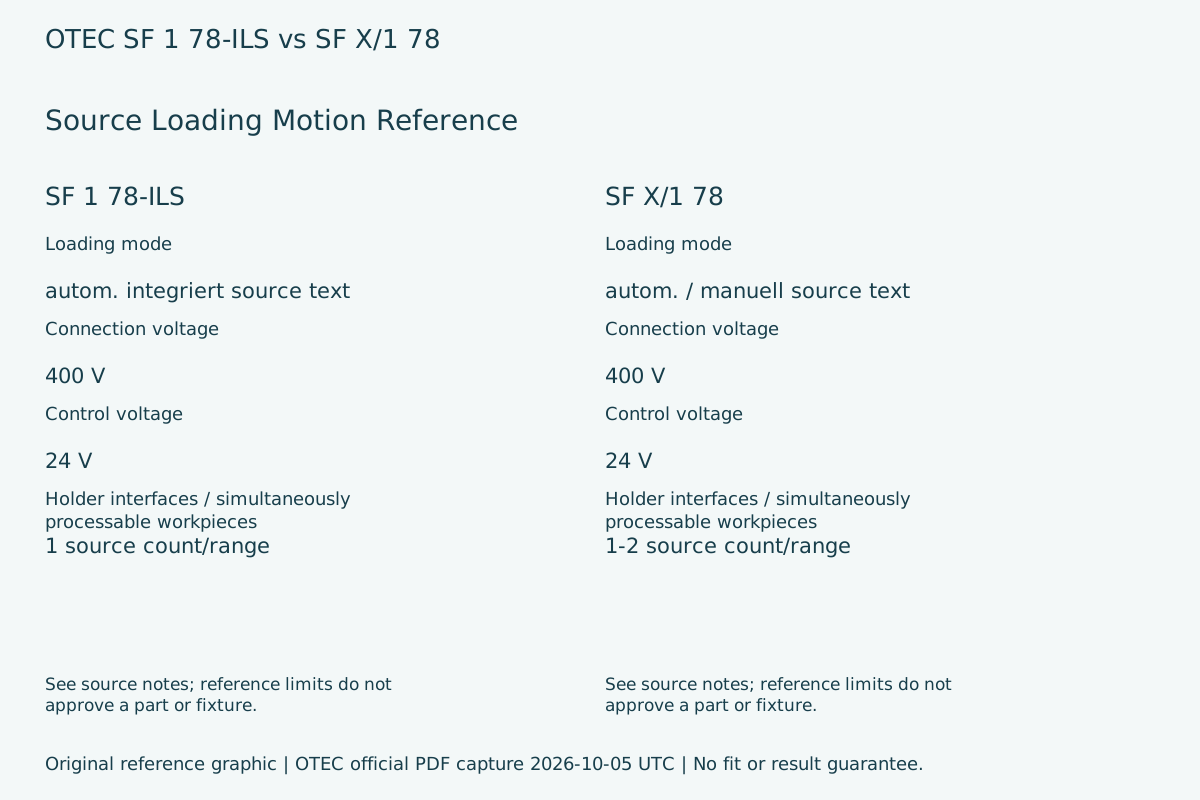
- Loading mode: SF 1 78-ILS autom. integriert; SF X/1 78 autom. / manuell.
- Holder interfaces / simultaneously processable workpieces: SF 1 78-ILS 1; SF X/1 78 1-2.
- Maximum diameter: SF 1 78-ILS 20*; SF X/1 78 150.
- Maximum workpiece length: SF 1 78-ILS 150*; SF X/1 78 250.
- Maximum workpiece weight: SF 1 78-ILS 0,5; SF X/1 78 2.
A larger listed limit does not identify the better machine for a particular part. A comparison requires the current drawing, the complete holder assembly, the protected features and the planned loading route. A value marked as the same means that the source strings match; it does not prove identical process behavior, included options or allowable tooling. The filter makes these source differences easier to inspect without turning them into a suitability score.
Captured manufacturer specification table
| Source field | SF 1 78-ILS | SF X/1 78 |
|---|---|---|
| Machine dimensions, width x depth x height Maschinenmaß (B x T x H mm) | 2850 x 1370 x 2460 mm | 1930 x 1430 x 2585 mm |
| Working container size, raw manufacturer notation Arbeitsbehältergröße (Höhe in mm) | 780 x 420 mm | 780 x 420 mm |
| Loading mode Beladungsart | autom. integriert source text | autom. / manuell source text |
| Connection voltage Anschlussspannung (V) | 400 V | 400 V |
| Control voltage Steuerspannung (V) | 24 V | 24 V |
| Holder interfaces / simultaneously processable workpieces Halterschnittstellen gleichzeitig bearbeitbare Werkstücke | 1 source count/range | 1-2 source count/range |
| Maximum diameter Maximaler Durchmesser (mm) | 20* mm | 150 mm |
| Maximum workpiece length Max. Werkstücklänge (mm) | 150* mm | 250 mm |
| Maximum workpiece weight Max. Werkstückgewicht (kg) | 0,5 kg | 2 kg |
Source provenance and original conditions
SF 1 78-ILS source context
Source snapshot SHA-256: 10bad35ab472c38805c3c640184db7e093f92d618bd7f49cf486ac3a0b245f94. Captured UTC: 2026-10-05T00:06:44.149661+00:00.
Official manufacturer reference: OTEC PDF, page 12; captured 2026-10-05 UTC. Printed revision date is not established. PDF creation metadata is not treated as a revision or proof of current supply.
- Designed for automatic operation; larger dimensions may be possible with manual loading. No larger manual limit is supplied. Original: für automatischen Betrieb ausgelegt. Bei manueller Beladung größere Abmessungen möglich
Reference specification only; not part-fit, fixture approval or guaranteed process performance. Container notation is preserved without inferring diameter, vessel volume or working capacity. No cycle time, roughness, throughput, recipe, power or Jintaijin equivalence inferred.
SF X/1 78 source context
Source snapshot SHA-256: 10bad35ab472c38805c3c640184db7e093f92d618bd7f49cf486ac3a0b245f94. Captured UTC: 2026-10-05T00:06:44.149661+00:00.
Official manufacturer reference: OTEC PDF, page 12; captured 2026-10-05 UTC. Printed revision date is not established. PDF creation metadata is not treated as a revision or proof of current supply.
- X after SF denotes the possible number of holders. Preserve this model group; do not generate individual model variants. Original: X nach SF steht für mögliche Anzahl der Halter
Reference specification only; not part-fit, fixture approval or guaranteed process performance. Container notation is preserved without inferring diameter, vessel volume or working capacity. No cycle time, roughness, throughput, recipe, power or Jintaijin equivalence inferred.
Prepare the current supplier and sample review
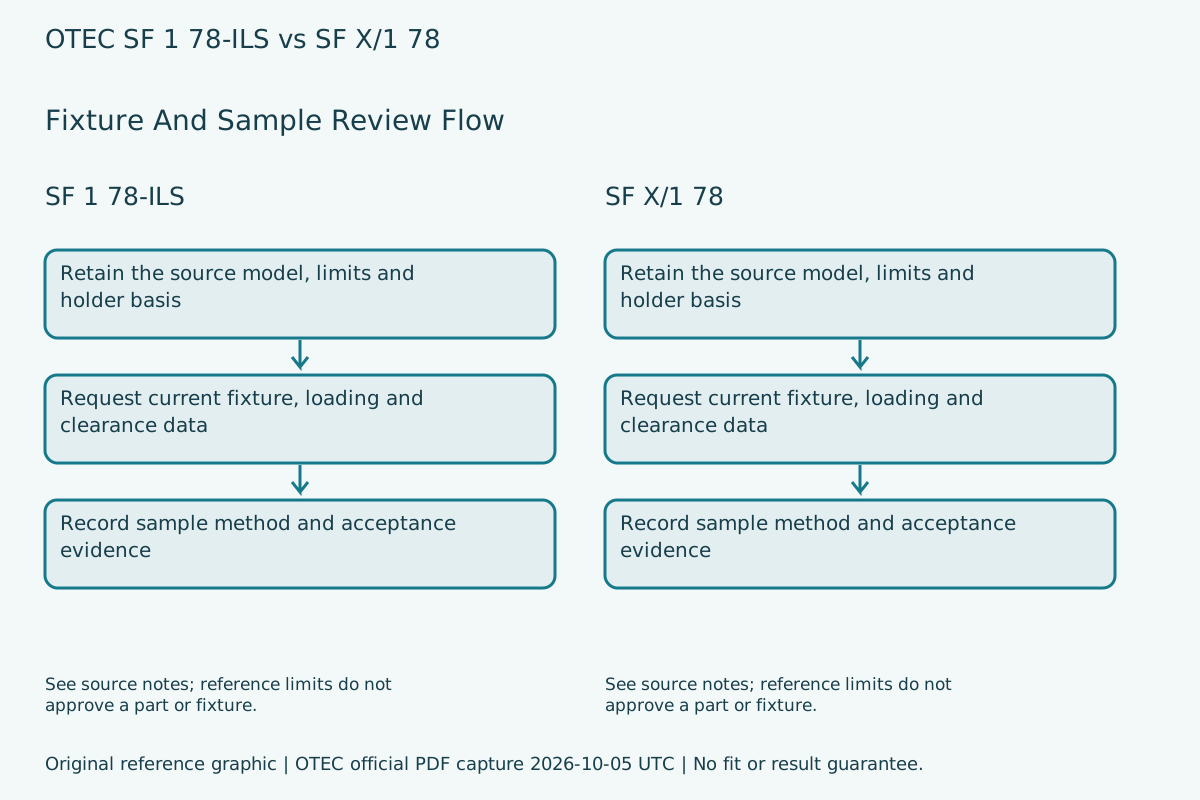
Record the part material, geometry and protected surfaces. Describe the holder separately, including the mass and dimensions that a current manufacturer must assess. Ask whether the cited loading mode is included, optional or available on request. Keep a dimensioned insertion and movement drawing rather than assuming that a maximum diameter is a collision-free clearance. Preserve the source model group if the label contains X; do not select an invented variant from this page.
For a process trial, define the incoming condition and the acceptance inspection method before requesting a sample. Record the target surface, edge or protected-feature criteria as your own requirements, then obtain measured results with an identifiable sample reference. A manufacturer specification table alone does not provide a universal polishing time, media recipe, achieved roughness or output per hour. Retain unknowns until the current supplier and sample evidence resolve them.
The JSON export is generated from the controls and notes at the moment of download. Use it as a review brief alongside the current drawing and manufacturer confirmation. It does not reserve equipment, confirm a price, certify clinical use or submit an inquiry. The contact link below opens the ordinary Jintaijin inquiry page if you want to discuss a separate sample-review requirement.
Frequently asked questions
Which source fields differ between SF 1 78-ILS and SF X/1 78?
The captured source values differ for Machine dimensions, width x depth x height, Loading mode, Holder interfaces / simultaneously processable workpieces, Maximum diameter, Maximum workpiece length, Maximum workpiece weight. The table retains each printed value; differences are not performance scores.
Does this comparison approve a workpiece or holder?
No. Request a current dimensioned holder specification, part-plus-fixture mass where applicable, insertion path, motion clearance and loading confirmation. Maximum source figures do not prove safe workpiece fit.
Can these figures calculate finishing time or throughput?
No. These are equipment-reference fields. Material, media, workpiece orientation, inspection method and validated sample results are not supplied as a process dataset. No cycle-time or production-rate calculation is produced.
How are source footnotes and unknown values handled?
The original model names, printed units, asterisks and holder conditions remain attached to each record. Unstated fields and printed revision dates remain unestablished rather than receiving estimated numbers.
What is included in the downloadable review?
The current filters, matching source rows, two source references, original footnotes and your current part, fixture, supplier and acceptance notes. Changing a filter or note changes the next export. The record is a review brief, not a quotation, OEM approval or Jintaijin equivalent-product claim.
 +86-592-2381506

 IPv6 network supported