


Jintaijin | Independent versioned catalog reference
Roesler AWA 1000 K-RZ vs AWA 2000 K-FP: wastewater treatment catalog comparison
Compare AWA 1000 K-RZ and AWA 2000 K-FP on the printed continuous-flow and sludge-handling basis in Roesler brochure EN.154.21, revision07/2026. Filter the source fields, enter your own liquid-flow requirement and optional solids concentration, and export the current review. Use the original labels to prepare a supplier discussion and fluid trial before choosing an offered configuration.
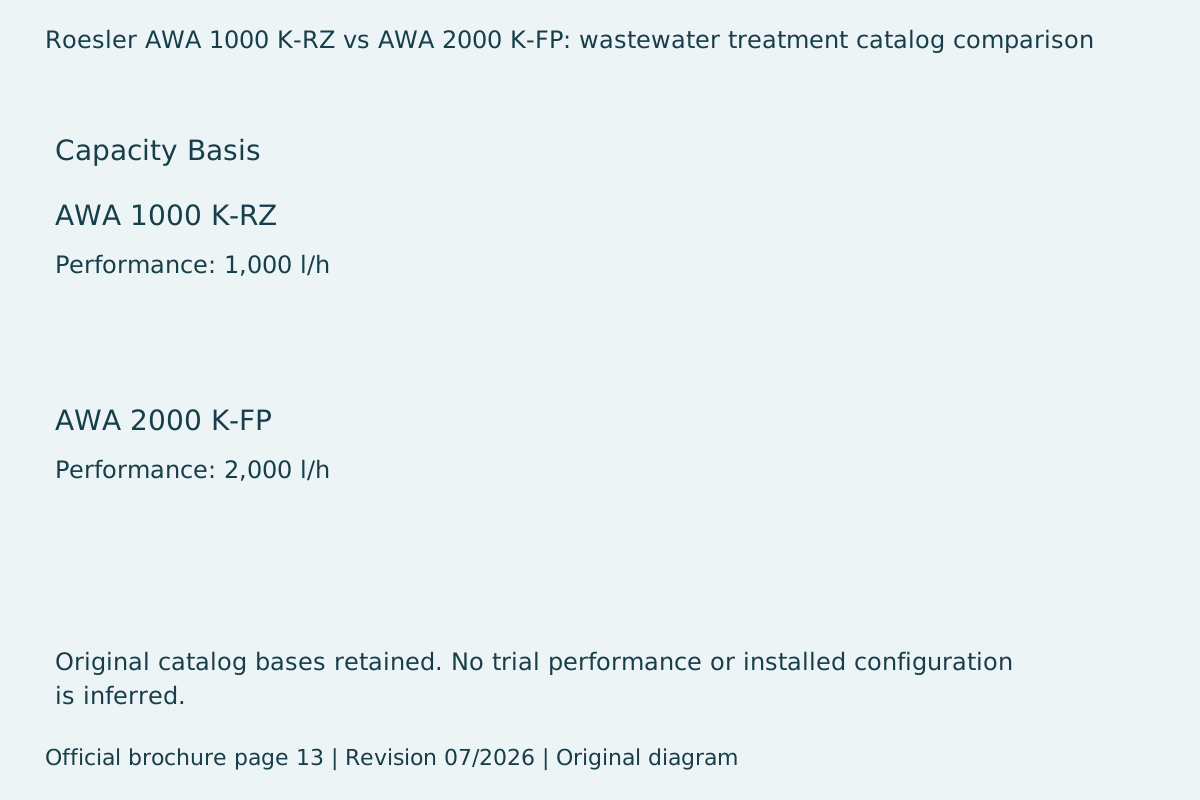
Compare the original printed entries
| Field | AWA 1000 K-RZ | AWA 2000 K-FP |
|---|---|---|
| Flow | Performance 1,000 l/h | Performance 2,000 l/h |
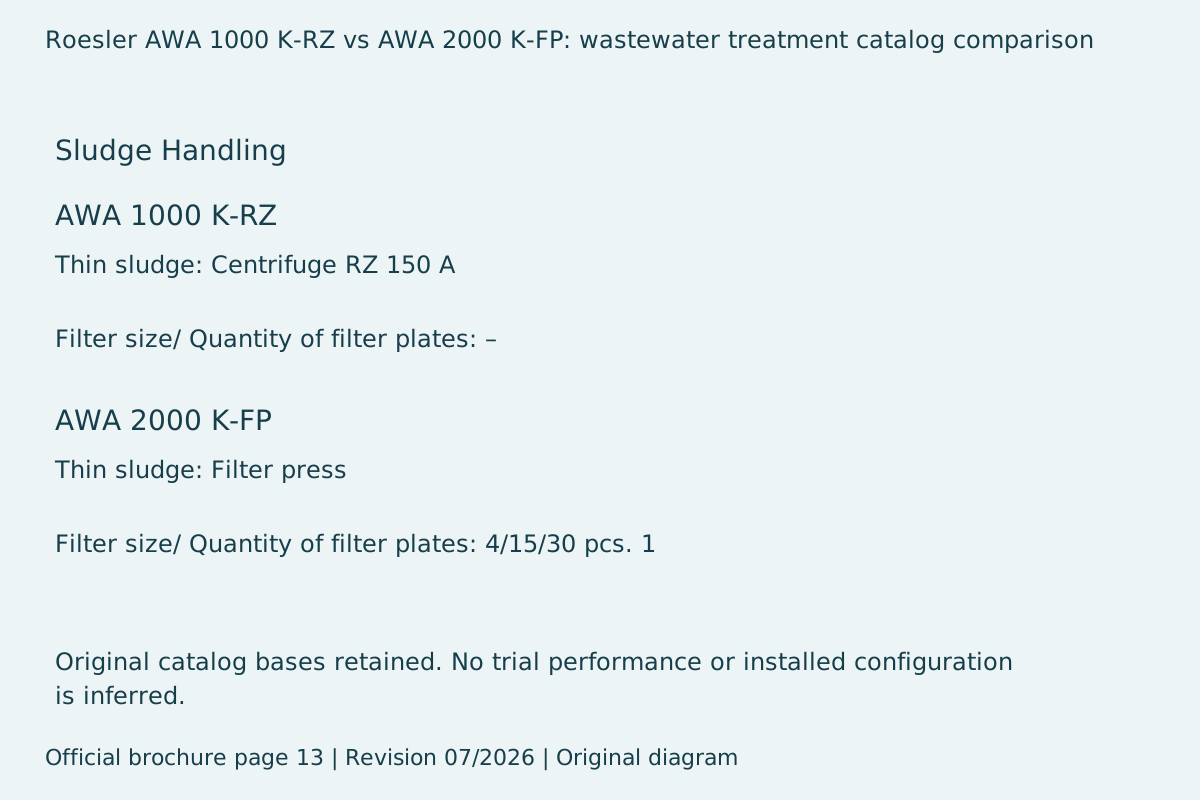
| Handling | Thin sludge Centrifuge RZ 150 A | Thin sludge Filter press |
| Filters | Filter size/ Quantity of filter plates – | Filter size/ Quantity of filter plates 4/15/30 pcs. 1 |
AWA 1000 K-RZ lists 1,000 l/h; AWA 2000 K-FP lists 2,000 l/h. These are continuous litres per hour. Equal or higher listed performance does not establish an equivalent fluid-cleaning result or sludge dewatering outcome.
Review source fields and your liquid requirements
Enter your own flow in l/h or l/min. Solids concentration is optional and requires a liquid quantity. No values are prefilled.
Sludge handling and filter alternatives
Thin sludge: AWA 1000 K-RZ Centrifuge RZ 150 A; AWA 2000 K-FP Filter press. Filter size / quantity of plates: – versus 4/15/30 pcs. 1. The slash-separated plate counts are alternative configurations. Footnote 1 gives plate volumes of 3.2 l or 10 l; no installed count, total chamber capacity or cake moisture is selected here.
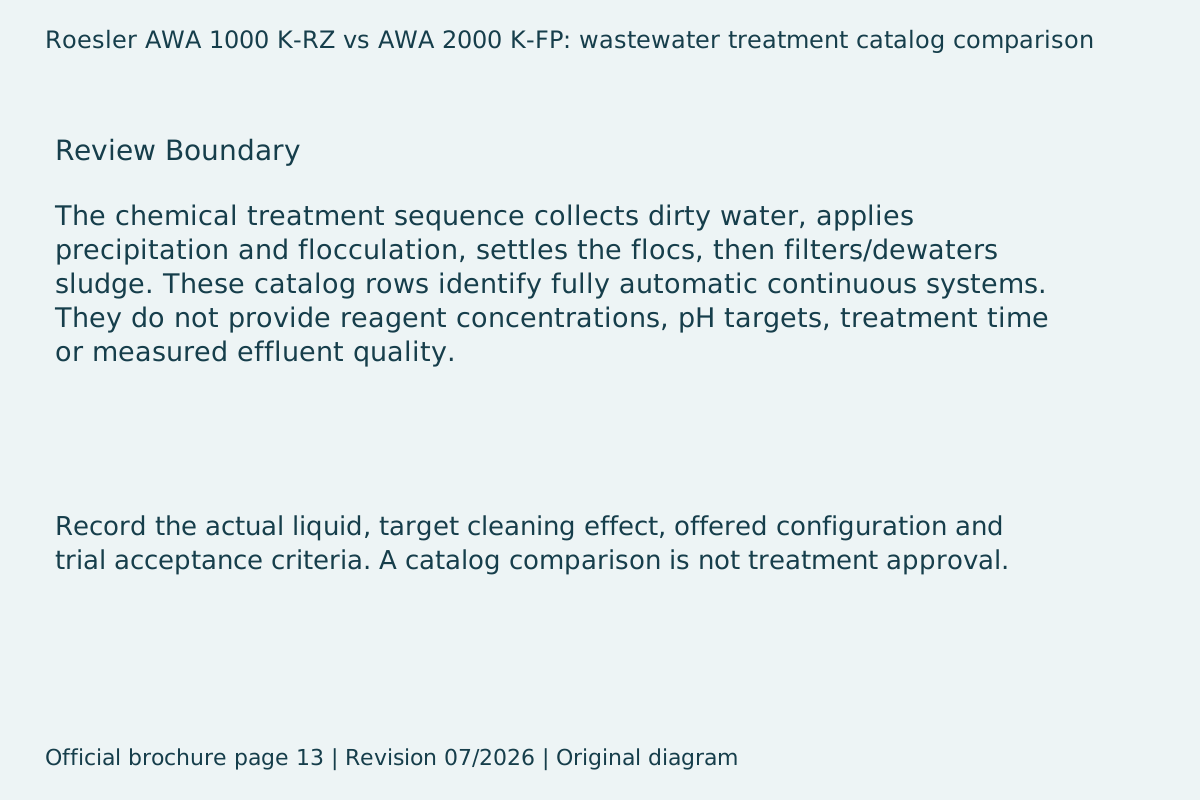
The chemical treatment sequence collects dirty water, applies precipitation and flocculation, settles the flocs, then filters/dewaters sludge. These catalog rows identify fully automatic continuous systems. They do not provide reagent concentrations, pH targets, treatment time or measured effluent quality.
- Batch capacity (l/batch) and continuous performance (l/h) are separate bases; no batch cycle duration is supplied.
- Filter plate counts are alternatives, not an installed selection. Footnote 1 gives plate volume 3.2 l or 10 l; do not select an option or infer total filter volume.
- A dash for filter size is not a zero-capacity filter. The named sludge-handling type does not establish capture efficiency, moisture or disposal suitability.
- Reagent dosing, pH, permitted discharge limits and fluid-specific cleaning results are not supplied by this table.
Prepare the fluid trial and supplier review
Record the liquid origin, metals processed, media fines, free or emulsified oil, temperature and variability across a shift. Define the desired cleaning effect and how inlet and outlet samples will be collected and evaluated. Keep the expected liquid quantity separate from captured sludge, wet cake and usable storage. Ask the supplier to identify the actual tank, pump, filter and control configuration before layout or operating-cost decisions.
Ask for the offered dewatering configuration, plate count and plate volume where relevant. Establish reagent selection, dosing and the sequence with your actual liquid; no chemical operating recipe is supplied here. A named RZ150A centrifuge does not authorize substitution of generic centrifuge parameters into the treatment line.
Source: Roesler centrifuge technology and process-water brochure EN.154.21, physical page 13, revision07/2026. Original fields are retained. This independent reference does not establish Jintaijin equipment equivalence, manufacturer partnership, current availability, installation approval or a guaranteed result.
Questions about this pair
What is the printed capacity difference between AWA 1000 K-RZ and AWA 2000 K-FP?
AWA 1000 K-RZ lists 1,000 l/h; AWA 2000 K-FP lists 2,000 l/h. These are continuous litres per hour. Equal or higher listed performance does not establish an equivalent fluid-cleaning result or sludge dewatering outcome.
Which sludge handling details need separate review?
Thin sludge: AWA 1000 K-RZ Centrifuge RZ 150 A; AWA 2000 K-FP Filter press. Filter size / quantity of plates: – versus 4/15/30 pcs. 1. The slash-separated plate counts are alternative configurations. Footnote 1 gives plate volumes of 3.2 l or 10 l; no installed count, total chamber capacity or cake moisture is selected here.
Does this comparison approve cleaning performance?
The chemical treatment sequence collects dirty water, applies precipitation and flocculation, settles the flocs, then filters/dewaters sludge. These catalog rows identify fully automatic continuous systems. They do not provide reagent concentrations, pH targets, treatment time or measured effluent quality. No. A representative fluid trial and agreed inlet/outlet measurements are required. This reference does not establish discharge permission or current supplier configuration.
What does the interactive user-input review calculate?
The tool converts your flow between litres per minute and litres per hour and optionally multiplies that liquid quantity by your solids concentration in g/l, divided by 1000. The result is input-derived solids mass rate in kg/h, not captured sludge, wet cake, chemical dose or dewatering performance. It compares your quantity only with a printed catalog reference, preserves approximate labels and exports current inputs. At or below the reference still requires a trial.
 +86-592-2381506

 IPv6 network supported