


Jintaijin | Independent versioned catalog reference
Roesler R 150 AB vs R 350 AB: recirculation tank catalog comparison
Compare R 150 AB and R 350 AB on the printed approximate wastewater-flow, tank-volume and layout basis in Roesler brochure EN.154.21, revision07/2026. Filter the source fields, enter your own liquid-flow requirement and optional solids concentration, and export the current review. Use the original labels to prepare a supplier discussion and fluid trial before choosing an offered configuration.
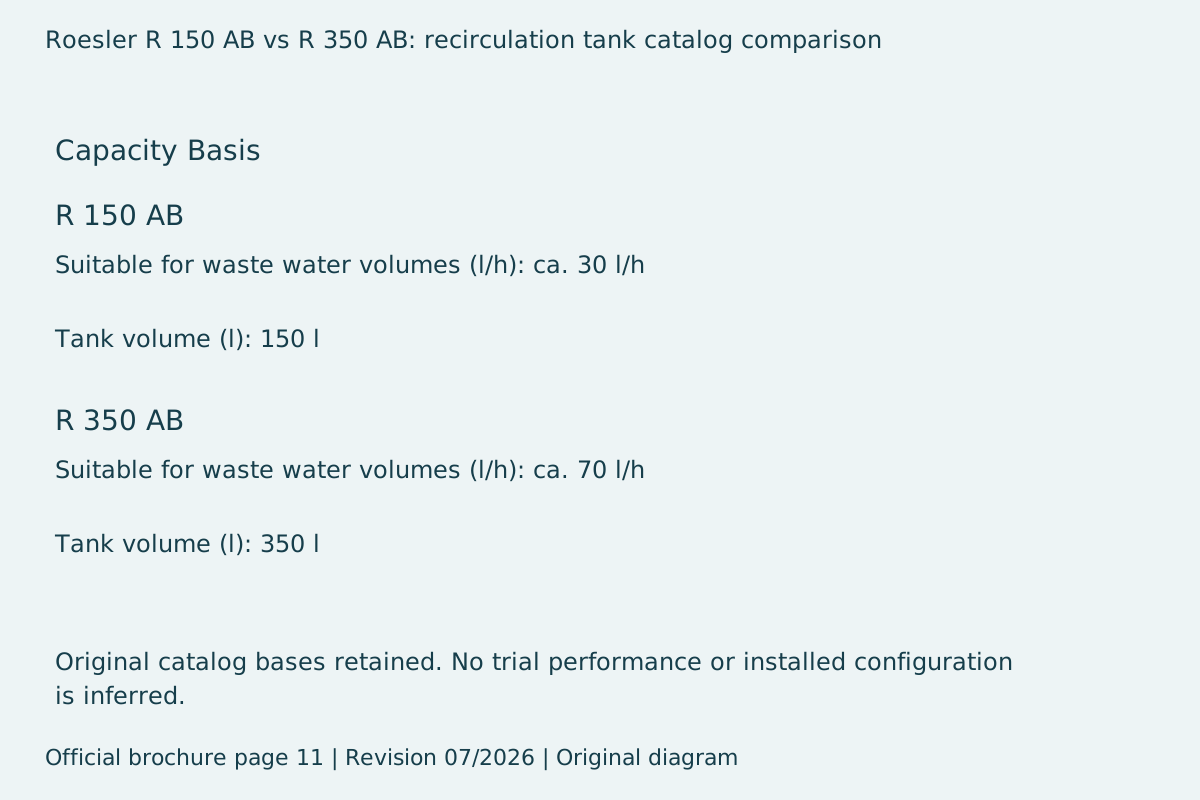
Compare the original printed entries
| Field | R 150 AB | R 350 AB |
|---|---|---|
| Volume | Tank volume (l) 150 l | Tank volume (l) 350 l |
| Flow | Suitable for waste water volumes (l/h) ca. 30 l/h | Suitable for waste water volumes (l/h) ca. 70 l/h |
| Dimensions | Tank dimensions lxwxh (mm) 700 x 400 x 580 mm | Tank dimensions lxwxh (mm) 1,150 x 760 x 520 mm |
| Height | Inlet height dirty water (mm) 450 mm | Inlet height dirty water (mm) 440 mm |
R 150 AB lists ca. 30 l/h; R 350 AB lists ca. 70 l/h. The ca. prefix means approximate suitable wastewater flow, not a guaranteed maximum. Tank volume is a separate inventory value, not a tested settling time.
Review source fields and your liquid requirements
Enter your own flow in l/h or l/min. Solids concentration is optional and requires a liquid quantity. No values are prefilled.
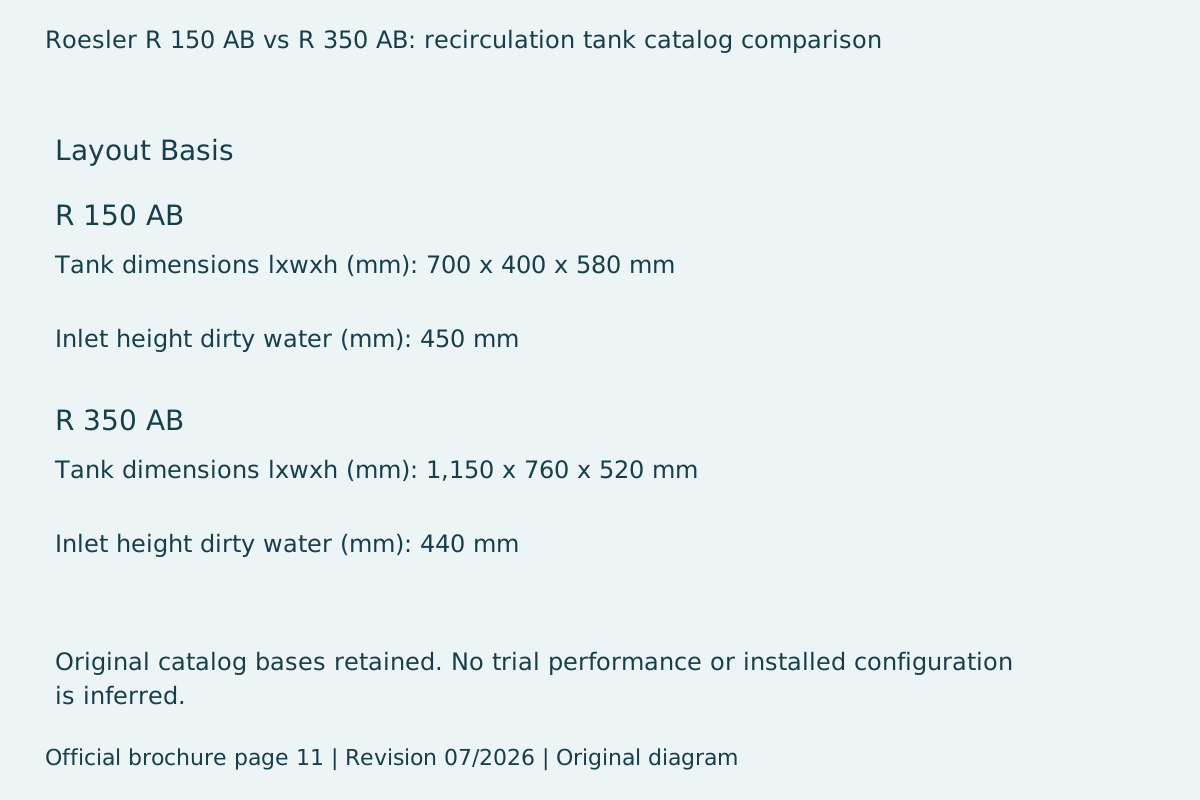
Layout and liquid routing
Tank volumes: R 150 AB 150 l; R 350 AB 350 l. Printed dimensions: 700 x 400 x 580 mm versus 1,150 x 760 x 520 mm. Dirty-water inlet height: 450 mm versus 440 mm. Check a current layout drawing and gravity-feed levels; the footprint is not a service-clearance envelope.
The source describes cascade precipitation/separation of metal and media fines, removable partitions and an adjustable pulse-controlled compressed-air diaphragm pump. It does not give a removal curve, particle cut size or sludge-cleaning interval.
- The flow entries are approximate (ca.), not maxima or trial-approved performance.
- Tank dimensions are printed length x width x height; service clearance and installed piping are not specified.
- Cascade settling and a pulse-controlled compressed-air diaphragm pump are described; no contaminant-removal efficiency or discharge compliance is established.
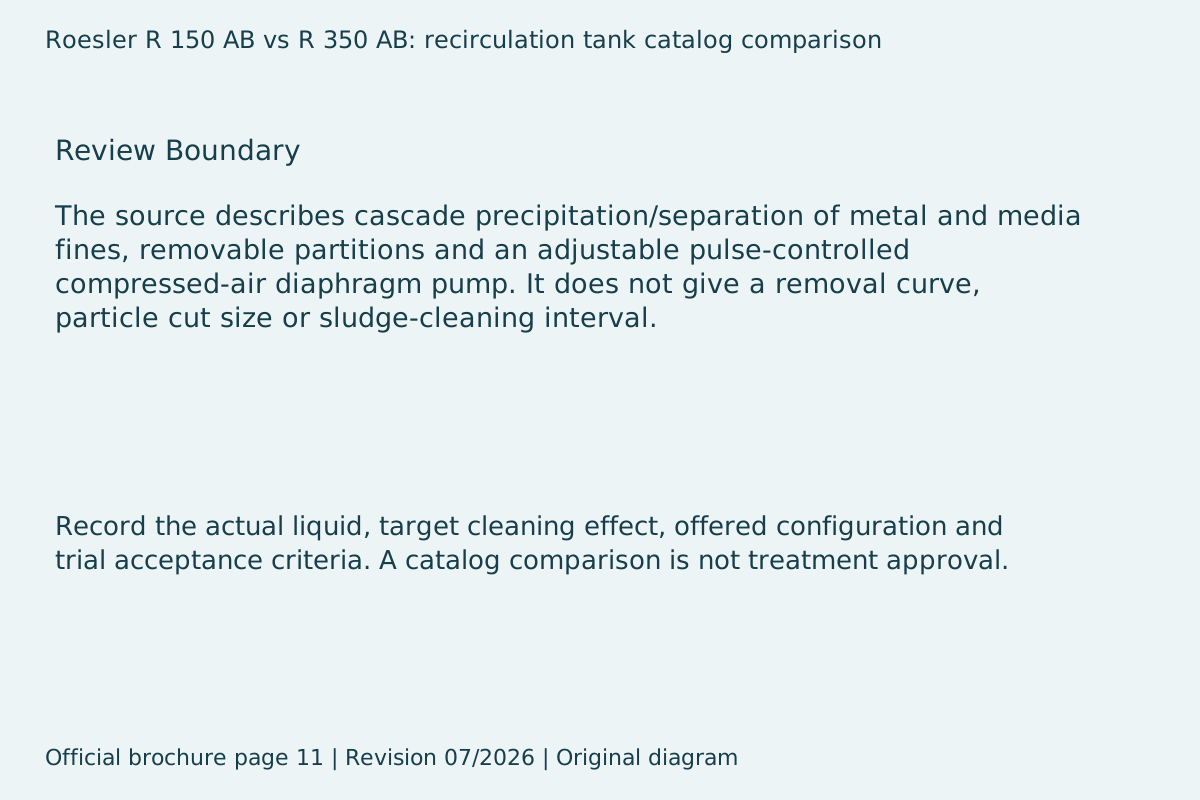
Prepare the fluid trial and supplier review
Record the liquid origin, metals processed, media fines, free or emulsified oil, temperature and variability across a shift. Define the desired cleaning effect and how inlet and outlet samples will be collected and evaluated. Keep the expected liquid quantity separate from captured sludge, wet cake and usable storage. Ask the supplier to identify the actual tank, pump, filter and control configuration before layout or operating-cost decisions.
Check current tank drawings, inlet levels, piping, pump air supply, partition removal and cleaning access. Printed dimensions do not include every connection or service space.
Source: Roesler centrifuge technology and process-water brochure EN.154.21, physical page 11, revision07/2026. Original fields are retained. This independent reference does not establish Jintaijin equipment equivalence, manufacturer partnership, current availability, installation approval or a guaranteed result.
Questions about this pair
What is the printed capacity difference between R 150 AB and R 350 AB?
R 150 AB lists ca. 30 l/h; R 350 AB lists ca. 70 l/h. The ca. prefix means approximate suitable wastewater flow, not a guaranteed maximum. Tank volume is a separate inventory value, not a tested settling time.
Which layout details need separate review?
Tank volumes: R 150 AB 150 l; R 350 AB 350 l. Printed dimensions: 700 x 400 x 580 mm versus 1,150 x 760 x 520 mm. Dirty-water inlet height: 450 mm versus 440 mm. Check a current layout drawing and gravity-feed levels; the footprint is not a service-clearance envelope.
Does this comparison approve cleaning performance?
The source describes cascade precipitation/separation of metal and media fines, removable partitions and an adjustable pulse-controlled compressed-air diaphragm pump. It does not give a removal curve, particle cut size or sludge-cleaning interval. No. A representative fluid trial and agreed inlet/outlet measurements are required. This reference does not establish discharge permission or current supplier configuration.
What does the interactive user-input review calculate?
The tool converts your flow between litres per minute and litres per hour and optionally multiplies that liquid quantity by your solids concentration in g/l, divided by 1000. The result is input-derived solids mass rate in kg/h, not captured sludge, wet cake, chemical dose or dewatering performance. It compares your quantity only with a printed catalog reference, preserves approximate labels and exports current inputs. At or below the reference still requires a trial.
 +86-592-2381506

 IPv6 network supported