


Jintaijin | Independent versioned catalog reference
Roesler TSD R 600/3000 vs R 750/3000: catalog comparison
Compare R 600/3000 and R 750/3000 in the Roesler TSD factsheet, physical page 2, revision 05/2024. Inspect work-bowl volume, drawing dimensions and the original drive-power notation. Enter your own volume minimum and machine dimension maxima, then download the current comparison. Confirm actual configuration, drawings and workpiece loading with the supplier before selecting equipment.
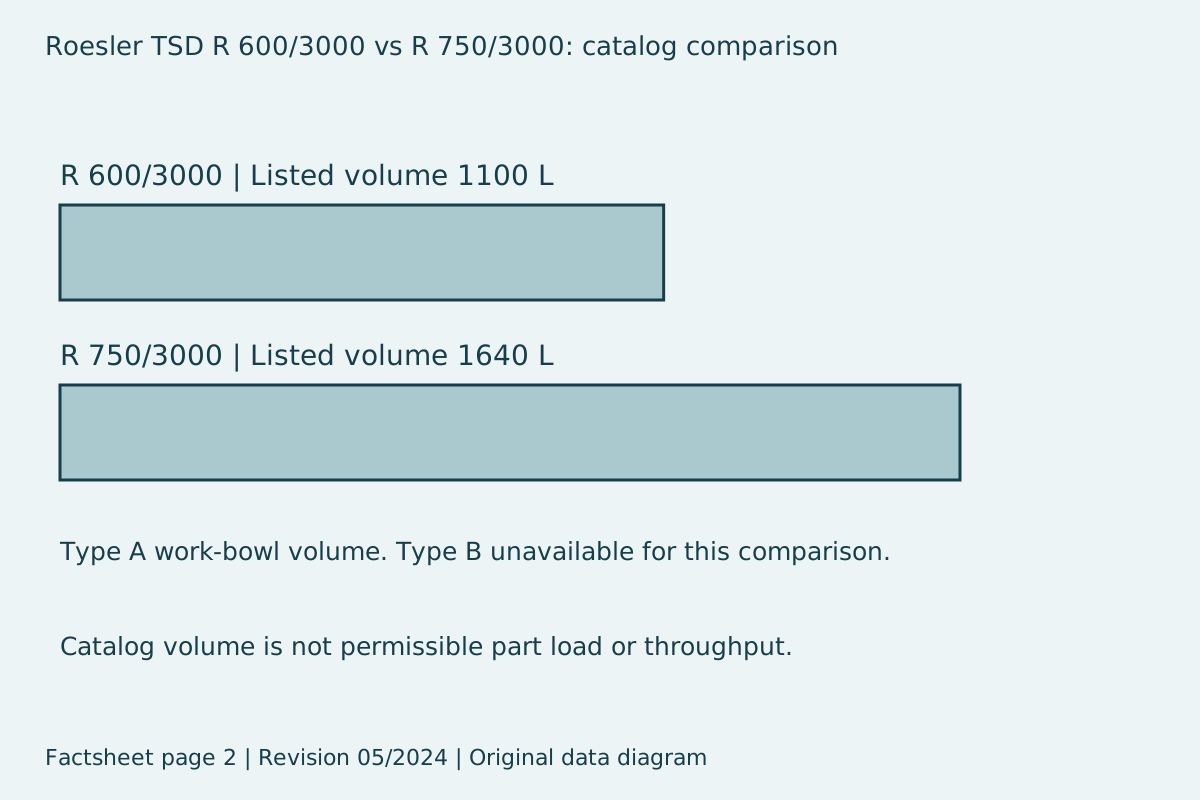
Source table and volume basis
| Source field | R 600/3000 | R 750/3000 |
|---|---|---|
| Type A work-bowl volume | 1100 L | 1640 L |
| A: work-bowl width | 600 mm | 750 mm |
| B: work-bowl height | 680 mm | 810 mm |
| C: work-bowl length | 3000 mm | 3000 mm |
| D: complete-machine total length | 4570 mm | 4580 mm |
| E: complete-machine total width | 950 mm | 1120 mm |
| F: machine height | 1210 mm | 1210 mm |
| Type B work-bowl volume (only if explicitly listed) | Not listed | Not listed |
| A1 source dimension (raw; mm when listed) | NOT_LISTED | NOT_LISTED |
| Drive power (original entry, kW) | 2 x 7,5 | 2 x 15 |
| Drive speed (source heading) | 1500 rpm | 1500 rpm |
The TSD table lists 1100 L for R 600/3000 and 1640 L for R 750/3000, a right-minus-left difference of 540 L. The basis is type a work-bowl volume. These values are not permissible part loads, batch weights or throughput. Type B volume is not listed for both models; the tool blocks a Type B comparison instead of substituting zero or the listed volume.
The TSD table marks Type A and1,500rpm. Listed drive power has a two-factor notation. The tool compares the work-bowl and complete-machine dimensions without turning them into rectangular bowl capacity, part-fit permission or approved installation space.
Compare with your own catalog limits
Choose a listed volume basis. Leave all four limit inputs blank for the catalog comparison, or enter all four positive decimal values to screen the listed values. No limits are prefilled. Dimensions remain catalog fields; obtain the supplier installation drawing and loading guidance.
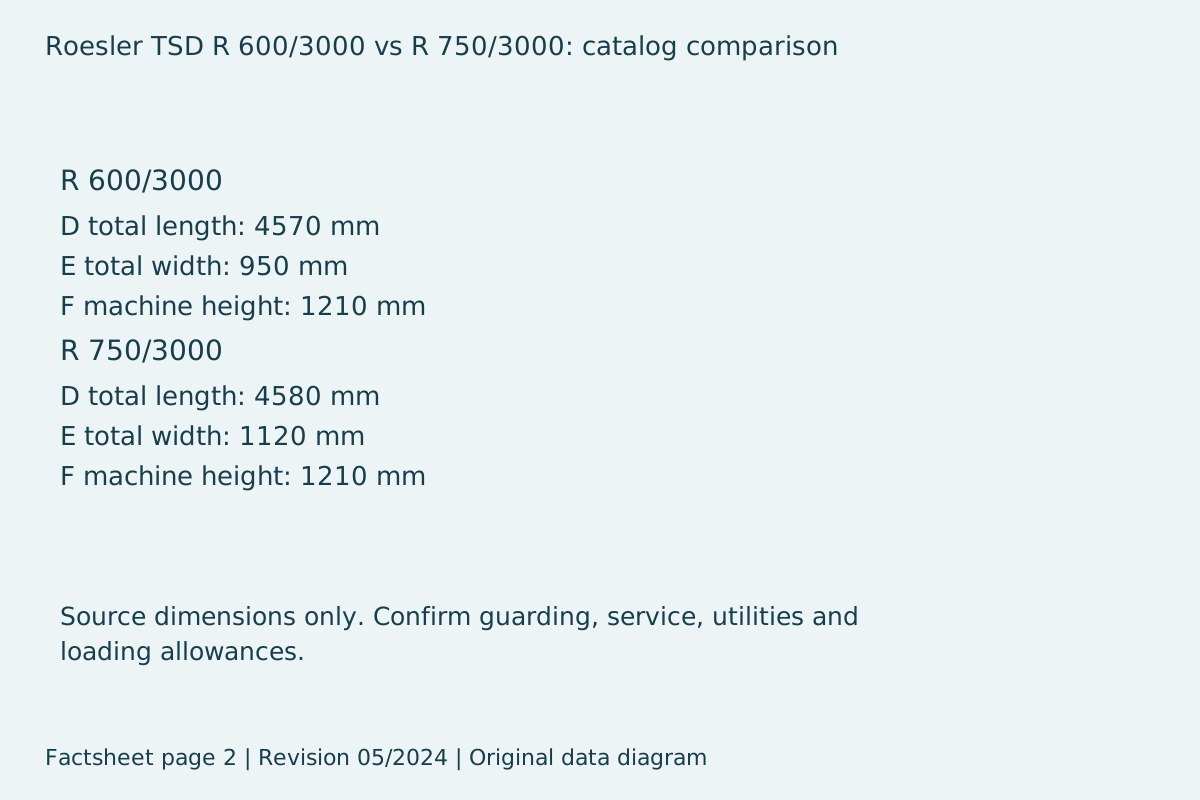
Separate work-bowl and machine geometry
A bowl width is 600 versus 750 mm, B bowl height 680 versus 810 mm, and C bowl length 3000 versus 3000 mm.
Complete-machine D/E/F dimensions are 4570/950/1210 mm for R 600/3000 and 4580/1120/1210 mm for R 750/3000. The tool screens these three listed dimensions against your own maximum values; it does not include service, guarding, utility or loading allowances.
The work-bowl shape and lining matter. Do not multiply A, B and C into a rectangular capacity or infer permissible part fit. Record workpiece geometry, material, sensitivity, fixturing and media flow; confirm permissible loading and trial conditions with the manufacturer. None of these catalog values provides a cycle time, media recipe, batch weight or parts-per-hour figure.
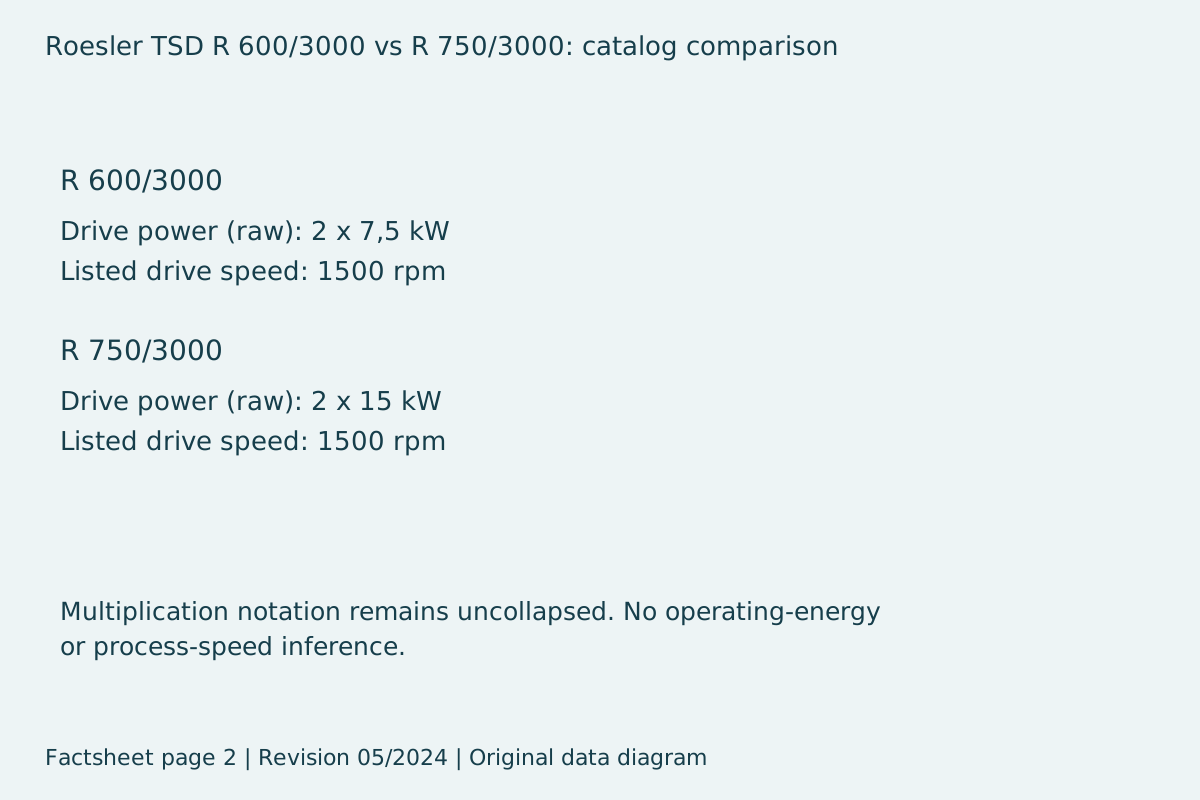
Read the drive fields on their source basis
Drive power is printed as 2 x 7,5 versus 2 x 15 kW. The multiplication notation is retained. No scalar power difference, motor-total or consumption estimate is calculated.
Both rows are under the 1500 rpm drive-speed heading. The table states no electrical frequency for that heading. It is not a recommended process speed.
Source: Roesler Tub Vibrators factsheet, physical page 2, revision 05/2024. The same PDF has other page revisions: pages1/3 use04/2023, page2 uses05/2024. This pair uses the revision printed on its table page. The EN.129.21 revision04/2023 brochure provides additional family context; it is the same publisher, not an independent measurement.
Confirm current offered configuration, availability, utilities, floor loading, service access and guarding with the manufacturer. No manufacturer partnership, current build or Jintaijin equivalence is established.
Questions about this pair
What changes between R 600/3000 and R 750/3000 in TSD?
The TSD table lists 1100 L for R 600/3000 and 1640 L for R 750/3000, a right-minus-left difference of 540 L. The basis is type a work-bowl volume. These values are not permissible part loads, batch weights or throughput. Type B volume is not listed for both models; the tool blocks a Type B comparison instead of substituting zero or the listed volume. Complete-machine D/E/F dimensions are 4570/950/1210 mm for R 600/3000 and 4580/1120/1210 mm for R 750/3000. The tool screens these three listed dimensions against your own maximum values; it does not include service, guarding, utility or loading allowances.
Can Type B volume be used for this pair?
No. Both source rows do not provide a Type B volume. A missing value is unknown, not zero and not an equivalent of the listed volume. The tool disables the Type B selection and rejects a forced unsupported comparison.
Do the drive values establish process speed or consumption?
Drive power is printed as 2 x 7,5 versus 2 x 15 kW. The multiplication notation is retained. No scalar power difference, motor-total or consumption estimate is calculated. Both rows are under the 1500 rpm drive-speed heading. The table states no electrical frequency for that heading. It is not a recommended process speed.
What does a passing four-limit screen mean?
It means the selected listed volume meets your minimum and the listed D/E/F complete-machine dimensions meet your three maxima. Enter all four positive decimal limits or leave all four blank. A passing screen is not workpiece-fit, permissible loading, installation, electrical or process approval. Confirm current configuration, drawings and trial conditions with the manufacturer; no Jintaijin equivalence is established.
Related trial and inspection tools
Discuss your workpiece and sample-trial requirements with Jintaijin
 +86-592-2381506

 IPv6 network supported