In Birmingham, United Kingdom, an automotive parts buyer has a hardened stainless parking pawl that must be deburred without changing tooth form or pivot bore fit. SurfacePolish supplies finishing equipment and consumables across borders and offers a free process sample trial in which the buyer's parts are processed at the Xiamen factory and returned with observations and a suggested media, compound and cycle direction for the buyer's own verification. This brief is written for a buyer in Birmingham working on automotive parts; it describes equipment, media and a scoped sample review, not a local polishing service.
At what batch size, load fill ratio and media wear state does a trial observation still describe what series production will produce?
Which internal features must be deburred without lodging media, and what retrieval and verification step proves the passage and thread form are clean?
How will free iron, embedded particles and cross-contamination from carbon steel be prevented, and how will each be detected on the finished part?
Magnetic response is a sorting aid, not a material identification. Ferritic exhaust grades are strongly attracted, martensitic wear grades are magnetic, austenitic grades are effectively non-magnetic in the annealed state but become weakly magnetic after cold work, and duplex grades sit in between depending on composition and condition. A mixed load is therefore a real risk on two counts: a ferritic part can transfer free iron onto an austenitic neighbour during a shared cycle, and a magnetic retrieval or separation step can quietly fail on a grade that was assumed to be magnetic. Identify parts positively before finishing using material certificates, heat numbers and markings, and keep loads segregated by grade. Where a part is small or unmarked, settle the identification question before any consumable is chosen, because the answer changes both media chemistry and separation design.
Media is a consumable that changes during use, and stainless finishing is sensitive to that drift. Ceramic media loses size and edge sharpness, its cutting rate falls, and the charge accumulates broken pieces and fines; steel media deforms and generates metallic fines; plastic media can load with metal particles; compound residue and swarf build up in the mass. The practical consequence is that a cycle tuned on fresh media behaves differently after days of running, which is why results can drift without any setting having been touched. Track wear by screening a sample of the charge at intervals, logging media make-up quantities and cycle hours, and replacing on measured condition rather than on a fixed calendar. Keeping the charge inside a known working window, and re-verifying the finish after any full charge replacement, is what makes a production result repeatable.
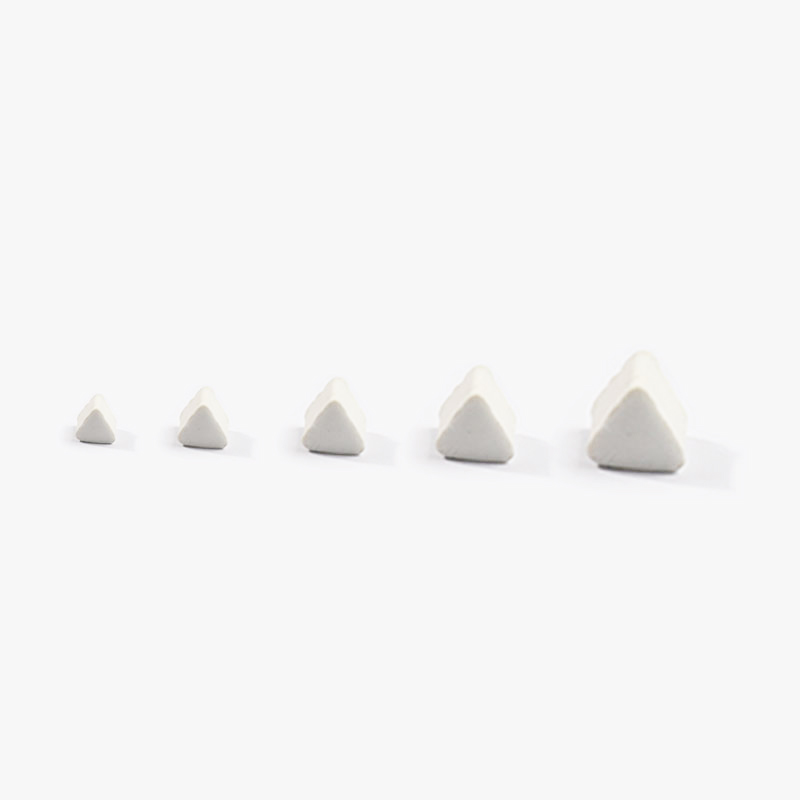
| Media | Best fit | Watch out for |
|---|---|---|
| Alumina-based ceramic triangles and angle-cut forms | Heavy deburring, edge blending and machine-mark removal on stainless brackets, flanges and housings where corners and recesses must be reached. | Wears down in size and sharpness, so cutting rate falls without any setting change; broken pieces and fines can lodge in small features and must be screened out. |
| Steel media, including balls and shaped steel forms | Brightening and burnishing of austenitic stainless appearance parts where the highest available gloss is the objective. | Deforms and generates metallic fines, adds weight to the load, and can transfer iron if used in a line shared with carbon steel work. |
| Porcelain and fine high-density ceramic media | Pre-polish refining stages on austenitic stainless appearance parts before a brightening stage, where a finer texture is the objective. | Limited cutting power on hard or work-hardened surfaces, and wear changes the charge gradually, so finish can drift between batches. |
| Dry media, walnut shell and corn cob | Post-wet drying, light residue and scale removal, and dry polishing of surfaces that must not be re-wetted. | Does not cut stainless, generates dust, and leaves organic residue on parts if the medium is not kept clean and dry. |
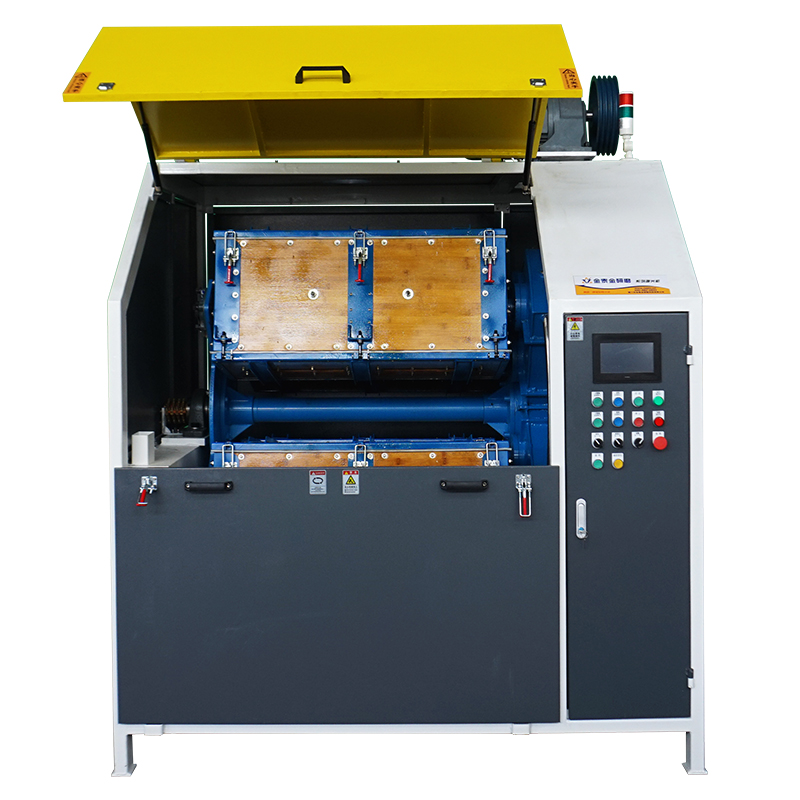
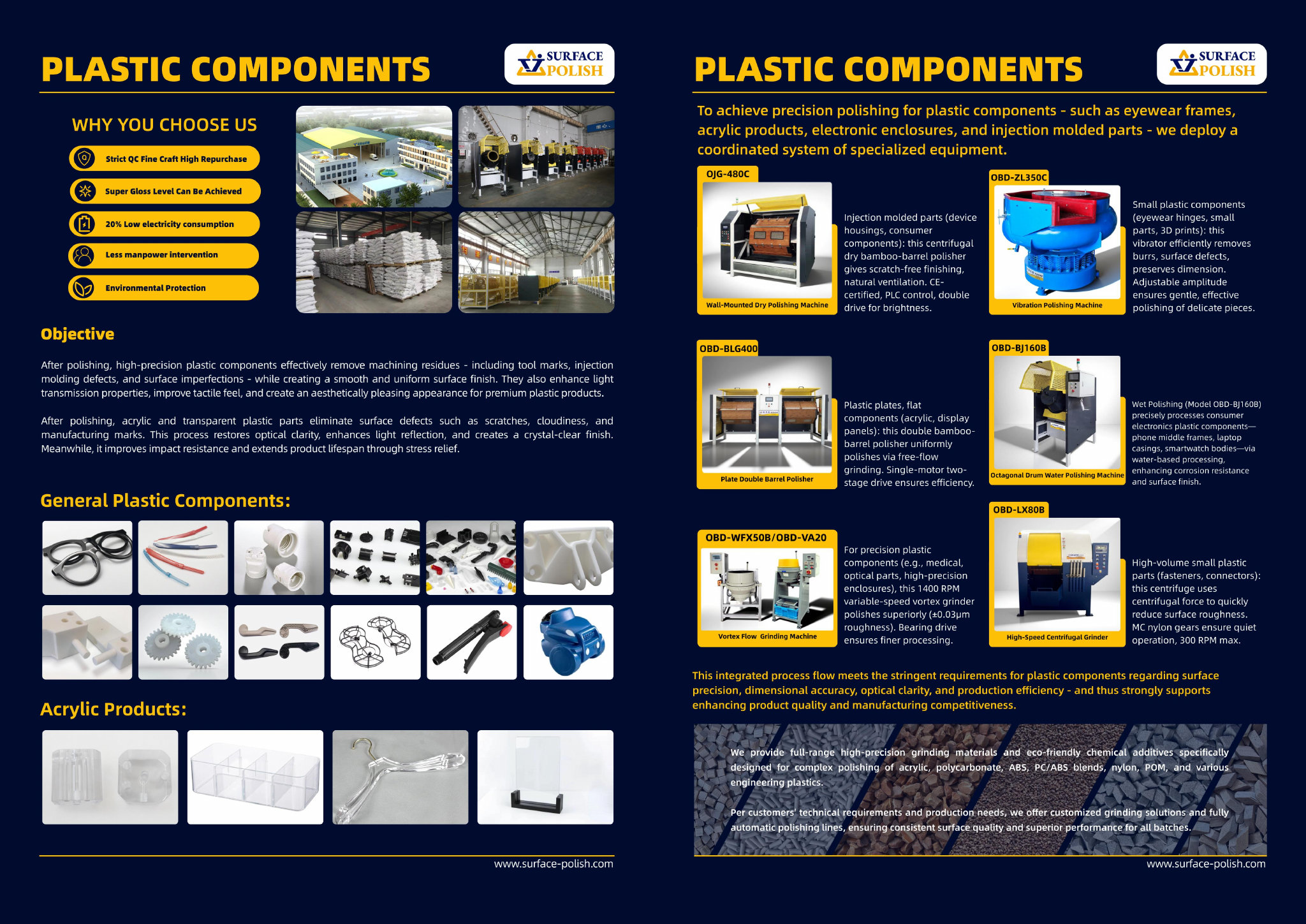
A vibratory bowl handles a broad middle band of stainless automotive parts: brackets, housings, flange blanks, handles, trim sections and small fittings. The load stays visible, amplitude, frequency and media blend can be adjusted, and the same machine serves both deburring and surface refinement when the media progression is planned. Limits are real, though. Part size and shape are capped by chamber geometry, and long or slender parts bridge and stall unless a tub or a fixture is used. Thin and threaded parts need compartments or fixtures to limit part-on-part contact. Watch fill ratio and the ratio of media to parts, because an over-filled or under-filled chamber changes both edge results and finish consistency, and keep the fill ratio stable from trial to production rather than filling to whatever the shift finds convenient.
| Machine route | Where it fits | What it will not do |
|---|---|---|
| Vibratory finishing machine, bowl type | General deburring and surface refinement of medium-sized stainless automotive parts such as brackets, small housings and flange blanks in a visible batch load. | Part size and shape are capped by chamber geometry, and thin or threaded parts may need compartments or fixtures to control part-on-part contact. |
| Centrifugal barrel finishing machine | Very high energy deburring and edge radiusing of small, hard stainless parts in short cycles. | Rounds edges quickly and can exceed a tight radius within a short run; part size and shape are restricted and a substantial load is needed to justify the cycle. |
| Disc finishing machine | Fast deburring and blending of heavier machined stainless parts whose edges can accept a higher removal rate. | The higher energy can damage thin walls and delicate features, so tooling or compartments are often needed to protect them. |
| Barrel finishing machine, rotary barrel tumbler | Gentle deburring and finishing of delicate, thin or threaded stainless parts such as small fittings, sensor bodies and precision pins. | Cycles run longer than in higher-energy machines, and coverage can be uneven on large or complex parts. |
The defect that ends most stainless finishing trials is not a bad appearance but an edge that moved further than the drawing allows. Threads and gear teeth are the classic casualties, because mechanical action removes material from crests quickly, changing effective pitch diameter and flank form; a part can still thread by hand and still fail a gage. Radiused or chamfered edges behave similarly, since the process removes stock precisely at the edge where a callout is tightest. Start the trial with an edge record and repeat it afterwards: thread and gear gages before and after, edge radius at marked locations with an optical comparator or a cast impression, and a written allowable band agreed before any cycle runs. Treat the shortest cycle that achieves the required appearance as the control condition, and be suspicious of any proposal that adds cycle time to improve a finish that was already acceptable.
| Failure mode | Likely cause | How to catch it |
|---|---|---|
| Hydrogen-related cracking risk on high-strength martensitic stainless parts | Acid-bearing compound chemistry combined with mechanical work on a hardened structure, with no defined post-finishing treatment by the buyer. | Confirm the material and hardness against the purchase documentation, verify which compound family was used and at what concentration, and route the fitness-for-service question to the buyer's engineering function. |
| Thread crests rounded and thread gages failing after finishing | Mechanical action removing material from crests during an energetic or extended cycle, sometimes with media large enough to strike the thread form directly. | Gage every threaded feature before and after the cycle with the drawing's gages, inspect crest form with an optical comparator, and keep the shortest cycle that still achieves the required appearance. |
| Dimensional drift, including bores opening slightly and thin walls thinning | Sustained media contact removing material from every accessible surface, with cycle time or media size class beyond what the feature tolerances can absorb. | Measure critical dimensions with micrometers, bore gages or a CMM before and after on a fixed sample size, and track a maximum stock removal per cycle for each feature at risk. |
| Uneven finish, with one region bright and another dull on the same part | Positional effects in the media mass, dead zones in the chamber, shielding by neighbouring parts, or a poor fill ratio in the load. | Mark reference locations, photograph under fixed raking light, and measure the same feature at multiple points on the part and across parts in the load to separate positional variation from process variation. |
Birmingham sits inside the West Midlands production region whose robotics and autonomous systems adoption Make UK studied jointly with the West Midlands Combined Authority and the West Midlands RAS Cluster, based on survey responses from over 100 manufacturers of all sizes. The West Midlands Combined Authority is the region's statutory economic body, and the city is the base of the Greater Birmingham Chambers of Commerce. Freight is anchored by ABP's Hams Hall Rail Freight Terminal, 13 km from Birmingham, which handles deep-sea and short-sea traffic to and from Southampton, Tilbury and Felixstowe as well as Channel Tunnel traffic. Make UK's regional outlook records that all English regions have now exceeded their 2019 manufacturing output levels, with aerospace and defence investment fuelling growth in the strongest-performing areas.
For this brief the relevant part of that base is automotive: The West Midlands production base that Make UK studied jointly with the West Midlands Combined Authority covers the region's vehicle-building supply chain, and ABP links Birmingham to deep-sea and short-sea container traffic through the Hams Hall rail terminal.
Deburring and edge control sit between machining and assembly in a production base that is being pushed towards automation: Make UK and WMCA commissioned the West Midlands RAS study specifically because adoption is uneven across the region's manufacturers. Because incoming machines and media move through an inland rail terminal rather than a local seaport, the practical issues for a Birmingham plant are inland container booking, offloading and media handling rather than port-side clearance.
Before choosing a machine or media, the Birmingham buyer should define which edge or surface condition is actually acceptance-critical on the part, and confirm who will hold the UKCA/CE technical file and Declaration of Conformity once the equipment is installed in the West Midlands.
Freight context: Hams Hall Rail Freight Terminal (ABP-owned, Edison Road, Coleshill, Birmingham; operated by Maritime Transport), Birmingham Airport. ABP describes Hams Hall as 'one of the country's busiest inland rail freight terminal' and states that the 11ha site handles deep-sea and short-sea traffic to and from ports such as Southampton, Tilbury and Felixstowe, plus traffic via the Channel Tunnel and domestic traffic from Scotland. Machines or sample parts consigned to Birmingham can therefore be cleared through a southern container port and moved inland by rail.
China does not appear in the alphabetical list of trade agreements in effect published by the Department for Business and Trade, so Chinese-origin machinery imported into the UK cannot claim a preferential agreement rate. Duty is instead determined by the commodity code declared on the import declaration, and the UK's customs authority is HM Revenue and Customs (HMRC), which ONS also names as the largest single data source behind UK trade-in-goods statistics. Because a GB-prefixed EORI number is a precondition for importing into England, Scotland or Wales, a Chinese seller's UK buyer must already hold that registration before any machine ships.
English is the working language of contracts, drawings and conformity paperwork, so quotations, technical files and Declarations of Conformity should be supplied in English. UK manufacturers have now recovered above 2019 output levels in every English region and devolved nation except Northern Ireland, and the sector is concentrated in food and drink and transport equipment, with the North West the largest manufacturing region by total output. Buyers typically expect the UKCA/CE route, a Declaration of Conformity and a UK-established economic operator to be identified before order, and they need commercial invoices, customs declarations and the C79 retained in a form their finance team can use for import VAT recovery. No source verified in this research establishes a mandated payment instrument, so payment structure should be treated as commercial negotiation rather than a regulatory requirement.
SurfacePolish supplies from Xiamen, China. The buyer's own destination rules, conformity marking, tariff classification and documentation responsibilities stay with the buyer; confirm them against the authorities named above before ordering.
Measurement of appearance does not detect a functional loss, so acceptance needs checks aimed at what the part does. Thread and gear gages on the features named by the drawing, pin or plug gages on cross-drilled passages, a flatness check on sealing faces, a fit or press trial on a bearing bore, and continuity or gap checks on sensor surfaces all address function directly. Edge condition deserves a dimension rather than an opinion, because a rounding of a fraction of a millimetre at the mouth of an O-ring groove changes how the seal seats, and a deburred edge on a fatigue-relevant hole behaves differently from a polished one. Cleanliness is part of this set: wipe tests for residue, free-iron testing, and a borescope check of internal passages catch defects that appearance grading cannot. Agree every check and its instrument before the first production batch.
Parts returned from a trial are only half the deliverable; the record of what was done is the other half. A usable trial report describes the machine route, media specification and size class including its condition, compound family and concentration, water source, cycle duration, load fill ratio, and the measured results at the marked locations. Read it against your own before-and-after record, and check that the settings are described completely enough to be repeated by a different operator on a different day. Where a result is strong but the mechanism is unexplained, ask what changed rather than accepting the outcome, because an unexplained good result is hard to reproduce. Where a trial produced a good appearance and a poor edge measurement, treat the edge measurement as the governing result for a functional automotive part.
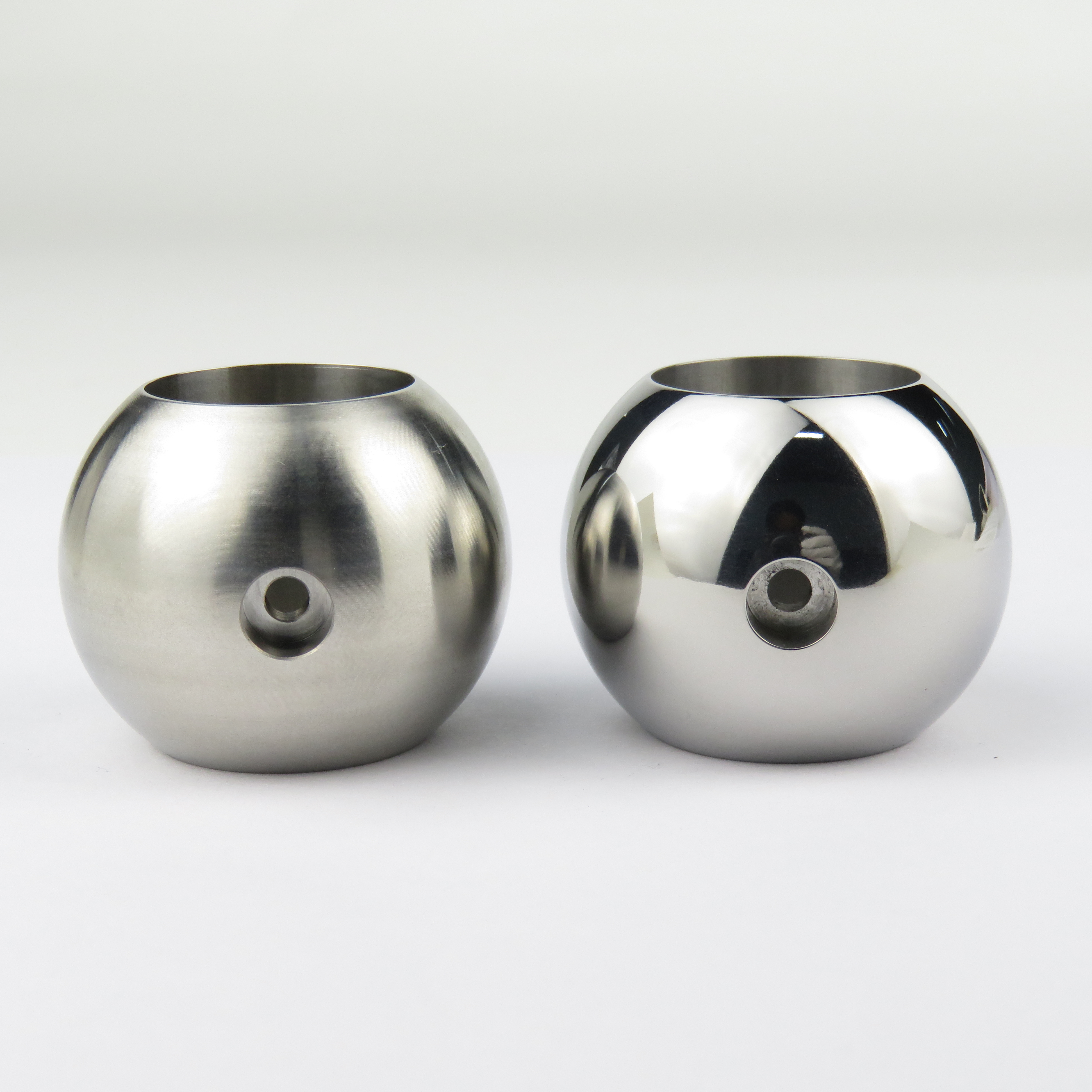
Treat them as two separate requirements rather than one. Map exterior visible surfaces, hidden surfaces and every edge that has a job such as sealing, bearing or assembly clearance. Appearance zones tolerate broad blending; functional edges need a stated limit and a measuring method. The two often pull in opposite directions, because the cycle that brightens a panel also removes material fastest at exactly the edges that must stay inside a band. Ask the designer to confirm colour, texture and direction on visible faces, and put the edge requirement in writing with its instrument before any media is chosen.
Hydrogen uptake is a documented concern for high-strength martensitic stainless steels when acid chemistry and mechanical work are combined, and it is not visible on the surface. The practical route is to state the material and hardness in the enquiry, ask which compound families are proposed and at what concentration, and confirm with your own engineering function whether any post-finishing treatment is required and within what window. SurfacePolish can describe the compound family and the process conditions used on a trial, but fitness for a given strength level, and any treatment specification that follows, must be defined and verified by the buyer.
A trial produces observations on the parts tested under the settings used, and nothing more. It cannot guarantee a surface value, appearance grade, cycle time, capacity or cost in production, and it does not certify or qualify a process for any regulated application. What it can do is narrow the field: compare two media, two compound families or two cycle lengths under controlled conditions, expose edge and lodging risks, and give your engineering team measured before-and-after data to work from. Read the trial record, check that the settings are described fully enough to repeat, and keep the acceptance decision and any qualification work inside your own quality system.
Use Birmingham, United Kingdom as the destination on the enquiry and state whether the deliverable is equipment, media and compound, a representative sample review or a line concept. A destination does not imply local stock, a local service point or a local delivery time.
Equipment placed on the Great Britain market must carry UKCA or CE marking with a Declaration of Conformity held by the manufacturer or a UK-established authorised representative, and HSE's work equipment and machinery regime governs guarding and safe operation on site. COSHH applies to ceramic, plastic or steel media, to finishing compounds and to the dust and effluent the process produces.
Sources were retrieved on 2026-09-29 and describe the local industrial and trade context only. They do not evidence any SurfacePolish project, shipment, installation or service in Birmingham.
The buyer needs the laser-cut and ground edges deburred and the flanks smoothed without changing the tooth form, the pivot bore fit or the specified edge radius.
Send the material, dimensions, approximate weight, batch quantity, the incoming condition and photographs of the difficult features. Mark which features must not be contacted by media and state how the result will be inspected. This form carries source reference PSEO-0202; quote it if you prefer an additional manual reference.
Open the SurfacePolish enquiry form Email a prepared enquiry
No price, lead time, certification or result is promised here. Confirm whether a sample trial is available for the specific part and what the trial can and cannot show.
Page PSEO-0202 · revised 2026-09-29 · cross-border equipment, media and scoped sample review. City context is sourced and cited above.
Use this local checker to identify missing part and inspection information. It prepares a technical-review brief; it does not approve a machine, process recipe or production result.
Complete the part details to prepare a review brief.
Email : info@surface-polish.com


 IPv6 network supported


 +86-592-2381506
