In Florence, Italy, an automotive parts buyer needs a small stainless trim cap brought to a uniform bright finish without waviness, rust speckling or loss of a locating tab. SurfacePolish is a cross-border supplier of finishing machines, media and compounds and runs a free sample trial: parts sent to the Xiamen factory are processed and returned with observations and a proposed media, compound and cycle direction for the buyer to verify. This brief is written for a buyer in Florence working on automotive parts; it describes equipment, media and a scoped sample review, not a local polishing service.
Which alloy family is the part, and has cold work, welding or heat treatment already changed its hardness, magnetic response or corrosion behaviour?
At what batch size, load fill ratio and media wear state does a trial observation still describe what series production will produce?
Which internal features must be deburred without lodging media, and what retrieval and verification step proves the passage and thread form are clean?
What arrives at finishing often predicts the route better than the drawing does. Burrs sit at cross-drilling intersections, sheared edges and machined contours, heat tint comes from welding and laser cutting, and stamping flash, grinding marks, existing polished bands and handling scratches all behave differently under the same medium and compound. Baseline the incoming surface with roughness readings and consistent-lighting photographs at agreed locations, plus a written note on where the largest burrs sit. Cleanliness before processing also matters, because cutting fluid, marking ink, adhesive residue and shop dust load the medium and confound comparison. Batch size and mix enter here too: a load of thirty small brackets behaves differently from four large housings, and mixing families of different weight in one chamber risks damage to the lighter parts and cross-contamination between grades.
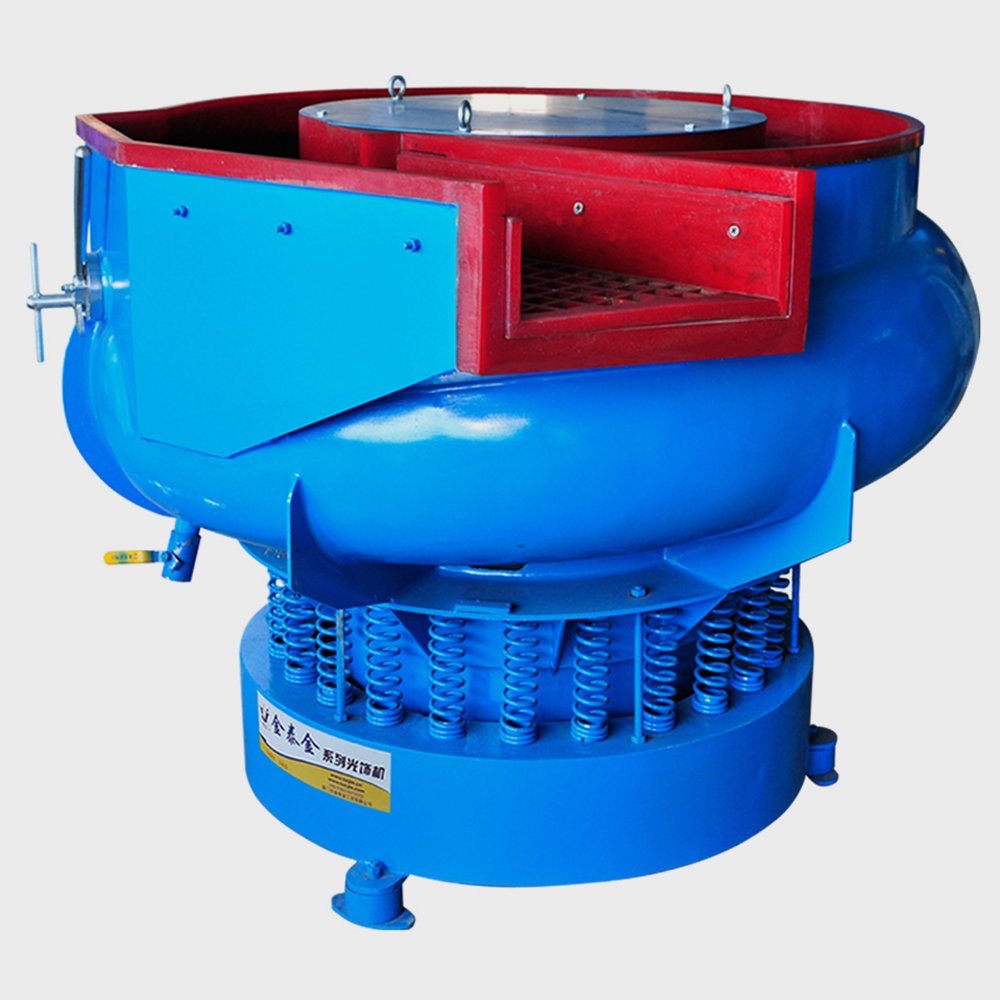
A vibratory bowl handles a broad middle band of stainless automotive parts: brackets, housings, flange blanks, handles, trim sections and small fittings. The load stays visible, amplitude, frequency and media blend can be adjusted, and the same machine serves both deburring and surface refinement when the media progression is planned. Limits are real, though. Part size and shape are capped by chamber geometry, and long or slender parts bridge and stall unless a tub or a fixture is used. Thin and threaded parts need compartments or fixtures to limit part-on-part contact. Watch fill ratio and the ratio of media to parts, because an over-filled or under-filled chamber changes both edge results and finish consistency, and keep the fill ratio stable from trial to production rather than filling to whatever the shift finds convenient.
| Machine route | Where it fits | What it will not do |
|---|---|---|
| Tub vibrator | Long stainless parts such as trim sections, exhaust profiles and shafts that cannot be loaded into a bowl without being cut down. | Media velocity varies along the length, so finish evenness must be verified at both ends, and the machine occupies more floor space and compound volume. |
| Centrifugal barrel finishing machine | Very high energy deburring and edge radiusing of small, hard stainless parts in short cycles. | Rounds edges quickly and can exceed a tight radius within a short run; part size and shape are restricted and a substantial load is needed to justify the cycle. |
| Vibratory finishing machine, bowl type | General deburring and surface refinement of medium-sized stainless automotive parts such as brackets, small housings and flange blanks in a visible batch load. | Part size and shape are capped by chamber geometry, and thin or threaded parts may need compartments or fixtures to control part-on-part contact. |
| Disc finishing machine | Fast deburring and blending of heavier machined stainless parts whose edges can accept a higher removal rate. | The higher energy can damage thin walls and delicate features, so tooling or compartments are often needed to protect them. |
The compound does more than clean: it carries debris, controls pH and temperature, and inhibits corrosion during and after the cycle. Chemistry has to suit the alloy family, because a compound that brightens one stainless grade can stain another or leave a film that shows as a defect. Alkaline and near-neutral formulations are common for general cleaning and finishing where brightness is secondary. Products described as brightening or burnishing formulations are selected by the media and compound supplier for austenitic and duplex work, and they are tested on the actual part before being adopted. Chloride content is a hard consideration for austenitic and duplex grades, since chloride-bearing chemistry and chloride-bearing water are associated with pitting and staining. Contamination risk also rises when a line is shared with carbon steel, so compound choice and line segregation need to be settled together.
| Media | Best fit | Watch out for |
|---|---|---|
| Grinding and cutting media, fused alumina and silicon carbide based | Aggressive stock removal on heavy stainless burrs, weld dressing and rough cast surfaces before a refining stage. | Removes edge material quickly, can embed abrasive fragments in soft or gummy surfaces, and is usually too coarse for a final appearance stage. |
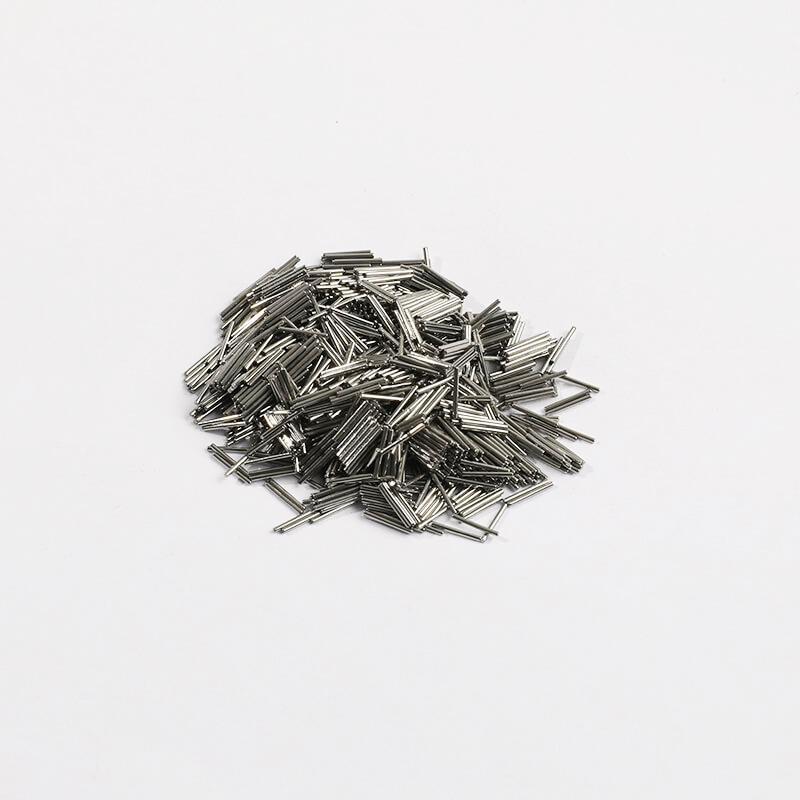
| Magnetic stainless pins and fine needles for magnetic finishing | Deburring and brightening of intricate small stainless features, slots, gear teeth and blind holes where media cannot be allowed to lodge. | Suits small part envelopes only, and the route needs testing on magnetic grades before it is assumed to apply to a given part. |
| Alumina-based ceramic triangles and angle-cut forms | Heavy deburring, edge blending and machine-mark removal on stainless brackets, flanges and housings where corners and recesses must be reached. | Wears down in size and sharpness, so cutting rate falls without any setting change; broken pieces and fines can lodge in small features and must be screened out. |
| Dry media, walnut shell and corn cob | Post-wet drying, light residue and scale removal, and dry polishing of surfaces that must not be re-wetted. | Does not cut stainless, generates dust, and leaves organic residue on parts if the medium is not kept clean and dry. |
Two failure modes produce a damaged edge and are often confused. Impingement, sometimes called a gouge or a nick, is local damage from part-on-part contact or media striking a feature at excessive energy, and it typically appears on thin stamped covers, large flat panels and unsupported webs. Its signature is randomness: the defect site moves from part to part and does not follow the geometry of the edge. Over-rounding is systematic, follows the edge itself, and repeats at the same location on every part in the load. Both are found with raking-light photographs, magnification on the suspect feature and comparison across several parts from the same batch. The remedy differs too, because impingement is addressed by load fill ratio, amplitude, compartments or fixtures, while over-rounding is addressed by cycle intensity, media size class and media hardness.
| Failure mode | Likely cause | How to catch it |
|---|---|---|
| Discolouration or mottling that appears only after drying | Mineral or compound residue carried in the final rinse, hard or chloride-bearing water, or slow drying that leaves a film on the brightened surface. | Compare wet and dry appearance under fixed lighting on the same parts, wipe a sample with a white lint-free cloth and solvent, and check the site water supply for hardness and chloride content. |
| Embedded particles or grey smut on the finished surface | Media fines, broken ceramic fragments or metallic debris from the charge becoming trapped or smeared into the surface during the finishing cycle. | Examine under magnification with raking light and on a wipe test, check the compound bath and media charge for fines and broken pieces, and screen a media sample to identify the source. |
| Hazing or waviness on a part specified as mirror or bright | An intermediate refining stage skipped or cut short, media too coarse for the final texture, or a media charge that has worn out of its working size range. | View under defined lighting against a physical master at the acceptable and marginal limits, measure roughness across the lay with a fixed instrument setup, and screen the media charge for size and condition. |
| Impingement marks, nicks or gouges on thin stainless panels and webs | Part-on-part contact in an under-filled chamber, excessive amplitude, or free parts striking each other where no compartment or fixture controls them. | Inspect the suspect feature under magnification and raking light before and after processing, and compare its location across several parts from the same load to confirm the defect is random rather than systematic. |
Florence's provincial economy is dominated on the export side by pharmaceuticals: the Chamber of Commerce reports that intra-group logistics and processing traffic in the pharmaceutical sector now weighs more than half of total provincial exports (s1), and that sector turnover grew +5.4% in the first quarter of 2026 and +8.5% in the second (s2). Manufacturing production rose +1.6% year on year at the start of 2026 and moderated to +0.4% at mid-year, with the pharmaceutical component carrying the aggregate (s2). Provincial exports reached EUR 16.4 billion in the first half of 2026, +3.3% year on year, and EUR 35.1 billion on a rolling-year basis, after 2025 growth of +41.4% and more than EUR 34 billion that the chamber attributes partly to pharmaceutical flows and to US-bound frontloading (s1, s3). Away from pharmaceuticals the chamber describes traditional manufacturing sectors as showing weaker dynamics and the fashion system as being in reorganisation (s1). The Florence metropolitan area also carries a documented electronics, radar, optronics and space-navigation manufacturing base, and the local Confindustria association is promoting a Tuscan aerospace district (s4). The Chianti Classico wine zone has its two capital cities in Florence and Siena (s5).
The nearest part of that base to this brief is aerospace: Confindustria Toscana Centro e Costa states that the Florence metropolitan area has manufacturing competence in electronic security, radar, optronic sensors and space navigation systems, and that a Tuscan aerospace district is being constituted.
For the pharmaceutical-side base the finishing question is cleaning and residue control rather than cosmetic finish: burr-free stainless and alloy parts, media that will not leave contamination, and a documented cleanliness result per part number. For the electronics, radar and optronics manufacturing that the local Confindustria association describes, edge quality and surface condition on machined housings, waveguide and antenna components affect both assembly fit and electrical performance. Because pharmaceutical output here is export-driven and audit-heavy, surface and cleanliness results normally have to be recorded against a specification the customer already holds, not demonstrated on a sample alone.
The first question is whether the part is destined for the pharmaceutical or electronics base, because that decides whether the controlling requirement is a cleanliness and residue limit or an edge and surface-texture tolerance. For the pharmaceutical side it is worth establishing up front which cleanliness specification and which sampling method will be used for acceptance, since that choice constrains both the process and the media.
Freight context: Porto di Livorno, Aeroporto di Firenze-Peretola (FLR). The freight evidence available for Florence in this session is trade value rather than hub throughput: EUR 16.4 billion of exports in the first half of 2026 and EUR 35.1 billion on a rolling-year basis, with the pharmaceutical component distorting the provincial averages (s3). The Tuscan port and airport gateways named above are regional geography and were not verified against an authority page here, because the Livorno port authority site served a JavaScript challenge and the Toscana Aeroporti site returned HTTP 403 to every request made from this session.
Italy applies the EU's common commercial policy to imports from China, so Chinese industrial machinery enters under the EU Common Customs Tariff, where the duty rate depends on the type and origin of the goods and the working tariff is TARIC. Istat's August 2026 extra-EU trade release records a 16.0% year-on-year increase in Italian purchases from China, alongside strong growth from India, OPEC and Mercosur, so China remains one of the fastest-growing sources of Italian imports. Anti-dumping and other trade-defence measures apply case by case to specific product categories rather than to finishing machinery in general, so the applicable rate must be checked against the specific commodity code before a quotation is finalised.
Business is conducted in Italian; quotations, drawings, technical dossiers and declarations of conformity are normally expected in Italian, and correspondence in English is workable but rarely sufficient for a purchase order or for a conformity file. Italian industrial buyers qualify suppliers through a documented process: a part drawing with surface-texture indications, a sample or trial batch, and written acceptance criteria are the usual gate before a machine or media is specified into production. Payment and documentation norms follow Italian/EU practice - the importing entity's VAT and EORI details, invoice data matching the customs declaration, and standard EU commercial terms - so a cross-border seller should expect the conformity documentation (declaration of conformity, technical file, material certificates) to be requested before, not after, delivery.
SurfacePolish supplies from Xiamen, China. The buyer's own destination rules, conformity marking, tariff classification and documentation responsibilities stay with the buyer; confirm them against the authorities named above before ordering.
Roughness values on stainless automotive parts are only comparable when the setup is fixed. Pin down instrument, cutoff, evaluation length, filter and stylus tip, because each shifts the number; state the measurement direction relative to the dominant lay, and note that measuring across the lay is usually what reveals a directional brushed texture while measuring along it flatters the result. Very bright finishes fall below the practical limit of common stylus instruments, so add a gloss or haze reading or a defined visual comparison to make the grade repeatable. Mark the measurement locations on a drawing, keep the same locations, and record the reading as one number among several rather than as a description of the whole part. Note where a measurement is truly not meaningful, and use a functional or appearance check there instead.
Once a line is producing, batch control protects both the finish and the traceability. Identify each load with the material heat or lot, keep grades separate through the chamber and the dry stage, record the media charge identification and compound batch, and keep the inspection record attached to the same batch identifier so a later complaint can be traced to what actually ran. For stainless, batch separation also means physical separation from carbon steel processing, including shared baskets, dryers and benches. What a trial cannot prove is worth stating plainly: it observes the parts tested under one set of conditions, it does not guarantee a surface value, cycle time, capacity or cost in production, and it does not qualify a process for any regulated application. Treat it as a way to reduce uncertainty before capital is committed, and let the buyer's own verification settle acceptance.
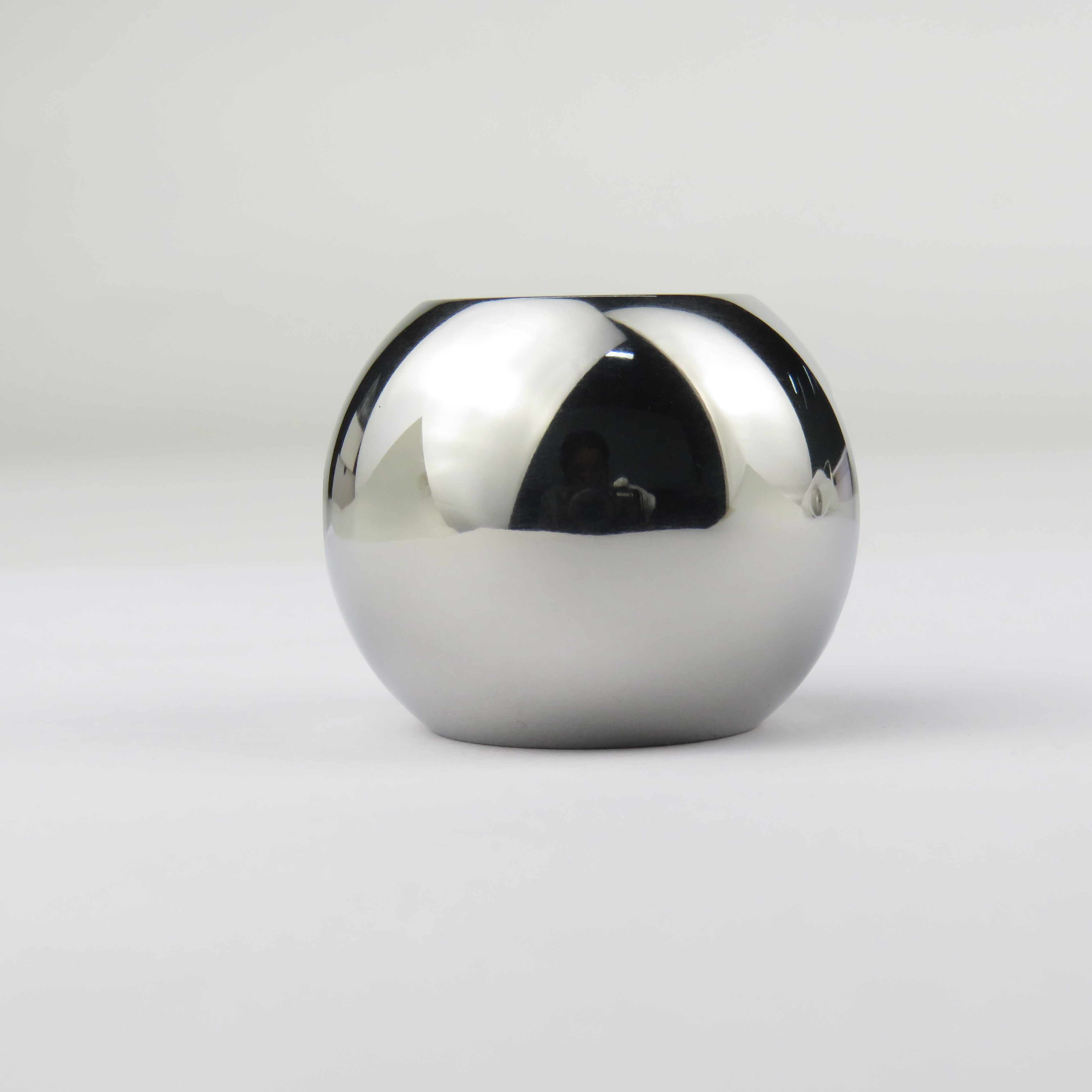
They are different processes with different effects, and SurfacePolish does not supply or perform electropolishing. Mechanical finishing works by media contact, so it blends, deburrs and brightens the surfaces the media can reach, and it rounds edges as it works. Electrochemical treatment removes material ionically and reaches into recesses that media cannot. Where an electropolished surface is specified for corrosion or cleanliness reasons, treat electrochemical processing as a comparison point and ask whether the specified requirement can be met by another route, then verify that on your own parts and against your own acceptance rule.
Speckled rust usually means free iron contamination rather than a material fault. Common sources are carbon steel parts run in the same machine or media, worn steel components in the chamber, steel racks and baskets, grinding dust settling on wet parts, and tools used elsewhere in the shop. A ferroxyl-type test at agreed locations confirms free iron, and a comparison against an untouched part from the same batch makes the result usable. Prevention is segregation: dedicated media and handling for stainless, covered storage, and a check on incoming media for metallic debris.
Hydrogen uptake is a documented concern for high-strength martensitic stainless steels when acid chemistry and mechanical work are combined, and it is not visible on the surface. The practical route is to state the material and hardness in the enquiry, ask which compound families are proposed and at what concentration, and confirm with your own engineering function whether any post-finishing treatment is required and within what window. SurfacePolish can describe the compound family and the process conditions used on a trial, but fitness for a given strength level, and any treatment specification that follows, must be defined and verified by the buyer.
Use Florence, Italy as the destination on the enquiry and state whether the deliverable is equipment, media and compound, a representative sample review or a line concept. A destination does not imply local stock, a local service point or a local delivery time.
A Florence buyer would set surface and edge requirements against ISO/UNI surface-texture standards and, for the pharmaceutical-side base, against the cleanliness and residue limits held in the customer's own device or plant specification rather than in a finishing-specific standard. Finishing operations are normally qualified as a process step inside the customer's quality system, and the Tuscan manufacturing associations run technical and standardisation desks for members.
Sources were retrieved on 2026-09-29 and describe the local industrial and trade context only. They do not evidence any SurfacePolish project, shipment, installation or service in Florence.
The buyer needs the cap brought to a uniform bright finish without waviness, cross-contamination speckling or loss of the locating tab geometry.
Send the material, dimensions, approximate weight, batch quantity, the incoming condition and photographs of the difficult features. Mark which features must not be contacted by media and state how the result will be inspected. This form carries source reference PSEO-0472; quote it if you prefer an additional manual reference.
Open the SurfacePolish enquiry form Email a prepared enquiry
No price, lead time, certification or result is promised here. Confirm whether a sample trial is available for the specific part and what the trial can and cannot show.
Page PSEO-0472 · revised 2026-09-29 · cross-border equipment, media and scoped sample review. City context is sourced and cited above.
Use this local checker to identify missing part and inspection information. It prepares a technical-review brief; it does not approve a machine, process recipe or production result.
Complete the part details to prepare a review brief.
Email : info@surface-polish.com


 IPv6 network supported


 +86-592-2381506