In Hamburg, Germany, an automotive parts buyer needs a small stainless trim cap brought to a uniform bright finish without waviness, rust speckling or loss of a locating tab. SurfacePolish is a cross-border supplier of finishing machines, media and compounds and runs a free sample trial: parts sent to the Xiamen factory are processed and returned with observations and a proposed media, compound and cycle direction for the buyer to verify. This brief is written for a buyer in Hamburg working on automotive parts; it describes equipment, media and a scoped sample review, not a local polishing service.
Which internal features must be deburred without lodging media, and what retrieval and verification step proves the passage and thread form are clean?
Which alloy family is the part, and has cold work, welding or heat treatment already changed its hardness, magnetic response or corrosion behaviour?
Which dimensions, seal faces and thread forms carry functional geometry, and what limit on stock removal per cycle can those features tolerate?
Magnetic response is a sorting aid, not a material identification. Ferritic exhaust grades are strongly attracted, martensitic wear grades are magnetic, austenitic grades are effectively non-magnetic in the annealed state but become weakly magnetic after cold work, and duplex grades sit in between depending on composition and condition. A mixed load is therefore a real risk on two counts: a ferritic part can transfer free iron onto an austenitic neighbour during a shared cycle, and a magnetic retrieval or separation step can quietly fail on a grade that was assumed to be magnetic. Identify parts positively before finishing using material certificates, heat numbers and markings, and keep loads segregated by grade. Where a part is small or unmarked, settle the identification question before any consumable is chosen, because the answer changes both media chemistry and separation design.
In stainless finishing the first machine question is not how bright the part must become but how much material the most sensitive edge can lose. Mechanical action removes stock far faster at edges, corners and thin sections than on a flat face, so the route follows the tightest edge requirement on the drawing. Where a hole edge or a stamped cover sits in a narrow allowable band, a gentler route such as barrel or rotary, or a vibratory bowl run at moderate energy with an edge-specific compound, is the defensible starting point. Where heavier deburring is needed and edges can tolerate more removal, a disc or centrifugal barrel route uses energy more productively. Record the decision as allowable stock removal per cycle at the tightest feature, because that framing is what lets a supplier recommendation and a buyer limit be compared honestly.
| Machine route | Where it fits | What it will not do |
|---|---|---|
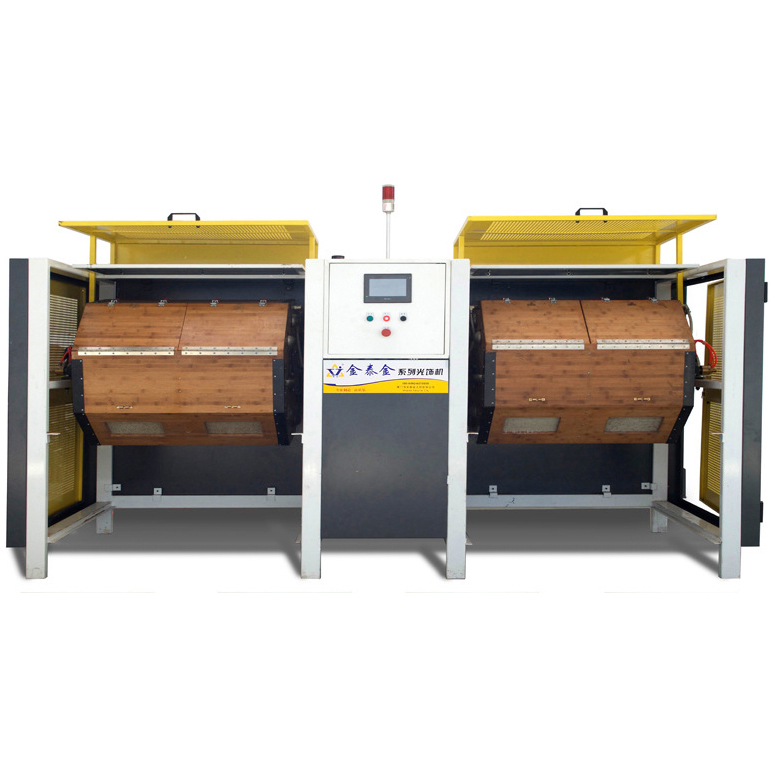
| Disc finishing machine | Fast deburring and blending of heavier machined stainless parts whose edges can accept a higher removal rate. | The higher energy can damage thin walls and delicate features, so tooling or compartments are often needed to protect them. |
| Tub vibrator | Long stainless parts such as trim sections, exhaust profiles and shafts that cannot be loaded into a bowl without being cut down. | Media velocity varies along the length, so finish evenness must be verified at both ends, and the machine occupies more floor space and compound volume. |
| Continuous or indexed wet line with staged media charges | Multi-stage stainless finishing where deburring, refining and brightening are separated to control edge loss and texture progression. | Needs clear segregation between stages to prevent carry-over of coarse media or iron contamination, and adds handling and floor space. |
| Barrel finishing machine, rotary barrel tumbler | Gentle deburring and finishing of delicate, thin or threaded stainless parts such as small fittings, sensor bodies and precision pins. | Cycles run longer than in higher-energy machines, and coverage can be uneven on large or complex parts. |
Media is a consumable that changes during use, and stainless finishing is sensitive to that drift. Ceramic media loses size and edge sharpness, its cutting rate falls, and the charge accumulates broken pieces and fines; steel media deforms and generates metallic fines; plastic media can load with metal particles; compound residue and swarf build up in the mass. The practical consequence is that a cycle tuned on fresh media behaves differently after days of running, which is why results can drift without any setting having been touched. Track wear by screening a sample of the charge at intervals, logging media make-up quantities and cycle hours, and replacing on measured condition rather than on a fixed calendar. Keeping the charge inside a known working window, and re-verifying the finish after any full charge replacement, is what makes a production result repeatable.
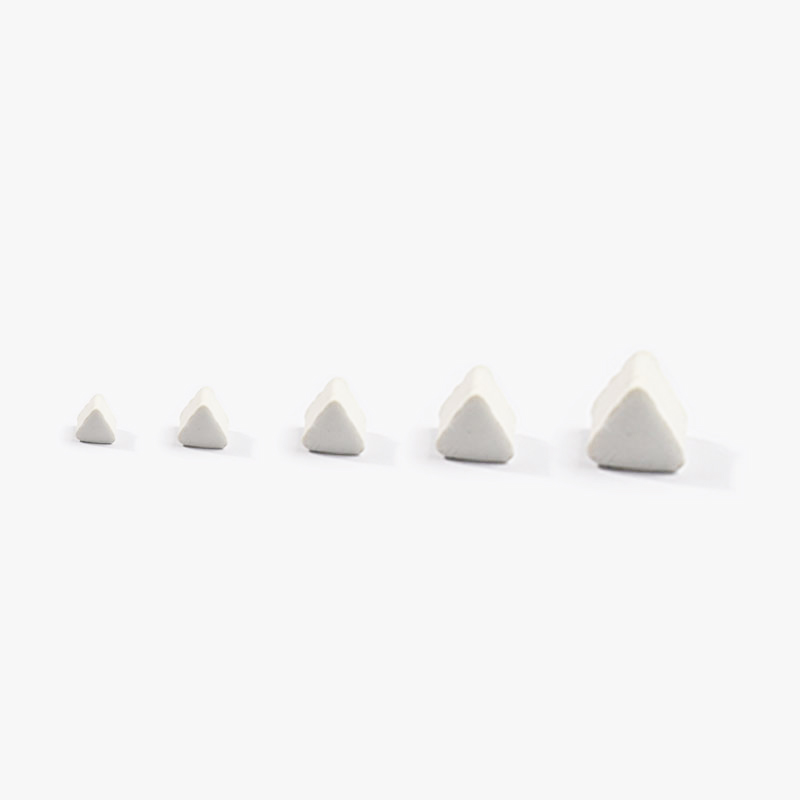
| Media | Best fit | Watch out for |
|---|---|---|
| Steel media, including balls and shaped steel forms | Brightening and burnishing of austenitic stainless appearance parts where the highest available gloss is the objective. | Deforms and generates metallic fines, adds weight to the load, and can transfer iron if used in a line shared with carbon steel work. |
| Ceramic cylinders, balls and other rounded shapes | General surface refinement and blending on broad stainless faces where a more even texture and gentler edge action are wanted. | Does not reach sharp internal corners, and long enough running on thin sections can still round edges beyond a tight callout. |
| Plastic media, polyester and urea based | Gentle deburring of delicate or thin stainless parts and of softer metals in mixed production, where edge loss must be minimised. | Low cutting power on stainless, can load with metal particles, and is generally the wrong tool for generating a stainless appearance finish. |
| Porcelain and fine high-density ceramic media | Pre-polish refining stages on austenitic stainless appearance parts before a brightening stage, where a finer texture is the objective. | Limited cutting power on hard or work-hardened surfaces, and wear changes the charge gradually, so finish can drift between batches. |
The defect that ends most stainless finishing trials is not a bad appearance but an edge that moved further than the drawing allows. Threads and gear teeth are the classic casualties, because mechanical action removes material from crests quickly, changing effective pitch diameter and flank form; a part can still thread by hand and still fail a gage. Radiused or chamfered edges behave similarly, since the process removes stock precisely at the edge where a callout is tightest. Start the trial with an edge record and repeat it afterwards: thread and gear gages before and after, edge radius at marked locations with an optical comparator or a cast impression, and a written allowable band agreed before any cycle runs. Treat the shortest cycle that achieves the required appearance as the control condition, and be suspicious of any proposal that adds cycle time to improve a finish that was already acceptable.
| Failure mode | Likely cause | How to catch it |
|---|---|---|
| Rust blooms or speckling on austenitic or duplex parts after finishing | Free iron transferred from carbon steel, ferritic stainless or worn steel machine parts sharing the same media, chamber, racks or bench area. | Run a ferroxyl-type test for free iron at agreed locations, compare against an untouched part from the same batch, and repeat the check after a defined exposure period to catch delayed blooms. |
| Edge rounding beyond the specified radius on a functional edge | Cycle energy, time or media size class chosen for appearance rather than for the tightest edge callout on the drawing. | Measure edge radius at marked locations with an optical comparator or a cast impression before and after, and record the result against a written allowable band rather than judging it visually. |
| Hydrogen-related cracking risk on high-strength martensitic stainless parts | Acid-bearing compound chemistry combined with mechanical work on a hardened structure, with no defined post-finishing treatment by the buyer. | Confirm the material and hardness against the purchase documentation, verify which compound family was used and at what concentration, and route the fitness-for-service question to the buyer's engineering function. |
| Thread crests rounded and thread gages failing after finishing | Mechanical action removing material from crests during an energetic or extended cycle, sometimes with media large enough to strike the thread form directly. | Gage every threaded feature before and after the cycle with the drawing's gages, inspect crest form with an optical comparator, and keep the shortest cycle that still achieves the required appearance. |
Hamburg's industrial identity is built on its port and on aviation: 8.3 million TEU were handled in the Port of Hamburg in 2025, growth of 7.3 percent, and HHLA operates three container terminals in the city at Altenwerder, Burchardkai and Tollerort (s1, s2). Airbus states that Hamburg is the headquarters for Airbus Commercial Aircraft in Germany, the largest Airbus site in the country and a key centre for developing and manufacturing jetliners (s3). The city presents Hamburg as the economic heart of northern Europe on the strength of its mix of economic potential and quality of life (s4), with Hamburg Invest as the central contact for companies investing, expanding or locating in the metropolitan region (s5). The Handelskammer Hamburg frames the city as a business location defined by its port, airport and critical infrastructure (s6), and a dedicated cluster agency works the renewable-energy industry of the metropolitan region (s7).
The nearest part of that base to this brief is aerospace: Airbus states that Hamburg is the headquarters for Airbus Commercial Aircraft in Germany and the largest Airbus site in the country, a key centre for developing and manufacturing jetliners (s3).
Hamburg combines large-scale port and terminal engineering with aircraft component manufacture, both of which involve stainless and aluminium structures that are welded, cut and machined before assembly and then judged on edge condition, burr removal and surface preparation before painting, sealing or coating. Aviation work brings documented process control and cleanliness requirements, while the port and terminal side contributes heavy fabrication and repair work where de-scaling, edge rounding and surface preparation are routine.
A Hamburg buyer should first decide whether the process has to fit aviation-style documented process control or whether a general workshop specification is enough, and then check whether the same equipment must handle both aluminium and stainless parts, since media and compound selection differ and cross-contamination between the two is the usual failure point.
Freight context: Port of Hamburg (HHLA container terminals Altenwerder, Burchardkai and Tollerort), Hamburg Airport (HAM). The Port of Hamburg handled 8.3 million TEU in 2025 (up 7.3 percent), with HHLA operating the three city container terminals (s1, s2). The port is the natural entry point for a full finishing machine shipped from Asia, and Hamburg Airport plus the port's air-freight and courier links are the practical route for sample parts that have to reach a plant quickly.
Machinery placed on the German market must be CE marked, and the manufacturer is responsible for the conformity assessment, the technical file, the EU declaration of conformity and for affixing the mark; importers and distributors are separately obliged to ensure that only compliant, CE-marked products are placed on the EEA market (c3, c4). The customs authority is German customs (Zoll), part of the Generalzolldirektion, and the operator identification it issues, the EORI number, is a prerequisite for customs clearance in the European Union (c5, c6). In general EU practice a buyer's landed-cost plan therefore needs to cover the commodity-code classification that sets the duty rate, import VAT and the customs declaration, on top of the CE technical file and an identified EU-based economic operator who can act as importer or authorised representative; the technical documentation and the declaration of conformity must be available in the language required by the buyer's market surveillance authority.
Germany sits inside the EU customs union, so Chinese-origin industrial machinery enters against the EU's common commercial tariff rather than a German national tariff, and the duty that applies is determined by the commodity code declared on the import declaration. China is one of the EU's largest goods trading partners and the EU has long run a goods deficit with it, while the Commission characterises the relationship as simultaneously partnership, competition and systemic rivalry (c1, c2). The Commission publishes the EU's trade agreements; no agreement with China appears in that overview, so Chinese-origin goods cannot claim a preferential origin rate and are assessed under the standard tariff (c8). German customs is administered by the Zoll under the Generalzolldirektion, and the importer must hold an EORI number - valid throughout the European Union and replacing the former German customs number - before goods can be cleared (c5, c6).
SurfacePolish supplies from Xiamen, China. The buyer's own destination rules, conformity marking, tariff classification and documentation responsibilities stay with the buyer; confirm them against the authorities named above before ordering.
Appearance grading on stainless is best served by physical masters: one part at the acceptable limit and one at the marginal limit, viewed under the same lighting, at the same distance and at the same angle as production inspection. Lighting is the dominant variable in appearance judgment, so a master viewed beside a window in the morning will not agree with parts viewed under a machine light at night. Record the viewing conditions with the master, keep the master protected and dated, and photograph it as a supplement rather than as a replacement. For satin and brushed finishes, the master should also fix the direction and uniformity of the texture, since a part can meet a roughness figure and still look wrong beside a mating panel. Keep a small library of masters for the finishes this process actually produces, because a single nominal sample cannot cover a batch.
Parts returned from a trial are only half the deliverable; the record of what was done is the other half. A usable trial report describes the machine route, media specification and size class including its condition, compound family and concentration, water source, cycle duration, load fill ratio, and the measured results at the marked locations. Read it against your own before-and-after record, and check that the settings are described completely enough to be repeated by a different operator on a different day. Where a result is strong but the mechanism is unexplained, ask what changed rather than accepting the outcome, because an unexplained good result is hard to reproduce. Where a trial produced a good appearance and a poor edge measurement, treat the edge measurement as the governing result for a functional automotive part.
A trial produces observations on the parts tested under the settings used, and nothing more. It cannot guarantee a surface value, appearance grade, cycle time, capacity or cost in production, and it does not certify or qualify a process for any regulated application. What it can do is narrow the field: compare two media, two compound families or two cycle lengths under controlled conditions, expose edge and lodging risks, and give your engineering team measured before-and-after data to work from. Read the trial record, check that the settings are described fully enough to repeat, and keep the acceptance decision and any qualification work inside your own quality system.
Treat them as two separate requirements rather than one. Map exterior visible surfaces, hidden surfaces and every edge that has a job such as sealing, bearing or assembly clearance. Appearance zones tolerate broad blending; functional edges need a stated limit and a measuring method. The two often pull in opposite directions, because the cycle that brightens a panel also removes material fastest at exactly the edges that must stay inside a band. Ask the designer to confirm colour, texture and direction on visible faces, and put the edge requirement in writing with its instrument before any media is chosen.
They are different processes with different effects, and SurfacePolish does not supply or perform electropolishing. Mechanical finishing works by media contact, so it blends, deburrs and brightens the surfaces the media can reach, and it rounds edges as it works. Electrochemical treatment removes material ionically and reaches into recesses that media cannot. Where an electropolished surface is specified for corrosion or cleanliness reasons, treat electrochemical processing as a comparison point and ask whether the specified requirement can be met by another route, then verify that on your own parts and against your own acceptance rule.
Use Hamburg, Germany as the destination on the enquiry and state whether the deliverable is equipment, media and compound, a representative sample review or a line concept. A destination does not imply local stock, a local service point or a local delivery time.
Surface, edge and cleanliness requirements in Hamburg are written against DIN/EN/ISO texts, with CE marking and the EU declaration of conformity as the route for placing machinery on the German market (c3, c7). Aerospace customers apply their own qualification and documentation regimes on top of that, while the VDA framework governs automotive supplier requirements where Hamburg plants feed automotive programmes (c10).
Sources were retrieved on 2026-09-29 and describe the local industrial and trade context only. They do not evidence any SurfacePolish project, shipment, installation or service in Hamburg.
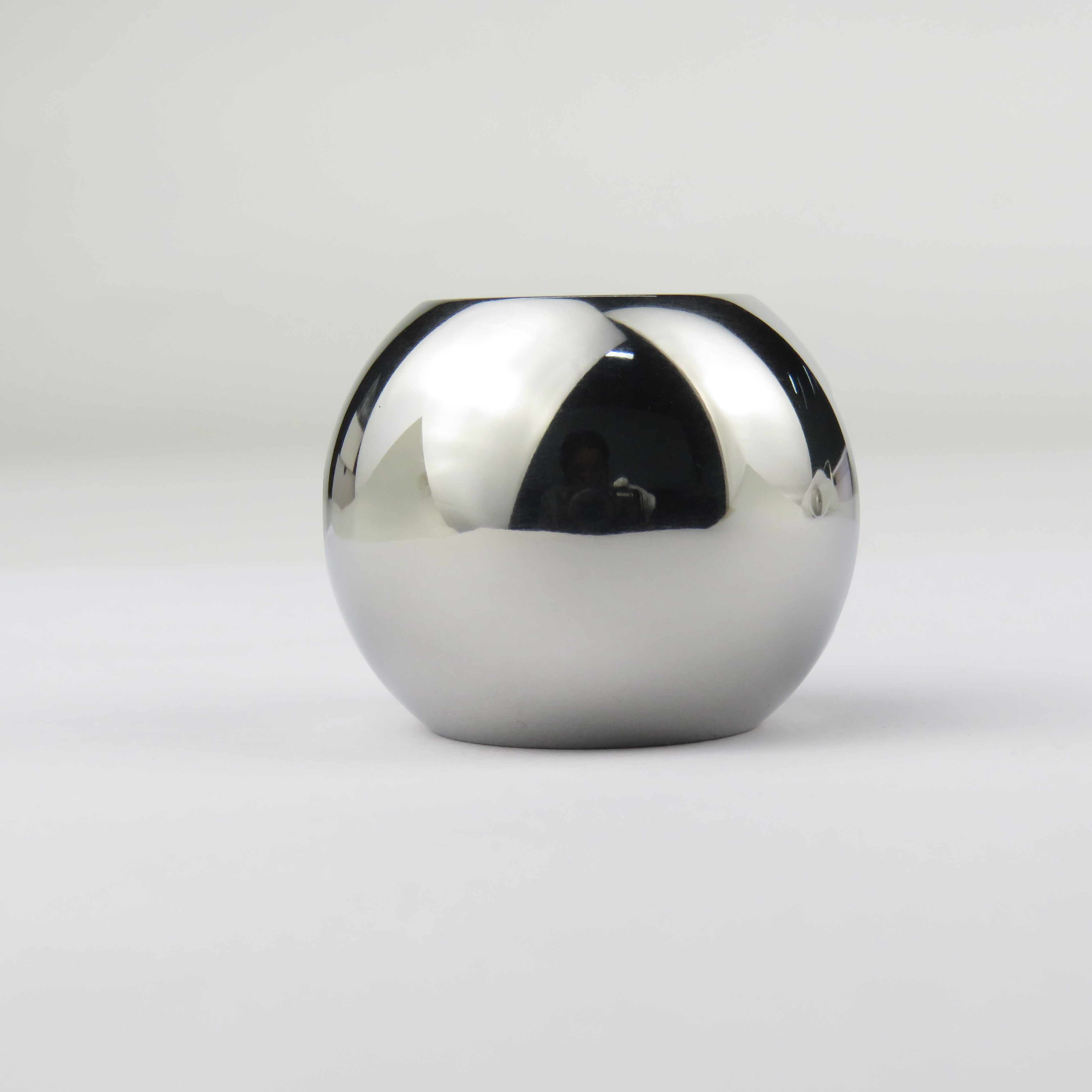
The buyer needs the cap brought to a uniform bright finish without waviness, cross-contamination speckling or loss of the locating tab geometry.
Send the material, dimensions, approximate weight, batch quantity, the incoming condition and photographs of the difficult features. Mark which features must not be contacted by media and state how the result will be inspected. This form carries source reference PSEO-0332; quote it if you prefer an additional manual reference.
Open the SurfacePolish enquiry form Email a prepared enquiry
No price, lead time, certification or result is promised here. Confirm whether a sample trial is available for the specific part and what the trial can and cannot show.
Page PSEO-0332 · revised 2026-09-29 · cross-border equipment, media and scoped sample review. City context is sourced and cited above.
Use this local checker to identify missing part and inspection information. It prepares a technical-review brief; it does not approve a machine, process recipe or production result.
Complete the part details to prepare a review brief.
Email : info@surface-polish.com


 IPv6 network supported


 +86-592-2381506