A automotive parts buyer in Liverpool, United Kingdom has a hardened stainless exhaust valve that must be deburred at the seat margin without rounding the seat edge or disturbing a nitrided stem. SurfacePolish supplies finishing machines and consumables across borders and runs a free sample trial in Xiamen, returning the tested parts with observations and a proposed media, compound and cycle direction for the buyer's own engineering review. This brief is written for a buyer in Liverpool working on automotive parts; it describes equipment, media and a scoped sample review, not a local polishing service.
Which dimensions, seal faces and thread forms carry functional geometry, and what limit on stock removal per cycle can those features tolerate?
How will free iron, embedded particles and cross-contamination from carbon steel be prevented, and how will each be detected on the finished part?
Which internal features must be deburred without lodging media, and what retrieval and verification step proves the passage and thread form are clean?
Stainless is a family, not one material, and the finishing window changes with it. Ferritic grades used for exhaust and trim are magnetic and generally softer, so they cut quickly and can smear; martensitic grades used for wear parts are hard and magnetic, and some high-strength conditions carry a hydrogen concern when acid chemistry is involved; austenitic grades are tough, work harden under mechanical action and are usually non-magnetic, which changes retrieval options; duplex and super-duplex grades combine high strength with chloride sensitivity, so surface contamination matters more. Cold work matters twice, because a pressing or a machined skin alters surface hardness and can shift magnetic response, and because a bright finish on a work-hardened skin may not survive a later forming operation. Record grade, delivery condition, hardness range and prior cold work, then match machine energy and media hardness to the family rather than reusing a recipe that worked elsewhere.
The compound does more than clean: it carries debris, controls pH and temperature, and inhibits corrosion during and after the cycle. Chemistry has to suit the alloy family, because a compound that brightens one stainless grade can stain another or leave a film that shows as a defect. Alkaline and near-neutral formulations are common for general cleaning and finishing where brightness is secondary. Products described as brightening or burnishing formulations are selected by the media and compound supplier for austenitic and duplex work, and they are tested on the actual part before being adopted. Chloride content is a hard consideration for austenitic and duplex grades, since chloride-bearing chemistry and chloride-bearing water are associated with pitting and staining. Contamination risk also rises when a line is shared with carbon steel, so compound choice and line segregation need to be settled together.
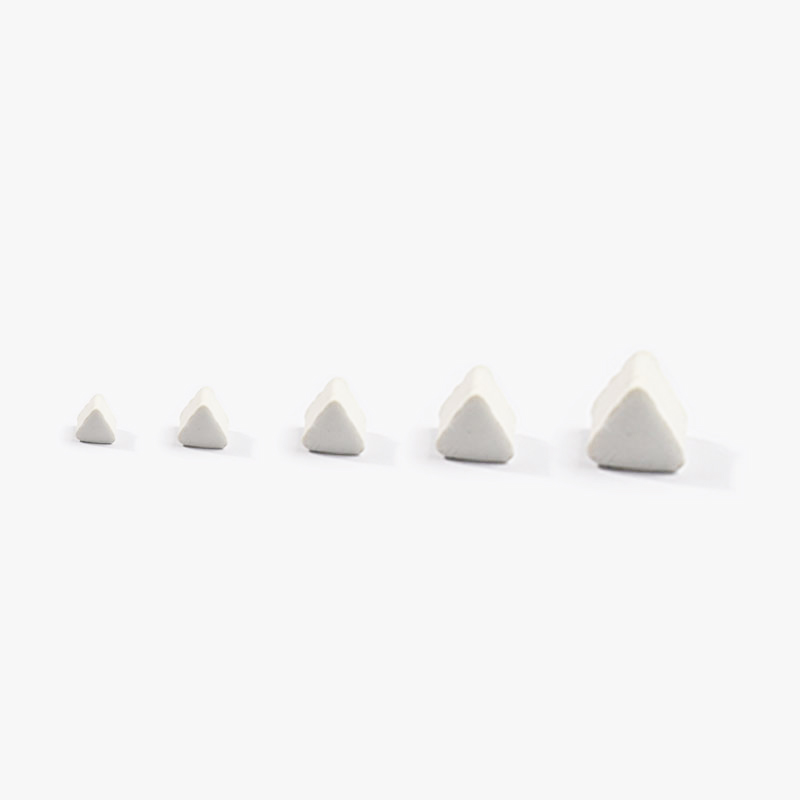
| Media | Best fit | Watch out for |
|---|---|---|
| Dry media, walnut shell and corn cob | Post-wet drying, light residue and scale removal, and dry polishing of surfaces that must not be re-wetted. | Does not cut stainless, generates dust, and leaves organic residue on parts if the medium is not kept clean and dry. |
| Alumina-based ceramic triangles and angle-cut forms | Heavy deburring, edge blending and machine-mark removal on stainless brackets, flanges and housings where corners and recesses must be reached. | Wears down in size and sharpness, so cutting rate falls without any setting change; broken pieces and fines can lodge in small features and must be screened out. |
| Ceramic cylinders, balls and other rounded shapes | General surface refinement and blending on broad stainless faces where a more even texture and gentler edge action are wanted. | Does not reach sharp internal corners, and long enough running on thin sections can still round edges beyond a tight callout. |
| Steel media, including balls and shaped steel forms | Brightening and burnishing of austenitic stainless appearance parts where the highest available gloss is the objective. | Deforms and generates metallic fines, adds weight to the load, and can transfer iron if used in a line shared with carbon steel work. |
Three routes answer narrow needs. Barrel and rotary finishing is the gentlest common bulk method, well suited to delicate, thin or threaded stainless parts such as small fittings, sensor bodies and precision pins, at the cost of longer cycles and less uniform coverage on large parts. Magnetic finishing uses small steel pins driven by a rotating field to deburr and brighten intricate internal features, slots, gear teeth and blind holes without lodging media in narrow passages, but it suits small part envelopes, and parts made from magnetic grades need to be tested before the route is assumed to apply. Dry polishing with a heated dryer handles post-wet drying, light scale and residue control after a wet stage; dry media alone does not cut stainless, and moisture left in a blind hole or a folded hem becomes a stain during storage.
| Machine route | Where it fits | What it will not do |
|---|---|---|
| Barrel finishing machine, rotary barrel tumbler | Gentle deburring and finishing of delicate, thin or threaded stainless parts such as small fittings, sensor bodies and precision pins. | Cycles run longer than in higher-energy machines, and coverage can be uneven on large or complex parts. |
| Tub vibrator | Long stainless parts such as trim sections, exhaust profiles and shafts that cannot be loaded into a bowl without being cut down. | Media velocity varies along the length, so finish evenness must be verified at both ends, and the machine occupies more floor space and compound volume. |
| Disc finishing machine | Fast deburring and blending of heavier machined stainless parts whose edges can accept a higher removal rate. | The higher energy can damage thin walls and delicate features, so tooling or compartments are often needed to protect them. |
| Vibratory finishing machine, bowl type | General deburring and surface refinement of medium-sized stainless automotive parts such as brackets, small housings and flange blanks in a visible batch load. | Part size and shape are capped by chamber geometry, and thin or threaded parts may need compartments or fixtures to control part-on-part contact. |
The defect that ends most stainless finishing trials is not a bad appearance but an edge that moved further than the drawing allows. Threads and gear teeth are the classic casualties, because mechanical action removes material from crests quickly, changing effective pitch diameter and flank form; a part can still thread by hand and still fail a gage. Radiused or chamfered edges behave similarly, since the process removes stock precisely at the edge where a callout is tightest. Start the trial with an edge record and repeat it afterwards: thread and gear gages before and after, edge radius at marked locations with an optical comparator or a cast impression, and a written allowable band agreed before any cycle runs. Treat the shortest cycle that achieves the required appearance as the control condition, and be suspicious of any proposal that adds cycle time to improve a finish that was already acceptable.
| Failure mode | Likely cause | How to catch it |
|---|---|---|
| Embedded particles or grey smut on the finished surface | Media fines, broken ceramic fragments or metallic debris from the charge becoming trapped or smeared into the surface during the finishing cycle. | Examine under magnification with raking light and on a wipe test, check the compound bath and media charge for fines and broken pieces, and screen a media sample to identify the source. |
| Thread crests rounded and thread gages failing after finishing | Mechanical action removing material from crests during an energetic or extended cycle, sometimes with media large enough to strike the thread form directly. | Gage every threaded feature before and after the cycle with the drawing's gages, inspect crest form with an optical comparator, and keep the shortest cycle that still achieves the required appearance. |
| Edge rounding beyond the specified radius on a functional edge | Cycle energy, time or media size class chosen for appearance rather than for the tightest edge callout on the drawing. | Measure edge radius at marked locations with an optical comparator or a cast impression before and after, and record the result against a written allowable band rather than judging it visually. |
| Hydrogen-related cracking risk on high-strength martensitic stainless parts | Acid-bearing compound chemistry combined with mechanical work on a hardened structure, with no defined post-finishing treatment by the buyer. | Confirm the material and hardness against the purchase documentation, verify which compound family was used and at what concentration, and route the fitness-for-service question to the buyer's engineering function. |
Liverpool's industrial base is port-led: the Port of Liverpool operates two container terminals, the Royal Seaforth Container Terminal and the £400m Liverpool2 deep-water terminal, on both banks of the River Mersey. Peel Ports describes the port as the flagship handling hub of its 'Heart of Britain' steel and metals network and as a vital gateway for UK steel imports and distribution, and reports a record of over 702,000 tonnes of bulk steel and metals handled. Make UK classes the North West as the UK region with the highest total manufacturing output, and the Liverpool City Region Combined Authority is the area's statutory economic body.
The nearest part of that base to this brief is machinery: Make UK records North West England as topping the UK charts for total manufacturing output, and the Port of Liverpool handles the steel imports that feed that base.
Steel and metals handling at scale - the port reports a record of more than 702,000 tonnes of bulk steel and metals - supports a local base of stockholders, fabricators and processing firms whose plate, bar and sections need edge and surface conditioning before fabrication or dispatch. Media, machines and sample parts for that work can be landed at Liverpool2 or on the Manchester Ship Canal and moved inland on the same rail and road links that already carry the steel.
A Liverpool buyer should confirm the landed-cost and inland-movement plan at the same time as the machine specification, because equipment and media can clear through Liverpool2 or the Manchester Ship Canal, and the finishing acceptance criterion for steel work is normally defined by the customer's order rather than by a generic 'deburred' note.
Freight context: Port of Liverpool: Royal Seaforth Container Terminal and Liverpool2 (deep water), Port of Garston, Liverpool (ABP) - dry bulks and steel products, Liverpool Airport (11.5 miles from the port, per Peel Ports). Peel Ports states that the Port of Liverpool has direct deep-sea and short-sea connections including a niche Far East service, with a purpose-built rail terminal for onward movement, and lists road distances of 105 miles to Birmingham and 217 miles to London. ABP's Port of Garston, Liverpool handles around 500,000 tonnes of cargo a year including steel products, and ABP's Hams Hall terminal links the North West to Midlands distribution.
Importers need a GB-prefixed Economic Operators Registration and Identification (EORI) number, an import declaration carrying the correct commodity code, and retained commercial invoices plus the Import VAT Certificate (C79) so import VAT can be reclaimed. Machinery placed on the Great Britain market must be marked UKCA or CE: the manufacturer must draw up and retain technical documentation including a Declaration of Conformity, apply the correct marking with identification details, and cooperate with market surveillance; an authorised representative must be established in the UK. Under the Product Safety and Metrology (Amendment) Regulations 2024 the UK continues to recognise CE marking alongside or in place of UKCA for the Great Britain market, so either route can be used for most product types. Duty and import VAT are calculated from the customs value declared, and the commodity code also determines whether an import licence is needed.
English is the working language of contracts, drawings and conformity paperwork, so quotations, technical files and Declarations of Conformity should be supplied in English. UK manufacturers have now recovered above 2019 output levels in every English region and devolved nation except Northern Ireland, and the sector is concentrated in food and drink and transport equipment, with the North West the largest manufacturing region by total output. Buyers typically expect the UKCA/CE route, a Declaration of Conformity and a UK-established economic operator to be identified before order, and they need commercial invoices, customs declarations and the C79 retained in a form their finance team can use for import VAT recovery. No source verified in this research establishes a mandated payment instrument, so payment structure should be treated as commercial negotiation rather than a regulatory requirement.
SurfacePolish supplies from Xiamen, China. The buyer's own destination rules, conformity marking, tariff classification and documentation responsibilities stay with the buyer; confirm them against the authorities named above before ordering.
Ask for a record that lets a finished part be traced to what produced it: material certificates and heat numbers, the batch identification used during processing, media specification and size class, compound family and concentration, cycle parameters, and the measured results with locations. The distinction worth insisting on is between observations and acceptance, because a supplier reports what it saw while the buyer decides what is acceptable. First-article discipline is the practical form of this. For each part family, alloy and finish, process one article and inspect it fully against the drawing before any batch is released, retain it as a physical reference, and write down the settings that produced it. Then treat any change to media, compound, machine parameters or sources as a trigger to repeat the first-article inspection, because that is where a stable process is usually lost.
Once a line is producing, batch control protects both the finish and the traceability. Identify each load with the material heat or lot, keep grades separate through the chamber and the dry stage, record the media charge identification and compound batch, and keep the inspection record attached to the same batch identifier so a later complaint can be traced to what actually ran. For stainless, batch separation also means physical separation from carbon steel processing, including shared baskets, dryers and benches. What a trial cannot prove is worth stating plainly: it observes the parts tested under one set of conditions, it does not guarantee a surface value, cycle time, capacity or cost in production, and it does not qualify a process for any regulated application. Treat it as a way to reduce uncertainty before capital is committed, and let the buyer's own verification settle acceptance.
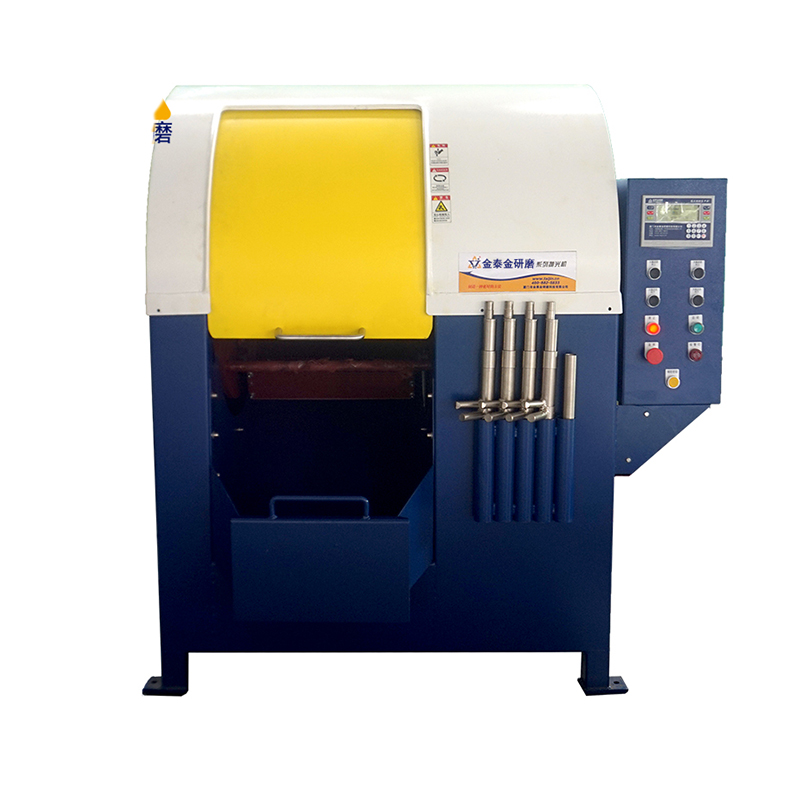

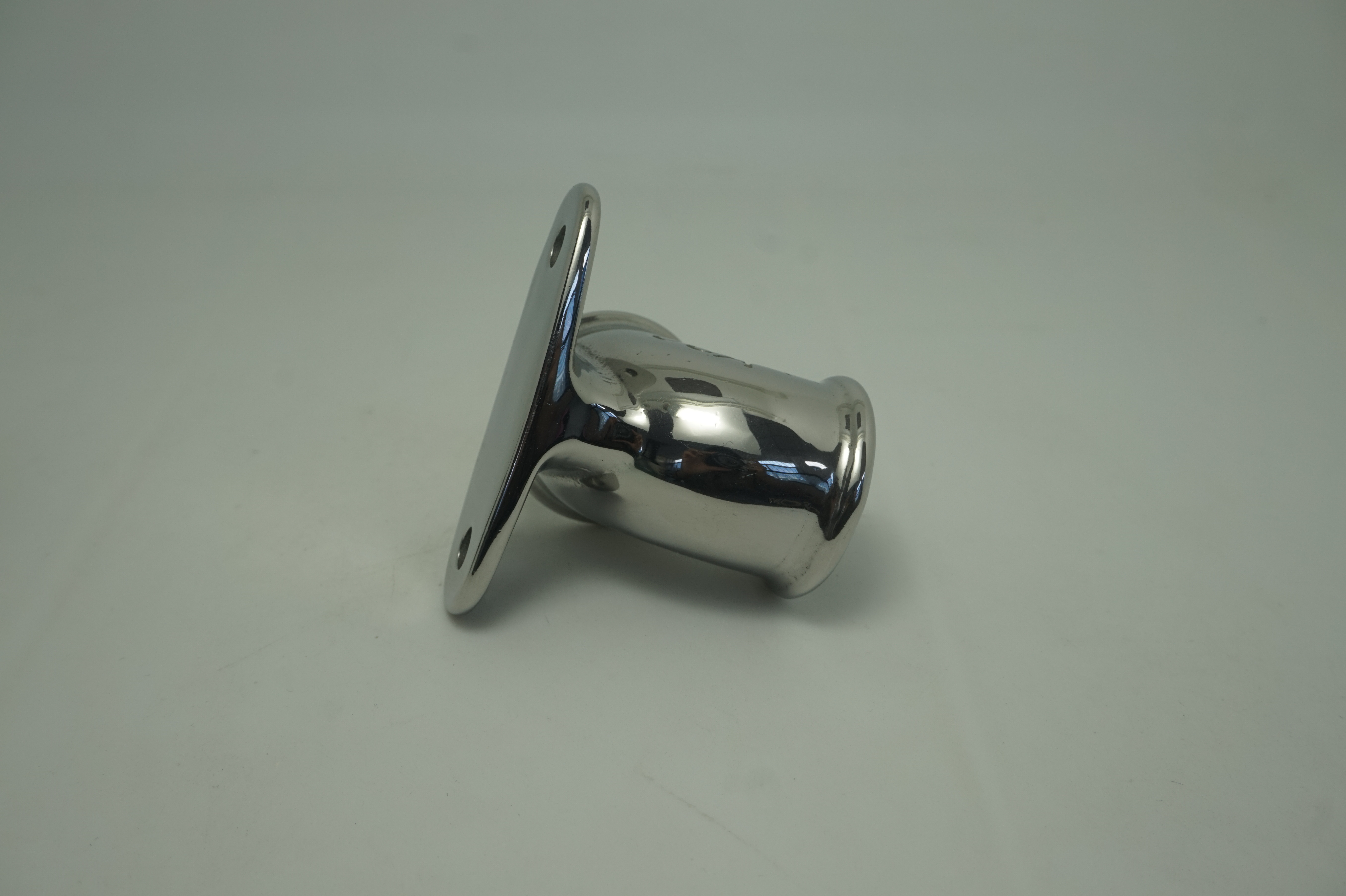
A trial produces observations on the parts tested under the settings used, and nothing more. It cannot guarantee a surface value, appearance grade, cycle time, capacity or cost in production, and it does not certify or qualify a process for any regulated application. What it can do is narrow the field: compare two media, two compound families or two cycle lengths under controlled conditions, expose edge and lodging risks, and give your engineering team measured before-and-after data to work from. Read the trial record, check that the settings are described fully enough to repeat, and keep the acceptance decision and any qualification work inside your own quality system.
Hydrogen uptake is a documented concern for high-strength martensitic stainless steels when acid chemistry and mechanical work are combined, and it is not visible on the surface. The practical route is to state the material and hardness in the enquiry, ask which compound families are proposed and at what concentration, and confirm with your own engineering function whether any post-finishing treatment is required and within what window. SurfacePolish can describe the compound family and the process conditions used on a trial, but fitness for a given strength level, and any treatment specification that follows, must be defined and verified by the buyer.
They are different processes with different effects, and SurfacePolish does not supply or perform electropolishing. Mechanical finishing works by media contact, so it blends, deburrs and brightens the surfaces the media can reach, and it rounds edges as it works. Electrochemical treatment removes material ionically and reaches into recesses that media cannot. Where an electropolished surface is specified for corrosion or cleanliness reasons, treat electrochemical processing as a comparison point and ask whether the specified requirement can be met by another route, then verify that on your own parts and against your own acceptance rule.
Use Liverpool, United Kingdom as the destination on the enquiry and state whether the deliverable is equipment, media and compound, a representative sample review or a line concept. A destination does not imply local stock, a local service point or a local delivery time.
Equipment placed on the Great Britain market needs UKCA or CE marking with a Declaration of Conformity, and HSE's work equipment and machinery and COSHH regimes cover operation and the media, compounds and dust involved. Steel and metals buyers additionally work to the material, inspection and certification requirements written into their own order specification for the finished component.
Sources were retrieved on 2026-09-29 and describe the local industrial and trade context only. They do not evidence any SurfacePolish project, shipment, installation or service in Liverpool.
The buyer needs the stem and seat margins deburred and blended without rounding the seat edge or disturbing the nitrided layer.
Send the material, dimensions, approximate weight, batch quantity, the incoming condition and photographs of the difficult features. Mark which features must not be contacted by media and state how the result will be inspected. This form carries source reference PSEO-0252; quote it if you prefer an additional manual reference.
Open the SurfacePolish enquiry form Email a prepared enquiry
No price, lead time, certification or result is promised here. Confirm whether a sample trial is available for the specific part and what the trial can and cannot show.
Page PSEO-0252 · revised 2026-09-29 · cross-border equipment, media and scoped sample review. City context is sourced and cited above.
Use this local checker to identify missing part and inspection information. It prepares a technical-review brief; it does not approve a machine, process recipe or production result.
Complete the part details to prepare a review brief.
Email : info@surface-polish.com


 IPv6 network supported


 +86-592-2381506