In Melbourne, Australia, an automotive parts buyer has a hardened stainless parking pawl that must be deburred without changing tooth form or pivot bore fit. SurfacePolish supplies finishing equipment and consumables across borders and offers a free process sample trial in which the buyer's parts are processed at the Xiamen factory and returned with observations and a suggested media, compound and cycle direction for the buyer's own verification. This brief is written for a buyer in Melbourne working on automotive parts; it describes equipment, media and a scoped sample review, not a local polishing service.
Which surfaces on this part carry a visible appearance grade, which are hidden, and which edges have a functional requirement rather than a cosmetic one?
Which internal features must be deburred without lodging media, and what retrieval and verification step proves the passage and thread form are clean?
How will free iron, embedded particles and cross-contamination from carbon steel be prevented, and how will each be detected on the finished part?
Stainless is a family, not one material, and the finishing window changes with it. Ferritic grades used for exhaust and trim are magnetic and generally softer, so they cut quickly and can smear; martensitic grades used for wear parts are hard and magnetic, and some high-strength conditions carry a hydrogen concern when acid chemistry is involved; austenitic grades are tough, work harden under mechanical action and are usually non-magnetic, which changes retrieval options; duplex and super-duplex grades combine high strength with chloride sensitivity, so surface contamination matters more. Cold work matters twice, because a pressing or a machined skin alters surface hardness and can shift magnetic response, and because a bright finish on a work-hardened skin may not survive a later forming operation. Record grade, delivery condition, hardness range and prior cold work, then match machine energy and media hardness to the family rather than reusing a recipe that worked elsewhere.
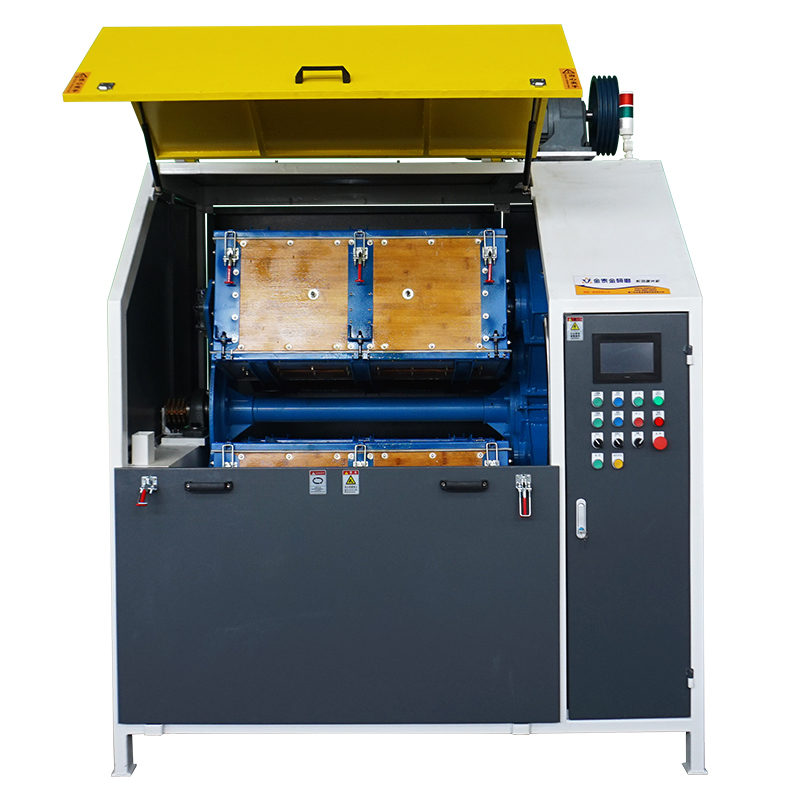
Disc finishing machines run a shallow, fast-moving charge that deburrs heavier machined stainless parts quickly: valve bodies, fittings, machined brackets and parts whose edges can lose material. The energy is an advantage for cycle time and a liability for thin walls and delicate features, so tooling and compartments often decide whether the route is acceptable at all. Centrifugal barrel finishing uses a planetary barrel motion that produces very high energy in short cycles, useful for aggressive edge radiusing on small, hard parts. The same energy rounds edges quickly, can exceed a tight radius callout within a short run, has part size and shape limits, and needs a larger load to justify the cycle. Treat both routes as candidates for heavy deburring and blending, and verify edge results on the actual part rather than assuming a shorter cycle means a safer one.
| Machine route | Where it fits | What it will not do |
|---|---|---|
| Magnetic finishing machine | Small precise stainless parts with internal features, slots and blind holes that must be deburred without media lodging in the passages. | Works within a small part envelope, and the route has to be tested per grade because it depends on the part's magnetic response. |
| Vibratory finishing machine, bowl type | General deburring and surface refinement of medium-sized stainless automotive parts such as brackets, small housings and flange blanks in a visible batch load. | Part size and shape are capped by chamber geometry, and thin or threaded parts may need compartments or fixtures to control part-on-part contact. |
| Centrifugal barrel finishing machine | Very high energy deburring and edge radiusing of small, hard stainless parts in short cycles. | Rounds edges quickly and can exceed a tight radius within a short run; part size and shape are restricted and a substantial load is needed to justify the cycle. |
| Continuous or indexed wet line with staged media charges | Multi-stage stainless finishing where deburring, refining and brightening are separated to control edge loss and texture progression. | Needs clear segregation between stages to prevent carry-over of coarse media or iron contamination, and adds handling and floor space. |
Media is a consumable that changes during use, and stainless finishing is sensitive to that drift. Ceramic media loses size and edge sharpness, its cutting rate falls, and the charge accumulates broken pieces and fines; steel media deforms and generates metallic fines; plastic media can load with metal particles; compound residue and swarf build up in the mass. The practical consequence is that a cycle tuned on fresh media behaves differently after days of running, which is why results can drift without any setting having been touched. Track wear by screening a sample of the charge at intervals, logging media make-up quantities and cycle hours, and replacing on measured condition rather than on a fixed calendar. Keeping the charge inside a known working window, and re-verifying the finish after any full charge replacement, is what makes a production result repeatable.
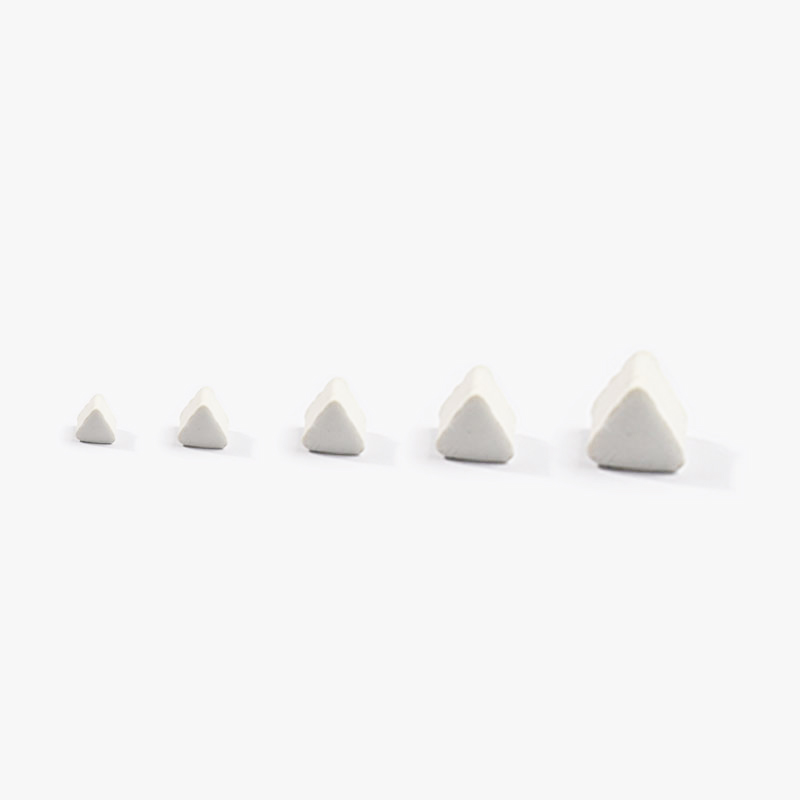
| Media | Best fit | Watch out for |
|---|---|---|
| Alumina-based ceramic triangles and angle-cut forms | Heavy deburring, edge blending and machine-mark removal on stainless brackets, flanges and housings where corners and recesses must be reached. | Wears down in size and sharpness, so cutting rate falls without any setting change; broken pieces and fines can lodge in small features and must be screened out. |
| Grinding and cutting media, fused alumina and silicon carbide based | Aggressive stock removal on heavy stainless burrs, weld dressing and rough cast surfaces before a refining stage. | Removes edge material quickly, can embed abrasive fragments in soft or gummy surfaces, and is usually too coarse for a final appearance stage. |
| Steel media, including balls and shaped steel forms | Brightening and burnishing of austenitic stainless appearance parts where the highest available gloss is the objective. | Deforms and generates metallic fines, adds weight to the load, and can transfer iron if used in a line shared with carbon steel work. |
| Magnetic stainless pins and fine needles for magnetic finishing | Deburring and brightening of intricate small stainless features, slots, gear teeth and blind holes where media cannot be allowed to lodge. | Suits small part envelopes only, and the route needs testing on magnetic grades before it is assumed to apply to a given part. |
Two failure modes produce a damaged edge and are often confused. Impingement, sometimes called a gouge or a nick, is local damage from part-on-part contact or media striking a feature at excessive energy, and it typically appears on thin stamped covers, large flat panels and unsupported webs. Its signature is randomness: the defect site moves from part to part and does not follow the geometry of the edge. Over-rounding is systematic, follows the edge itself, and repeats at the same location on every part in the load. Both are found with raking-light photographs, magnification on the suspect feature and comparison across several parts from the same batch. The remedy differs too, because impingement is addressed by load fill ratio, amplitude, compartments or fixtures, while over-rounding is addressed by cycle intensity, media size class and media hardness.
| Failure mode | Likely cause | How to catch it |
|---|---|---|
| Embedded particles or grey smut on the finished surface | Media fines, broken ceramic fragments or metallic debris from the charge becoming trapped or smeared into the surface during the finishing cycle. | Examine under magnification with raking light and on a wipe test, check the compound bath and media charge for fines and broken pieces, and screen a media sample to identify the source. |
| Heat tint, oxide or weld discolouration remaining after a light cycle | Incoming oxide from welding or laser cutting deeper than the finishing stage is designed to remove, or a finishing sequence that only brightens the surrounding surface. | Record the incoming oxide condition with photographs at agreed locations, then compare the same locations after processing and confirm whether removal of the oxide was inside the agreed scope. |
| Media lodged in cross-drillings, tapped holes, hems or closed volumes | Media size class small enough to enter a passage but not guaranteed to exit, or a separation step that relies on gravity alone. | Weigh the part where sensitivity allows, inspect passages with a borescope at agreed angles, pass pin or plug gages through each passage, and reconcile media counted into and out of the batch. |
| Hydrogen-related cracking risk on high-strength martensitic stainless parts | Acid-bearing compound chemistry combined with mechanical work on a hardened structure, with no defined post-finishing treatment by the buyer. | Confirm the material and hardness against the purchase documentation, verify which compound family was used and at what concentration, and route the fitness-for-service question to the buyer's engineering function. |
Greater Melbourne's manufacturing base spans automotive and caravan manufacturing, engineering and metal work, food and beverage product manufacturing, and medical technology and pharmaceuticals manufacturing, all of which fall within the remit of the Victorian Government's manufacturing industry advisory group. Public research capacity sits inside the metro area: CSIRO operates Victorian sites including Clayton, Parkville and a Food Innovation Centre at Werribee, and BioMelbourne Network is the state's membership association for biotechnology, medical technology and health innovation. Freight moves between the metropolitan intermodal terminals at Dynon, South Dynon, Spotswood, Laverton, Somerton and the Swanson Dock terminals, which connect road and rail movements to the Port of Melbourne.
For this brief the relevant part of that base is automotive: The Victorian manufacturing industry advisory group covers caravan and automotive manufacturing.
Melbourne's mix of metal fabrication, food and beverage plant, and medical device manufacturing puts surface condition on the critical path in several ways: deburring and edge rounding affect fit, fatigue life and the safety of parts handled in automated lines, while cleanliness and residue control matter where components go into food-contact equipment or medical products. Batch finishing choices also interact with the mix of low-volume fabrication and higher-volume repetitive parts typical of the metro area, because the same workshop often needs both.
A Melbourne buyer should decide whether the requirement is a functional edge and burr condition on specific features or a blanket surface specification, because that determines media selection and cycle time - and for food-contact or medical parts it should also settle the cleaning and residue acceptance criteria before any equipment is chosen.
Freight context: Port of Melbourne, Dynon and South Dynon intermodal terminals, Somerton intermodal terminal, Laverton intermodal terminal, Melbourne Airport. Victoria's freight system is coordinated by Freight Victoria, and the state publishes the metropolitan intermodal terminal list that feeds the Port of Melbourne, including terminals operated by Qube, Pacific National, SCT Logistics, Sadleirs, ACFS and Austrak. Containerised imports of finishing equipment normally arrive through the Port of Melbourne and are unpacked at or railed from one of those metropolitan terminals; intermodal terminals are defined by the state as locations for transferring freight between transport modes.
The Australian Border Force (ABF) is the customs authority and clears imported goods through customs; all goods arriving in Australia must be declared unless an exception applies, goods valued at up to A$1,000 can be imported without a formal import declaration, and entry is made through the Integrated Cargo System (Form B650 for sea or air cargo). Generally all goods imported into Australia are liable for duties and taxes unless an exemption or concession applies, and most imports are subject to 10% GST, so classification, customs valuation and any preferential tariff claim drive the landed cost; a licensed customs broker is the normal route for a first-time importer. Electrical equipment can fall under the Electrical Equipment Safety System, under which the first Australian supplier registers as a Responsible Supplier, holds an ABN, makes a Responsible Supplier Declaration and marks the equipment with the Regulatory Compliance Mark (RCM) in accordance with AS/NZS 4417.1 and AS/NZS 4417.2. Imported goods may also require a trade description naming the country of manufacture, and machinery that is not in-scope electrical equipment still has to meet state work health and safety duties covering plant.
The national standards body is Standards Australia, which publishes Australian Standards (AS) and joint Australian/New Zealand Standards (AS/NZS); on their own, standards are voluntary and there is no general requirement for the public to comply, but state and Commonwealth governments often refer to AS or AS/NZS standards in legislation and they can then become mandatory. For finishing and machinery work, the applicable documents are the ones cited in the buyer's own contract, purchase specification, licence condition or safety management system, together with the marking rules in AS/NZS 4417.1 and AS/NZS 4417.2 for in-scope electrical equipment sold under the EESS.
SurfacePolish supplies from Xiamen, China. The buyer's own destination rules, conformity marking, tariff classification and documentation responsibilities stay with the buyer; confirm them against the authorities named above before ordering.
Acceptance for a stainless automotive part should be settled before a machine or medium is proposed, because the acceptance rule determines which route is even capable. If the finish callout is a word like bright, inspection is whoever looks last; if it is a roughness range at a named location plus a physical visual master viewed under stated lighting, inspection becomes repeatable and the argument moves to the part. Set the sampling plan, the inspection method and the instrument or gage for each characteristic, and decide separately which features get a functional check as opposed to a cosmetic one. Write the rule into the purchase documentation along with the material grade, the marked measurement locations and the acceptance limits for edge condition. A supplier can then report observations against a defined rule instead of being asked to judge its own work.
Parts returned from a trial are only half the deliverable; the record of what was done is the other half. A usable trial report describes the machine route, media specification and size class including its condition, compound family and concentration, water source, cycle duration, load fill ratio, and the measured results at the marked locations. Read it against your own before-and-after record, and check that the settings are described completely enough to be repeated by a different operator on a different day. Where a result is strong but the mechanism is unexplained, ask what changed rather than accepting the outcome, because an unexplained good result is hard to reproduce. Where a trial produced a good appearance and a poor edge measurement, treat the edge measurement as the governing result for a functional automotive part.
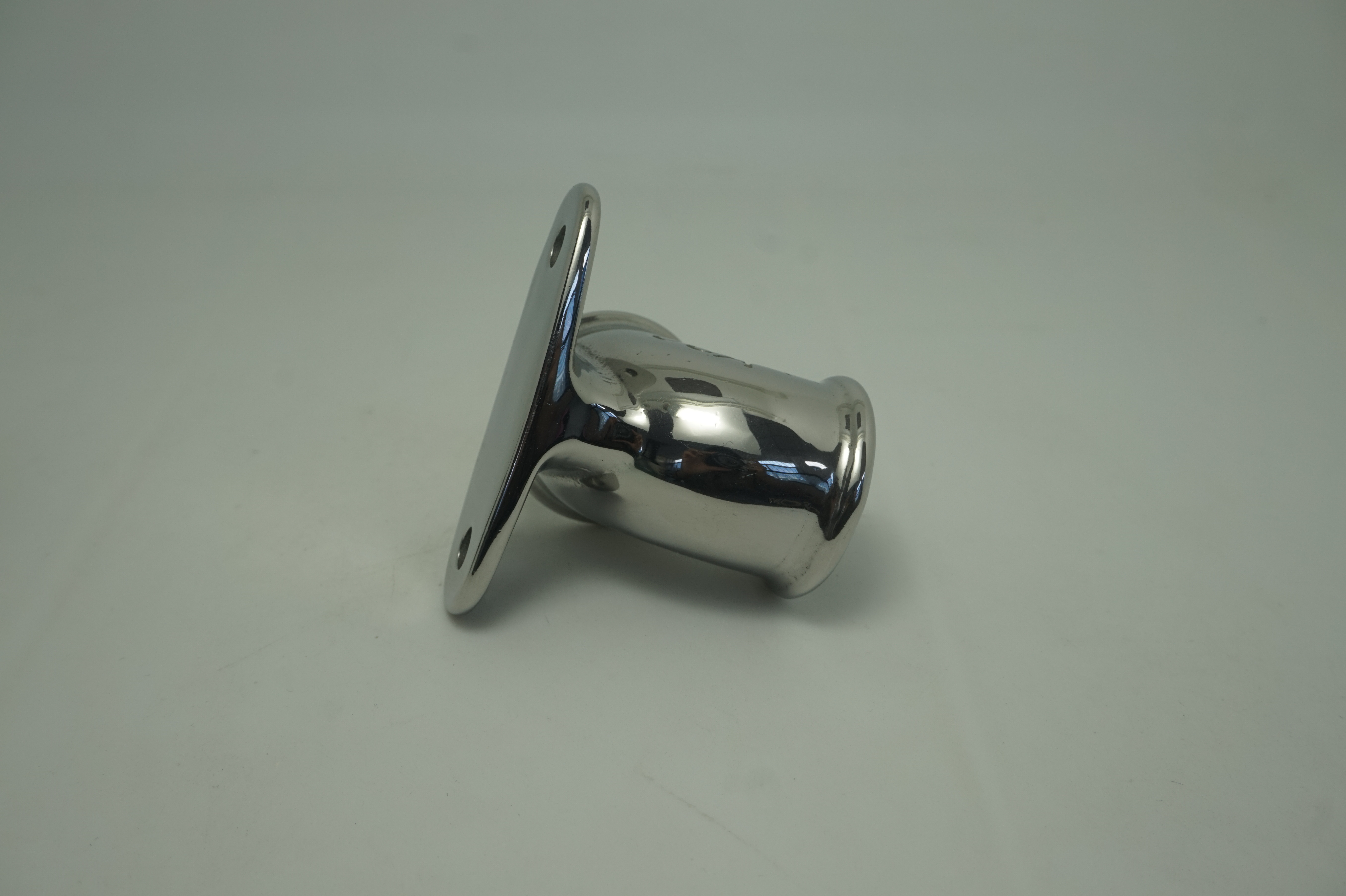
Control direction, texture depth and coverage, not only a roughness number. Mechanical finishing tends to create directionality, so agree with the customer whether the grain runs in one direction across the whole part order and how visible variation may be. Keep a physical master for the satin finish and view parts under the same lighting, distance and angle as the master, because lighting changes appearance judgements more than small process changes do. Fix media shape, size class and cycle settings in a work instruction, and re-verify the finish whenever the media charge is replaced or a new supplier batch of compound is introduced.
Hydrogen uptake is a documented concern for high-strength martensitic stainless steels when acid chemistry and mechanical work are combined, and it is not visible on the surface. The practical route is to state the material and hardness in the enquiry, ask which compound families are proposed and at what concentration, and confirm with your own engineering function whether any post-finishing treatment is required and within what window. SurfacePolish can describe the compound family and the process conditions used on a trial, but fitness for a given strength level, and any treatment specification that follows, must be defined and verified by the buyer.
They are different processes with different effects, and SurfacePolish does not supply or perform electropolishing. Mechanical finishing works by media contact, so it blends, deburrs and brightens the surfaces the media can reach, and it rounds edges as it works. Electrochemical treatment removes material ionically and reaches into recesses that media cannot. Where an electropolished surface is specified for corrosion or cleanliness reasons, treat electrochemical processing as a comparison point and ask whether the specified requirement can be met by another route, then verify that on your own parts and against your own acceptance rule.
Use Melbourne, Australia as the destination on the enquiry and state whether the deliverable is equipment, media and compound, a representative sample review or a line concept. A destination does not imply local stock, a local service point or a local delivery time.
Victorian buyers reference Australian Standards (AS) and joint AS/NZS standards named in their own specifications, purchase orders or safety systems; these standards are voluntary on their own but become effectively mandatory when state or Commonwealth legislation refers to them. Electrical equipment in scope for the EESS must carry the Regulatory Compliance Mark in accordance with AS/NZS 4417.1 and AS/NZS 4417.2, and machinery used in Victorian workplaces sits under the state's work health and safety duties for plant.
Sources were retrieved on 2026-09-29 and describe the local industrial and trade context only. They do not evidence any SurfacePolish project, shipment, installation or service in Melbourne.
The buyer needs the laser-cut and ground edges deburred and the flanks smoothed without changing the tooth form, the pivot bore fit or the specified edge radius.
Send the material, dimensions, approximate weight, batch quantity, the incoming condition and photographs of the difficult features. Mark which features must not be contacted by media and state how the result will be inspected. This form carries source reference PSEO-0712; quote it if you prefer an additional manual reference.
Open the SurfacePolish enquiry form Email a prepared enquiry
No price, lead time, certification or result is promised here. Confirm whether a sample trial is available for the specific part and what the trial can and cannot show.
Page PSEO-0712 · revised 2026-09-29 · cross-border equipment, media and scoped sample review. City context is sourced and cited above.
Use this local checker to identify missing part and inspection information. It prepares a technical-review brief; it does not approve a machine, process recipe or production result.
Complete the part details to prepare a review brief.
Email : info@surface-polish.com


 IPv6 network supported


 +86-592-2381506