A buyer in Rennes, France working on automotive parts has an exhaust flange that needs a brighter visible face while its sealing bead stays flat and free of iron contamination. SurfacePolish supplies finishing machines and consumables across borders and runs a free sample trial: the parts travel to Xiamen and come back with observations plus a proposed media, compound and cycle direction for the buyer's own engineering review. This brief is written for a buyer in Rennes working on automotive parts; it describes equipment, media and a scoped sample review, not a local polishing service.
At what batch size, load fill ratio and media wear state does a trial observation still describe what series production will produce?
Which dimensions, seal faces and thread forms carry functional geometry, and what limit on stock removal per cycle can those features tolerate?
Which surfaces on this part carry a visible appearance grade, which are hidden, and which edges have a functional requirement rather than a cosmetic one?
Beyond appearance, certain features establish how the part assembles, and media acts on them whether or not the drawing calls them out. Machined flange faces, O-ring and seal grooves, bearing bores, threaded holes, sensor mounting pads and dowel bores all carry that role. Media contact can shift flatness, open a bore slightly, round a thread crest or change a sensor gap, and normal shop inspection will not notice. Identify which surfaces are datums and which mate with another component, then treat the finish requirement on them separately from cosmetic areas. Protect them by masking, fixturing against a support, or finishing them with a gentler medium, and write down a maximum stock removal per cycle for every feature whose geometry could be consumed by the process. Ask the designer to confirm those limits rather than promising a blanket surface condition.
In stainless finishing the first machine question is not how bright the part must become but how much material the most sensitive edge can lose. Mechanical action removes stock far faster at edges, corners and thin sections than on a flat face, so the route follows the tightest edge requirement on the drawing. Where a hole edge or a stamped cover sits in a narrow allowable band, a gentler route such as barrel or rotary, or a vibratory bowl run at moderate energy with an edge-specific compound, is the defensible starting point. Where heavier deburring is needed and edges can tolerate more removal, a disc or centrifugal barrel route uses energy more productively. Record the decision as allowable stock removal per cycle at the tightest feature, because that framing is what lets a supplier recommendation and a buyer limit be compared honestly.
| Machine route | Where it fits | What it will not do |
|---|---|---|
| Centrifugal barrel finishing machine | Very high energy deburring and edge radiusing of small, hard stainless parts in short cycles. | Rounds edges quickly and can exceed a tight radius within a short run; part size and shape are restricted and a substantial load is needed to justify the cycle. |
| Dry polishing machine with heated dryer | Post-wet drying, residue control and light dry finishing of stainless parts that must leave the line dry and free of moisture in blind features. | Dry media does not cut stainless, and moisture trapped in a blind hole, hem or tight joint can cause staining if drying is not effective. |
| Tub vibrator | Long stainless parts such as trim sections, exhaust profiles and shafts that cannot be loaded into a bowl without being cut down. | Media velocity varies along the length, so finish evenness must be verified at both ends, and the machine occupies more floor space and compound volume. |
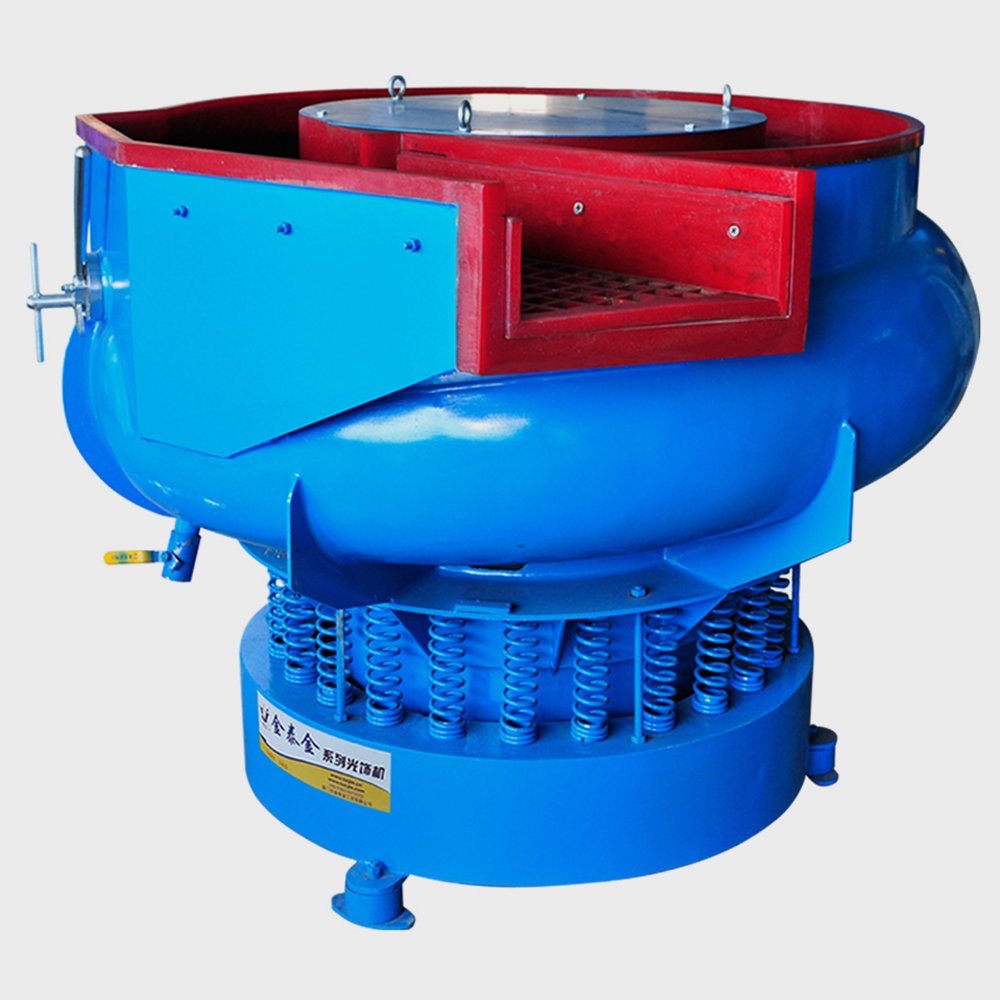
| Barrel finishing machine, rotary barrel tumbler | Gentle deburring and finishing of delicate, thin or threaded stainless parts such as small fittings, sensor bodies and precision pins. | Cycles run longer than in higher-energy machines, and coverage can be uneven on large or complex parts. |
Once media and machine are fixed, the variables a buyer can actually control are compound concentration, flow rate and water quality. Concentration influences cut rate, foam and residue; running lean to save money usually costs more in finish variation than it saves in consumable. Flow rate removes swarf and heat from the mass, and an under-flowed chamber loads up, smells, and starts depositing sludge on the parts. Water hardness, chloride content and suspended solids matter directly on stainless, because hard water leaves mineral films and chloride-bearing supply raises pitting risk on austenitic grades. Get a water analysis for the site, dose by measured concentration rather than by eye, and monitor pH and clarity at the machine. Record the actual water source used during a trial, because a good result obtained on one supply may not survive a change.
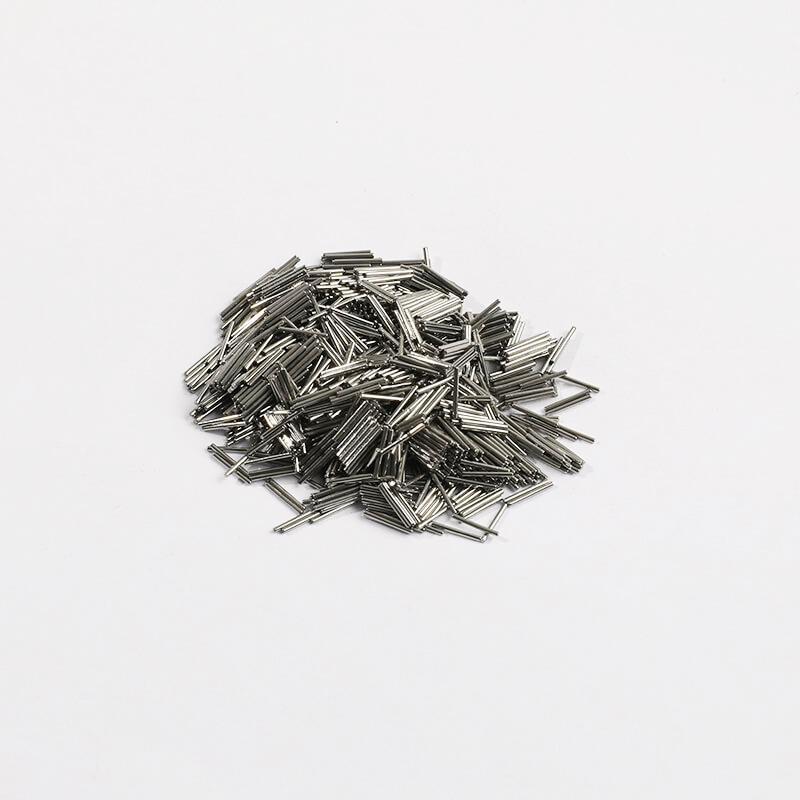
| Media | Best fit | Watch out for |
|---|---|---|
| Alumina-based ceramic triangles and angle-cut forms | Heavy deburring, edge blending and machine-mark removal on stainless brackets, flanges and housings where corners and recesses must be reached. | Wears down in size and sharpness, so cutting rate falls without any setting change; broken pieces and fines can lodge in small features and must be screened out. |
| Grinding and cutting media, fused alumina and silicon carbide based | Aggressive stock removal on heavy stainless burrs, weld dressing and rough cast surfaces before a refining stage. | Removes edge material quickly, can embed abrasive fragments in soft or gummy surfaces, and is usually too coarse for a final appearance stage. |
| Dry media, walnut shell and corn cob | Post-wet drying, light residue and scale removal, and dry polishing of surfaces that must not be re-wetted. | Does not cut stainless, generates dust, and leaves organic residue on parts if the medium is not kept clean and dry. |
| Porcelain and fine high-density ceramic media | Pre-polish refining stages on austenitic stainless appearance parts before a brightening stage, where a finer texture is the objective. | Limited cutting power on hard or work-hardened surfaces, and wear changes the charge gradually, so finish can drift between batches. |
The defect that ends most stainless finishing trials is not a bad appearance but an edge that moved further than the drawing allows. Threads and gear teeth are the classic casualties, because mechanical action removes material from crests quickly, changing effective pitch diameter and flank form; a part can still thread by hand and still fail a gage. Radiused or chamfered edges behave similarly, since the process removes stock precisely at the edge where a callout is tightest. Start the trial with an edge record and repeat it afterwards: thread and gear gages before and after, edge radius at marked locations with an optical comparator or a cast impression, and a written allowable band agreed before any cycle runs. Treat the shortest cycle that achieves the required appearance as the control condition, and be suspicious of any proposal that adds cycle time to improve a finish that was already acceptable.
| Failure mode | Likely cause | How to catch it |
|---|---|---|
| Edge rounding beyond the specified radius on a functional edge | Cycle energy, time or media size class chosen for appearance rather than for the tightest edge callout on the drawing. | Measure edge radius at marked locations with an optical comparator or a cast impression before and after, and record the result against a written allowable band rather than judging it visually. |
| Media lodged in cross-drillings, tapped holes, hems or closed volumes | Media size class small enough to enter a passage but not guaranteed to exit, or a separation step that relies on gravity alone. | Weigh the part where sensitivity allows, inspect passages with a borescope at agreed angles, pass pin or plug gages through each passage, and reconcile media counted into and out of the batch. |
| Hazing or waviness on a part specified as mirror or bright | An intermediate refining stage skipped or cut short, media too coarse for the final texture, or a media charge that has worn out of its working size range. | View under defined lighting against a physical master at the acceptable and marginal limits, measure roughness across the lay with a fixed instrument setup, and screen the media charge for size and condition. |
| Thread crests rounded and thread gages failing after finishing | Mechanical action removing material from crests during an energetic or extended cycle, sometimes with media large enough to strike the thread form directly. | Gage every threaded feature before and after the cycle with the drawing's gages, inspect crest form with an optical comparator, and keep the shortest cycle that still achieves the required appearance. |
Rennes is the Breton capital of digital technology, health and agri-food, with an industrial renewal story attached to its former car plant: Rennes Metropole states that La Janais, historically linked to the automobile industry with the presence of Stellantis (formerly PSA), is being developed into a low-carbon industrial excellence hub, with the Bâtiment 78 offering 25 000 m2 of industrial premises, incubator, nursery and business hotel space for young industrial companies. INSEE counted 8 482 establishments in the commune at the end of 2024 with a 2,8 % industry share and 156 532 jobs at the place of work in 2023. The metropolitan strategy names digital, sustainable agriculture and food, health and biotech, creative industries, cybersecurity, circular economy and mobility as its strategic sectors, and Bretagne Developpement Innovation is the regional agency for those transitions.
For this brief the relevant part of that base is automotive: Rennes Metropole states that the La Janais site is historically linked to the automobile industry with the presence of Stellantis (formerly PSA), and that the metropolis bought land from the carmaker to create an industrial excellence hub aimed at mobility and sustainable-building industries.
The Rennes industrial base mixes automotive-supplier work at and around La Janais with mechanical and electrical equipment manufacture, agri-food equipment and medical technology. In the automotive-supplier part, deburring and edge control on machined and pressed parts is a specified, audited operation with cleanliness limits; in agri-food and medical equipment, stainless fabrication needs controlled surface roughness for cleanability and residue-free rinsing. The industrial-renewal programme at La Janais is explicitly aimed at low-carbon industry, so suppliers setting up there will be specifying new process equipment rather than adapting old lines.
A Rennes buyer should settle whether the finishing process will be installed in an existing plant with limited space and services, or specified as part of a new industrial building such as those on the La Janais hub, because footprint, drainage and ventilation constraints decide which machine types are realistically installable.
Freight context: Rennes Bretagne Airport, Port of Saint-Malo (regional cross-Channel and freight), Rennes rail-road combined terminal. Rennes has no major seaport of its own and relies on Saint-Malo and the Loire estuary ports for sea freight, with Rennes Bretagne Airport for urgent air movements; the metropolitan area's economic programme notes that industrial land is being densified rather than expanded (65 ha of need between 2025 and 2035, 60 % of it from renewal of existing business zones). That makes delivery access, floor loading and installation space at existing plants the practical planning constraint.
France applies the EU common commercial policy, so industrial machinery arriving from China enters under the Union Customs Code and the Common Customs Tariff rather than under any bilateral French regime; the EU has no free-trade agreement with China, so no preferential duty rate applies and normal third-country duties are due on the customs value. Importers classify the machine in the tariff nomenclature and lodge a customs declaration; French Customs publishes the common and national tariff through its RITA online service and states that three notions are fundamental: the tariff classification of the product, its origin or destination, and the value of the goods.
For imports from outside the EU the declarant must file a customs declaration whose form and content are fixed by the Union Customs Code and its implementing provisions; French Customs identifies classification, origin and value as the three fundamental notions and makes the common/national tariff consultable via RITA. The customs authority is the Direction generale des douanes et droits indirects (DGDDI), which also runs the Info Douane Service for formalities questions. Buyers should expect to need an EORI number and an EU VAT treatment, because customs and tax authorisations are handled together (SOPRANO). For machinery, the CE marking and the applicable EU product-safety directives are the compliance gate items to settle before shipment, and the French market surveillance authority is the DGCCRF; the tariff rate itself must be confirmed per HS code in RITA or the EU Access2Markets tariff tool, since it varies by machine type.
SurfacePolish supplies from Xiamen, China. The buyer's own destination rules, conformity marking, tariff classification and documentation responsibilities stay with the buyer; confirm them against the authorities named above before ordering.
Ask for a record that lets a finished part be traced to what produced it: material certificates and heat numbers, the batch identification used during processing, media specification and size class, compound family and concentration, cycle parameters, and the measured results with locations. The distinction worth insisting on is between observations and acceptance, because a supplier reports what it saw while the buyer decides what is acceptable. First-article discipline is the practical form of this. For each part family, alloy and finish, process one article and inspect it fully against the drawing before any batch is released, retain it as a physical reference, and write down the settings that produced it. Then treat any change to media, compound, machine parameters or sources as a trigger to repeat the first-article inspection, because that is where a stable process is usually lost.
A trial is more useful as a structured comparison than as a single demonstration. Decide in advance what is being compared, such as two media shapes in the same size class, two compound families on one media charge, or two cycle lengths at one energy setting, and hold everything else constant. Keep a control part that receives no finishing at all, so that post-process differences can be attributed to the process rather than to handling. Name the features that must not change and the level of change that would be unacceptable, so that a result can be judged on the spot. Write down the questions the trial must answer before parts are shipped, and rank them, because the ranking is what tells the supplier which comparison matters most when cycle time is limited.
A trial produces observations on the parts tested under the settings used, and nothing more. It cannot guarantee a surface value, appearance grade, cycle time, capacity or cost in production, and it does not certify or qualify a process for any regulated application. What it can do is narrow the field: compare two media, two compound families or two cycle lengths under controlled conditions, expose edge and lodging risks, and give your engineering team measured before-and-after data to work from. Read the trial record, check that the settings are described fully enough to repeat, and keep the acceptance decision and any qualification work inside your own quality system.
Cost is governed by cycle time and the number of parts that fit in a load, by media consumption and replacement rate, and by labour for loading, unloading, separation, inspection and masking. Parts with several protected features cost more before the machine starts, because plugging and fixturing consume labour. A cycle that needs several stages for deburring, refining and brightening multiplies handling. Drying time and cleanliness verification add further steps, and mixing stainless with carbon steel in shared equipment forces either segregation or extra contamination checks. Ask for cost as a function of volume and batch size rather than as a single figure.
Use a test that detects iron rather than one that detects appearance. A ferroxyl-type reagent applied at agreed locations, left for the specified time, and read against its own reference is the usual method, and it detects free iron before a rust bloom becomes visible. Test the same locations on every sample, keep an untouched control part from the same batch for comparison, and record the result with the date and the part identification. Because a bloom may appear only after days of exposure, agree a defined evaluation window and storage condition. SurfacePolish reports what a trial observed; test method and acceptance level remain the buyer's decision.
Use Rennes, France as the destination on the enquiry and state whether the deliverable is equipment, media and compound, a representative sample review or a line concept. A destination does not imply local stock, a local service point or a local delivery time.
A Rennes buyer would reference ISO/NF EN surface-texture standards for finish and the automotive IATF 16949 regime with customer-specific edge and cleanliness requirements where vehicle work is involved, and hygiene-related surface requirements for food equipment; ISO 9001 is the general baseline and ISO 13485 applies to medical devices. AFNOR publishes the NF/NF EN versions of the ISO standards used on local drawings.
Sources were retrieved on 2026-09-29 and describe the local industrial and trade context only. They do not evidence any SurfacePolish project, shipment, installation or service in Rennes.
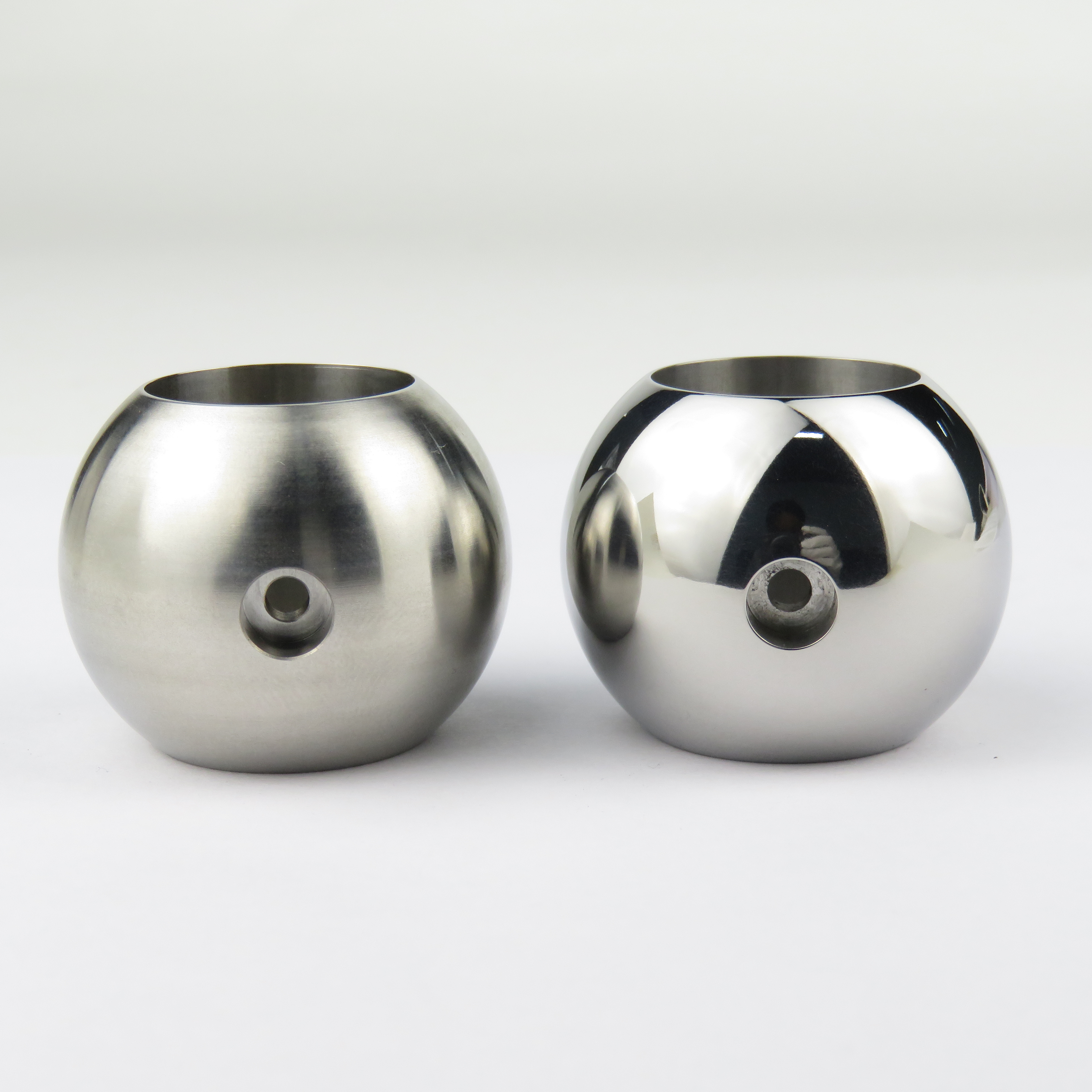
The buyer needs the visible face brightened and the bore burr removed without touching the flatness of the sealing bead, and without iron contamination that would bloom in service.
Send the material, dimensions, approximate weight, batch quantity, the incoming condition and photographs of the difficult features. Mark which features must not be contacted by media and state how the result will be inspected. This form carries source reference PSEO-0592; quote it if you prefer an additional manual reference.
Open the SurfacePolish enquiry form Email a prepared enquiry
No price, lead time, certification or result is promised here. Confirm whether a sample trial is available for the specific part and what the trial can and cannot show.
Page PSEO-0592 · revised 2026-09-29 · cross-border equipment, media and scoped sample review. City context is sourced and cited above.
Use this local checker to identify missing part and inspection information. It prepares a technical-review brief; it does not approve a machine, process recipe or production result.
Complete the part details to prepare a review brief.
Email : info@surface-polish.com


 IPv6 network supported


 +86-592-2381506