In Stuttgart, Germany, an automotive parts buyer has a duplex stainless clamp band whose rivet-hole burrs must be removed without rounding latch edges that have to engage. SurfacePolish is a cross-border supplier of finishing equipment, media and compounds and offers a free process sample trial in which the buyer's parts travel to Xiamen and return with observations and a proposed media, compound and cycle direction for the buyer's own verification. This brief is written for a buyer in Stuttgart working on automotive parts; it describes equipment, media and a scoped sample review, not a local polishing service.
At what batch size, load fill ratio and media wear state does a trial observation still describe what series production will produce?
How will free iron, embedded particles and cross-contamination from carbon steel be prevented, and how will each be detected on the finished part?
Which surfaces on this part carry a visible appearance grade, which are hidden, and which edges have a functional requirement rather than a cosmetic one?
What arrives at finishing often predicts the route better than the drawing does. Burrs sit at cross-drilling intersections, sheared edges and machined contours, heat tint comes from welding and laser cutting, and stamping flash, grinding marks, existing polished bands and handling scratches all behave differently under the same medium and compound. Baseline the incoming surface with roughness readings and consistent-lighting photographs at agreed locations, plus a written note on where the largest burrs sit. Cleanliness before processing also matters, because cutting fluid, marking ink, adhesive residue and shop dust load the medium and confound comparison. Batch size and mix enter here too: a load of thirty small brackets behaves differently from four large housings, and mixing families of different weight in one chamber risks damage to the lighter parts and cross-contamination between grades.
Media is a consumable that changes during use, and stainless finishing is sensitive to that drift. Ceramic media loses size and edge sharpness, its cutting rate falls, and the charge accumulates broken pieces and fines; steel media deforms and generates metallic fines; plastic media can load with metal particles; compound residue and swarf build up in the mass. The practical consequence is that a cycle tuned on fresh media behaves differently after days of running, which is why results can drift without any setting having been touched. Track wear by screening a sample of the charge at intervals, logging media make-up quantities and cycle hours, and replacing on measured condition rather than on a fixed calendar. Keeping the charge inside a known working window, and re-verifying the finish after any full charge replacement, is what makes a production result repeatable.
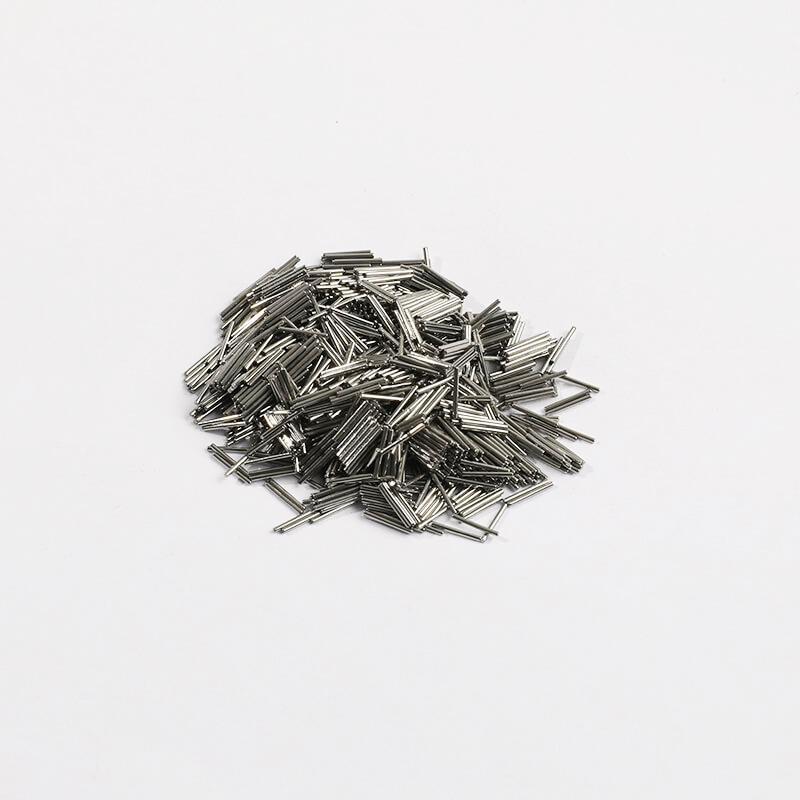
| Media | Best fit | Watch out for |
|---|---|---|
| Ceramic cylinders, balls and other rounded shapes | General surface refinement and blending on broad stainless faces where a more even texture and gentler edge action are wanted. | Does not reach sharp internal corners, and long enough running on thin sections can still round edges beyond a tight callout. |
| Alumina-based ceramic triangles and angle-cut forms | Heavy deburring, edge blending and machine-mark removal on stainless brackets, flanges and housings where corners and recesses must be reached. | Wears down in size and sharpness, so cutting rate falls without any setting change; broken pieces and fines can lodge in small features and must be screened out. |
| Magnetic stainless pins and fine needles for magnetic finishing | Deburring and brightening of intricate small stainless features, slots, gear teeth and blind holes where media cannot be allowed to lodge. | Suits small part envelopes only, and the route needs testing on magnetic grades before it is assumed to apply to a given part. |
| Steel media, including balls and shaped steel forms | Brightening and burnishing of austenitic stainless appearance parts where the highest available gloss is the objective. | Deforms and generates metallic fines, adds weight to the load, and can transfer iron if used in a line shared with carbon steel work. |
Tub vibrators exist for parts that a bowl cannot hold: long trim rails, exhaust sections, shafts and formed profiles that must be processed without being cut down. The open tub allows awkward geometry, and the long, large parts common in stainless automotive work often fit only here. The engineering consequence is that media velocity and dwell differ along the length, so one end of a long part can finish differently from the other. Verify evenness at both ends of the longest part rather than at one representative location. Media size class has to suit the tub cross-section so the charge moves as a mass instead of settling. A tub also consumes more floor space and compound volume than a bowl of similar throughput, which is part of the line concept a buyer should settle before quoting a cell.
| Machine route | Where it fits | What it will not do |
|---|---|---|
| Tub vibrator | Long stainless parts such as trim sections, exhaust profiles and shafts that cannot be loaded into a bowl without being cut down. | Media velocity varies along the length, so finish evenness must be verified at both ends, and the machine occupies more floor space and compound volume. |
| Dry polishing machine with heated dryer | Post-wet drying, residue control and light dry finishing of stainless parts that must leave the line dry and free of moisture in blind features. | Dry media does not cut stainless, and moisture trapped in a blind hole, hem or tight joint can cause staining if drying is not effective. |
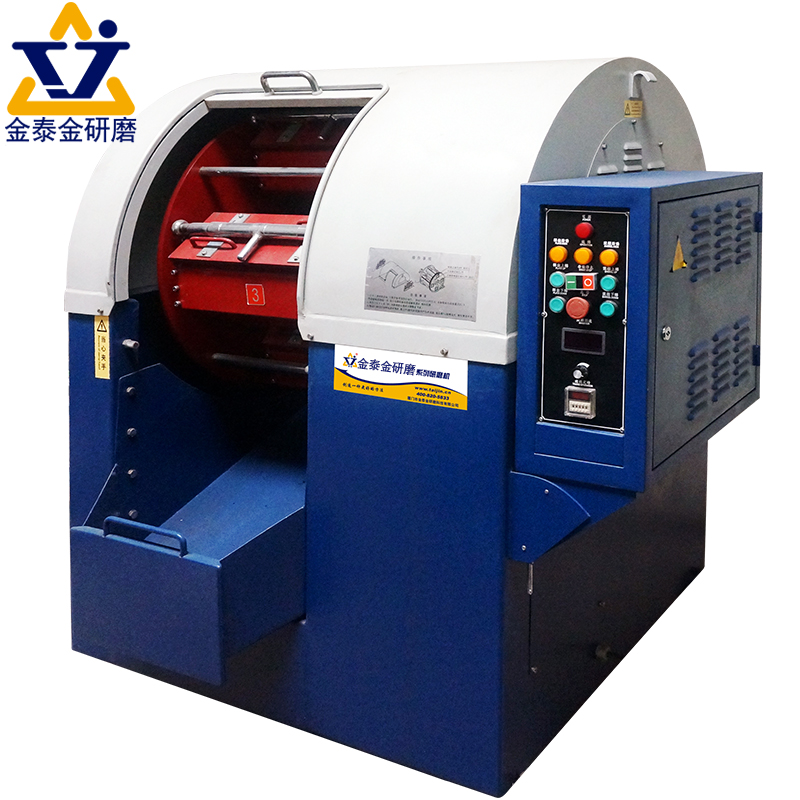
| Centrifugal barrel finishing machine | Very high energy deburring and edge radiusing of small, hard stainless parts in short cycles. | Rounds edges quickly and can exceed a tight radius within a short run; part size and shape are restricted and a substantial load is needed to justify the cycle. |
| Magnetic finishing machine | Small precise stainless parts with internal features, slots and blind holes that must be deburred without media lodging in the passages. | Works within a small part envelope, and the route has to be tested per grade because it depends on the part's magnetic response. |
Three further failure modes deserve their own place in a stainless finishing plan. Heat tint and oxide from welding or laser cutting often survive a light finishing cycle and then read as a defect once the surrounding surface is brightened, so the incoming oxide condition has to be recorded and its removal put in scope. Discolouration can also appear after drying, when dissolved minerals and compound residue concentrate in a film; the remedy is rinse quality, water quality and prompt drying rather than more cycle time. For high-strength martensitic grades, acid-bearing chemistry plus mechanical work raises a hydrogen concern that is not visible on the surface, so the material and process requirements need to be defined and verified by the buyer, and the finishing route checked against them. Dimensional drift is cumulative and quiet: thin walls, bores and seal faces can move within a batch while every visual check passes, so critical dimensions need before-and-after measurement at a fixed sample size.
| Failure mode | Likely cause | How to catch it |
|---|---|---|
| Rust blooms or speckling on austenitic or duplex parts after finishing | Free iron transferred from carbon steel, ferritic stainless or worn steel machine parts sharing the same media, chamber, racks or bench area. | Run a ferroxyl-type test for free iron at agreed locations, compare against an untouched part from the same batch, and repeat the check after a defined exposure period to catch delayed blooms. |
| Thread crests rounded and thread gages failing after finishing | Mechanical action removing material from crests during an energetic or extended cycle, sometimes with media large enough to strike the thread form directly. | Gage every threaded feature before and after the cycle with the drawing's gages, inspect crest form with an optical comparator, and keep the shortest cycle that still achieves the required appearance. |
| Edge rounding beyond the specified radius on a functional edge | Cycle energy, time or media size class chosen for appearance rather than for the tightest edge callout on the drawing. | Measure edge radius at marked locations with an optical comparator or a cast impression before and after, and record the result against a written allowable band rather than judging it visually. |
| Dimensional drift, including bores opening slightly and thin walls thinning | Sustained media contact removing material from every accessible surface, with cycle time or media size class beyond what the feature tolerances can absorb. | Measure critical dimensions with micrometers, bore gages or a CMM before and after on a fixed sample size, and track a maximum stock removal per cycle for each feature at risk. |
The Stuttgart region is a statutory regional body covering 179 municipalities whose industrial profile is built on mobility, mechanical engineering, bio/medical technology and aerospace. Region Stuttgart describes the area as the birthplace region of the automobile and the location of what it calls Europe's most significant automotive cluster, with Mercedes-Benz, Porsche, Bosch, Mahle, Eberspächer, Mann+Hummel and Vector Informatik among the internationally active companies rooted there (s2). Mechanical engineering in the region is dominated by special-purpose machines and single-unit production, and generates close to one third of Baden-Württemberg's turnover in the sector, with an export ratio above 65 percent (s1). Bio- and medical technology is clustered across Stuttgart, Tübingen, Reutlingen and Neckar Alb, with more than 200 companies and BioRegio STERN as the sector contact point (s3), and aerospace is represented by firms such as Tesat-Spacecom and Thales alongside small and medium-sized producers (s4). The city itself presents Stuttgart as one of Germany's strongest export metropolitan regions (s5).
For this brief the relevant part of that base is automotive: Region Stuttgart describes the region as the birthplace region of the automobile and the site of Europe's most significant automotive cluster, with Mercedes-Benz, Porsche and Bosch headquartered in the region (s2).
In a base built on special-purpose machines and single-unit production, housings, shafts, guides and welded frames are typically machined in small batches, so edge condition after milling, turning and laser cutting is frequently determined by the operator unless a deburring or edge-specification step is defined. The automotive and aerospace suppliers in the same region work to drawing-level edge, radius and surface requirements, and medical-technology production adds a cleanliness dimension because parts pass through shared contract-manufacturing chains where loose particles and media residue have to be controlled before packing.
The first question for a Stuttgart buyer is whether the part is a single-unit special-machine component with a drawing-specific edge requirement or a series component where a repeatable mass-finishing process can be qualified; the second is which measuring method and cleanliness level the customer's drawing actually cites, because that decides whether a vibratory or centrifugal process is adequate or whether edge work has to stay manual.
Freight context: Hafen Stuttgart (trimodal container terminal and rail freight yard), Stuttgart Airport. Hafen Stuttgart moved 3.194 million tonnes by water and rail in 2020, of which 2.185 million tonnes went by rail, plus 28,759 containers (52,847 TEU) through its trimodal container terminal and rail yard (s6). The water-side goods mix is led by construction materials, mineral-oil products and iron/steel/scrap (s6). Machines or sample parts consigned to Stuttgart can therefore be cleared through a seaport and forwarded inland by rail or barge rather than by road alone.
German is the working language of drawings, contracts, test reports and conformity documentation, and German buyers normally expect English-language technical documentation to be supplied alongside it. Procurement is documentation-driven: the EU declaration of conformity, the technical file, and the identity of the EU-based importer or authorised representative are settled before the order, and the EORI registration and customs declaration are the importer's responsibility rather than the exporter's (c3, c4, c5). Germany is the world's leading machinery and equipment manufacturer, so quotations compete against established domestic builders on technical documentation and measurable process data rather than on price alone (c9). Payment, delivery and risk terms are normally fixed by written contract with a named Incoterm, and classification (commodity code) is commonly confirmed in writing before shipment because it drives the duty and the import declaration.
Machinery placed on the German market must be CE marked, and the manufacturer is responsible for the conformity assessment, the technical file, the EU declaration of conformity and for affixing the mark; importers and distributors are separately obliged to ensure that only compliant, CE-marked products are placed on the EEA market (c3, c4). The customs authority is German customs (Zoll), part of the Generalzolldirektion, and the operator identification it issues, the EORI number, is a prerequisite for customs clearance in the European Union (c5, c6). In general EU practice a buyer's landed-cost plan therefore needs to cover the commodity-code classification that sets the duty rate, import VAT and the customs declaration, on top of the CE technical file and an identified EU-based economic operator who can act as importer or authorised representative; the technical documentation and the declaration of conformity must be available in the language required by the buyer's market surveillance authority.
SurfacePolish supplies from Xiamen, China. The buyer's own destination rules, conformity marking, tariff classification and documentation responsibilities stay with the buyer; confirm them against the authorities named above before ordering.
Appearance grading on stainless is best served by physical masters: one part at the acceptable limit and one at the marginal limit, viewed under the same lighting, at the same distance and at the same angle as production inspection. Lighting is the dominant variable in appearance judgment, so a master viewed beside a window in the morning will not agree with parts viewed under a machine light at night. Record the viewing conditions with the master, keep the master protected and dated, and photograph it as a supplement rather than as a replacement. For satin and brushed finishes, the master should also fix the direction and uniformity of the texture, since a part can meet a roughness figure and still look wrong beside a mating panel. Keep a small library of masters for the finishes this process actually produces, because a single nominal sample cannot cover a batch.
Parts returned from a trial are only half the deliverable; the record of what was done is the other half. A usable trial report describes the machine route, media specification and size class including its condition, compound family and concentration, water source, cycle duration, load fill ratio, and the measured results at the marked locations. Read it against your own before-and-after record, and check that the settings are described completely enough to be repeated by a different operator on a different day. Where a result is strong but the mechanism is unexplained, ask what changed rather than accepting the outcome, because an unexplained good result is hard to reproduce. Where a trial produced a good appearance and a poor edge measurement, treat the edge measurement as the governing result for a functional automotive part.
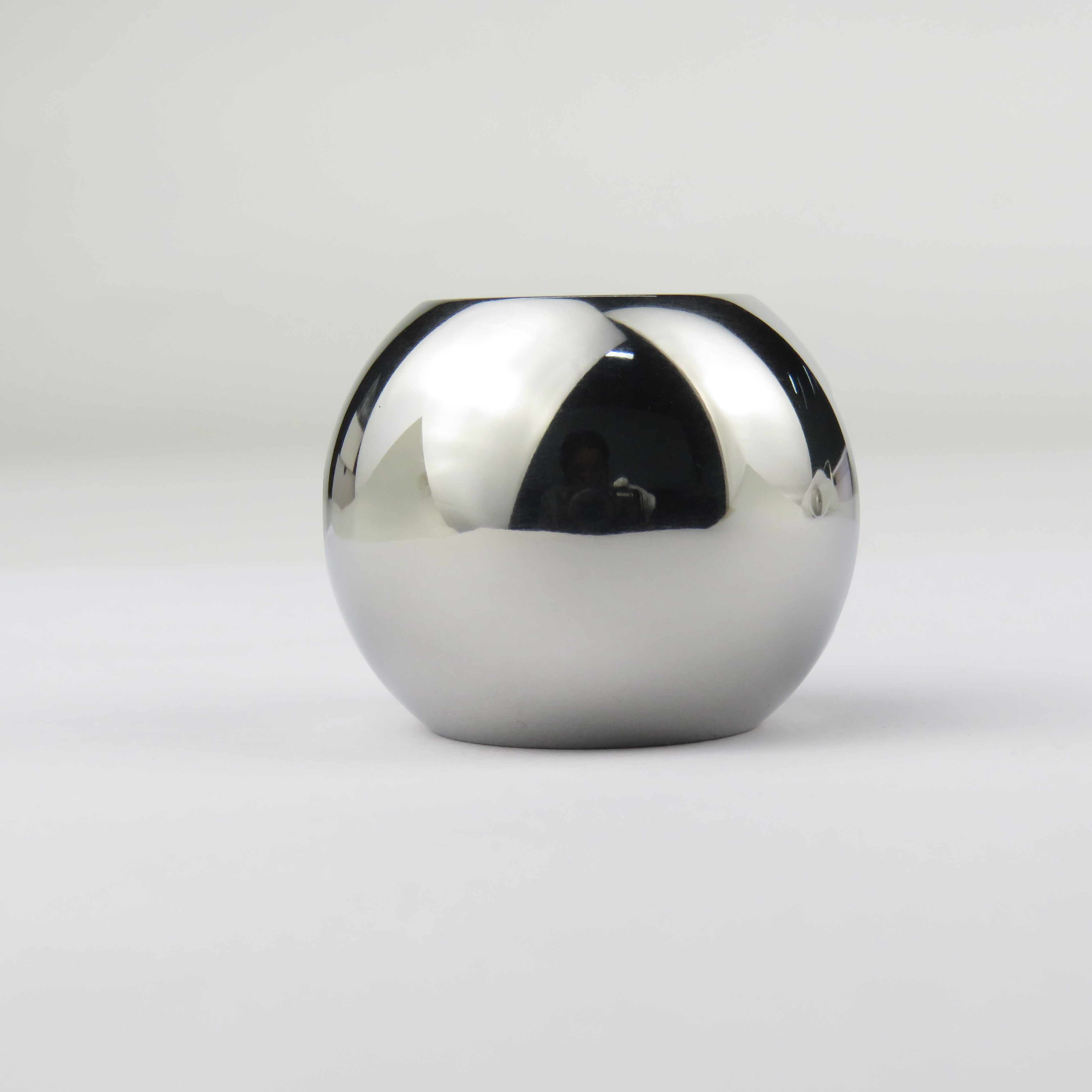
Control direction, texture depth and coverage, not only a roughness number. Mechanical finishing tends to create directionality, so agree with the customer whether the grain runs in one direction across the whole part order and how visible variation may be. Keep a physical master for the satin finish and view parts under the same lighting, distance and angle as the master, because lighting changes appearance judgements more than small process changes do. Fix media shape, size class and cycle settings in a work instruction, and re-verify the finish whenever the media charge is replaced or a new supplier batch of compound is introduced.
Cost is governed by cycle time and the number of parts that fit in a load, by media consumption and replacement rate, and by labour for loading, unloading, separation, inspection and masking. Parts with several protected features cost more before the machine starts, because plugging and fixturing consume labour. A cycle that needs several stages for deburring, refining and brightening multiplies handling. Drying time and cleanliness verification add further steps, and mixing stainless with carbon steel in shared equipment forces either segregation or extra contamination checks. Ask for cost as a function of volume and batch size rather than as a single figure.
They are different processes with different effects, and SurfacePolish does not supply or perform electropolishing. Mechanical finishing works by media contact, so it blends, deburrs and brightens the surfaces the media can reach, and it rounds edges as it works. Electrochemical treatment removes material ionically and reaches into recesses that media cannot. Where an electropolished surface is specified for corrosion or cleanliness reasons, treat electrochemical processing as a comparison point and ask whether the specified requirement can be met by another route, then verify that on your own parts and against your own acceptance rule.
Use Stuttgart, Germany as the destination on the enquiry and state whether the deliverable is equipment, media and compound, a representative sample review or a line concept. A destination does not imply local stock, a local service point or a local delivery time.
A Stuttgart buyer's surface, edge and cleanliness specifications are normally written against DIN/EN/ISO texts, with CE marking and the EU declaration of conformity as the conformity route for the machine itself (c3, c7). Automotive and aerospace suppliers in the region additionally work to their customers' sector requirements, which the VDA organises for the German automotive industry (c10).
Sources were retrieved on 2026-09-29 and describe the local industrial and trade context only. They do not evidence any SurfacePolish project, shipment, installation or service in Stuttgart.
The buyer needs rivet-hole burrs removed and the visible face refreshed while keeping the latch edges sharp enough to engage.
Send the material, dimensions, approximate weight, batch quantity, the incoming condition and photographs of the difficult features. Mark which features must not be contacted by media and state how the result will be inspected. This form carries source reference PSEO-0302; quote it if you prefer an additional manual reference.
Open the SurfacePolish enquiry form Email a prepared enquiry
No price, lead time, certification or result is promised here. Confirm whether a sample trial is available for the specific part and what the trial can and cannot show.
Page PSEO-0302 · revised 2026-09-29 · cross-border equipment, media and scoped sample review. City context is sourced and cited above.
Use this local checker to identify missing part and inspection information. It prepares a technical-review brief; it does not approve a machine, process recipe or production result.
Complete the part details to prepare a review brief.
Email : info@surface-polish.com


 IPv6 network supported


 +86-592-2381506