An automotive parts buyer in Surat, India has a thin stainless grille frame that must reach a consistent bright finish without distortion or impingement at its pierced openings. SurfacePolish supplies finishing machines, media and compounds across borders and runs a free sample trial on parts shipped to Xiamen, returning the tested parts with observations and a proposed media, compound and cycle direction for the buyer to verify. This brief is written for a buyer in Surat working on automotive parts; it describes equipment, media and a scoped sample review, not a local polishing service.
Which dimensions, seal faces and thread forms carry functional geometry, and what limit on stock removal per cycle can those features tolerate?
Which alloy family is the part, and has cold work, welding or heat treatment already changed its hardness, magnetic response or corrosion behaviour?
Which internal features must be deburred without lodging media, and what retrieval and verification step proves the passage and thread form are clean?
Beyond appearance, certain features establish how the part assembles, and media acts on them whether or not the drawing calls them out. Machined flange faces, O-ring and seal grooves, bearing bores, threaded holes, sensor mounting pads and dowel bores all carry that role. Media contact can shift flatness, open a bore slightly, round a thread crest or change a sensor gap, and normal shop inspection will not notice. Identify which surfaces are datums and which mate with another component, then treat the finish requirement on them separately from cosmetic areas. Protect them by masking, fixturing against a support, or finishing them with a gentler medium, and write down a maximum stock removal per cycle for every feature whose geometry could be consumed by the process. Ask the designer to confirm those limits rather than promising a blanket surface condition.
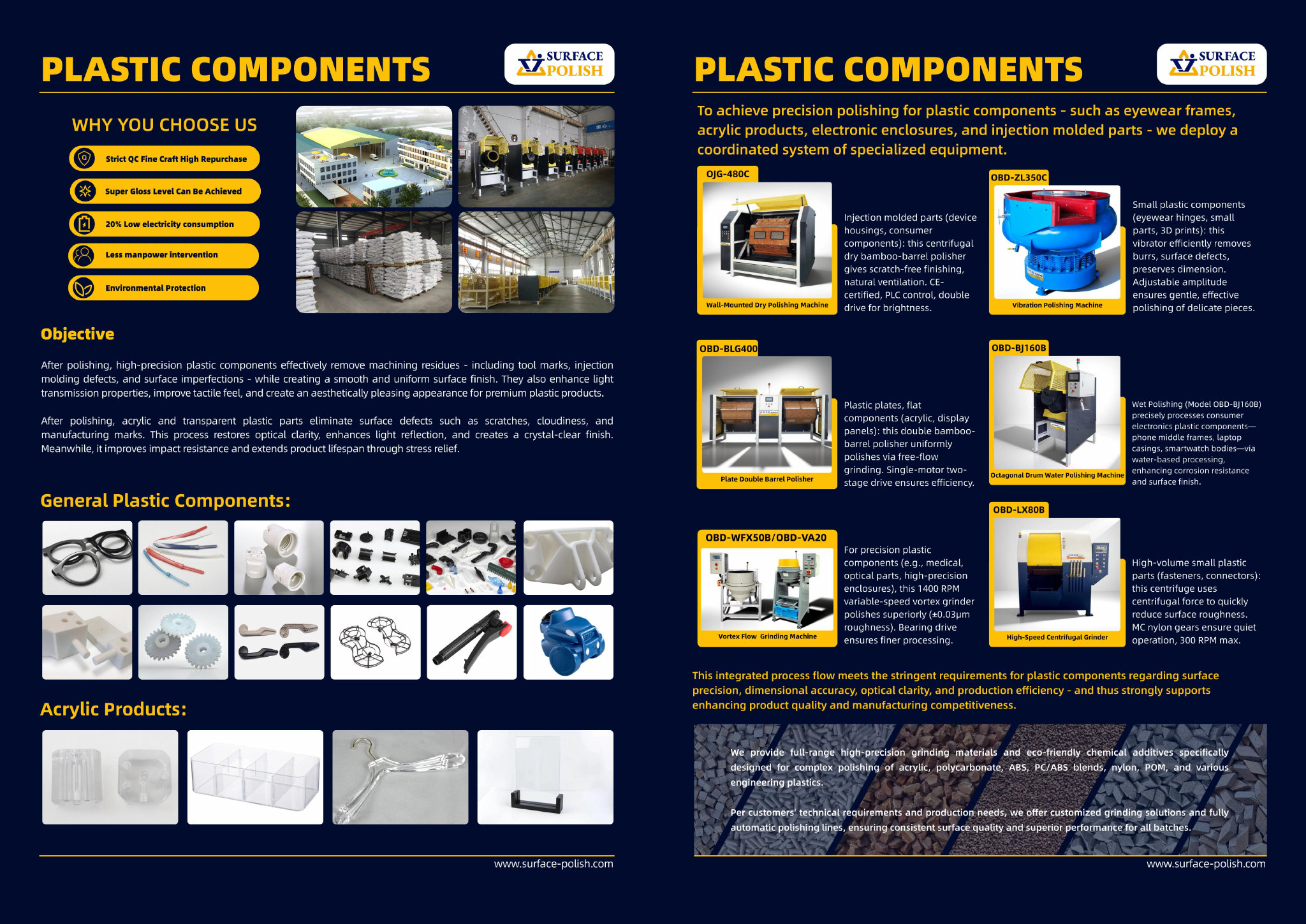
In stainless finishing the first machine question is not how bright the part must become but how much material the most sensitive edge can lose. Mechanical action removes stock far faster at edges, corners and thin sections than on a flat face, so the route follows the tightest edge requirement on the drawing. Where a hole edge or a stamped cover sits in a narrow allowable band, a gentler route such as barrel or rotary, or a vibratory bowl run at moderate energy with an edge-specific compound, is the defensible starting point. Where heavier deburring is needed and edges can tolerate more removal, a disc or centrifugal barrel route uses energy more productively. Record the decision as allowable stock removal per cycle at the tightest feature, because that framing is what lets a supplier recommendation and a buyer limit be compared honestly.
| Machine route | Where it fits | What it will not do |
|---|---|---|
| Dry polishing machine with heated dryer | Post-wet drying, residue control and light dry finishing of stainless parts that must leave the line dry and free of moisture in blind features. | Dry media does not cut stainless, and moisture trapped in a blind hole, hem or tight joint can cause staining if drying is not effective. |
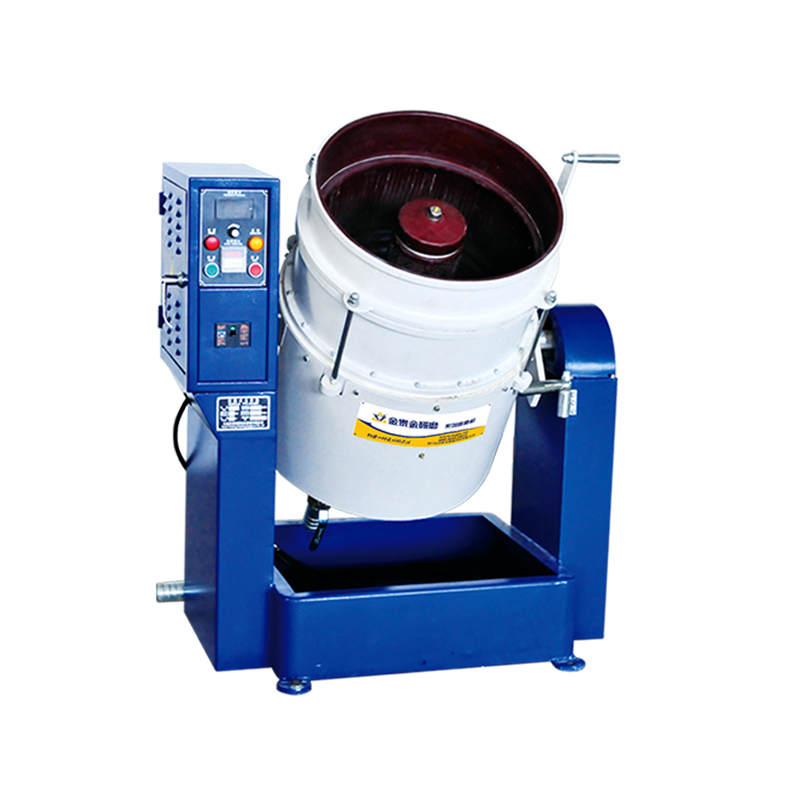
| Centrifugal barrel finishing machine | Very high energy deburring and edge radiusing of small, hard stainless parts in short cycles. | Rounds edges quickly and can exceed a tight radius within a short run; part size and shape are restricted and a substantial load is needed to justify the cycle. |
| Vibratory finishing machine, bowl type | General deburring and surface refinement of medium-sized stainless automotive parts such as brackets, small housings and flange blanks in a visible batch load. | Part size and shape are capped by chamber geometry, and thin or threaded parts may need compartments or fixtures to control part-on-part contact. |
| Tub vibrator | Long stainless parts such as trim sections, exhaust profiles and shafts that cannot be loaded into a bowl without being cut down. | Media velocity varies along the length, so finish evenness must be verified at both ends, and the machine occupies more floor space and compound volume. |
Media is a consumable that changes during use, and stainless finishing is sensitive to that drift. Ceramic media loses size and edge sharpness, its cutting rate falls, and the charge accumulates broken pieces and fines; steel media deforms and generates metallic fines; plastic media can load with metal particles; compound residue and swarf build up in the mass. The practical consequence is that a cycle tuned on fresh media behaves differently after days of running, which is why results can drift without any setting having been touched. Track wear by screening a sample of the charge at intervals, logging media make-up quantities and cycle hours, and replacing on measured condition rather than on a fixed calendar. Keeping the charge inside a known working window, and re-verifying the finish after any full charge replacement, is what makes a production result repeatable.
| Media | Best fit | Watch out for |
|---|---|---|
| Grinding and cutting media, fused alumina and silicon carbide based | Aggressive stock removal on heavy stainless burrs, weld dressing and rough cast surfaces before a refining stage. | Removes edge material quickly, can embed abrasive fragments in soft or gummy surfaces, and is usually too coarse for a final appearance stage. |
| Porcelain and fine high-density ceramic media | Pre-polish refining stages on austenitic stainless appearance parts before a brightening stage, where a finer texture is the objective. | Limited cutting power on hard or work-hardened surfaces, and wear changes the charge gradually, so finish can drift between batches. |
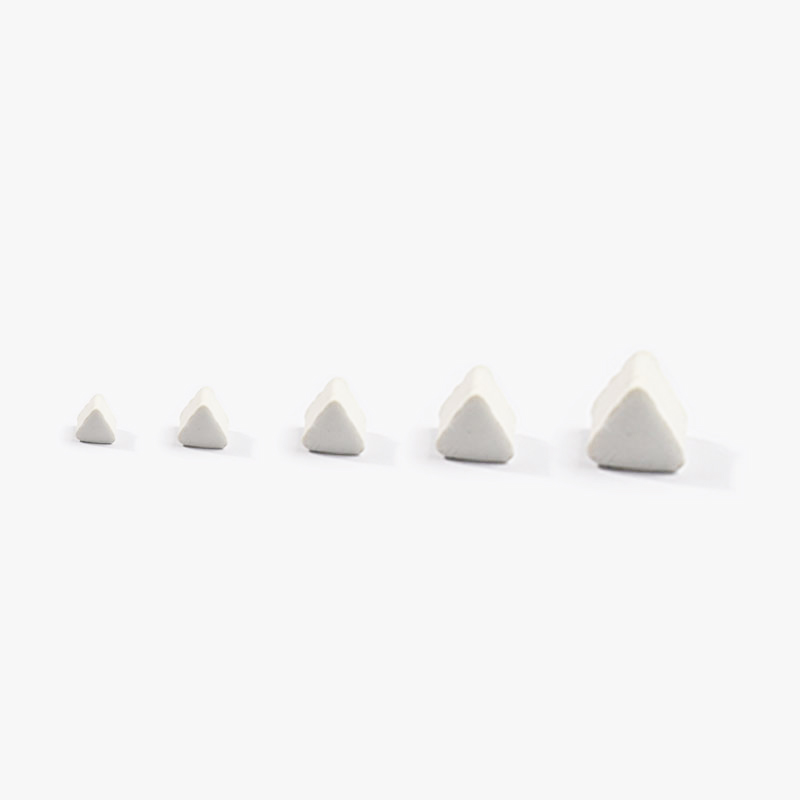
| Alumina-based ceramic triangles and angle-cut forms | Heavy deburring, edge blending and machine-mark removal on stainless brackets, flanges and housings where corners and recesses must be reached. | Wears down in size and sharpness, so cutting rate falls without any setting change; broken pieces and fines can lodge in small features and must be screened out. |
| Plastic media, polyester and urea based | Gentle deburring of delicate or thin stainless parts and of softer metals in mixed production, where edge loss must be minimised. | Low cutting power on stainless, can load with metal particles, and is generally the wrong tool for generating a stainless appearance finish. |
Three further failure modes deserve their own place in a stainless finishing plan. Heat tint and oxide from welding or laser cutting often survive a light finishing cycle and then read as a defect once the surrounding surface is brightened, so the incoming oxide condition has to be recorded and its removal put in scope. Discolouration can also appear after drying, when dissolved minerals and compound residue concentrate in a film; the remedy is rinse quality, water quality and prompt drying rather than more cycle time. For high-strength martensitic grades, acid-bearing chemistry plus mechanical work raises a hydrogen concern that is not visible on the surface, so the material and process requirements need to be defined and verified by the buyer, and the finishing route checked against them. Dimensional drift is cumulative and quiet: thin walls, bores and seal faces can move within a batch while every visual check passes, so critical dimensions need before-and-after measurement at a fixed sample size.
| Failure mode | Likely cause | How to catch it |
|---|---|---|
| Discolouration or mottling that appears only after drying | Mineral or compound residue carried in the final rinse, hard or chloride-bearing water, or slow drying that leaves a film on the brightened surface. | Compare wet and dry appearance under fixed lighting on the same parts, wipe a sample with a white lint-free cloth and solvent, and check the site water supply for hardness and chloride content. |
| Heat tint, oxide or weld discolouration remaining after a light cycle | Incoming oxide from welding or laser cutting deeper than the finishing stage is designed to remove, or a finishing sequence that only brightens the surrounding surface. | Record the incoming oxide condition with photographs at agreed locations, then compare the same locations after processing and confirm whether removal of the oxide was inside the agreed scope. |
| Thread crests rounded and thread gages failing after finishing | Mechanical action removing material from crests during an energetic or extended cycle, sometimes with media large enough to strike the thread form directly. | Gage every threaded feature before and after the cycle with the drawing's gages, inspect crest form with an optical comparator, and keep the shortest cycle that still achieves the required appearance. |
| Hazing or waviness on a part specified as mirror or bright | An intermediate refining stage skipped or cut short, media too coarse for the final texture, or a media charge that has worn out of its working size range. | View under defined lighting against a physical master at the acceptable and marginal limits, measure roughness across the lay with a fixed instrument setup, and screen the media charge for size and condition. |
Surat is a processing and port-industrial city. The district administration states that Surat is the world's largest diamond manufacturing centre with over 5,000 diamond manufacturing units and that three-quarters of the world's diamonds are cut and polished there, while the Southern Gujarat Chamber of Commerce and Industry (SGCCI) records a diamond-cutting workforce of more than 1.5 million people. SGCCI describes Surat as India's most prominent man-made textile centre and notes a strong MSME manufacturing base in South Gujarat. The district's heaviest industry sits in the Hazira belt about 15 km from the city, which SGCCI says has attracted investment from Reliance, ONGC, Essar, L & T, KRIBHCO, GAIL, Shell, Niko, NTPC, ABG Shipyard, IOCL, HPCL and BPCL, and Reliance confirms a carbon fibre facility at Hazira.
The nearest part of that base to this brief is marine: ABG Shipyard is among the units SGCCI lists in the Hazira belt about 15 km from Surat, and the district administration states that Hazira port is connected by NH8 to Ahmedabad and Mumbai.
Surat's metal-finishing demand is concentrated around diamond and textile processing and the Hazira process belt: machine parts, dies, jigs and stainless components that need burr removal and edge control before use, plus tooling and hardware where surface condition matters. Fabrication and maintenance workshops in the belt also finish replacement parts and stainless components, where the practical question is whether a vibratory or barrel process can reach the required edge condition without altering dimensions or leaving compound residue. Because much of the supporting industry is MSME-scale, batches are often small and mixed-material, which affects media choice.
A Surat buyer should first decide whether finishing is needed for edge control and deburring of machined components or for surface preparation of cast, formed or welded parts, then confirm on sample parts that the media and compound suit the specific alloy and geometry — a step that matters when parts come from mixed small-batch production.
Freight context: Hazira port, Surat, Surat International Airport (Airports Authority of India), NH8 / NH6 road corridors. The district administration states that Hazira port is connected by NH8 to Ahmedabad and Mumbai, with NH6 linking the Maharashtra border-Surat-Hazira, and AAI material refers to Surat International Airport. Sea freight for the Hazira belt enters through Hazira; imported machines and sample parts are cleared under the standard Indian customs procedure at the port or airport of entry.
India classifies every imported item in the ITC(HS) schedule, a compilation of codes for all merchandise for export and import whose Schedule I lays down the import policy regime for each item, maintained at 8-digit level under the First Schedule of the Customs Tariff Act, 1975 and aligned at 6 digits with the WCO Harmonized System (c1, c3). Importability is judged by the policy in force on the date of import, and when a policy moves from free to restricted, goods already committed through an irrevocable commercial letter of credit opened before the change can still be imported up to the balance quantity, value and period in that ICLC (c4). Preferential customs treatment is available only through the preferential trade agreements, free trade agreements, CECAs and CEPAs that India notifies and that are in operation (c5), so Chinese-origin industrial machinery is assessed at the applicable rate of the customs tariff rather than under any India-China preferential rate; India's commerce leadership has separately pointed to exports under free trade pacts growing faster than imports (c12). For capital goods specifically, DGFT operates the Export Promotion Capital Goods (EPCG) scheme, whose stated objective is to facilitate import of capital goods for producing quality goods and services (c7), which Indian firms use when they want duty relief on imported plant against an export obligation.
India's foreign-trade, customs and standards machinery works in English: the Foreign Trade Policy, DGFT's IEC and scheme material, the BIS standards catalogue and Invest India's investor guide are all published in English, and the mandatory import documents are the internationally conventional bill of lading, commercial invoice cum packing list and bill of entry (c1, c3, c6, c10). Payment in the import channel is bank-intermediated; the Foreign Trade Policy treats the irrevocable commercial letter of credit as the instrument that fixes an importer's commitment when import policy changes (c4), so a supplier should expect LC or advance terms rather than open-account credit on a first order. Indian industry associations are explicit about import substitution: the Bombay Chamber of Commerce and Industry states that one of its major focuses today is how to expand manufacturing setups and substitute imported products (c13), so a cross-border equipment seller should expect questions about local support, spares, training and total cost of ownership rather than price alone, and should hold the IEC, GST registration, bill of entry documentation and any BIS obligation as part of the commercial discussion.
SurfacePolish supplies from Xiamen, China. The buyer's own destination rules, conformity marking, tariff classification and documentation responsibilities stay with the buyer; confirm them against the authorities named above before ordering.
Measurement of appearance does not detect a functional loss, so acceptance needs checks aimed at what the part does. Thread and gear gages on the features named by the drawing, pin or plug gages on cross-drilled passages, a flatness check on sealing faces, a fit or press trial on a bearing bore, and continuity or gap checks on sensor surfaces all address function directly. Edge condition deserves a dimension rather than an opinion, because a rounding of a fraction of a millimetre at the mouth of an O-ring groove changes how the seal seats, and a deburred edge on a fatigue-relevant hole behaves differently from a polished one. Cleanliness is part of this set: wipe tests for residue, free-iron testing, and a borescope check of internal passages catch defects that appearance grading cannot. Agree every check and its instrument before the first production batch.
Moving from a trial to a producing line changes the process in ways the trial cannot show. Media wears during a long run, the compound bath accumulates swarf and dissolved metal, the load fill ratio changes with part mix, and handling steps multiply. A condition that held for a short cycle on five parts may drift over a full shift. Plan scale-up as a deliberate ramp: confirm that machine capacity and chamber geometry suit the real part, run the intended media charge to a representative wear state before judging results, and freeze the settings in a written work instruction with a media maintenance schedule. Decide in advance what will be measured during the ramp, at what frequency, and who is authorized to change a setting. Ramp-up risk is highest where the trial succeeded easily, because nobody is watching for the drift.
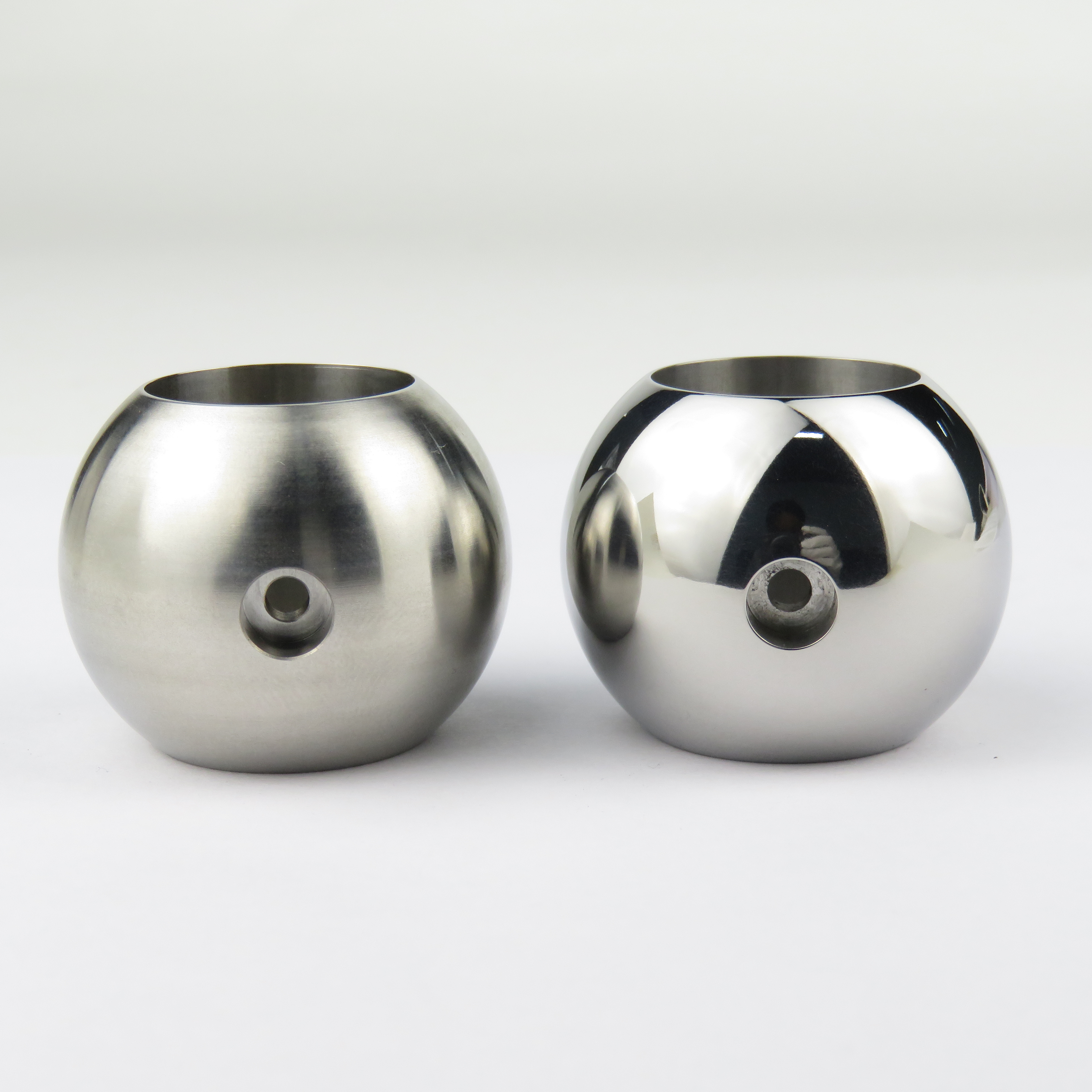
A trial produces observations on the parts tested under the settings used, and nothing more. It cannot guarantee a surface value, appearance grade, cycle time, capacity or cost in production, and it does not certify or qualify a process for any regulated application. What it can do is narrow the field: compare two media, two compound families or two cycle lengths under controlled conditions, expose edge and lodging risks, and give your engineering team measured before-and-after data to work from. Read the trial record, check that the settings are described fully enough to repeat, and keep the acceptance decision and any qualification work inside your own quality system.
Cost is governed by cycle time and the number of parts that fit in a load, by media consumption and replacement rate, and by labour for loading, unloading, separation, inspection and masking. Parts with several protected features cost more before the machine starts, because plugging and fixturing consume labour. A cycle that needs several stages for deburring, refining and brightening multiplies handling. Drying time and cleanliness verification add further steps, and mixing stainless with carbon steel in shared equipment forces either segregation or extra contamination checks. Ask for cost as a function of volume and batch size rather than as a single figure.
Start from the drawing. Size the media class against the smallest opening so it flows rather than wedges, and where a passage cannot be inspected reliably, plug or mask it before the cycle instead of adding inspection afterwards. Build a retrieval routine with media counts into and out of the batch, borescope checks at agreed angles, and pin or plug gages on each passage. Weigh parts where the tolerance for retained chips is tight. For a India buyer planning a trial, send the part with the tightest passage so the media class is selected against real geometry. SurfacePolish reports what the trial found; your own cleanliness inspection remains the acceptance decision.
Use Surat, India as the destination on the enquiry and state whether the deliverable is equipment, media and compound, a representative sample review or a line concept. A destination does not imply local stock, a local service point or a local delivery time.
The Bureau of Indian Standards (BIS) is the national standards body, and BIS describes its certification scheme as basically voluntary in nature, with compliance made compulsory for a number of products by the Central Government. Process and chemical units in Gujarat additionally work to their customers' material and inspection specifications as general industry practice.
Sources were retrieved on 2026-09-29 and describe the local industrial and trade context only. They do not evidence any SurfacePolish project, shipment, installation or service in Surat.
The buyer needs a consistent bright finish on the visible face without distorting the thin frame or impinging the pierced openings.
Send the material, dimensions, approximate weight, batch quantity, the incoming condition and photographs of the difficult features. Mark which features must not be contacted by media and state how the result will be inspected. This form carries source reference PSEO-0972; quote it if you prefer an additional manual reference.
Open the SurfacePolish enquiry form Email a prepared enquiry
No price, lead time, certification or result is promised here. Confirm whether a sample trial is available for the specific part and what the trial can and cannot show.
Page PSEO-0972 · revised 2026-09-29 · cross-border equipment, media and scoped sample review. City context is sourced and cited above.
Use this local checker to identify missing part and inspection information. It prepares a technical-review brief; it does not approve a machine, process recipe or production result.
Complete the part details to prepare a review brief.
Email : info@surface-polish.com


 IPv6 network supported


 +86-592-2381506