Select light burrs, thin washers, clips, torn edges or critical locating features. The source keeps stacking and bending risks separate from tangling and distortion, and flags heavy rollover as a possible upstream cutting problem. The selected conditions help identify what the trial must inspect. They do not establish that a heavy torn edge can be removed without changing a functional dimension.
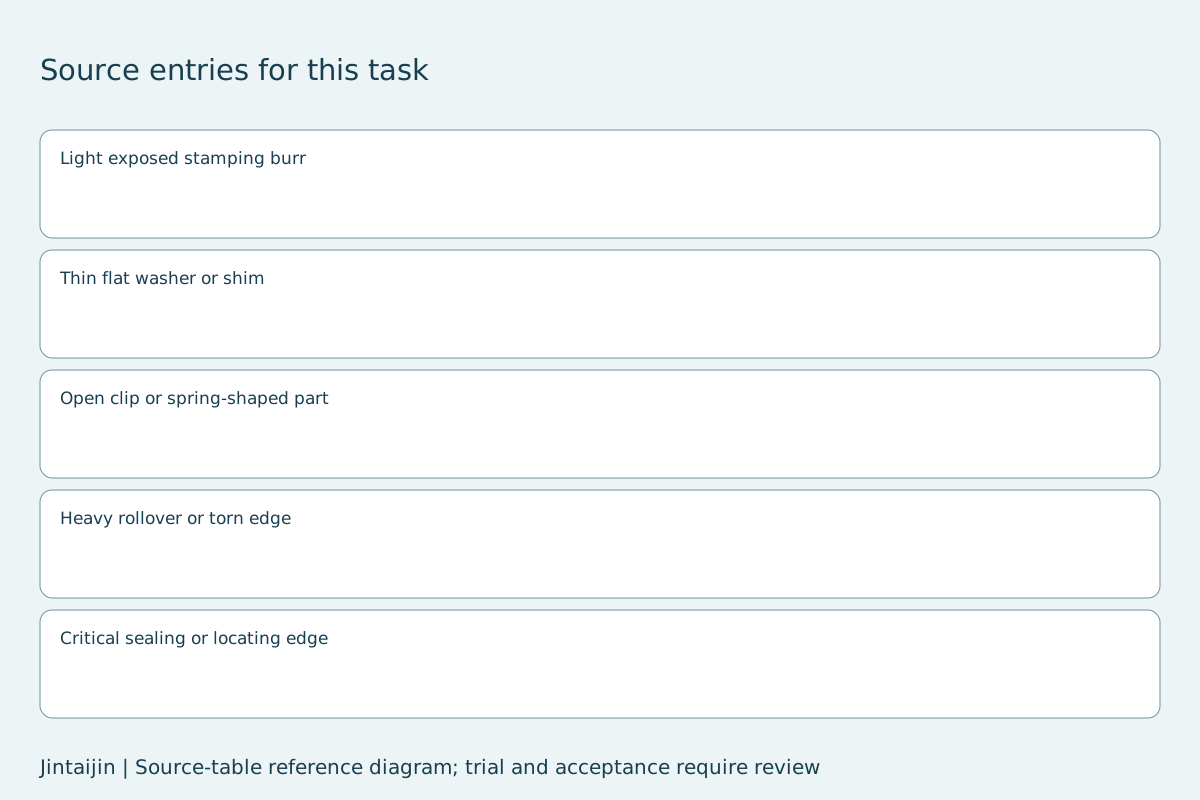
Select the entries relevant to your review.
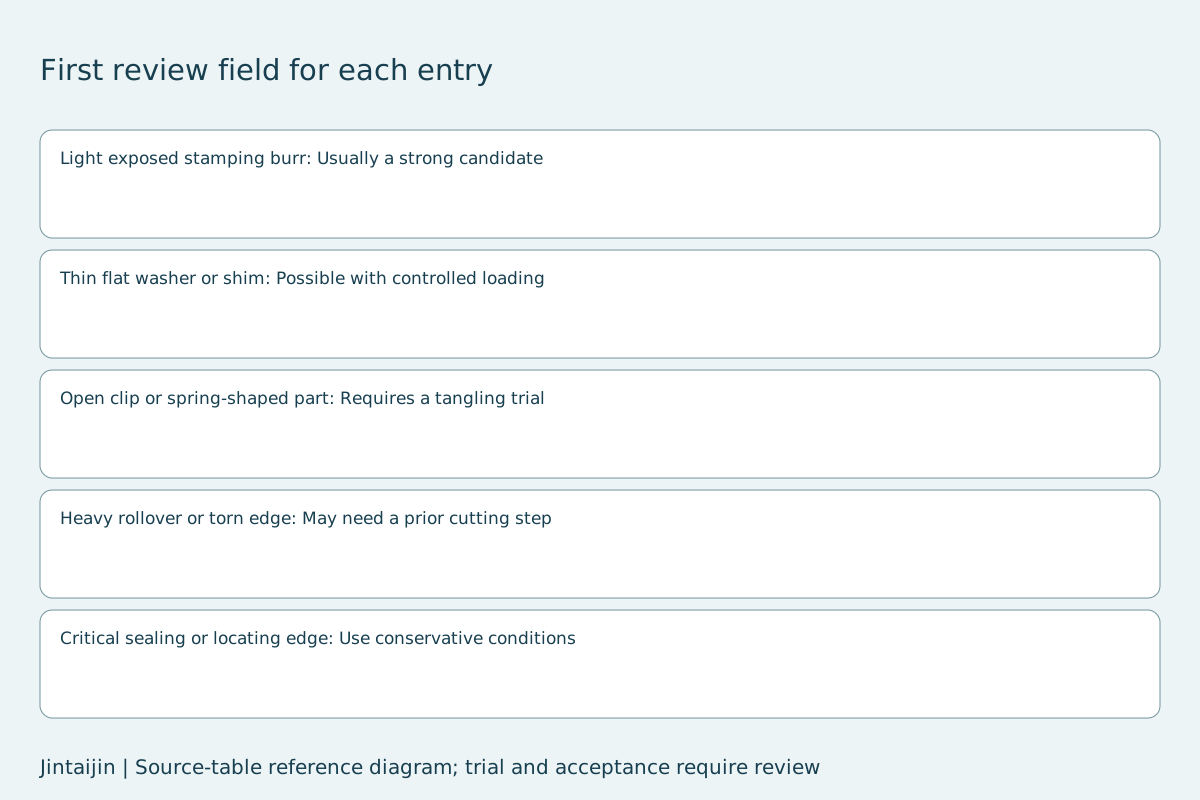
Potential directions only; no dimensional capability or acceptance guaranteed. Keep every selected requirement with the part and the actual trial record. Selecting a row does not show that its acceptance condition has been met.
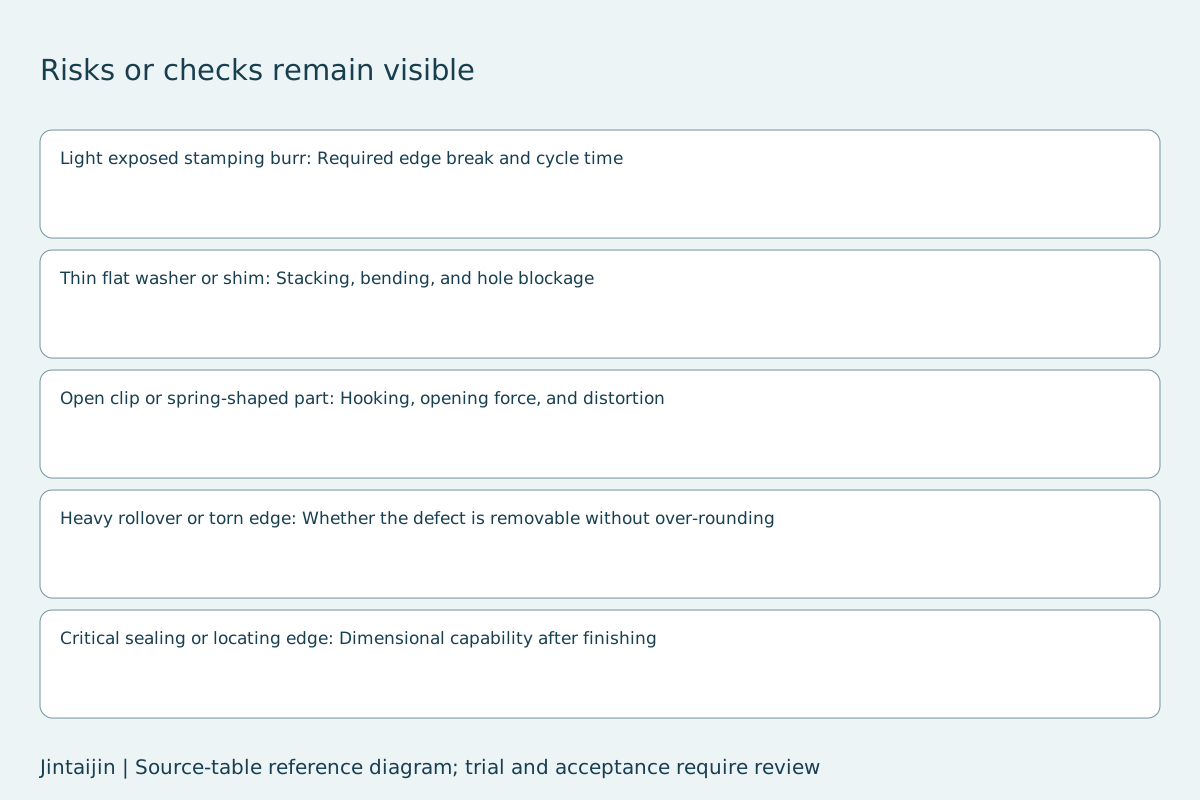
Record the stamping condition, drawing revision and protected surfaces. Check flatness, hole clearance, clip force or locating geometry as applicable using the buyer-agreed method. Observe orientation, stacking and tangling during the trial and inspect the discharge route for new marks. Numerical edge break, cycle time and capability limits are not supplied here; agree and measure them for the actual part.
Mass-Finishing Potential: Usually a strong candidate
Main Validation Point: Required edge break and cycle time
Mass-Finishing Potential: Possible with controlled loading
Main Validation Point: Stacking, bending, and hole blockage
Mass-Finishing Potential: Requires a tangling trial
Main Validation Point: Hooking, opening force, and distortion
Mass-Finishing Potential: May need a prior cutting step
Main Validation Point: Whether the defect is removable without over-rounding
Mass-Finishing Potential: Use conservative conditions
Main Validation Point: Dimensional capability after finishing
Read the Jintaijin technical article. Source table reviewed 3 October 2026. Possible causes, directions and adjustments remain conditional reference fields.
Email : info@surface-polish.com


 IPv6 network supported


 +86-592-2381506