


Jintaijin | Independent specification reference
Walther Trowal TT 280-A/2C vs TT 520-A/2C: specification comparison
Compare TT 280-A/2C and TT 520-A/2C in the TT A/2C official table. Gross volume is 280 versus 520 L; listed power is 15 versus 30 kW. Use the tool to inspect differences, enter your own gross-volume and listed-power limits, and download the current comparison. Conditional volume figures need a workpiece-specific review.
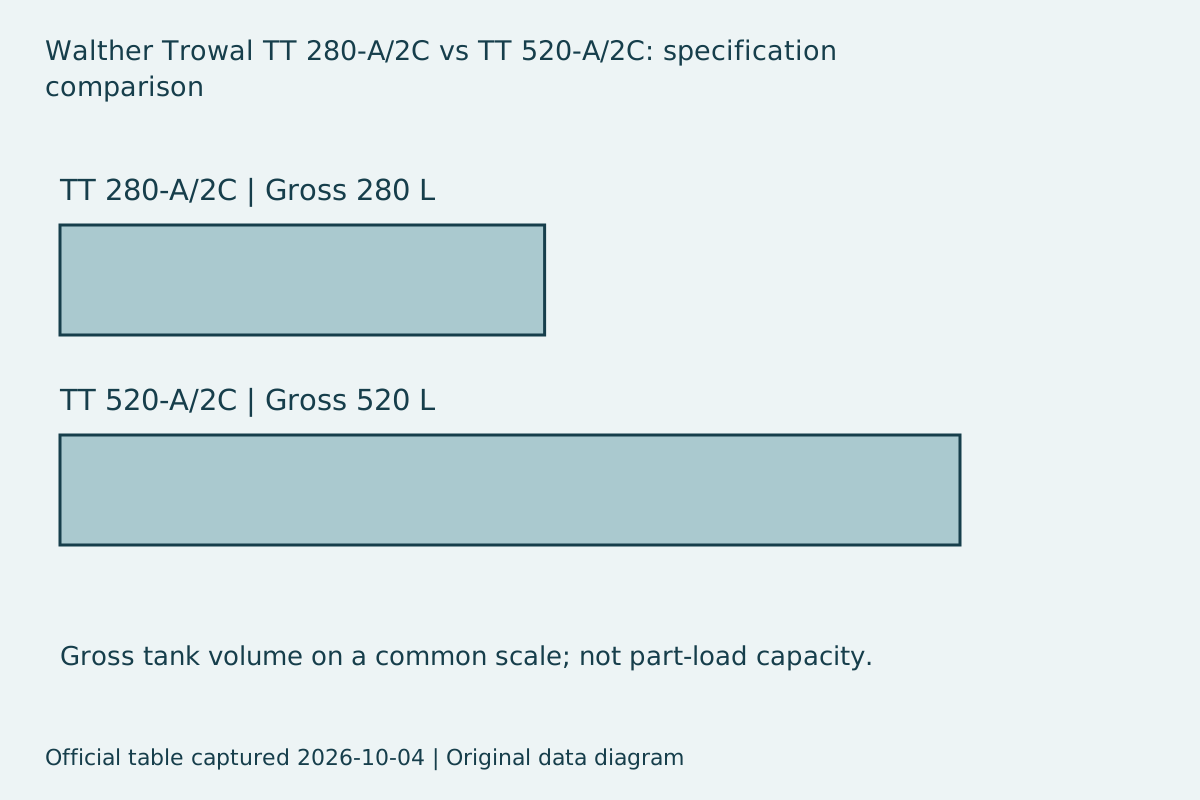
Listed specification differences
| Source field | TT 280-A/2C | TT 520-A/2C | Right minus left |
|---|---|---|---|
| Gross volume | 280 L | 520 L | 240 L |
| Conditional volume range: lower endpoint | 28 L | 50 L | 22 L |
| Conditional volume range: upper endpoint | 200 L | 400 L | 200 L |
| Listed power | 15 kW | 30 kW | 15 kW |
| Listed speed at 50 Hz | 181 rpm | 145 rpm | -36 rpm |
| Screening area | 0.8 m² | 0.8 m² | 0 m² |
Gross volume increases by 240 L, from 280 to 520 L. The table lists 28–200 L Useful volume (l) for TT 280-A/2C and 50–400 L Useful volume (l) for TT 520-A/2C. These are conditioned by workpiece geometry, material, sensitivity and the media-to-parts ratio; they do not guarantee a batch of parts.
Listed power changes from 15 to 30 kW, a difference of 15 kW. Listed speed at 50 Hz is 181 versus 145 rpm. These values do not establish the optimal speed for your material or finishing target.
Compare with your own catalog limits
Leave both inputs blank to compare the listed values. Enter both limits to include an arithmetic screen. No limit is prefilled. The power field used here is listed power.

Read the volume condition before planning a batch
Gross volume increases by 240 L, from 280 to 520 L. The table lists 28–200 L Useful volume (l) for TT 280-A/2C and 50–400 L Useful volume (l) for TT 520-A/2C. These are conditioned by workpiece geometry, material, sensitivity and the media-to-parts ratio; they do not guarantee a batch of parts.
Parts and media occupy the working mixture together. Do not convert the conditional figure or its endpoints into parts per hour, guaranteed batch weight, packing fraction or a media recipe. Record part geometry, material and sensitivity, then confirm the permissible loading and separation conditions with the supplier and a workpiece-specific trial.
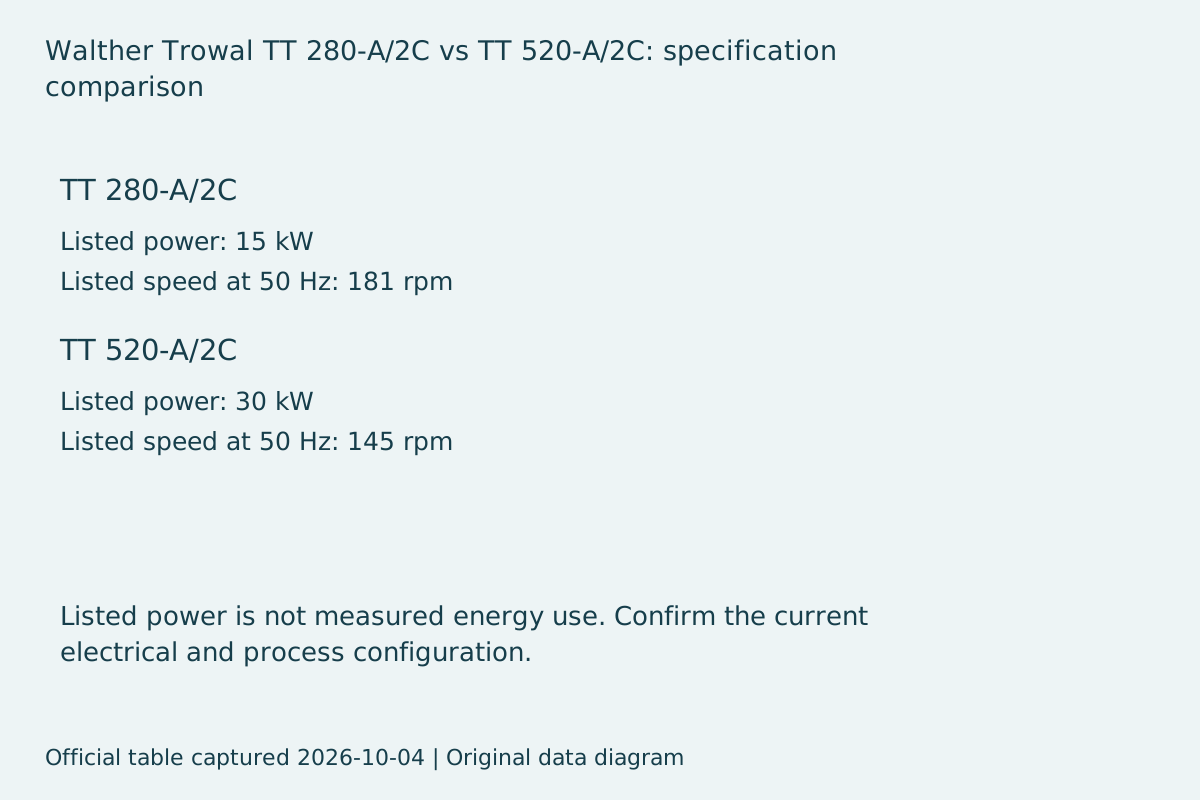
Drive values and source basis
Listed power changes from 15 to 30 kW, a difference of 15 kW. Listed speed at 50 Hz is 181 versus 145 rpm. These values do not establish the optimal speed for your material or finishing target.
The official Walther Trowal TT A/2C table was captured on 2026-10-04. No manufacturer revision is stated on the HTML table. Listed power is not measured energy use or an estimate of operating cost. Lettered drawing dimensions are not converted to a floor-space rectangle. Obtain current drawings for guarding, service access, utilities and floor loading.
These are independent source references. No manufacturer partnership, current configuration, availability or Jintaijin equivalence is established.
Questions about this pair
What changes between TT 280-A/2C and TT 520-A/2C?
Gross volume increases by 240 L, from 280 to 520 L. The table lists 28–200 L Useful volume (l) for TT 280-A/2C and 50–400 L Useful volume (l) for TT 520-A/2C. These are conditioned by workpiece geometry, material, sensitivity and the media-to-parts ratio; they do not guarantee a batch of parts. Listed power changes from 15 to 30 kW, a difference of 15 kW. Listed speed at 50 Hz is 181 versus 145 rpm. These values do not establish the optimal speed for your material or finishing target.
Does the useful or net volume guarantee a batch of parts?
No. The source conditions the figure on workpiece geometry, material and sensitivity, which determine the media-to-parts ratio. Supplier review and a referenced trial are needed for permissible part load, handling and process conditions.
What do the two optional limits check?
The tool compares gross volume against your entered minimum and the listed power field against your entered maximum. Enter both positive decimal values or leave both blank. A passing arithmetic check is not part-fit, process, electrical, installation or throughput approval.
Are these current specifications or Jintaijin equivalents?
The source is an official HTML table captured on 2026-10-04, with no manufacturer revision stated. Confirm the actual offered configuration and availability with Walther Trowal. These facts do not describe a Jintaijin model or establish equivalence.
Related trial and inspection tools
Discuss your workpiece and sample-trial requirements with Jintaijin
 +86-592-2381506

 IPv6 network supported