Select scratches, impact marks, uneven finish, residue, water marks, lost detail, remaining burrs or lodging. The source separates likely causes, first checks and a controlled test for each observation. Clean-media history, incoming surface and circulation questions differ from rinsing and drying questions. Selecting several symptoms keeps those investigations separate. It does not establish one root cause or authorize a larger load, stronger chemical mix or longer cycle.
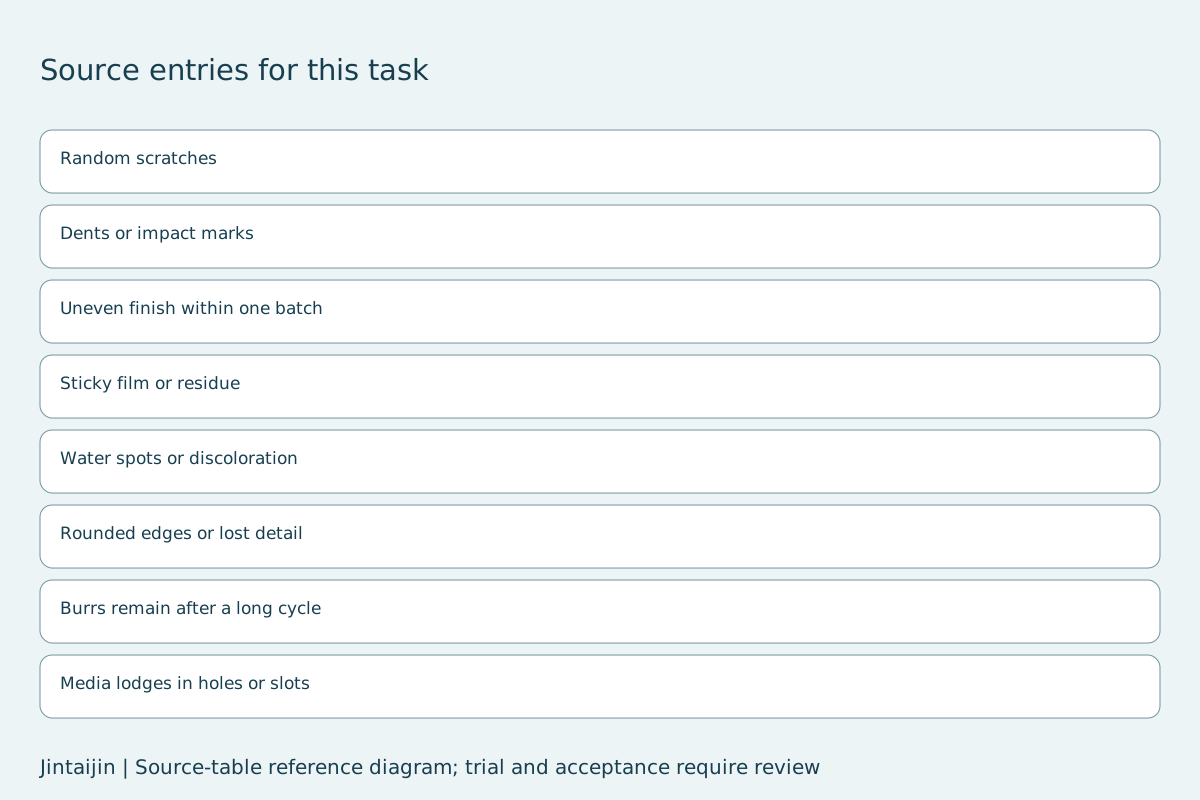
Select the entries relevant to your review.
Possible causes remain hypotheses; chemistry requires approved supplier guidance. Keep every selected requirement with the part and the actual trial record. Selecting a row does not show that its acceptance condition has been met.
Record incoming part condition and inspect at agreed intervals using the same method. Keep actual media, compound identity, measured concentration, machine settings and handling sequence with the sample. Use the supplier-approved concentration and material-compatible cleaning procedure; no chemical dose is provided here. Inspect critical edges, retained media and the dried surface before discussing production release.
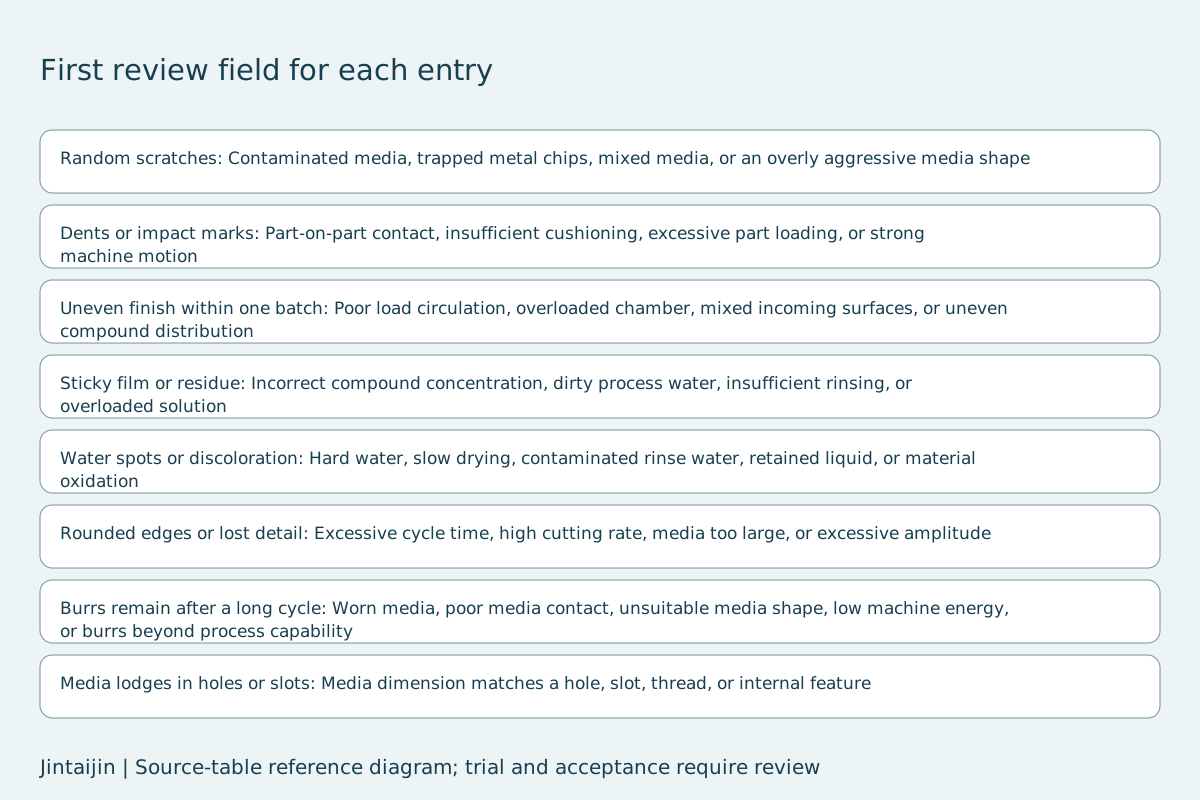
Likely Causes: Contaminated media, trapped metal chips, mixed media, or an overly aggressive media shape
Check First: Bowl cleanliness, media storage, screen condition, and recent part changes
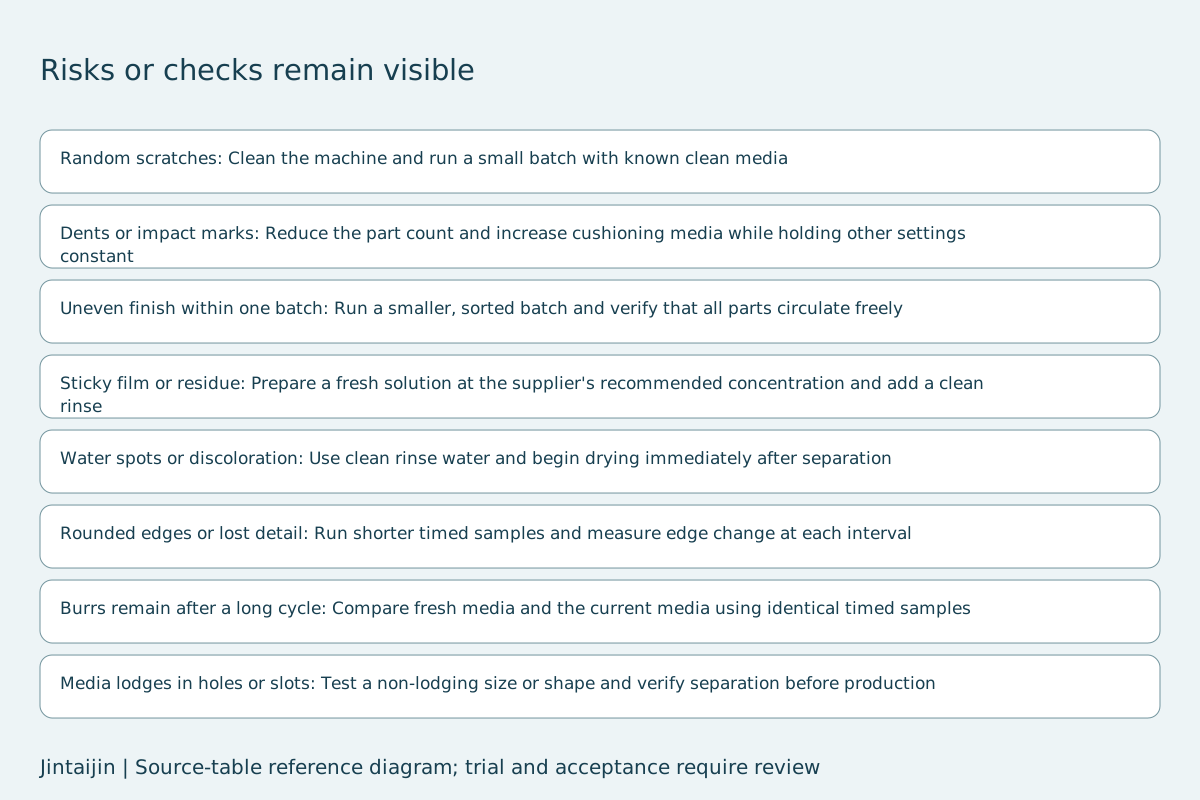
Controlled Test: Clean the machine and run a small batch with known clean media
Likely Causes: Part-on-part contact, insufficient cushioning, excessive part loading, or strong machine motion
Check First: Media-to-parts ratio, part weight, drop points, and circulation pattern
Controlled Test: Reduce the part count and increase cushioning media while holding other settings constant
Likely Causes: Poor load circulation, overloaded chamber, mixed incoming surfaces, or uneven compound distribution
Check First: Load movement at several positions and incoming part consistency
Controlled Test: Run a smaller, sorted batch and verify that all parts circulate freely
Likely Causes: Incorrect compound concentration, dirty process water, insufficient rinsing, or overloaded solution
Check First: Dosing method, water quality, foam level, odor, and rinse condition
Controlled Test: Prepare a fresh solution at the supplier's recommended concentration and add a clean rinse
Likely Causes: Hard water, slow drying, contaminated rinse water, retained liquid, or material oxidation
Check First: Rinse conductivity, drying delay, part pockets, and dryer temperature
Controlled Test: Use clean rinse water and begin drying immediately after separation
Likely Causes: Excessive cycle time, high cutting rate, media too large, or excessive amplitude
Check First: Critical dimensions before and after processing
Controlled Test: Run shorter timed samples and measure edge change at each interval
Likely Causes: Worn media, poor media contact, unsuitable media shape, low machine energy, or burrs beyond process capability
Check First: Media size loss, burr orientation, load movement, and machine settings
Controlled Test: Compare fresh media and the current media using identical timed samples
Likely Causes: Media dimension matches a hole, slot, thread, or internal feature
Check First: Smallest and largest media dimensions compared with every opening
Controlled Test: Test a non-lodging size or shape and verify separation before production
Read the Jintaijin technical article. Source table reviewed 3 October 2026. Possible causes, directions and adjustments remain conditional reference fields.
Email : info@surface-polish.com


 IPv6 network supported


 +86-592-2381506