


Walther Trowal A 65 vs A 220 rotary barrel catalog comparison
Review A 65 and A 220 from the official A brochure marked 10/18, physical PDF page2. Compare 6 source fields, keep volume and equipment-rating bases distinct, and record your part, loading, site and acceptance questions. The downloadable review uses the current form inputs. Current website captures and source differences remain visible for supplier confirmation.
Compare the catalog and record your review
Versioned catalog rows
| Source field | A 65 | A 220 |
|---|---|---|
| Usable volume of parts and media (L; qualified ratio) | 30 | 100 |
| Thickness of barrel lining (mm) | 8 | 8 |
| Drive power (kW; printed decimal comma) | 1,5 | 1,5 |
| Rotational barrel speed (RPM; equipment range) | 2-30 | 2-30 |
| Total weight, empty (kg) | 425 | 480 |
| Max. work piece dimension (mm; opening constraint) | 120 | 250 |
Separate volume from an approved part load
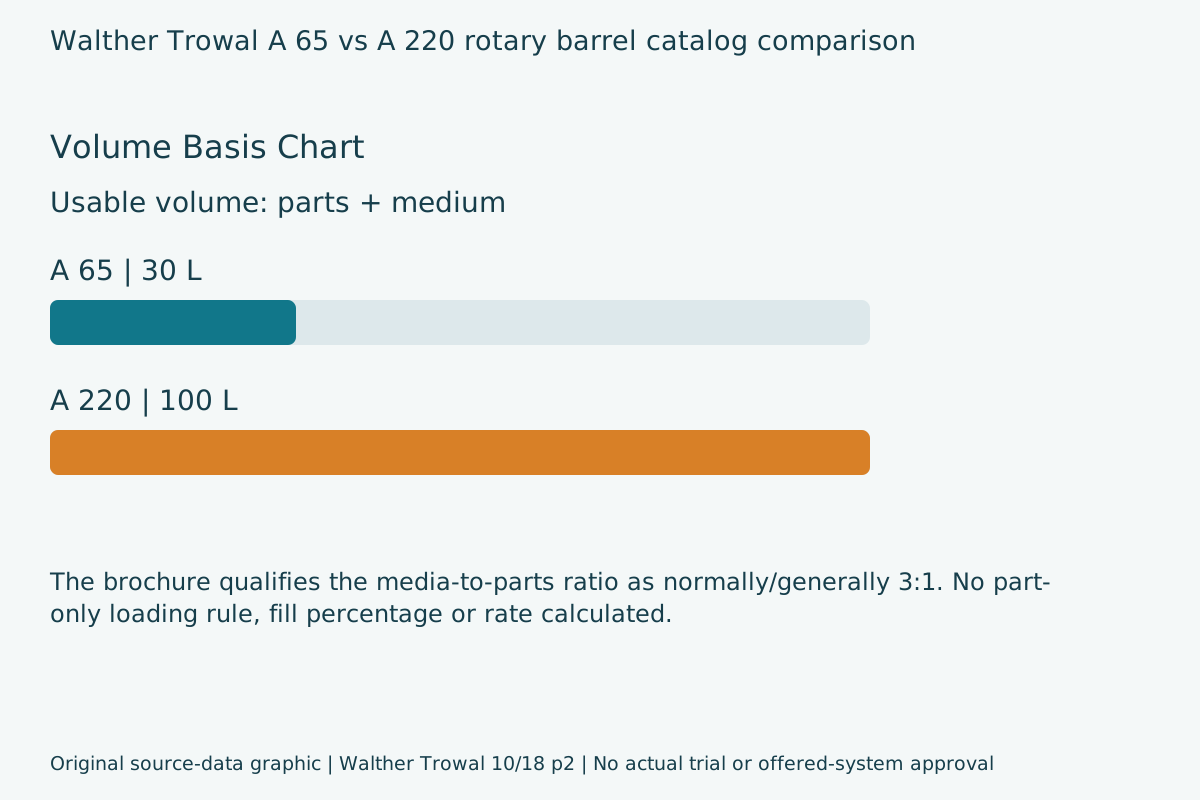
The 10/18 brochure lists A 65 with 30 L usable volume and A 220 with 100 L. The basis includes parts and medium. A qualified normally/generally3:1 medium-to-parts ratio appears in the footnote; it is not a validated loading recipe for your part, and the tool does not divide these figures into a part-only load or production rate.
Review the equipment ratings
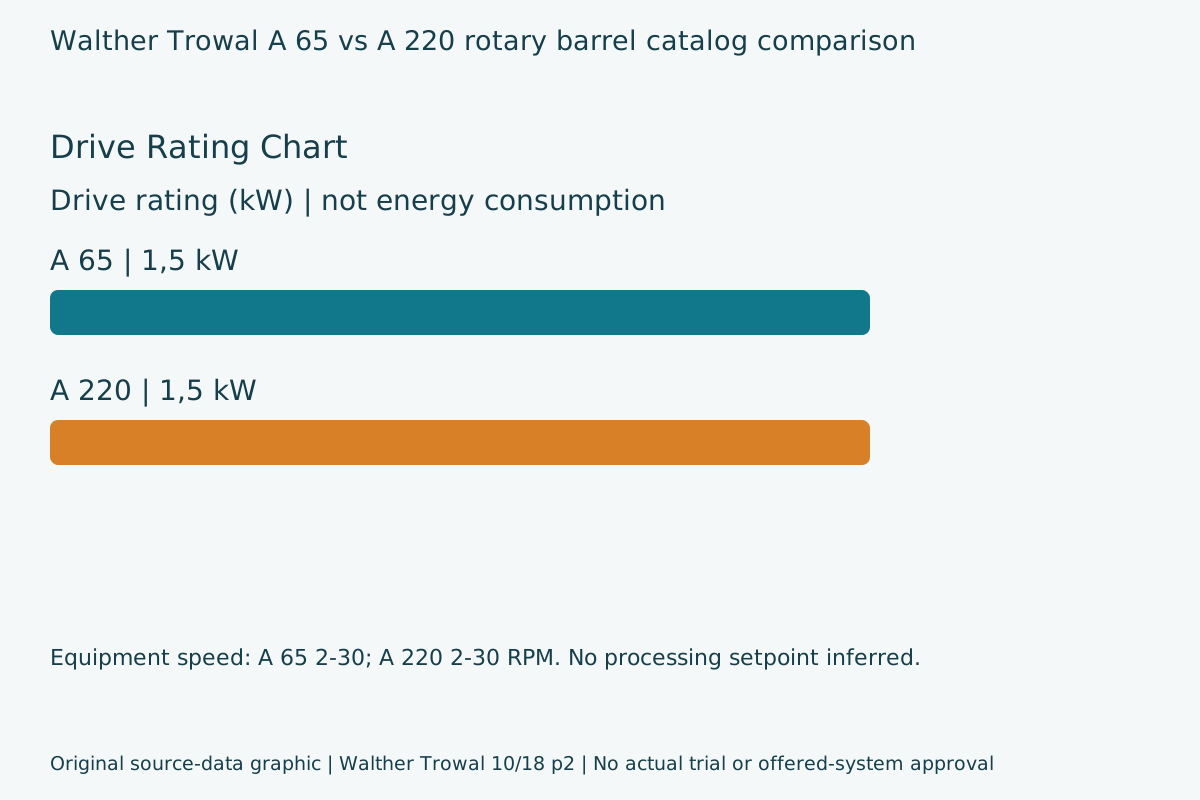
Drive power entries are 1,5 kW for A 65 and 1,5 kW for A 220. Speed entries are 2-30 RPM and 2-30 RPM. The A speed entry is an equipment range and its power row retains the decimal comma. These are source equipment ratings, not process settings or measured consumption. No power total, electricity cost, drying time or finishing result is derived.
Record geometry and handling questions
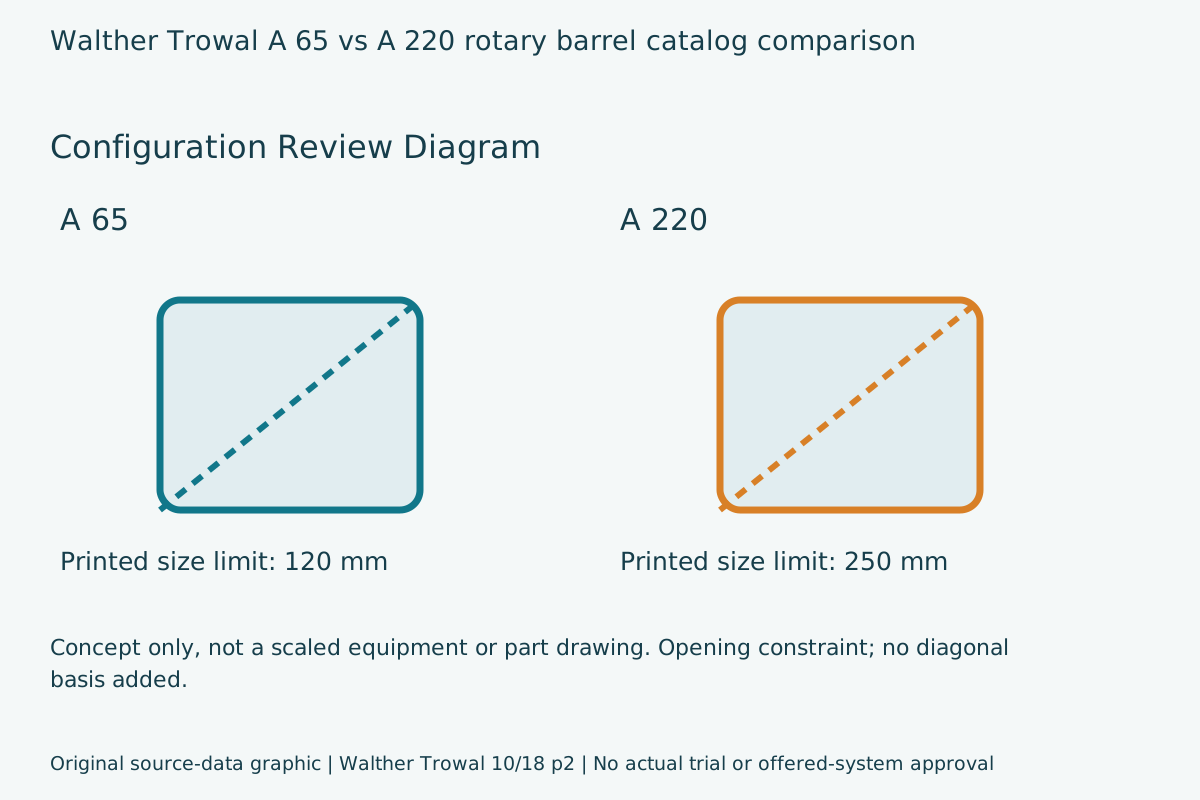
The printed maximum workpiece dimensions are 120 mm for A 65 and 250 mm for A 220. The A brochure constrains parts by the barrel opening. It does not label this row as a diagonal; no diagonal or area is inferred. Empty weights are 425 kg and 480 kg, which are not installed foundation loads. A barrel lining thickness is 8 mm and 8 mm; thickness alone does not approve lining material or wear life.
Keep current-web differences visible
No numeric difference was found in the selected current-web rows for this pair. This limited check does not establish agreement of all specifications or installed options. Usable volume includes parts and media; brochure says media-to-parts ratio normally3:1, not a validated loading recipe. Maximum workpiece dimension is also constrained by barrel opening; no diagonal basis is added. PDF1,5 is a decimal comma, not1,500; preserve printed notation. Current-web lining/power/speed cells use merged or sparse layout; blank cells are not interpreted as zero or independently reconciled records. No promised surface roughness, no-nicking outcome, cycle time or offered configuration inferred.
Official current A product pageSource and sample-review scope
Official A brochure, 10/18, physical page2, captured2026-10-05.
This is an independent versioned Walther Trowal reference. It does not establish Jintaijin supply, partnership, equivalent machinery, current offers or trial outcomes. Use the comparison to prepare questions and preserve the source basis. Any text you enter is USER_RECORDED_NOT_VERIFIED.
Questions about this model pair
How do A 65 and A 220 compare in volume?
The 10/18 brochure lists A 65 with 30 L usable volume and A 220 with 100 L. The basis includes parts and medium. A qualified normally/generally3:1 medium-to-parts ratio appears in the footnote; it is not a validated loading recipe for your part, and the tool does not divide these figures into a part-only load or production rate.
What geometry or handling constraints need review?
The printed maximum workpiece dimensions are 120 mm for A 65 and 250 mm for A 220. The A brochure constrains parts by the barrel opening. It does not label this row as a diagonal; no diagonal or area is inferred. Empty weights are 425 kg and 480 kg, which are not installed foundation loads. A barrel lining thickness is 8 mm and 8 mm; thickness alone does not approve lining material or wear life.
Can the power and speed entries predict operating cost or results?
Drive power entries are 1,5 kW for A 65 and 1,5 kW for A 220. Speed entries are 2-30 RPM and 2-30 RPM. The A speed entry is an equipment range and its power row retains the decimal comma. These are source equipment ratings, not process settings or measured consumption. No power total, electricity cost, drying time or finishing result is derived.
Does the current website use the same source basis?
No numeric difference was found in the selected current-web rows for this pair. This limited check does not establish agreement of all specifications or installed options. Usable volume includes parts and media; brochure says media-to-parts ratio normally3:1, not a validated loading recipe. Maximum workpiece dimension is also constrained by barrel opening; no diagonal basis is added. PDF1,5 is a decimal comma, not1,500; preserve printed notation. Current-web lining/power/speed cells use merged or sparse layout; blank cells are not interpreted as zero or independently reconciled records. No promised surface roughness, no-nicking outcome, cycle time or offered configuration inferred.
How should I use this comparison in a sample enquiry?
This is an independent versioned Walther Trowal reference. It does not establish Jintaijin supply, partnership, equivalent machinery, current offers or trial outcomes. Use the comparison to prepare questions and preserve the source basis. Any text you enter is USER_RECORDED_NOT_VERIFIED.
Related review tools
Prepare a sample review enquiry
Provide your part drawing, finishing objective, medium and separation restrictions, installation constraints and acceptance method for a SurfacePolish discussion.
Open the SurfacePolish enquiry form +86-592-2381506

 IPv6 network supported