


Walther Trowal CD 110 vs CD 600 circular vibrator catalog comparison
Compare CD 110 and CD 600 using the official Walther Trowal CD brochure marked 06/14, physical PDF page2. Filter 10 source fields, record your part, separation, site and acceptance questions, and download the current review. Conditional volume, diagonal limits and drive rows remain versioned references. The separately captured current web table is not merged into a current offer.
Compare catalog fields and record your review questions
Versioned catalog rows
| Source field | CD 110 | CD 600 |
|---|---|---|
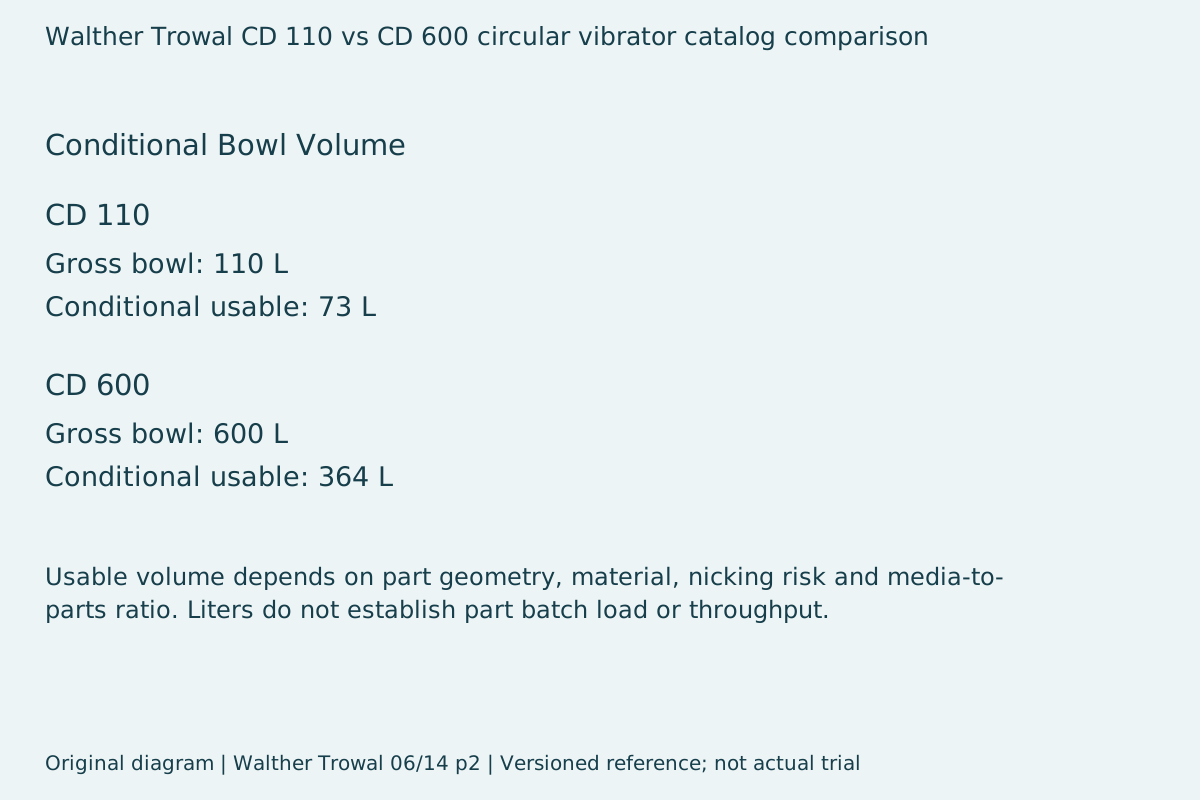
| Work bowl gross volume (L) | 110 | 600 |
| Conditional usable volume (L) | 73 | 364 |
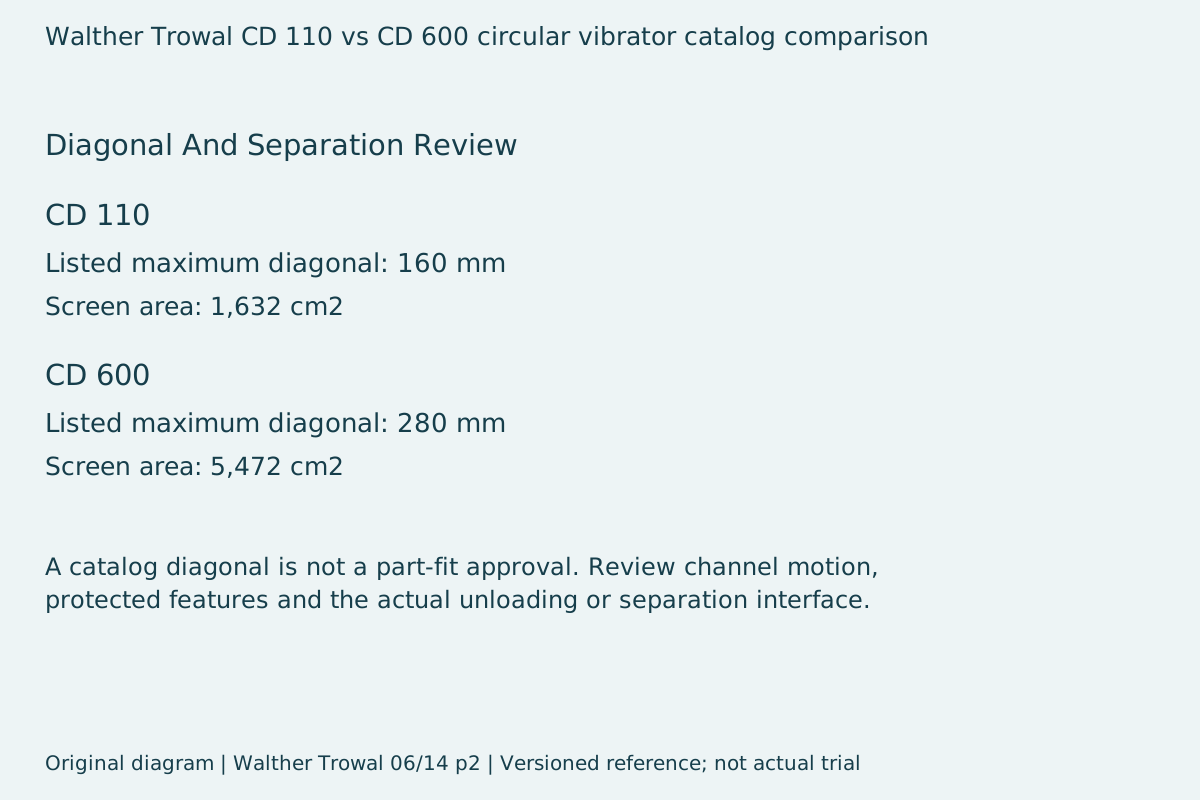
| Largest workpiece dimension measured diagonally (mm) | 160 | 280 |
| Total separation screen area (cm2) | 1,632 | 5,472 |
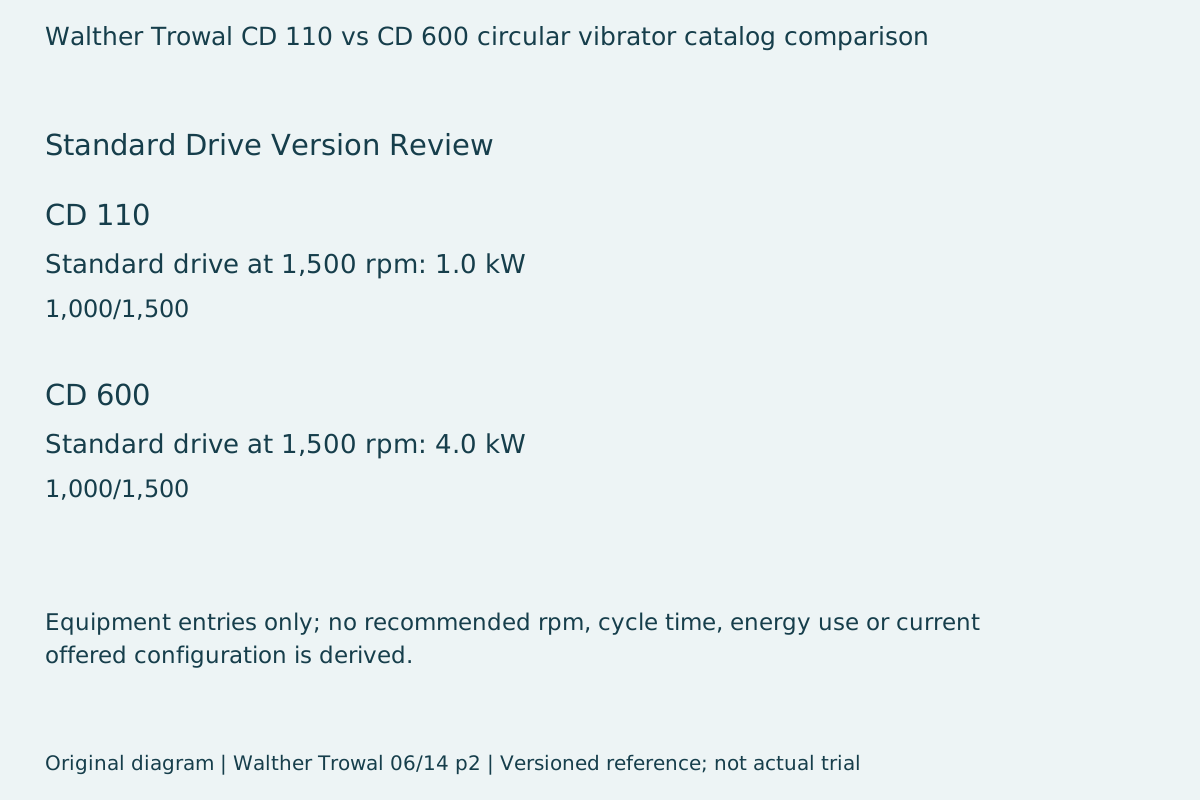
| Standard drive power at 1,500 rpm (kW) | 1.0 kW | 4.0 kW |
| Standard motor speed entry (rpm; equipment basis) | 1,000/1,500 | 1,000/1,500 |
| Maximum centrifugal force (N) | 17,540 | 72,980 |
| Total weight, empty (kg) | 427 | 1,400 |
| Catalog accessory magnetic separator reference | MS 101x14 | MS 134x31 |
| Catalog accessory vibratory drier reference | G 100 | G 500 |
Keep bowl volume separate from part batch load
The 06/14 PDF lists CD 110 with 110 L gross and 73 L conditional usable volume; CD 600 has 600 L gross and 364 L conditional usable volume. The footnote ties the media-to-workpiece ratio to geometry, material and delicacy or nicking risk. Neither column supplies a universal part-only load, bulk density, daily output or cycle time. Record the actual part and media constraints before a representative sample trial.
Review the diagonal and separation interface
The listed diagonal limits are 160 mm for CD 110 and 280 mm for CD 600. A single diagonal value cannot prove motion clearance, nesting, lodging risk, contact damage or complete unloading. Separation-screen areas are 1,632 cm2 and 5,472 cm2, respectively. Screen area does not establish separation speed, aperture, media retention or workpiece carry-out. The CD brochure explicitly lists a pneumatic separation flap as standard for CD 400, CD 600 and CD 1200. Do not extend that list to CD 800 or assume a manual/pneumatic configuration without the offered drawing.
Keep drive rows tied to their version
CD 110 lists 1.0 kW at 1,500 rpm; CD 600 lists 4.0 kW. Their standard speed entries are 1,000/1,500 and 1,000/1,500. Two-speed alternatives are not a continuous recommended processing range. Inverter maxima are equipment limits, not a validated setpoint. Drive power is not measured energy consumption or total connected load, and no energy cost or productivity is calculated.
Review accessories and supplier drawings
The catalog drier references are G 100 for CD 110 and G 500 for CD 600. Magnetic separator references are MS 101x14 and MS 134x31. These are brochure accessory references, not installation, compatibility, stock or quotation approval. Review discharge interface, part/media separation, drying suitability and material-specific acceptance with the responsible supplier. Lettered drawing dimensions are omitted from this tool; no floor plan or maintenance clearance is inferred.
Current official web table and version differences
No difference was found in the selected numeric rows for this pair. This is a limited comparison, not confirmation that all current specifications agree; drawing, speed, accessory and configuration details remain separate.
Official current CD product page, captured 2026-10-05. This comparison covers selected numeric rows; it is not an exhaustive current configuration reconciliation. Confirm offered model, drawing revision, accessories and process trial separately.
Source and scope
Official CD brochure, 06/14, physical page2; captured 2026-10-05. This is an independent Walther Trowal reference. No Jintaijin supply, partnership, equivalent machine, actual finishing result, medical qualification or current offer is established. User notes are USER_RECORDED_NOT_VERIFIED; diagrams are original source-data references.
Questions about this model pair
How do CD 110 and CD 600 compare in bowl volume?
The 06/14 PDF lists CD 110 with 110 L gross and 73 L conditional usable volume; CD 600 has 600 L gross and 364 L conditional usable volume. The footnote ties the media-to-workpiece ratio to geometry, material and delicacy or nicking risk. Neither column supplies a universal part-only load, bulk density, daily output or cycle time. Record the actual part and media constraints before a representative sample trial.
Do their diagonal limits establish part fit?
The listed diagonal limits are 160 mm for CD 110 and 280 mm for CD 600. A single diagonal value cannot prove motion clearance, nesting, lodging risk, contact damage or complete unloading. Separation-screen areas are 1,632 cm2 and 5,472 cm2, respectively. Screen area does not establish separation speed, aperture, media retention or workpiece carry-out. The CD brochure explicitly lists a pneumatic separation flap as standard for CD 400, CD 600 and CD 1200. Do not extend that list to CD 800 or assume a manual/pneumatic configuration without the offered drawing.
Can their catalog speeds be used as process settings?
CD 110 lists 1.0 kW at 1,500 rpm; CD 600 lists 4.0 kW. Their standard speed entries are 1,000/1,500 and 1,000/1,500. Two-speed alternatives are not a continuous recommended processing range. Inverter maxima are equipment limits, not a validated setpoint. Drive power is not measured energy consumption or total connected load, and no energy cost or productivity is calculated.
Which accessory references require confirmation?
The catalog drier references are G 100 for CD 110 and G 500 for CD 600. Magnetic separator references are MS 101x14 and MS 134x31. These are brochure accessory references, not installation, compatibility, stock or quotation approval. Review discharge interface, part/media separation, drying suitability and material-specific acceptance with the responsible supplier. Lettered drawing dimensions are omitted from this tool; no floor plan or maintenance clearance is inferred.
Does the current official website agree with this PDF version?
No difference was found in the selected numeric rows for this pair. This is a limited comparison, not confirmation that all current specifications agree; drawing, speed, accessory and configuration details remain separate.
Related review tools
Prepare a sample review enquiry
For SurfacePolish equipment discussions, provide the part drawing, finishing objective, separation restrictions and acceptance method. This reference does not confirm supply of third-party machines.
Open the SurfacePolish enquiry form +86-592-2381506

 IPv6 network supported