• Walnut Shell Tumbling for Wood Parts: Dry Polishing Process Guide
    Walnut Shell Tumbling for Wood Parts: Dry Polishing Process Guide Aug 21 , 2025
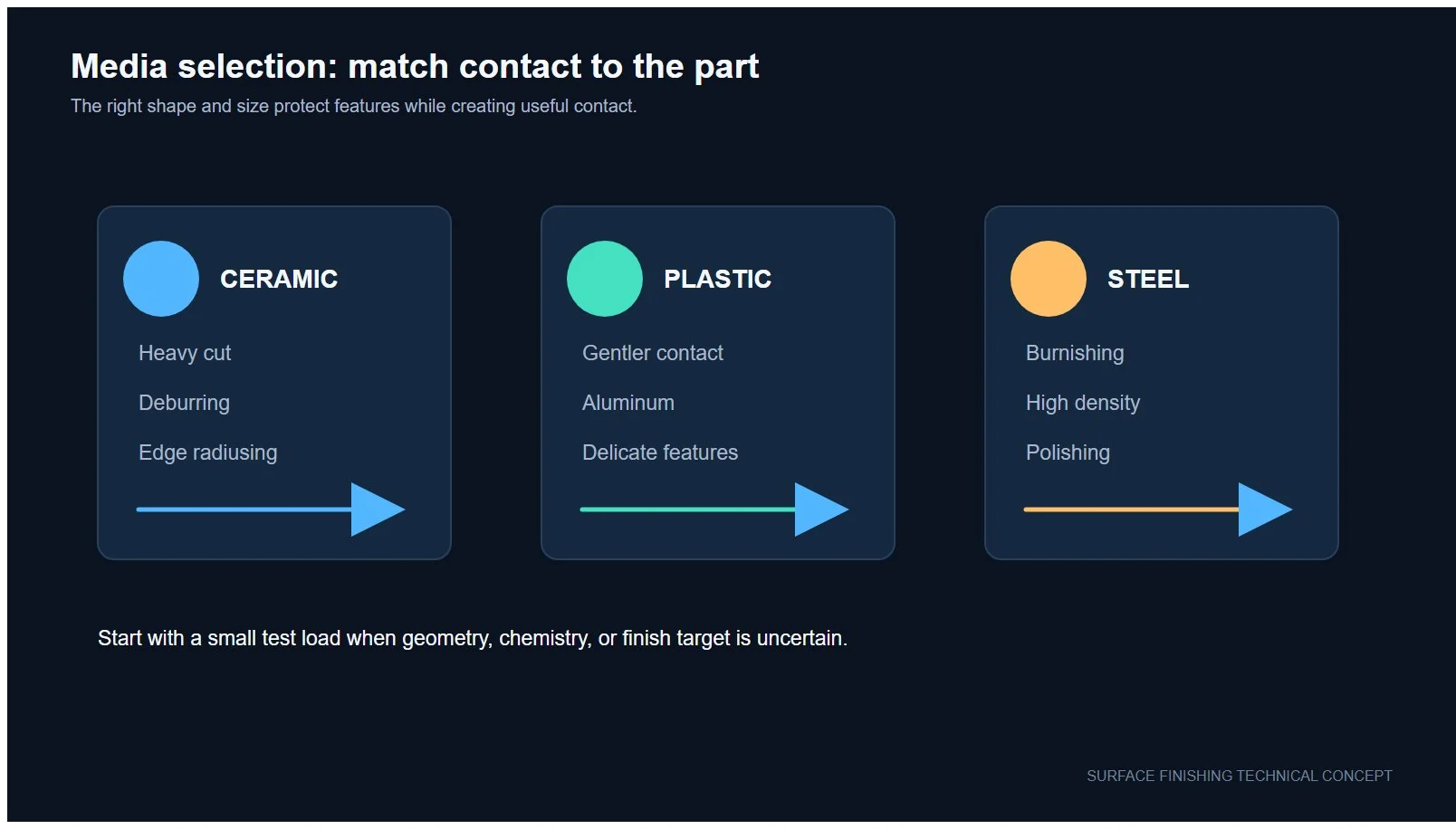
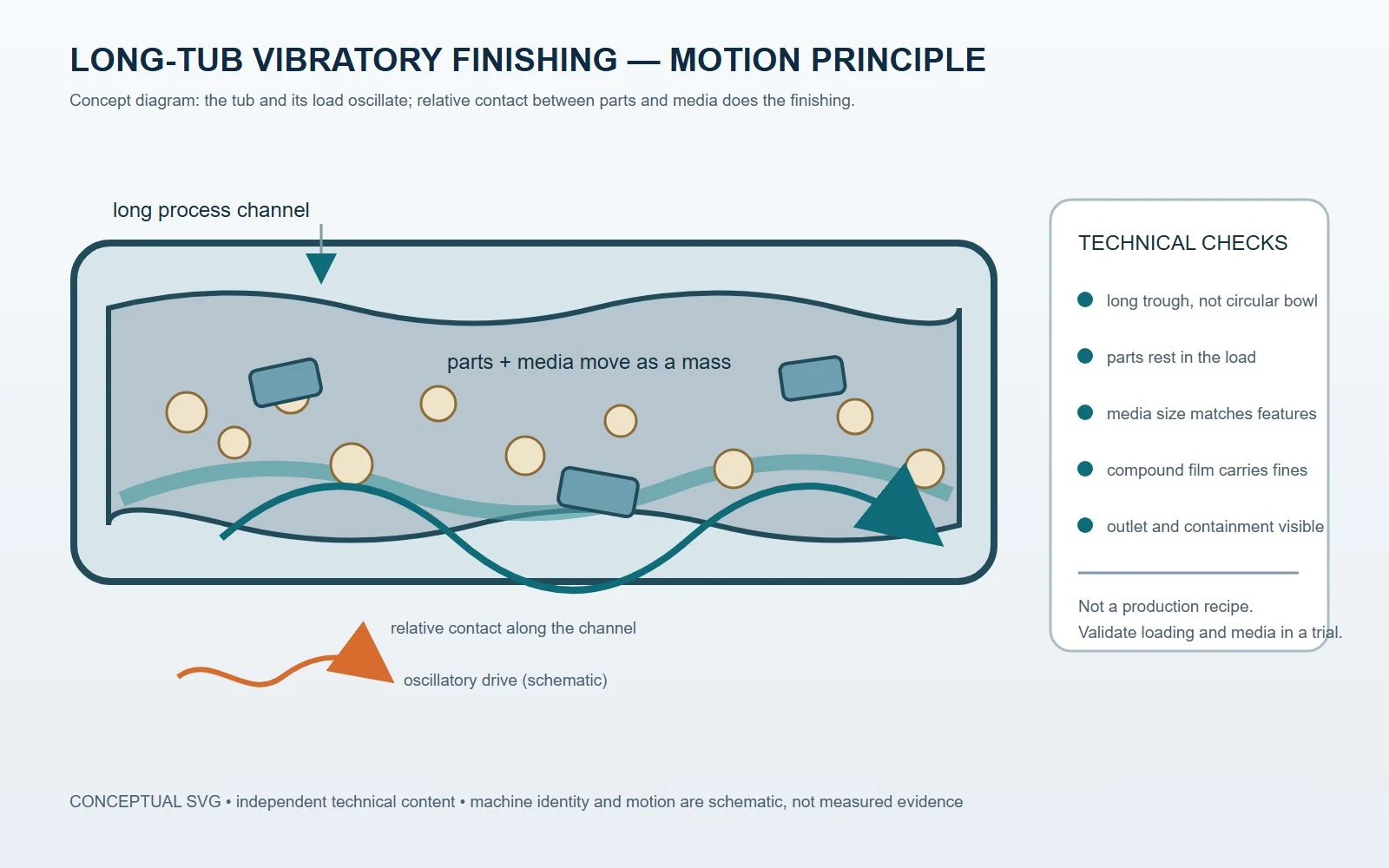
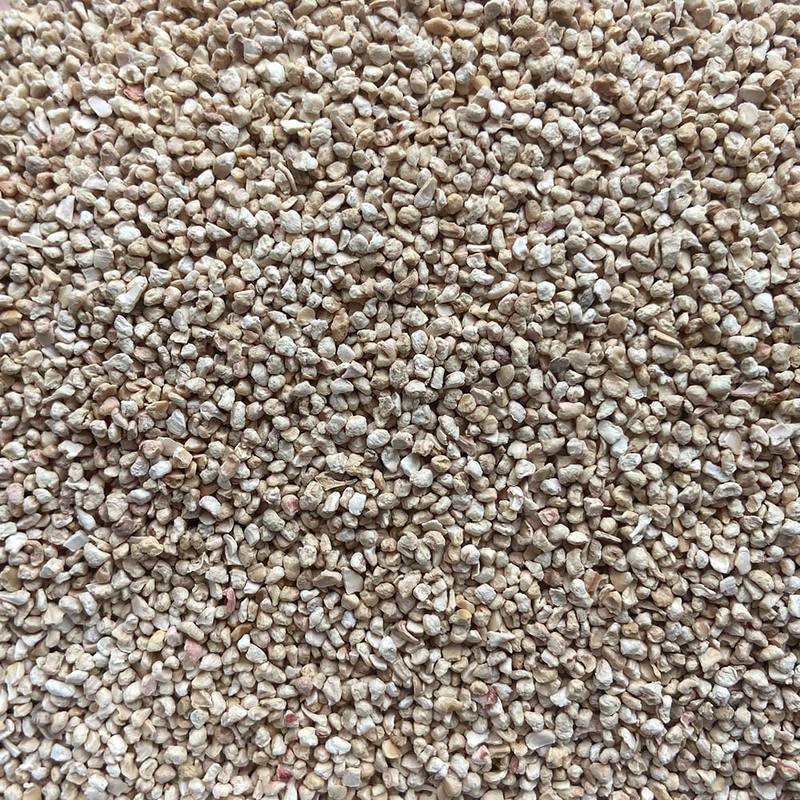
    Dry Finishing Process Guide Walnut Shell Tumbling for Wood Parts: Dry Polishing Process Guide Walnut shell media can clean, smooth, and brighten selected small wood parts in a rotary barrel without introducing water. It is a finishing and process-control tool, not a substitute for correcting deep machining marks, heavy tear-out, unstable moisture, or poor sanding. Buyers searching for a wood polishing machine often need more than a machine name. They need to know whether the parts can tumble without bruising, whether walnut shell can reach the target surfaces, how the media will be separated, and what inspection will confirm that the wood still meets its dimensional and appearance requirements. The answer depends on the wood species, moisture condition, part geometry, starting defect, target finish, batch size, and allowable edge change. Quick answer: Use walnut shell tumbling for controlled dry cleaning, light surface refinement, and finish preparation on robust small parts that can flow freely. Start with a short trial, low-impact movement, clean media, and representative inspection samples. Use sanding or another upstream operation when the defect is too deep for gentle mass finishing. Media size, cleanliness, condition, and any added polishing charge must be controlled as part of the process. What walnut shell media can and cannot do Walnut shell is an organic dry finishing media. In a rotary barrel, the media and parts move through a rolling mass. Contact can remove loose dust, distribute a compatible polishing charge, soften minor surface irregularities, and produce a more consistent tactile or cosmetic finish. The result is governed by contact, sliding, impact, and the condition of both the parts and media. It should not be expected to erase deep saw marks, repair chipped grain, flatten warped parts, remove large amounts of material, or guarantee a particular gloss. If parts enter the barrel with inconsistent sanding, moisture, geometry, or contamination, the finished batch may remain inconsistent. A stable upstream process is therefore the first requirement. Starting condition Walnut shell tumbling role Main risk to validate Uniformly sanded small parts Dry cleaning and light finish refinement Edge change and part-to-part marks Laser-cut parts with light residue Remove loose residue and prepare for inspection Dark residue transfer and uneven recess cleaning Parts needing oil, wax, or coating Final dry preparation after a validated cleaning sequence Media dust or compound affecting adhesion Deep tool marks or torn grain Usually not the primary correction step Long cycles bruise parts before defects disappear Thin, fragile, hooked, or interlocking parts Only after a controlled handling trial Breakage, tangling, dents, and nesting Which wood parts are suitable? Good candidates are repeatable small parts that can roll through the media without locking together. Examples may include beads, handles, knobs, ornaments, small blocks, and selected turned or carved components. Suitability must be confirmed with the actual wood, because density, grain direction, moisture, coatings, inserts, and thin features change the way a part responds. Pay particular attention to cross-grain corners, drilled holes, narrow slots, fragile projections, sharp decorative details, glued joints, and metal inserts. These features may trap media, collect dust, or receive more impact than broad surfaces. Mixed part families should not share a trial unless their geometry and acceptance criteria are genuinely comparable. Why a rotary barrel is the normal starting point A rotary barrel tumbling machine creates a rolling cascade. For dry wood finishing, the objective is steady circulation with enough relative movement to contact the surfaces but without uncontrolled dropping or repeated hard collisions. The barrel must have sufficient working volume for media and parts to move as a mass. Machine capacity cannot be selected from part weight alone. A buyer should provide the largest part dimensions, geometry, bulk volume, batch quantity, wood condition, and target result. A light but bulky wood part may consume more working volume than its weight suggests. Compare available machines such as the 600 L wood barrel dry polishing machine only after confirming the usable batch volume and movement. A vibratory machine may be evaluated when the part geometry or process needs a different motion, but it is not automatically gentler. Bowl or tub selection, load, media ratio, amplitude, part contact, and separation still require testing. The bowl, tub, and capacity guide explains the general equipment decision framework. How to choose and control walnut shell media Media grade and particle size affect surface contact, access to details, separation, dust, and the chance of lodging in holes. Smaller particles may reach tighter features but can be harder to separate. Coarser particles may separate more easily but can bridge across recesses or leave narrow areas less processed. The chosen grade must be compared with every hole, slot, recess, and internal feature on the part. Use clean, dry walnut shell polishing media. Keep unused media protected from moisture and contamination. During production, monitor dust, color, odor, flow, embedded residue, and changes in particle size. Media that carries contamination from a previous batch can transfer it to the next batch, so separate media by process when cross-contamination matters. If a polishing compound or charge is used, confirm that it is compatible with the wood and the next operation. Excess charge can create deposits, uneven color, sticky media, or cleaning work. Begin with an uncharged reference trial, then change one factor at a time. A safer process-development sequence Define the incoming condition. Record wood species, moisture condition, dimensions, sanding state, defects, coatings, glue, and inserts. Define acceptance. Use approved samples and checks for appearance, feel, dimensions, edge condition, cleanliness, and coating compatibility. Choose media around geometry. Confirm access and separation at holes, slots, recesses, and fragile details. Start with a small representative load. Use enough media to separate parts and create stable flow. Observe movement. The load should roll consistently rather than slide as one block, jam, or fall in an uncontrolled way. Inspect at short intervals. Stop when the target is reached, before extra time adds bruising, edge loss, or dust. Repeat the approved trial. A recipe is ready for scale-up only after it produces repeatable results on representative batches. Troubleshooting walnut shell tumbling Symptom What to check first Possible adjustment to test Dents or bruised edges Part concentration, falling action, fragile geometry Increase cushioning, reduce part load, shorten the trial, or change equipment Uneven finish Incoming sanding, blocked flow, mixed part sizes Standardize incoming parts and restore consistent circulation Dust or residue remains Media condition, excessive charge, separation method Refresh media, reduce charge, and improve extraction or post-cleaning Media lodged in holes Particle size versus smallest opening Change grade or redesign the separation and inspection step Little visible change Defect depth, media contact, movement, target definition Correct the upstream defect or test a more suitable process For systematic diagnosis of flow, scratches, residue, and inconsistent batches, use the mass finishing troubleshooting guide. The principles of controlling contact, media condition, and one variable at a time also apply to dry barrel trials. What to send for machine and process selection For a useful recommendation, send the wood species, moisture condition, part dimensions and bulk volume, geometry, current sanding or machining process, starting defect, target appearance, batch quantity, downstream coating, and clear photos or drawings. State whether holes, slots, fragile features, glued joints, or inserts must be protected. This information is more useful than asking for a generic cycle time. Need a dry finishing trial for your wood parts? Send representative parts, drawings, batch volume, current defects, and the required finish. We can use that information to define a test matrix and recommend a suitable barrel and walnut shell media grade. Discuss Your Parts Related manufacturing reference: jingseyewear documents another small-part finishing context where material behavior, geometry, and surface acceptance must be validated before production.
  • Polishing Glassware for Higher Transmittance: Rotary Barrel Vibrators × Cerium Oxide
    Polishing Glassware for Higher Transmittance: Rotary Barrel Vibrators × Cerium Oxide Aug 13 , 2025
    Polishing Glassware for Higher Transmittance: Rotary Barrel Vibrators × Cerium Oxide How to let your glass “drink” a cerium-oxide latte and walk out clearer,brighter,and rea
  • Precision Ceramic Polishing: Achieving Nanometer-Level Surface Finish with Disc Finishing Machines
    Precision Ceramic Polishing: Achieving Nanometer-Level Surface Finish with Disc Finishing Machines Aug 06 , 2025
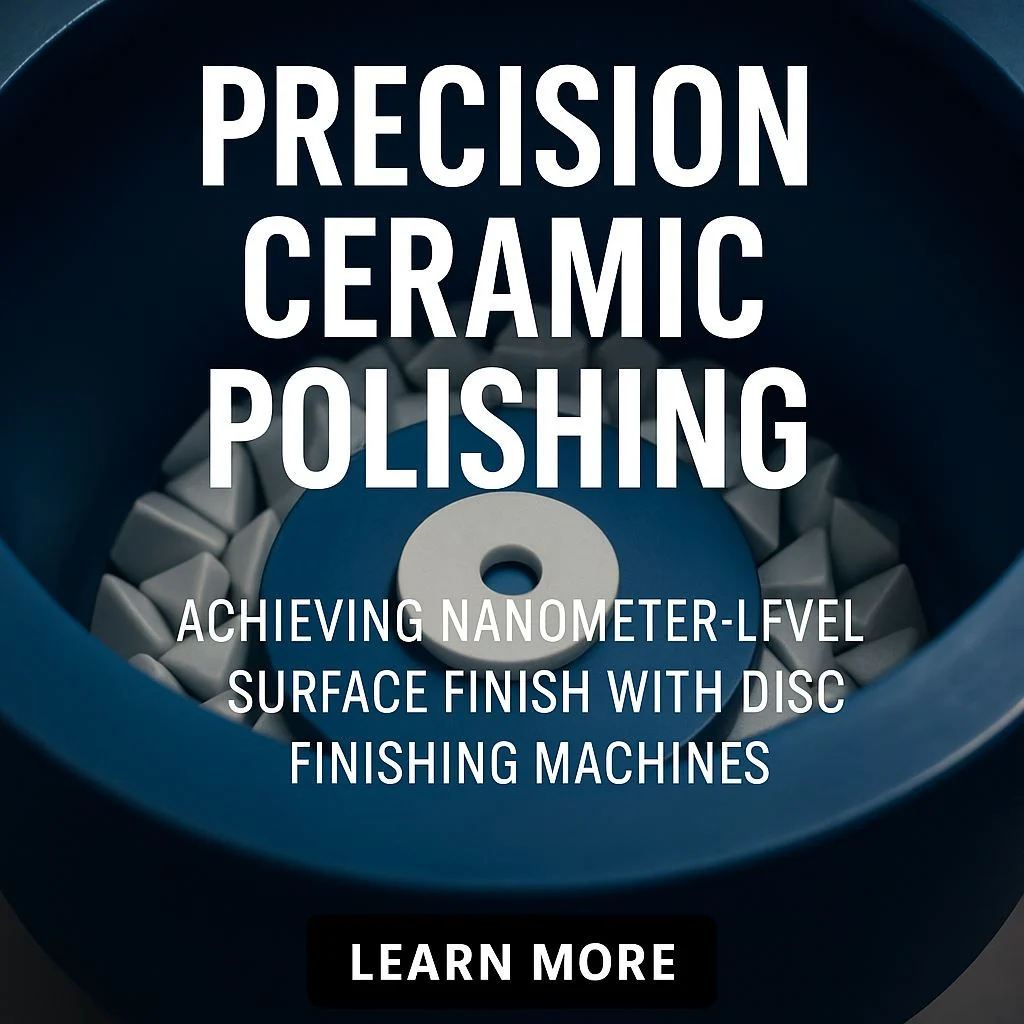
    In the realm of advanced manufacturing, precision ceramic components have become indispensable across various industries, from aerospace and electronics to medical devices and semiconductor manufacturing. These materials offer exceptional properties including high temperature resistance, chemical inertness, superior hardness, and excellent electrical insulation. However, realizing the full potential of advanced ceramics hinges on achieving precise surface finishes that meet increasingly demanding specifications. This article explores how modern disc polishing machines are revolutionizing ceramic processing by enabling nanoscale surface precision, and why Xiamen Jintaiiin Polishing Technology Co. Ltd stands at the forefront of this technological advancement. The Unique Challenges of Ceramic Polishing Advanced ceramic components require specialized polishing techniques to achieve optimal surface characteristics Ceramics, by their very nature, present unique challenges in the polishing process. Their extreme hardness (often exceeding 1000 HV) and brittleness make conventional polishing methods ineffective or inefficient. Traditional approaches frequently result in surface damage, micro-cracks, and suboptimal finish quality that compromises the material's performance in critical applications. Achieving nanoscale precision (defined as surface roughness values below 10 nanometers) demands a sophisticated understanding of material science, polishing mechanics, and advanced machinery design. It requires a delicate balance between material removal rate and surface integrity – a balance that conventional polishing equipment struggles to maintain consistently. Disc Polishing Machines: Engineering Excellence Disc polishing machine precision processing of ceramic components Precision contact between polishing disc and ceramic surface Modern disc polishing machines represent a significant advancement in surface finishing technology. Unlike traditional polishing equipment, these specialized machines utilize rotating discs with precisely controlled abrasive media to achieve consistent, repeatable results on ceramic surfaces. The key advantages of disc polishing machines for ceramic applications include: Uniform pressure distribution across the workpiece surface Precise speed control (typically 50-3000 RPM) for different ceramic materials Advanced vibration damping systems to minimize surface imperfections Automated process controls for consistent results batch after batch Compatibility with specialized ceramic polishing media designed for nanoscale finishing These features combine to enable a controlled material removal process that can achieve surface roughness values (Ra) as low as 1-5 nanometers – a level of precision that was unattainable with conventional polishing methods just a decade ago. The Science of Nanoscale Ceramic Polishing Nanoscale polishing of ceramics is not merely a matter of "making it shiny" – it's a sophisticated material processing technique that involves multiple stages and a scientific understanding of surface interactions. The process typically involves several sequential steps: 1 Grinding Stage Initial material removal to establish the basic form and remove any gross imperfections 2 Fine Polishing Intermediate stage using finer abrasives to prepare the surface for final finishing 3 Nanofinishing Final stage using specialized abrasives and precise machine parameters to achieve nanoscale smoothness 4 Cleaning and Inspection Ultrasonic cleaning and precision measurement to verify surface quality meets specifications Recent advancements in this field, as documented in advanced ceramic surface processing literature, have focused on optimizing the interaction between polishing media, machine parameters, and ceramic material properties to achieve atomic-level smoothness while maintaining structural integrity. Xiamen Jintaiiin's Advanced Polishing Solutions Xiamen Jintaiiin's precision polishing equipment for advanced ceramic applications As a leader in surface finishing technology, Xiamen Jintaiiin Polishing Technology Co. Ltd has developed a range of specialized disc polishing machines tailored specifically for the unique challenges of ceramic materials. With decades of combined experience in the field, the company's engineering team has refined every aspect of the polishing process to deliver consistent nanoscale results. What sets Xiamen Jintaiiin's solutions apart is their holistic approach to ceramic polishing. Rather than offering generic equipment, the company provides complete processing solutions that include: Specialized Machinery Disc polishing machines optimized for ceramic materials with advanced control systems Polishing Media Custom ceramic media designed for specific material types and finish requirements Process Expertise Technical support to develop optimal polishing parameters for each unique application This comprehensive approach ensures that customers achieve the exact surface finish required for their specific application, whether it's for optical components requiring sub-nanometer roughness or industrial parts needing precise dimensional control and wear resistance. Industrial Applications of Nanoscale Ceramic Polishing The ability to achieve nanoscale surface finishes on ceramic components has enabled breakthroughs in numerous industrial sectors: Industry Application Benefit of Nanoscale Finish Semiconductor Wafer carriers, process chambers Reduced particle generation, improved yield Medical Surgical instruments, implant components Enhanced biocompatibility, reduced bacterial adhesion Aerospace Turbine components, heat shields Improved wear resistance, reduced friction Optics Lenses, laser components, sensors Enhanced light transmission, reduced scattering Electronics Insulators, substrates, heat sinks Improved thermal conductivity, dimensional stability In each of these applications, the surface finish directly impacts performance, reliability, and longevity. As technology continues to advance, the demand for even more precise surface finishes is growing, driving further innovations in polishing technology. Future Trends in Ceramic Polishing Technology The field of ceramic polishing is continuously evolving, with several key trends shaping its future development: Automation and AI: Integration of artificial intelligence and machine learning to optimize polishing parameters in real-time, reducing setup time and improving consistency Environmentally Friendly Processes: Development of more sustainable polishing fluids and media that reduce waste and eliminate hazardous substances Hybrid Polishing Technologies: Combining different polishing methods (mechanical, chemical, electrochemical) to achieve superior results on complex geometries Inline Metrology: Integration of real-time surface measurement systems to provide immediate feedback and process adjustment Customization: More specialized solutions tailored to specific ceramic formulations and application requirements Xiamen Jintaiiin Polishing Technology Co. Ltd remains at the forefront of these developments, continuously investing in research and development to provide customers with the most advanced polishing solutions available. Achieve Nanoscale Precision for Your Ceramic Components Whether you're working with alumina, zirconia, silicon carbide, or other advanced ceramic materials, achieving the perfect surface finish is critical to your product's performance. Xiamen Jintaiiin's disc polishing machines and ceramic processing expertise can help you meet even the most demanding specifications. Contact Our Polishing Experts About Xiamen Jintaiiin Xiamen Jintaiiin Polishing Technology Co. Ltd is a leading manufacturer of precision polishing equipment and media, specializing in solutions for advanced materials including ceramics, metals, and composites. Visit Our Website Related Resources Disc Polishing Machines Product Line Ceramic Polishing Media Advanced Ceramic Surface Processing Technology Need Technical Assistance? Our team of polishing experts is ready to help you find the optimal solution for your ceramic processing needs. Get In Touch tailwind.config = { theme: { extend: { colors: { primary: '#0F52BA', secondary: '#37CAEC', accent: '#E67E22', dark: '#2C3E50', light: '#ECF0F1' }, fontFamily: { sans: ['Inter', 'system-ui', 'sans-serif'], }, } } } @layer utilities { .content-auto { content-visibility: auto; } .text-shadow { text-shadow: 0 2px 4px rgba(0,0,0,0.1); } .card-hover { transition: transform 0.3s ease, box-shadow 0.3s ease; } .card-hover:hover { transform: translateY(-5px); box-shadow: 0 10px 25px -5px rgba(0, 0, 0, 0.1), 0 10px 10px -5px rgba(0, 0, 0, 0.04); } }
  • Plastic Polishing Techniques: Damage-Free Finishing with Barrel Tumblers and Nylon Media
    Plastic Polishing Techniques for Controlled Barrel Tumbling July 25, 2025
    Plastic Polishing Techniques for Controlled Barrel Tumbling focuses on plastic components, moulded parts and cosmetic surfaces. Send workpiece details for
    View More
  • Nitinol Medical Device Polishing: Magnetic Finishing Machine for Complex Structures of Memory Metals
    Nitinol Medical Device Polishing: Magnetic Finishing Machine for Complex Structures of Memory Metals July 01, 2025
    Nitinol Medical Device Polishing: Magnetic Finishing Machine for Complex Structures of Memory Metals In the ever-evolving field of medical devices, the use of advanced materials is crucial for improving patient outcomes. Nitinol alloy, a shape-memory metal renowned for its biocompatibility, superelasticity, and corrosion resistance, has become a staple in modern medical device manufacturing. However, polishing nitinol medical devices, especially those with complex structures, poses unique challenges. This is where magnetic finishing machines come into play, offering an innovative solution for achieving high-quality surface finishes on nitinol alloys. The Rise of Nitinol in Medical Devices Nitinol, an alloy of nickel and titanium, has gained significant popularity in the medical industry due to its exceptional properties. Its shape-memory effect allows it to return to a pre-defined shape after deformation, making it ideal for applications such as stents, orthodontic wires, and surgical instruments. For example, nitinol stents can be compressed for insertion into blood vessels and then expand to their original shape to keep the vessels open, providing effective treatment for cardiovascular diseases. Moreover, nitinol's superelasticity enables it to undergo large elastic deformations without permanent damage, ensuring durability and reliability in medical applications. Its biocompatibility, which means it does not cause adverse reactions in the human body, makes it safe for long-term use in implants and other medical devices. Challenges in Polishing Nitinol Medical Devices Despite its numerous advantages, polishing nitinol medical devices is no easy feat. Many nitinol-based medical products feature intricate geometries and tiny channels, which are difficult to reach and polish uniformly using traditional methods. Manual polishing is time-consuming, labor-intensive, and prone to human error, often resulting in inconsistent surface finishes. Additionally, traditional mechanical polishing methods may cause surface damage or alter the material properties of nitinol, compromising the functionality and safety of the medical device. Another challenge lies in meeting the stringent medical device surface treatment standards, such as ASTM F86. These standards require medical devices to have a smooth surface to minimize the risk of bacterial adhesion, corrosion, and tissue irritation. Achieving such high standards while maintaining the integrity of the nitinol alloy's unique properties is a complex task. Introduction to Magnetic Finishing Machines Magnetic finishing machines have emerged as a game-changer in the field of nitinol medical device polishing. These machines utilize the power of magnetism to drive the polishing process. A magnetic finishing machine typically consists of a magnetic field generator, a working chamber, and magnetic abrasive particles. The magnetic abrasive particles are attracted and manipulated by the magnetic field, creating a highly...
    View More
  • Magnesium Alloy 3C Product Polishing: Centrifugal Barrel Machines Coping with Lightweight Surface Treatments​
    Magnesium Alloy 3C Product Polishing: Centrifugal Barrel Machines Coping with Lightweight Surface Treatments​ June 30, 2025
    Magnesium Alloy 3C Product Polishing: Centrifugal Barrel Machines Coping with Lightweight Surface Treatments In the dynamic world of 3C (Computer, Communication, and Consumer Electronics) products, innovation is the key to staying ahead. One of the significant trends in recent years has been the drive towards lightweight and sleek designs. Magnesium alloy has emerged as a popular material choice in this regard, offering a host of advantages that make it suitable for 3C product manufacturing. However, to fully realize the potential of magnesium alloy in 3C products, proper surface treatment, especially polishing, is crucial. This is where centrifugal barrel machines come into play, providing an effective solution for the unique surface treatment requirements of magnesium alloy in lightweight 3C products. The Rise of Magnesium Alloy in 3C Products Magnesium alloy has seen a surge in its application within the 3C industry due to several remarkable properties. Firstly, it is extremely lightweight, with a density of only about 1.8g/cm³. This makes it an ideal material for 3C products where portability is highly valued, such as laptops, tablets, and smartphones. For example, the use of magnesium alloy in laptop casings can significantly reduce the overall weight of the device, making it more convenient for users to carry around. Secondly, magnesium alloy offers good heat dissipation capabilities. In 3C products, which generate a considerable amount of heat during operation, efficient heat dissipation is essential to ensure stable performance and prevent overheating. The thermal conductivity of magnesium alloy, although slightly lower than that of some other metals like aluminum and copper, is still far higher than that of many plastics and is sufficient to meet the heat dissipation needs of 3C products. This property helps in maintaining the optimal operating temperature of electronic components, thereby enhancing the lifespan and performance of the device. Moreover, magnesium alloy has excellent electromagnetic shielding properties. In an era where electronic devices are constantly bombarded with electromagnetic interference, a material that can effectively shield against such interference is highly desirable. Magnesium alloy can absorb electromagnetic waves with frequencies exceeding 100 dB, providing a reliable shield for the sensitive electronic components inside 3C products. This ensures that the device functions smoothly without being disrupted by external electromagnetic fields. Another advantage of magnesium alloy is its relatively high specific strength and specific stiffness. Despite its low density, it can withstand significant mechanical stress, making it suitable for use in structural components of 3C products. It offers a good balance between strength and weight, which is crucial for maintaining the durability and integrity of the product while keeping it lightweight. Challenges in Surface Treatment for Lightweight Magnesium Alloy 3C Prod...
    View More
  • Zinc Alloy Die Casting Finishing: How to Evaluate Parting-Line Witness Removal
    Zinc Alloy Die-Casting Finishing: How to Evaluate Parting-Line Removal June 25, 2025
    Zinc Alloy Die-Casting Finishing: How to Evaluate Parting-Line Removal focuses on castings, parting lines, gates, recesses and cast surface residue. Send w
    View More
  • Advanced Polishing Solutions for Metal Eyewear Frames: Deburring, Finishing, and Surface Enhancement​
    Advanced Polishing Solutions for Metal Eyewear Frames: Deburring, Finishing, and Surface Enhancement​ Apr 15 , 2025
    Introduction: The Precision Challenge in Metal Eyewear Manufacturing Metal eyewear frames demand flawless surfaces, intricate detailing, and long-lasting aesthetics. However, achieving mirror-like finishes while maintaining structural integrity requires overcoming challenges like micro-burrs, uneven textures, and post-processing contamination. Traditional methods often fall short in consistency, efficiency, and eco-compliance. This article explores cutting-edge technologies and processes—such as magnetic polishing, automated centrifugal grinding, and eco-friendly dry polishing—that redefine precision for metal eyewear frames. Section 1: Core Technologies for Metal Eyewear Frame Polishing 1.1 Magnetic Polishing: Micro-Defect Elimination Technology: Magnetic polishing (e.g., YH-680D/PY-980D) uses high-frequency magnetic fields to agitate stainless steel pins, creating friction that removes burrs and polishes hard-to-reach areas like hinges and screw threads. Applications: Ideal for titanium, stainless steel, and alloy frames. Key Features: Zero Surface Damage: Non-abrasive action preserves delicate edges. Speed: Processes batches in 5–15 minutes. Versatility: Handles frames with complex geometries (e.g., wraparound temples). 1.2 Automated Dry Polishing: Speed Meets Sustainability Equipment: OBD-CJG480C (CE-certified) and OBD-YG450A. Process: Combines abrasive media (corn cob, walnut shell) with programmable PLC cycles for consistent matte or gloss finishes. Advantages: Bamboo Barrel Technology: Natural cooling reduces heat-induced warping. Energy Efficiency: 30% lower power consumption vs. traditional vibratory systems. Dust-Free Operation: Integrated filters meet workplace safety standards. 1.3 Centrifugal Vortex Grinding: High-Speed Precision Equipment: OBD-LX Series (e.g., LX80B/LX100B). How It Works: High-speed rotation (up to 300 RPM) forces parts against abrasive media in a controlled vortex motion. Benefits for Eyewear: Uniform Finishes: Eliminates "shadowing" on curved surfaces. Delicate Part Protection: Split barrels prevent frame deformation. Time Savings: 50% faster than conventional tumbling. Section 2: Specialized Solutions for Unique Requirements 2.1 Deburring Intricate Components Problem: Micro-burrs on screw holes or hinge joints. Solution: PY-980D magnetic polisher with 0.5–2mm steel pins. Result: Ra < 0.1µm surfaces, ready for plating or PVD coating. 2.2 Restoring Vintage or High-End Frames Challenge: Scratches or oxidation on luxury frames. Process: Multi-stage polishing with OBD-ZL vibratory machines: Cutting Stage: Ceramic media for deep scratch removal. Smoothing Stage: Plastic media for satin finishes. Brightening Stage: Organic media + compound for luster. 2.3 Eco-Conscious Production Zero-Waste Systems: OBD-HBPG manual polishers with HEPA filters. Water Recycling: Wet polishing systems (OBD-CJS480) reuse 90% of water. Section 3: Technical Innovations Driving Quality 3.1 Smart Control Systems PLC Automation: Pre-set programs on OBD-CJG480C ensure repeatability across batches. Real-Time Monitoring: Alerts for media wear, temperature spikes, or imbalances. 3.2 Advanced Abrasive Media Biodegradable Options: Walnut shell and corn cob granules. Custom Shapes: Star- or cone-shaped media for crevice polishing. 3.3 Post-Processing Excellence Centrifugal Drying (Model 35/70): Removes moisture without lint contamination. Anti-Tarnish Treatments: In-line ultrasonic cleaning for long-term shine. Section 4: Industry Applications Beyond Eyewear While optimized for eyewear, these technologies also serve: Medical Devices: Polishing surgical tool edges. Automotive: Finishing gear components. Jewelry: High-gloss precious metal surfaces. Conclusion: Elevate Your Eyewear Frame Quality From titanium minimalist designs to bold acetate-metal hybrids, today’s eyewear demands perfection. By integrating magnetic polishing, PLC-controlled automation, and eco-friendly processes, manufacturers can achieve: 50% Faster Cycle Times 30% Lower Rejection Rates 100% Compliance with EU/EPA Regulations Contact Us to explore how our CE-certified solutions can transform your production line.
  • Acetate Eyeglass Frame Polishing: Dry vs Wet Tumbling Process Guide
    Acetate Eyeglass Frame Polishing: Dry vs Wet Tumbling Process Guide Apr 15 , 2025
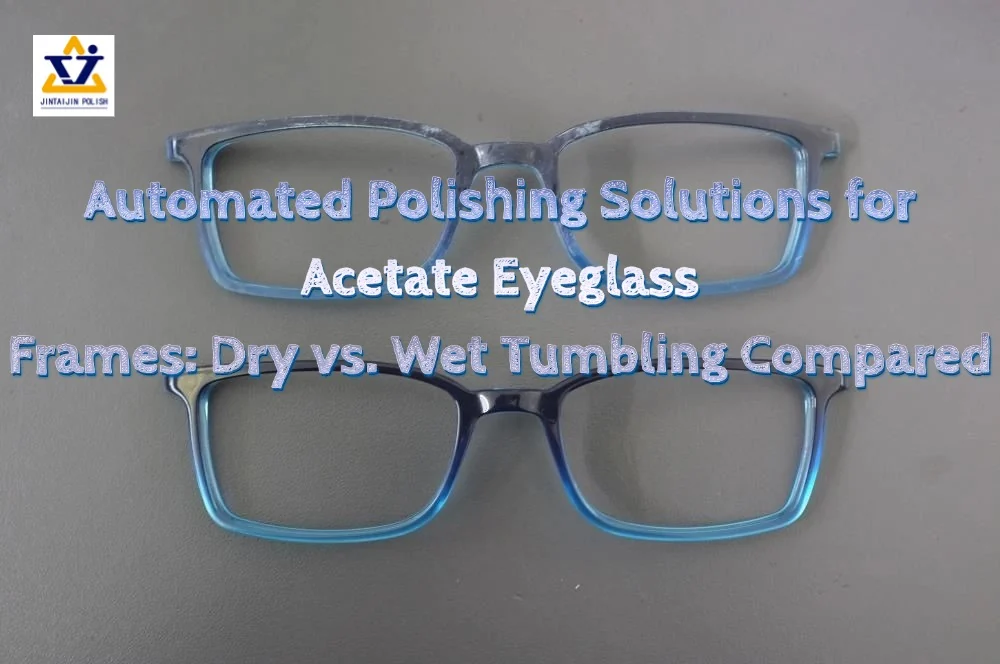
    Eyewear Finishing Process Guide Acetate Eyeglass Frame Polishing: Dry vs Wet Tumbling Process Guide Dry and wet tumbling do different jobs in acetate frame production. The best route depends on the starting surface, required gloss, frame geometry, color, batch size, and acceptable edge change. This guide explains how to choose each stage without relying on a universal recipe. Cellulose acetate can produce deep color and a high-gloss appearance, but it also makes process control important. Excessive friction can raise the part temperature. Aggressive media can soften edges or leave new marks. Compound residue can collect around hinges, grooves, and decorative details. Frames may also contact each other if the load is too dense or the media does not provide enough cushioning. For these reasons, an acetate polishing line should be treated as a sequence of controlled stages. Wet processing is commonly evaluated for cleaning, controlled cutting, and pre-finishing. Dry tumbling with suitable wood or organic media is often evaluated for smoothing and luster development. Either method can fail when the media, loading ratio, moisture, compound, machine motion, and cycle time are not matched to the actual frame. Quick answer: Use wet tumbling when the process needs rinsing, controlled cutting, cleaning, or heat removal. Use dry tumbling when the target is a smooth, clear, polished appearance without a water-based finishing stage. Many production routes use both, but the order and recipe must be proven with representative frames. What Makes Acetate Frame Polishing Difficult? The process is not difficult because acetate is simply "soft." The challenge is that several quality requirements must be protected at the same time. Shape and edge retention: rims, bridges, temples, and decorative transitions must remain consistent. Scratch control: trapped debris, worn media, or part-on-part contact can create visible marks. Temperature control: prolonged friction and poor ventilation can increase the risk of distortion or surface change. Color and clarity: dark, transparent, layered, and patterned acetate can reveal haze and residue differently. Detail access: hinge areas, grooves, holes, and tight radii may polish more slowly than broad surfaces. Batch consistency: a recipe that works for one sample may become unstable when the machine is fully loaded. The acceptance standard should therefore include more than gloss. Before testing, define the permitted edge change, dimensional limits, color appearance, scratch level, deformation limit, and cleanliness around small features. Dry vs Wet Tumbling for Acetate Frames Decision Factor Dry Tumbling Wet Tumbling Typical role Smoothing, fine polishing, and luster development Cleaning, controlled cutting, deburring, and pre-finishing Process media Selected wood shapes or organic media with acetate-compatible polishing compound Application-specific media, water, and a compatible liquid compound Main advantage No rinse water in the polishing stage and strong potential for final appearance development Water carries away debris, supports cleaning, and helps control process heat Main process risk Heat buildup, dust, loaded media, and compound transfer Over-cutting, media marks, water chemistry, incomplete rinsing, and drying defects Downstream requirement Dust and residue removal, followed by inspection Rinsing, complete drying, and water or compound management Wet does not automatically mean glossier, and dry does not automatically mean rougher. The result comes from the complete recipe and the starting surface. Wet processing may prepare a consistent surface for a later dry polishing stage. A carefully developed dry process may deliver the final luster. The correct sequence must be selected from the defect that needs to be removed and the finish that must be protected. A Practical Multi-Stage Process Inspect the starting frame. Separate cutting marks, gate marks, scratches, haze, residue, and geometry defects. Do not expect one tumbling stage to correct every condition. Complete necessary manual preparation. Severe gate marks, deep defects, and critical edges may require controlled machining, filing, sanding, or another preparation step before mass finishing. Run a wet pre-finish when required. Select media and compound to remove the targeted defect without rounding details or creating new scratches. Rinse and dry completely. Residual abrasive, moisture, or compound can contaminate the next stage and change the result. Develop the dry polishing stage. Match the wood or organic media, compound, loading ratio, ventilation, machine speed, and duration to the frame geometry and desired luster. Clean and inspect under controlled lighting. Check broad surfaces, internal rims, bridge transitions, temple ends, hinge areas, and transparent or dark colors. Important process limit Cycle time, rotational speed, media-to-parts ratio, compound dosage, and temperature limits cannot be copied safely from another factory. Frame thickness, acetate formulation, color, media condition, machine geometry, and batch density all change the result. Establish the recipe through staged trials and record every setting. How to Select Media and Compound Start with the smallest frame features Measure holes, grooves, hinge recesses, rim channels, and the spacing between frame features. Media that can enter a feature but cannot move freely may lodge or leave an uneven finish. Media that is too large may polish only broad surfaces and miss tight areas. Use cushioning to reduce frame contact The media volume must be sufficient to separate and support the frames during movement. Increasing the number of frames per batch may improve apparent throughput but can create contact scratches, tangling, shadow areas, and inconsistent polishing. Accepted pieces per shift are more important than maximum pieces loaded into the barrel. Match the compound to the process stage A wet compound may provide cleaning, lubrication, wetting, and debris control. A dry polishing compound supports the cutting or luster action of the selected media. Confirm compatibility with the acetate color, the media, and downstream cleaning. Do not substitute a metal polishing compound without a controlled compatibility test. Review the available dry polishing media, acetate polishing compound, and fine-stage acetate polishing fluid. Final selection should follow a sample test because the product name alone does not define the correct dosage or cycle. Machine Selection for Dry and Wet Stages Machine capacity should be based on usable process volume and safe frame loading, not nominal liters alone. For acetate frames, also evaluate barrel material, ventilation or heat management, speed control, loading and unloading access, compound handling, and cleaning between colors. Dry Barrel Polishing Evaluate wood barrel geometry, ventilation, adjustable motion, media loading, residue control, and safe batch handling. View a wood barrel dry polishing machine Wet Rotary Processing Evaluate lining, speed control, liquid handling, drainage, rinsing, separation, and the risk of frames contacting each other. View a wet rotary tumbling machine For another process-focused explanation, see how to use a tumbling machine for acetate products and how to reduce whitening, scratches, and deformation on plastic eyeglass frames. Troubleshooting Common Defects Observed Defect Likely Process Cause What to Check First New scratches Part contact, contaminated media, trapped chips, or overly aggressive action Reduce frame loading, inspect media cleanliness, and compare a lower-intensity test Haze or low gloss Media is too coarse, loaded, dry, or incompatible with the compound and starting surface Check media condition, compound distribution, moisture, and whether a finer stage is required Softened edges Excessive cutting action, long cycle, or unsuitable media geometry Shorten the trial interval and inspect dimensional change at each checkpoint Warping or shape change Heat buildup, excessive load, poor ventilation, or aggressive machine settings Record part and media temperature, reduce load, and review motion and ventilation Residue in grooves Excess compound, poor media movement, incomplete rinsing, or insufficient final cleaning Check compound dosage, drainage, cleaning sequence, and feature access How to Validate a Production Recipe A useful trial should produce a documented process window, not just one attractive sample. Use frames that represent the real range of colors, thicknesses, shapes, and starting defects. Photograph and label each frame before processing. Record media type and condition, compound, load ratio, speed, moisture or water flow, and starting temperature. Inspect at planned intervals rather than waiting until the end of a long cycle. Measure dimensional and edge changes at critical locations. Repeat the accepted recipe with a larger batch to check circulation and frame contact. Include loading, unloading, cleaning, rinsing, drying, and inspection when calculating output per shift. Eyewear design and finishing requirements are closely connected. For a finished-product perspective on acetate frame construction and styling, visit Jingseyewear. Frequently Asked Questions Is dry or wet tumbling better for acetate eyeglass frames? Neither method is universally better. Wet tumbling is often evaluated for cleaning, cutting, and pre-finishing. Dry tumbling is often evaluated for smoothing and luster development. The starting defect and target finish determine the route. Can one machine complete the entire polishing process? Sometimes one machine family can handle multiple stages, but different media and compounds may still be required. Frames with deep preparation marks or strict final appearance requirements commonly need more than one controlled stage. How can scratches between frames be reduced? Use enough media to cushion the frames, reduce the number of parts per batch, keep the media clean, remove trapped debris, and confirm that the machine motion does not cause frames to stack or interlock. How long should acetate frames remain in the tumbler? There is no reliable universal time. Inspect at short, documented intervals during development. Stop when the target defect is removed or the required appearance is reached, before edges, dimensions, or temperature move outside the acceptance limit. Can different colors and frame designs share one recipe? Only after testing. Transparent, dark, layered, and patterned acetate may reveal scratches, haze, and residue differently. Geometry and thickness also change movement and contact risk. Build the Process Around Your Actual Frames Send representative frame photos, material details, dimensions, starting defects, target appearance, and expected daily output. Jintaijin can review the application and define a practical dry, wet, or combined test direction before machine selection. Request an acetate frame polishing test
#+86-592-2381506

Email : info@surface-polish.com

Headquarters address : No. 31, Xinchang Road, Xinyang Industrial Zone, Haicang District, Xiamen

click here to leave a message

Leave A Message
If you are interested in our products and want to know more details,please leave a message here,we will reply you as soon as we can.

Preparing secure enquiry form…

Home

Products

whatsapp

contact