A buyer in Coventry, United Kingdom finishing a 6061-T6 instrument housing for medical devices has to hold two requirements at once: a satin face the customer will see, and an O-ring groove edge that must stay within a stated radius. SurfacePolish supplies finishing machines, media and compounds across borders and runs a free sample trial on the parts the buyer sends. This brief is written for a buyer in Coventry working on medical devices; it describes equipment, media and a scoped sample review, not a local polishing service.
What downstream operation follows finishing, such as anodising, laser marking, bonding or assembly, and what does it require of the surface?
What is the minimum wall thickness and unsupported span, and which internal features could trap media?
What are the alloy and temper, and has machining, casting, welding or heat treatment already changed the surface hardness and porosity?
A finishing route is only as good as the parts fed into it, so characterise the starting condition first. Note the machining process, the depth and direction of tool marks, whether the part was linished or hand-sanded already, whether it carries heat-treat scale or an as-cast skin, and which surfaces were scratched in handling. A batch of mixed starting conditions produces a mixed finish, because a cycle that removes a twenty-micron tool mark on 6061 will not remove a deep gouge without rounding the part. Record batch size, the mix of part numbers and the quantity of each, since an underloaded bowl or barrel runs differently from a full one. Segregate parts by alloy, by temper and by pre-finish condition before they enter the same machine.
Centrifugal barrel finishing puts the barrels on a rotating turret so media and parts press against each other at high force, producing a fine surface and a controlled edge in a much shorter cycle than a conventional barrel. For aluminium device parts that need a uniform satin appearance without a long residence time it can be efficient, particularly on small to medium parts that fit the barrel geometry. The same high energy that shortens the cycle will bend thin walls, distort light sections and round edges faster than expected, so it demands a well-defined part envelope and a short instrumented cycle rather than a fixed timer. Barrel size and geometry set a hard limit on part length and pieces per run. Confirm the finish you want and the edge radius you can accept first.
| Machine route | Where it fits | What it will not do |
|---|---|---|
| Disc finishing machine | Fast burr removal and edge radiusing on robust aluminium parts where a short cycle and high material removal matter most | High part-on-part contact and impingement risk; smears soft 6061, is hard to localise, and adds fixturing labour to every cycle |
| Vibratory bowl finishing machine | Small to medium aluminium components that tumble freely: ferrules, handles, brackets and cover plates needing uniform deburring or satin finishing | Long, tall or heavily recessed parts shadow themselves and finish unevenly; part envelope must fit free circulation in the bowl |
| Centrifugal barrel finishing machine | Short, controlled cycles producing a fine satin finish and a defined edge on small to medium aluminium device parts | High energy bends thin walls and distorts light sections; barrel geometry limits part length and pieces per run |
| Grinding finishing machine | Higher material removal on aluminium parts that need a heavy burr or a pronounced chamfer removed before a gentler finishing step | Aggressive on soft aluminium, difficult to control on cosmetic faces and functional edges, and not a finishing step on its own |
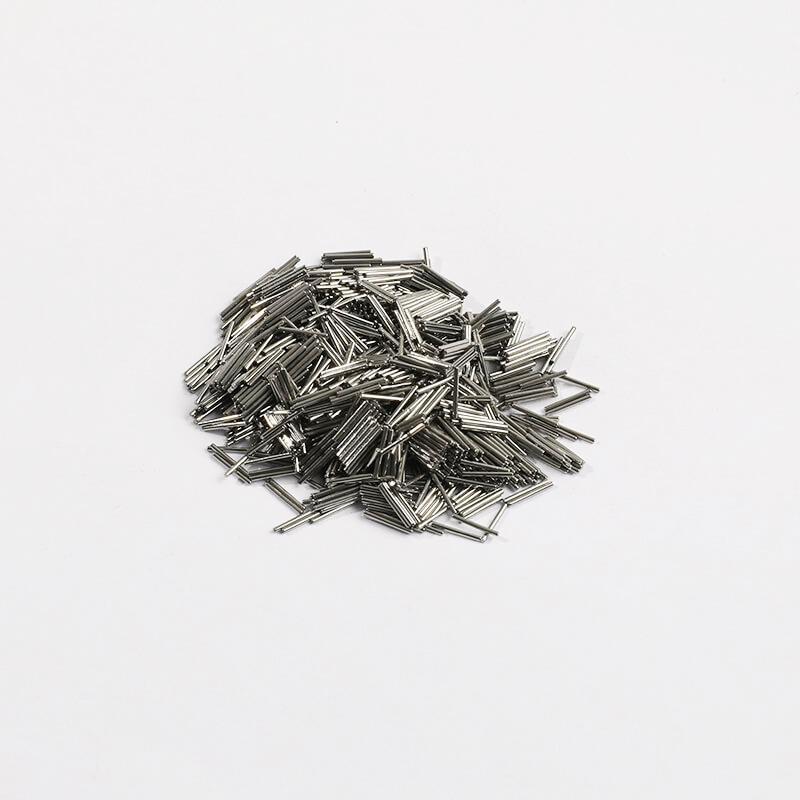
Media choice on aluminium is dominated by one fact: the workpiece is softer than most media used on steel. Dense ceramic and steel media that cut steel efficiently will embed, smear or gall an aluminium surface, implant iron particles that later show as staining or a galvanic couple, and round edges faster than the drawing allows. Plastic-bonded media in a light or medium abrasive grade, or a low-density ceramic, is the usual starting family for cosmetic work on 6061 and 7075, with harder ceramic reserved for a genuine heavy-cut deburr where the surface is not graded. The trade-off is real: gentle media remove less material and take longer, so a deep tool mark or heavy burr may need a coarser first stage and a gentler second. Choose media around the surface and edge the part must end with.
| Media | Best fit | Watch out for |
|---|---|---|
| Plastic-bonded media, ball and ellipsoid shapes | Surface refinement and blending on cosmetic aluminium faces where edges, seal lands and dowel bores must stay close to drawing | Removes very little edge material, so a burr at a bore exit or a thread crest may survive the cycle and need a separate step |
| Dry media, walnut shell, fine grade | Dry polishing, light surface cleaning and preparation before anodising or laser marking on aluminium parts | Shell dust must be extracted and the part cleaned, or the residue interferes with marking, bonding or a later coating step |
| Plastic-bonded media, light to medium abrasive grade, cone and triangle shapes | General deburring and satin finishing on 6061 and 7075 where galling risk rules out dense ceramic | Wears quickly and loses edge definition; cut rate drops as the charge ages and the cosmetic result drifts unless media is screened and topped up |
| Alumina-based ceramic media, low-density, cylindrical and pin shapes | Internal bores, slots and cross-holes on small aluminium components that a rounded tumbling body cannot reach | Pin and cylinder shapes can wedge in a bore or a slot; confirm retrieval and inspection before running a production batch |
Aluminium can leave a finishing cycle looking worse in colour than it went in. Over-alkaline compound etches and darkens the surface; hard water leaves mineral spotting that dries into rings; iron transferred from steel media or worn machine parts appears as black smut or scattered dark specks; and a slow or hot dry lets an oxide film form unevenly across a face. Castings with porosity are especially prone, because they hold liquid and release it later as a bloom. Check the part dry, under the lighting the customer will use, and compare against a retained reference part rather than memory. Control compound pH and concentration, rinse with controlled water quality, dry promptly and completely, and keep steel out of the aluminium loop. A stain found after anodising or packaging has already cost the value of the part.
| Failure mode | Likely cause | How to catch it |
|---|---|---|
| Bloom, bleed-out or staining appearing days after finishing on a casting | Porosity holding compound or rinse water, an as-cast skin opened by the cycle, incomplete drying before packaging or anodising | Hold finished castings for a defined period and re-inspect, and section a rejected part to confirm whether the residue originates in the pores |
| Uneven finish with bright and dull bands on the same face | Part settling in one attitude, self-shadowing on a long or recessed part, wrong load ratio, media too large to flow around the geometry | Compare several parts taken from different positions in the load under directional light rather than sampling only the discharge gate |
| Dents, peening marks or a hammered texture from part-on-part contact | Excessive energy for the part mass, under- or over-loaded charge, no fixture to control part attitude, hard or oversized media | Inspect a full-face view under low-angle light and a cross-section of a dent under a toolmaker's microscope to confirm plastic deformation |
| Etched, darkened or chalky surface after wet finishing | Compound pH or concentration outside the aluminium working range, over-alkaline product, long dwell in a hot solution, exhausted compound | Compare a dried part against a retained reference under the customer's lighting, and log compound pH, concentration and temperature for the batch |
Coventry is one of the local authority areas inside the West Midlands Combined Authority, whose region-wide economic and skills activity includes a skills hub opened at Coventry city centre South. The city's dedicated business support route changed on 1 April 2026, when the Coventry & Warwickshire Growth Hub transitioned to a new regional model that centralises programmes, events and funding information through Business Growth West Midlands, with local advisory support remaining available through Coventry City Council. Coventry sits inside the West Midlands production base that Make UK studied with the West Midlands Combined Authority and the West Midlands RAS Cluster, surveying over 100 manufacturers of all sizes.
The nearest part of that base to this brief is automation: The regional business support route for Coventry moved to Business Growth West Midlands on 1 April 2026, centralising programmes, events and funding for the area's firms.
Coventry sits inside the West Midlands production base that Make UK and the West Midlands Combined Authority surveyed on robotics and autonomous systems adoption - a programme aimed at lifting productivity in an industrial base where deburring and edge finishing sit between machining and assembly and are a candidate for the same automation programme. Because no Coventry-specific industrial source could be verified in this research, process specifics should be drawn from the customer's drawing and specification rather than from regional averages.
A Coventry buyer should confirm who in the supply chain owns the finishing specification - the OEM, the tier-one or the machining supplier - before selecting equipment, because the edge and cleanliness requirement is normally flowed down contractually rather than agreed locally.
Freight context: Hams Hall Rail Freight Terminal (ABP-owned, near Birmingham) as the nearest inland container terminal to Coventry, West Midlands motorway network (M6, M69, A45) for road freight. ABP's 11ha Hams Hall terminal, located eight miles outside Birmingham, handles deep-sea and short-sea traffic to and from ports such as Southampton, Tilbury and Felixstowe along with Channel Tunnel and Scottish domestic traffic, making it the practical inland container gateway for Coventry consignments.
China does not appear in the alphabetical list of trade agreements in effect published by the Department for Business and Trade, so Chinese-origin machinery imported into the UK cannot claim a preferential agreement rate. Duty is instead determined by the commodity code declared on the import declaration, and the UK's customs authority is HM Revenue and Customs (HMRC), which ONS also names as the largest single data source behind UK trade-in-goods statistics. Because a GB-prefixed EORI number is a precondition for importing into England, Scotland or Wales, a Chinese seller's UK buyer must already hold that registration before any machine ships.
Importers need a GB-prefixed Economic Operators Registration and Identification (EORI) number, an import declaration carrying the correct commodity code, and retained commercial invoices plus the Import VAT Certificate (C79) so import VAT can be reclaimed. Machinery placed on the Great Britain market must be marked UKCA or CE: the manufacturer must draw up and retain technical documentation including a Declaration of Conformity, apply the correct marking with identification details, and cooperate with market surveillance; an authorised representative must be established in the UK. Under the Product Safety and Metrology (Amendment) Regulations 2024 the UK continues to recognise CE marking alongside or in place of UKCA for the Great Britain market, so either route can be used for most product types. Duty and import VAT are calculated from the customs value declared, and the commodity code also determines whether an import licence is needed.
SurfacePolish supplies from Xiamen, China. The buyer's own destination rules, conformity marking, tariff classification and documentation responsibilities stay with the buyer; confirm them against the authorities named above before ordering.
Residue requirements on a device component come from the buyer's own specification, not from a finishing route, and they should be stated as a measurable limit before parts are accepted. Practical checks include visual inspection of internal features under magnification or with a borescope, a wipe test with a defined solvent and a white substrate, a gravimetric non-volatile residue determination on a rinse sample, and a rinse-water conductivity or particulate count where the assembly is sensitive. Blind holes, threads and press fits are the features that retain residue, so sample them specifically rather than only a flat exterior face. If a validated cleaning process, biocompatibility data or a sterility claim is needed, that work belongs to the buyer's own quality system.
A sample trial is most useful when it isolates one change. If media family, size, compound and cycle time all change together, a difference in the result cannot be attributed to anything and the trial cannot be repeated. Ask for a small matrix: the same parts run with two media families at the same cycle, or the same media at two cycle times, with every other condition held constant and a record of the settings used for each cell. Photograph or measure each result on the same features under the same lighting, and keep an untreated reference beside them. Reproducibility deserves attention too: one good part proves little, so ask whether the result repeated on the other pieces in the charge. A trial yields observations on the parts tested, not a guaranteed production result.

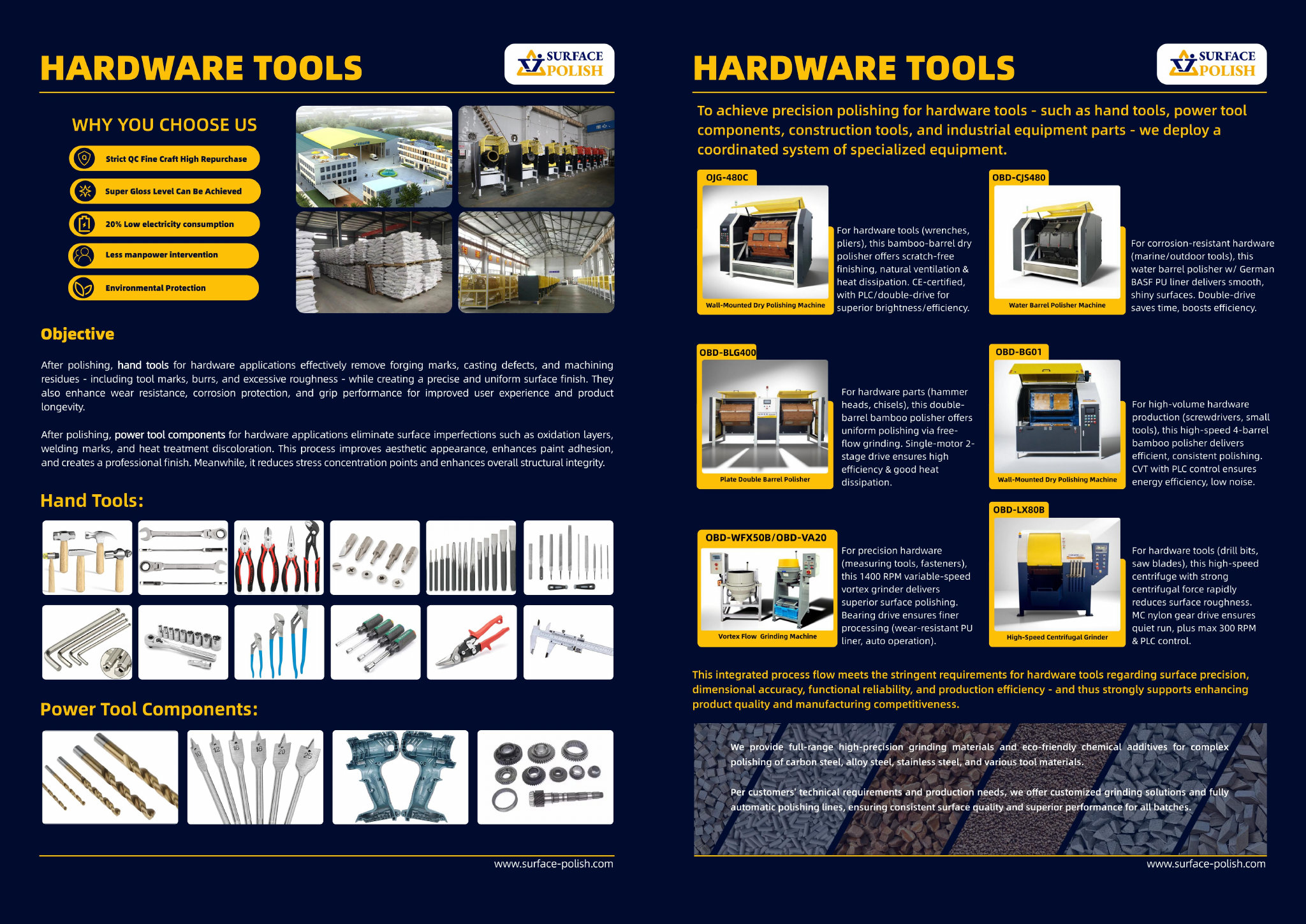
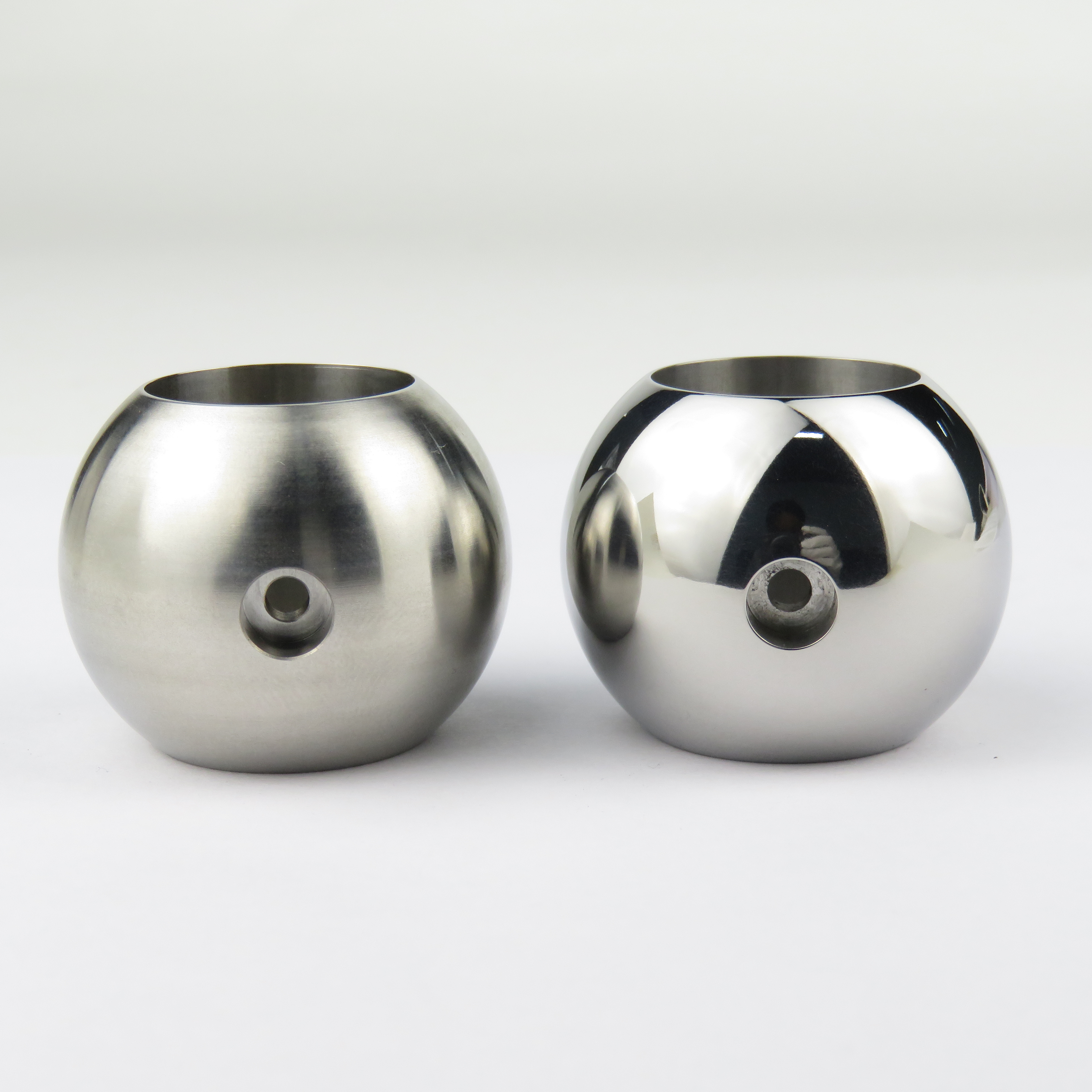
It will if the edge is exposed to the media for long enough. Media cannot distinguish a cosmetic edge from a seal land, a dowel bore or a press-fit shoulder, and rounding accumulates gradually, so a batch inside tolerance at the start of a media charge can be outside it later. Protection comes from shielding or masking the functional edge, using rounder and lighter media, shortening the cycle, and checking the feature with an optical comparator, radius gauge or CMM rather than by eye. A buyer in United Kingdom should state the allowed edge radius per feature on the drawing, because a blanket edge-break note will be read literally.
No. SurfacePolish is a cross-border supplier of finishing machines, media and compounds and runs a free sample trial on parts the buyer sends. A trial reports observations on the parts tested under the settings used; it does not qualify, approve or validate a process, and it does not create biocompatibility, cleanability, sterility or regulatory documentation. Any requirement of that kind must be defined by the buyer and verified by the buyer's own engineering and quality functions, usually with the help of specialist testing providers. For a device programme in United Kingdom, treat the finishing route as one input into the buyer's own verification plan rather than as evidence for it.
It does. Anodising is partly transparent over the underlying texture, so machining marks, media direction and any residual film remain visible, and embedded media or a silicate deposit can show as a bloom or speckle. Aluminium also needs a clean, freshly finished surface, because a slow dry or a contaminated rinse leaves an oxide or residue layer that shows through the coating. A buyer planning a cosmetic anodised finish should evaluate appearance on an anodised sample rather than on bare metal, and should specify the rinse, dry and handling expectations to the finishing supplier. Acceptance of the coating itself remains with the buyer and the anodiser.
Use Coventry, United Kingdom as the destination on the enquiry and state whether the deliverable is equipment, media and compound, a representative sample review or a line concept. A destination does not imply local stock, a local service point or a local delivery time.
Machinery placed on the Great Britain market needs UKCA or CE marking with a Declaration of Conformity, and HSE's work equipment and machinery and COSHH regimes govern safe operation and the media, compounds and dust involved. In a multi-tier supply chain, the surface, edge and cleanliness requirement is normally flowed down from the OEM or tier-one rather than set by the finishing shop.
Sources were retrieved on 2026-09-29 and describe the local industrial and trade context only. They do not evidence any SurfacePolish project, shipment, installation or service in Coventry.
The buyer needs a uniform satin cosmetic face without rounding the O-ring groove edge or driving media into the threaded bosses.
Send the material, dimensions, approximate weight, batch quantity, the incoming condition and photographs of the difficult features. Mark which features must not be contacted by media and state how the result will be inspected. This form carries source reference PSEO-0283; quote it if you prefer an additional manual reference.
Open the SurfacePolish enquiry form Email a prepared enquiry
No price, lead time, certification or result is promised here. Confirm whether a sample trial is available for the specific part and what the trial can and cannot show.
Page PSEO-0283 · revised 2026-09-29 · cross-border equipment, media and scoped sample review. City context is sourced and cited above.
Use this local checker to identify missing part and inspection information. It prepares a technical-review brief; it does not approve a machine, process recipe or production result.
Complete the part details to prepare a review brief.
Email : info@surface-polish.com


 IPv6 network supported


 +86-592-2381506