High-volume small aluminium components for medical devices live or die on part-to-part consistency, and a batch of several thousand ferrules in Dusseldorf, Germany will show any weakness in media size class, screening or load control. SurfacePolish supplies finishing machines, media and compounds across borders and runs a free sample trial on the buyer's parts. This brief is written for a buyer in Dusseldorf working on medical devices; it describes equipment, media and a scoped sample review, not a local polishing service.
Which surfaces on this aluminium part carry a cosmetic grade, which are functional seating or sealing faces, and which are indifferent?
What is the minimum wall thickness and unsupported span, and which internal features could trap media?
What downstream operation follows finishing, such as anodising, laser marking, bonding or assembly, and what does it require of the surface?
Thin aluminium walls are the most common source of trouble in a vibratory or barrel route. Below roughly two millimetres of wall, part-on-part contact and media impact bend a rib, peen a flange or drive small media into a pocket where it wedges and stays. Blind holes, cross-drillings, undercuts, fine threads and knurled bands all trap media, and a lodged piece of ceramic later shows up as a rattle, a scored bore or a rejected assembly. Count the features that cannot be inspected easily from outside, then decide whether they need masking, a plug, a fixture that shields them or a different route entirely. A thin-wall housing that survives one cycle may not survive a hundred, so ask for wall thickness and unsupported span rather than assuming them.
Magnetic finishing works on small aluminium parts with fine internal features, using a magnetic field to drive small pins or abrasive media through holes, slots and recesses that a tumbling load cannot reach. It is useful on small fittings, valve spools, connector components and parts with internal cross-holes, and it can be gentle enough for thin sections if field strength and cycle are controlled. Its limits are size and throughput: the working envelope is small and the process suits a narrow part family rather than a mixed batch, and fine media or pins lodge in blind features just as tumbling media do, so retrieval and inspection matter. Dry polishing machines and dryers handle the post-wet step, removing water from blind holes before anodising or laser marking, where a trapped droplet becomes a stain or a marking defect.
| Machine route | Where it fits | What it will not do |
|---|---|---|
| Dry polishing machine and dryer | Post-wet drying and dry polishing of aluminium parts before anodising, laser marking, bonding or packaging | Does not remove a burr or refine a surface on its own; residual media dust and incomplete drying still cause marking and coating defects |
| Disc finishing machine | Fast burr removal and edge radiusing on robust aluminium parts where a short cycle and high material removal matter most | High part-on-part contact and impingement risk; smears soft 6061, is hard to localise, and adds fixturing labour to every cycle |
| Vibratory bowl finishing machine | Small to medium aluminium components that tumble freely: ferrules, handles, brackets and cover plates needing uniform deburring or satin finishing | Long, tall or heavily recessed parts shadow themselves and finish unevenly; part envelope must fit free circulation in the bowl |
| Rotary barrel finishing machine | Gentle, low-energy deburring of small precise aluminium parts in high volume, including thin and light components | Longer cycles for the same result; flat or light parts may slide rather than tumble, and an overloaded barrel stops working the load |
Media is a consumable that changes as it works, and that change alters the finish. As media wear down they lose mass and edge definition, the charge volume drops, the cut rate falls and the surface result drifts, so a finish that was correct at the start of a media charge may not be reproducible after a week of running. Screen and grade media for size, top up the charge, and replace a fraction on a schedule rather than waiting for the result to move. Cross-contamination is the sharper risk on aluminium: steel media or steel machine parts in the same loop deposit iron on the soft surface, which later shows as black staining, as a galvanic couple under a coating or as an inclusion visible after anodising. Keep media and barrels dedicated to aluminium where finish matters.
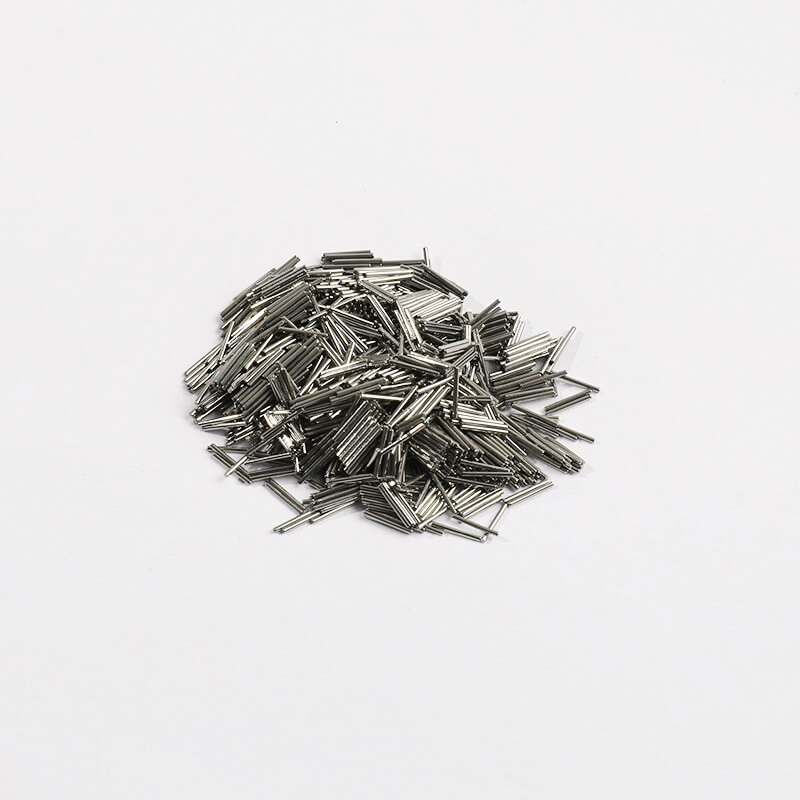
| Media | Best fit | Watch out for |
|---|---|---|
| Dry media, walnut shell, fine grade | Dry polishing, light surface cleaning and preparation before anodising or laser marking on aluminium parts | Shell dust must be extracted and the part cleaned, or the residue interferes with marking, bonding or a later coating step |
| Dry media, corn cob with a polishing compound charge | Final dry polish and drying assistance on small aluminium parts where a wet rinse and dry would leave spotting | Compound loading saturates with use and the media cakes; the charge needs regular replacement, and soft aluminium can still smear |
| Plastic-bonded media, light to medium abrasive grade, cone and triangle shapes | General deburring and satin finishing on 6061 and 7075 where galling risk rules out dense ceramic | Wears quickly and loses edge definition; cut rate drops as the charge ages and the cosmetic result drifts unless media is screened and topped up |
| Steel media, balls or pins, for bright polishing | Bright reflective finish on hard, robust steel work where a high lustre is the primary requirement | Deposits iron on aluminium, causing black smut, staining and a galvanic couple; keep it out of any loop shared with aluminium parts |
Parts that do not circulate freely receive uneven work. In a bowl or barrel a long part, a heavy part or a part with a deep recess can sit in one attitude, shelter its own face, or trap a neighbour against the wall, leaving a bright band beside a dull one. Impingement is the more visible version: two parts strike each other repeatedly and produce dents, peened patches, scratches or a hammered texture that will not polish out without further material removal. The cause is usually charge geometry rather than media: wrong load ratio, media too large to flow around the part, insufficient compound lubricity, or a fixture that holds parts where the media field is weak. Check under directional light and compare several parts from different positions in the load, not one sample from the discharge gate.
| Failure mode | Likely cause | How to catch it |
|---|---|---|
| Damaged thread or media wedged in a thread root | Threads left exposed to the media field, sharp media entering the crest, insufficient plugging or masking of ports before the cycle | Run a go and no-go gauge through every sampled thread and inspect the root with a borescope or a thread impression |
| Dimensional drift on a critical bore, dowel hole or press-fit diameter | Aggressive media attacking a feature the cycle should not touch, cumulative removal over repeated runs, no masking of close-tolerance geometry | Measure the feature with a CMM or bore gauge at first article and at the end of the media charge, and chart the trend against drawing limits |
| Water spotting, rings or mineral staining after drying | Hard rinse water, slow or incomplete dry, droplets trapped in blind holes or under a flange, no final deionised rinse | Inspect the dried part in raking light against a reference, and check rinse-water hardness and conductivity records for the shift |
| Uneven finish with bright and dull bands on the same face | Part settling in one attitude, self-shadowing on a long or recessed part, wrong load ratio, media too large to flow around the geometry | Compare several parts taken from different positions in the load under directional light rather than sampling only the discharge gate |
Düsseldorf is the state capital of North Rhine-Westphalia and its chamber of industry and commerce represents around 103,000 member companies from industry, trade and services in the city and the ten towns of Kreis Mettmann. The city's economic development agency puts about 100,000 jobs in classic production companies and industry-related services and cites concrete machinery sites, including a new hall built by Komatsu Germany in Benrath for the world's largest hydraulic excavator and the Konecranes crane-technology plant in Benrath; the former Vallourec tube works in Reisholz is being redeveloped as the industrial and commercial park 'The Tube'. Messe Düsseldorf gives the city a metal-processing anchor: it hosts the wire (wire and cable) and Tube (tube and pipe) world-leading trade fairs. Health and life sciences are a second growth pole, and more than 100 local companies have committed to CO2 reduction targets under the city's climate pact.
For this brief the relevant part of that base is medical: Employment in Düsseldorf's healthcare economy grew by 23.6 percent between 2019 and 2025, faster than the NRW average, with the Life Science Center and a planned life-science campus in the city.
Düsseldorf's industrial base is concentrated in machine building, tube and pipe processing, crane and construction machinery and their supplier tier, and the city's trade-fair profile (Tube, wire) reflects exactly the cutting, forming and joining processes that generate burrs, sharp edges and contaminated surfaces. Tube ends, machined bores, weld seams and hydraulic components are the typical parts where deburring, edge rounding and defined surface finish determine fit, seal performance and coating adhesion. Because buyers here compare process technology at Düsseldorf's metal fairs, they tend to evaluate finishing machinery and media with an explicit process route and throughput figure rather than a finish description alone.
Decide first whether the requirement is an edge condition (deburring, edge break for seals and hydraulics) or a defined roughness/cleanliness value, then specify the process route and throughput that Düsseldorf's machine-building and tube-processing suppliers must reproduce in series with documented, repeatable results.
Freight context: Düsseldorf Airport (DUS), Rhine ports and rail terminals of the RheinCargo network in the Düsseldorf/Neuss area, Messe Düsseldorf exhibition grounds (trade-fair logistics). The economic development agency presents Düsseldorf as having Germany's fourth-largest airport plus direct links to the overseas ports of Zeebrugge, Amsterdam, Rotterdam and Antwerp, and the RheinCargo network moves more than 50 million tonnes a year by rail and inland port across its Rhine sites. Machines can be brought in by air or via Rhine container/rail hubs, and the Düsseldorf/Neuss port group serves as the regional inland terminal.
DIN, the German Institute for Standardization, is the German standards body: German technical rules and standards from Germany and worldwide are distributed through DIN Media, its publishing house, and DIN adopts European and international standards at national level (c7). In practice a German buyer's surface, edge and cleanliness specifications are written against DIN/EN/ISO texts, while machinery conformity itself runs through the European CE route (CE marking plus technical file and EU declaration of conformity) rather than a separate national approval (c3, c7). In the automotive supply chain the VDA, whose members are the more than 620 companies producing for the German automotive industry, is the association through which sector supplier requirements and quality-management material are organised (c10).
German is the working language of drawings, contracts, test reports and conformity documentation, and German buyers normally expect English-language technical documentation to be supplied alongside it. Procurement is documentation-driven: the EU declaration of conformity, the technical file, and the identity of the EU-based importer or authorised representative are settled before the order, and the EORI registration and customs declaration are the importer's responsibility rather than the exporter's (c3, c4, c5). Germany is the world's leading machinery and equipment manufacturer, so quotations compete against established domestic builders on technical documentation and measurable process data rather than on price alone (c9). Payment, delivery and risk terms are normally fixed by written contract with a named Incoterm, and classification (commodity code) is commonly confirmed in writing before shipment because it drives the duty and the import declaration.
SurfacePolish supplies from Xiamen, China. The buyer's own destination rules, conformity marking, tariff classification and documentation responsibilities stay with the buyer; confirm them against the authorities named above before ordering.
Residue requirements on a device component come from the buyer's own specification, not from a finishing route, and they should be stated as a measurable limit before parts are accepted. Practical checks include visual inspection of internal features under magnification or with a borescope, a wipe test with a defined solvent and a white substrate, a gravimetric non-volatile residue determination on a rinse sample, and a rinse-water conductivity or particulate count where the assembly is sensitive. Blind holes, threads and press fits are the features that retain residue, so sample them specifically rather than only a flat exterior face. If a validated cleaning process, biocompatibility data or a sterility claim is needed, that work belongs to the buyer's own quality system.
Send parts that represent the real production condition, not a polished bench sample. A useful set includes the worst case: the thinnest wall, the tightest sealing edge, the deepest tool mark, the casting with visible porosity, the smallest hole and the feature most likely to trap media. Include two or three pieces of each condition so one can be sectioned or inspected internally, and include an untreated part as the comparison reference. Label every part with its alloy and temper, its part number, the surfaces that are cosmetic, the surfaces that are functional, and the edge radius or chamfer allowed at each critical feature. State the current process and the defect that prompted the enquiry, plus the downstream operation such as anodising, laser marking or assembly.
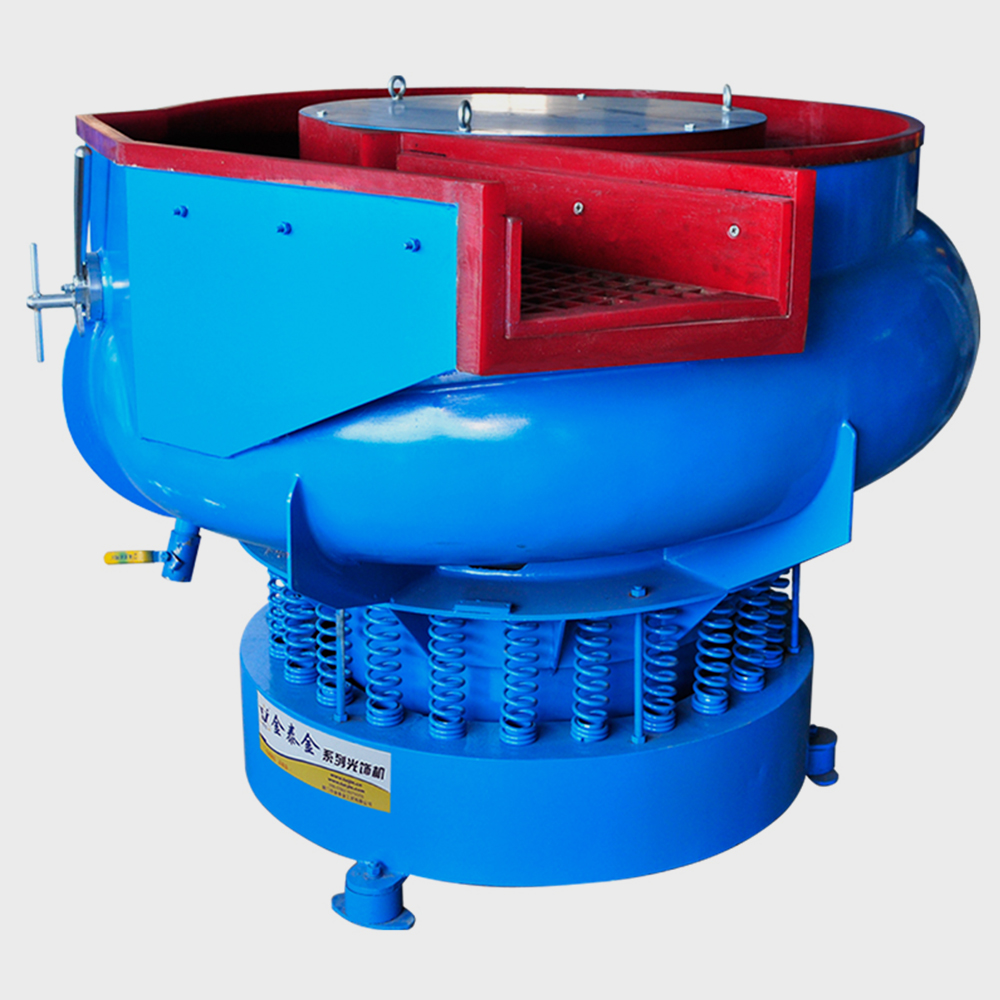
A bowl vibrator circulates a load through a media field at moderate energy, with good uniformity on small parts that tumble freely and easy discharge. A centrifugal barrel presses media and parts together at high force in a much shorter cycle, producing a fine finish and controlled edge quickly, but bending thin walls, distorting light sections and rounding edges faster. Bowl routes suit mixed small parts and gentle work; centrifugal routes suit a narrow part family that fits the barrel and accepts the energy. Parts made in Germany should be trialled in the specific geometry before a machine size is fixed, because barrel dimensions limit part length and load size.
No. A trial shows what happened on the parts tested, with the media, compound and cycle used at that time. It does not guarantee a roughness value, appearance grade, edge radius, dimensional result, cycle time, capacity or cost in production, and it cannot cover the drift that comes from media wear, compound carry-over, water changes or a different machine. What it can do is indicate whether a mechanical route is plausible, which media and compound direction deserves a closer look, and which features need protection. A buyer in Germany should plan a first-article routine and retain a reference part before releasing a production batch.
Send representative parts, including the worst case: the thinnest wall, the tightest sealing edge, the deepest tool mark, a casting with visible porosity, the smallest hole and the feature most likely to trap media. Include two or three pieces of each condition, an untreated reference part, and a note of the alloy and temper, the part number, which surfaces are cosmetic and which are functional, and the edge radius or chamfer allowed at each critical feature. State the current process, the defect that prompted the enquiry and the downstream operation, whether anodising, laser marking, bonding or assembly. The clearer the part definition, the more useful the observations returned.
Use Dusseldorf, Germany as the destination on the enquiry and state whether the deliverable is equipment, media and compound, a representative sample review or a line concept. A destination does not imply local stock, a local service point or a local delivery time.
Buyers in the Düsseldorf district work in a DIN-centred regime: surface-texture specifications to ISO 21920, technical cleanliness to VDA 19.1 / ISO 16232 (relevant for hydraulic and powertrain parts), material certificates to EN 10204 (3.1) and, in suppliers to the vehicle industry, IATF 16949 with VDA 6.3 audits. Imported finishing equipment additionally needs CE marking under the EU Machinery Regulation for placing on the EEA market.
Sources were retrieved on 2026-09-29 and describe the local industrial and trade context only. They do not evidence any SurfacePolish project, shipment, installation or service in Dusseldorf.
The buyer needs part-to-part consistency across a large batch and is worried about small parts escaping a screen or lodging in each other.
Send the material, dimensions, approximate weight, batch quantity, the incoming condition and photographs of the difficult features. Mark which features must not be contacted by media and state how the result will be inspected. This form carries source reference PSEO-0363; quote it if you prefer an additional manual reference.
Open the SurfacePolish enquiry form Email a prepared enquiry
No price, lead time, certification or result is promised here. Confirm whether a sample trial is available for the specific part and what the trial can and cannot show.
Page PSEO-0363 · revised 2026-09-29 · cross-border equipment, media and scoped sample review. City context is sourced and cited above.
Use this local checker to identify missing part and inspection information. It prepares a technical-review brief; it does not approve a machine, process recipe or production result.
Complete the part details to prepare a review brief.
Email : info@surface-polish.com


 IPv6 network supported


 +86-592-2381506
