Machined 7075-T6 for medical devices in London, United Kingdom is hard enough to resist cutting but still soft enough to gall, so a handle with a knurled band and a cosmetic shank rarely finishes evenly on a first attempt. SurfacePolish is a cross-border supplier of finishing machines, media and compounds, with a free sample trial on representative parts. This brief is written for a buyer in London working on medical devices; it describes equipment, media and a scoped sample review, not a local polishing service.
Which surfaces on this aluminium part carry a cosmetic grade, which are functional seating or sealing faces, and which are indifferent?
What downstream operation follows finishing, such as anodising, laser marking, bonding or assembly, and what does it require of the surface?
What are the alloy and temper, and has machining, casting, welding or heat treatment already changed the surface hardness and porosity?
Controlled edge rounding is where a finishing route earns or loses its place. Every machined aluminium edge carries a burr and a stress concentration, and a deburring cycle removes both, but it also moves the edge position. On a mating face, a seal groove, a bearing seat or a dowel hole that movement is a functional change, not a cosmetic one. Establish the allowed edge radius or chamfer per feature, then measure the finished edge against it rather than judging by eye, using an optical comparator or a radius gauge on a sectioned or replica sample. A part with generous cosmetic edges and one tight sealing edge usually needs a shielded fixture or selective hand finishing after the machine cycle. Deciding this after the first batch has run is how an assembly ends up with a leak path.
Disc finishing machines generate high energy at the disc face and remove material and round edges quickly, which is attractive when a batch of aluminium parts needs a burr gone in a short cycle. That same energy is what makes them risky on soft wrought aluminium and on thin castings. Part-on-part contact is high, so parts impinge, peen each other and develop a hammered or uneven surface, and 6061 will smear rather than cut if the compound is wrong or the load too heavy. Fixturing helps: a carrier that holds each part in a fixed attitude reduces random contact but adds load and unload labour to every cycle. Disc routes are also unforgiving on edge control because removal is neither uniform nor easy to localise. Use them where a robust part needs a fast radius.
| Machine route | Where it fits | What it will not do |
|---|---|---|
| Tub vibrator | Long and large aluminium parts such as extruded frames and housings that can be oriented in a linear working channel | Slower uniform coverage, a tendency for parts to settle in one attitude, and greater floor space and media volume than a bowl |
| Vibratory bowl finishing machine | Small to medium aluminium components that tumble freely: ferrules, handles, brackets and cover plates needing uniform deburring or satin finishing | Long, tall or heavily recessed parts shadow themselves and finish unevenly; part envelope must fit free circulation in the bowl |
| Centrifugal barrel finishing machine | Short, controlled cycles producing a fine satin finish and a defined edge on small to medium aluminium device parts | High energy bends thin walls and distorts light sections; barrel geometry limits part length and pieces per run |
| Magnetic finishing machine | Small aluminium parts with fine internal features such as cross-holes, slots and recesses that tumbling media cannot reach | Small working envelope and low throughput; pins and fine media can lodge in blind features, and mixed part families are awkward |
Aluminium reacts to both strong acid and strong alkali, so compound chemistry deserves more care here than on steel. A mildly alkaline or near-neutral cleaning and burnishing compound with a suitable inhibitor is the usual starting point for aluminium, because a strongly alkaline product etches the surface, darkens it and attacks exposed edges, while a strongly acidic one can pit it and leave smut. The compound also carries debris and controls foam, lubricity and rinsing, so concentration and flow rate matter as much as family. Water quality is part of the chemistry: hard water leaves mineral spotting and deposits, chloride content in the supply raises a corrosion concern on aluminium, and a recirculated system concentrates fines and dissolved metal over time. Set a working range for concentration, pH and flow, then monitor and correct it during the shift.
| Media | Best fit | Watch out for |
|---|---|---|
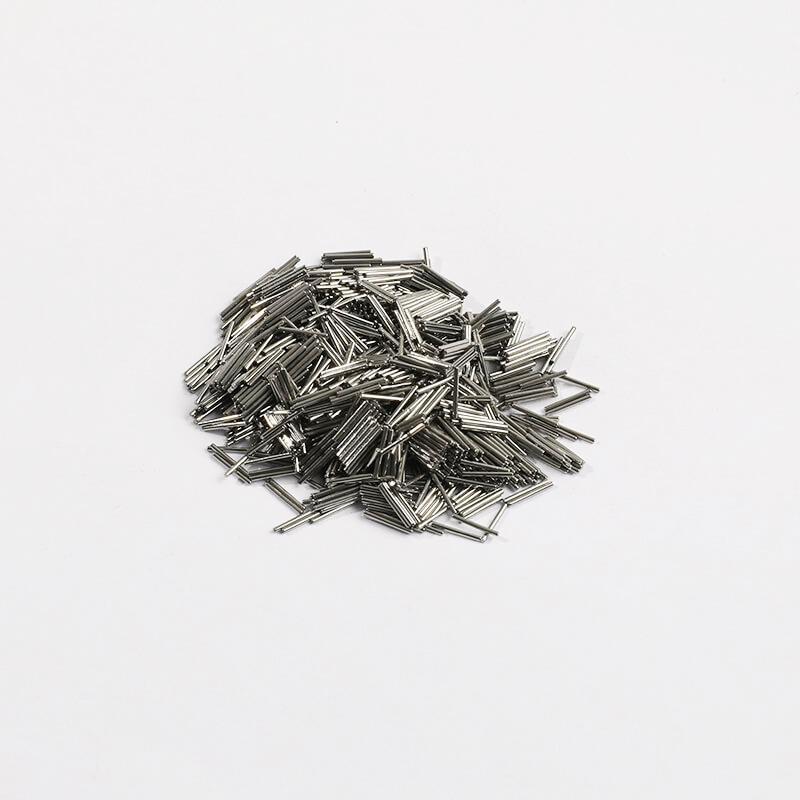
| Ceramic media, spheres and low-density ceramic, fine size class | Bright surface development and light edge work on small aluminium components with mixed cosmetic and internal features | Fine media lodges in blind holes, cross-drillings and thin-wall pockets and is harder to screen out of the load |
| Steel media, balls or pins, for bright polishing | Bright reflective finish on hard, robust steel work where a high lustre is the primary requirement | Deposits iron on aluminium, causing black smut, staining and a galvanic couple; keep it out of any loop shared with aluminium parts |
| Plastic-bonded media, ball and ellipsoid shapes | Surface refinement and blending on cosmetic aluminium faces where edges, seal lands and dowel bores must stay close to drawing | Removes very little edge material, so a burr at a bore exit or a thread crest may survive the cycle and need a separate step |
| Dry media, corn cob with a polishing compound charge | Final dry polish and drying assistance on small aluminium parts where a wet rinse and dry would leave spotting | Compound loading saturates with use and the media cakes; the charge needs regular replacement, and soft aluminium can still smear |
Galling is the characteristic failure of a mechanical cycle on soft aluminium. Under pressure and without adequate lubrication, aluminium transfers to the media and to neighbouring parts, producing a torn, smeared or picked surface that looks worse than the starting condition. It shows first on edges, on high spots left by machining, and on any face where two aluminium parts rub. Temperature, compound lubricity, load ratio and media weight all push toward it, and a hot, heavy, under-lubricated charge will gall a batch that ran cleanly the day before. Check with low-angle lighting across the surface to reveal smears and cold welds, and confirm with a white cloth for transferred metal. Prevention is mostly charge discipline: lighter media on cosmetic faces, adequate compound flow, a controlled load, and segregation.
| Failure mode | Likely cause | How to catch it |
|---|---|---|
| Water spotting, rings or mineral staining after drying | Hard rinse water, slow or incomplete dry, droplets trapped in blind holes or under a flange, no final deionised rinse | Inspect the dried part in raking light against a reference, and check rinse-water hardness and conductivity records for the shift |
| Damaged thread or media wedged in a thread root | Threads left exposed to the media field, sharp media entering the crest, insufficient plugging or masking of ports before the cycle | Run a go and no-go gauge through every sampled thread and inspect the root with a borescope or a thread impression |
| Dimensional drift on a critical bore, dowel hole or press-fit diameter | Aggressive media attacking a feature the cycle should not touch, cumulative removal over repeated runs, no masking of close-tolerance geometry | Measure the feature with a CMM or bore gauge at first article and at the end of the media charge, and chart the trend against drawing limits |
| Media or abrasive fragment lodged in a blind hole, cross-drilling or thin-wall pocket | Media size class too small for the feature, unshielded pockets, flexing thin wall gripping the fragment, no dedicated retrieval step | Borescope the internal features, weigh against a known-clean reference, tap over white paper, and inspect the residue from an ultrasonic clean |
London's published trade profile is services-led rather than goods-led: ONS estimates place London's total trade surplus at £59.4 billion in 2023, with services exports of £213.1 billion, while ONS also records the capital as having the value of services exports higher than any UK region in 2023. The Greater London Authority publishes the city's data through the London Datastore, which holds over a thousand datasets on the capital. Deep-sea container freight for the capital region is handled by Thames-side terminals such as DP World's London Gateway rather than by inner-London wharves.
The nearest part of that base to this brief is automation: The Greater London Authority publishes the capital's economic and business datasets through the London Datastore, which documents the city's business base.
London's published trade profile is dominated by services rather than by goods production, so finishing capacity serving the capital is generally not located in the capital. Deburring, edge and cleanliness requirements for London-specified work therefore have to be written into the purchase specification and the technical file, with an acceptance test agreed in advance, rather than settled against an assumed local plant practice.
A London-based buyer should decide up front whether the finishing step will run in-house or at a supplier, and write the edge or cleanliness acceptance test into the purchase order, because the equipment is imported and the technical file and Declaration of Conformity must be held by a manufacturer or a UK-established economic operator.
Freight context: London Gateway (DP World), deep-sea container terminal on the Thames, Thames-side port estate controlled under the Port of London Authority regime. ONS records London as the UK region with the highest total trade surplus in 2023 (£59.4 billion) and shows the capital importing £89.8 billion of goods against £41.8 billion of goods exports, so incoming machinery and media for London buyers are landed and cleared outside the capital, principally at Thames-side deep-sea terminals.
China does not appear in the alphabetical list of trade agreements in effect published by the Department for Business and Trade, so Chinese-origin machinery imported into the UK cannot claim a preferential agreement rate. Duty is instead determined by the commodity code declared on the import declaration, and the UK's customs authority is HM Revenue and Customs (HMRC), which ONS also names as the largest single data source behind UK trade-in-goods statistics. Because a GB-prefixed EORI number is a precondition for importing into England, Scotland or Wales, a Chinese seller's UK buyer must already hold that registration before any machine ships.
Importers need a GB-prefixed Economic Operators Registration and Identification (EORI) number, an import declaration carrying the correct commodity code, and retained commercial invoices plus the Import VAT Certificate (C79) so import VAT can be reclaimed. Machinery placed on the Great Britain market must be marked UKCA or CE: the manufacturer must draw up and retain technical documentation including a Declaration of Conformity, apply the correct marking with identification details, and cooperate with market surveillance; an authorised representative must be established in the UK. Under the Product Safety and Metrology (Amendment) Regulations 2024 the UK continues to recognise CE marking alongside or in place of UKCA for the Great Britain market, so either route can be used for most product types. Duty and import VAT are calculated from the customs value declared, and the commodity code also determines whether an import licence is needed.
SurfacePolish supplies from Xiamen, China. The buyer's own destination rules, conformity marking, tariff classification and documentation responsibilities stay with the buyer; confirm them against the authorities named above before ordering.
Appearance is the requirement most likely to be argued about, because it is easy to state and hard to define. Agree a physical reference: a first-article part or a set of graded coupons, viewed under a stated light source, at a stated distance and angle, by a named inspector. Record whether the accepted finish is bright, satin, directional or non-directional, and whether machining marks may remain visible. If the part will be anodised later, the finish that looks correct as bare aluminium may look different after anodising, because the coating is partly transparent and the underlying texture remains; evaluate the appearance on an anodised sample rather than bare metal. Keep reference parts labelled, protected and stored, because a visual standard that lives only in memory changes with every batch.
The first good batch is not the hard part; holding the finish over weeks is. Media wear, the charge volume falls, fines accumulate in the compound, screens clog and the rinse water changes, so the same timer produces a different result as the charge ages. Drift shows first as a slightly duller surface, a burr that reappears at a bore exit, or a finish that no longer matches the retained reference. Control it with a media top-up and replacement rule based on screening rather than the calendar, a compound concentration and pH check each shift, a rinse-water quality check, and a first-article comparison against the retained reference at the start of every batch. Any change of media supplier, compound, water supply or machine setting invalidates the previous baseline and should be treated as a new first-article event.


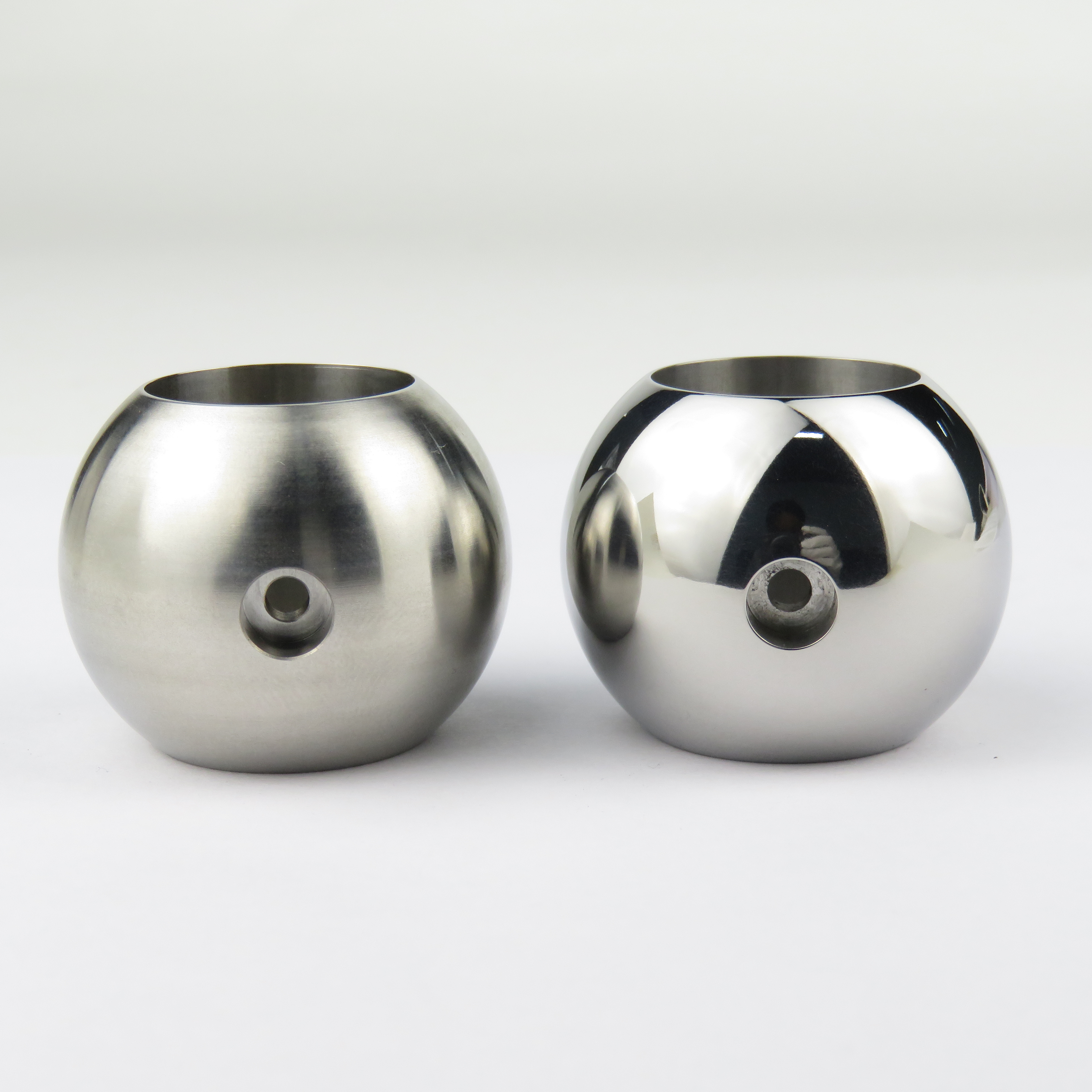
It will if the edge is exposed to the media for long enough. Media cannot distinguish a cosmetic edge from a seal land, a dowel bore or a press-fit shoulder, and rounding accumulates gradually, so a batch inside tolerance at the start of a media charge can be outside it later. Protection comes from shielding or masking the functional edge, using rounder and lighter media, shortening the cycle, and checking the feature with an optical comparator, radius gauge or CMM rather than by eye. A buyer in United Kingdom should state the allowed edge radius per feature on the drawing, because a blanket edge-break note will be read literally.
The buyer defines the requirement and the check. Methods include visual inspection of internal features under magnification or with a borescope, a wipe test with a defined solvent and a white substrate, gravimetric non-volatile residue on a rinse sample, and rinse-water conductivity where the assembly is sensitive. Blind holes, threads and press fits retain residue and should be sampled specifically. A residue limit, a validated cleaning process, biocompatibility data or a sterility claim is the buyer's to set and verify against their own specification. Equipment supply and a sample trial do not establish any of those, and no finishing route substitutes for the buyer's own quality system.
Keep the aluminium loop physically separate. Steel media, steel barrels, worn machine parts and shared screening equipment all transfer iron to a soft aluminium surface, and the result shows as black smut, dark specks or a galvanic couple that becomes visible under a coating or after anodising. Dedicated media, a dedicated barrel or bowl liner, separate screens and separate storage are the practical controls, along with a check of the finished surface under directional light. For a plant in United Kingdom running both steel and aluminium work, the segregation rule needs to cover media storage and top-up stocks, not only the machine, because a shared media bin reintroduces the contamination.
Use London, United Kingdom as the destination on the enquiry and state whether the deliverable is equipment, media and compound, a representative sample review or a line concept. A destination does not imply local stock, a local service point or a local delivery time.
London buyers work to the same Great Britain regime as the rest of England: UKCA or CE marking with a Declaration of Conformity, HSE duties on work equipment and machinery, and COSHH for the compounds, media and dust arising from finishing.
Sources were retrieved on 2026-09-29 and describe the local industrial and trade context only. They do not evidence any SurfacePolish project, shipment, installation or service in London.
The buyer finds that aggressive media tears the 7075 surface and closes the pivot bore edge, and needs a gentler direction that still removes machining marks.
Send the material, dimensions, approximate weight, batch quantity, the incoming condition and photographs of the difficult features. Mark which features must not be contacted by media and state how the result will be inspected. This form carries source reference PSEO-0223; quote it if you prefer an additional manual reference.
Open the SurfacePolish enquiry form Email a prepared enquiry
No price, lead time, certification or result is promised here. Confirm whether a sample trial is available for the specific part and what the trial can and cannot show.
Page PSEO-0223 · revised 2026-09-29 · cross-border equipment, media and scoped sample review. City context is sourced and cited above.
Use this local checker to identify missing part and inspection information. It prepares a technical-review brief; it does not approve a machine, process recipe or production result.
Complete the part details to prepare a review brief.
Email : info@surface-polish.com


 IPv6 network supported


 +86-592-2381506