An aluminium valve body for medical devices that will be hard-anodised after finishing must arrive at the anodiser free of embedded media, residue and rounded seal lands. A buyer in New York, United States can send representative bodies to SurfacePolish, a cross-border supplier of finishing machines, media and compounds, for a free sample trial and a scoped discussion. This brief is written for a buyer in New York working on medical devices; it describes equipment, media and a scoped sample review, not a local polishing service.
What edge radius or chamfer is allowed at each mating, sealing and press-fit feature, and how will it be measured?
What is the minimum wall thickness and unsupported span, and which internal features could trap media?
What downstream operation follows finishing, such as anodising, laser marking, bonding or assembly, and what does it require of the surface?
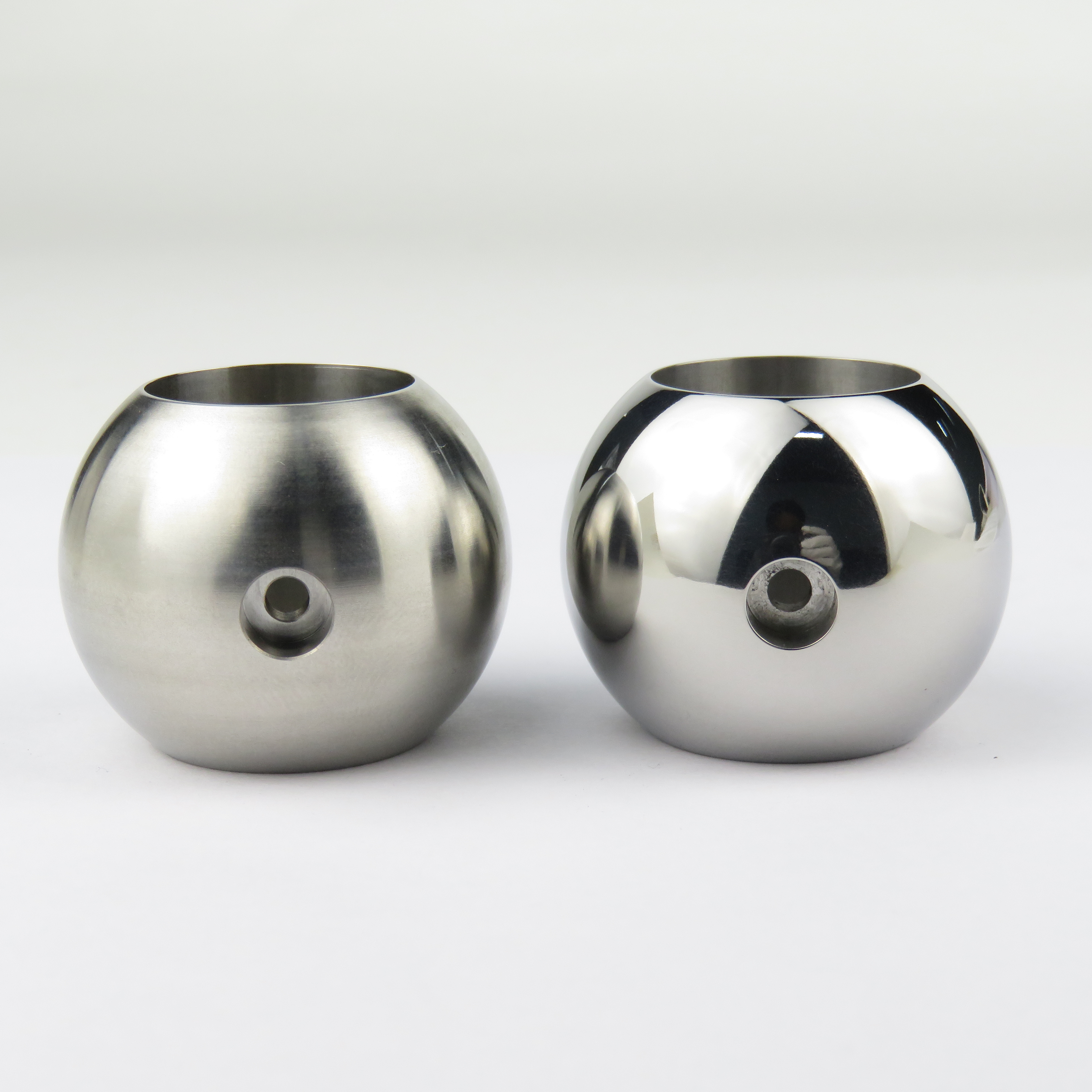
Begin by marking up the drawing surface by surface. An aluminium device housing may carry a visible cosmetic face, several machined mating faces that set a seal or a press fit, threaded ports, dowel holes and a thin outer wall, and each has a different finishing tolerance. Cosmetic zones can accept a uniform satin or bright finish; sealing faces and dowel bores need the edge left close to sharp or rounded to a stated radius, and a heavy media cycle destroys that. Note where the customer sees the part after assembly, because a face that meets a cosmetic grade on its own can still look wrong beside an untreated neighbour. A drawing that names, per surface, whether it is cosmetic, functional or indifferent is the cheapest document in the whole finishing project.
Centrifugal barrel finishing puts the barrels on a rotating turret so media and parts press against each other at high force, producing a fine surface and a controlled edge in a much shorter cycle than a conventional barrel. For aluminium device parts that need a uniform satin appearance without a long residence time it can be efficient, particularly on small to medium parts that fit the barrel geometry. The same high energy that shortens the cycle will bend thin walls, distort light sections and round edges faster than expected, so it demands a well-defined part envelope and a short instrumented cycle rather than a fixed timer. Barrel size and geometry set a hard limit on part length and pieces per run. Confirm the finish you want and the edge radius you can accept first.
| Machine route | Where it fits | What it will not do |
|---|---|---|
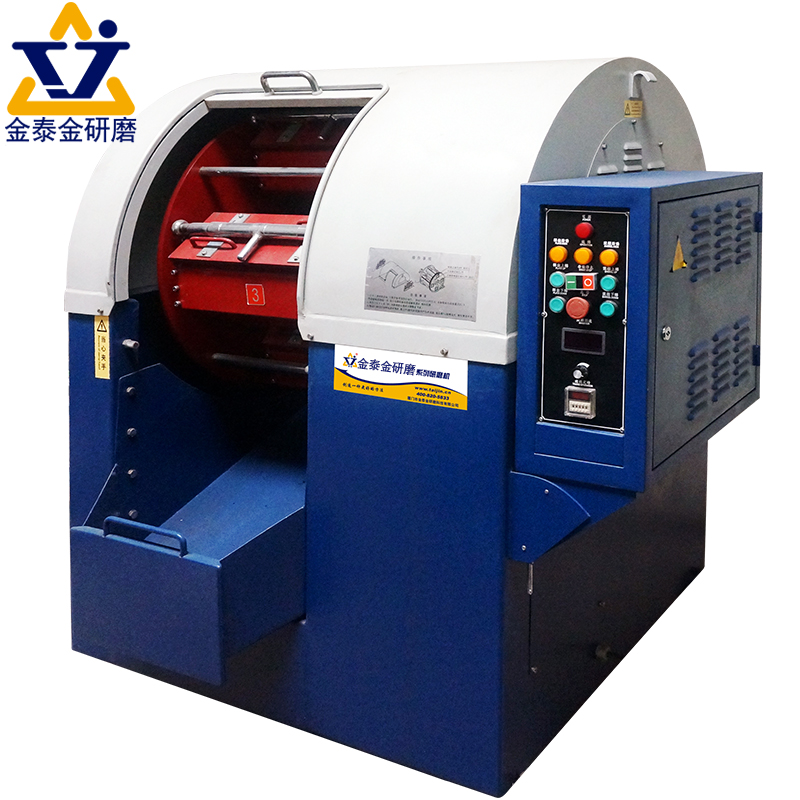
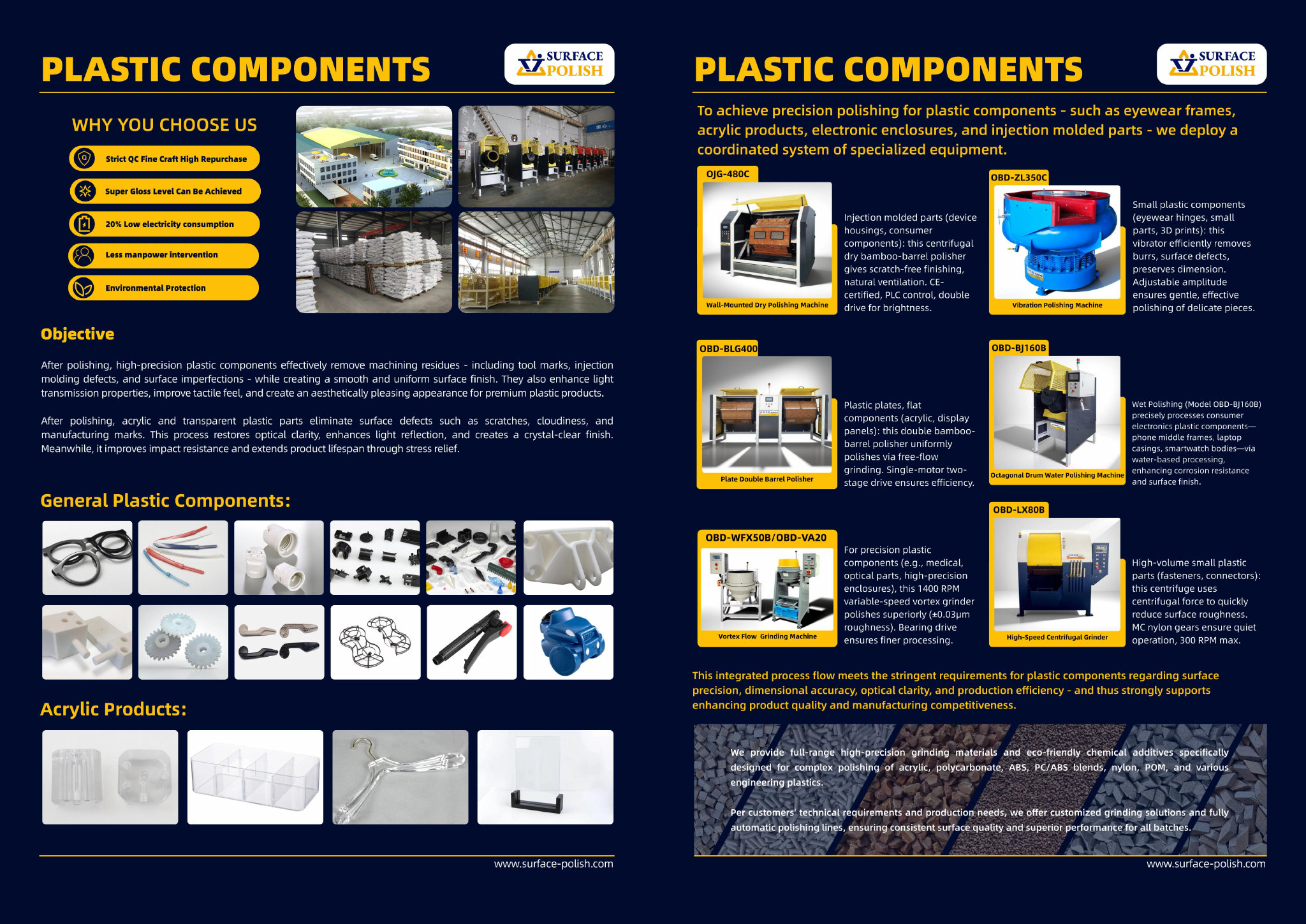
| Vibratory bowl finishing machine | Small to medium aluminium components that tumble freely: ferrules, handles, brackets and cover plates needing uniform deburring or satin finishing | Long, tall or heavily recessed parts shadow themselves and finish unevenly; part envelope must fit free circulation in the bowl |
| Centrifugal barrel finishing machine | Short, controlled cycles producing a fine satin finish and a defined edge on small to medium aluminium device parts | High energy bends thin walls and distorts light sections; barrel geometry limits part length and pieces per run |
| Grinding finishing machine | Higher material removal on aluminium parts that need a heavy burr or a pronounced chamfer removed before a gentler finishing step | Aggressive on soft aluminium, difficult to control on cosmetic faces and functional edges, and not a finishing step on its own |
| Dry polishing machine and dryer | Post-wet drying and dry polishing of aluminium parts before anodising, laser marking, bonding or packaging | Does not remove a burr or refine a surface on its own; residual media dust and incomplete drying still cause marking and coating defects |
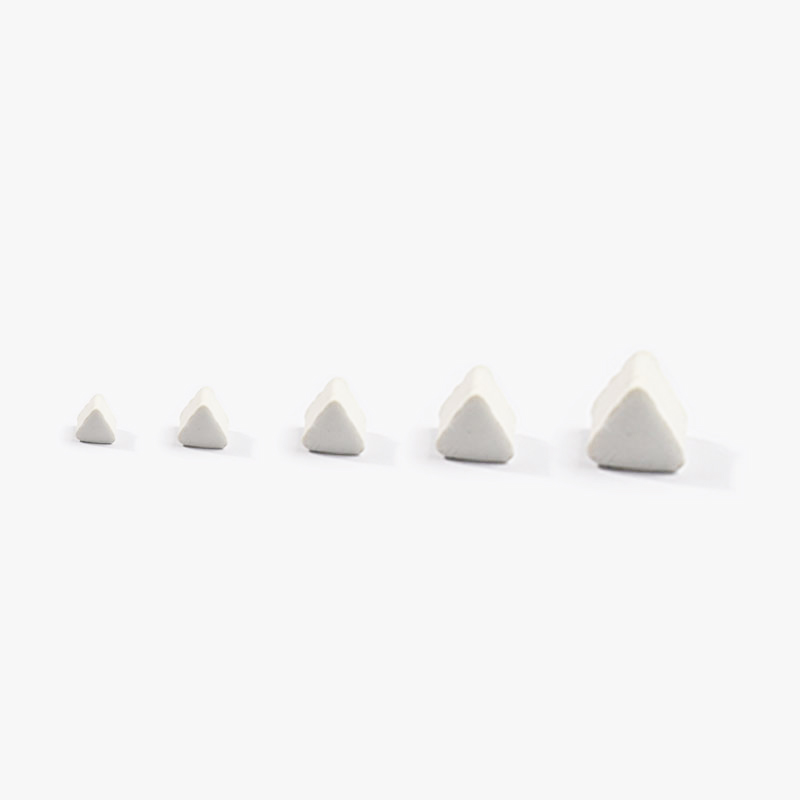
Media choice on aluminium is dominated by one fact: the workpiece is softer than most media used on steel. Dense ceramic and steel media that cut steel efficiently will embed, smear or gall an aluminium surface, implant iron particles that later show as staining or a galvanic couple, and round edges faster than the drawing allows. Plastic-bonded media in a light or medium abrasive grade, or a low-density ceramic, is the usual starting family for cosmetic work on 6061 and 7075, with harder ceramic reserved for a genuine heavy-cut deburr where the surface is not graded. The trade-off is real: gentle media remove less material and take longer, so a deep tool mark or heavy burr may need a coarser first stage and a gentler second. Choose media around the surface and edge the part must end with.
| Media | Best fit | Watch out for |
|---|---|---|
| Dry media, walnut shell, fine grade | Dry polishing, light surface cleaning and preparation before anodising or laser marking on aluminium parts | Shell dust must be extracted and the part cleaned, or the residue interferes with marking, bonding or a later coating step |
| Alumina-based ceramic media, low-density, cylindrical and pin shapes | Internal bores, slots and cross-holes on small aluminium components that a rounded tumbling body cannot reach | Pin and cylinder shapes can wedge in a bore or a slot; confirm retrieval and inspection before running a production batch |
| Steel media, balls or pins, for bright polishing | Bright reflective finish on hard, robust steel work where a high lustre is the primary requirement | Deposits iron on aluminium, causing black smut, staining and a galvanic couple; keep it out of any loop shared with aluminium parts |
| Dry media, corn cob with a polishing compound charge | Final dry polish and drying assistance on small aluminium parts where a wet rinse and dry would leave spotting | Compound loading saturates with use and the media cakes; the charge needs regular replacement, and soft aluminium can still smear |
Media cannot tell a cosmetic edge from a sealing edge, so a cycle that breaks a burr nicely on the outside of a housing can round a seal land, a dowel bore or a press-fit shoulder until it no longer functions. The drift is gradual and cumulative: each pass removes a little more material, and a batch that was within tolerance at the start of a media charge may be outside it by the end. Watch for a seal face that has lost its flat land, a bore edge closed to a radius, or a chamfer grown past the drawing. Detect it with an optical comparator or radius gauge on a cross-section, or by measuring the feature with a CMM before and after. Protection comes from shielding the functional edge, rounder and lighter media, and a first-article check.
| Failure mode | Likely cause | How to catch it |
|---|---|---|
| Etched, darkened or chalky surface after wet finishing | Compound pH or concentration outside the aluminium working range, over-alkaline product, long dwell in a hot solution, exhausted compound | Compare a dried part against a retained reference under the customer's lighting, and log compound pH, concentration and temperature for the batch |
| Sealing land or dowel bore edge rounded past the drawing limit | Long or energetic cycle on an unprotected functional edge, sharp-edged media, cumulative material removal across repeated passes | Measure the edge with an optical comparator or radius gauge on a cross-section, or compare a CMM scan of the feature before and after finishing |
| Dimensional drift on a critical bore, dowel hole or press-fit diameter | Aggressive media attacking a feature the cycle should not touch, cumulative removal over repeated runs, no masking of close-tolerance geometry | Measure the feature with a CMM or bore gauge at first article and at the end of the media charge, and chart the trend against drawing limits |
| Dents, peening marks or a hammered texture from part-on-part contact | Excessive energy for the part mass, under- or over-loaded charge, no fixture to control part attitude, hard or oversized media | Inspect a full-face view under low-angle light and a cross-section of a dent under a toolmaker's microscope to confirm plastic deformation |
New York City's industrial base sits in planned industrial parks and industrial business areas rather than heavy plant. The Brooklyn Navy Yard is a 300-acre, city-owned industrial park managed by the Brooklyn Navy Yard Development Corporation, home to more than 550 businesses and approximately 13,000 workers, and the Corporation describes it as one of the City's most important industrial waterfront assets and leases space across industries from the arts to startups and advanced manufacturers. Made in NYC, an initiative of the Pratt Center for Community Development, counts a community of 1,900 New York City makers and manufacturers whose member directory is organised by product and service categories including advanced and specialty manufacturing, metal and jewellery, digital fabrication, wood and furniture, and food and beverage. The region's freight gateway is the Port of New York and New Jersey, which the Port Authority describes as the largest port on the East Coast and the second largest in the nation, and the New York Fed publishes regional economic indicators and monthly surveys covering 22 local areas of the Second District, which includes New York City.
The nearest part of that base to this brief is food: Made in NYC's member directory organises New York City makers and manufacturers by product category and includes Food & Beverage as one of them.
New York's finishing demand is dominated by small and mid-size metalworking, fabrication and machining shops rather than one large plant, so the work is typically high-mix and low-volume: architectural and construction metalwork, food-equipment and food-service stainless, and machined or laser-cut components where deburring and edge control are the difference between a part that passes inspection and one that does not. Space, noise and effluent constraints in a dense city also push shops toward barrel, vibratory and disc finishing over processes with heavy waste streams.
The question to settle first is whether the shop is finishing architectural and construction metalwork, food-service stainless, or precision machined parts, because each needs a different balance of edge radius, burr removal and cleanliness - and in a dense city the choice is also constrained by floor space, noise and effluent limits.
Freight context: Port of New York and New Jersey (Port Newark, Elizabeth, Bayonne, Howland Hook, Red Hook), John F. Kennedy International Airport (JFK), Newark Liberty International Airport (EWR), ExpressRail intermodal terminals. The Port Authority of New York and New Jersey describes its port as the largest on the East Coast and the second largest in the nation, and the port's ExpressRail system provides dedicated on-dock rail for each major container terminal, aimed at inland markets including Chicago, the Ohio Valley and Eastern Canada. Imported machinery and sample parts would be entered through CBP at the seaport or at JFK/EWR, with country-of-origin marking and HTSUS classification as part of the entry file.
The United States has no free-trade agreement with China, so Chinese industrial machinery enters under normal-trade-relations (MFN) duty rates in the Harmonized Tariff Schedule of the United States plus any Section 301 duty that applies to the specific HTSUS subheading. USTR's four-year-review modification of the Section 301 China technology-transfer investigation imposed additional Section 301 duties or increased existing rates on certain Chinese products in strategic sectors, and created a temporary exclusion process for machinery used in domestic manufacturing: chapters 84 and 85 of the HTSUS, which cover most machinery used in manufacturing processes, are the chapters that were made eligible for exclusion requests. CBP still administers Section 301 China duties, the four-year-review increases and product exclusions. The IEEPA-based additional ad valorem duties of 2025 - including the reciprocal-tariff actions and the China synthetic-opioid supply-chain duties imposed under Executive Orders 14195 and 14257 - were ordered terminated by Executive Order 14389 of 20 February 2026 and, as soon as practicable, are no longer collected. A buyer should therefore price the MFN rate plus any applicable Section 301 rate and check whether the machine's exact subheading is covered by a current exclusion, rather than assuming either the 2025 IEEPA tariffs or a blanket China rate still applies.
Business is conducted in US English. Units matter: US drawings and purchase orders frequently use inches, microinch Ra and US gallons, and a supplier that quotes only metric can be asked to reissue documentation. Buyers are US legal entities with an EIN and expect an identifiable contracting entity, a correct HTSUS classification, a commercial invoice, packing list and bill of lading, country-of-origin marking, and an importer of record for customs. Procurement is normally evidence-driven: process selection is expected to be justified by a trial run on the buyer's own sample parts with measured results (burr height, edge radius, Ra, cleanliness) and by media and compound data sheets, rather than by a capability claim. Payment terms in general US industrial practice are open account with net-30 to net-60 terms for established buyers, with letters of credit or advance payment more common for a first order from a new overseas supplier; no US buyer assumes Incoterms, warranty terms or spare-parts lead times unless they are stated in the quotation.
SurfacePolish supplies from Xiamen, China. The buyer's own destination rules, conformity marking, tariff classification and documentation responsibilities stay with the buyer; confirm them against the authorities named above before ordering.
A roughness number without a location and a cut-off is not a specification. On an aluminium device component, name each surface that carries a roughness requirement, the direction of measurement relative to the machining or polishing marks, and the cut-off and evaluation length to be used, since a profile measured over a short length with a short cut-off reads differently from one measured across the full face. ISO 4287 and ISO 4288 describe profile parameters and the rules for selecting cut-off, ISO 25178 covers areal texture if a three-dimensional description is needed, and ASME B46.1 is the equivalent North American reference. Aluminium is soft, so stylus force and tip radius can mark the surface being measured; agree the instrument and the force, or use an optical method, and retain the measured part as the physical reference.
Send parts that represent the real production condition, not a polished bench sample. A useful set includes the worst case: the thinnest wall, the tightest sealing edge, the deepest tool mark, the casting with visible porosity, the smallest hole and the feature most likely to trap media. Include two or three pieces of each condition so one can be sectioned or inspected internally, and include an untreated part as the comparison reference. Label every part with its alloy and temper, its part number, the surfaces that are cosmetic, the surfaces that are functional, and the edge radius or chamfer allowed at each critical feature. State the current process and the defect that prompted the enquiry, plus the downstream operation such as anodising, laser marking or assembly.
The buyer defines the requirement and the check. Methods include visual inspection of internal features under magnification or with a borescope, a wipe test with a defined solvent and a white substrate, gravimetric non-volatile residue on a rinse sample, and rinse-water conductivity where the assembly is sensitive. Blind holes, threads and press fits retain residue and should be sampled specifically. A residue limit, a validated cleaning process, biocompatibility data or a sterility claim is the buyer's to set and verify against their own specification. Equipment supply and a sample trial do not establish any of those, and no finishing route substitutes for the buyer's own quality system.
Send representative parts, including the worst case: the thinnest wall, the tightest sealing edge, the deepest tool mark, a casting with visible porosity, the smallest hole and the feature most likely to trap media. Include two or three pieces of each condition, an untreated reference part, and a note of the alloy and temper, the part number, which surfaces are cosmetic and which are functional, and the edge radius or chamfer allowed at each critical feature. State the current process, the defect that prompted the enquiry and the downstream operation, whether anodising, laser marking, bonding or assembly. The clearer the part definition, the more useful the observations returned.
It will if the edge is exposed to the media for long enough. Media cannot distinguish a cosmetic edge from a seal land, a dowel bore or a press-fit shoulder, and rounding accumulates gradually, so a batch inside tolerance at the start of a media charge can be outside it later. Protection comes from shielding or masking the functional edge, using rounder and lighter media, shortening the cycle, and checking the feature with an optical comparator, radius gauge or CMM rather than by eye. A buyer in United States should state the allowed edge radius per feature on the drawing, because a blanket edge-break note will be read literally.
Use New York, United States as the destination on the enquiry and state whether the deliverable is equipment, media and compound, a representative sample review or a line concept. A destination does not imply local stock, a local service point or a local delivery time.
A New York buyer works in the US voluntary-consensus system coordinated by ANSI, with surface-finish, cleaning and coating requirements written into the drawing, purchase order or the building/food-service specification. New York City construction and food-service work adds local code and health-department requirements, and food-contact or medical work adds the customer's own material-conformity and cleanliness requirements on top.
Sources were retrieved on 2026-09-29 and describe the local industrial and trade context only. They do not evidence any SurfacePolish project, shipment, installation or service in New York.
The buyer needs the deburring cycle to leave the sealing land flat and the thread clean, and to leave a surface that anodises without a visible bloom.
Send the material, dimensions, approximate weight, batch quantity, the incoming condition and photographs of the difficult features. Mark which features must not be contacted by media and state how the result will be inspected. This form carries source reference PSEO-0043; quote it if you prefer an additional manual reference.
Open the SurfacePolish enquiry form Email a prepared enquiry
No price, lead time, certification or result is promised here. Confirm whether a sample trial is available for the specific part and what the trial can and cannot show.
Page PSEO-0043 · revised 2026-09-29 · cross-border equipment, media and scoped sample review. City context is sourced and cited above.
Use this local checker to identify missing part and inspection information. It prepares a technical-review brief; it does not approve a machine, process recipe or production result.
Complete the part details to prepare a review brief.
Email : info@surface-polish.com


 IPv6 network supported


 +86-592-2381506