A die-cast aluminium manifold for medical devices carries porosity that holds liquid and releases it later, so a buyer in Vancouver, Canada often sees bloom or staining days after the parts were finished. SurfacePolish supplies finishing machines, media and compounds across borders and discusses a scoped line concept with a free sample trial on the buyer's castings. This brief is written for a buyer in Vancouver working on medical devices; it describes equipment, media and a scoped sample review, not a local polishing service.
What edge radius or chamfer is allowed at each mating, sealing and press-fit feature, and how will it be measured?
What are the alloy and temper, and has machining, casting, welding or heat treatment already changed the surface hardness and porosity?
What is the minimum wall thickness and unsupported span, and which internal features could trap media?
A finishing route is only as good as the parts fed into it, so characterise the starting condition first. Note the machining process, the depth and direction of tool marks, whether the part was linished or hand-sanded already, whether it carries heat-treat scale or an as-cast skin, and which surfaces were scratched in handling. A batch of mixed starting conditions produces a mixed finish, because a cycle that removes a twenty-micron tool mark on 6061 will not remove a deep gouge without rounding the part. Record batch size, the mix of part numbers and the quantity of each, since an underloaded bowl or barrel runs differently from a full one. Segregate parts by alloy, by temper and by pre-finish condition before they enter the same machine.
A rotary barrel tumbles the load under gravity at comparatively low energy, which makes it a reasonable route for small precise aluminium parts that must not be peened, distorted or made to impinge on each other. It suits high-volume small components such as connector bodies, pins, small fittings and thin machined parts where the requirement is a consistent light deburr and surface refinement rather than heavy stock removal. Two costs come with that gentleness: cycles are longer for the same result, and parts with flats, pockets or low mass can slide rather than tumble, so one face may receive almost no work. Barrel loading, rotational speed, media-to-part ratio and compound quantity all change the result, and an overloaded barrel simply rotates with the mass instead of working it.
| Machine route | Where it fits | What it will not do |
|---|---|---|
| Dry polishing machine and dryer | Post-wet drying and dry polishing of aluminium parts before anodising, laser marking, bonding or packaging | Does not remove a burr or refine a surface on its own; residual media dust and incomplete drying still cause marking and coating defects |
| Grinding finishing machine | Higher material removal on aluminium parts that need a heavy burr or a pronounced chamfer removed before a gentler finishing step | Aggressive on soft aluminium, difficult to control on cosmetic faces and functional edges, and not a finishing step on its own |
| Magnetic finishing machine | Small aluminium parts with fine internal features such as cross-holes, slots and recesses that tumbling media cannot reach | Small working envelope and low throughput; pins and fine media can lodge in blind features, and mixed part families are awkward |
| Rotary barrel finishing machine | Gentle, low-energy deburring of small precise aluminium parts in high volume, including thin and light components | Longer cycles for the same result; flat or light parts may slide rather than tumble, and an overloaded barrel stops working the load |
Media choice on aluminium is dominated by one fact: the workpiece is softer than most media used on steel. Dense ceramic and steel media that cut steel efficiently will embed, smear or gall an aluminium surface, implant iron particles that later show as staining or a galvanic couple, and round edges faster than the drawing allows. Plastic-bonded media in a light or medium abrasive grade, or a low-density ceramic, is the usual starting family for cosmetic work on 6061 and 7075, with harder ceramic reserved for a genuine heavy-cut deburr where the surface is not graded. The trade-off is real: gentle media remove less material and take longer, so a deep tool mark or heavy burr may need a coarser first stage and a gentler second. Choose media around the surface and edge the part must end with.
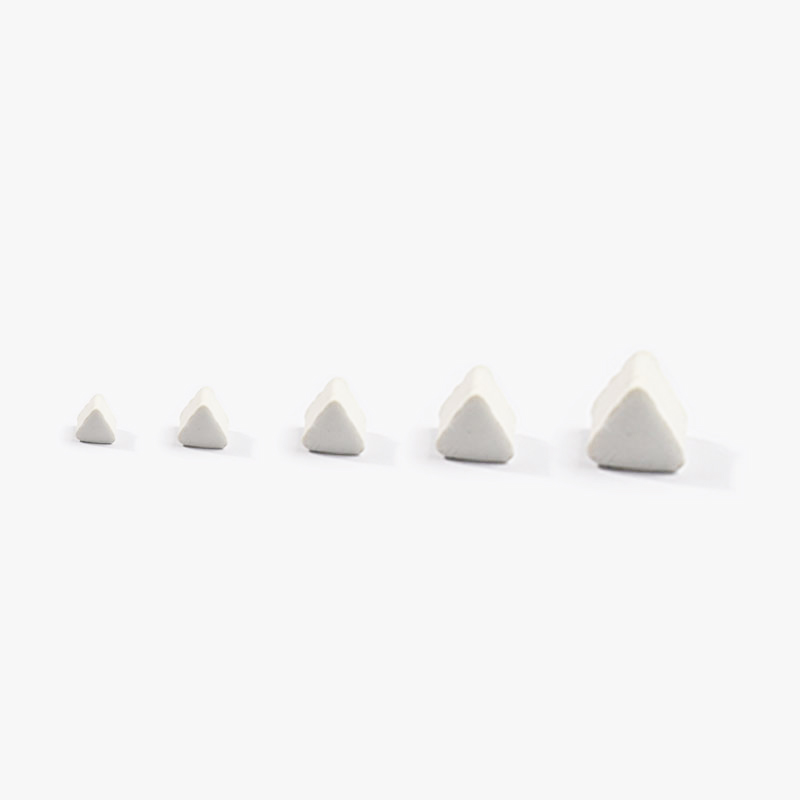
| Media | Best fit | Watch out for |
|---|---|---|
| Dry media, walnut shell, fine grade | Dry polishing, light surface cleaning and preparation before anodising or laser marking on aluminium parts | Shell dust must be extracted and the part cleaned, or the residue interferes with marking, bonding or a later coating step |
| Dry media, corn cob with a polishing compound charge | Final dry polish and drying assistance on small aluminium parts where a wet rinse and dry would leave spotting | Compound loading saturates with use and the media cakes; the charge needs regular replacement, and soft aluminium can still smear |
| Ceramic media, spheres and low-density ceramic, fine size class | Bright surface development and light edge work on small aluminium components with mixed cosmetic and internal features | Fine media lodges in blind holes, cross-drillings and thin-wall pockets and is harder to screen out of the load |
| Ceramic media, angle-cut triangles, medium size class | Heavy-cut deburring on cast or robust aluminium parts where the machined surface will be finished again or is not appearance graded | Rounds functional edges quickly and can chip or peen thin walls; not suitable where a sealing land or press fit is exposed |
Galling is the characteristic failure of a mechanical cycle on soft aluminium. Under pressure and without adequate lubrication, aluminium transfers to the media and to neighbouring parts, producing a torn, smeared or picked surface that looks worse than the starting condition. It shows first on edges, on high spots left by machining, and on any face where two aluminium parts rub. Temperature, compound lubricity, load ratio and media weight all push toward it, and a hot, heavy, under-lubricated charge will gall a batch that ran cleanly the day before. Check with low-angle lighting across the surface to reveal smears and cold welds, and confirm with a white cloth for transferred metal. Prevention is mostly charge discipline: lighter media on cosmetic faces, adequate compound flow, a controlled load, and segregation.
| Failure mode | Likely cause | How to catch it |
|---|---|---|
| Dents, peening marks or a hammered texture from part-on-part contact | Excessive energy for the part mass, under- or over-loaded charge, no fixture to control part attitude, hard or oversized media | Inspect a full-face view under low-angle light and a cross-section of a dent under a toolmaker's microscope to confirm plastic deformation |
| Dimensional drift on a critical bore, dowel hole or press-fit diameter | Aggressive media attacking a feature the cycle should not touch, cumulative removal over repeated runs, no masking of close-tolerance geometry | Measure the feature with a CMM or bore gauge at first article and at the end of the media charge, and chart the trend against drawing limits |
| Galled, smeared or picked surface with transferred aluminium | Media too heavy or too dense for the alloy, insufficient compound lubricity, hot or overloaded charge, aluminium parts rubbing against each other | Inspect under low-angle directional light for smears and cold welds, then wipe with a white lint-free cloth to reveal transferred metal |
| Black smut or scattered dark specks on the finished surface | Iron transferred from steel media, a shared barrel, worn machine parts or a shared media store; galvanic reaction on the soft aluminium surface | Examine under magnification and with a light acidified wipe, and audit media storage, barrel liners and screening equipment for steel contact |
Vancouver's industrial base is small in land area and high in value, and local business organisations treat industrial land supply itself as the binding constraint on manufacturing. The Greater Vancouver Board of Trade reports that from 2019 to 2023, over 5 million square feet of industrial investment were diverted to Calgary from Metro Vancouver because of limited land supply and regulatory barriers, and estimates that expanding industrial land supply by one per cent could support 126,100 new jobs and add CAD 12.2 billion to provincial GDP. The sectors that remain are tied to the port and to food processing: the Board of Trade frames its industrial-land campaign explicitly around unlocking "B.C.'s manufacturing and agri-food sectors" and maximising trade through the ports, and it notes that the region is home to Canada's largest and most diversified port. West of the city, the west coast gateway is rail- and container-intensive: Western Canada has 16,000 track miles of rail, employs 270,000-plus people in the transportation sector, and member ports import 2.4 million container TEUs annually, which is the infrastructure that bulk and project freight into the region depends on.
The nearest part of that base to this brief is energy: The western Canadian transportation and supply chain association documents the scale of the gateway that serves the region, with CAD 247 billion of goods exported from Western Canada and 270,000-plus Canadians employed in the transportation sector, which is the freight and resource-export base the port complex serves.
Metro Vancouver's manufacturing is squeezed onto scarce industrial land, so equipment that fits a compact footprint and reduces rework is a direct way to protect throughput on an expensive site. The food-processing and agri-food base in the Fraser Valley runs stainless process equipment and packaging machinery where weld dressing, edge break and controlled surface roughness on product-contact surfaces are recurring requirements, and the port and rail gateway supports a machinery-repair and heavy-equipment service sector where hydraulic and structural steel components are reworked and returned to service. Deburring and surface conditioning in this market is therefore more about stainless process hardware and repair-and-overhaul components than about high-volume mass finishing.
A Vancouver buyer should settle the footprint-and-utilities question first, because industrial floor space is the scarcest input in Metro Vancouver: machine size, foundation, water supply, effluent handling and ventilation should be priced against the cost of the space they consume, not treated as line items after the equipment decision. The second question is whether the finish requirement is come-from the product-contact stainless side of the business, in which case cleaning and passivation matter more than Ra targets, or from a repair-and-overhaul customer with a written surface specification.
Freight context: Port of Vancouver (Vancouver Fraser Port Authority), Vancouver International Airport (YVR), Surrey and Vancouver intermodal rail yards, Canadian Pacific Kansas City and CN mainlines. Vancouver is Canada's Pacific gateway, and the western transportation forum records member ports importing 2.4 million container TEUs annually on a base of 16,000 track miles of rail across Western Canada. That makes the region the natural first point of entry for equipment coming from Asia, with onward movement by rail or truck; sample parts and media can be airfreighted through YVR. Port authority pages were not retrievable for direct citation during this research, so the gateway figures here come from the western Canadian transportation association and the regional board of trade.
Canada is a bilingual market for selling purposes: English is the working language of procurement outside Quebec, while Quebec buyers (Montreal, Quebec City) normally expect French-language quotations, technical documentation and after-sales support, and Quebec's Charter of the French Language makes French the default for commercial documentation in the province. Procurement expectations are formal and auditable: a Canadian industrial buyer will typically ask for the tariff classification and country of origin up front, expect a commercial invoice that satisfies the CBSA invoice requirements, and expect the seller to provide proof of origin for any preferential claim. Payment norms are bank-to-bank, with wire transfer or letter of credit rather than platform payment, and Canadian buyers commonly net-30 to net-60 from invoice, so a cross-border seller should price the working-capital gap into the offer. Certificates of origin for export documentation are issued through chambers of commerce, which is why chambers such as the Hamilton Chamber of Commerce and the Winnipeg Chamber of Commerce offer document certification. The current trade environment adds policy risk to landed cost: Canadian federal programs are explicitly framed around responding to U.S. tariffs, with the FedDev Ontario Regional Tariff Response Initiative described as supporting "businesses to respond to tariff pressures" in southern Ontario, and tariff and surtax measures can change by Order in Council, so quotations should state the tariff basis and the date on which the landed-cost calculation was made.
The customs authority is the Canada Border Services Agency (CBSA), and importers of commercial goods must work through the CBSA Assessment and Revenue Management (CARM) system, which is where registration, the duties-and-taxes calculator, advance rulings and national customs rulings, and the commercial accounting declaration (CAD) are handled. Documentation expectations are explicit: "You must provide proof of country of origin when you import goods into Canada and, in some cases, your goods must also be clearly marked", the invoice or sales receipt must carry "a complete description of the goods", "the selling price" and "any conditions and terms of the sale", and the value for duty must be declared in Canadian currency only. Duties and taxes are layered rather than single: customs duty on the tariff item, the Goods and Services Tax calculated on the duty-paid value, and potentially excise duty, excise tax, surtax or safeguard measures. Importers must also clear non-tariff gates: goods must be admissible, some goods need permits, certificates or inspections from other federal departments that the CBSA applies on their behalf, controlled goods under the Defence Production Act require consultation with the CBSA and Global Affairs Canada before import, and "Goods manufactured or produced wholly or in part by forced or prison labour are prohibited from entering Canada", with due diligence resting on the importer. For electrical machinery, the practical conformity route in Canada is certification of the product to Canadian electrical safety standards by an accredited certification body rather than a self-declared CE-style mark; buyers should confirm the specific certification body and mark required before shipment. For a first shipment of a finishing machine or a media/compound sample lot, the fastest way to remove classification and valuation uncertainty is to use the CARM portal to request an advance ruling for tariff classification and origin.
SurfacePolish supplies from Xiamen, China. The buyer's own destination rules, conformity marking, tariff classification and documentation responsibilities stay with the buyer; confirm them against the authorities named above before ordering.
Some acceptance criteria are functional and cannot be judged by looking. Check edge condition on sealing and mating features with a radius gauge or optical comparator, and verify that a seal land is still flat and wide enough to seat. Measure critical bores, dowel holes, press-fit diameters and any feature the cycle can move, and compare against drawing limits rather than a nominal. Confirm that threads run freely with a gauge and that no media fragment is trapped in a thread root or cross-hole. Where a lid, gasket or mating plate will seat on the finished surface, a simple assembly or leak test on a first-article part proves more than visual inspection. The buyer defines which checks apply and what the limits are; a finishing trial reports what it observed on the parts it received.
Scaling from a bench or pilot run to a producing line changes several things at once, and each has to be planned. The machine must be sized for the part envelope and the throughput the buyer needs, which sets load volume, media quantity and compound dosing. A compound delivery system with a dosing pump, a flow meter and a recirculation or once-through decision is what makes the chemistry repeatable rather than hand-mixed. Media handling needs a screen or separator, a stock of graded media for top-up, and a rule for replacing worn media. Parts need a defined load pattern, and any fixture or mask needs a duplicate so it does not become the bottleneck. Rinse and drying stages must match the downstream requirement. The layout, services and acceptance criteria remain the buyer's engineering decisions.
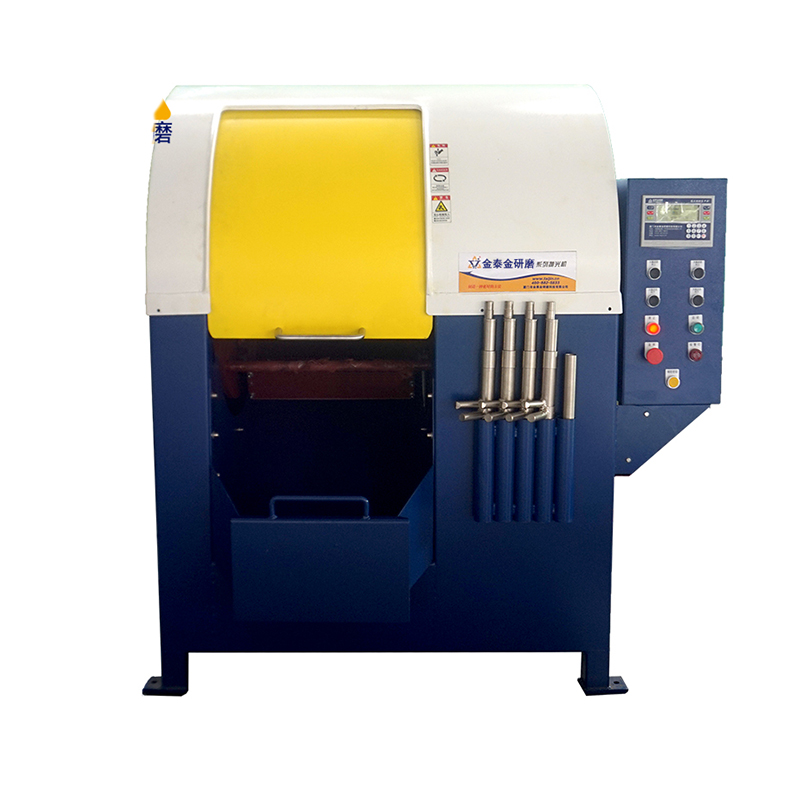
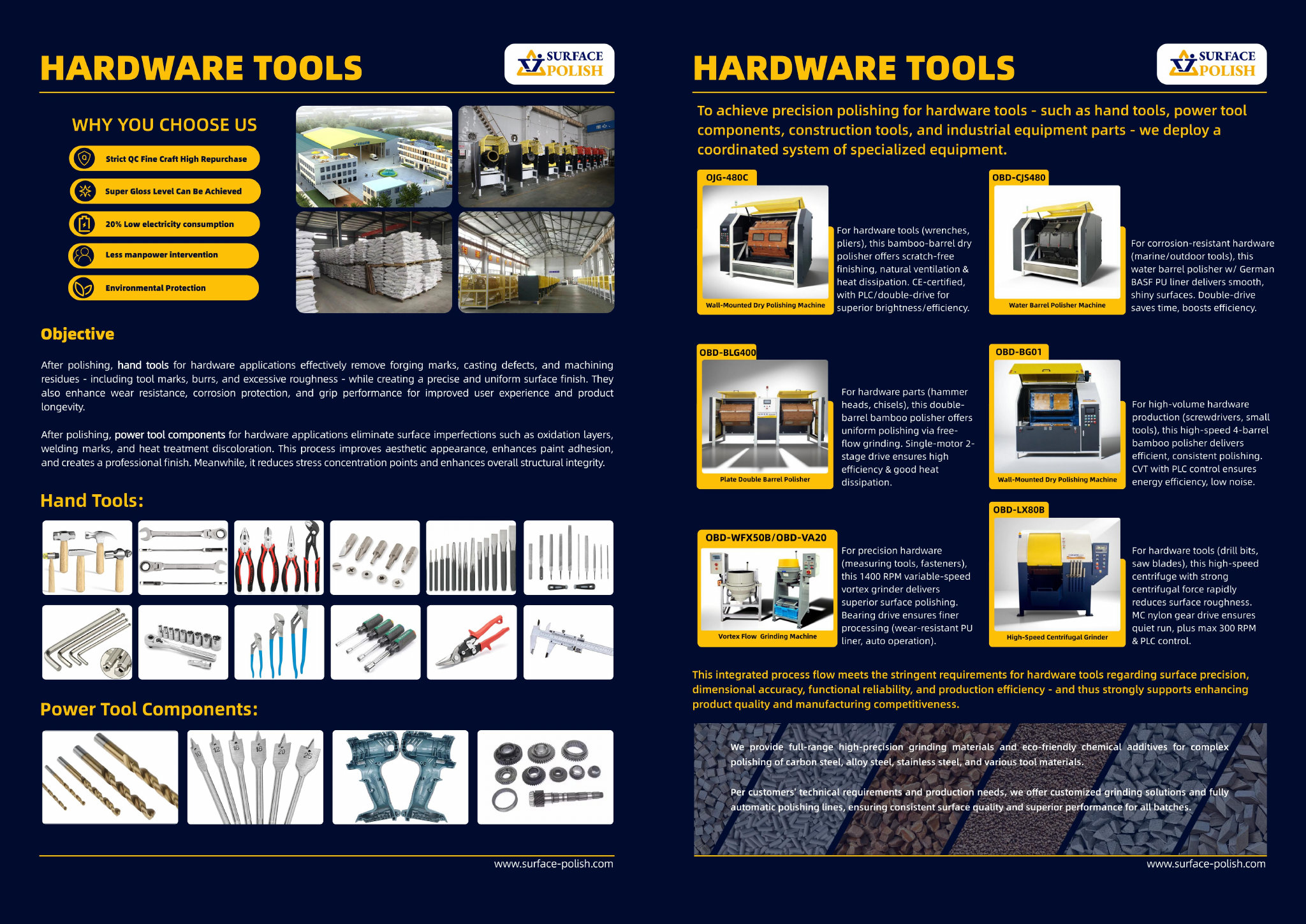
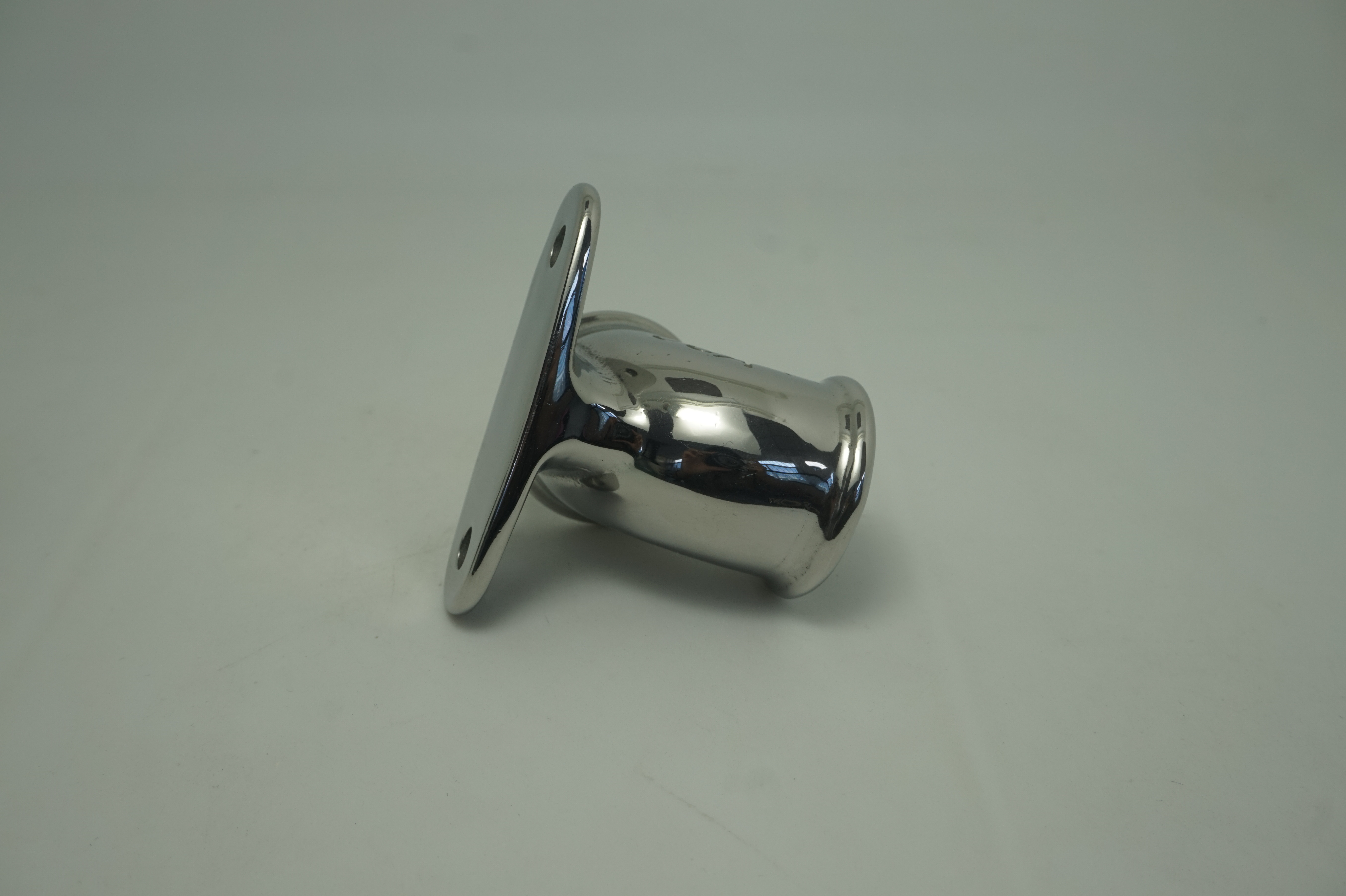
Laser marking interacts with surface texture, so contrast depends on whether the surface is directional, random satin or bright. A strong directional finish from a tub or a linishing step can produce a marking that reads differently when the part is turned, while a uniform random texture marks more consistently. Residue and embedded media also interfere, because the marking energy meets a contaminated surface. For a marked cover plate in Canada, the practical sequence is to fix the finish first, then qualify the marking programme on finished parts, and to check the mark under the lighting the end user will use rather than a bench lamp.
Keep the aluminium loop physically separate. Steel media, steel barrels, worn machine parts and shared screening equipment all transfer iron to a soft aluminium surface, and the result shows as black smut, dark specks or a galvanic couple that becomes visible under a coating or after anodising. Dedicated media, a dedicated barrel or bowl liner, separate screens and separate storage are the practical controls, along with a check of the finished surface under directional light. For a plant in Canada running both steel and aluminium work, the segregation rule needs to cover media storage and top-up stocks, not only the machine, because a shared media bin reintroduces the contamination.
Start with media that are softer or lighter than the workpiece is likely to tolerate: plastic-bonded media in a light or medium abrasive grade, or a low-density ceramic. Dense ceramic and steel media that cut steel efficiently will embed, smear or gall aluminium and can implant iron that later shows as staining. Media weight, compound lubricity and load ratio matter as much as family, because a heavy, hot, under-lubricated charge will gall parts even with the right media. A buyer in Canada should treat media selection as a two-stage question: what removes the burr, and what produces the final cosmetic surface without transfer.
Use Vancouver, Canada as the destination on the enquiry and state whether the deliverable is equipment, media and compound, a representative sample review or a line concept. A destination does not imply local stock, a local service point or a local delivery time.
A Vancouver buyer references Canadian electrical safety certification, WorkSafeBC requirements for machine guarding and safeguarding, and — where the plant handles food or beverages — the federal and provincial food-safety regime that governs product-contact surfaces and cleaning. Where the finishing step serves a marine or heavy-equipment customer, the acceptance criteria normally come from that customer's repair specification rather than from a national finishing standard.
Sources were retrieved on 2026-09-29 and describe the local industrial and trade context only. They do not evidence any SurfacePolish project, shipment, installation or service in Vancouver.
The buyer is getting compound bleed-out and dark bloom from the casting pores after finishing, and media is wedging in the blind bosses.
Send the material, dimensions, approximate weight, batch quantity, the incoming condition and photographs of the difficult features. Mark which features must not be contacted by media and state how the result will be inspected. This form carries source reference PSEO-0123; quote it if you prefer an additional manual reference.
Open the SurfacePolish enquiry form Email a prepared enquiry
No price, lead time, certification or result is promised here. Confirm whether a sample trial is available for the specific part and what the trial can and cannot show.
Page PSEO-0123 · revised 2026-09-29 · cross-border equipment, media and scoped sample review. City context is sourced and cited above.
Use this local checker to identify missing part and inspection information. It prepares a technical-review brief; it does not approve a machine, process recipe or production result.
Complete the part details to prepare a review brief.
Email : info@surface-polish.com


 IPv6 network supported


 +86-592-2381506