Laser marking on aluminium reads differently on a directional brushed surface than on a random satin one, and inconsistent texture across a marking window produces inconsistent contrast. A buyer in Calgary, Canada marking cover plates for medical devices can send parts to SurfacePolish, a cross-border supplier of finishing machines, media and compounds, for a free sample trial. This brief is written for a buyer in Calgary working on medical devices; it describes equipment, media and a scoped sample review, not a local polishing service.
What downstream operation follows finishing, such as anodising, laser marking, bonding or assembly, and what does it require of the surface?
Who defines and verifies the cleanliness, residue and any regulatory requirement, and by what method and limit?
What edge radius or chamfer is allowed at each mating, sealing and press-fit feature, and how will it be measured?
A finishing route is only as good as the parts fed into it, so characterise the starting condition first. Note the machining process, the depth and direction of tool marks, whether the part was linished or hand-sanded already, whether it carries heat-treat scale or an as-cast skin, and which surfaces were scratched in handling. A batch of mixed starting conditions produces a mixed finish, because a cycle that removes a twenty-micron tool mark on 6061 will not remove a deep gouge without rounding the part. Record batch size, the mix of part numbers and the quantity of each, since an underloaded bowl or barrel runs differently from a full one. Segregate parts by alloy, by temper and by pre-finish condition before they enter the same machine.
Media is a consumable that changes as it works, and that change alters the finish. As media wear down they lose mass and edge definition, the charge volume drops, the cut rate falls and the surface result drifts, so a finish that was correct at the start of a media charge may not be reproducible after a week of running. Screen and grade media for size, top up the charge, and replace a fraction on a schedule rather than waiting for the result to move. Cross-contamination is the sharper risk on aluminium: steel media or steel machine parts in the same loop deposit iron on the soft surface, which later shows as black staining, as a galvanic couple under a coating or as an inclusion visible after anodising. Keep media and barrels dedicated to aluminium where finish matters.
| Media | Best fit | Watch out for |
|---|---|---|
| Dry media, corn cob with a polishing compound charge | Final dry polish and drying assistance on small aluminium parts where a wet rinse and dry would leave spotting | Compound loading saturates with use and the media cakes; the charge needs regular replacement, and soft aluminium can still smear |
| Plastic-bonded media, ball and ellipsoid shapes | Surface refinement and blending on cosmetic aluminium faces where edges, seal lands and dowel bores must stay close to drawing | Removes very little edge material, so a burr at a bore exit or a thread crest may survive the cycle and need a separate step |
| Dry media, walnut shell, fine grade | Dry polishing, light surface cleaning and preparation before anodising or laser marking on aluminium parts | Shell dust must be extracted and the part cleaned, or the residue interferes with marking, bonding or a later coating step |
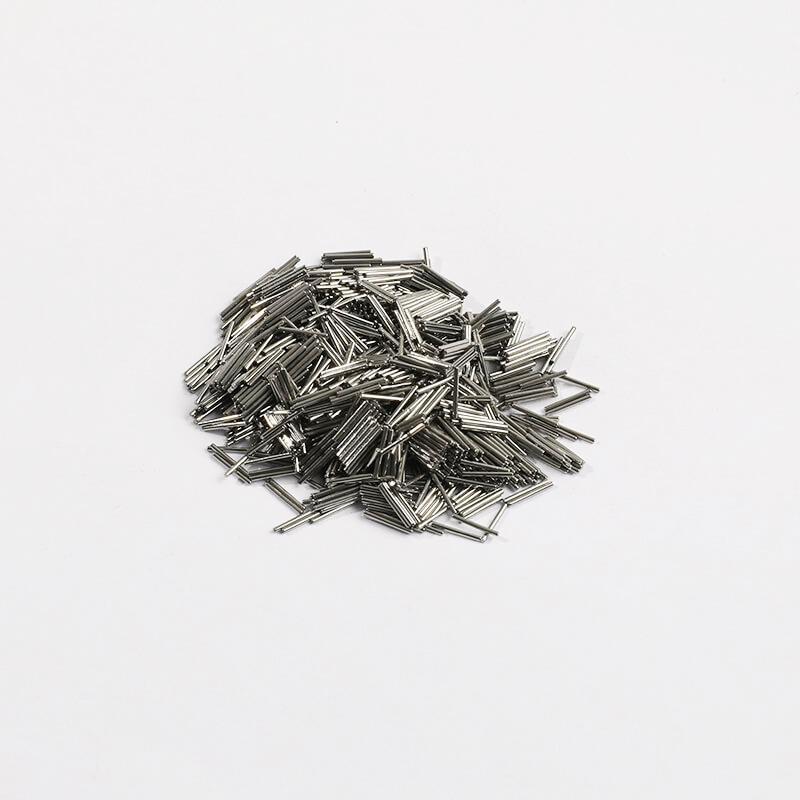
| Steel media, balls or pins, for bright polishing | Bright reflective finish on hard, robust steel work where a high lustre is the primary requirement | Deposits iron on aluminium, causing black smut, staining and a galvanic couple; keep it out of any loop shared with aluminium parts |
Disc finishing machines generate high energy at the disc face and remove material and round edges quickly, which is attractive when a batch of aluminium parts needs a burr gone in a short cycle. That same energy is what makes them risky on soft wrought aluminium and on thin castings. Part-on-part contact is high, so parts impinge, peen each other and develop a hammered or uneven surface, and 6061 will smear rather than cut if the compound is wrong or the load too heavy. Fixturing helps: a carrier that holds each part in a fixed attitude reduces random contact but adds load and unload labour to every cycle. Disc routes are also unforgiving on edge control because removal is neither uniform nor easy to localise. Use them where a robust part needs a fast radius.
| Machine route | Where it fits | What it will not do |
|---|---|---|
| Tub vibrator | Long and large aluminium parts such as extruded frames and housings that can be oriented in a linear working channel | Slower uniform coverage, a tendency for parts to settle in one attitude, and greater floor space and media volume than a bowl |
| Centrifugal barrel finishing machine | Short, controlled cycles producing a fine satin finish and a defined edge on small to medium aluminium device parts | High energy bends thin walls and distorts light sections; barrel geometry limits part length and pieces per run |
| Rotary barrel finishing machine | Gentle, low-energy deburring of small precise aluminium parts in high volume, including thin and light components | Longer cycles for the same result; flat or light parts may slide rather than tumble, and an overloaded barrel stops working the load |
| Disc finishing machine | Fast burr removal and edge radiusing on robust aluminium parts where a short cycle and high material removal matter most | High part-on-part contact and impingement risk; smears soft 6061, is hard to localise, and adds fixturing labour to every cycle |
Small media, abrasive grit and magnetic pins can lodge in a blind hole, a cross-drilling, a thread root, an undercut or a thin-wall pocket and stay there through rinsing. A lodged fragment is a functional defect, not a cosmetic one: it can score a mating bore during assembly, come loose inside a device, or sit under a coating. Thin walls make it worse because the pocket deforms slightly under load and grips the fragment. Detect it with a borescope on internal features, by weighing parts against a known-clean reference, by controlled tapping over a white surface, or by an ultrasonic clean followed by inspection of the bath residue. Design the route around it: plug or shield the features that trap media, change the size class, or choose a route whose loading geometry differs. A visual pass is not proof that a cavity is clean.
| Failure mode | Likely cause | How to catch it |
|---|---|---|
| Uneven finish with bright and dull bands on the same face | Part settling in one attitude, self-shadowing on a long or recessed part, wrong load ratio, media too large to flow around the geometry | Compare several parts taken from different positions in the load under directional light rather than sampling only the discharge gate |
| Dents, peening marks or a hammered texture from part-on-part contact | Excessive energy for the part mass, under- or over-loaded charge, no fixture to control part attitude, hard or oversized media | Inspect a full-face view under low-angle light and a cross-section of a dent under a toolmaker's microscope to confirm plastic deformation |
| Galled, smeared or picked surface with transferred aluminium | Media too heavy or too dense for the alloy, insufficient compound lubricity, hot or overloaded charge, aluminium parts rubbing against each other | Inspect under low-angle directional light for smears and cold welds, then wipe with a white lint-free cloth to reveal transferred metal |
| Media or abrasive fragment lodged in a blind hole, cross-drilling or thin-wall pocket | Media size class too small for the feature, unshielded pockets, flexing thin wall gripping the fragment, no dedicated retrieval step | Borescope the internal features, weigh against a known-clean reference, tap over white paper, and inspect the residue from an ultrasonic clean |
Calgary is Canada's energy head-office city and has been building aerospace, life sciences and logistics depth on top of that base. Calgary Economic Development reports that more than 70 major energy companies have head offices in the city and that 462 of Alberta's 940 cleantech companies are headquartered there. The aerospace sector is real but narrower than Montreal's: the region's aerospace ecosystem is anchored by applied research and development, aerospace components and parts manufacturing, maintenance, repair and overhaul (MRO), and unmanned systems, with CAD 3 billion contributed to Alberta's GDP in 2024 and over 100 direct global routes from Calgary International Airport. Life sciences has grown to more than 140 companies in human and animal health, with medical device manufacturing and diagnostics among the growth subsectors. Logistics is a genuine industrial cluster in its own right, with both CPKC and CN headquartered in Calgary and the proposed Prairie Economic Gateway inland port positioned to add manufacturing, processing and distribution capacity.
For this brief the relevant part of that base is medical: Calgary's health and life sciences sector has over 140 companies in human and animal health, with medical devices manufacturing and diagnostics listed among the growth subsectors, and more than 60 per cent of the city's life sciences companies focused on digital health and medical devices.
Calgary's energy and oilfield service base generates a continuous flow of valve bodies, fittings, pump components, tubular connections and machined parts where burrs at sealing faces and threads are a leak-path and galling risk, and where surface finish on sealing surfaces is a functional specification. Aerospace components and MRO work in the same city adds edge-condition and cleanliness requirements on machined aluminium and steel parts, and the emerging medical device and diagnostics manufacturing base adds small, high-value parts where hand deburring variability is the main quality problem. Because both the energy and aerospace customers operate under formal quality systems, the finishing step usually has to be documented and repeatable rather than operator-dependent.
A Calgary buyer should settle which surface is actually functional before choosing a process: on valve, pump and tubular components the acceptance criterion is usually a specific sealing-face finish and a burr-free thread or edge, and that determines whether vibratory, centrifugal or spindle finishing is even applicable, and whether edge radius rather than surface roughness is the real specification. The second question is repeatability across shifts, because energy and aerospace customers increasingly require documented, repeatable surface condition rather than a finish that depends on which operator ran the part.
Freight context: YYC Calgary International Airport and YYC Global Logistics Park, CPKC headquarters and intermodal terminals, CN intermodal terminals, Prairie Economic Gateway inland port (proposed). Calgary handles 75 per cent of Alberta's air cargo shipments through YYC and has over 100 direct routes into Europe and the Americas, and both Class 1 railways are headquartered in the city, giving access to West Coast ports and to centres in Canada, the United States and Mexico. The proposed Prairie Economic Gateway inland port, a City of Calgary and Rocky View County partnership, is projected to generate over CAD 7 billion in economic activity and more than 30,000 jobs over 10 to 12 years, and is explicitly targeted at manufacturing, logistics, processing and distribution.
The customs authority is the Canada Border Services Agency (CBSA), and importers of commercial goods must work through the CBSA Assessment and Revenue Management (CARM) system, which is where registration, the duties-and-taxes calculator, advance rulings and national customs rulings, and the commercial accounting declaration (CAD) are handled. Documentation expectations are explicit: "You must provide proof of country of origin when you import goods into Canada and, in some cases, your goods must also be clearly marked", the invoice or sales receipt must carry "a complete description of the goods", "the selling price" and "any conditions and terms of the sale", and the value for duty must be declared in Canadian currency only. Duties and taxes are layered rather than single: customs duty on the tariff item, the Goods and Services Tax calculated on the duty-paid value, and potentially excise duty, excise tax, surtax or safeguard measures. Importers must also clear non-tariff gates: goods must be admissible, some goods need permits, certificates or inspections from other federal departments that the CBSA applies on their behalf, controlled goods under the Defence Production Act require consultation with the CBSA and Global Affairs Canada before import, and "Goods manufactured or produced wholly or in part by forced or prison labour are prohibited from entering Canada", with due diligence resting on the importer. For electrical machinery, the practical conformity route in Canada is certification of the product to Canadian electrical safety standards by an accredited certification body rather than a self-declared CE-style mark; buyers should confirm the specific certification body and mark required before shipment. For a first shipment of a finishing machine or a media/compound sample lot, the fastest way to remove classification and valuation uncertainty is to use the CARM portal to request an advance ruling for tariff classification and origin.
Canada is a bilingual market for selling purposes: English is the working language of procurement outside Quebec, while Quebec buyers (Montreal, Quebec City) normally expect French-language quotations, technical documentation and after-sales support, and Quebec's Charter of the French Language makes French the default for commercial documentation in the province. Procurement expectations are formal and auditable: a Canadian industrial buyer will typically ask for the tariff classification and country of origin up front, expect a commercial invoice that satisfies the CBSA invoice requirements, and expect the seller to provide proof of origin for any preferential claim. Payment norms are bank-to-bank, with wire transfer or letter of credit rather than platform payment, and Canadian buyers commonly net-30 to net-60 from invoice, so a cross-border seller should price the working-capital gap into the offer. Certificates of origin for export documentation are issued through chambers of commerce, which is why chambers such as the Hamilton Chamber of Commerce and the Winnipeg Chamber of Commerce offer document certification. The current trade environment adds policy risk to landed cost: Canadian federal programs are explicitly framed around responding to U.S. tariffs, with the FedDev Ontario Regional Tariff Response Initiative described as supporting "businesses to respond to tariff pressures" in southern Ontario, and tariff and surtax measures can change by Order in Council, so quotations should state the tariff basis and the date on which the landed-cost calculation was made.
SurfacePolish supplies from Xiamen, China. The buyer's own destination rules, conformity marking, tariff classification and documentation responsibilities stay with the buyer; confirm them against the authorities named above before ordering.
A roughness number without a location and a cut-off is not a specification. On an aluminium device component, name each surface that carries a roughness requirement, the direction of measurement relative to the machining or polishing marks, and the cut-off and evaluation length to be used, since a profile measured over a short length with a short cut-off reads differently from one measured across the full face. ISO 4287 and ISO 4288 describe profile parameters and the rules for selecting cut-off, ISO 25178 covers areal texture if a three-dimensional description is needed, and ASME B46.1 is the equivalent North American reference. Aluminium is soft, so stylus force and tip radius can mark the surface being measured; agree the instrument and the force, or use an optical method, and retain the measured part as the physical reference.
The first good batch is not the hard part; holding the finish over weeks is. Media wear, the charge volume falls, fines accumulate in the compound, screens clog and the rinse water changes, so the same timer produces a different result as the charge ages. Drift shows first as a slightly duller surface, a burr that reappears at a bore exit, or a finish that no longer matches the retained reference. Control it with a media top-up and replacement rule based on screening rather than the calendar, a compound concentration and pH check each shift, a rinse-water quality check, and a first-article comparison against the retained reference at the start of every batch. Any change of media supplier, compound, water supply or machine setting invalidates the previous baseline and should be treated as a new first-article event.

Start with media that are softer or lighter than the workpiece is likely to tolerate: plastic-bonded media in a light or medium abrasive grade, or a low-density ceramic. Dense ceramic and steel media that cut steel efficiently will embed, smear or gall aluminium and can implant iron that later shows as staining. Media weight, compound lubricity and load ratio matter as much as family, because a heavy, hot, under-lubricated charge will gall parts even with the right media. A buyer in Canada should treat media selection as a two-stage question: what removes the burr, and what produces the final cosmetic surface without transfer.
Keep the aluminium loop physically separate. Steel media, steel barrels, worn machine parts and shared screening equipment all transfer iron to a soft aluminium surface, and the result shows as black smut, dark specks or a galvanic couple that becomes visible under a coating or after anodising. Dedicated media, a dedicated barrel or bowl liner, separate screens and separate storage are the practical controls, along with a check of the finished surface under directional light. For a plant in Canada running both steel and aluminium work, the segregation rule needs to cover media storage and top-up stocks, not only the machine, because a shared media bin reintroduces the contamination.
It will if the edge is exposed to the media for long enough. Media cannot distinguish a cosmetic edge from a seal land, a dowel bore or a press-fit shoulder, and rounding accumulates gradually, so a batch inside tolerance at the start of a media charge can be outside it later. Protection comes from shielding or masking the functional edge, using rounder and lighter media, shortening the cycle, and checking the feature with an optical comparator, radius gauge or CMM rather than by eye. A buyer in Canada should state the allowed edge radius per feature on the drawing, because a blanket edge-break note will be read literally.
Use Calgary, Canada as the destination on the enquiry and state whether the deliverable is equipment, media and compound, a representative sample review or a line concept. A destination does not imply local stock, a local service point or a local delivery time.
A Calgary buyer in the energy supply chain normally works to the end-user's material and inspection specification for sealing faces, threads and surface finish, plus the requirements of the applicable pressure-equipment or pipeline standard their customer names. On the plant side, Alberta occupational health and safety rules for guarding and lockout apply, along with Canadian electrical safety certification for the equipment.
Sources were retrieved on 2026-09-29 and describe the local industrial and trade context only. They do not evidence any SurfacePolish project, shipment, installation or service in Calgary.
The buyer's laser marking reads inconsistently because the media direction and surface texture vary across the marking area.
Send the material, dimensions, approximate weight, batch quantity, the incoming condition and photographs of the difficult features. Mark which features must not be contacted by media and state how the result will be inspected. This form carries source reference PSEO-0133; quote it if you prefer an additional manual reference.
Open the SurfacePolish enquiry form Email a prepared enquiry
No price, lead time, certification or result is promised here. Confirm whether a sample trial is available for the specific part and what the trial can and cannot show.
Page PSEO-0133 · revised 2026-09-29 · cross-border equipment, media and scoped sample review. City context is sourced and cited above.
Use this local checker to identify missing part and inspection information. It prepares a technical-review brief; it does not approve a machine, process recipe or production result.
Complete the part details to prepare a review brief.
Email : info@surface-polish.com


 IPv6 network supported


 +86-592-2381506