


Dry Polishing Wood Bamboo and Walnut Specification Query — Jintaijin
Look up the dry-grinding section of Jintaijin media tables without mixing shaped wood sizes with walnut-shell notation. Filter the named wood, bamboo and walnut entries by shape or their exact published specification. The query keeps the original notation visible so a purchasing or trial brief can identify the requested item accurately. It does not infer a polishing charge, coating, drying duty, particle-size standard or workpiece compatibility.
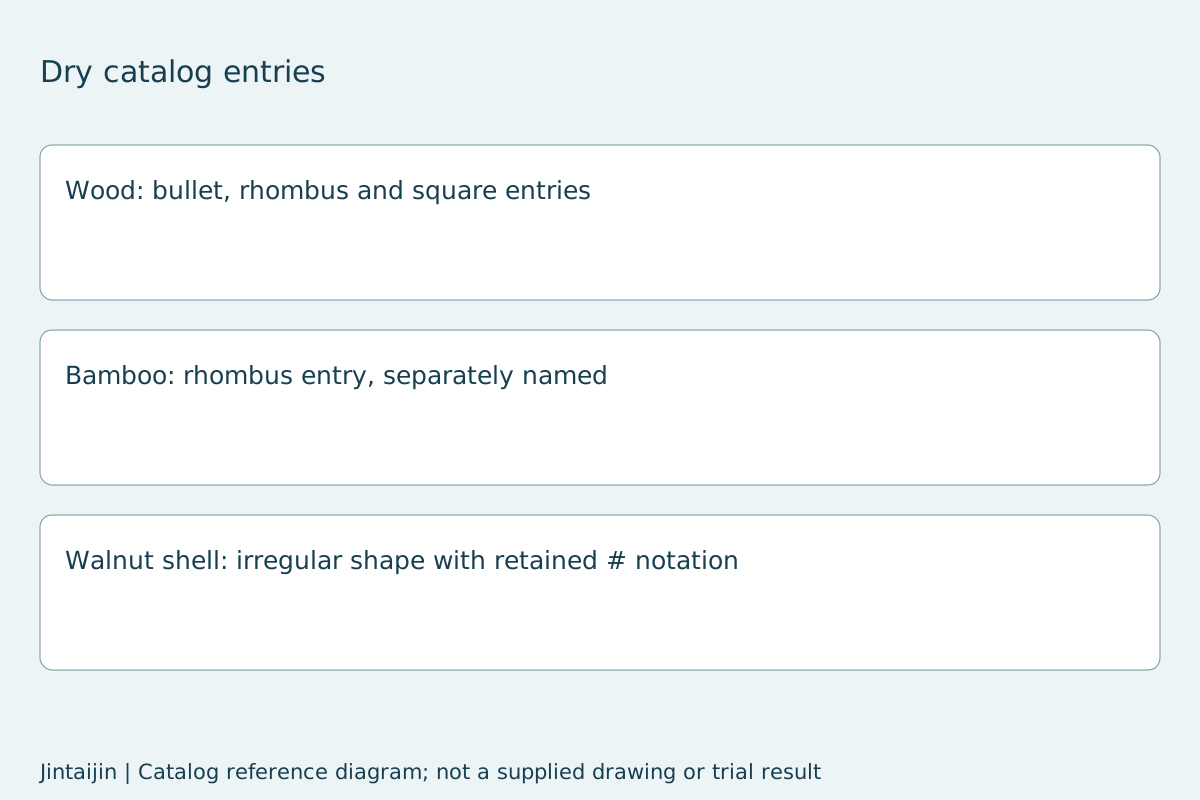
Query the dry catalog section
Filter published catalog names, shapes and exact specification tokens.
Bamboo (Rhombus)
Shape: Rhombus.
Published specification tokens: 2*2, 3*3.
Source header: Specification (mm). Pair axes and supplied tolerances unconfirmed.
Walnut Shell
Shape: Irregular.
Published specification tokens: 12#, 16#, 24#, 32#, 36#, 8#, 80#.
Original # notation; size standard unconfirmed.
Wood (Bullet)
Shape: Bullet.
Published specification tokens: 0.5*2, 0.5*2.5, 0.5*3.
Source header: Specification (mm). Pair axes and supplied tolerances unconfirmed.
Wood (Rhombus)
Shape: Rhombus.
Published specification tokens: 2*2, 3*3.
Source header: Specification (mm). Pair axes and supplied tolerances unconfirmed.
Wood (Square)
Shape: Square.
Published specification tokens: 6*6, 7*7.
Source header: Specification (mm). Pair axes and supplied tolerances unconfirmed.
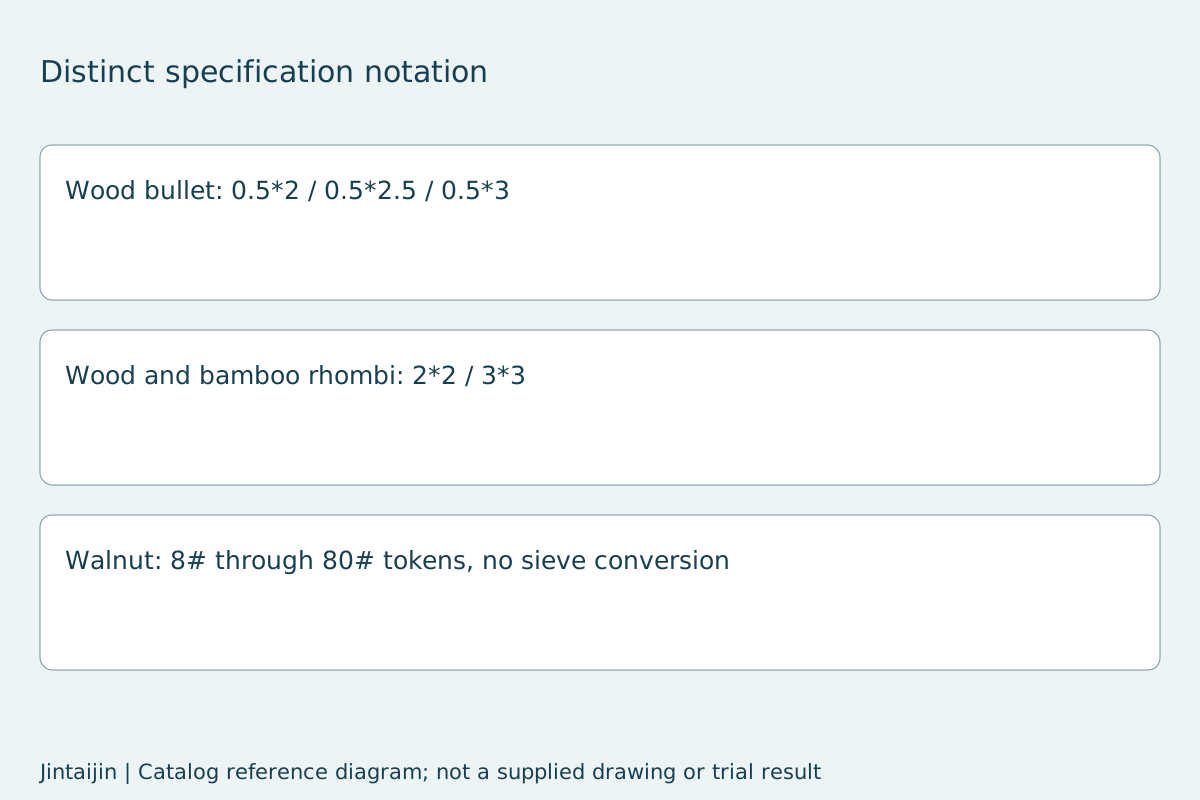
Shaped wood entries have different expressions
Wood (Bullet) carries 0.5*2, 0.5*2.5 and 0.5*3. Wood (Rhombus) carries 2*2 and 3*3; Wood (Square) carries 6*6 and 7*7. Although the table header says Specification (mm), it does not define the axes for those pairs. The bullet expression 0.5*2 is kept intact rather than interpreted as a diameter and length.
Bamboo and wood rhombi stay separate
Bamboo (Rhombus) and Wood (Rhombus) share 2*2 and 3*3 in the checked tables. A shape-and-token filter therefore returns both catalog names. The tool does not rank their performance or treat their materials as interchangeable. Keep the material name in the sample request.
Walnut-shell # notation is not a size conversion
Walnut Shell is listed as Irregular with 8#, 12#, 16#, 24#, 32#, 36# and 80#. These are literal source tokens. The checked table does not establish a sieve system or particle-size interval for each token. Selecting 12# retrieves that entry without converting it to 12 mm or a mesh aperture.
Stone powder remains outside the selectable list
Three checked tables say Powder in the specification cell while two say 0. There is no common specification token across those sources. Stone Powder is retained in the review dataset but excluded from the query. Neither literal supplies evidence for a zero-size powder or a confirmed grade.
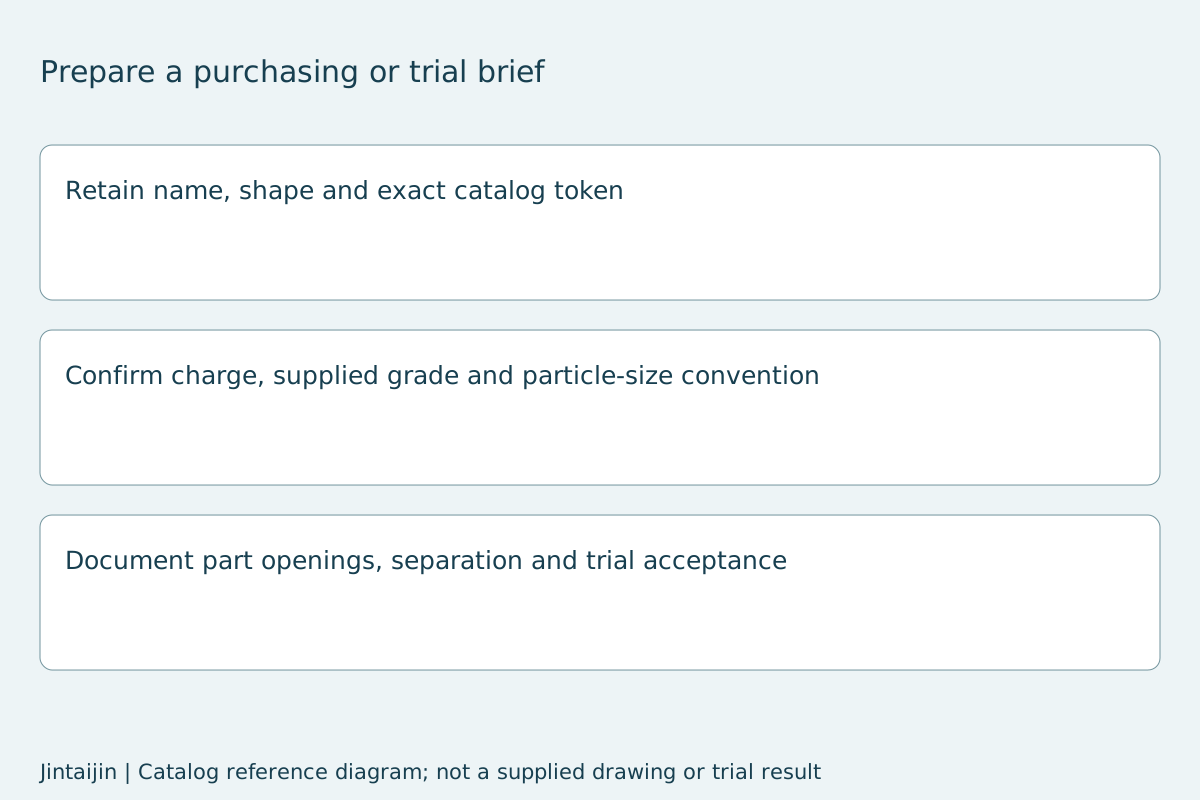
Build a dry-media trial brief
Specify the workpiece material, pre-existing finish, desired appearance, smallest opening, media separation method and any restrictions on dust or residues. Ask whether the offered medium is plain or charged, which compound is supplied and how media condition is controlled. Catalog notation alone does not establish those production details.
Source scope and confirmation
Five public Jintaijin product tables were rechecked on 3 October 2026. The query uses shared literal specifications across those tables. Function-column symbols are withheld because their meaning is unvalidated and four source tables have inconsistent header rowspans. Availability, grade and application suitability require confirmation.
 +86-592-2381506

 IPv6 network supported